The Betsy Ross House at 239 Arch Street in Philadelphia is famous for its connection to America’s first flag. But the story visitors discover inside is more complicated than the version many Americans learned in school.
The small colonial home has narrow staircases, rooms furnished to reflect life in the 1700s, and a courtyard where Betsy Ross and her third husband are buried. Visitors can explore her upholstery business, see historical artifacts, and meet an interpreter portraying the woman behind the legend.
The biggest surprise is that historians still cannot confirm whether Ross made the first American flag. The museum explores that mystery while revealing the remarkable life of a woman who raised seven children, survived three marriages, and ran her own business during the Revolutionary era.
A Small Home With a Very Big Reputation
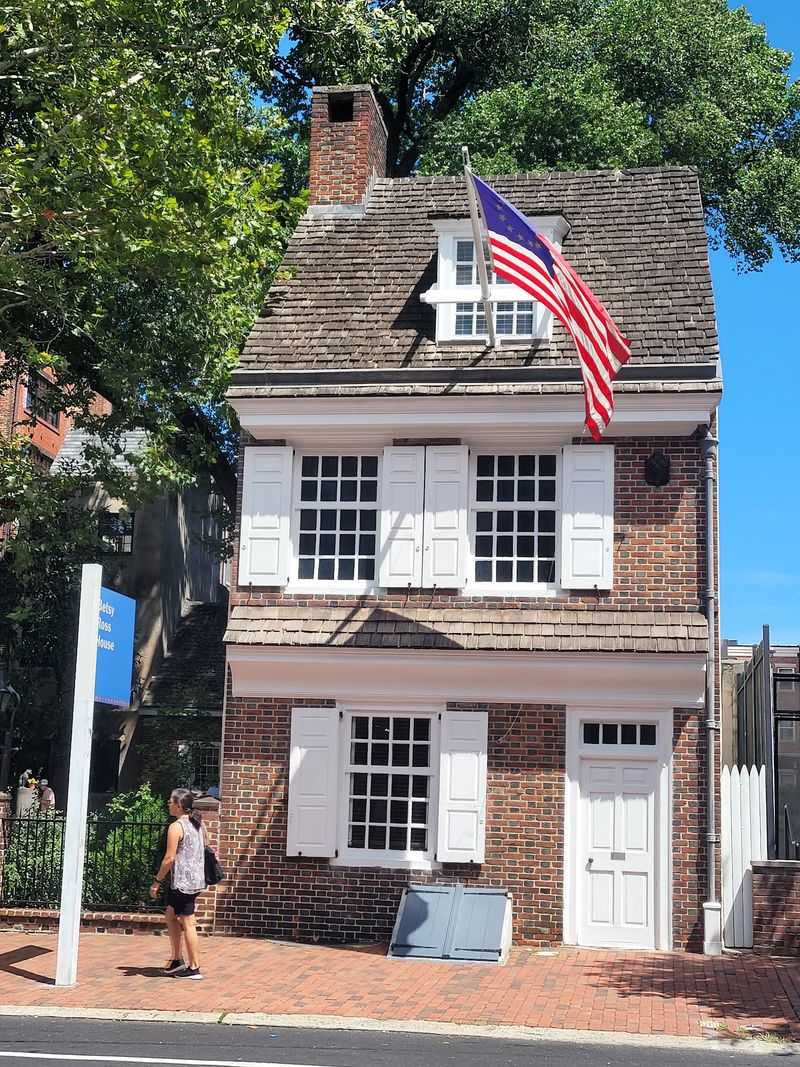
Few houses in America carry as much flag-related fame as the Betsy Ross House. You can find it at 239 Arch Street in Philadelphia, Pennsylvania, right in the city’s Old City neighborhood.
The building is a colonial-era brick row house, and it has been open to the public as a museum since 1898. That means people have been visiting this spot for well over a century.
Today it is run as part of Historic Philadelphia.
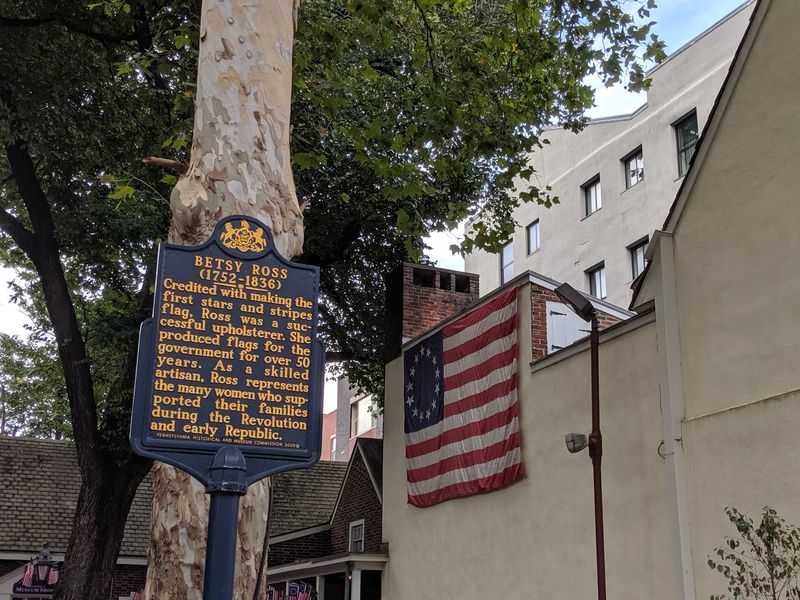
Why does it matter? The house is closely tied to Elizabeth Griscom Ross, the upholsterer most Americans know as Betsy Ross.
Her story became one of the best-known tales in early American history.
The museum focuses on her life, her work, and the times she lived through. It does not just repeat the famous flag legend.
Instead, it shows a working woman in a busy colonial city trying to make a living.
I find that angle refreshing. A home this small can make a big historical figure feel like a real neighbor.
Of course, a story this famous comes with questions, and the flag tale itself is where most of those questions begin.
The Flag Story and Its Big Question Mark
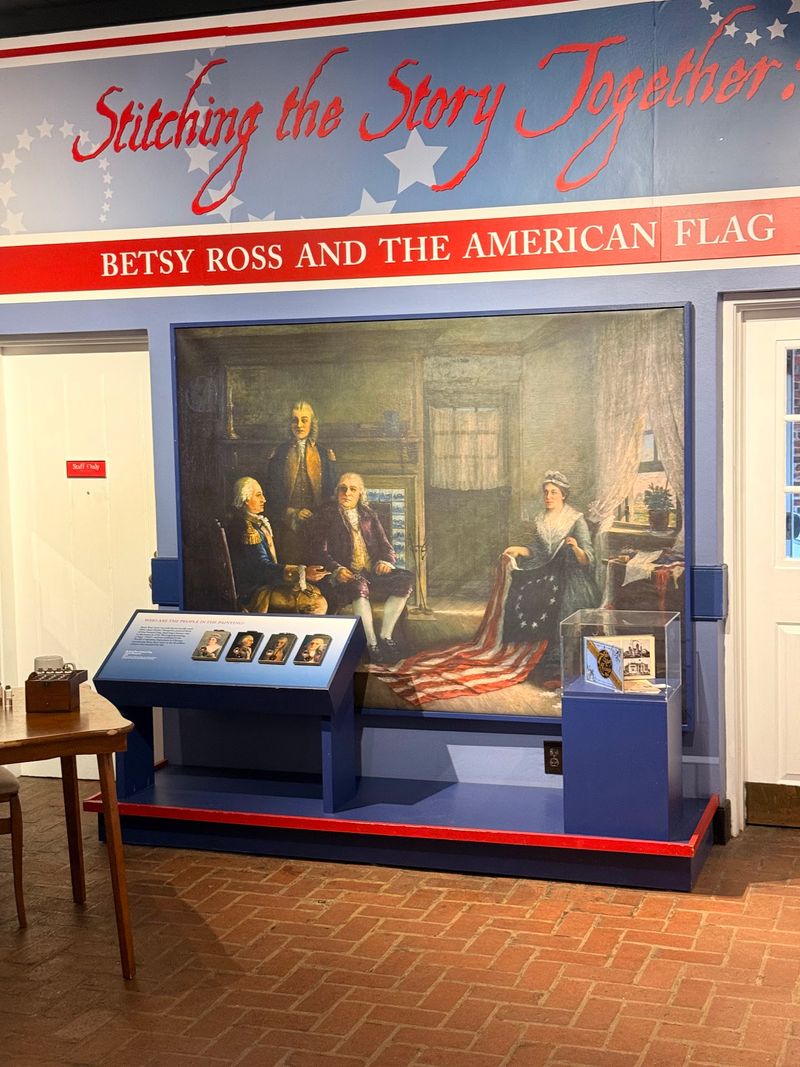
Ask almost any American who made the first flag, and the answer is usually Betsy Ross. The legend says George Washington and others visited her in 1776 with a design, and she suggested a five-pointed star.
Here is the twist. Much of that story comes from her grandson, William Canby, who shared it publicly in 1870.
He based it on family memories rather than written records from the time.
Historians still debate how much of the tale is accurate. No document from 1776 proves she sewed the very first flag.
What is well documented is that she made flags. Records show she was paid for making flags for the Pennsylvania navy in 1777, and she kept sewing flags for decades.
I actually like that the museum leaves room for this conversation. It treats visitors like thinkers, not just fans.
That five-pointed star detail is fun to remember, though. The legend says she showed how to cut one with a single snip of the scissors.
Whether you believe every part of the story or not, the woman behind it led a remarkable life of her own.
Meet Elizabeth Before She Became a Legend
Born in 1752, Elizabeth Griscom grew up in a Quaker family in Philadelphia. She was one of many children, and she trained as an upholsterer as a young woman.
Her life took a bold turn when she married John Ross, who was not a Quaker. Marrying outside the faith got her cut off from her Quaker meeting.
Some visitors leave calling her a rebel, and that label feels fair.
She married three times in all, and she outlived all three husbands. She raised seven daughters while keeping her upholstery business going for many years.
That is a lot of responsibility for anyone. In the 1700s, running a business as a woman took serious grit.
She lived to 84, passing away in 1836. Her working career stretched across decades of huge change in the young country.
Here is a fun fact. She probably did not go by Betsy Ross for most of her life, since her last married name was Claypoole.
Knowing all this makes the rooms of the house feel more personal. Each space starts to look like part of her daily routine.
Steep Stairs and Snug Colonial Rooms
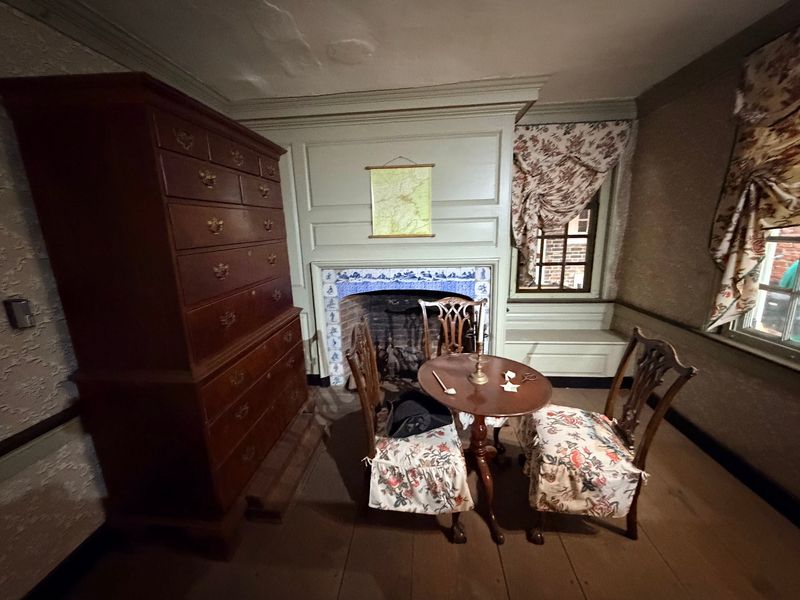
Tight spaces were normal in colonial city homes, and this house proves it. The rooms are small, and the stairs connecting them are steep and narrow.
Visitors move through the house floor by floor. Rooms are set up with period furniture and objects that show what daily life looked like in the 1700s.
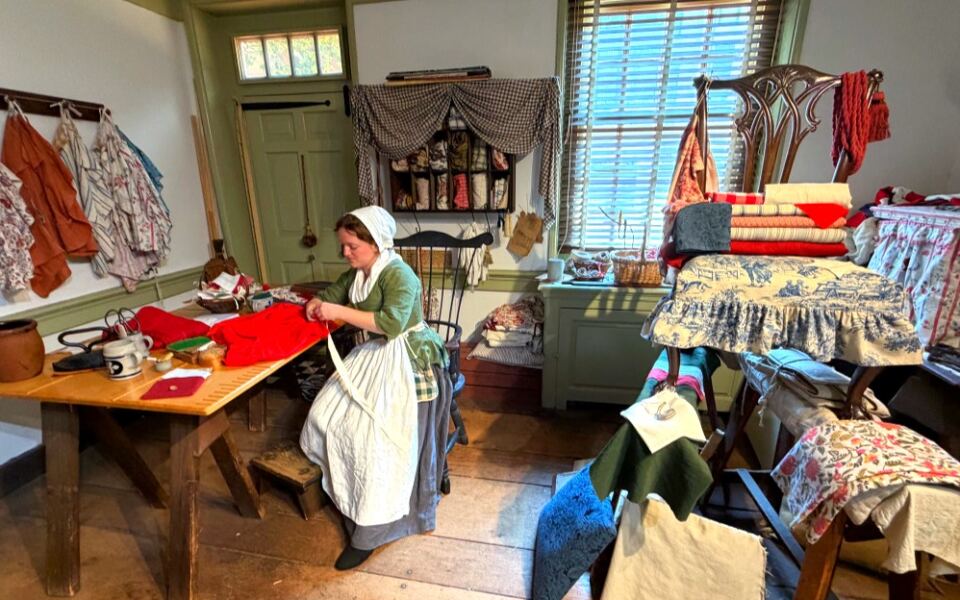
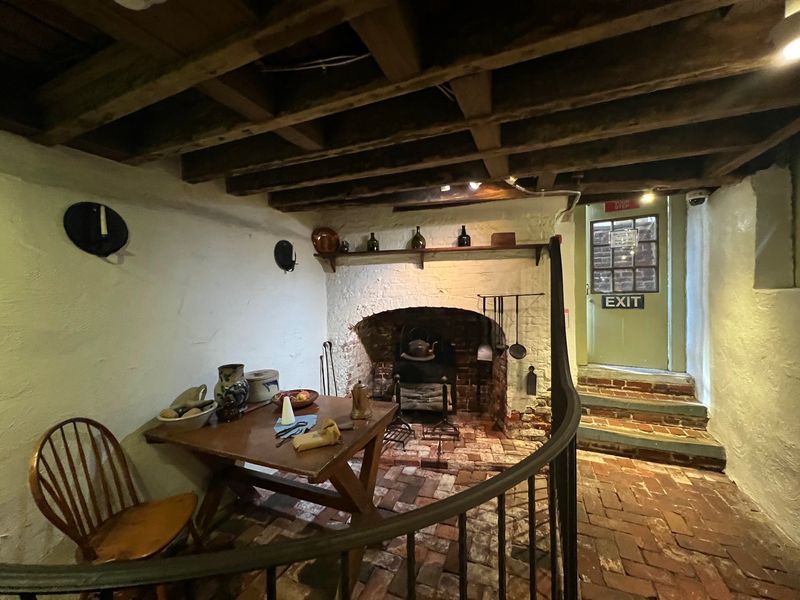
Upstairs, you can see the space presented as the place where she worked on her sewing. The lower level includes a kitchen setting that hints at cooking and household chores.
Plan ahead if stairs are hard for you. The house has no elevator, so the upper rooms are not wheelchair accessible.
Small rooms also mean a few people can make a space feel full. Visiting at a quieter time can make it easier to look around.
Another detail surprises many people. She did not own this home, and the museum explains that she likely rented space here and shared the building with others.
I enjoy that kind of honesty about ordinary life. It reminds us that famous names often lived in modest, crowded homes.
Those small rooms come alive even more when you add a voice to guide you.
An Audio Tour That Fills In the Details
Signs inside the house give the basics, but the audio tour adds much more. Many people say it changes the whole experience.
The self-guided tour works with numbered stops throughout the house. At each stop, you can listen to narration about that room and what happened there.
The audio explains her work, her family, and the challenges of life in Revolutionary War-era Philadelphia. It also helps you understand the objects you are looking at.
Without it, you might pass through the house quickly. With it, you can slow down and catch details you would otherwise miss.
My advice is simple. Add the audio option when you get your ticket, especially if you enjoy stories more than plaques.
It also helps families. Kids who get bored reading signs may stay interested when a voice tells them what to look for.
A ticket is required to go inside the house, so it helps to check current options before you go. Some travel passes include it too.
Of course, a recording is one thing. Talking with Betsy herself is something else entirely.
A Chat With Betsy in Colonial Dress
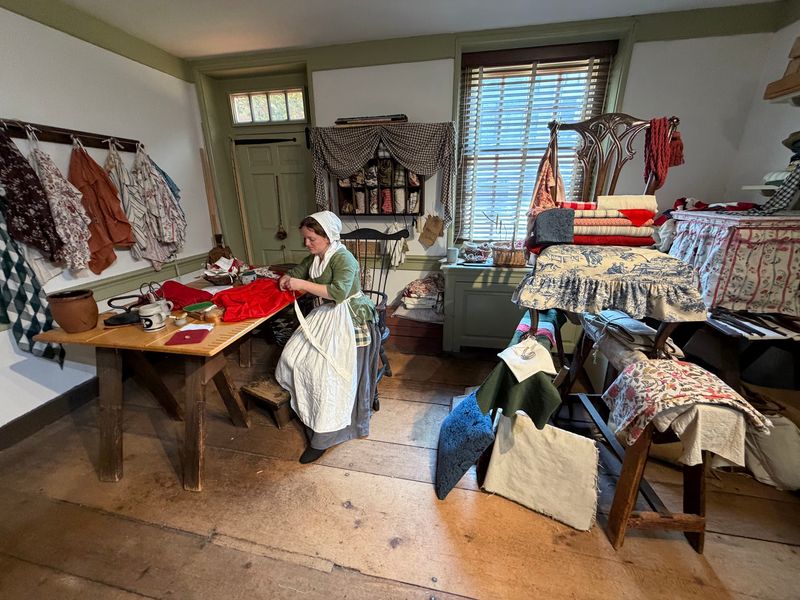
Toward the end of the tour, many visitors get to meet a costumed interpreter portraying Betsy Ross. She stays in character and answers questions about her life and work.
This part feels like talking to history instead of reading about it. You can ask about her business, her family, or the famous flag story.
Kids especially enjoy this moment. Some visitors have even received a small paper star as a souvenir from the conversation.
A tip for shy guests: come with a question ready. The interpreter is there to share, and a good question opens up great stories.
You might ask how she cut cloth, what upholstery work involved, or what Philadelphia was like during the Revolution. Each answer adds another layer.
I think this is the smartest part of the visit. Hearing her speak in first person makes the 1700s feel close.
Interpreter schedules can vary, so availability is not guaranteed every moment. Still, it is worth asking staff if she is around when you arrive.
After meeting Betsy indoors, the quiet courtyard outside offers a different kind of connection to her story.
A Courtyard Fountain and a Famous Resting Place
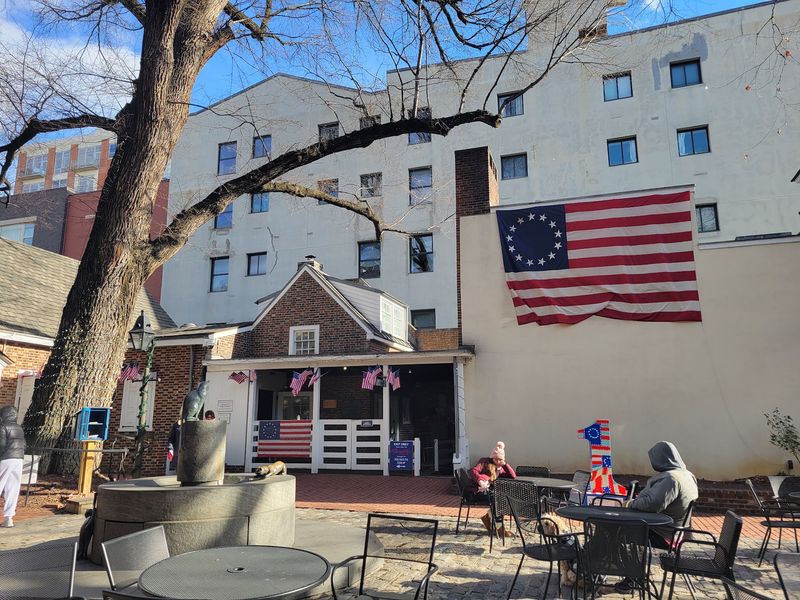
Out back, the courtyard is a peaceful surprise in the middle of busy Old City. It has a fountain, shade, and tables and chairs for resting.
Here is the detail many people do not expect. Betsy Ross and her third husband, John Claypoole, are buried in this courtyard.
Their remains were moved here in 1975, ahead of the nation’s bicentennial celebration. Before that, they rested in other Philadelphia burial grounds.
A flag flies above the site, which feels fitting. It turns a quiet patio into a meaningful place to pause.
The courtyard also hosts free activities at times, including crafts and colonial cooking demonstrations. These can vary by season and day.
You’ll also spot a Little Free Library in the area, which is a nice touch for book lovers.
On a warm afternoon, this is a great spot to sit after climbing those stairs. Families can take a break while kids explore safely.
I’d spend a few extra minutes here. It gives you time to think about everything you just learned.
Nearby, you can also pick up something to remember the visit.
Souvenirs With a Stars and Stripes Theme
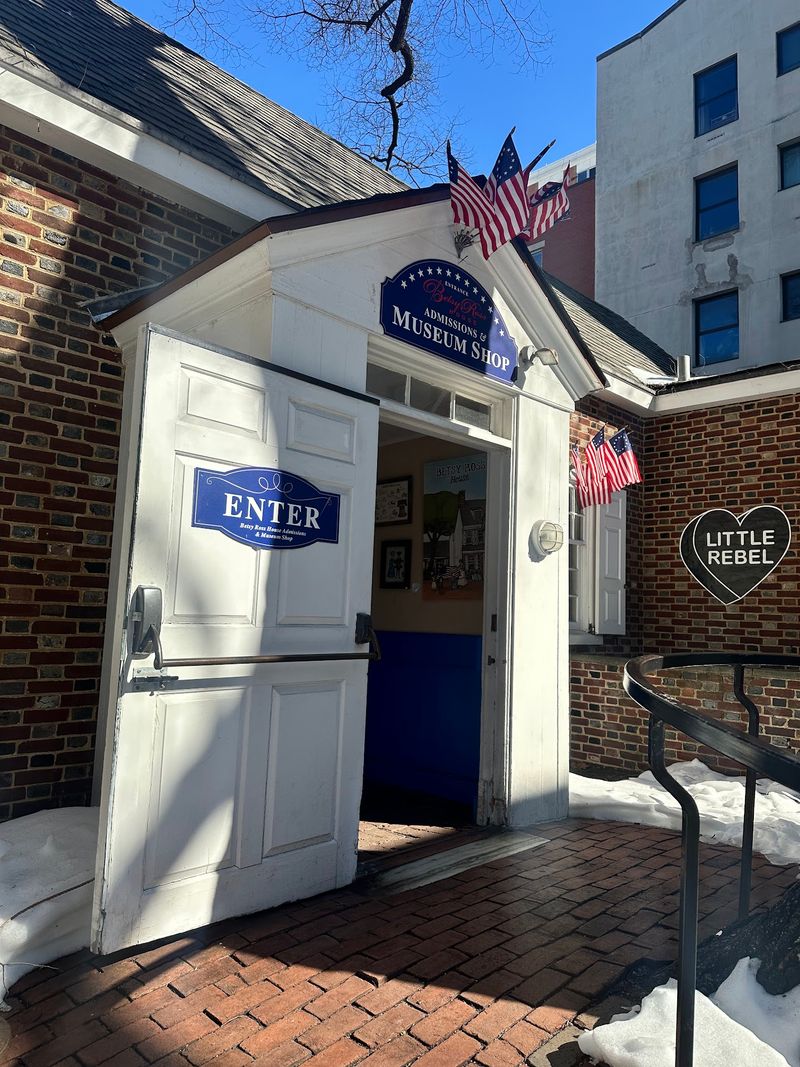
Flags, of course, are a big theme in the gift shop. It is attached to the house and easy to visit before or after your tour.
Shoppers can find patriotic gifts, history books, and items connected to colonial life. Many visitors describe it as a pleasant, well-stocked shop.
Kids may enjoy picking out a small flag or a history-themed toy. It can help them connect the visit with what they learn in school.
Teachers and history fans may want to look at the books. A good title can keep the story going long after you leave Philadelphia.
I like souvenirs that teach something. A book about Revolutionary women or flag history beats a random magnet any day.
Shop items and stock change over time, so it is best to browse and see what is available that day.
The shop is also handy for gifts. If you have a friend who loves American history, this is an easy place to find something thoughtful.
Once you have your souvenir, it helps to know a few planning tips before you head inside or move on to your next stop.
Smart Timing for a Smooth Visit
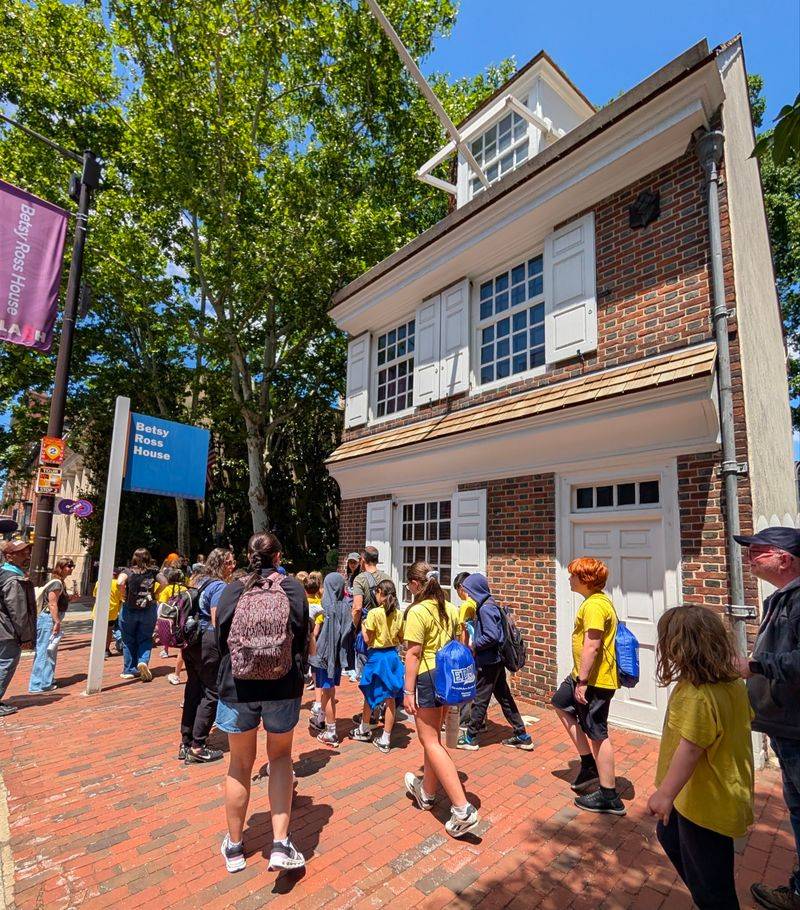
Timing can make a real difference in a house this small. Hallways and rooms fill quickly, so a handful of people can feel like a crowd.
The museum is generally open daily from 10 a.m. to 5 p.m., but checking the official site before your trip is always wise. Holidays and special events can affect schedules.
School groups often visit, especially on weekdays. Some guests find that late morning gaps between groups feel calmer.
How long will you need? It depends on your style.
A quick walkthrough may be short, but reading everything and using the audio tour can take much longer.
The inside is air-conditioned, which helps a lot during Philadelphia summers. Still, wear comfortable shoes for those stairs.
Buying tickets ahead can save time at the door. Some visitors use city passes that include admission.
Special events like Flag Day on June 14 bring extra activity to the site. Those days can be lively and busy.
I would plan this stop as part of a bigger walking day. The neighborhood around it makes that easy.
Old City Neighbors Worth a Short Walk
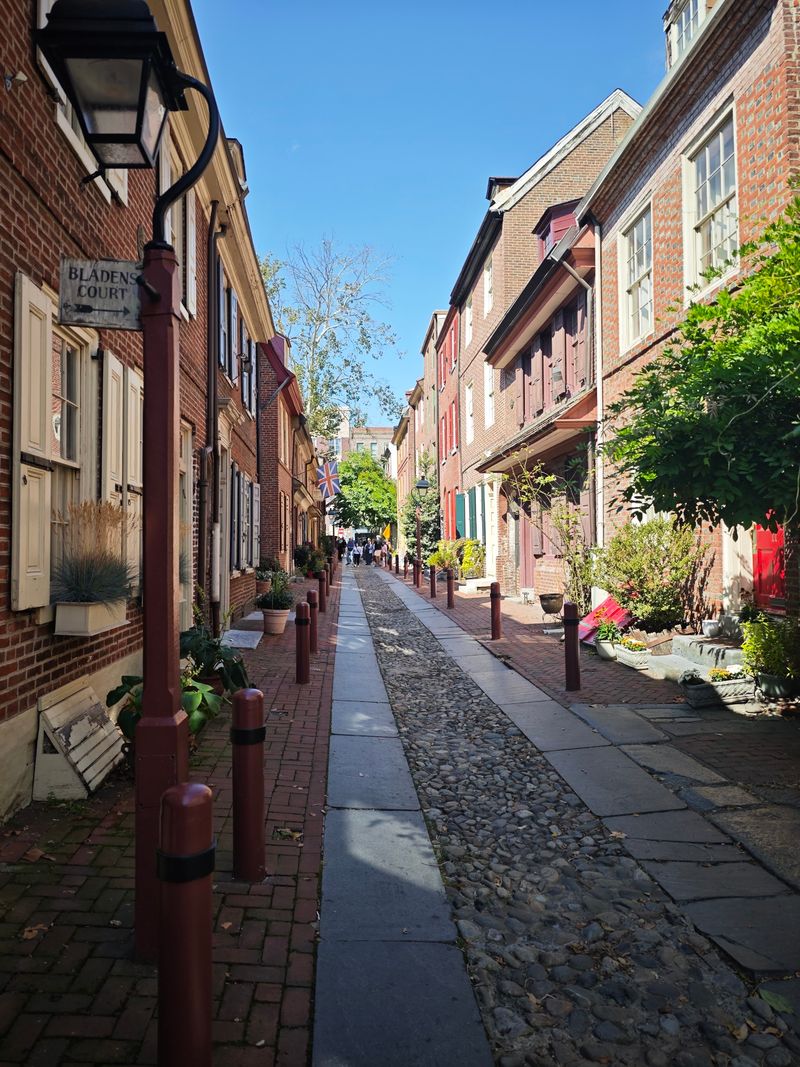
Arch Street puts this house in one of the most historic parts of Philadelphia. Several famous sites sit within a short walk.
Elfreth’s Alley is very close by. It is known as one of the oldest continuously lived-in residential streets in the country, and walking through it is free.
Independence Hall and the Liberty Bell are also nearby. Pairing them with this house makes for a full day of Revolutionary history.
Christ Church is another neighbor worth knowing about. Betsy Ross attended services there after leaving the Quaker meeting.
I like how these stops connect. You can see where national leaders met and then visit the home of a working woman from the same era.
That mix gives a fuller picture of the time. History was made by famous signers and by everyday people sewing, cooking, and running shops.
Walking between sites is easy in good weather. Old City’s streets are compact and full of historic buildings.
By the end of the day, the little house on Arch Street may feel like one of the most personal stops of all. Its story belongs to everyone who grew up hearing it.
Share this story