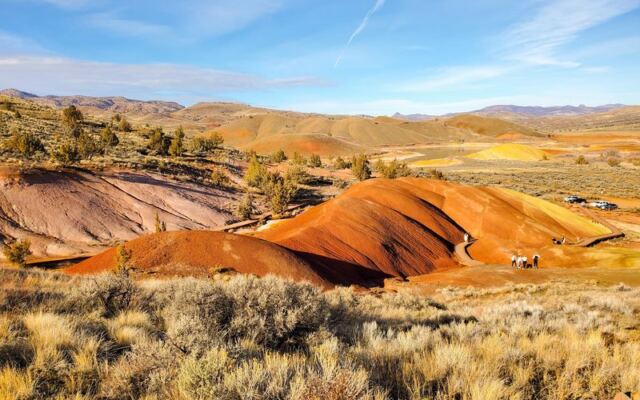
You know that feeling when a long, bumpy road ends somewhere you did not expect to love so much? Out in the quiet corner of Oregon, a stretch of hills looks like someone dragged a paintbrush across the dirt.
No crowds jostle you, and no ticket booth waits to take your cash. If you are an Oregonian who likes to be in on the secret, this one is for you.
A Striped Landscape in Central Oregon
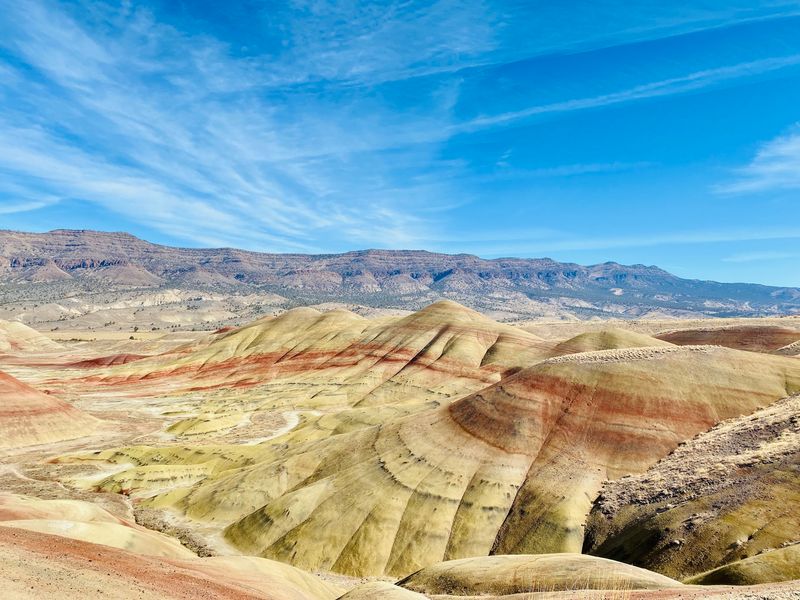
Picture a hillside wearing racing stripes of red, tan, orange, and black. That is the Painted Hills, a nature area in the high desert of central Oregon.
The site is a unit of the John Day Fossil Beds National Monument, and it is known for walks, fossil beds, and rolling hills that look hand painted. Visitors keep calling the colors magical, and many say pictures never quite do them justice.
Plenty of Oregonians have driven right past without knowing what waits out here. That is part of the charm.
The place feels rural and open, with room to wander and almost nobody in your way.
Bring a camera, bring curiosity, and leave the crowds behind in the Willamette Valley.
Where the Colors Come From
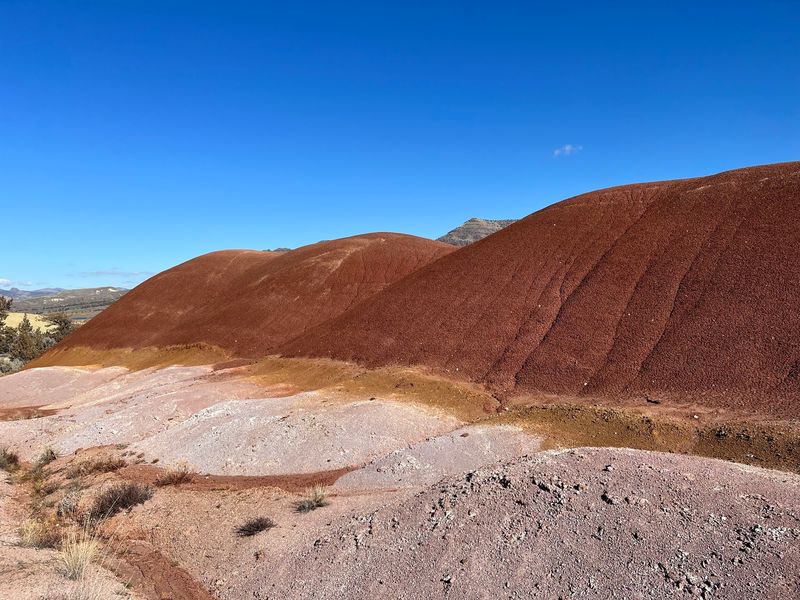
Here is a fun fact to drop at your next picnic: the hills get their stripes from minerals reacting with rock and soil. One visitor described the slopes as formed from weathering pumice, and the result is a layered patchwork of shades.
Up close, you can spot red, yellow, and even lavender in the clay. Each band tells a slightly different story about the ground beneath your boots.
The area also has a fossil past. Leaf Hill has been the site of extensive paleontological research, and an exhibit there shows a few of the leaves found nearby.
It is a little science lesson wrapped in scenery, and nobody will make you take a quiz afterward.
Painted Hills Overlook Trail
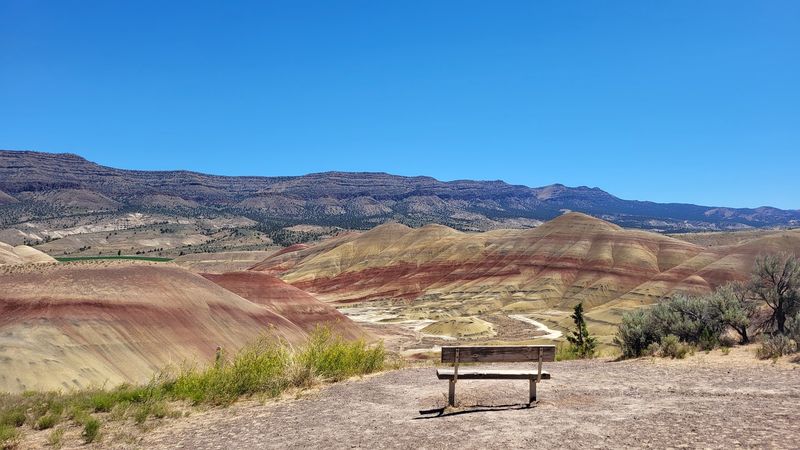
Short on time? Start with the classic.
The Overlook Trail runs just a half mile and follows a ridge above the multicolored mounds.
Signs explain what you are looking at, and the trail ends at the best overall viewpoint after roughly 100 feet of climb. Photographers will find plenty of spots to set up.
One visitor pointed out that this walk gives you scale. You see how the stripes roll across the whole landscape, which makes the small details feel even bigger later.
It is an easy stroll, and the payoff arrives fast. Pair it with a second trail and you will feel like you earned your lunch.
Painted Cove Trail Boardwalk
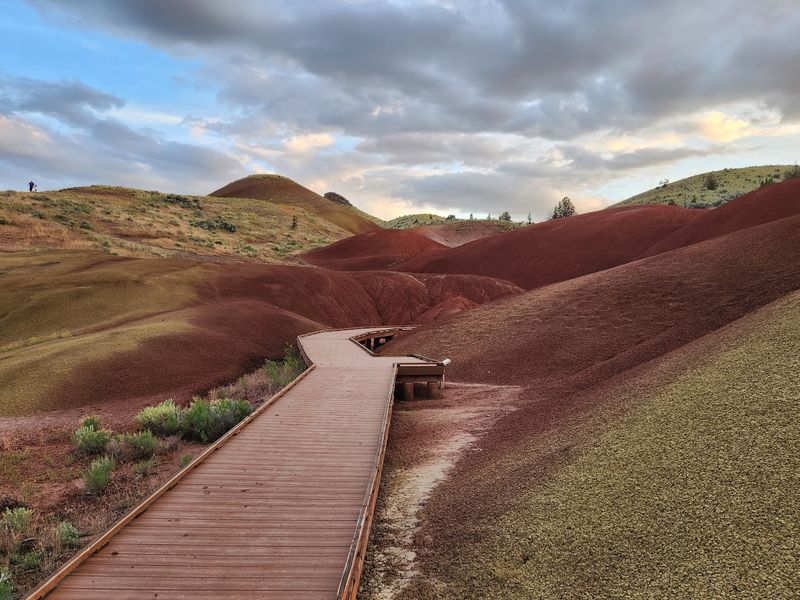
Touching is off the table, but getting close is not. The quarter mile Painted Cove loop uses a short boardwalk to bring you right up to the clay.
Climbing on the hills is not allowed, and it is hard to get near them otherwise. That is exactly why this trail is such a treat.
Visitors love the popcorn-like texture of the ancient clay mounds. Up close you will notice different colors and patterns that the distant views hide.
Walk slowly here. The path is short, and the details deserve a lingering look.
Carroll Rim for Big Views and Sunset
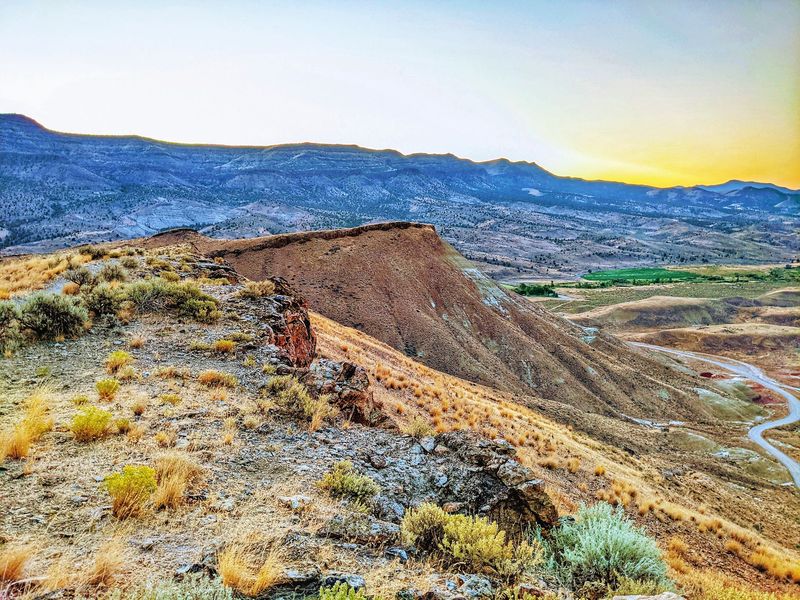
Ready to earn your view? Carroll Rim is the one that asks for a little sweat.
It is 1.6 miles round trip with about 400 feet of climb up a series of switchbacks.
At the top, you get panoramic views of the Painted Hills, Sutton Mountain, and canyons as far as you can see. Visitors call it the best overall hike here.
It is also a lovely place to watch a high desert sunset. A small parking area sits at the trailhead.
Pack water, wear sturdy shoes, and save a little energy for the walk back down.
Red Scar Knoll and Leaf Hill
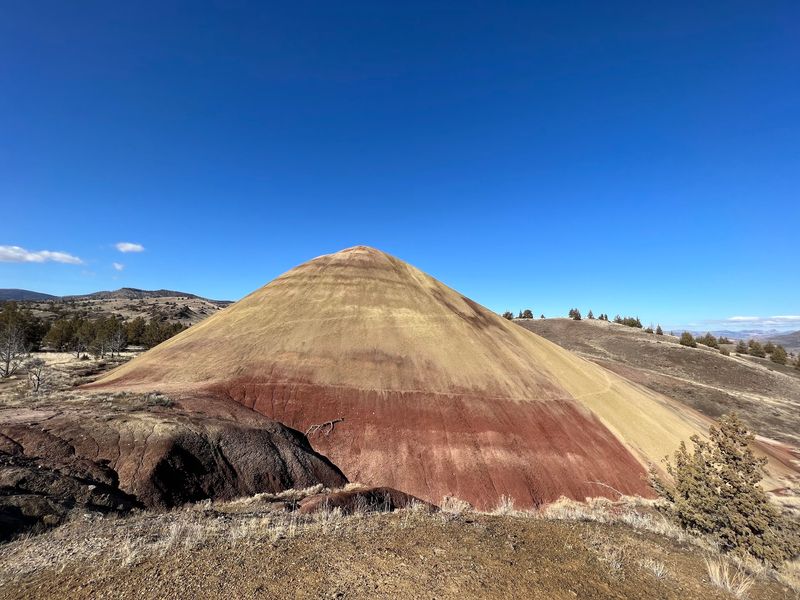
Some trails are quick sketches rather than full paintings. Red Scar Knoll is a quarter mile out and back, ending at a knoll that looks a bit like a magician’s hat.
Leaf Hill is another quarter mile loop. No fossils are visible along it today, but an exhibit shows examples of leaves found there.
One visitor found Leaf Hill underwhelming, while praising the other stops. That is honest advice: go for the history, and keep expectations modest.
Together these short walks round out a visit without eating up your afternoon. Four of the five trails are doable in about an hour and a half with photo breaks.
Chasing Golden Hour Light
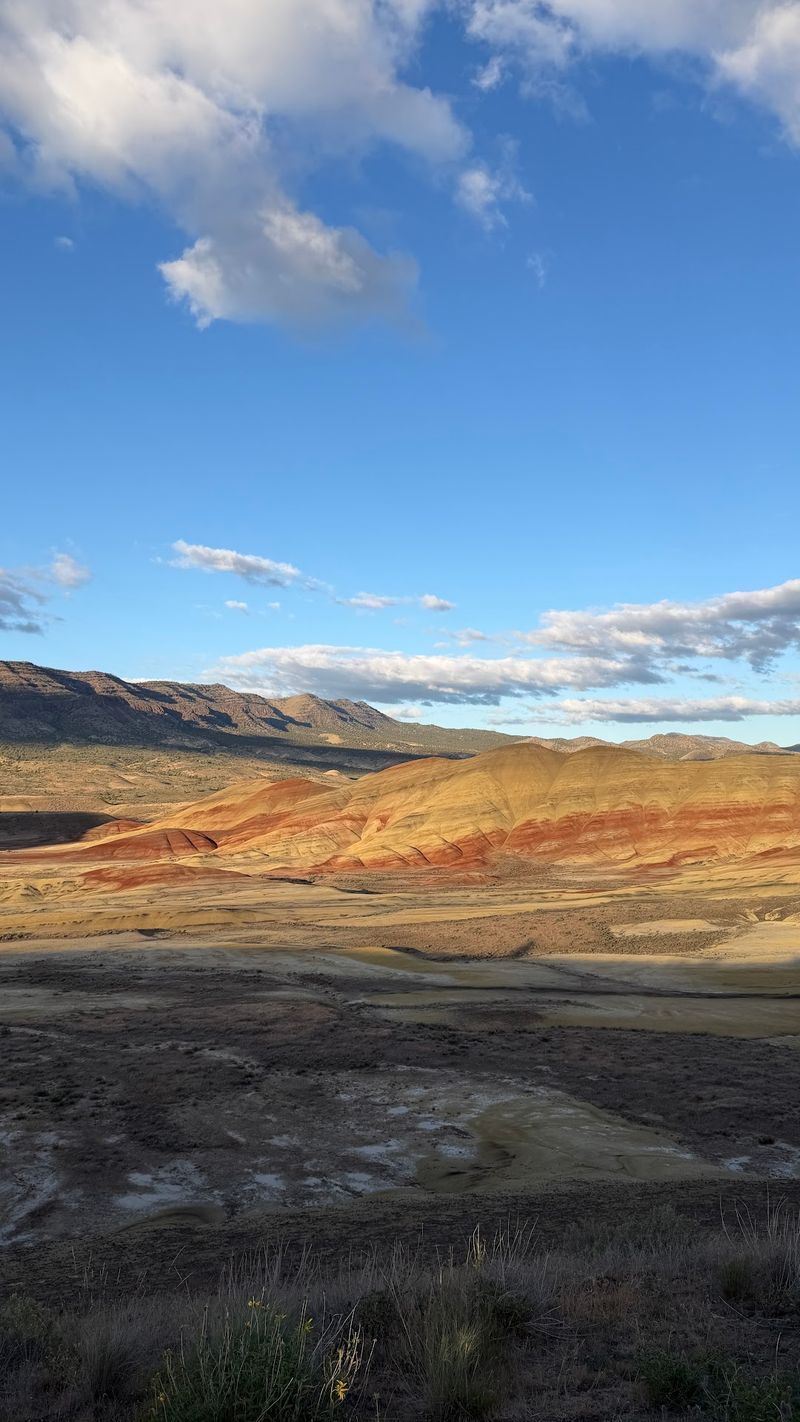
Colors can be shy at noon. Visitors say the stripes pop most in the morning sun, and evening light brings out the red bands on the main hillside.
Sunsets can deliver spectacular photos too. Vivid hues also show up on bright sunny days, while spring light gives subtler shades.
A few visitors caution that online photos can look more saturated than real life. Expect muted, natural tones rather than neon, and you will enjoy the real thing even more.
Plan around the light, and the hills will reward you.
A Quiet, Pet-Friendly Wander
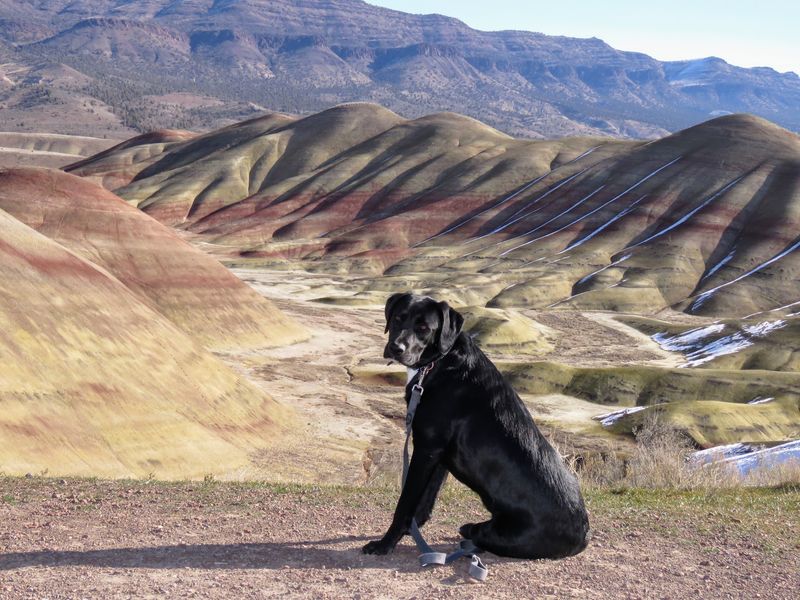
Crowds are not the main event here. Visitors describe the area as not busy at all, with space in the car park and a relaxed pace on the trails.
An educational wooden path runs along some of the hills, and the walks are easy enough for different ability levels. The area is also pet friendly.
Families, photographers, and road trippers all fit in. The whole site is small, so you can see it without a big time commitment.
Many visitors say they leave amazed, even those who came just to stretch their legs. It suits anyone who likes scenery without a scramble.
Getting There and Gravel Roads
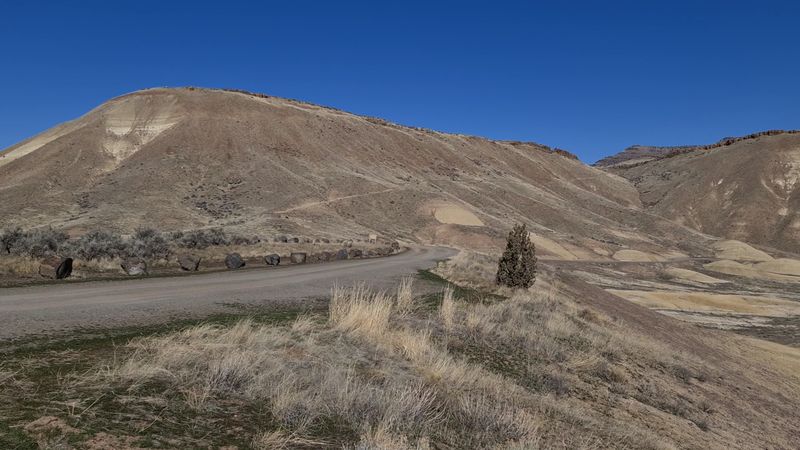
Fill the tank before you go. The Painted Hills sit about 90 miles from Bend, and it is a long haul from Portland or the Willamette Valley, though some do it as a day trip.
Towns along the way can feel very quiet. The access road turns to gravel for the last couple of miles, so keep your speed down.
If you come in overland, one visitor noted the last five miles of gravel washboard will test your suspension.
The nearby town of Mitchell is a handy stop, with a hotel, a city park for camping, and a local brewery stop that visitors mention.
Free Entry and a Soft Verdict
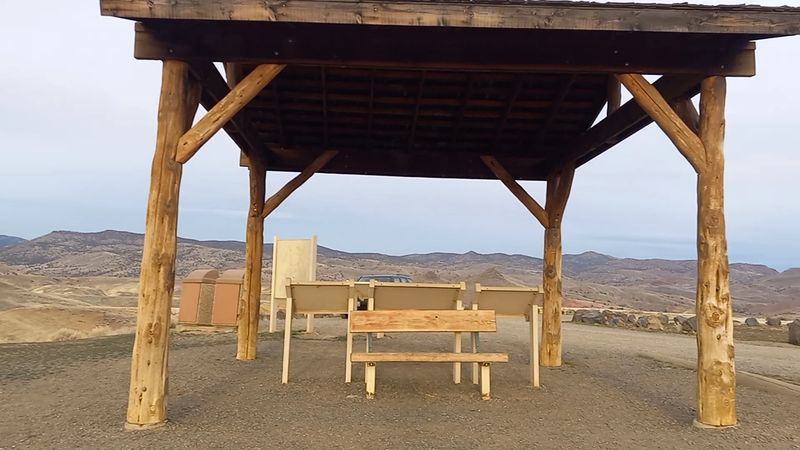
Here is the best part: visiting costs nothing. The area is open and free, with picnic tables on a grassy patch, a bathroom, and a small visitor center selling souvenirs.
The visitor center opens May through September. Outside those months, bring your own water and supplies, though a ranger may still be on site.
Most visitors rate it a must-see, a few found it more muted than photos suggest. Treat the colors as a gentle surprise instead of a spectacle.
Stay on the trails and leave the clay untouched so it lasts. If you are already heading east, the Painted Hills are well worth a stop.
Share this story