In the 1830s, canal boats in Pennsylvania did something boats were never supposed to do. They climbed a mountain.
Workers split some boats into sections, set them on rail cars, and pulled them up steep slopes with thick ropes.
The trip between Philadelphia and Pittsburgh once took about three weeks by wagon. This clever mix of canals and railroads cut it to roughly four days.
I like history that feels a little bit unbelievable, and this story fits that perfectly. It mixes steam engines, stone cutters, travelers, and a mountain range that refused to move out of the way.
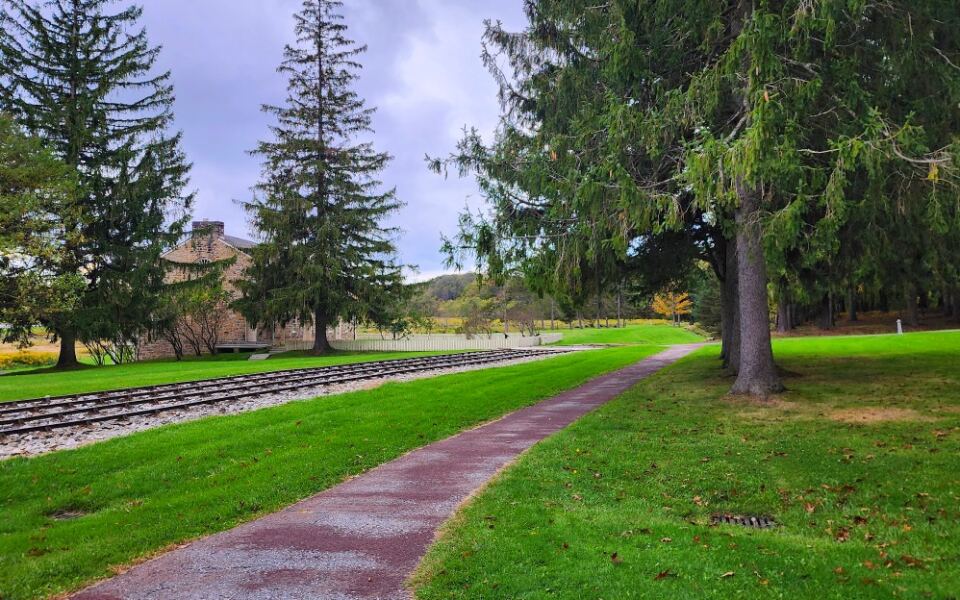
Today, you can walk the same ground where those boats rolled uphill. A stone tunnel, a tavern, and a rebuilt engine house still wait in the woods.
So how exactly did a boat get to the top?
Where Boats Once Rode Rails Up a Mountain
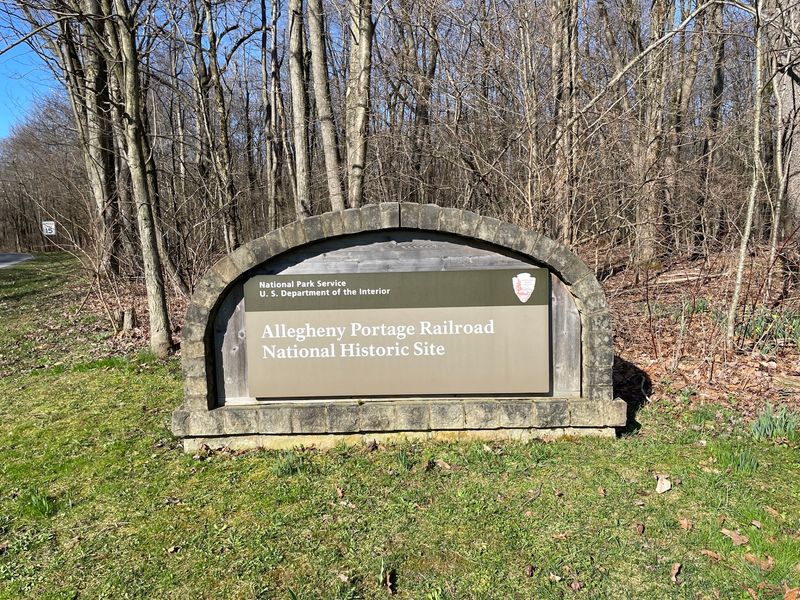
Mountains stopped a lot of plans in the early 1800s, but Pennsylvania found a way around one of the biggest. The Allegheny Portage Railroad National Historic Site tells that story today.
You’ll find it at 110 Federal Park Road in Gallitzin, Pennsylvania, high in the Allegheny Mountains.
The National Park Service protects this spot because it holds the remains of the first railroad to cross the Alleghenies. It opened in 1834 as part of the Main Line of Public Works.
That system linked Philadelphia and Pittsburgh with canals and railroads working together.
Here’s the problem it solved. Canals work on flat ground, and the Allegheny ridge is anything but flat.
So engineers built a 36-mile railroad between Hollidaysburg and Johnstown to carry passengers and freight over the top.
I find it fascinating that people tried this at all. Steam railroads were brand new back then, and few had ever tackled such rough terrain.
Best of all, the site doesn’t charge an entrance fee. The grounds include a visitor center, trails, and several historic structures.
To understand why the climb mattered, though, you first need to see how it actually worked.
Ten Inclined Planes and a Lot of Rope
Ten. That’s how many inclined planes the railroad used to get over the mountain.
Five sat on the eastern slope and five on the western slope, with flatter stretches of track between them.
An inclined plane was basically a steep ramp with rails. Cars couldn’t climb these slopes under their own power.
Instead, a stationary steam engine at the top pulled them up with a long rope.
Early on, workers used hemp ropes. Later, the railroad switched to wire rope, which lasted longer and held up better.
Cars going down helped balance cars coming up, which saved some effort.
On the level sections, horses pulled the cars at first. Locomotives later took over much of that work.
So a single trip could involve horses, steam engines, ropes, and plenty of people.
I like how practical this all sounds. Nobody had a perfect solution, so they combined several imperfect ones until the job got done.
The highest point of the route reached around 2,300 feet above sea level. At the summit stood one of the busiest spots on the line, and part of it survives today.
Engine House 6 Brings the Machines Back
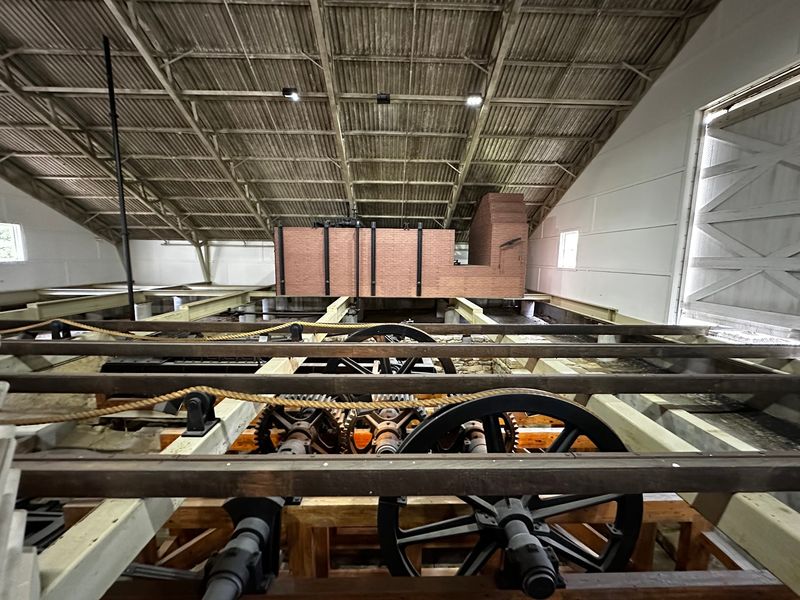
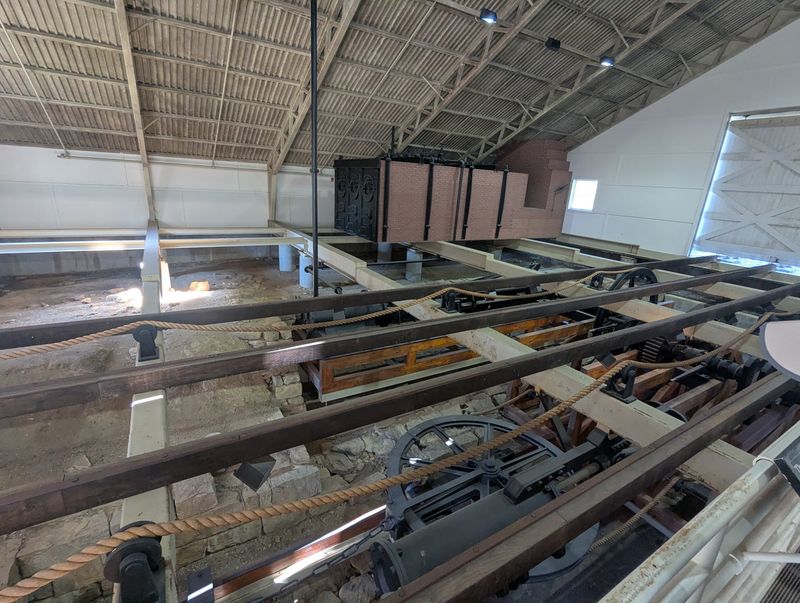
Big wheels, iron parts, and a long rail track help explain what happened at the top of Plane No. 6. The park built a shelter over the original foundation of Engine House 6 so visitors can see where the power came from.
Inside, exhibits show how a stationary steam engine turned the large wheels that moved the rope. Seeing the layout makes the whole system much easier to picture.
Diagrams on paper only go so far.
Kids tend to enjoy this building because the displays are hands-on and visual. It’s one of the better places in the park to ask a ranger questions.
Rangers sometimes give talks here, especially during the busier months.
I’d plan to spend real time in this spot. Understanding the engine house makes the rest of the site click into place.
Getting there is easy. A boardwalk trail runs through the woods from the visitor center to the engine house.
Boardwalks may close in winter, so check conditions before you go.
Just down the slope from the engine house sits a stone building with its own story to tell.
The Lemon House Fed Hungry Travelers
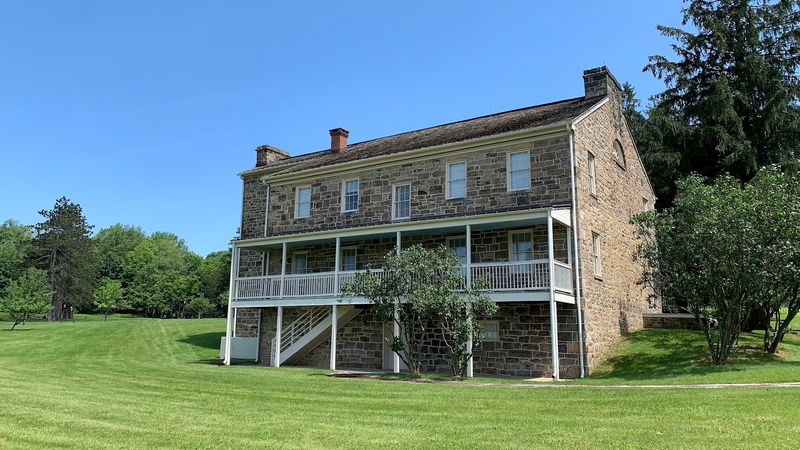
Samuel Lemon saw an opportunity, and he took it. His stone home near the top of Plane No. 6 became a tavern where railroad travelers could stop for meals and refreshment.
Lemon and his wife Jean ran the business while the railroad stayed busy. Their location was hard to beat.
Passengers waiting at the summit needed somewhere to rest, and the Lemon House sat right there.
The building still stands today. The first floor is open to visitors, with rooms set up to show what the tavern looked like in its heyday.
It’s a nice change of pace after the mechanical exhibits.
I like that this stop brings people into the story. Ropes and engines are impressive, but someone also had to cook dinner for tired travelers.
The Lemons also profited from more than food. Samuel Lemon was involved in other local business too, and the family did well during the railroad years.
The Lemon House is a short walk from the engine house. Pair them together on the same loop, since they sat side by side when trains were still running.
A Tunnel Cut Through Solid Rock
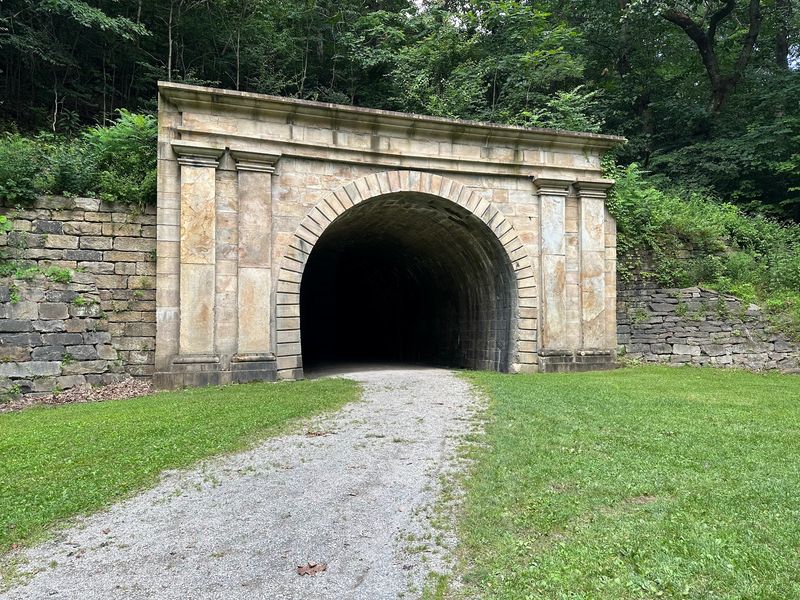
Workers carved the Staple Bend Tunnel by hand and with black powder. Finished in the early 1830s, it’s recognized as the first railroad tunnel built in the United States.
The tunnel runs about 900 feet through a ridge near Mineral Point, east of Johnstown. Laborers drilled holes, packed them with powder, and cleared the broken rock again and again.
Progress came slowly, measured in feet at a time.
The entrances got decorative stone portals. Builders wanted the tunnel to look as grand as it was.
It’s a nice reminder that early engineers cared about appearance too.
Today, a trail leads to the tunnel. It follows the old railroad bed and runs about 2.1 miles one way from the trailhead, so plan for a round trip of more than four miles.
Biking is a smart option for families who want to save their legs. The path is fairly level since it follows a former rail line.
I’d bring a flashlight for peeking inside. The tunnel sits in a separate section of the park, so map out your drive before heading over.
The Skew Arch Bridge Leans on Purpose
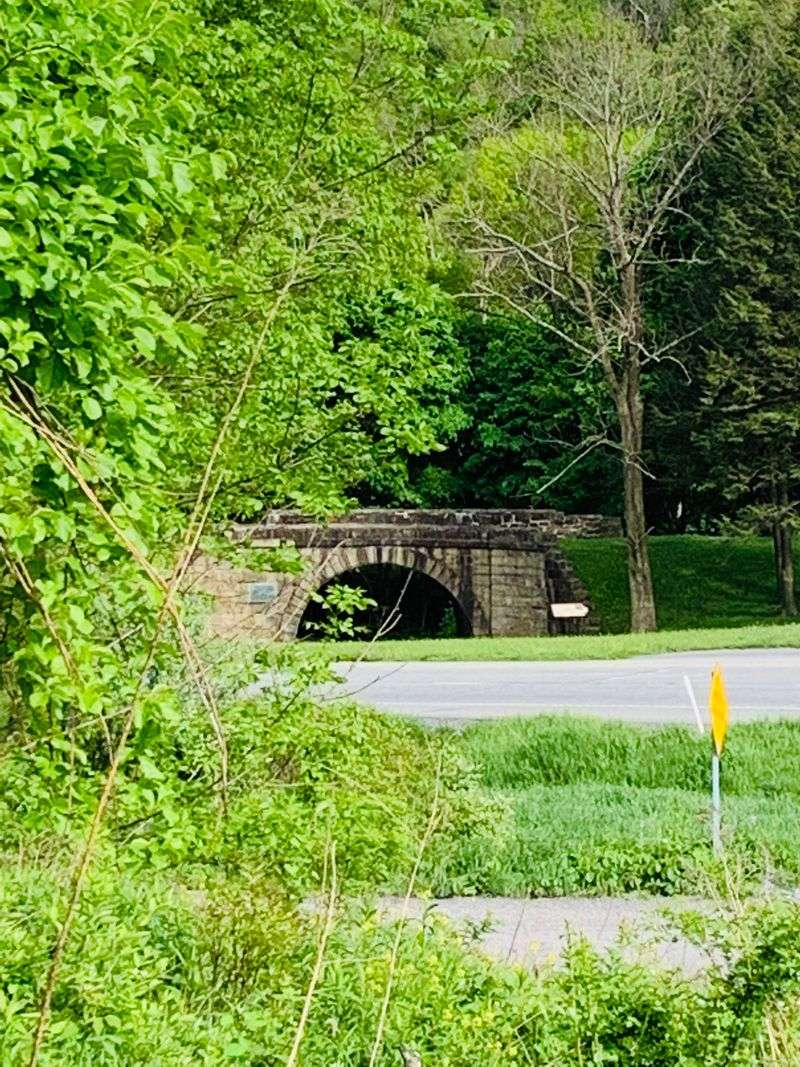
Most stone arches cross a path straight on. The Skew Arch Bridge doesn’t, and that angle is exactly why people come to see it.
Builders needed a road to cross the railroad at a slant. Making a stone arch work at that angle required careful planning and precisely cut stones.
Each block had to fit just right to carry the weight.
The bridge carried a road over the tracks near the Plane No. 6 area. It still stands today, a solid piece of 1830s stonework.
You can walk right up and study how the blocks twist along the arch.
A trail connects the main area to the bridge. Be aware that the hike crosses a busy road, so watch carefully with kids.
If walking isn’t ideal, a small parking lot sits near the bridge.
Honestly, I think this structure gets overlooked. It’s small compared to the tunnel, but the craftsmanship is easy to admire up close.
That skill didn’t appear out of nowhere. Stone workers shaped thousands of blocks for this railroad, and their work shows up in a surprising place.
Stone Sleepers Held the Rails
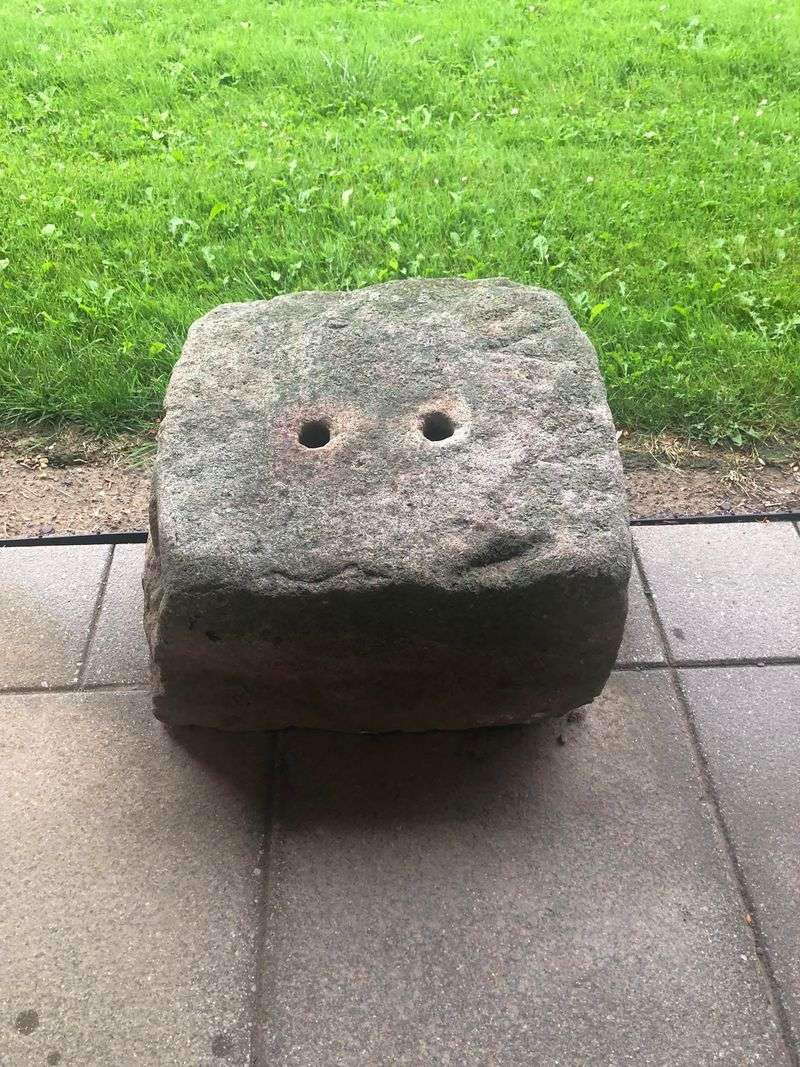
Wooden railroad ties feel normal now, but early builders on this line tried something heavier. They set the rails on square stone blocks called sleepers.
Each block had holes drilled into it for fastening the rails. Thousands of them lined the route.
Stone seemed like a durable choice, though it caused problems as the ground shifted and the rails moved.
Over time, wooden ties replaced many stone sleepers. Still, you can spot old blocks along trails at the park.
Keep your eyes on the ground, because they’re easy to miss.
The park has offered stone cutting demonstrations at times, showing how workers shaped these blocks. If one is scheduled, it’s a great way to understand the effort involved.
Ask at the visitor center about any demonstrations that day.
I like spotting details like this. They turn a quiet forest path into a real piece of history under your shoes.
Wear sturdy shoes for the unpaved trails, which can be rocky and full of roots. Main paths near the buildings are easier, but the old trace takes a little more care.
Kids Can Climb Into a Canal Boat
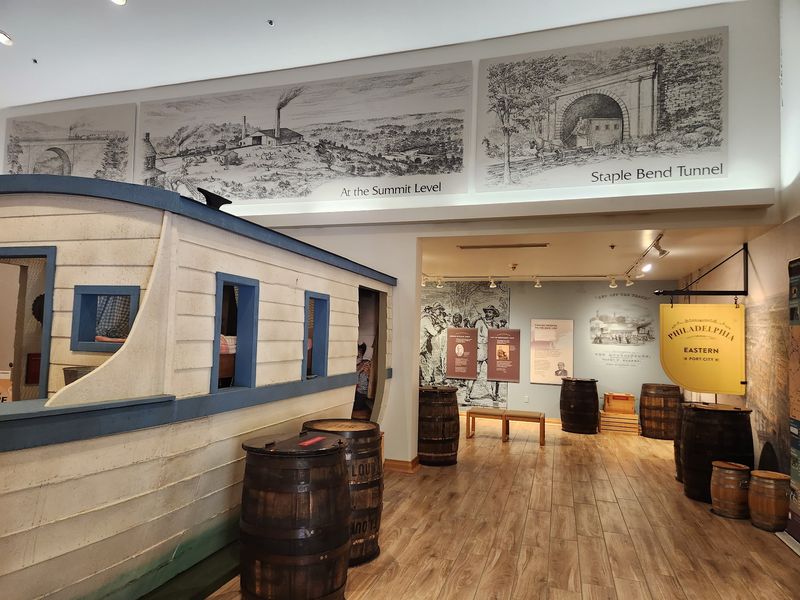
Families with young kids have it easy here. The visitor center includes hands-on exhibits that let children explore the world of canal travel.
A canal boat display gives kids a chance to step inside and play. Nearby shipping barrels show what goods traveled along the route.
Opening them up turns freight history into a little treasure hunt.
The museum also covers the people who worked and traveled on the Main Line. Life-sized figures and models help explain the journey.
Adults get plenty of reading material while kids poke around.
Don’t skip the film. It introduces the whole portage system and runs around 20 minutes or so.
Watching it first makes the outdoor sites much more meaningful.
The Junior Ranger program is another fun option. Kids complete activities and can earn a badge from a ranger.
It gives younger visitors a goal while exploring the grounds.
I’d start every visit right here. Ask about the film schedule and any ranger programs, then plan your walk to the engine house around them.
A Short Life That Changed Travel Anyway
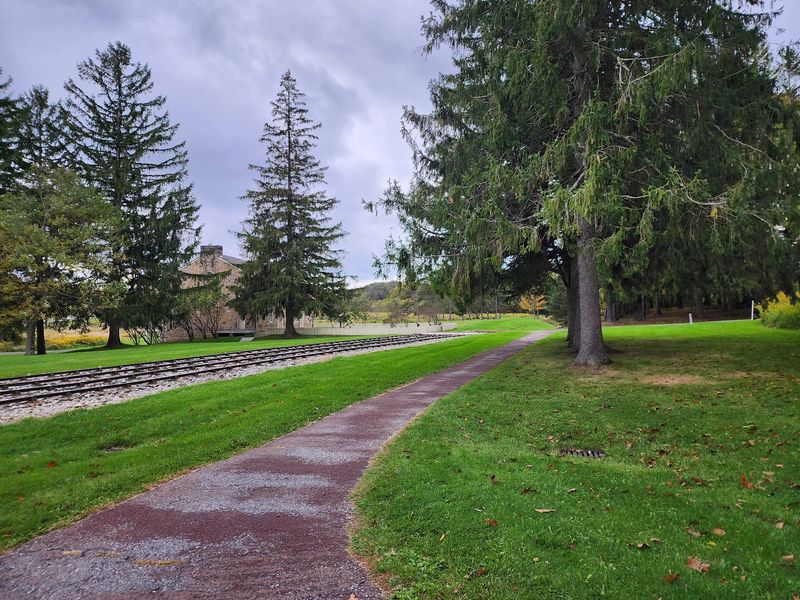
The Allegheny Portage Railroad ran for only about two decades. That’s a short career for something so impressive.
In the 1850s, the Pennsylvania Railroad finished a line across the mountains that didn’t need inclined planes. Its famous Horseshoe Curve near Altoona let trains climb steadily without ropes.
Faster, simpler travel made the old portage system outdated.
The state tried updating the portage route with a newer line that avoided the planes. It didn’t help much.
In 1857, Pennsylvania sold the Main Line to the Pennsylvania Railroad, which shut down the portage soon after.
Still, its impact lasted. The system proved that people and goods could cross the Alleghenies quickly.
It helped push the country toward the railroad age.
Charles Dickens even rode the portage in 1842. He wrote about the trip in his travel book American Notes, describing the mountain scenery.
I find it oddly inspiring that something replaced so quickly still mattered so much. Being first counts, even if you don’t stay on top forever.
Planning a Mountain Top Visit
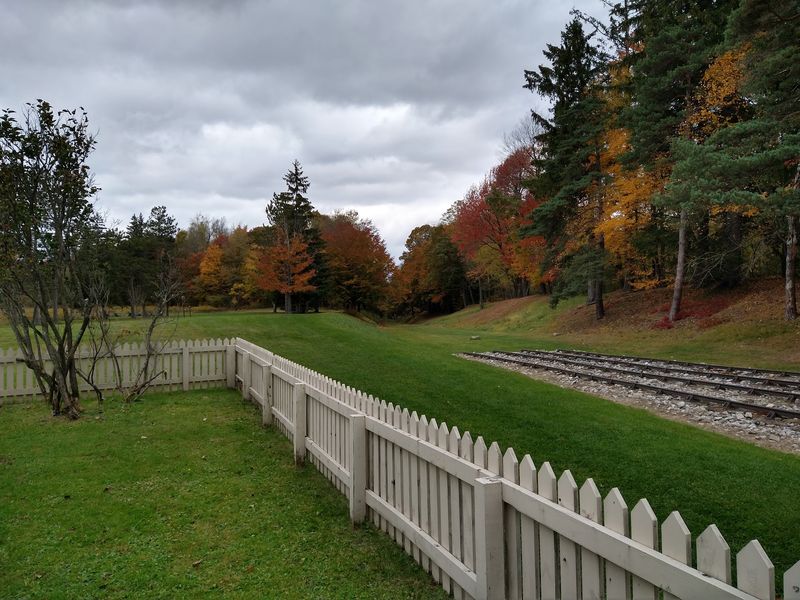
Fall might be the prettiest time to go. The Allegheny forests turn gold and red, and the trails feel especially pleasant in cooler weather.
The visitor center keeps seasonal hours, and it’s often closed a couple of days each week. Check the official National Park Service page before driving out.
Schedules can change, especially in winter.
Plan for at least an hour and a half to see the visitor center, engine house, and Lemon House. Add more time if you want to hike to the Skew Arch Bridge or Staple Bend Tunnel.
The main paths near the buildings are accessible, though some historic structures are harder to reach. Parking is generally easy.
Restrooms are available at the visitor center.
Cyclists might also enjoy the 6 to 10 Trail, which follows a later route across the mountain. Rangers can provide maps and directions.
The park sits near Gallitzin, not far from Altoona and Johnstown. That makes it easy to pair with other railroad sites in the region, like the Horseshoe Curve.
I’d turn it into a full day exploring how trains conquered these mountains.
Share this story