Europe is famous for castles, churches and old ruins, but some of its best stops are far stranger. Imagine riding a Ferris wheel inside a salt mine or sleeping inside a giant sculpture.
Many of these places grew from odd histories, wild art ideas or local traditions. Get ready to meet twelve spots that will make your travel photos the talk of the group chat.
Salina Turda in Turda, Romania
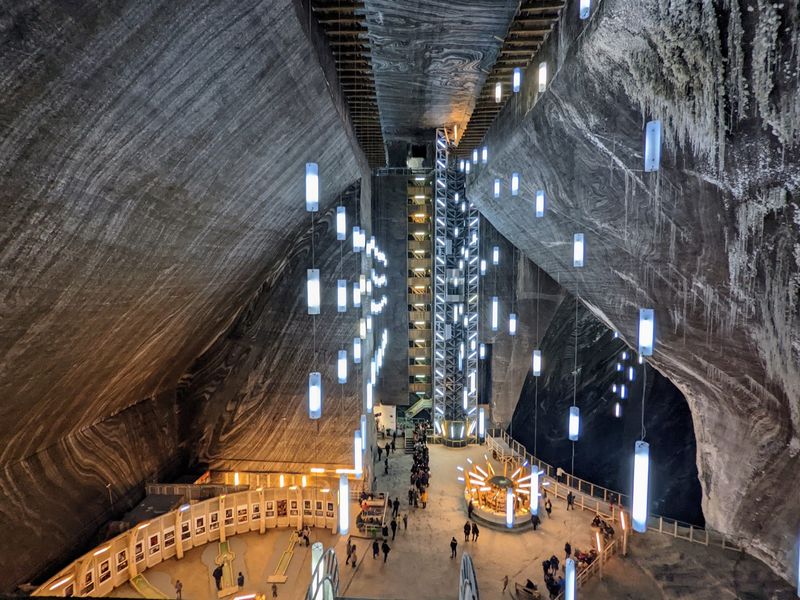
Picture a Ferris wheel spinning quietly under a ceiling of solid salt. That is everyday life at Salina Turda, a former mine in Transylvania that now feels like a hidden sci-fi city.
Visitors travel about 120 meters underground into huge chambers carved by centuries of miners. In the Rudolf Mine, you will find a Ferris wheel about 20 meters high, plus miniature golf, table tennis and an amphitheater.
Yes, you can play a round of mini golf while standing inside a mountain.
Go deeper into the Theresa Mine and you reach an underground lake. Small boats glide around a salt island while lights shimmer on the water.
It is a calm, dreamy spot, and a great place to slow down after all those stairs.
Pack a light jacket. The air stays around 11 to 12°C all year, no matter how hot it is outside.
Plan for at least two hours so you can explore each level without rushing. Bring a camera too, because the glowing walls and strange shapes make every photo look like a movie scene.
Sacro Bosco in Bomarzo, Italy
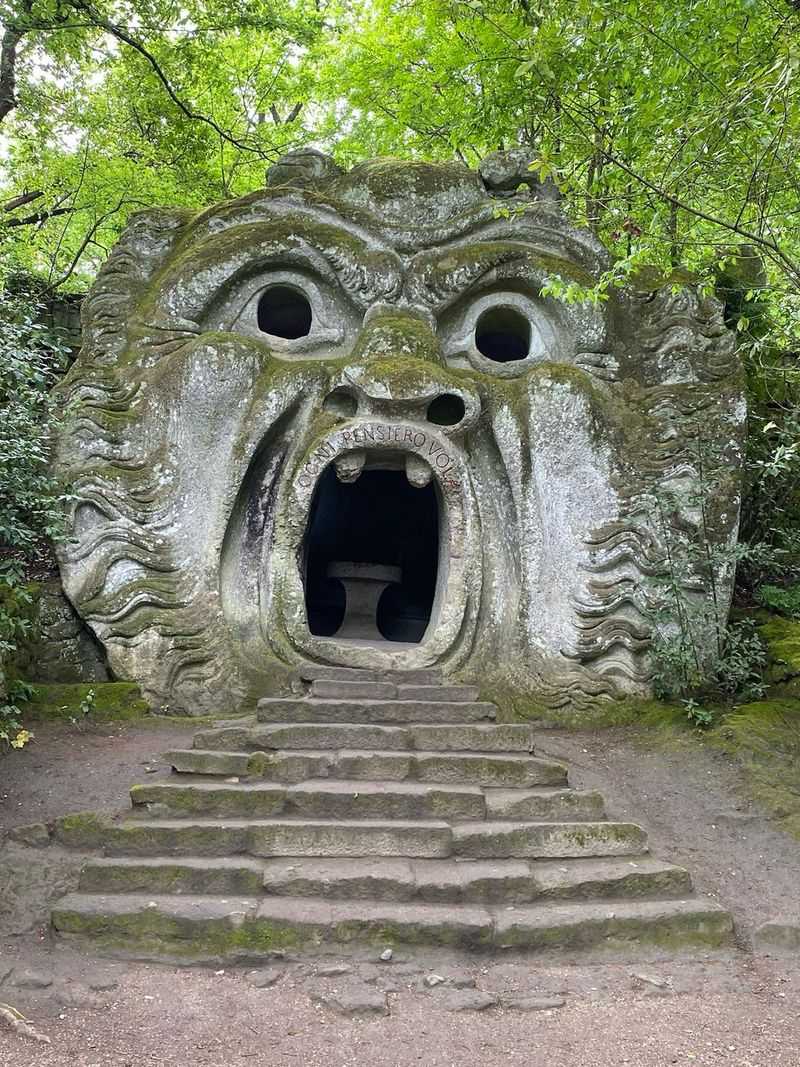
A stone face with a gaping mouth waits among the trees, and yes, you are allowed to walk right in. Welcome to Sacro Bosco, the Sacred Grove, where Italian garden rules were tossed out the window.
Pier Francesco Orsini started building it in the mid-16th century. Instead of neat hedges and flower beds, he filled the woods with huge creatures carved straight from volcanic rock.
You will meet dragons, mythological beings, a giant turtle and a house that leans at a dizzy angle.
The star is Orcus, whose open mouth forms a doorway into a small stone room. The garden was designed to break the usual Renaissance ideas of balance and order.
Experts still argue about what all the symbols mean, which adds to the mystery.
Wear comfy shoes, since the paths wind up and down through the forest. Go on a quiet morning if you can, when mist and shade make the statues feel even more alive.
Take your time, because every turn hides another surprise waiting to stare back at you.
Sedlec Ossuary in Kutná Hora, Czechia
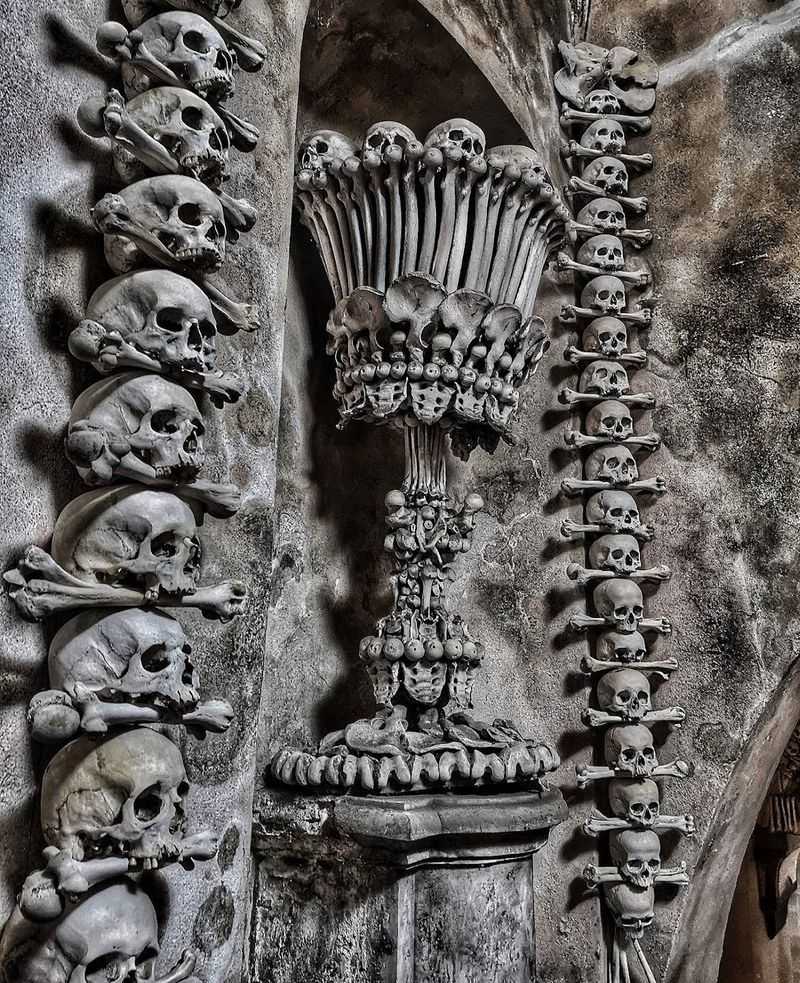
Bones hang from the ceiling like party decorations, but the mood inside is quiet and respectful. Sedlec Ossuary sits beneath the Cemetery Church of All Saints near Kutná Hora.
The chapel holds the remains of roughly 40,000 people. Skulls and bones were arranged into chandeliers, crosses, pyramids and even the grand coat of arms of the Schwarzenberg family.
One chandelier is said to include every bone in the human body.
Most of the artwork was arranged in the 19th century by a woodcarver named František Rint. The cemetery itself is much older, and many of the bones came from graves that needed to be cleared.
It is still a religious site, not just a spooky attraction.
Lower your voice when you step inside, and take a moment to look closely at the details. Visit early in the day to avoid the biggest crowds.
Combine it with a stroll through Kutná Hora, a charming town with lovely old streets, to balance out the gloom with some sunshine.
Hill of Crosses near Šiauliai, Lithuania
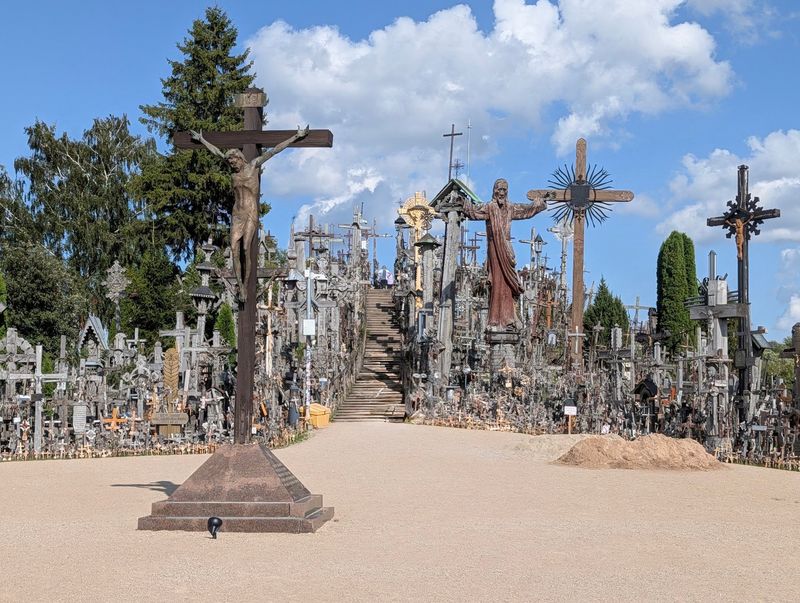
Try counting the crosses here and you will lose track in minutes. More than 200,000 of them crowd a small hill near Šiauliai, in every size and style you can imagine.
Rosaries, holy pictures and handwritten notes dangle between them, clinking softly in the wind. The tradition began as a way to remember loved ones.
Later it became a bold sign of Lithuanian faith and pride during years of Russian and Soviet rule.
Officials tried again and again to clear the hill, yet people kept bringing new crosses. Pope John Paul II visited in 1993, which made the site famous around the world.
Narrow paths wind through the forest of wood and metal, so watch your step. You can bring a cross of your own and place it on the hill, and local shops nearby sell them.
Go in the late afternoon for soft light and fewer visitors. Be respectful, since this is a place of prayer, memory and deep meaning for many people.
Icelandic Phallological Museum in Reykjavík, Iceland
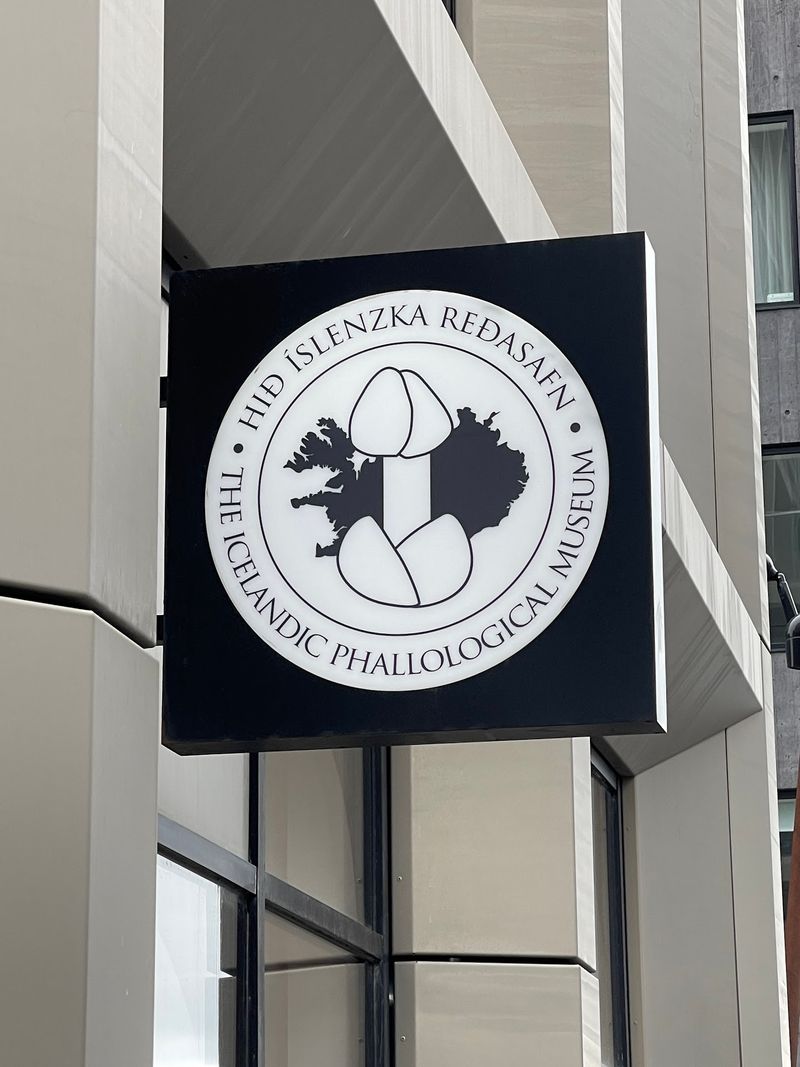
Yes, this museum is real, and yes, people line up to get in. Iceland’s official tourism organization calls it the only museum in the world devoted entirely to penises.
Behind the giggles is a real science collection. The Icelandic Phallological Museum holds specimens from hundreds of animals, including whales, seals and many land mammals.
Labels explain each one, so you actually learn something between the laughs.
Along with the specimens, you will see art, crafts and objects made as jokes. The theme even spreads into the café and the gift shop, where the souvenirs are as cheeky as you would expect.
Go in with a sense of humor and you will have a blast. Most visitors treat it like a quirky natural history stop, so the mood is more silly than shocking.
It is easy to fit in while exploring central Reykjavík on foot. Allow about an hour, and keep an eye out for the display tags, which are often funnier than the exhibits.
Setenil de las Bodegas in Andalusia, Spain
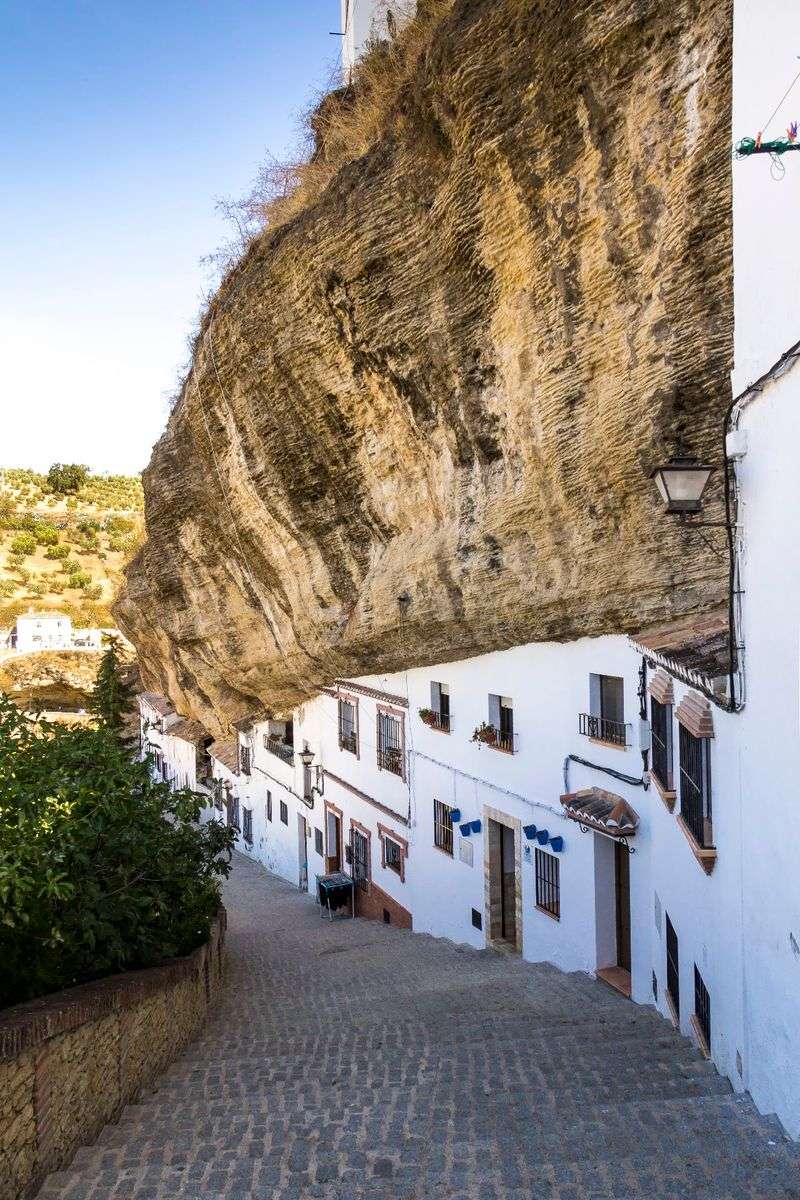
Look up in Setenil de las Bodegas and a giant slab of rock looks back. Here, a whole town seems to be tucked under a mountain’s eyebrow.
Generations of residents built homes and shops right beneath huge overhangs carved by the Guadalporcún River. Local tourism officials call them troglodytic houses, because the natural rock forms the roof.
No tiles needed.
On Cuevas de la Sombra, the stone hangs so far over the street that parts of it feel completely covered. Across the river, Cuevas del Sol is the brighter side, with more light and open views.
Walking both streets shows how differently the same cliff can feel.
Grab a table at a shaded café and order something cold. The rock keeps the air cooler on warm days, which is a handy bonus in southern Spain.
Take photos from the bridge to catch the overhangs from a distance. Comfortable shoes help, since the streets are sloped and the cobblestones can be uneven.
Krzywy Domek in Sopot, Poland
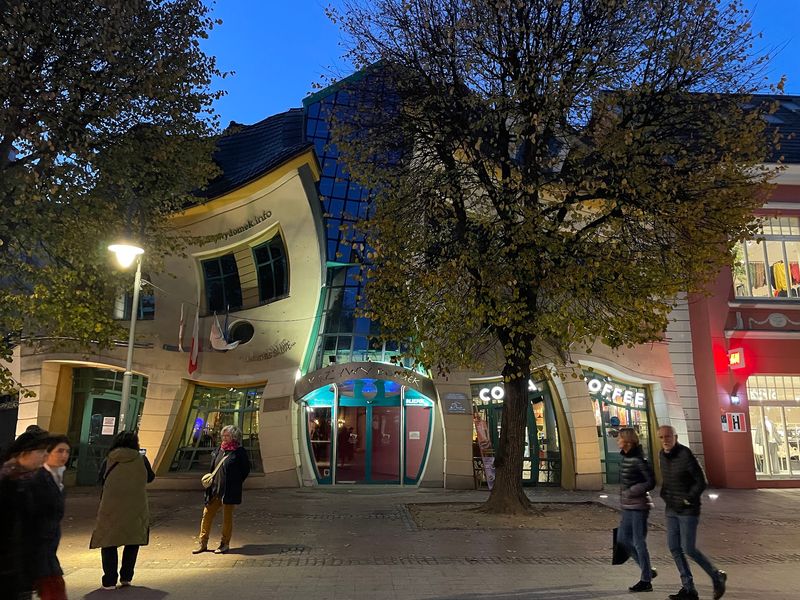
Nothing in Sopot lines up quite right, and that is exactly the point. Krzywy Domek, the Crooked House, looks like a cartoon drawing that wandered into real life.
Its walls bulge and curve, the windows wobble and the roof ripples like a wave. It was finished in the early 2000s as part of a shopping and dining complex.
The designers purposely avoided straight lines.
Unlike many stops on this list, there is no ancient legend behind it. The whole illusion is modern and totally intentional.
Stand across the street and the neighboring buildings look perfectly normal, while this one seems to be melting in the sun.
It has become one of the most photographed spots in this Baltic resort town. Try shooting from a low angle for an extra dramatic look.
After snapping your photos, stroll over to Sopot’s long wooden pier or the sandy beach. Visit in the morning for fewer crowds, since the street gets busy in summer.
Museum of Broken Relationships in Zagreb, Croatia
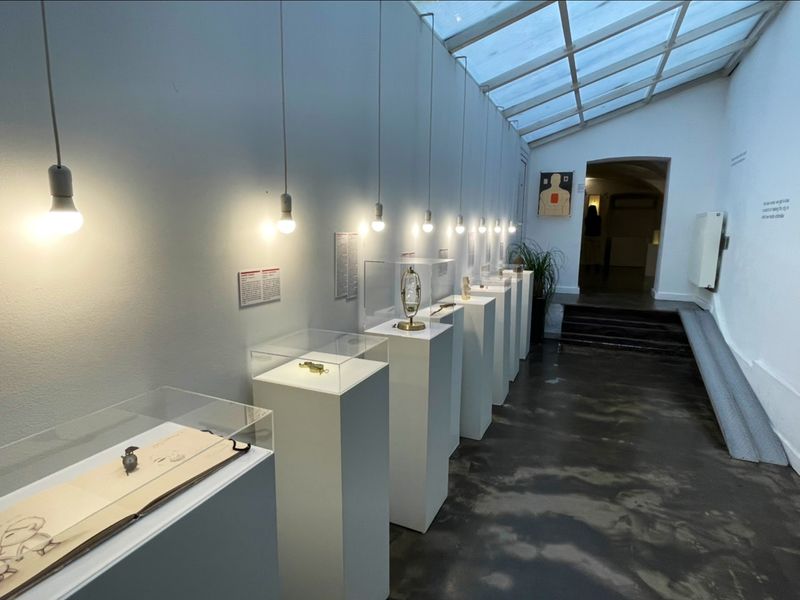
A single stuffed toy can break your heart if you read the label next to it. That is the magic of Zagreb’s Museum of Broken Relationships.
The idea began as a traveling art project built from ordinary items donated after breakups. Each object comes with a short story from the person who gave it.
Some are sad, some are hilarious and some are surprisingly sweet.
A few items seem silly until you read the note beside them. Then the meaning changes completely.
The collection swings between anger, humor, loss and love, so you never quite know what you will feel next.
The concept became so popular that exhibitions have toured the world and gathered more donations along the way. Give yourself time to read every story, because the words matter more than the objects.
Bring a friend to talk things over afterward. It is part art gallery, part diary and part group therapy session, and it sticks with you long after you leave.
Les Machines de l’Île in Nantes, France
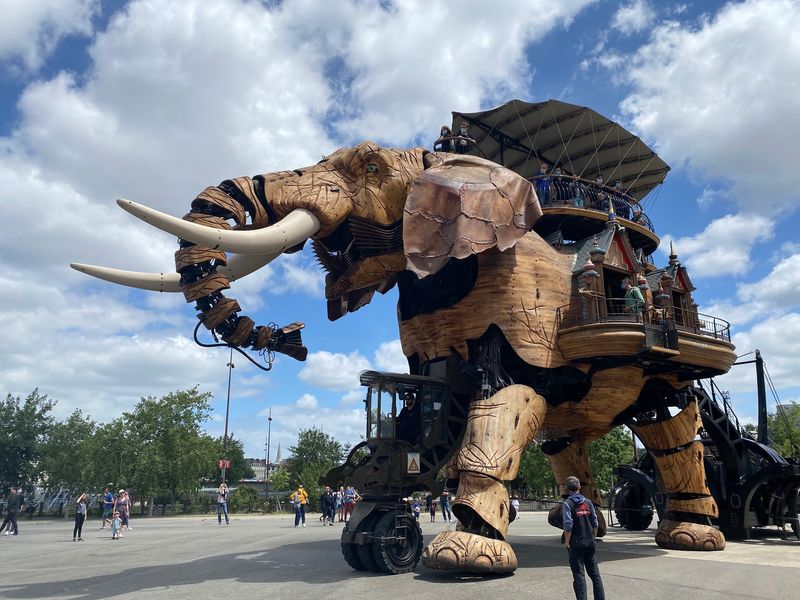
A 12-meter elephant stomps along the Nantes waterfront, flapping its ears and spraying water from its trunk. Passengers ride on its back like royalty.
This steel giant belongs to Les Machines de l’Île, an art project inspired partly by Jules Verne and the inventions of Leonardo da Vinci. It lives in a former shipyard, where the huge open spaces are perfect for building enormous machines.
Nearby, the Carrousel des Mondes Marins rises across three levels. Mechanical sea creatures turn and swim around it, and visitors can climb aboard and operate some of them.
Expect jellyfish, giant fish and other strange beasts.
The whole area feels like a steampunk workshop where machines act like animals. It is fun for kids and adults alike.
Check the elephant’s walking schedule before you go, since it does not roam all day. Arrive early to avoid lines for the rides.
Also take time to stroll the riverside, where old cranes and new art sit side by side.
Haus steht Kopf in Terfens, Austria
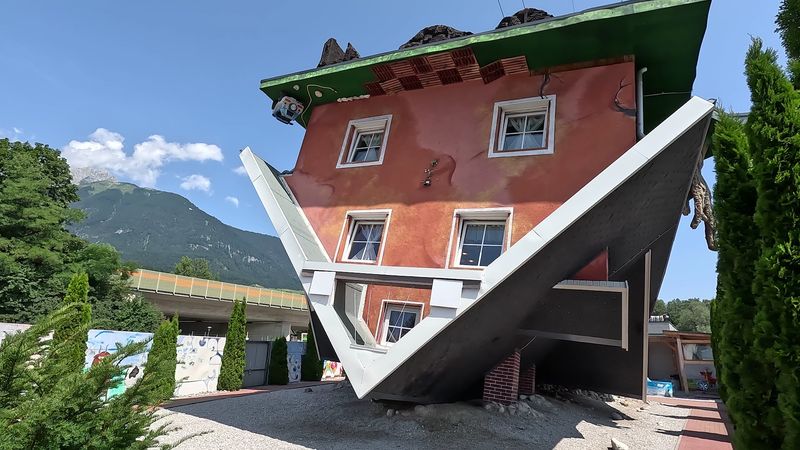
Something has clearly gone wrong with gravity in Terfens. A whole house stands on its roof, with its foundation pointing at the sky.
Haus steht Kopf, meaning House Stands on Its Head, is built upside down on purpose. Step inside and the fun continues.
Beds, tables, kitchen tools and even toilets are attached to the ceiling above you, or rather the floor, depending on how your brain is coping.
Many illusion rooms only work with clever camera angles. Here the building itself is truly constructed upside down, so the effect is real in person.
Walking through it can leave you a little dizzy, so take it slow.
The idea turns a boring suburban home into a giant puzzle for your senses. It makes a great stop for families with kids, who tend to love it.
Take photos from different spots to see how the illusion changes. Hold onto the handrails, and do not be surprised if you find yourself tilting your head the whole time.
CasAnus at the Verbeke Foundation in Belgium
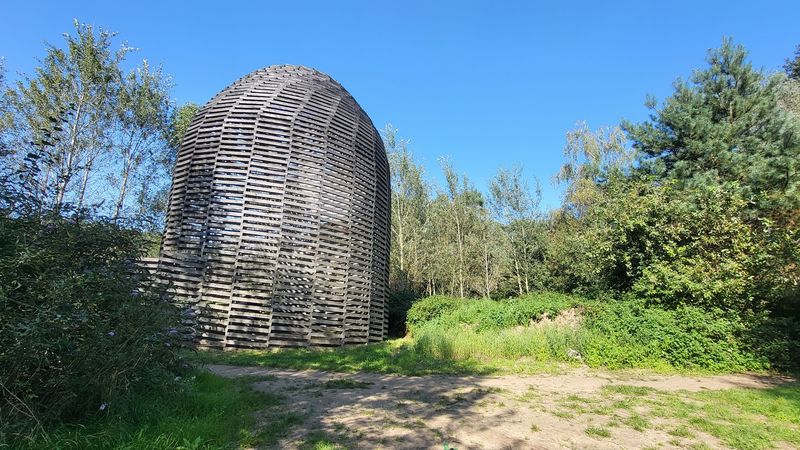
Booking a room here comes with a very unusual address. CasAnus is a huge sculpture shaped like part of the human digestive system, and you can sleep inside it.
Atelier Van Lieshout designed the piece, and its purpose is obvious from the opening at one end. Inside, windows and a working interior turn the giant artwork into real accommodation.
It is bold, cheeky and impossible to forget.
The setting adds to the oddness. It stands among experimental artworks and industrial structures at the Verbeke Foundation, a place known for unconventional contemporary art.
There is no fancy hotel lobby in sight.
Europe has plenty of quirky places to stay, from treehouses to old castles. Few can match a night inside a giant colon.
Check the foundation’s website for booking details and opening times before you plan a trip. Bring a sense of humor and an open mind.
At the very least, you will walk away with the best story from your whole vacation.
Popeye Village in Malta
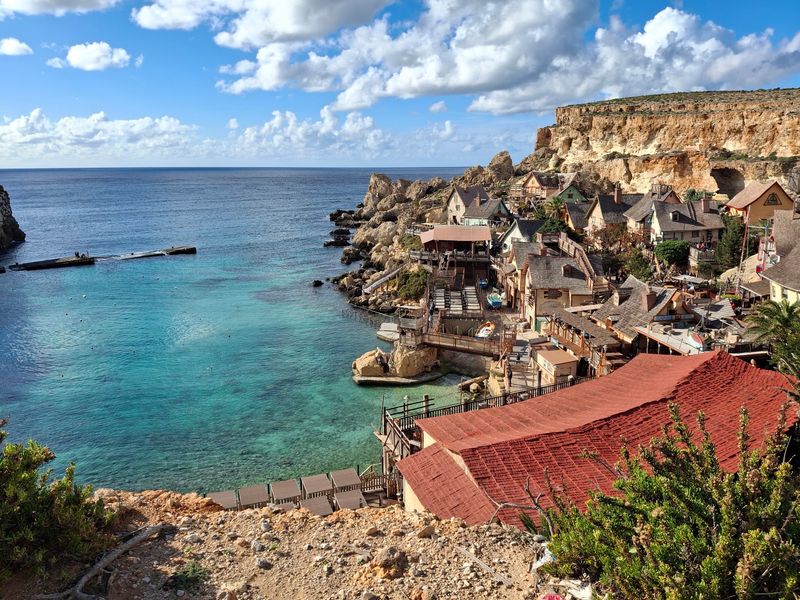
Ahoy, there is a cartoon fishing village hiding on the Maltese coast. Popeye Village started life as a movie set, not a real town.
Builders put up the crooked wooden houses at Anchor Bay for the 1980 musical Popeye, starring Robin Williams. When filming ended, Malta chose not to tear it down.
Instead, the island slowly turned it into a visitor attraction.
The brightly painted buildings cling to the rocky shore above deep blue water, which makes the whole scene look like a drawing come to life. Visitors can wander through the old sets, watch live shows and spot props from the film.
Most movie sets vanish within months, so a full village surviving for decades is a rare treat. Wear sturdy shoes, since the paths can be steep and uneven.
Bring swimwear if you like, because the bay is lovely on a hot day. Kids especially enjoy the playful atmosphere, and adults get a fun dose of movie history too.
Share this story