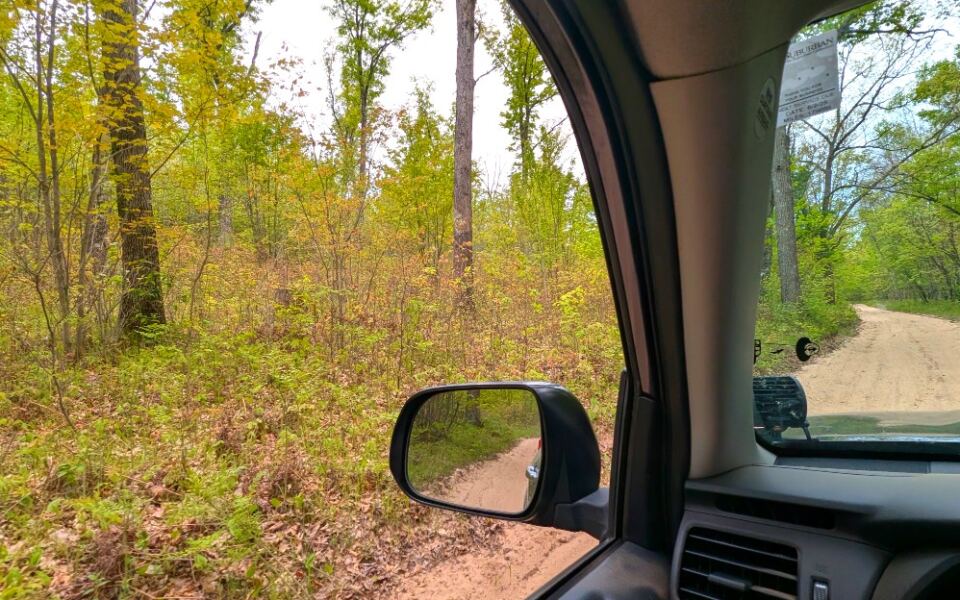
A simple dirt parking lot in northern Michigan leads to more than 17 miles of off-road adventure through forests, sandy hills, and rugged trails. Jeeps, ATVs, and side-by-sides can tackle the main ORV loop, while dirt bike riders have a separate 20-mile motorcycle trail to explore.
This isn’t a developed adventure park with expensive attractions or a long list of amenities. There’s a basic vault toilet, space for trailers, and direct access to trails where deep sand, rolling bumps, and occasional muddy sections keep drivers on their toes.
Some riders come to test their four-wheel-drive skills, while others simply want a few hours away from paved roads.
What makes this spot interesting is the variety of experiences packed into one forest trail system. Beginners can find manageable stretches, while more experienced riders have hills, sandy sections, and changing trail conditions to navigate.
There’s even a mud hole that has earned a reputation among visitors, although its condition depends on recent weather.
Before heading out, it helps to know which route fits your vehicle, what permits are required, and why arriving early can make a big difference on busy weekends.
Where the Sand Road Starts
Tin Cup ORV Trailhead sits along S Kings Hwy in Luther, Michigan 49656, in the United States. It serves as a launch point for a network of off-road vehicle trails in the forests of Lake County.
The Michigan Department of Natural Resources lists it among the state’s ORV riding areas. That matters, because it means the trails are part of an official system with rules, signs, and stickers.
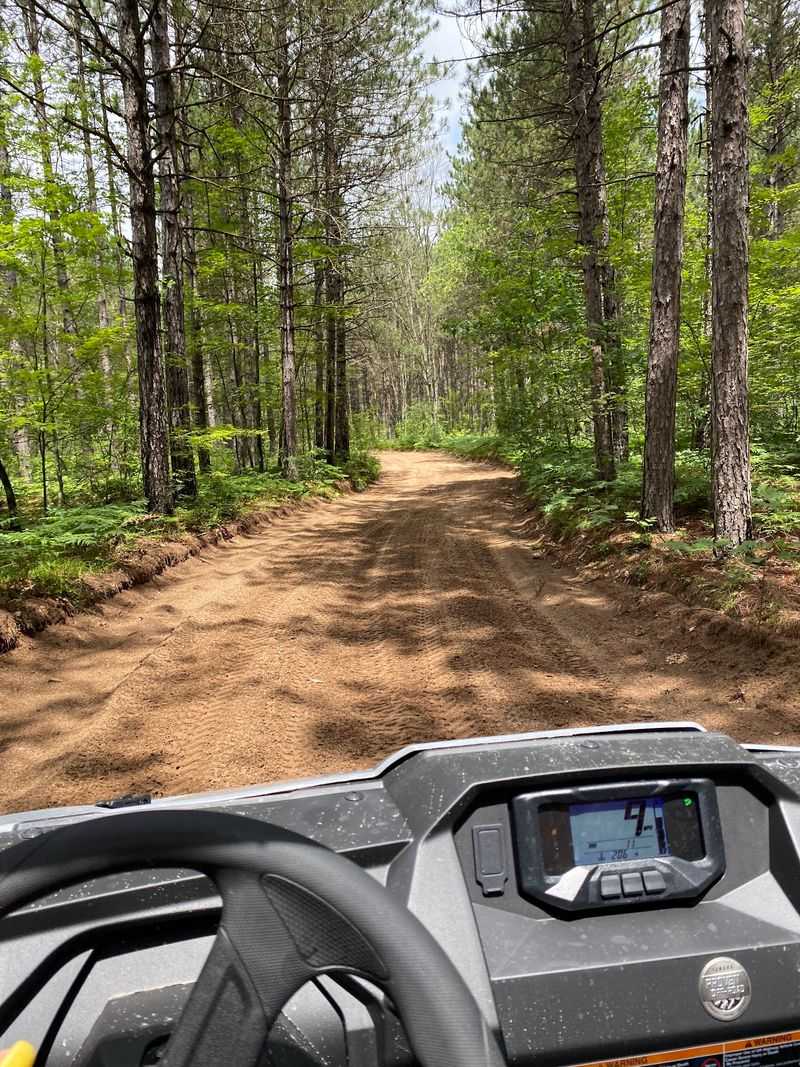
Two main routes start from this area. One is an ORV loop open to wider machines like side-by-sides, ATVs, and full-size four-wheel-drive vehicles.
The other is a single track loop designed for motorcycles.
Luther is a small town, so the trailhead feels far from busy highways. Riders come here for sand, hills, and long stretches of forest rather than city comforts.
I find the setup refreshing. You park, unload, check your gear, and the trail begins almost right away.
Before heading out, it helps to understand which loop fits your machine. That choice shapes your whole day, and the two routes ride very differently.
Two Loops, Two Personalities
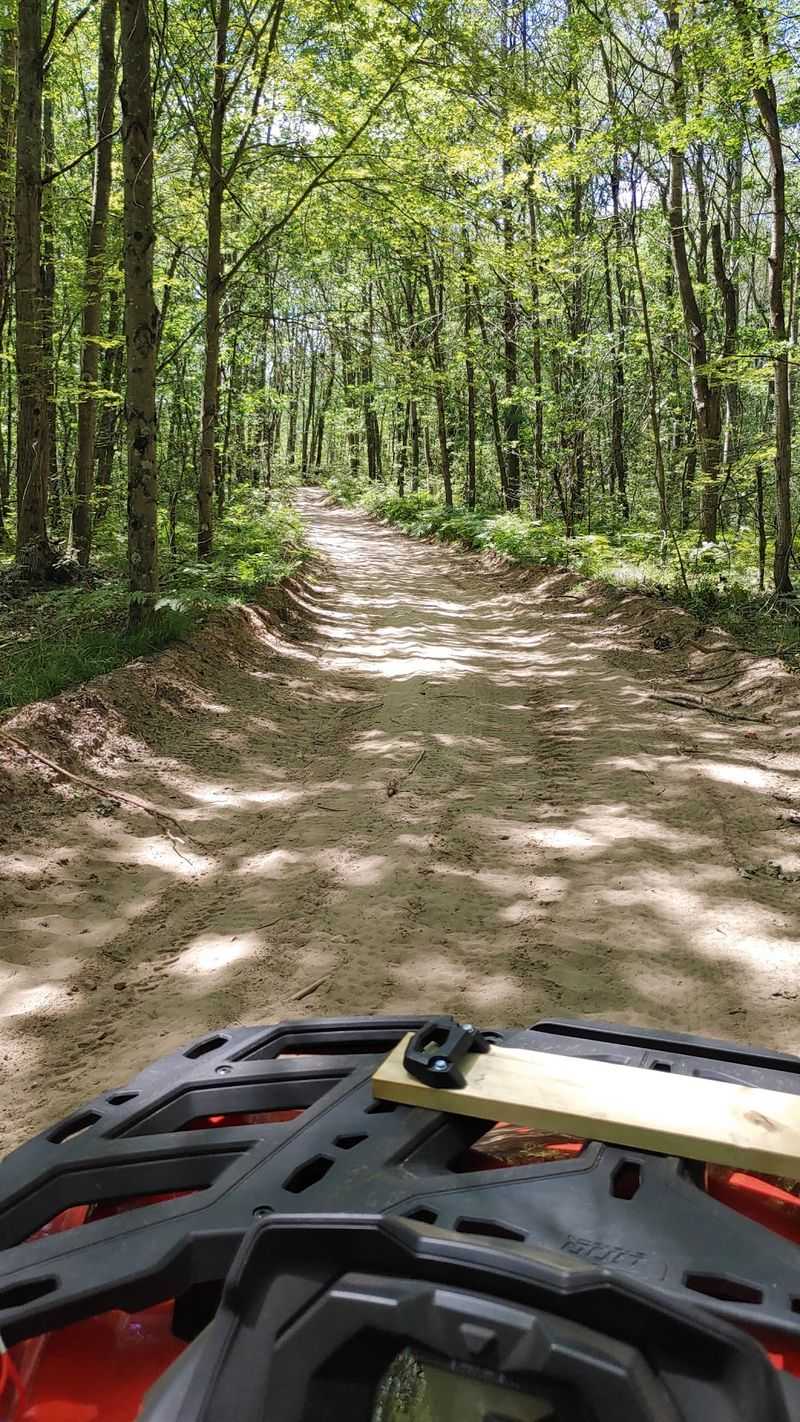
Picking a route at Tin Cup comes down to width. The ORV loop handles bigger machines, while the single track stays narrow and is meant for dirt bikes only.
Riders often describe the ORV loop as heavy on sand. Expect long sandy stretches, rolling whoops, and some elevation change through the trees.
Distance estimates vary depending on who measures it. One rider clocked the ORV route at just over 16 miles.
Others call it a few hours of steady driving with breaks.
The motorcycle single track runs longer, around 21 to 22 miles by rider estimates. It winds through rocks, roots, hills, and the occasional fallen tree.
Dirt bikers do have to use a short stretch of the ORV trail to complete their loop. That section can be busy, and its deep sand can feel tough on two wheels.
Knowing these differences ahead of time saves frustration. A full-size Jeep simply doesn’t belong on a path built for a motorcycle, and the rules reflect that.
Sand Is the Main Character
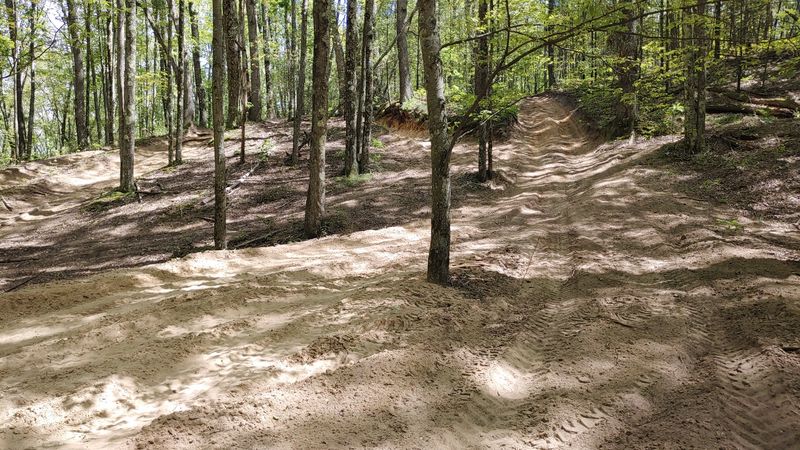
Northern Michigan sand shows up everywhere on this trail. It’s soft, deep in places, and it changes how every vehicle handles.
Plenty of riders mention deep sand on the ORV loop. Some even saw it poking through snow during colder months.
Sand rewards smooth throttle control. Spinning tires tend to dig in, so a steady pace usually works better than bursts of speed.
One dirt biker suggested letting some air out of tires to manage the deep sections. Lower pressure can help a tire float instead of sinking.
Four-wheel-drive owners should know their vehicle’s settings before arriving. Switching modes mid-trail is fine, but learning them in the parking lot is easier.
Sand also creates whoops, those repeated bumps formed by traffic. They can be fun at first, and a little tiring after many miles.
I’d plan for a slower average speed than a map suggests. Sand eats time, and the whoops make sure you feel every mile in your arms.
The Mud Hole With a Reputation
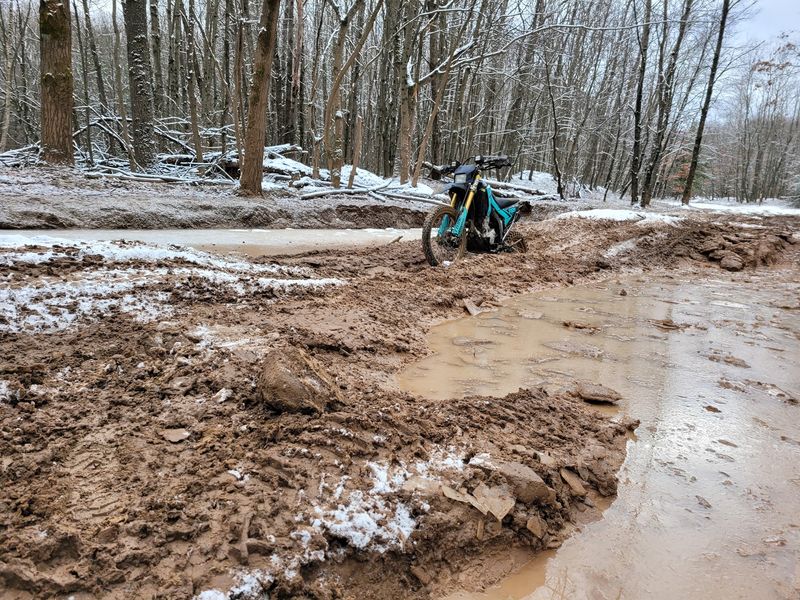
Every trail needs a spot people talk about later. At Tin Cup, that spot is the mud hole on the ORV loop.
Riders describe it as decent-sized. One suggested it as a good place to test a winch, or to settle friendly arguments about whose side-by-side performs better.
Conditions change with the seasons and weather. One rider in late March reported only a couple of small muddy spots, while another said recent trips had no large holes at all.
That variability matters for planning. After heavy rain, expect more mud.
During dry spells, the hole may barely slow anyone down.
If you plan to go through, bring recovery gear. A tow strap, gloves, and a shovel take little space and can turn a stuck vehicle into a short delay.
Riding with a buddy also helps. Two vehicles beat one when mud gets serious.
Not everyone needs to splash through. Skipping it is a perfectly reasonable choice, especially for beginners still learning how their machine behaves.
Single Track Built for Two Wheels
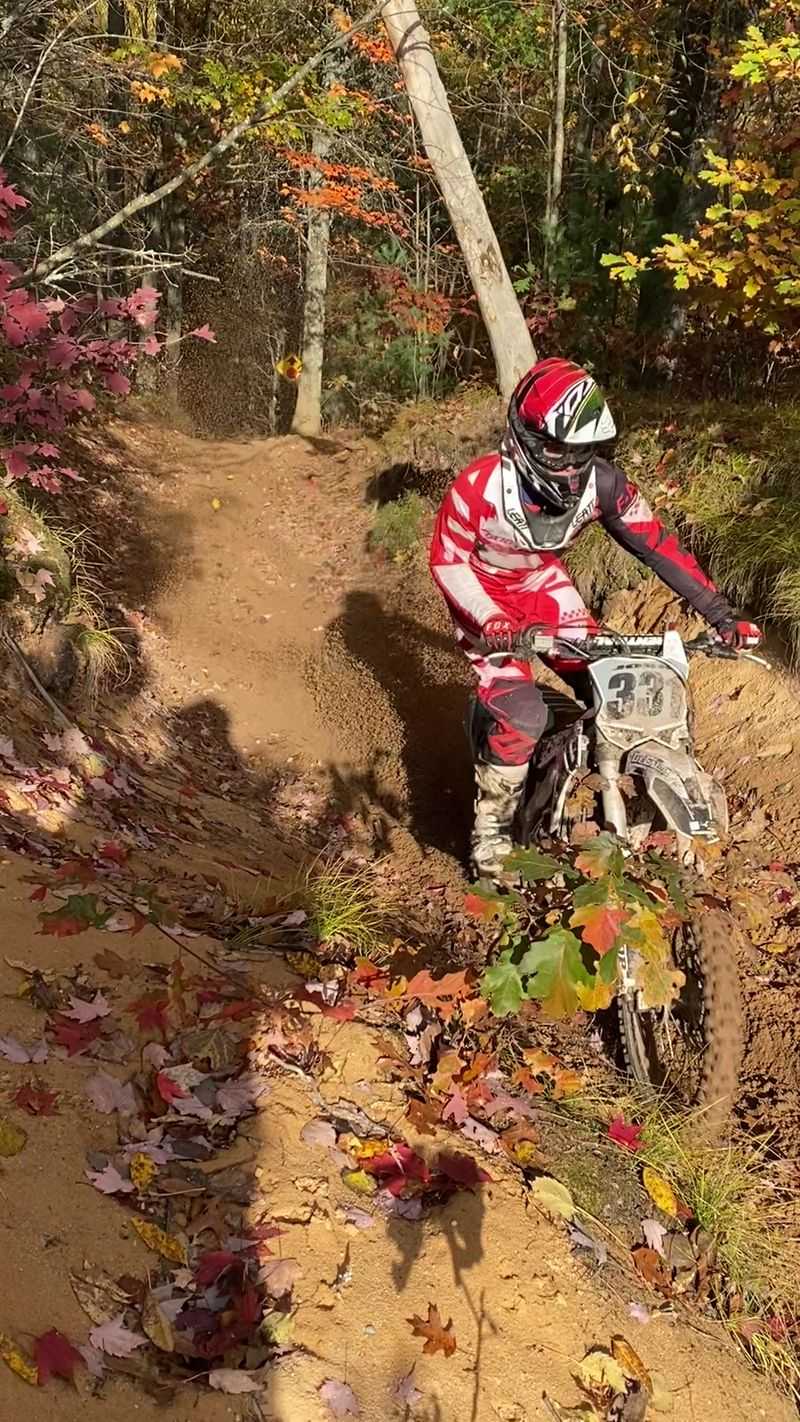
Motorcyclists get their own playground here. The single track loop is reserved for dirt bikes, so riders don’t share it with wide machines.
Rider reports describe a mix of obstacles. Rocks, roots, hill climbs, berms, puddles, and fallen trees all appear along the route.
Several riders said the trail isn’t overly tight. One felt it moves a little faster than some other Michigan motorcycle trails.
At roughly 21 miles, the loop is short enough that some riders go around twice in one day. That flexibility makes it handy for both quick visits and longer outings.
Berms on the corners give riders a chance to carry speed. Whoops add rhythm, though they can wear you down over time.
Riders should pace themselves early. Saving energy for the second half keeps the final miles fun instead of exhausting.
I like that one loop can stretch a newer rider and still keep experienced riders busy. The terrain mix is the reason, and it changes noticeably from section to section.
A Friendly Place for First-Timers
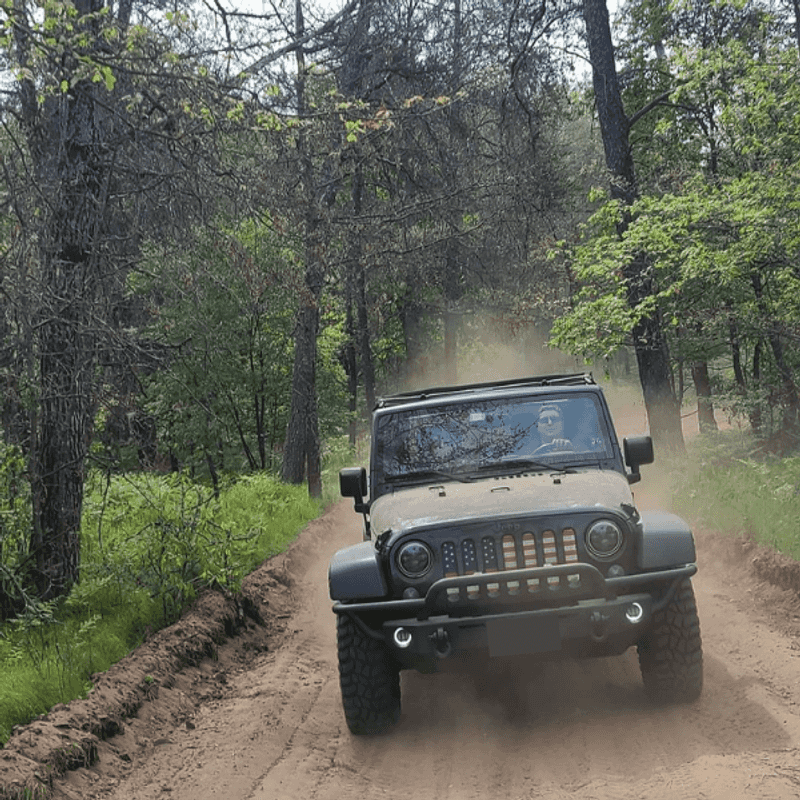
Nervous about your first off-road trip? This trailhead gets mentioned often by people who were brand new to the hobby.
One rider took a Jeep off-road for the first time here and found it manageable. Another recommended the trail especially for people just starting out.
The appeal comes from balance. There’s enough sand and elevation to feel exciting, without the constant extreme obstacles found at tougher parks.
Beginners should still prepare. Learn your four-wheel-drive system, carry water, and tell someone your plans before heading into the forest.
Going slow is always allowed. The trail isn’t a race, and taking time to stop helps you learn how your vehicle handles sand and bumps.
Experienced drivers find enough here too. Hills, mud, and whoops keep longer-time riders entertained.
I’d suggest beginners try the ORV loop first in a stock vehicle. Once comfortable, they can explore the forest’s other roads, which open up even more options for the curious.
Side Roads Worth a Look
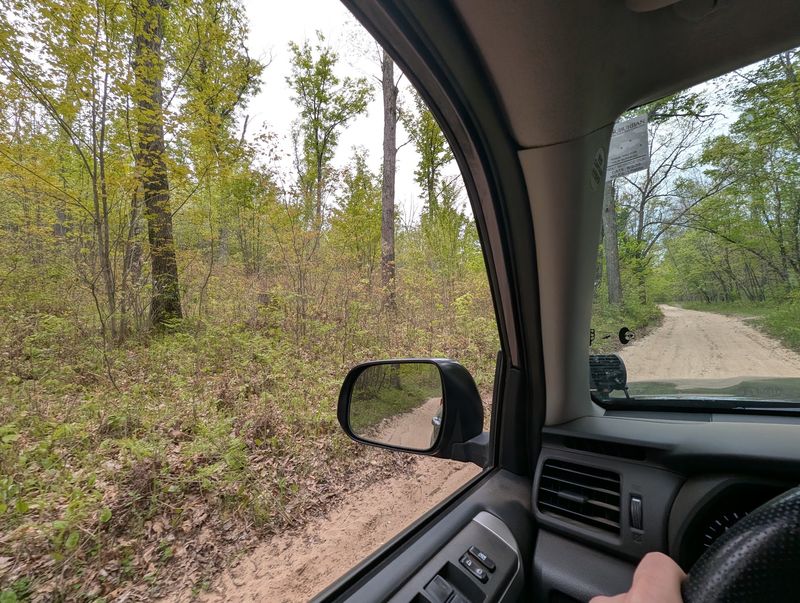
Explorers love a branching path. Beyond the main loops, riders mention DNR service trails, logging roads, and two-tracks in the surrounding forest.
Some riders say you can spend hours on the main trail and then dip into other routes nearby. That gives repeat visitors something new to find.
Rules depend on your vehicle, though. Street-licensed vehicles may have more access to forest roads than unplated ORVs, and the rules differ by road.
Before wandering, check the current DNR guidance and any posted signs. Getting a ticket or damaging closed land spoils a good day fast.
A downloaded map helps, since cell service in rural forest areas can be unreliable. Paper maps never run out of battery.
Fuel matters too. Exploring side roads adds miles quickly, so start with a full tank and know your range.
I find this freedom part of the appeal. A well-marked loop for structure, with side routes for curiosity, makes each visit feel a bit different.
Stickers, Rules, and Two-Way Traffic
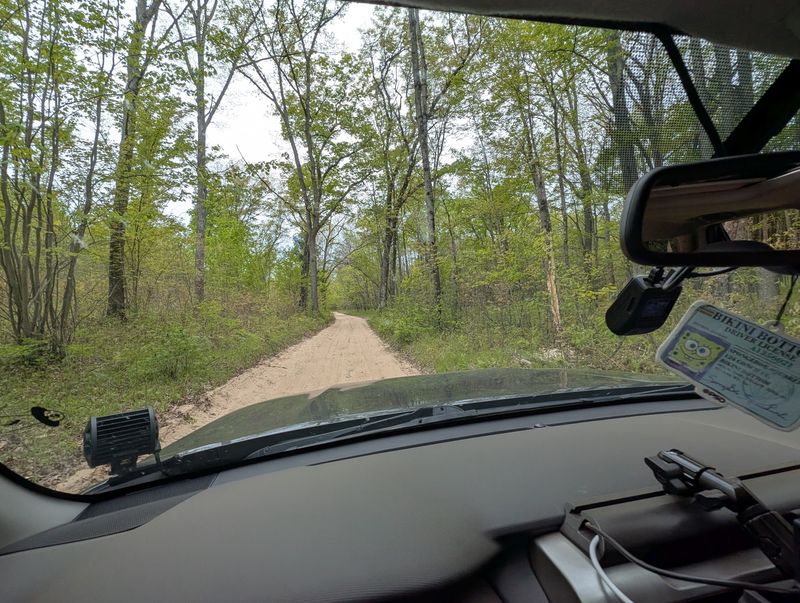
Paperwork isn’t exciting, but it keeps the trails open. Michigan requires ORV licenses and trail permits for off-road vehicles using state trail systems.
One rider noted that dirt bikes on the single track don’t need license plates, just the ORV and trail stickers. Check current DNR rules before riding, since requirements can change.
Traffic flow deserves attention too. A recent rider warned about two-way traffic on the route, which means oncoming vehicles can appear around blind corners.
Staying right and keeping speeds reasonable reduces surprises. Headlights help others spot you in shaded forest stretches.
Helmets and protective gear make sense for every rider. Trees, roots, and sand don’t forgive many mistakes.
Courtesy goes a long way. Pull over to let faster riders pass, and give dirt bikes space on the shared ORV section.
Fallen trees sometimes block the trail after storms. One spring rider stopped several times to cut and clear the path, so a small saw can be useful.
Fall Color and Forest Views
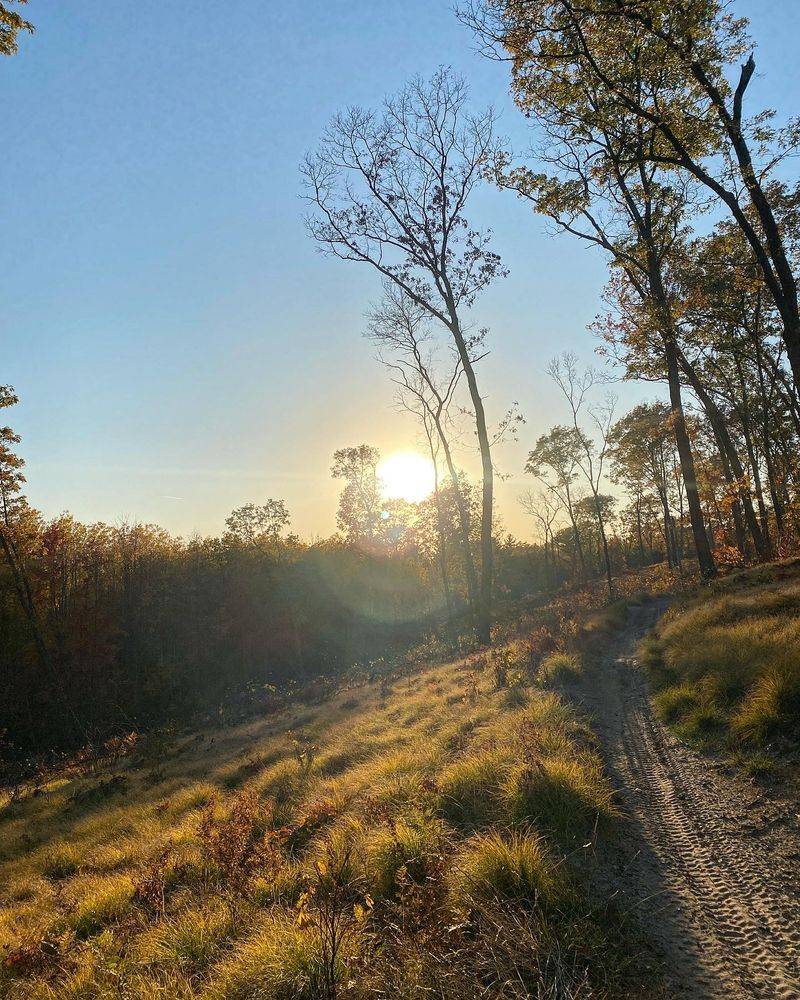
October changes the mood of this forest. Riders have described the fall views as a highlight, with color filling the woods along the trail.
Autumn also brings crowds. One rider visited on the last nice weekend of October and found many people out enjoying the trails.
Winter offers a quieter look. Riders have gone out in cold weather and seen sand pushing through patches of snow.
Spring can bring fallen trees and lingering moisture. Even so, one late March rider reported good overall conditions with only small muddy spots.
Wildlife sightings come up in rider stories as well. Keep speeds sensible so you have time to react if an animal crosses.
Each season changes the riding. Summer sand can be loose and dry, while wet months may firm it up.
I’d pick early fall for the scenery. Just know that popular weekends draw company, which brings us to the question of timing your arrival.
Early Starts and a Simple Lot
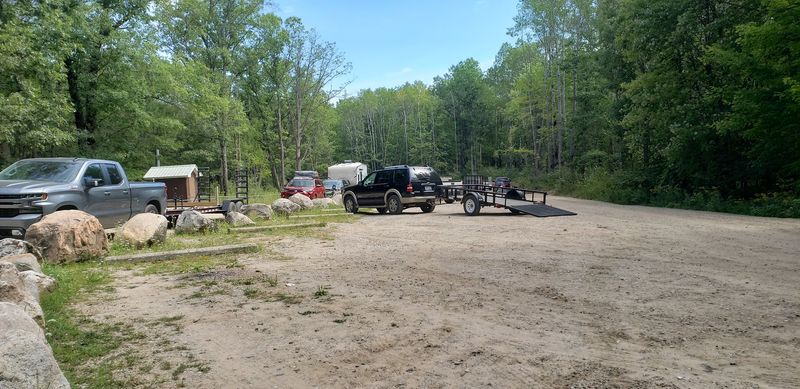
Timing can shape your day here. One rider noted midday weekends and holidays get crowded, and recommended arriving early for lighter traffic.
Another rider felt Tin Cup is usually less busy than the M-20 area. That’s useful for anyone wanting more elbow room.
The parking area is a basic dirt lot. Riders mention long spots that fit trailers, which makes unloading easier.
Amenities are minimal. Expect a vault toilet and not much else, so pack water, snacks, and anything else you need.
A full loop can take a few hours. One group spent three to four hours of easy driving, including a relaxed lunch.
Trash goes home with you. Keeping the lot clean helps everyone who arrives after.
I like how unfussy this place is. Sand, trees, a parking lot, and miles of trail make the plan simple, and for many riders that simplicity is exactly why Tin Cup ends up on the calendar again.
Share this story