Macarons get all the fame, with their pastel colors and fancy gift boxes. Yet France has a whole lineup of regional cakes that most visitors never hear about.
Some were invented by bakers in small fishing towns. Others are tied to old festivals, famous movie stars, or family recipes guarded for more than a century.
One cake is baked on a spinning spit beside an open fire. Another is cracked apart with a fist before anyone takes a bite.
A few look plain on the outside, but each one carries a story about the place where it was born. In this list, you will travel from the windy coast of Brittany to the mountain villages of the Ardeche, with stops in sunny Provence and old Alsatian streets.
For every cake, you will learn where it comes from, what goes into it, and which bakery keeps the tradition going today. Think of it as a sweet road map for your next trip, or at least a good excuse to plan one.
Keep reading, because the first stop is a cake that treats butter as the main event.
1. Kouign-Amann, Boulangerie des Plomarc’h, Douarnenez, Brittany
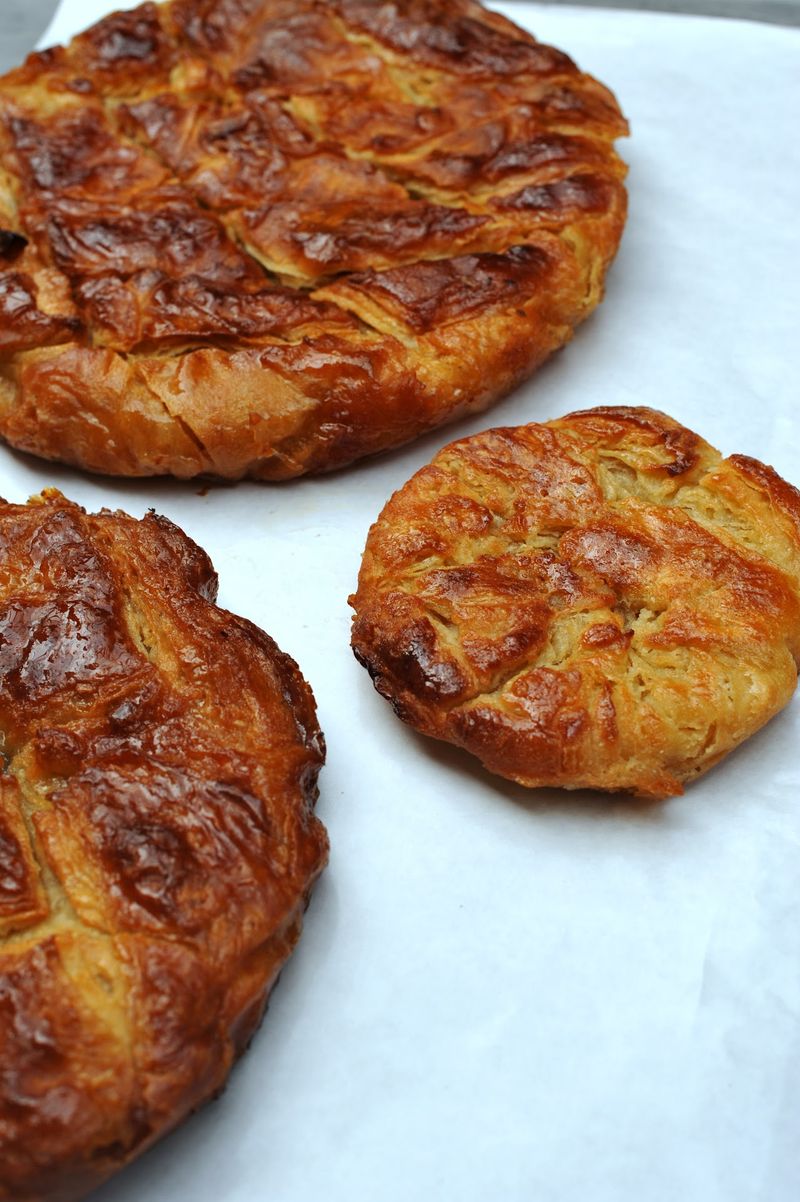
The name says it all, since kouign-amann means butter cake in the Breton language. Baker Yves-Rene Scordia is credited with creating it in Douarnenez around 1860.
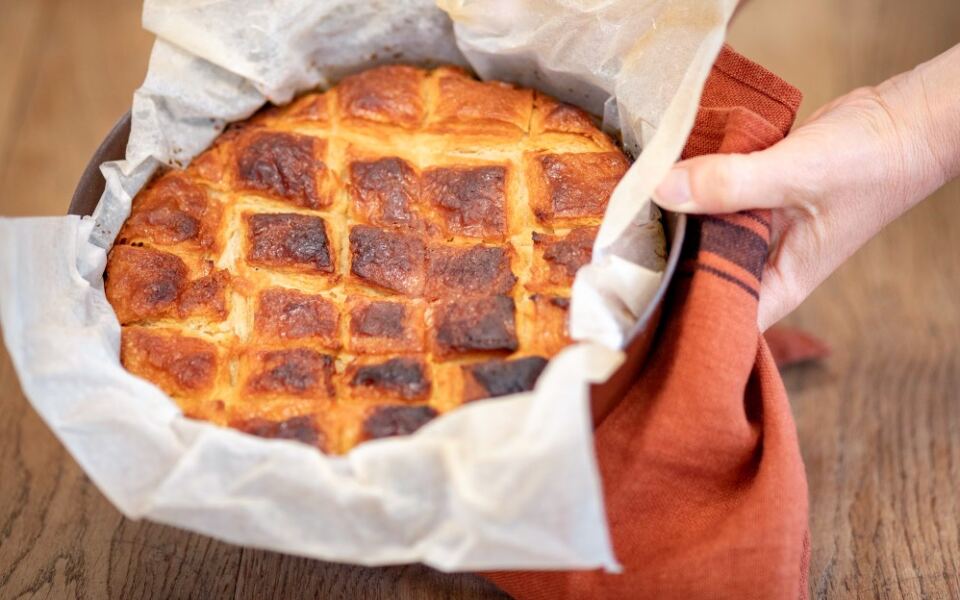
The recipe uses just three main ingredients: bread dough, salted butter, and sugar. Bakers fold and turn the layers again and again, a method called tourage.
During slow baking, the sugar caramelizes into a crisp golden top while the inside stays soft. It is rich, so one slice goes a long way.
Boulangerie des Plomarc’h, at 20 Rue des Plomarc’h, is a local favorite run by Thierry Lucas. Many regulars call its version one of the best in Brittany.
Curious eaters can also try a version made with buckwheat flour, known locally as ble noir. The bakery sells gateau breton too, including a buckwheat chocolate chip twist.
Tip: ask for a warm piece, then take it down to the harbor for a slow stroll.
2. Gâteau Basque, Maison Pariès, Saint-Jean-de-Luz, Nouvelle-Aquitaine
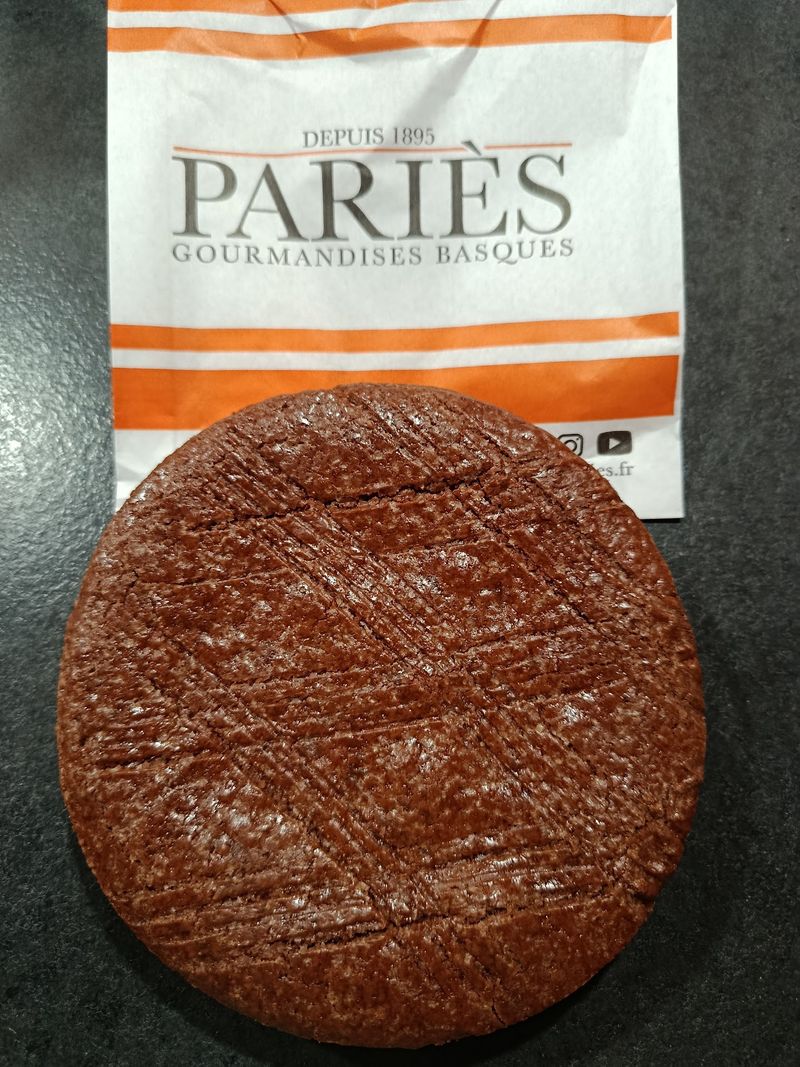
Here is a secret code baked right into the crust. A Basque cross on top usually means black cherry jam inside, while a crosshatch pattern signals pastry cream.
Gateau basque started in Cambo-les-Bains in the 1700s as a plain house biscuit with no filling at all. In the early 1800s, pastry chef Marianne Hirigoyen began selling filled versions, and the idea caught on fast.
The base is a buttery shortcrust that bakes up firm and golden. It travels well, which makes it a smart souvenir.
Maison Paries has baked its version since 1938, though the family business began in Bayonne as a chocolate maker in 1895. Recipes have passed through five generations.
The shop on Rue Leon Gambetta sells the classic cherry and cream flavors. Bolder buyers can pick chocolate, citrus, or hazelnut, and the hazelnut one won the Prix Epicure d’Or in 2025.
3. Gâteau Nantais, Maison Juhel, Nantes, Pays de la Loire
Some cakes come with a passport stamp. Gateau nantais grew out of the 1700s and 1800s, when ships brought sugar and almonds into the busy port of Nantes.
One story credits a local baker named Rouleau with inventing it around 1820. The famous LU biscuit company later helped bring it back into fashion.
Locals once called it the traveler’s cake because it stays fresh for days. Bakers often let it rest a full day before serving, which helps the flavors settle in.
The recipe is short: flour, sugar, salted butter, eggs, and ground almonds. A smooth white glaze covers the top, and some modern versions add a thin layer of apricot jam underneath.
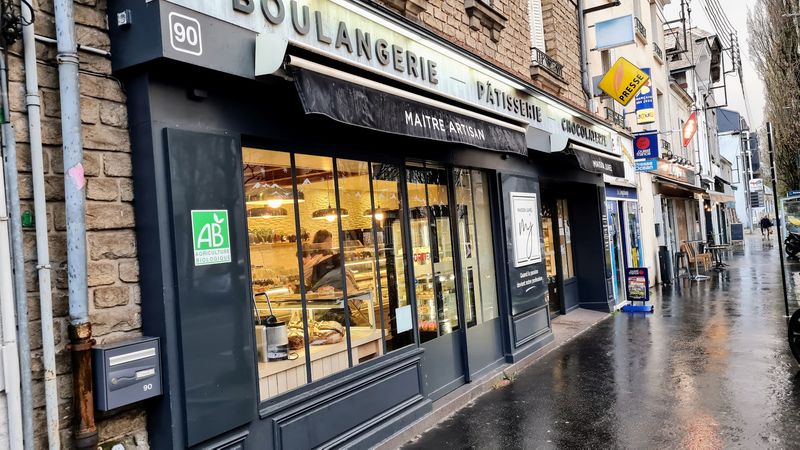
Maison Juhel, at 90 Boulevard Robert Schuman, won first prize in the city’s gateau nantais contest in 2022. Baker Fabien Juhel sells both single portions and full-size cakes for sharing.
4. Tarte Tropézienne, La Tarte Tropézienne, Saint-Tropez, Provence-Alpes-Côte d’Azur
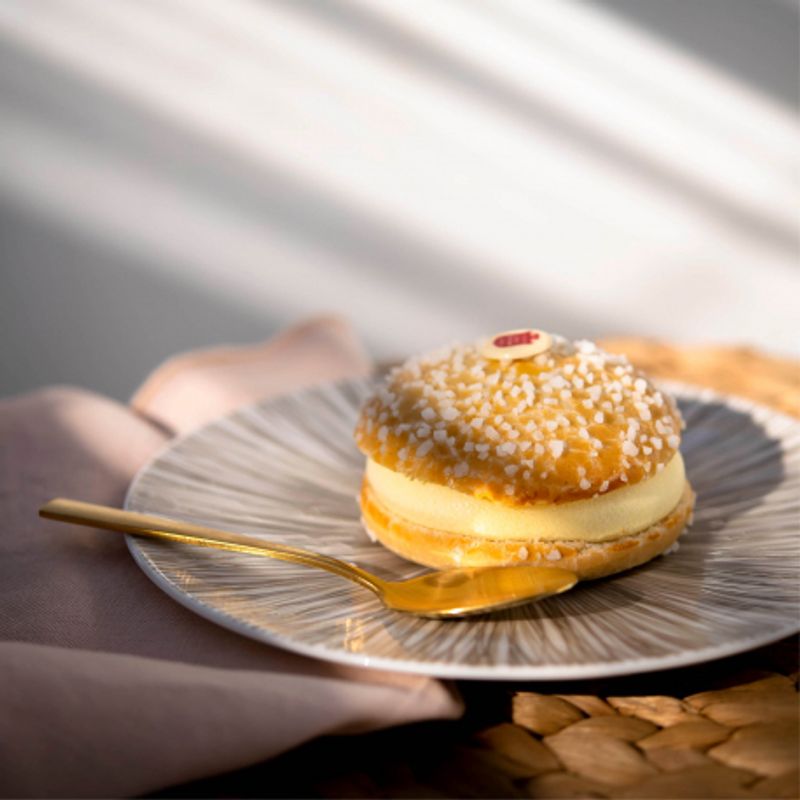
A movie star named this cake, and that is not a marketing trick. In 1955, Brigitte Bardot was filming near Saint-Tropez when she tasted a cream-filled brioche from a local baker.
That baker was Alexandre Micka, who had moved from Poland and used his grandmother’s recipe. Bardot suggested the name La Tarte Tropezienne, and both she and the cake became famous.
Micka registered the brand in 1973, and the exact recipe is still a secret. What we do know is the basic build: soft brioche, a thick layer of mixed creams, and a sprinkle of pearl sugar.
The flagship shop on Boulevard Vasserot keeps the original front and center. Creams are made fresh every day in a kitchen in nearby Cogolin.
Short on appetite? Grab a Baby Trop, the mini version, which also comes in chocolate, raspberry, or Menton lemon.
Serve it chilled for best results.
5. Fénétra, Pâtisserie Conté, Toulouse, Occitanie
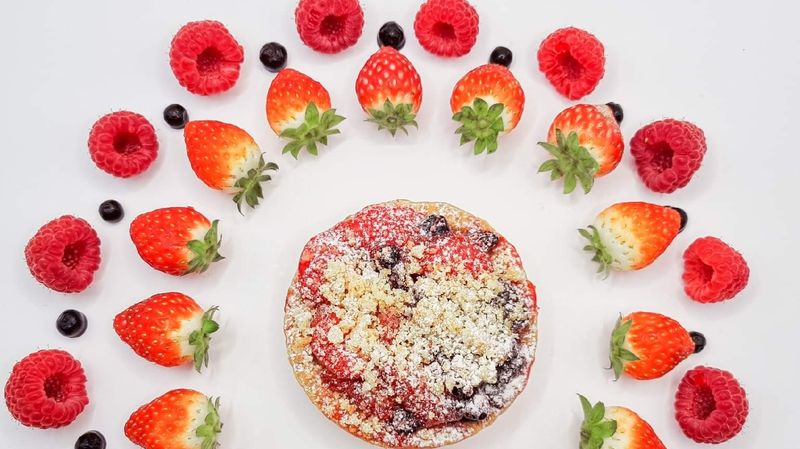
Plenty of people in Toulouse have never tasted their own city’s signature cake. Fenetra is often better known to tourists holding guidebooks than to locals.
The name comes from an old spring festival dating back to Roman times, when people shared dried fruits and nuts. Over the centuries, the festival name slowly changed into Fenetra.
In 1970, the city held a contest to choose an official cake. Pastry chef Christian Lacoste won with a recipe built to travel well and last several days.
The layers are easy to spot. A sweet pastry base holds apricot jam and bits of candied lemon, and a thin almond meringue called succes sits on top.
Patisserie Conte, at 37 Rue Croix Baragnon, opened in 1938 and is now run by its fourth generation. It doubles as a tea room, so you can sit down and try a slice before buying a whole cake.
6. Broyé du Poitou, Goulibeur, Poitiers, Nouvelle-Aquitaine
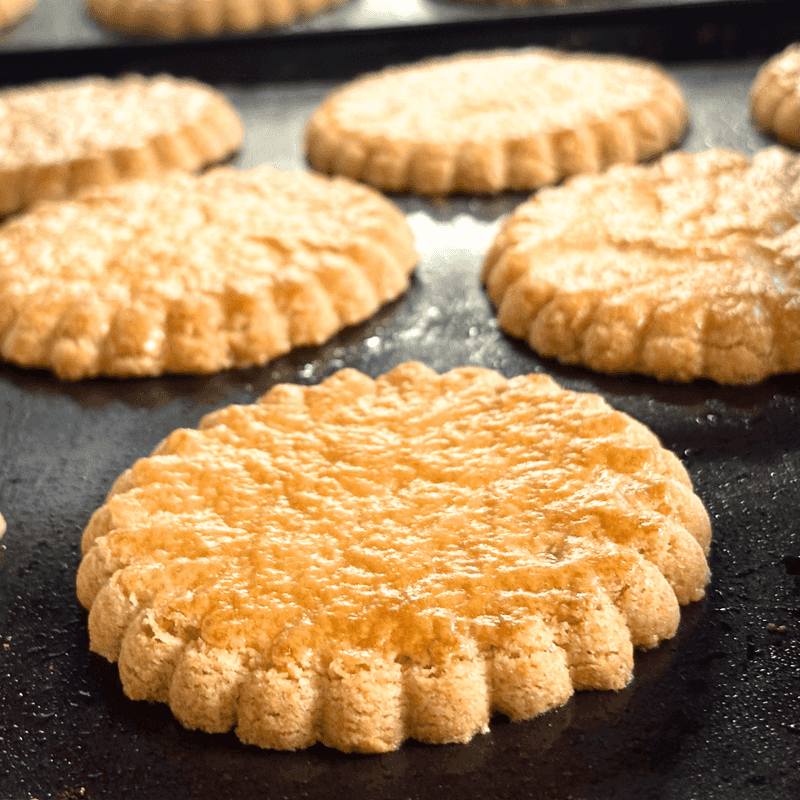
Knives are optional here. Tradition says someone at the table should give this cake a firm tap with a fist, right in the middle.
Broye comes from the French word for crush or break. The big round shortbread shatters into uneven pieces that everyone grabs and shares.
In the Poitou countryside, it showed up at weddings, baptisms, and harvest parties. The breaking part is still the highlight for kids and adults alike.
The ingredient list stays simple: flour, plenty of butter, sugar, eggs, and a pinch of sea salt. A fork pattern often decorates the shiny golden top.
Goulibeur has made broye since 1976, using a recipe founder Brigitte Arnaud-Boue got from her grandmother Paulette. In 2016, the company earned the Living Heritage Company label.
The factory boutique near the A10 highway in Poitiers opens Monday through Friday. Gift tins there make easy souvenirs for friends back home.
7. Gâteau à la Broche, Broche et Gourmandises, Tournemire, Occitanie
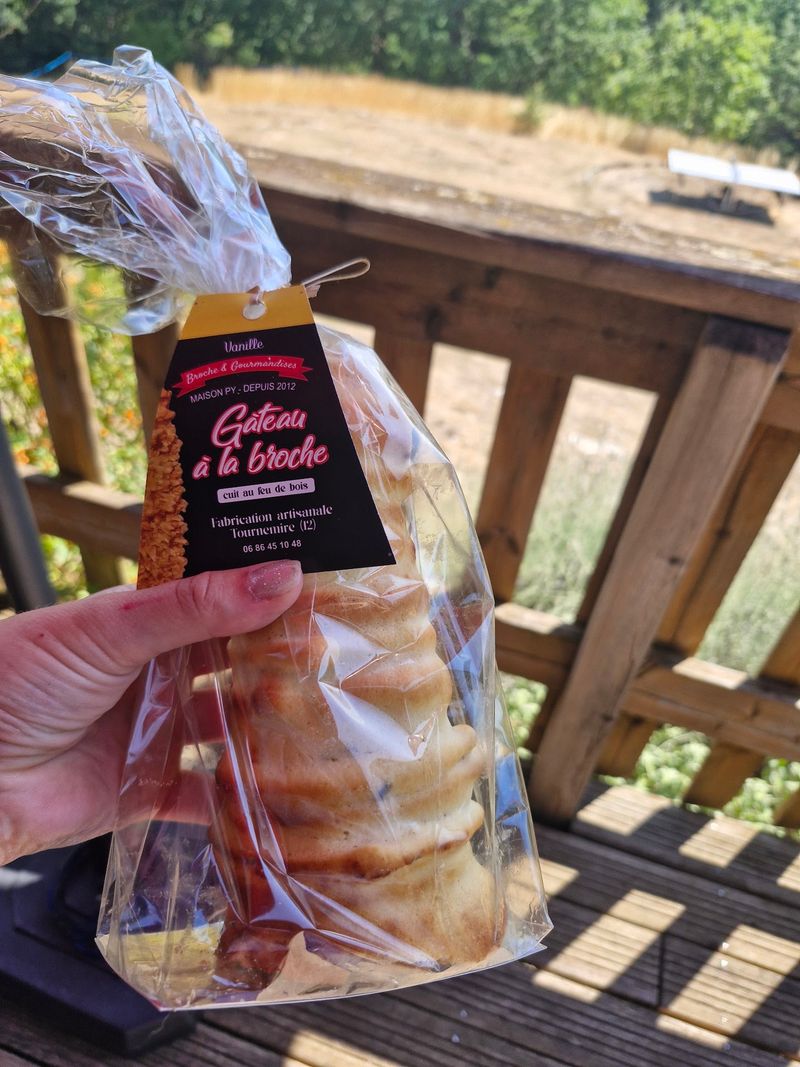
Patience is the secret ingredient in a cake that can take up to five hours to make. Gateau a la broche is baked on a spinning cone set in front of an open fire.
Bakers pour thin batter over the turning cone, layer after layer. Drips harden into the spiky ridges that make it look like a tiny mountain.
Slice it open, and you will see thin rings, a bit like a tree trunk. Germany has a cousin called Baumkuchen.
Some say Napoleon’s soldiers brought the method back from Eastern Europe in 1812. Others point to a Prussian royal pastry chef in the 1790s.
In Aveyron, families serve it at weddings, baptisms, and Christmas. Many pair it with a custard dessert.
At Broche et Gourmandises in Tournemire, the Py family uses a recipe from their grandparents. Visitors can watch the baking up close and join a tasting.
8. Kougelhopf, Pâtisserie Buhler, Strasbourg, Grand Est
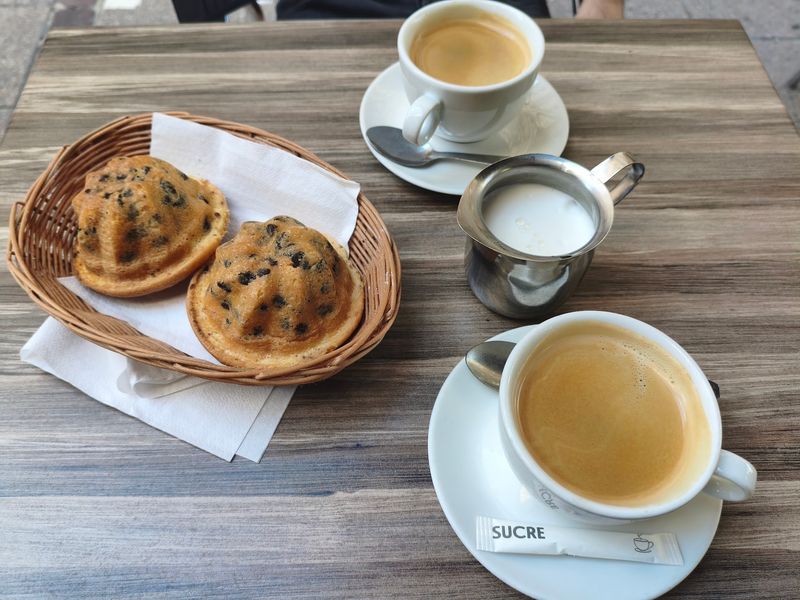
Spot a tall cake with swirled ridges and a hole in the middle anywhere in Alsace, and you have found a kougelhopf. The shape is so famous that the molds themselves are sold as souvenirs.
Those molds are traditionally made of clay or metal. They give the cake its wavy sides and give bakers a reason to show off.
Unlike many cakes, kougelhopf rises with yeast, so it sits somewhere between bread and dessert. Raisins mix through the dough, and whole almonds often line the top.
Ring cakes appear across Central Europe, but Alsace has made this version its own. Locals eat it at breakfast, at Sunday brunch, or with afternoon coffee.
Patisserie Buhler calls itself La Maison du Kougelhopf, and the name tells you its focus. The shop on Rue du Dome sits steps from the cathedral.
Grab one on your way through the old town’s food shops.
9. Gâteau Breton, Biscuiterie Philippe, Quimper, Brittany
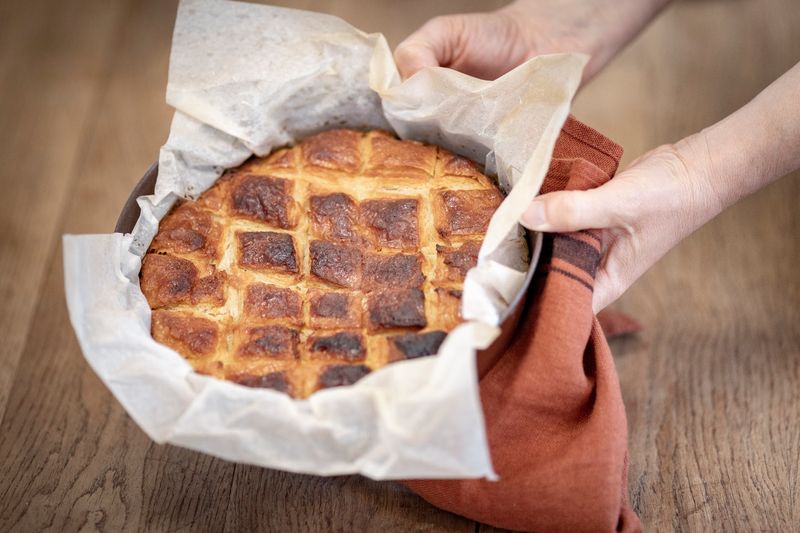
Short ingredient lists can still pack a punch. Gateau breton relies on butter, sugar, flour, and egg yolks, and that is about it.
The result is dense and golden, closer to a thick shortbread than a fluffy sponge. A crosshatch pattern pressed into the top makes it easy to recognize.
Breton families have baked it for holidays and gatherings for generations. Because it is so sturdy, it rarely breaks in a suitcase.
That makes it one of the smartest edible souvenirs in this whole list. Cream pastries would never survive the flight home.
At Biscuiterie Philippe in Quimper, you can pick up the classic plain cake. Shoppers who like a surprise inside can choose filled versions with prunes or caramel.
Buy a small one to snack on in town and a bigger one to carry home. Wrapped well, it stays good for several days, so friends will still get their slice.
10. Far Breton, Biscuiterie de Quimper, Quimper, Brittany
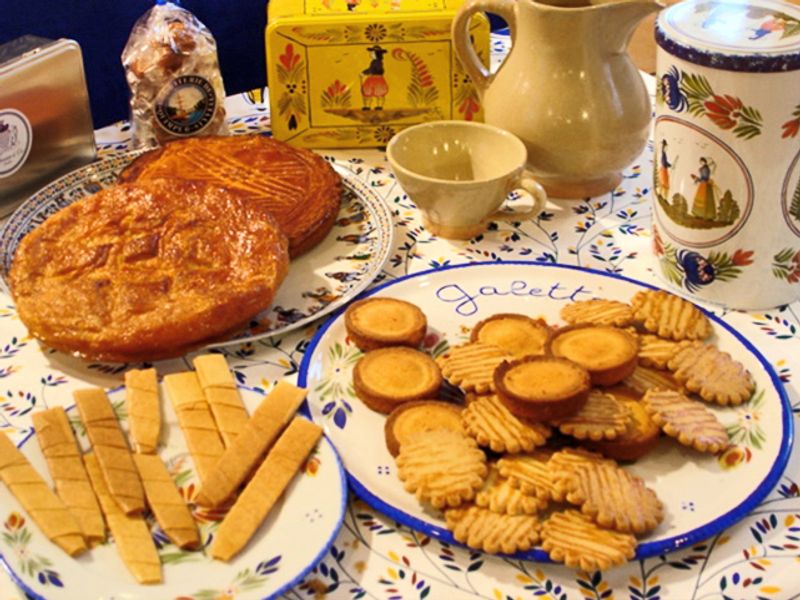
Is it a cake or a custard? Far breton happily refuses to pick a side.
The batter is close to what you would use for crepes: milk, eggs, flour, and sugar. Baked in a dish, it sets firm enough to cut into squares while staying soft in the middle.
The most famous version adds prunes, which sink into the batter during baking. Some bakers use raisins, and others leave it plain.
Far breton started as a farmhouse dessert made from what Breton families already had in the kitchen. It is still a common sight in homes and bakeries across the region.
Biscuiterie de Quimper sits in the Locmaria district, an old part of town known for its pottery. The shop carries many Breton sweets under one roof.
That setup is perfect for a homemade taste test. Buy far breton, gateau breton, and a few butter biscuits, then pick your own winner.
11. Canelé, Baillardran, Bordeaux, Nouvelle-Aquitaine
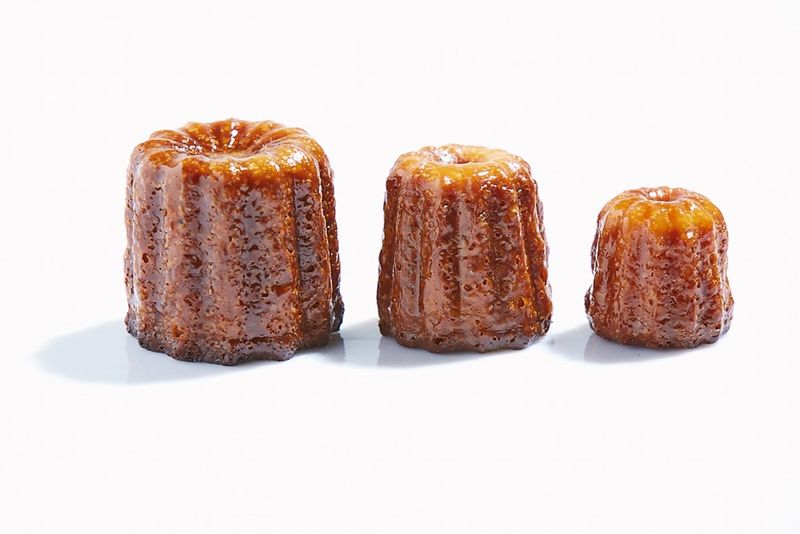
Small in size, big in reputation. The canele fits in the palm of your hand, yet it is one of the best-known cakes in France.
Look for the dark brown, almost shiny shell with deep grooves down the sides. Those grooves come from special fluted copper molds.
The batter is simple: milk, eggs, flour, sugar, and vanilla. Long baking at high heat creates a thick, caramelized crust around a soft, custard-like center.
Bakers in Bordeaux have made caneles for generations. Today you will spot them in shop windows all over the city.
Baillardran is a name many locals connect with the canele, and it focuses almost entirely on this one treat. Its shop on Rue Sainte-Catherine sits on a long, busy shopping street.
Buy a single canele for a walking snack or a box to share. They taste best the same day, so plan to eat them quickly.
12. Pavé de Saint-Régis, Au Pavé de Saint Régis, Lalouvesc, Auvergne-Rhône-Alpes
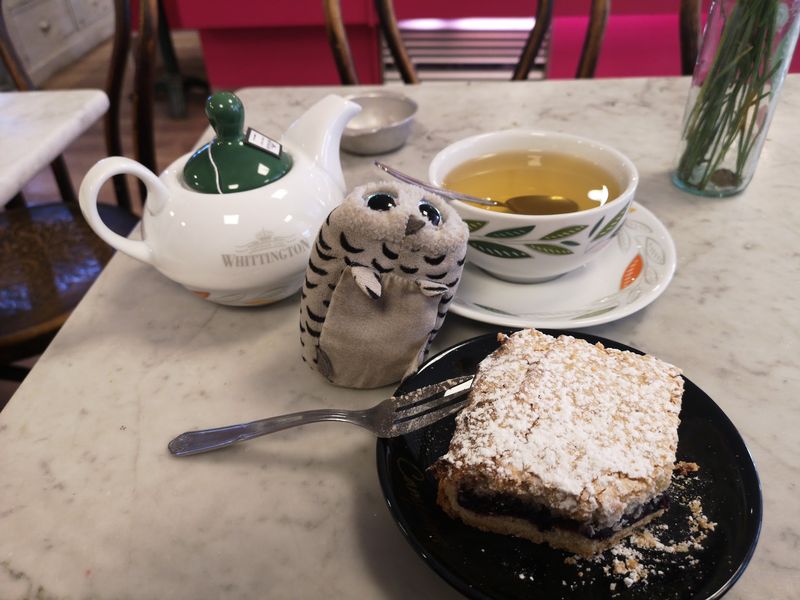
Chestnut lovers, this final stop is for you. High in the Ardeche mountains, the village of Lalouvesc has a cake that puts the region’s favorite nut to work.
The Pave de Saint-Regis is shaped like a rectangle, and pave means paving stone in French. It is built in layers, starting with a shortbread base.
Next comes a light almond biscuit. The fillings include fruit jam, praline, and chestnut, so every bite mixes several flavors.
The Ardeche is famous for chestnuts, and the bakery leans into that pride. Its second specialty, Lou Chastanha, also features local chestnuts.
Au Pave de Saint Regis works as both a bakery and a tea room. That means you can sit, rest after a mountain drive, and order a slice with tea or hot chocolate.
Bring a box home too, because you probably will not find this one anywhere else.
Share this story