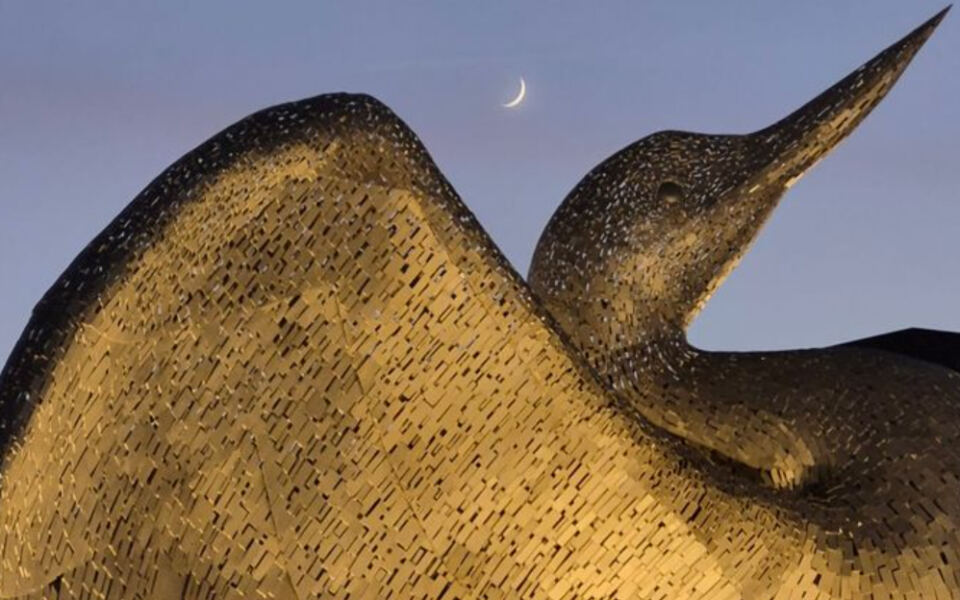
A bird that most Minnesotans know from the quiet surface of a northern lake has taken on an entirely new form along the Mississippi River corridor in St. Paul. Standing 33 feet tall, a massive sculpture of a common loon now rises above the riverfront area, turning heads from the road and drawing visitors who had no idea it was even there.
Minnesota’s state bird has always carried a special place in the hearts of locals, and this sculpture brings that feeling into dramatic, physical form. What makes this particular landmark so striking is not just its size, but the story behind the materials used to build it and what it represents for a rapidly growing corner of the city.
The Sculpture That Stopped Me in My Tracks
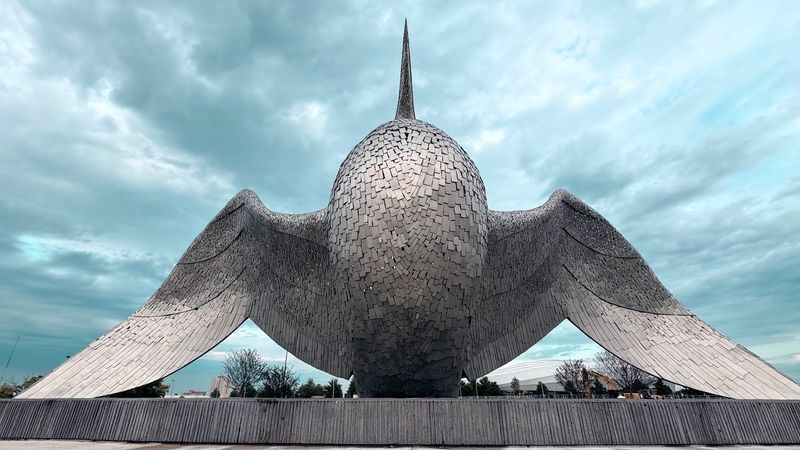
Some roadside landmarks announce themselves with signs and parking lots. This one just appears, suddenly and unmistakably, rising above the surrounding landscape with the quiet confidence of something that knows exactly how impressive it looks.
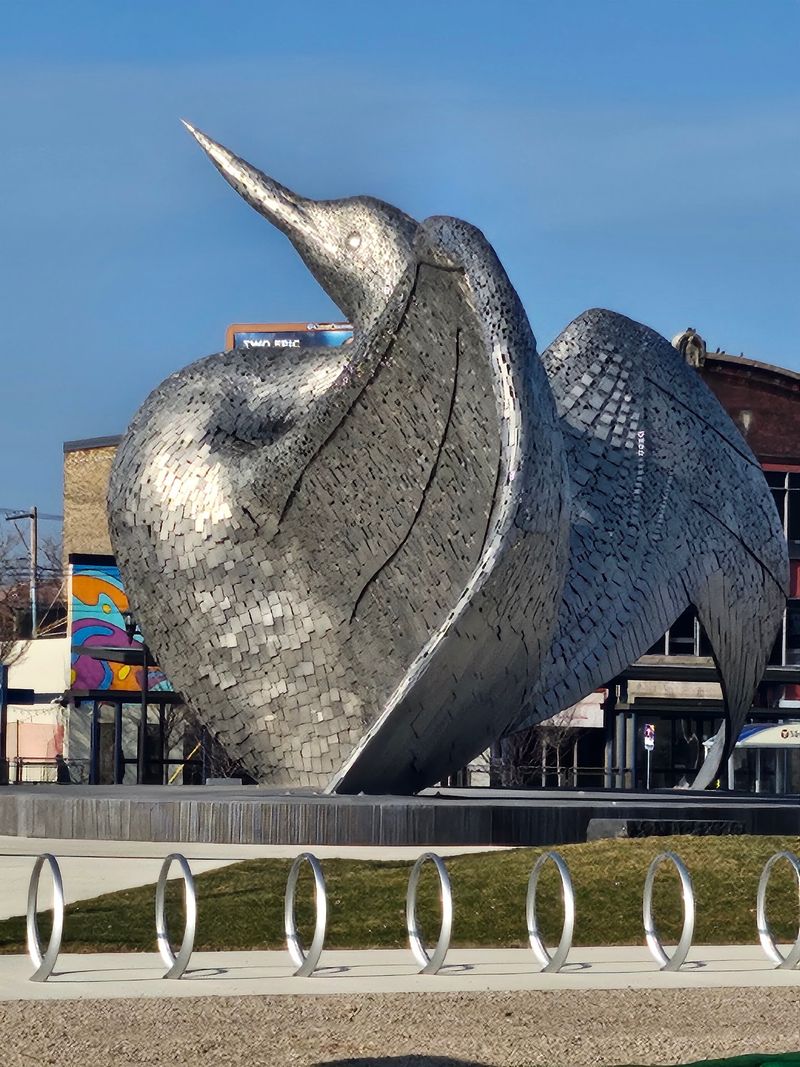
The Saint Paul Loon, located at 1578 Spruce Tree Dr, St. Paul, Minnesota 55104, is a 33-foot-tall sculpture of Minnesota’s state bird. It stands near Allianz Field in a section of the city that is actively developing, which makes the sculpture feel even more striking against its open surroundings.
The first time I spotted it from the road, I genuinely had to look twice. A loon that tall, positioned with such presence near a major roadway, is not something you easily process in passing.
The scale is what gets you first. Then the detail pulls you in closer, and that is when the real story begins.
Why Minnesota Chose the Loon as Its State Bird
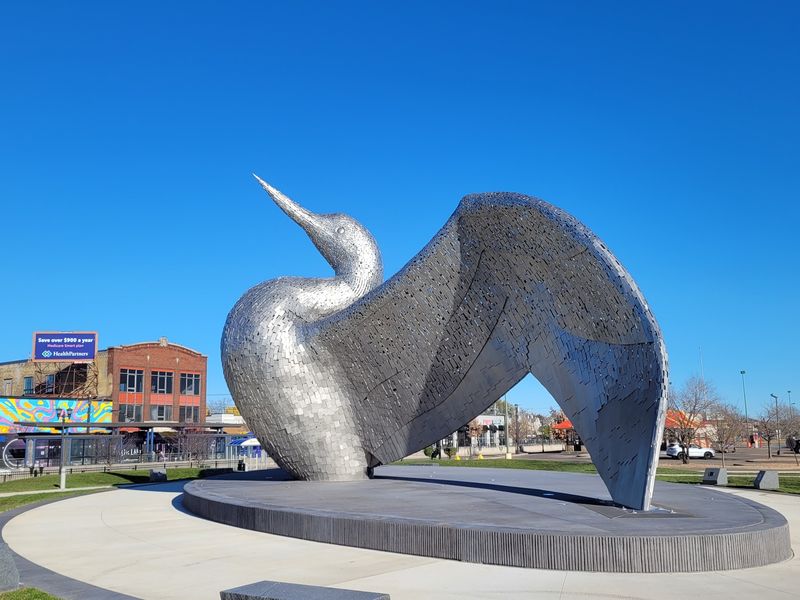
The common loon became Minnesota’s state bird in 1961, and the choice made complete sense to anyone who has spent a summer near a northern Minnesota lake. The loon’s haunting call is one of the most recognized sounds in the entire state, often described as the true sound of a Minnesota summer night.
Loons are deeply tied to Minnesota’s identity. They appear on the state quarter, show up in artwork across the region, and are a symbol locals genuinely feel connected to rather than just tolerate as an official designation.
The Saint Paul Loon sculpture leans directly into that emotional connection. By scaling the bird up to 33 feet, the artist transforms something familiar into something awe-inspiring.
It takes a creature people associate with peaceful lake mornings and gives it a physical presence that demands attention in an urban landscape. That contrast is part of what makes it work so well.
The Surprising Material That Makes This Sculpture Unique
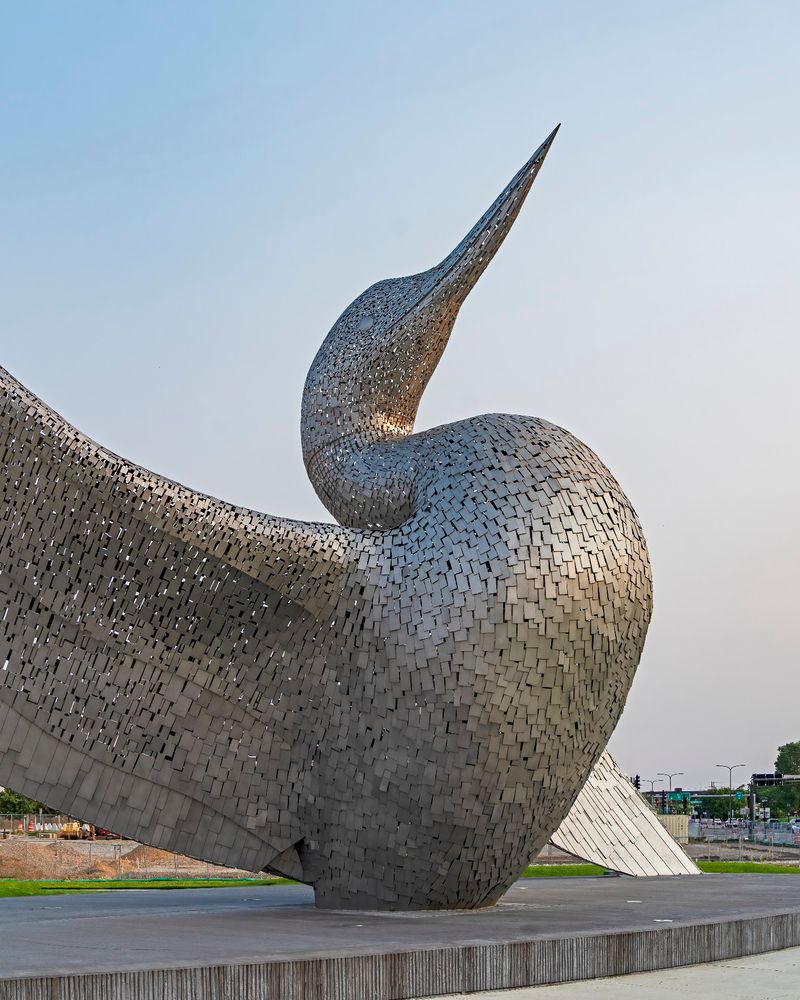
One detail about this sculpture changes the way you look at it entirely. According to local accounts, the loon is constructed using needles collected from the surrounding area near the intersection where it stands.
That single fact reframes the whole experience. What looks like a sleek, polished public monument from a distance is actually made from materials gathered right there, on-site, from the neighborhood itself.
There is something deeply intentional about that choice, tying the sculpture to its specific location in a way that most public art never achieves.
It also makes you want to get closer and look at the surface carefully. The texture of the sculpture rewards that kind of attention, and knowing what went into building it gives the piece a local authenticity that you cannot fake.
The materials are not imported or generic. They come from the ground beneath your feet, which makes the loon feel genuinely rooted in place.
The Location Along the Mississippi River Corridor
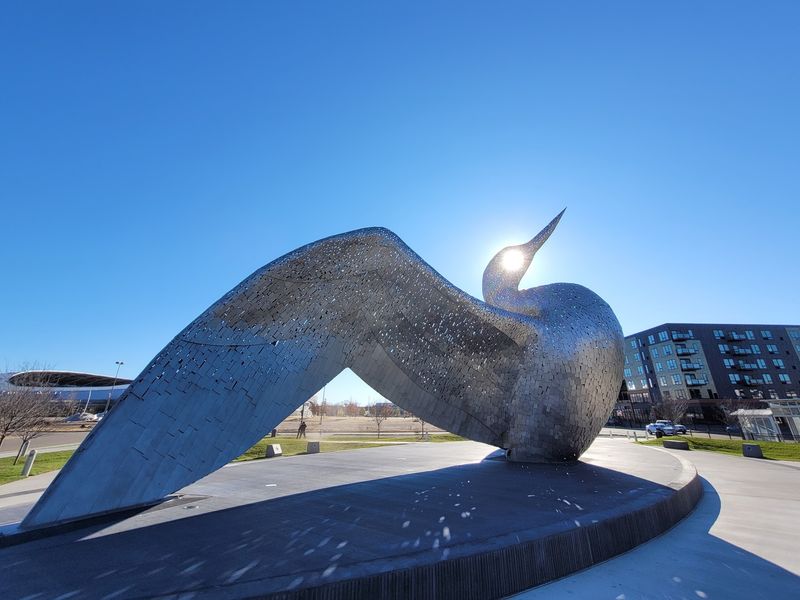
The stretch of St. Paul where the loon now stands is one of the most actively developing areas in the entire city. Allianz Field, home to Minnesota United FC, sits nearby, and the surrounding blocks are filling in with new construction at a noticeable pace.
That context matters when you visit. Right now, the loon stands in a relatively open area without much competing for your attention, which actually makes it more dramatic.
There is space around it, and that space lets the full 33-foot height register properly.
As the neighborhood continues to grow, the sculpture will eventually be surrounded by more buildings, businesses, and foot traffic. Visiting now means seeing it in a rawer, less crowded setting that feels almost like discovering something before the rest of the world catches up.
The Mississippi River corridor has a long history of transformation, and this loon is becoming one of its newer landmarks worth tracking over time.
What 33 Feet Actually Looks Like Up Close
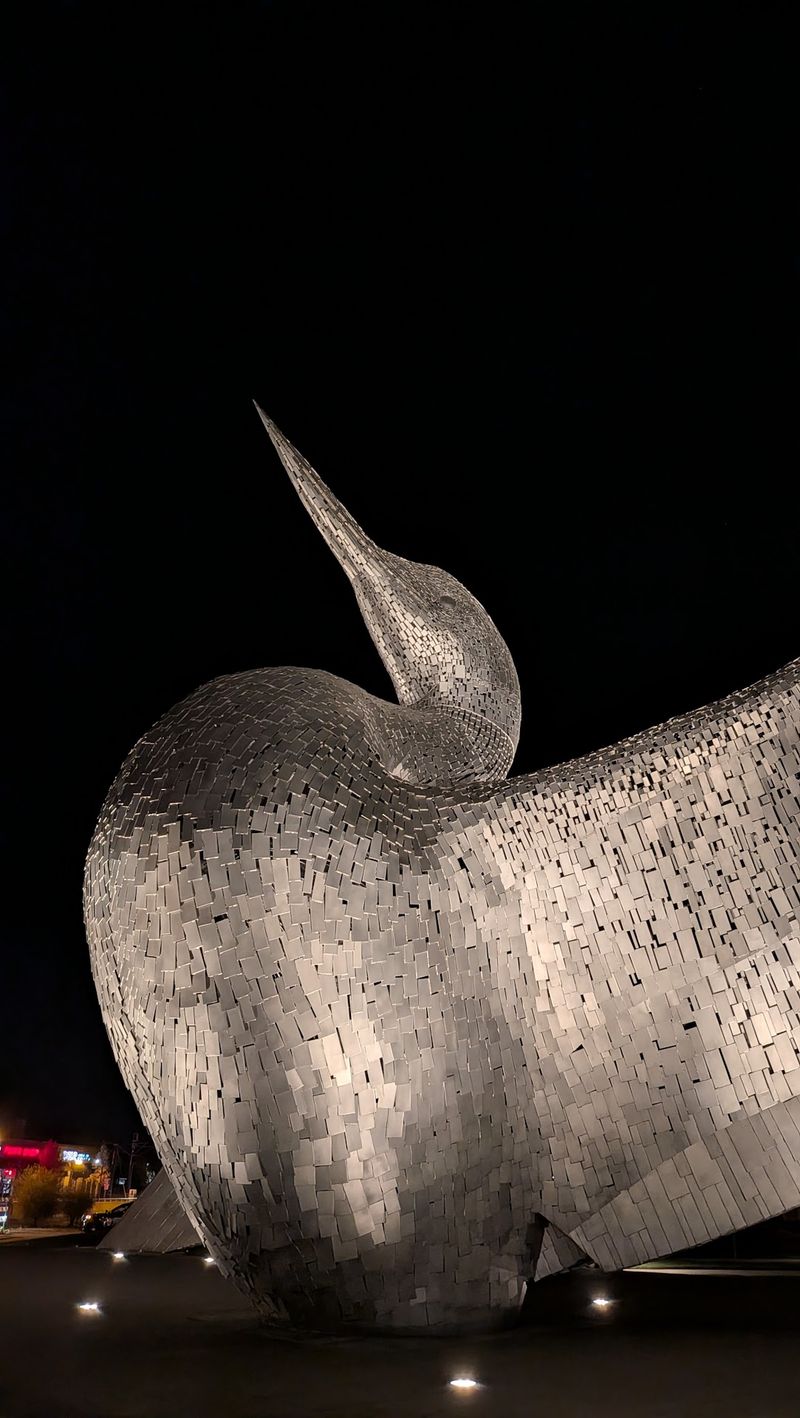
Numbers on paper rarely prepare you for the real thing. Thirty-three feet sounds tall, but it does not fully register until you are standing at the base of the sculpture looking up at a loon that towers well above a three-story building.
The scale is genuinely surprising. The bird’s body is wide and commanding, and the level of detail visible even from a distance becomes more impressive as you approach.
The neck, the bill, the posture of the wings, all of it is rendered with care that holds up under close inspection.
I found myself walking a full circle around the base just to take in different angles. From the front, the loon looks alert and powerful.
From the side, the silhouette against the sky is almost cinematic. It is the kind of public art that earns its place not just by being large, but by being genuinely well-executed at every scale of viewing.
Minnesota’s Tradition of Giant Roadside Sculptures
Minnesota has a long and enthusiastic history with oversized roadside sculptures. The state is dotted with giant figures ranging from Paul Bunyan in Bemidji to a massive otter in Fergus Falls, and locals tend to embrace these landmarks with genuine affection rather than irony.
The Saint Paul Loon fits right into that tradition, though it carries a more polished, urban energy compared to the fiberglass figures found in smaller towns. This is a city-scale public art installation, not a tourist trap novelty.
The craftsmanship sets it apart from the classic roadside giant category while still tapping into the same instinct to celebrate something locally meaningful at an impossible size.
For visitors who have toured Minnesota’s quirky roadside stops, the loon feels like a natural addition to the list. For those who have never explored that side of the state, it works as a perfect introduction to a distinctly Midwestern way of honoring local identity through sheer, unapologetic scale.
The Connection to Minnesota United FC and Allianz Field
One visitor noted that the loon feels patriotic not just to the state of Minnesota, but specifically to Minnesota United FC, the Major League Soccer team that plays at Allianz Field just steps from the sculpture. The loon is part of the team’s branding and visual identity, which gives the sculpture an added layer of meaning for soccer fans visiting the stadium.
On match days, the area around Allianz Field fills with fans, and the loon becomes a natural gathering point and photo opportunity before or after games. It is the kind of landmark that earns its place in the neighborhood by serving multiple purposes at once.
Even on non-game days, the sculpture holds its own as a standalone attraction. You do not need to be a soccer fan to appreciate the art.
But knowing the connection adds context and makes the loon feel even more intentionally placed in this particular corner of St. Paul.
How the Sculpture Reads From the Road
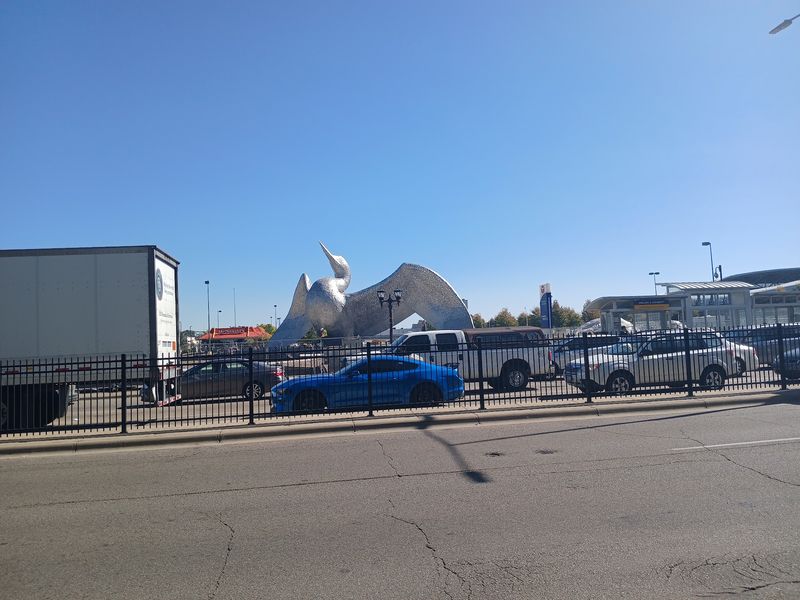
One thing that immediately stands out about the placement of the Saint Paul Loon is how visible it is from passing traffic. You do not need to know it is there to see it.
The height ensures that it registers above fences, parked vehicles, and low structures, making it one of those rare public art pieces that works as both a destination and a landmark you encounter unexpectedly.
Drivers heading along the nearby roads tend to do a double take. That reaction is part of what makes the sculpture successful as public art.
It earns attention without demanding it through signage or promotional materials.
The visibility also means first-time visitors can find it without much difficulty. There is something satisfying about a landmark that guides you to itself.
The loon is easy to spot, easy to reach, and delivers on the visual promise it makes from a distance, which is not something every large sculpture can claim.
Public Art That Locals Actually Love
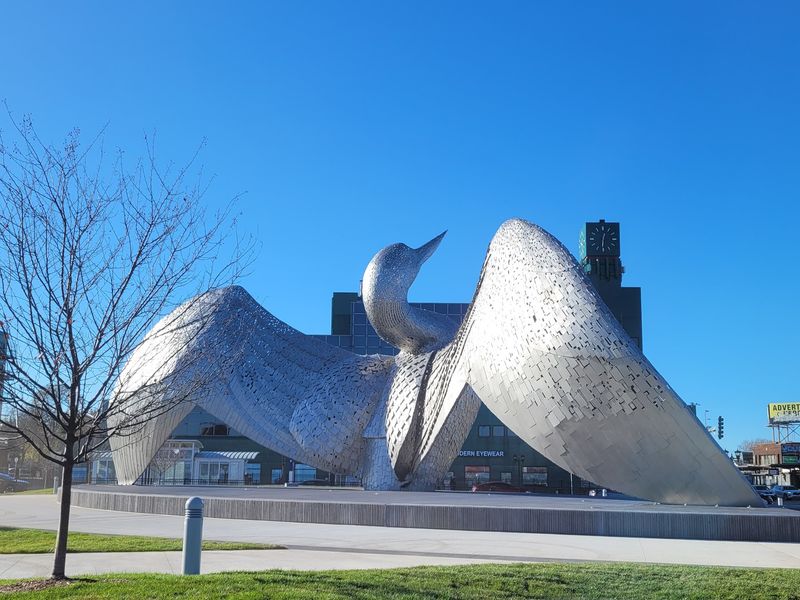
Public art can be a complicated thing. Cities commission large sculptures all the time, and not all of them earn genuine affection from the people who live nearby.
The Saint Paul Loon seems to have landed on the right side of that equation, drawing warm responses from locals who see it as something that reflects real Minnesota character.
There is a quality to the sculpture that feels earned rather than imposed. The loon is not an abstract shape or a corporate-looking installation.
It is a recognizable, beloved creature rendered at an extraordinary scale, and that combination resonates with people who already have a personal relationship with loons from time spent on Minnesota’s lakes.
The enthusiasm in early visitor responses speaks to how well the sculpture connects with its audience. People are not just acknowledging it politely.
They are stopping, photographing, circling the base, and sharing the experience. That level of engagement is exactly what good public art is supposed to generate.
The Best Time to Visit for Photos
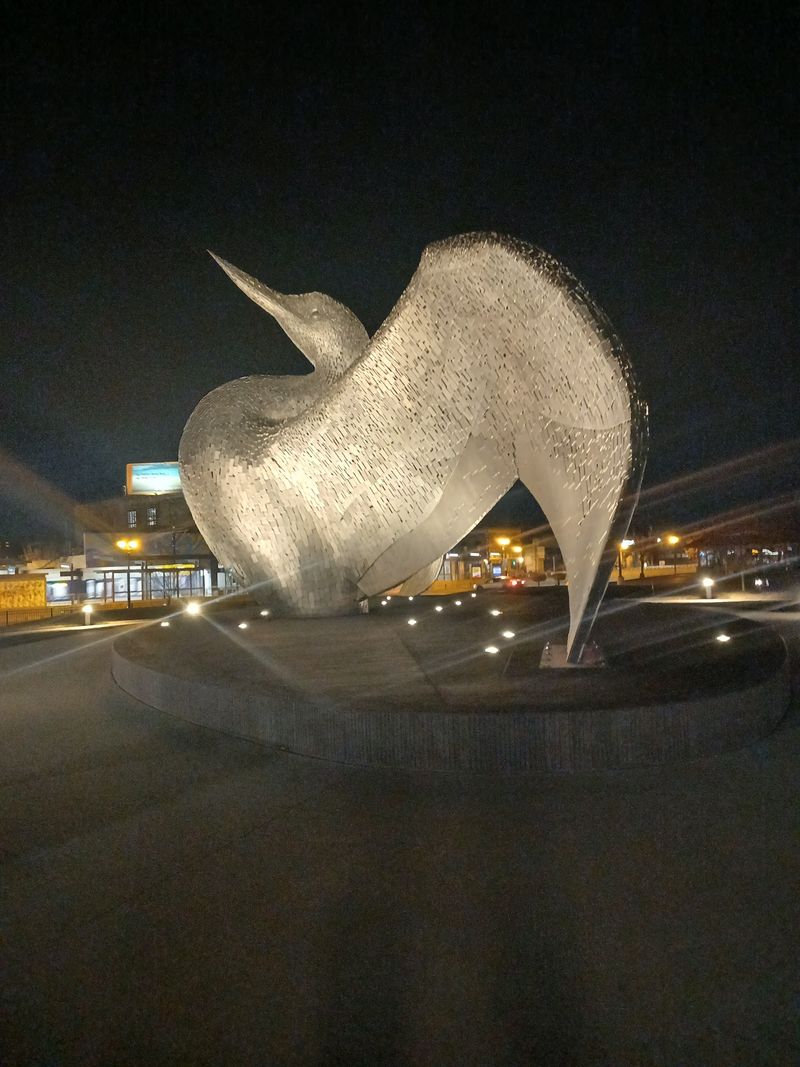
Lighting matters enormously when photographing large outdoor sculptures, and the Saint Paul Loon rewards visitors who time their trip thoughtfully. Morning light hits the sculpture cleanly, giving the surface texture a crisp, defined quality that works well for wide shots capturing the full 33-foot height.
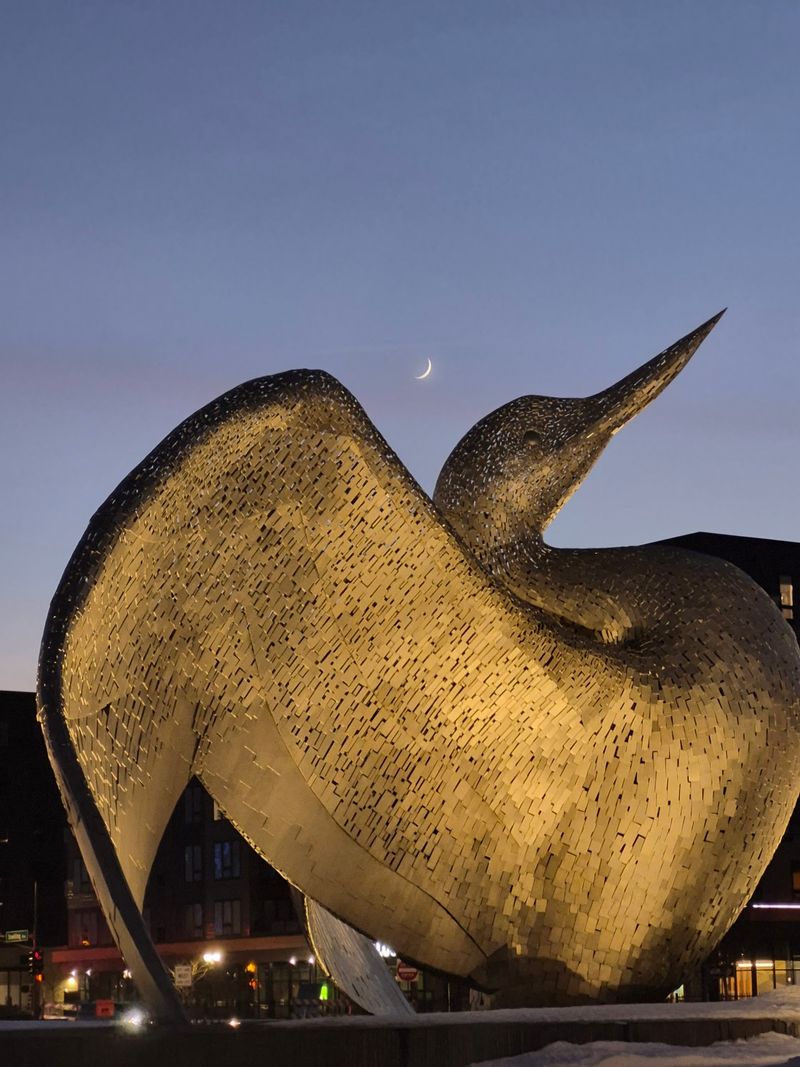
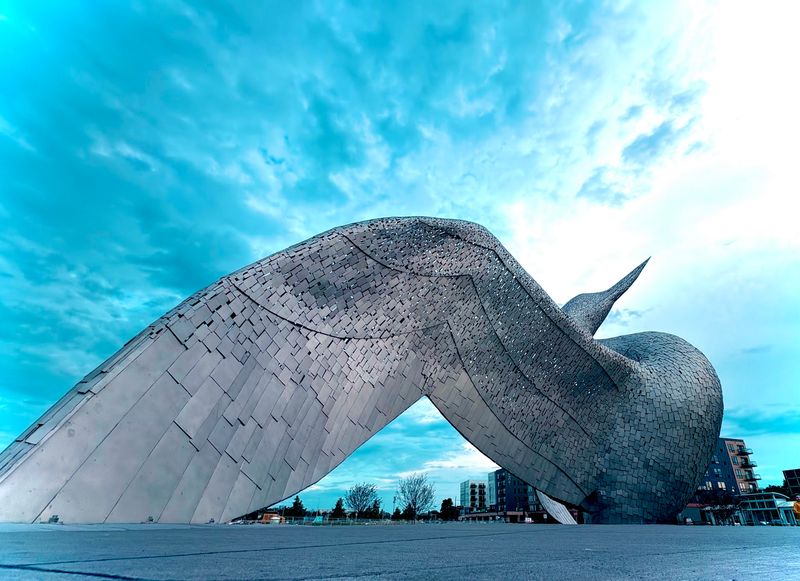
Late afternoon and golden hour visits offer a warmer, more dramatic look, especially if the sky has some cloud texture to work with. The loon’s form against a colorful evening sky makes for a striking image that captures both the sculpture’s scale and its setting.
Midday visits on bright days can create harsh shadows, but they also make the sculpture’s details easier to read up close. There is no wrong time to visit, but arriving with a little extra time to walk around the base and experiment with different angles will give you the best results.
The sculpture genuinely rewards patient attention.
A Developing Neighborhood Worth Watching
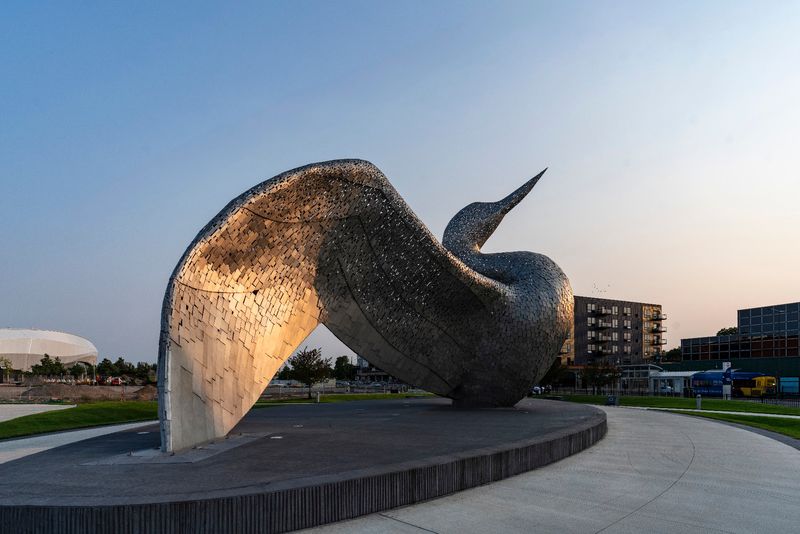
The area surrounding the Saint Paul Loon is not finished yet, and that is actually part of what makes visiting now feel interesting. The neighborhood is in active development, with new projects taking shape and the overall character of the district still being established.
The loon arrived early in that process, which positions it as a kind of anchor for the area’s identity. As more buildings, businesses, and public spaces fill in around it, the sculpture will likely become even more central to how people understand and navigate this part of St. Paul.
Watching a neighborhood take shape around a landmark is its own kind of experience. Right now, the loon stands in a relatively open setting that emphasizes its scale.
In a few years, the same sculpture will exist in a denser, more urban context. Both versions of the experience are worth having, but the current one has a rawness and openness that will not last forever.
What Makes This Different From Other Giant Animal Statues
Giant animal statues exist across the United States, but most of them fall into a recognizable category of novelty landmarks. They are large, they are fun, and they serve their purpose as photo stops.
The Saint Paul Loon occupies a slightly different space in that conversation.
The craftsmanship here is more refined than the typical fiberglass roadside figure. The surface texture, the posture, and the proportions all reflect a level of artistic intention that elevates the piece above pure novelty.
It is large enough to be dramatic, but detailed enough to hold up as serious sculpture.
That balance is harder to achieve than it looks. Many oversized sculptures sacrifice detail for size or prioritize quirkiness over craft.
The Saint Paul Loon manages to be genuinely impressive on both counts. It works as a conversation starter, as a photo subject, and as a legitimate work of public art.
Not many giant animal statues can honestly claim all three.
Practical Tips for Your Visit
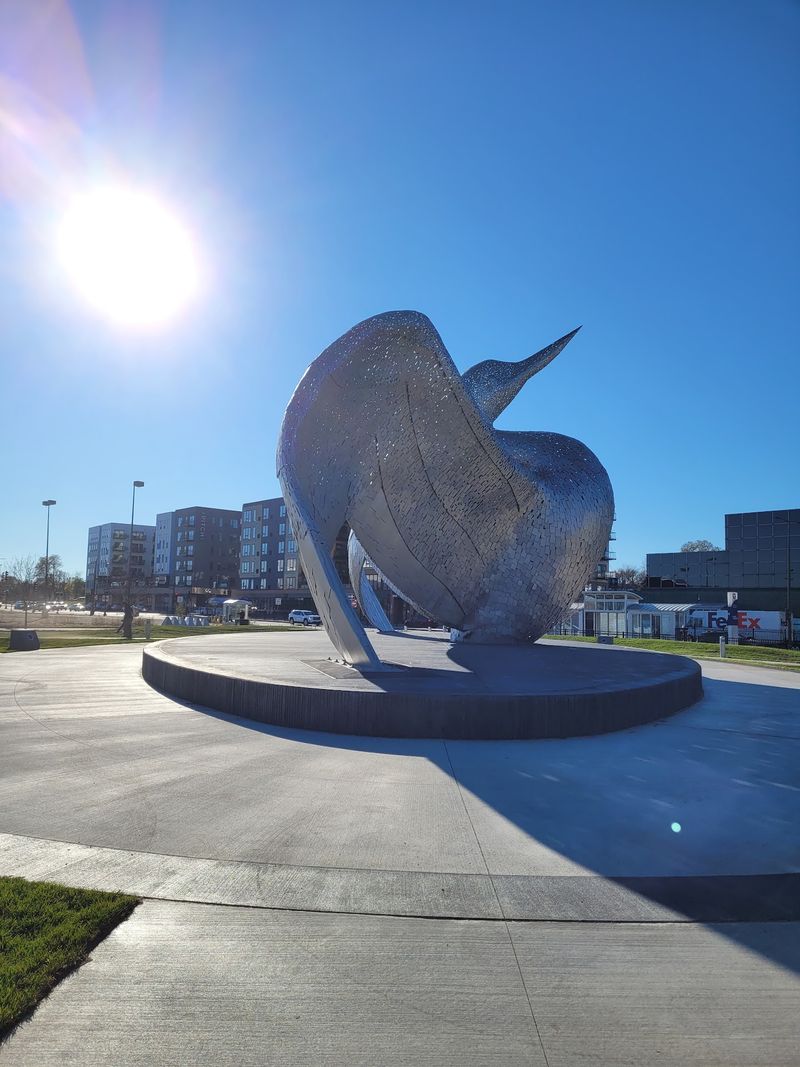
Getting to the Saint Paul Loon is straightforward. The sculpture is located at 1578 Spruce Tree Dr in St. Paul, and it is visible from the road, so navigation is easy once you are in the general area.
Street parking is available nearby, and the site is accessible without any admission fee.
The sculpture is an outdoor installation, which means it is available to visit any time of day. Early mornings tend to be quieter if you prefer a more personal experience without crowds.
On days when Minnesota United FC has a home match at Allianz Field, the surrounding area will be busier, which adds energy but also means more foot traffic around the sculpture.
Wear comfortable shoes since you will want to walk around the base for different viewing angles. Bringing a wide-angle lens or using your phone’s ultra-wide mode will help capture the full height of the sculpture in a single frame.
The experience is quick but genuinely satisfying.
A Landmark Still Finding Its Audience
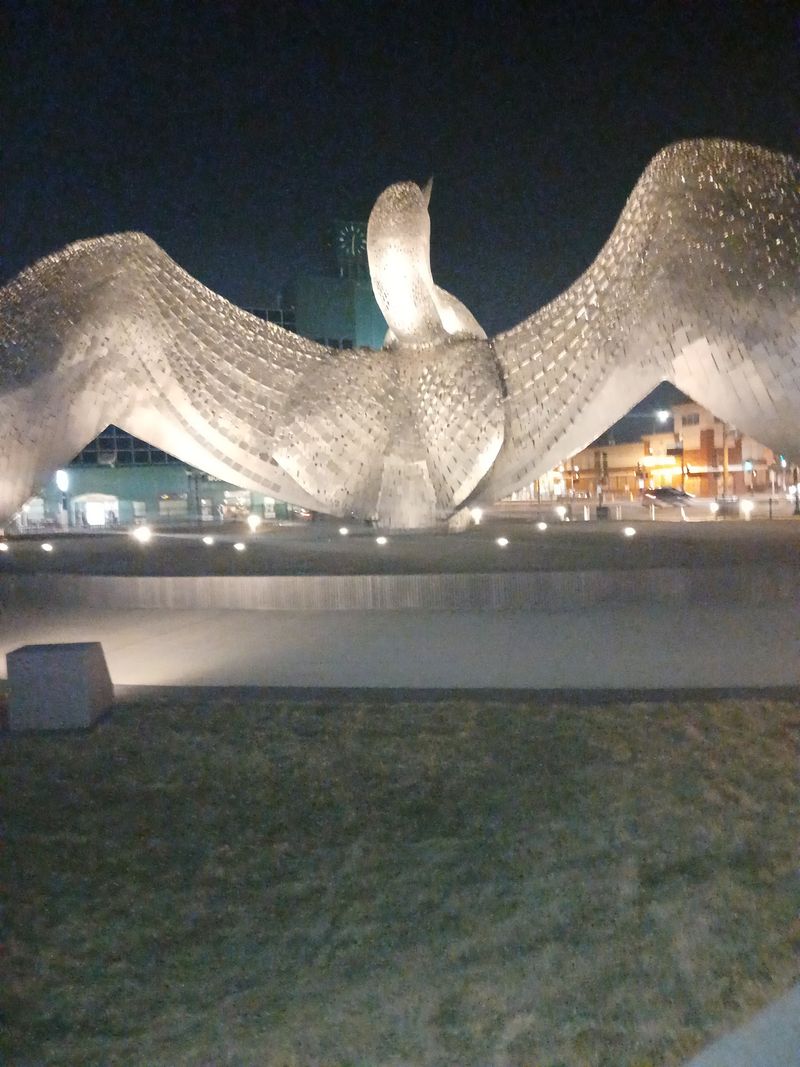
The Saint Paul Loon is still relatively new, and its audience is still growing. The reviews that have come in so far reflect a consistent theme: people who stop are glad they did, and many wish they had known about it sooner.
That word-of-mouth quality is how the best local landmarks build their reputations. No massive advertising campaign is needed when a sculpture is genuinely worth seeing.
People share photos, mention it to friends, and add it to lists of things to do in St. Paul almost organically.
As the surrounding neighborhood develops and more visitors discover Allianz Field and the broader riverfront area, the loon’s audience will grow naturally. Right now, there is still something special about being among the earlier visitors who found it before it became widely known.
If you are in St. Paul and looking for something that genuinely surprises, this is worth the short detour. The loon is waiting, and it is not hard to find.
Share this story