Camden has a nautical artifact that refuses to fade quietly into the background. It is not polished, not easy to tour, and not pretending to be a postcard stop, which is exactly why it keeps pulling local curiosity toward the waterfront.
This old lightship carries a working story from America’s maritime past, when floating beacons helped guide ships before modern navigation took over. Keep reading and the rust starts to look less like an ending and more like a challenge New Jersey has not fully answered yet.
A Camden Address With a Complicated Waterfront Story
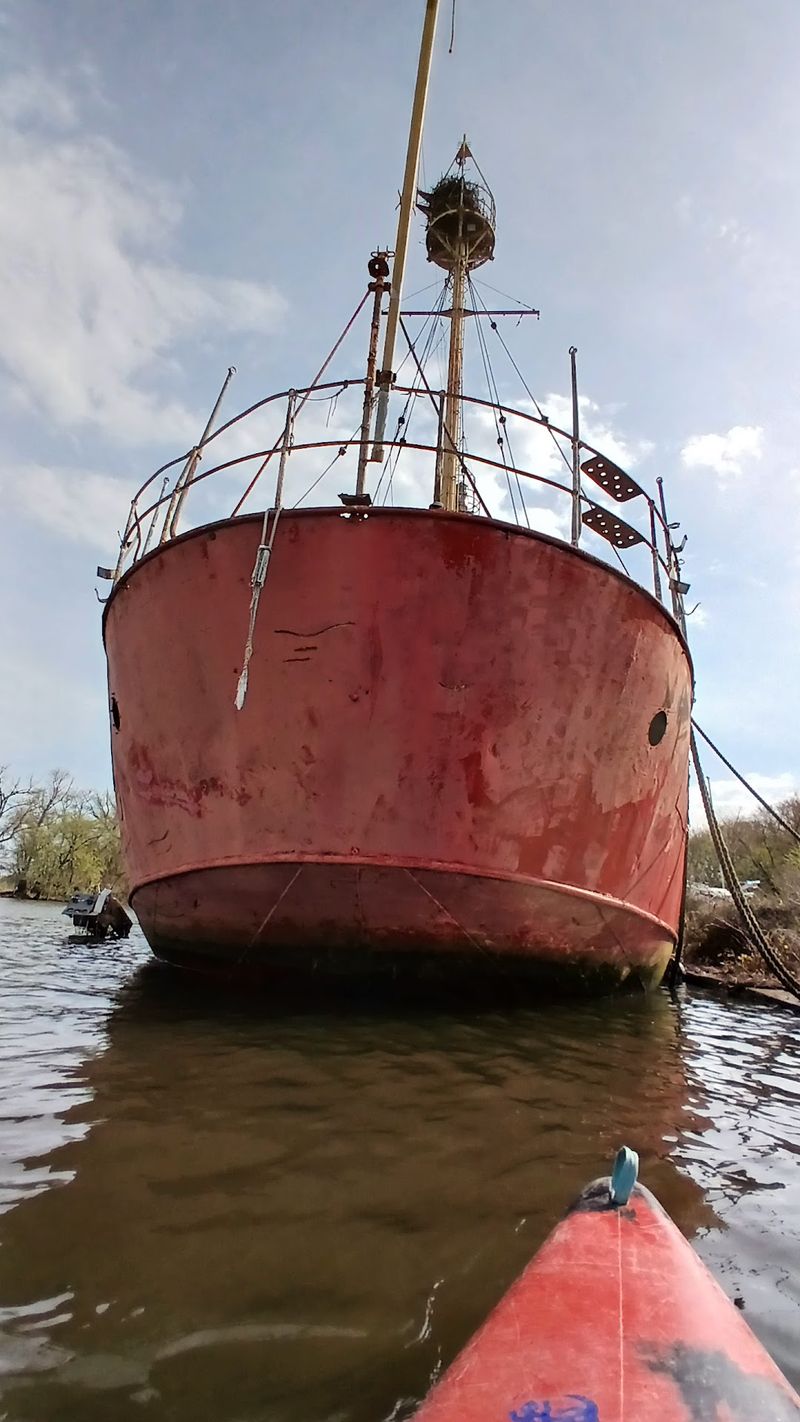
Not every landmark announces itself with a ticket booth and a polished welcome sign, and Lightship Barnegat proves that right away. The historic vessel is tied to 1091 N 8th St, Camden, NJ 08102, in Camden, New Jersey, United States, where its current setting places it near the same city where it was built more than a century ago.
Lightship Barnegat is listed as a historical landmark, but that label can be a little tricky for day-trippers. It is not a traditional museum experience with open decks, guided interpretation, and a set path for guests.
Public comments on the listing make clear that shore access has been a serious limitation. Some people have reported that the ship is not reachable from land and that only parts of the masts may be visible, depending on position and access around the area.
That makes the first lesson practical: treat this as a history stop to research and understand, not as a guaranteed walk-up attraction. The value sits in the story, the location, and the bigger question of what New Jersey chooses to preserve.
A 1904 Ship Born Close to Home
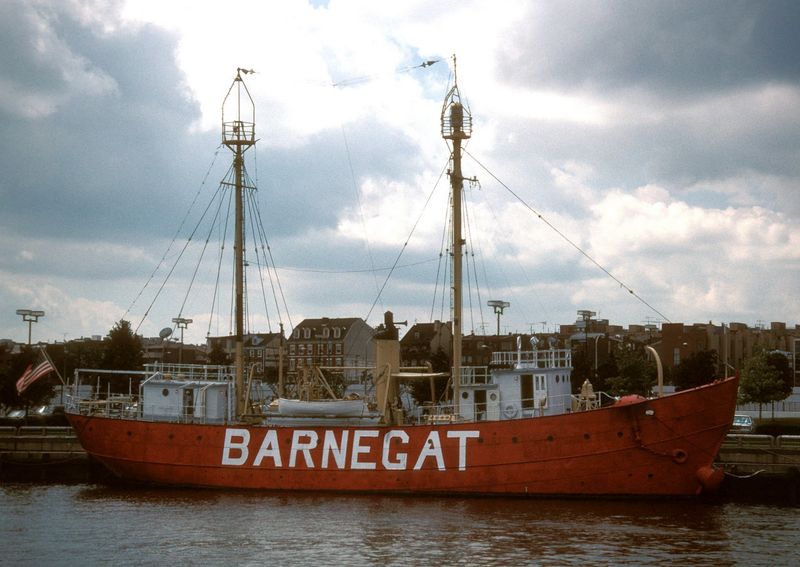
A good New Jersey story often has a local twist hiding in plain sight, and this one has a strong one. Lightship Barnegat, also known as LV-79, was built in Camden in 1904, not far from its present location.
That detail gives the vessel more than historical trivia. It links the ship to Camden’s own industrial and maritime past, which is easy to overlook when old infrastructure becomes background scenery.
Lightships were working vessels used as floating navigational aids in places where fixed lighthouses could not do the job. They marked important waters and helped maritime traffic find safer routes long before today’s electronic tools became standard.
LV-79 belongs to that era of practical engineering, when a ship could serve as a beacon, station, and workplace all at once. The idea feels almost stubbornly old-school now, but that is part of its appeal.
Because it was built locally, the Barnegat does not feel like a relic dropped into Camden from somewhere else. It is a piece of the city’s own handiwork, still present enough to raise an eyebrow and ask why more people do not know its name.
The Working Life Behind the Name
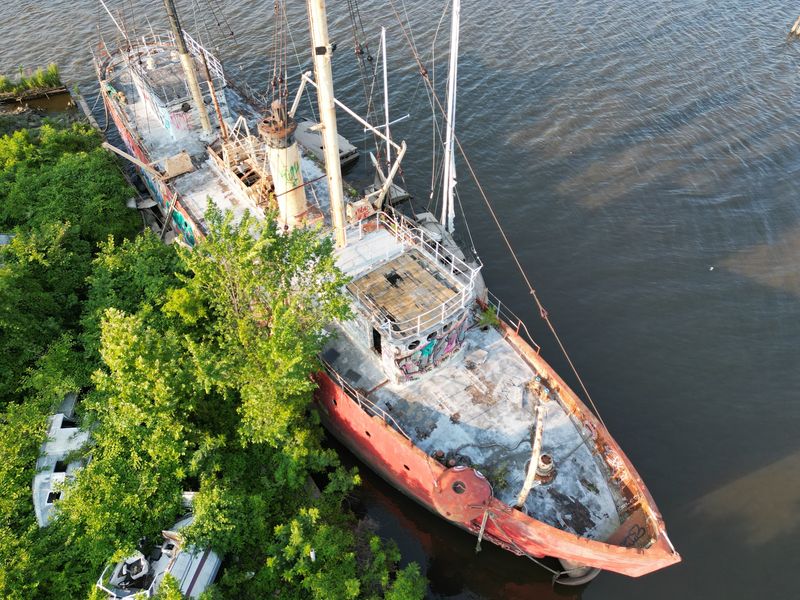
Before the Barnegat became a preservation puzzle, it had a job with no room for showboating. A lightship functioned as a floating marker, carrying a light and other identifying features to help mariners understand where they were.
That purpose explains why the vessel matters even in its current condition. It was part of a broader system that connected harbors, shipping lanes, coastal communities, and the people who depended on movement by water.
Lightship Barnegat was eventually decommissioned in the 1960s, ending its official working chapter. By then, navigation technology and maritime systems had changed enough that many older lightships were no longer needed in the same way.
The ship’s name can lead people to think only of the Jersey Shore, but its Camden connection gives the story another layer. Built in the city, retired from federal work, and later returned to the region, the vessel carries both statewide and national significance.
That combination is why the ship feels bigger than its current listing. It represents a time when America’s waterways relied on visible markers, patient crews, and vessels designed for duty rather than decoration.
A Philadelphia Chapter Before the Camden Return
The Barnegat’s story did not move in a straight line after its government service ended. After being decommissioned in the 1960s, it spent time moored at Penn’s Landing in Philadelphia, a waterfront setting already associated with public maritime interest.
That chapter matters because it shows the vessel had a second life in view of a major urban waterfront. Old working ships often survive when someone finds a public role for them, and the Barnegat seemed to have that possibility for a while.
Later, the vessel was privately acquired in the 1990s and moved to a marina in Camden. The goal was to establish it as a museum along the Camden waterfront, according to information preserved in public accounts of the ship’s history.
Those plans did not come together as intended. The result was a long stretch where the ship remained present but not fully interpreted, preserved, or opened in the way supporters had hoped.
That unfinished museum dream gives the Barnegat a peculiar kind of suspense. It is not just an old ship, it is an old ship with a plan that stalled, waiting to see whether the next chapter will finally get written.
Rust, Tags, and the Problem of Waiting
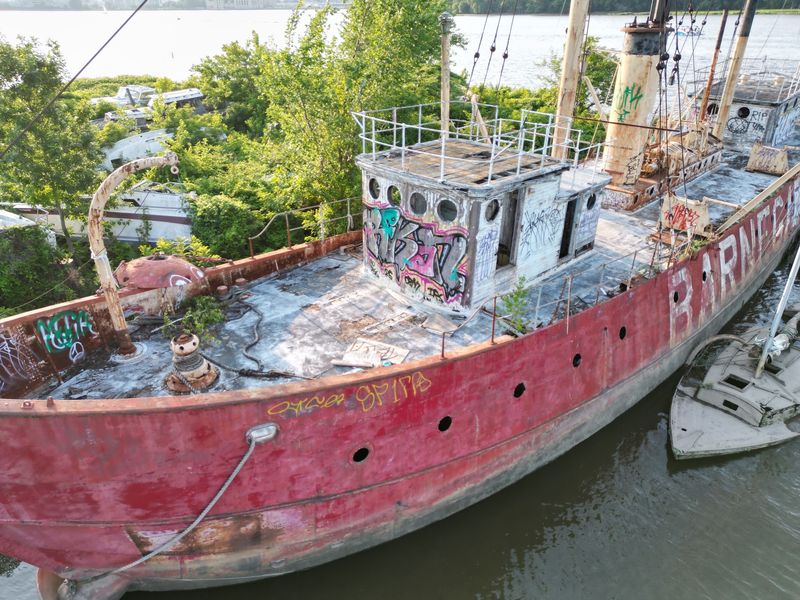
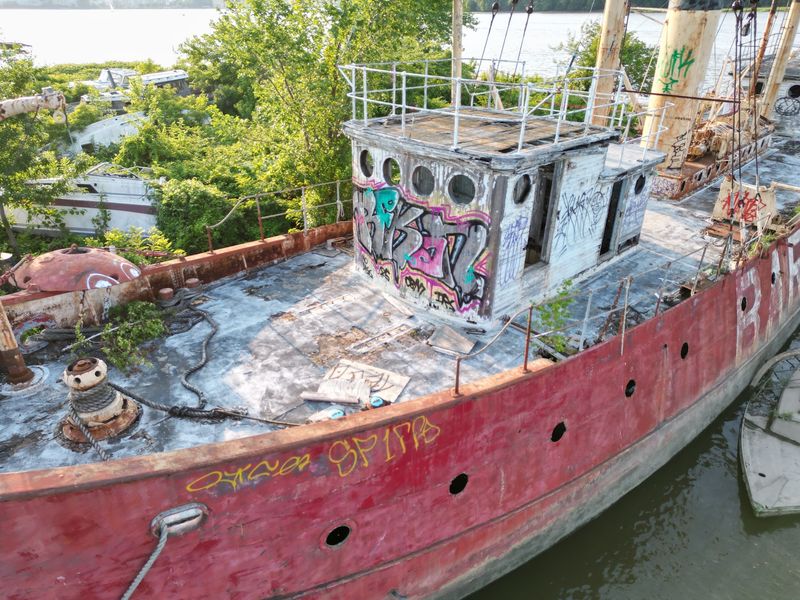
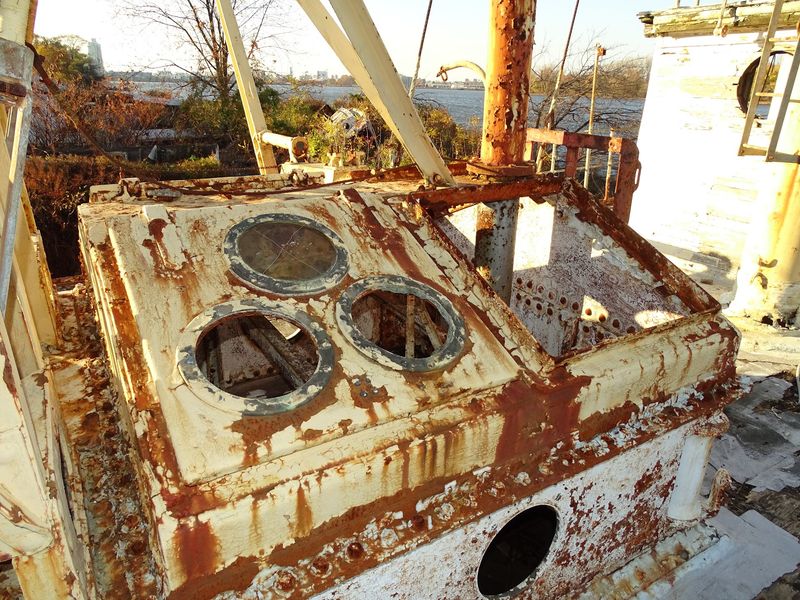
Old ships do not pause politely while committees, funding, and ownership questions get sorted out. Lightship Barnegat began to suffer from neglect, vandalism, and weather infiltration after the Camden museum plans fell through.
The public record and local commentary point to a vessel in serious disrepair. That is not a small cosmetic issue, because ships are complicated structures and long exposure can make restoration harder over time.
Some public comments express clear frustration about the condition of the ship, especially because of what it represented during its working years. Others show curiosity mixed with disappointment, since a landmark that cannot be approached easily can feel like a locked chapter of local history.
That tension is part of the reason the Barnegat keeps attracting attention. People are not only looking at rust and markings, they are reacting to the gap between what the vessel was and what it might become.
New Jersey has plenty of preserved historic places, but this one asks a more uncomfortable question. How long can a state treasure wait before preservation becomes much harder than pride alone can manage?
Two Masts That Still Do the Talking
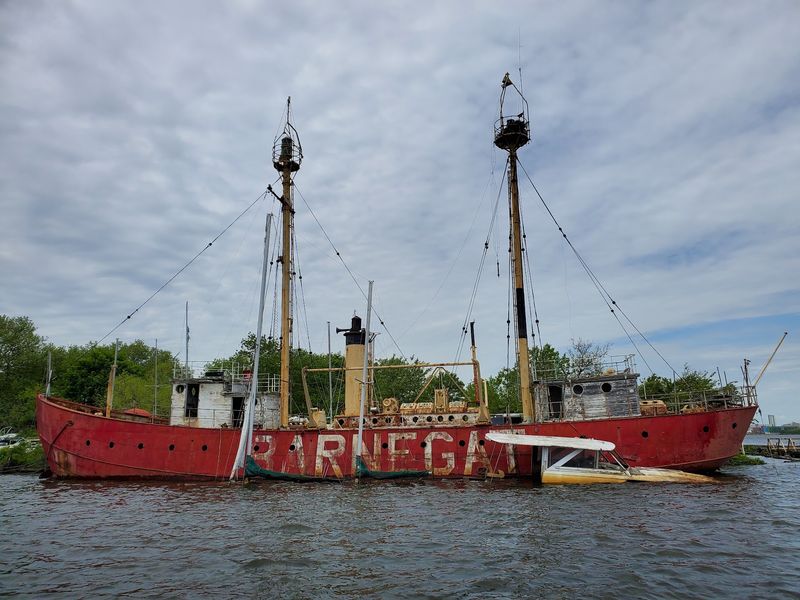
A curious detail keeps coming up in public comments: the masts may be the main thing people can see from shore. That limitation can be frustrating, but it also points to one of the vessel’s defining features.
Lightships needed to be seen and recognized. Their vertical elements, lights, and markings helped them perform a job that depended on visibility, position, and consistency.
In the Barnegat’s current state, the two masts have become a kind of shorthand for the whole ship. They are a reminder that the vessel was not built for leisure, but for function on the water.
One public comment mentions climbing a mast, but access should not be assumed from that statement. Current public information indicates that the site is not presented as an open public spot, and several comments warn that reaching the vessel from shore is not possible.
For a responsible reader, the takeaway is simple: admire from legal, public areas only and do not treat the ship as an adventure structure. The masts already tell enough of a story without anyone turning curiosity into a safety problem.
A Landmark Without the Usual Museum Comforts
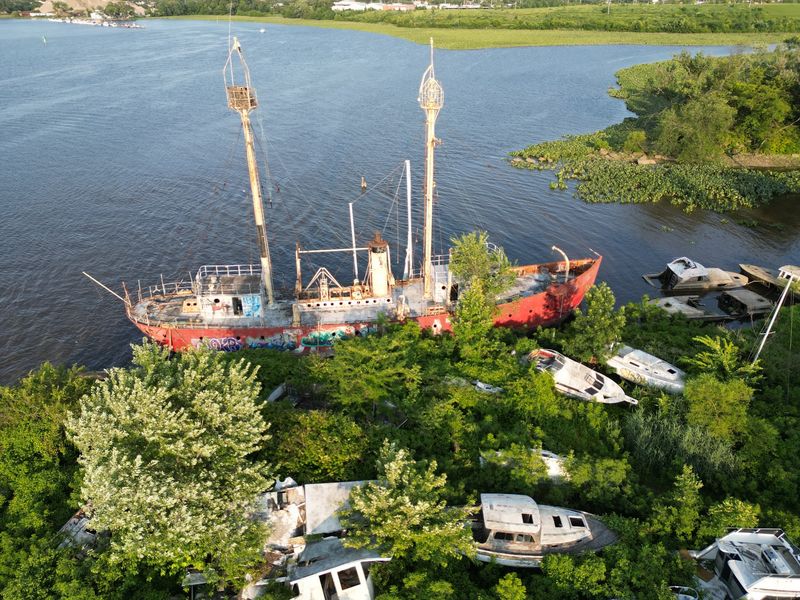
Plenty of historical landmarks invite people to step inside, read panels, and leave with a tidy understanding. Lightship Barnegat is different, and that difference needs to be clear before anyone makes the trip.
The ship is not described in the available data as a public museum with regular tours, admission details, or hands-on exhibits. Public comments specifically warn that access from shore is not available or is not obvious.
That does not erase its value, but it changes the kind of stop it is. This is more of a research-ahead, look-for-context destination than a casual attraction that fills an afternoon by itself.
For history-minded New Jersey readers, that may still be enough. The point is not to oversell the site, but to understand why an aging vessel in Camden can matter even when the visit is limited.
The Barnegat suits people who enjoy maritime history, preservation questions, and local places with unresolved stories. Anyone expecting a polished museum day should set that expectation aside before plotting a route.
The 2023 County Purchase and a Cautious Hope
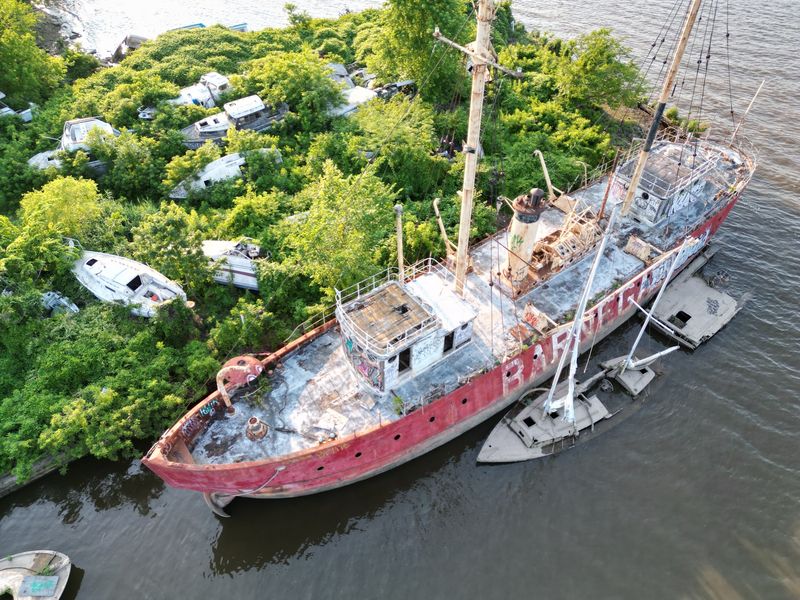
Hope arrived in a very practical form in 2023. Camden County purchased the ship along with the surrounding marina, with hopes of eventually restoring the Barnegat.
That detail matters because ownership can make or break historic preservation. When a vessel is privately held or caught between unrealized plans, even good intentions can stall.
A county purchase does not instantly repair metal, reopen decks, or turn a landmark into a public museum. It does, however, give the story a more official path than the uncertainty that came before.
The word to keep in mind is eventually. Available information does not provide a restoration schedule, public opening date, ticket cost, or final museum plan, so it would be careless to promise any of that.
Still, the purchase gives New Jersey residents a reason to keep the Barnegat on the mental map. A rusting ship can seem forgotten until a public body takes responsibility for the setting around it.
For Camden, the move also keeps a locally built vessel connected to the city that launched it. That is a quietly meaningful full-circle detail, and preservation stories need those small circles to keep turning.
Practical Notes Before Making the Trip
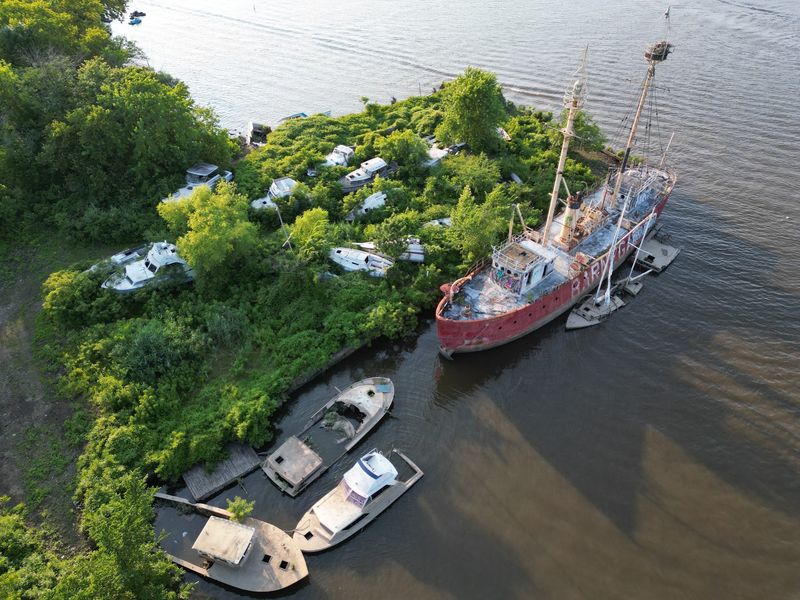
A spur-of-the-moment trip to this landmark needs a reality check before the car keys come out. The Google Maps listing identifies Lightship Barnegat as open now, but the available information does not provide posted hours, admission costs, guided tour details, or public entry rules.
That means the phrase open now should not be read as a promise that the ship itself can be boarded. Public comments warn that the vessel may not be accessible from shore, and some people report seeing only the upper parts of the masts.
The most sensible approach is to treat the address as a reference point, not a guaranteed entrance. Anyone planning a day around Camden history should pair this stop with other confirmed public destinations nearby rather than relying on the ship as the main activity.
Respect for access boundaries is part of the visit here. The Barnegat may be fascinating, but a historic landmark still sits within a real marina setting, and responsible curiosity matters.
For now, the best tools are patience, a little research, and realistic expectations. That may sound less thrilling than a tour schedule, but it is better than arriving with a plan the site cannot support.
A Soft Verdict for New Jersey History Hunters
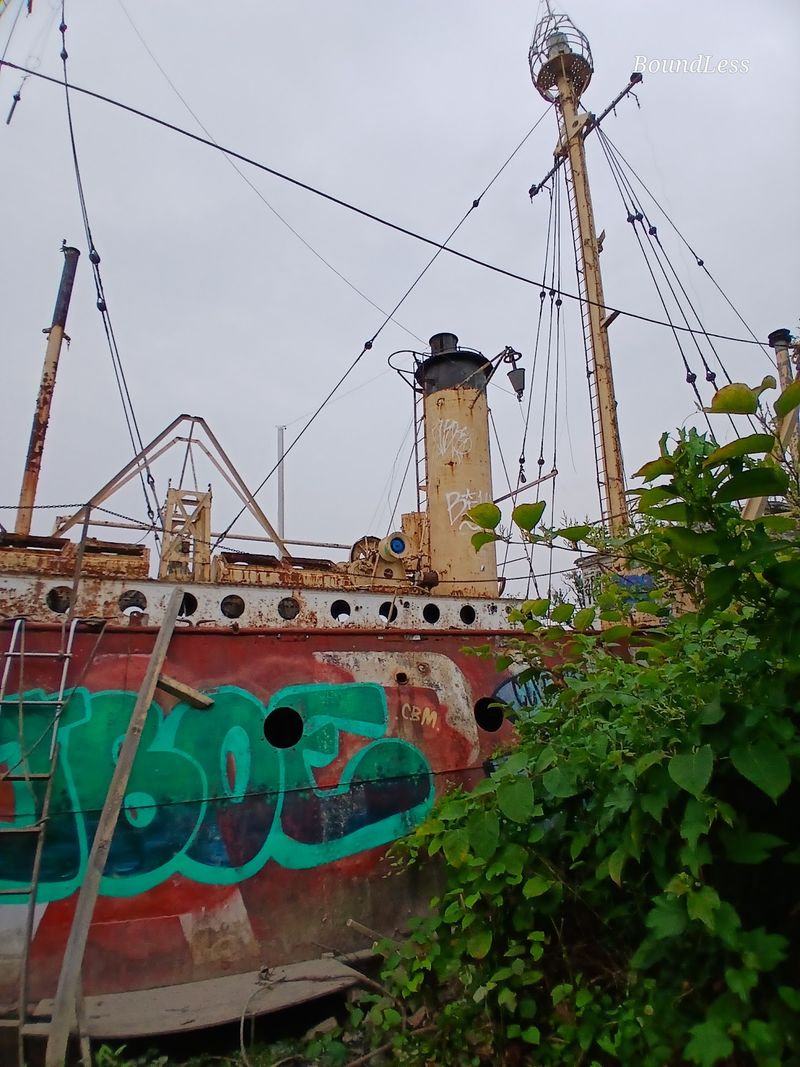
The Barnegat is not the easiest New Jersey landmark to recommend, which makes it one of the more honest ones. It asks readers to care about a place that is important, imperfect, and not yet ready for the neat museum treatment many people expect.
As a destination, it is best suited for maritime-history followers, Camden-curious locals, preservation watchers, and day-trippers who do not mind a stop that raises more questions than it answers. It is not a strong fit for anyone who wants open decks, guaranteed access, or a complete interpretive experience.
Still, there is a real reason to keep it in the conversation. Built in Camden in 1904, decommissioned in the 1960s, moved through Philadelphia and back toward Camden, then purchased by Camden County in 2023, the vessel carries a long public story in a compact frame.
The ship’s condition may be rough, but the history remains useful. It reminds New Jersey that heritage is not only found in restored rooms and polished signs.
Lightship Barnegat still holds its place in America’s nautical past, even while its future waits for careful decisions. For now, the soft verdict is simple: go for the story, temper expectations, and let the old ship keep tugging at local memory.
Share this story