Most people think of Victorian architecture and picture Boston, San Francisco, or Charleston. Very few think of Minnesota.
But tucked inside St. Paul is a four-mile boulevard lined with some of the most remarkably preserved Victorian-era homes in the entire country, and it has been quietly standing there for well over a century. This stretch of grand mansions, cathedral spires, and tree-canopied sidewalks is considered the longest continuous example of Victorian residential architecture in the United States.
Once you see it, you will wonder how it stayed off your radar for so long.
The Street That Rewrites What You Know About Minnesota
St. Paul does not usually come up when people talk about great American architecture streets. That changes the moment you set foot on Summit Avenue, located in St. Paul, Minnesota.
Running roughly four miles from the Cathedral of Saint Paul westward to the Mississippi River, this boulevard has earned recognition as the longest stretch of Victorian residential architecture remaining intact in the United States.
The homes here were not built to be modest. They were built to impress, and they still do.
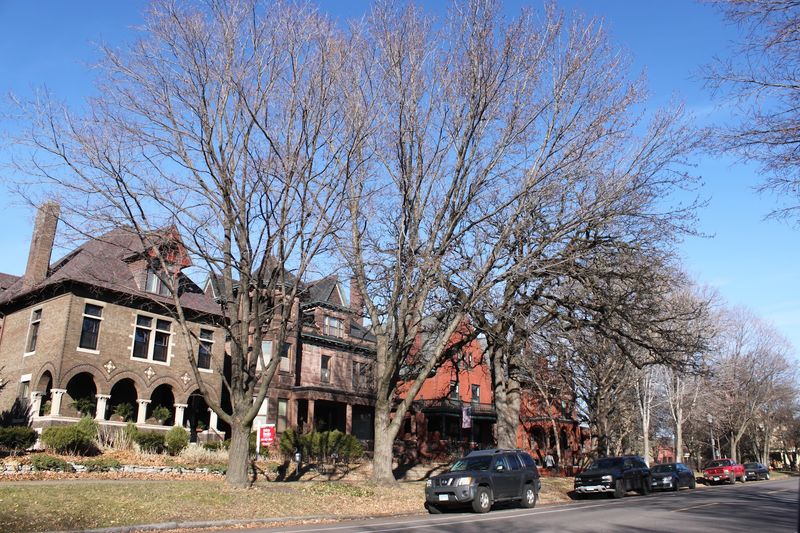
Red sandstone facades, ornate woodwork, turrets, wraparound porches, and stained glass windows line both sides of the street in an almost unbroken row.
What makes Summit Avenue genuinely surprising is how well it has survived. Development pressure, urban sprawl, and time have erased similar streets across the country.
Here, the character has stayed intact, making every walk down this boulevard feel like stepping into a different century.
A Boulevard Built During Minnesota’s Most Ambitious Era
Summit Avenue began attracting wealthy residents in the 1850s and grew rapidly through the late 1800s as St. Paul became one of the most prosperous cities in the upper Midwest. Lumber barons, railroad executives, and prominent businessmen chose this boulevard to build their family estates, each trying to outdo the neighbors with grander designs and more elaborate details.
The street reflects the confidence of that era. St. Paul was a booming city, and its most successful citizens wanted their homes to say exactly that.
Architects brought in styles from across Europe and the eastern United States, blending Romanesque Revival, Queen Anne, Colonial Revival, and other Victorian-era traditions into one remarkable corridor.
By the early twentieth century, Summit Avenue had become one of the most talked-about residential streets in the entire country. That reputation has not faded.
Walking it today, you can still feel the ambition that built it.
The James J. Hill House and the Man Who Shaped a Region
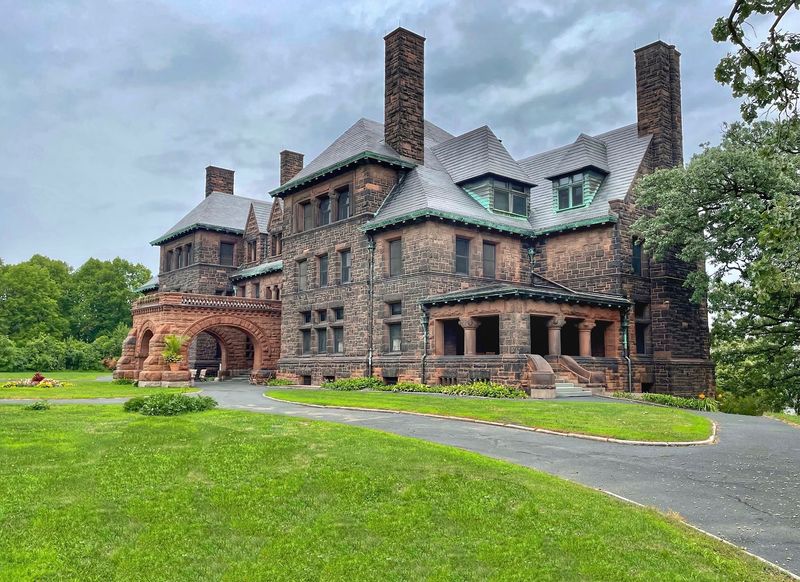
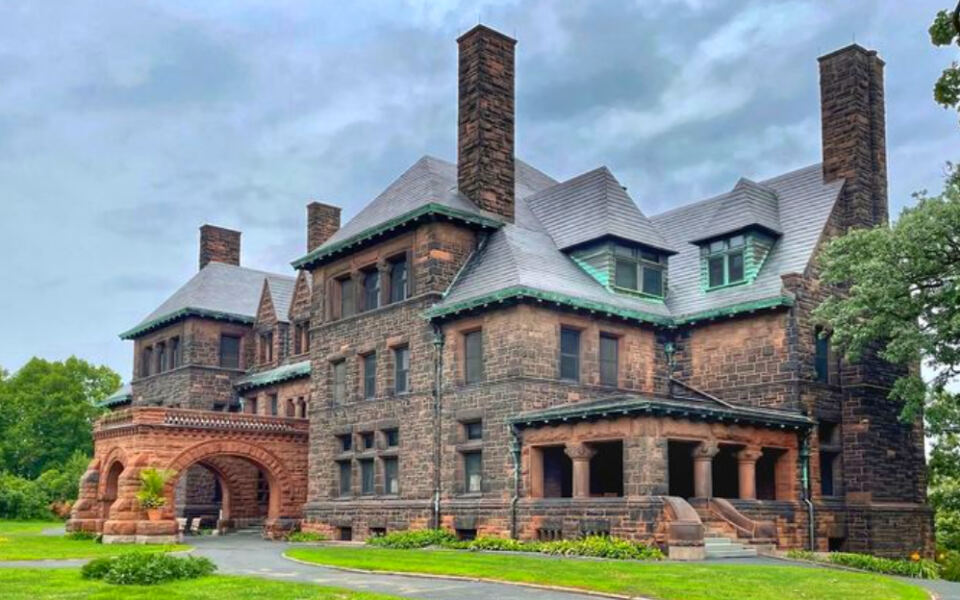
No building on Summit Avenue commands attention quite like the James J. Hill House.
Built between 1888 and 1891 for railroad magnate James J. Hill, this massive Romanesque Revival structure stretches across an enormous lot and rises with a presence that stops walkers mid-stride.
Hill was the force behind the Great Northern Railway, and his home reflects the scale of his ambitions.
The house features more than 13,000 square feet of living space, a skylit art gallery, a pipe organ, and woodwork crafted from some of the finest materials available at the time. It stands as one of the most significant examples of late Victorian residential architecture in the upper Midwest.
Today it operates as a historic site managed by the Minnesota Historical Society, offering tours that take visitors through the original rooms. Seeing the interior firsthand makes the exterior look almost understated by comparison.
That is saying something.
The Cathedral That Anchors the Eastern End
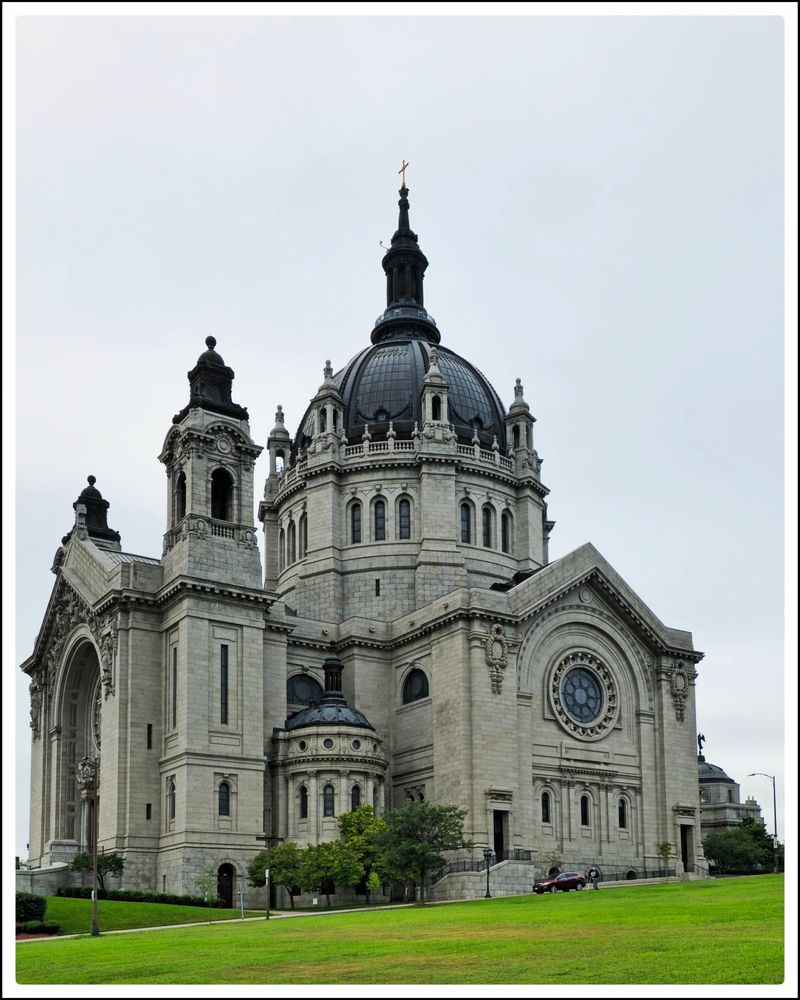
At the eastern end of Summit Avenue stands the Cathedral of Saint Paul, a landmark that sets the tone for everything stretching westward. Completed in 1915, this Roman Renaissance-style cathedral was modeled after St. Peter’s Basilica in Rome and features a copper-clad dome that can be seen from miles away across the St. Paul skyline.
The cathedral’s placement at the head of Summit Avenue was intentional. Its dome and twin towers create a dramatic backdrop that gives the boulevard a sense of grandeur right from the start.
Walking away from the cathedral toward the river, you feel the full sweep of the avenue open up ahead of you.
The building itself is open to visitors and worth exploring up close. The interior features intricate stonework, soaring ceilings, and stained glass that rewards a slow, quiet walk through the nave.
It is a genuinely impressive structure that few travelers outside Minnesota know to look for.
F. Scott Fitzgerald Lived Here, and It Showed in His Writing
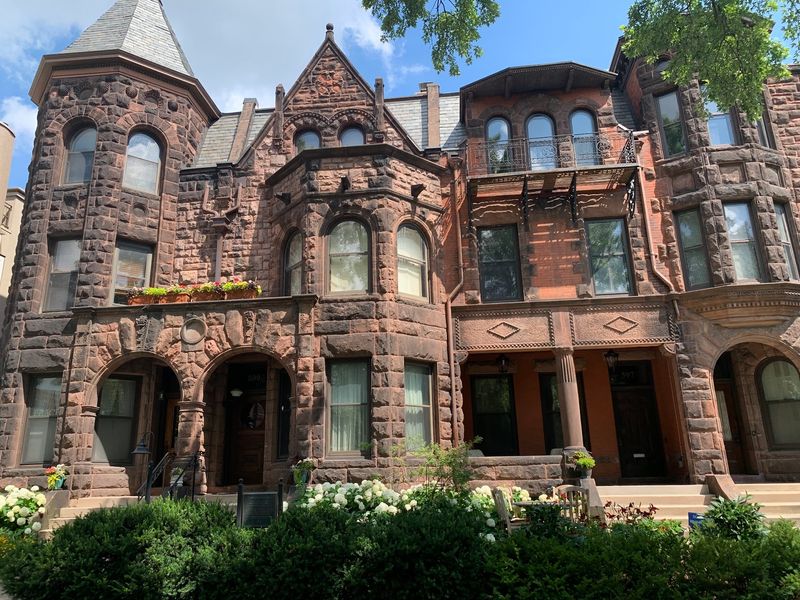
Summit Avenue has a literary connection that surprises most visitors. F.
Scott Fitzgerald, one of America’s most celebrated novelists, lived at 599 Summit Avenue during the summer of 1919. It was in a rented room in that brownstone row house that he completed revisions on his first novel, This Side of Paradise, which was published the following year and launched his career.
Fitzgerald grew up in St. Paul and had a complicated relationship with the wealth and social status that Summit Avenue represented. That tension found its way into his writing, shaping themes he would carry through his entire career, including The Great Gatsby.
The building still stands and carries a historical marker. Walking past it, knowing what was written inside those walls, adds a layer to the street that goes well beyond architecture.
Summit Avenue is not just a visual experience. It is a place where American literary history quietly happened.
The Architecture Styles That Make Every Block Feel Different
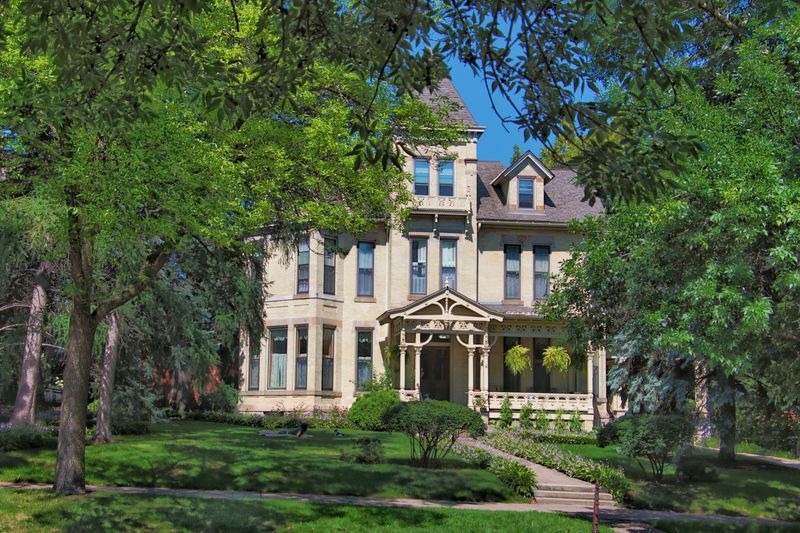
One of the things that keeps Summit Avenue visually interesting for the entire four-mile length is the variety of architectural styles packed into a single corridor. No two blocks look exactly the same.
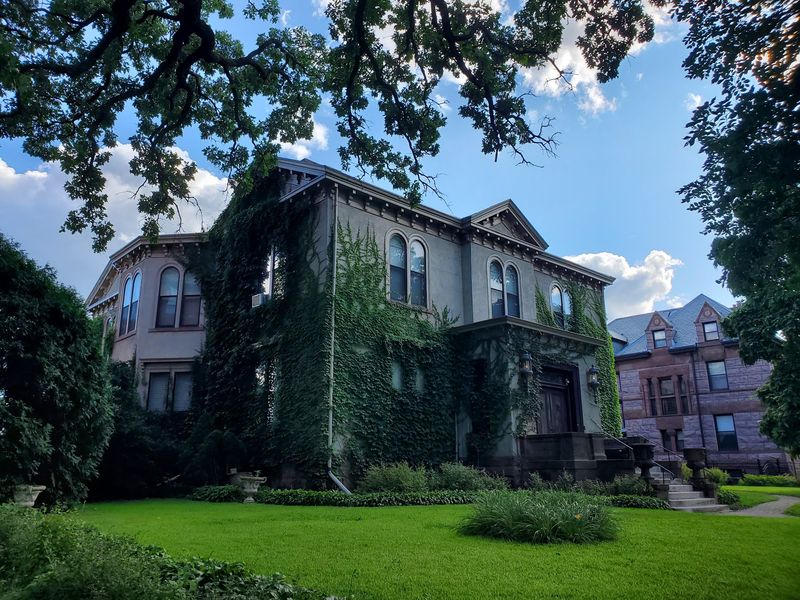
Queen Anne homes with their asymmetrical facades and decorative shingles sit near Romanesque Revival structures built from heavy red sandstone. Colonial Revival and Italianate designs add further contrast.
The details reward close attention. Carved stone lintels, decorative ironwork, leaded glass transoms, wraparound porches with turned spindles, and steep gabled rooflines appear again and again in different combinations.
Each home seems to have been designed with the specific goal of standing out while still belonging to the same grand conversation.
Architects and history enthusiasts often describe Summit Avenue as an outdoor museum of Victorian residential design. That description is accurate, but it undersells the experience.
Walking this street feels less like studying a textbook and more like watching an entire era come alive around you.
Why the Street Has Survived When So Many Others Have Not
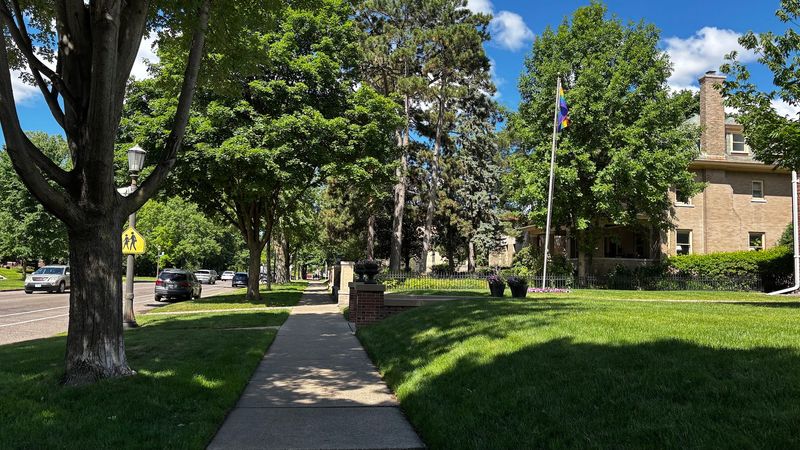
Across the United States, streets that once rivaled Summit Avenue have been largely lost to demolition, subdivision, and redevelopment. Summit Avenue survived for several reasons that came together in a rare combination.
The homes were built with exceptional quality materials and craftsmanship, making them structurally sound well into the twentieth century.
Community advocacy also played a critical role. Residents and preservation groups pushed hard to protect the street’s character as development pressures increased during the mid-1900s.
Local historic preservation efforts, combined with national recognition, helped establish protections that kept the most significant buildings intact.
Summit Avenue was added to the National Register of Historic Places, which provided additional layers of protection and public awareness. The result is a street that looks remarkably close to what it looked like over a century ago.
That kind of survival is genuinely rare, and it is a big part of why Summit Avenue draws visitors from across the country.
Walking the Full Length: What to Expect Mile by Mile
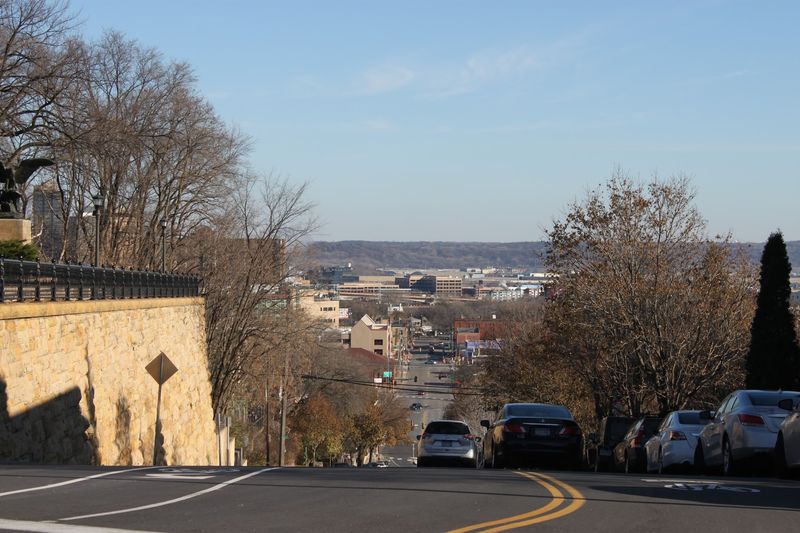
Walking the full four miles of Summit Avenue is an experience worth planning for. The eastern section near the cathedral is where the grandest and most historically significant mansions are concentrated.
This stretch offers the densest collection of elaborate Victorian architecture and is where most first-time visitors spend the majority of their time.
Moving westward, the homes gradually shift in scale and style while maintaining the overall character of the boulevard. The tree canopy thickens in places, and the pace of the walk naturally slows as more details catch your eye.
By the time you approach the western end near the Mississippi River bluffs, the surroundings take on a quieter, more residential tone.
Comfortable walking shoes are a practical necessity. The sidewalks are generally well-maintained, and the street is flat enough to make the full route manageable for most people.
Early morning walks offer the best light for photography and the calmest atmosphere along the boulevard.
Cycling Summit Avenue: A Different Way to See the Boulevard
Summit Avenue has long been popular with cyclists, and for good reason. The boulevard is wide enough to accommodate bike traffic comfortably, and the relatively flat grade makes it accessible for riders of most fitness levels.
Cycling the full length gives you a different relationship with the street than walking does, covering more ground while still moving slowly enough to take in the details.
On weekends, you will often share the road with other cyclists and joggers, which gives the boulevard a lively, community-oriented energy. The wide median strip lined with mature trees adds a buffer that makes the ride feel more relaxed than typical city cycling.
Renting a bike and spending a morning on Summit Avenue is one of the most efficient ways to get a full sense of the street’s scale. You can always lock up and walk specific blocks that catch your attention, combining both approaches for a well-rounded visit.
The Neighborhood Around the Boulevard Adds to the Experience
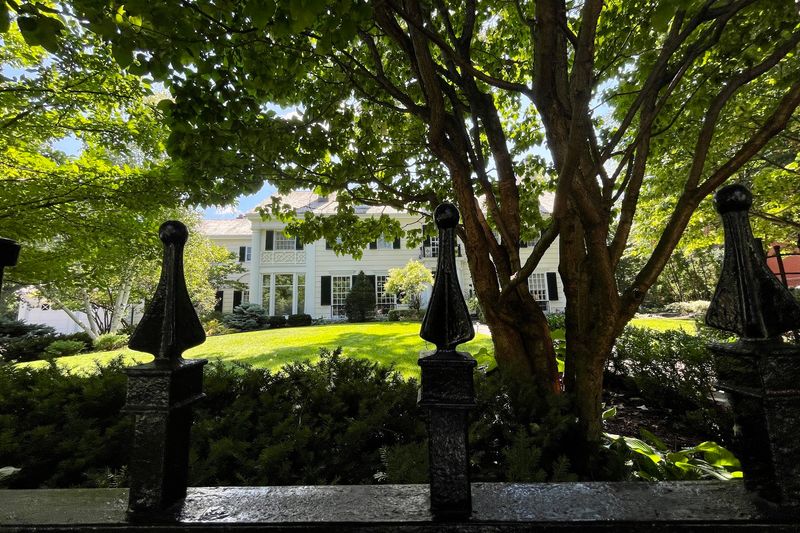
Summit Avenue does not exist in isolation. The surrounding Summit Hill neighborhood extends the architectural character in every direction, with blocks of well-maintained Victorian and Edwardian homes filling the streets between the boulevard and nearby Grand Avenue.
The neighborhood has a walkable, residential quality that makes exploring beyond the main street genuinely rewarding.
Grand Avenue runs parallel to Summit Avenue and offers a completely different kind of experience. Independent shops, cafes, and restaurants line the street in a mix of historic storefronts that complement the residential character nearby.
After a long walk along the boulevard, Grand Avenue provides a natural stopping point for coffee or a meal.
The two streets together create a visit that balances architectural exploration with everyday neighborhood life. That combination is part of what makes the Summit Hill area feel like more than a sightseeing stop.
It feels like a place where people genuinely live and enjoy their surroundings every day.
What the Street Looks Like in Each Season
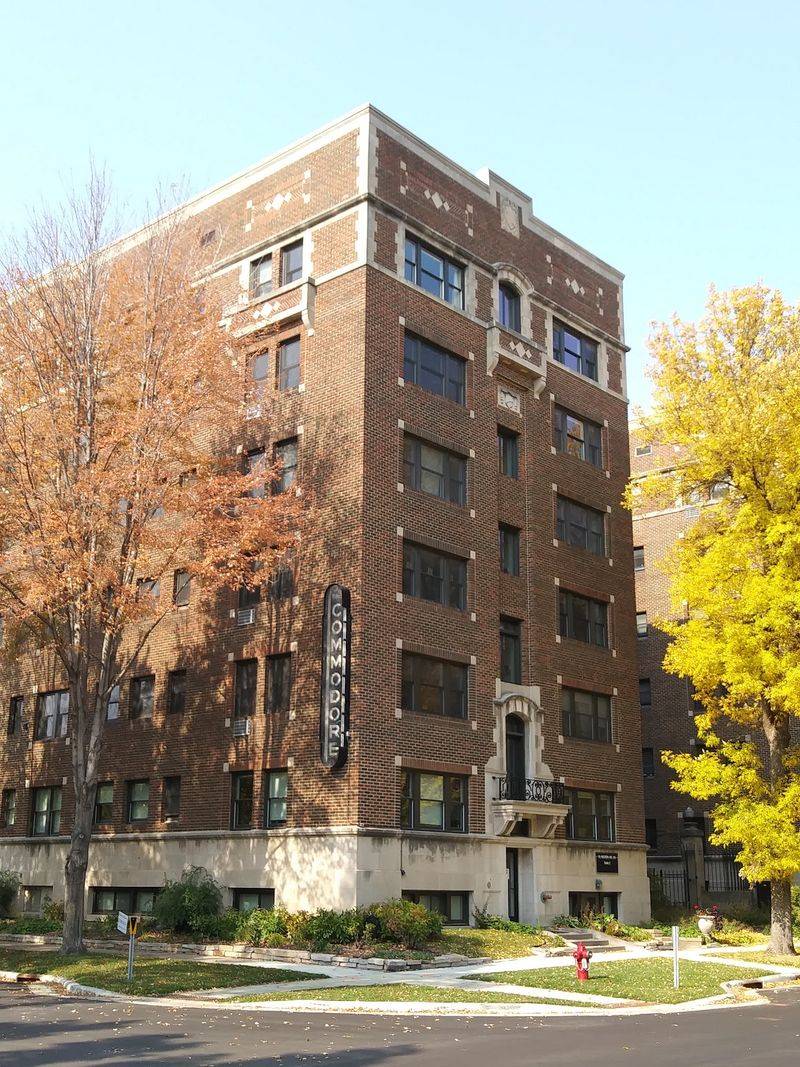
Summit Avenue changes personality with every season, and each version of the street offers something worth seeing. Summer brings the fullest tree canopy, with mature elms and oaks forming a green tunnel overhead that filters sunlight across the sidewalks and facades.
The combination of lush foliage and elaborate Victorian architecture creates a postcard-ready scene that photographers return to repeatedly.
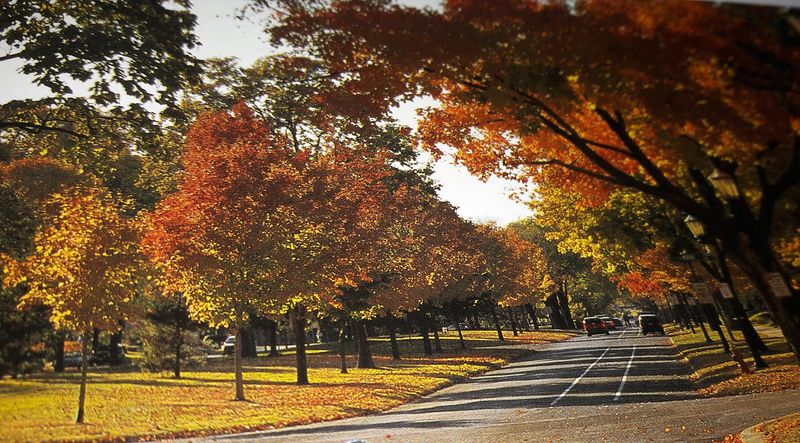
Autumn turns the boulevard into something almost theatrical. The leaves shift through amber, orange, and deep red while the stone and brick facades of the mansions take on warmer tones in the lower-angle light.
Many visitors say fall is the single best time to walk Summit Avenue.
Winter strips the trees bare and reveals the architecture in its most unobstructed form. Snow on the rooflines and turrets gives the street a storybook quality that feels entirely different from the warmer months.
Each season offers a genuine reason to return, which is exactly why so many locals walk this street year after year.
Planning Your Visit to Summit Avenue
Getting to Summit Avenue is straightforward. The boulevard runs through a well-established St. Paul neighborhood, and street parking is generally available along the side streets.
Most visitors start near the Cathedral of Saint Paul at the eastern end and walk or ride westward toward the river bluffs, which gives you the most dramatic introduction to the street.
The James J. Hill House offers ticketed tours on select days and is worth checking in advance to plan your visit around an available tour time.
The exterior of the house and the surrounding grounds can be viewed from the sidewalk at any time without a ticket.
There is no admission fee to walk or cycle Summit Avenue itself. The street is a public boulevard, and the experience of simply walking its length is completely free.
Bringing a camera, wearing comfortable shoes, and allowing at least two to three hours gives you the space to truly appreciate what makes this street unlike anything else in the country.
Share this story