In Philadelphia’s vibrant Fishtown neighborhood, one independent bookstore has become a destination for readers searching for meaningful stories, beautifully curated shelves, and a welcoming sense of community. Visitors come to discover books by women authors, Black writers, and diverse voices, attend inspiring literary events, explore a thoughtfully designed space filled with artwork, and experience a bookstore unlike any other. It’s the kind of place where every shelf introduces you to a new perspective and every visit leaves you feeling inspired.
The experience extends far beyond the books. Community gatherings, author events, children’s programming, beautiful art installations, thoughtfully curated collections, and a mission rooted in education, inclusion, and storytelling have made this one of Philadelphia’s most beloved independent bookstores. Whether you’re an avid reader or simply looking for one of the city’s most memorable hidden gems, it’s easy to understand why visitors return again and again.
Here’s why Harriett’s Bookshop has become one of Philadelphia’s most inspiring literary destinations and one of America’s most remarkable independent bookstores.
Where Stories Find Their Home in Fishtown
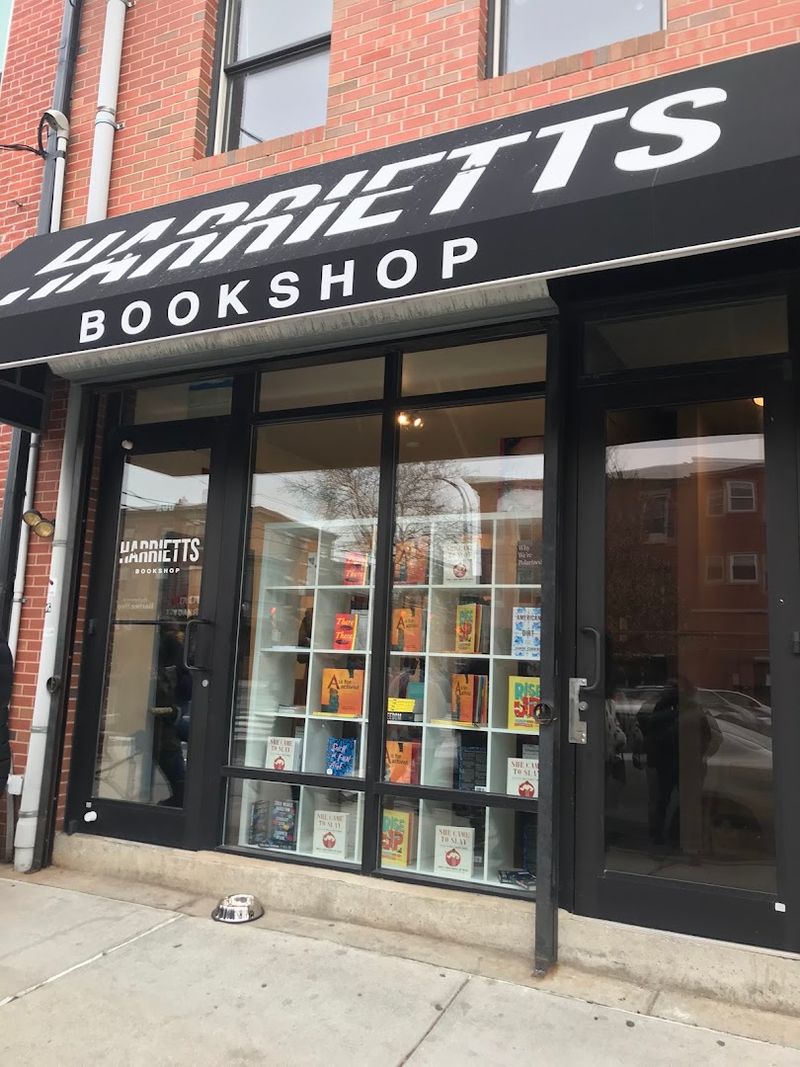
Right in the heart of Philadelphia’s creative Fishtown neighborhood, at 258 E Girard Ave, Philadelphia, PA 19125, sits one of the most intentional bookstores in the country. Fishtown is already known for its eclectic energy, its mix of historic rowhouses and contemporary murals, and Harriett’s Bookshop fits right into that spirit while carving out its own distinct identity.
The storefront announces itself with quiet confidence. There’s no neon gimmick or flashy window display competing for your attention, just a clear, purposeful presence that signals something meaningful happens inside.
The shop is open Wednesday through Friday from 12 to 6 PM, Saturday and Sunday from 10 AM to 6 PM, and closed Monday and Tuesday, so plan accordingly. Its 4.9-star rating across hundreds of reviews tells you everything you need to know about how consistently it delivers on its promise, and that promise is considerable.
The Mission Behind Harriett’s Bookshop
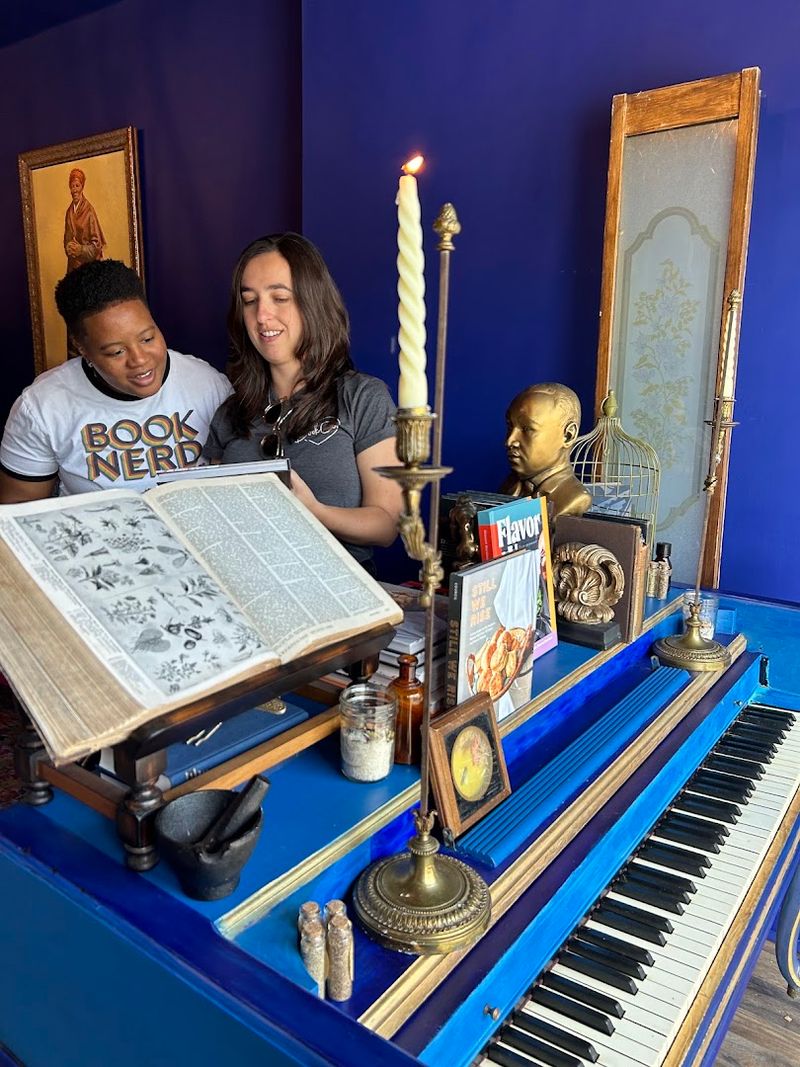
Jeannine A. Cook opened Harriett’s Bookshop in February 2020 with a mission that was anything but small. She named the shop after Harriet Tubman, the abolitionist and freedom fighter whose courage redefined what ordinary people could accomplish when driven by an extraordinary sense of purpose.
Cook is not simply a proprietor. She is a self-described “word worker,” an author, literary activist, and community organizer whose personal convictions are woven into every shelf and event the shop produces. Her debut memoir, SHUT UP AND READ, and her novel, IT’S ME THEY FOLLOW, are both available in the store, adding an authentically personal layer to the curation.
She has also led efforts to establish a federal holiday honoring Harriet Tubman, working alongside Congressman Brendan Boyle on the Harriet Tubman Day Act. Meeting her in person, as many visitors have described, feels less like encountering a shopkeeper and more like meeting someone who genuinely changed the neighborhood.
Born During a Pandemic and Stronger for It
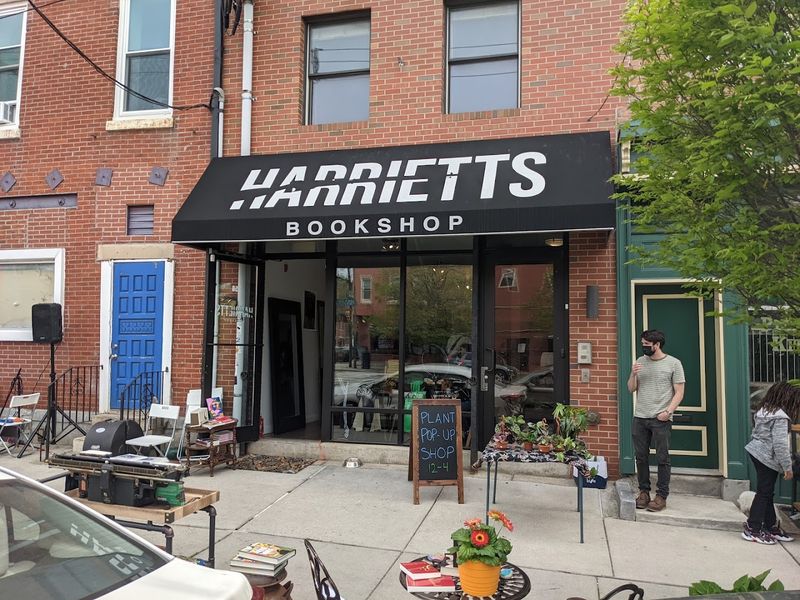
Few origin stories carry as much drama as opening a brand-new business just weeks before a global pandemic shut everything down. That is exactly what happened here in early 2020, and instead of folding, Harriett’s Bookshop responded with breathtaking creativity.
Cook moved the inventory outside and set up a sidewalk operation where books were sold on an honor system, trusting the community to pay fairly for what they took. That alone would make a remarkable story, but she went further, delivering books to Philadelphia children by horseback, an image so vivid and joyful it drew national media attention.
That period of crisis became, paradoxically, the moment that defined the shop’s character for years to come. The pandemic chapter proved that Harriett’s was not a fragile retail experiment but a deeply rooted community institution, one flexible enough to adapt without ever losing sight of what it stood for. Resilience, it turns out, is also a genre.
A Curated Collection Unlike Any Other
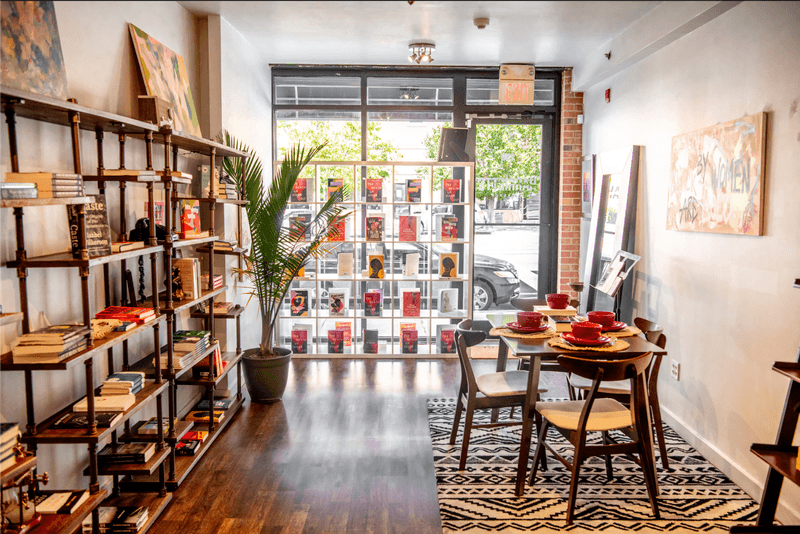
The selection at Harriett’s is not large in the way a chain store is large. It is purposeful, which is an entirely different and arguably superior quality. Every title earns its place on the shelf because it aligns with the shop’s commitment to amplifying women authors, Black writers, and BIPOC creators whose voices have historically been pushed to the margins.
The collection spans new releases, used titles, and rare finds, covering everything from biography and memoir to fiction, poetry, children’s literature, history, and cookbooks. Visitors consistently note that the curation feels like a personal recommendation from someone who has actually read everything on display.
Books are tied up with a bow before you leave, a small gesture that transforms a purchase into something that feels genuinely ceremonial. That kind of thoughtful detail is not accidental. It reflects a broader philosophy that every book exchanged here is not just a transaction but a meaningful connection between a reader and a story waiting to change them.
Activism Written Into the Walls
During the widespread protests following the killings of Ahmaud Arbery, Breonna Taylor, and George Floyd, Harriett’s Bookshop did not simply observe the national moment from a distance. Cook and her team gave away over 100 books to protestors and passersby, fueled initially by an anonymous donation that then sparked a broader crowdfunding campaign.
Demand for antiracist titles surged so dramatically that the online store had to temporarily pause orders just to keep up. Titles like White Fragility and How to Be an Antiracist flew off the shelves as readers sought context, vocabulary, and historical grounding for what they were witnessing in the streets.
This is what separates Harriett’s from a standard retail operation. Cook views books as instruments of social change, not decorative objects or leisure products. The shop’s response to that period of national reckoning made its position clear: literature is not a retreat from the world, it is one of the sharpest tools we have for reshaping it.
The Atmosphere That Stops You Mid-Step
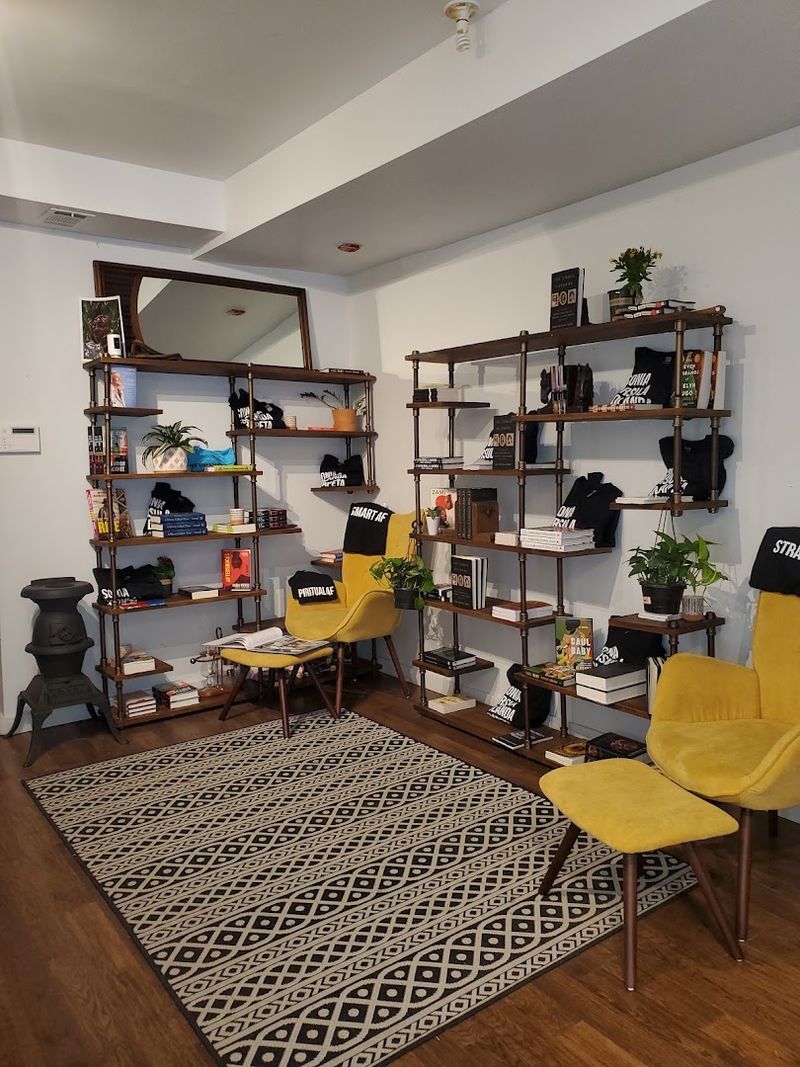
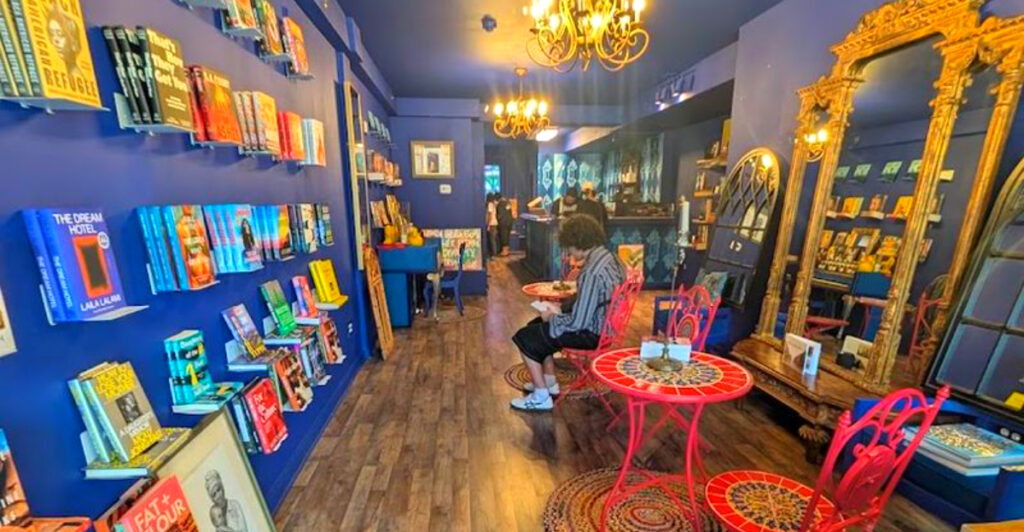
There is a specific kind of quiet that settles over you the moment you walk into Harriett’s, not silence exactly, but a sensory calm that visitors describe as almost involuntary. The interior design rewards slow movement, with details that reveal themselves gradually rather than shouting for attention all at once.
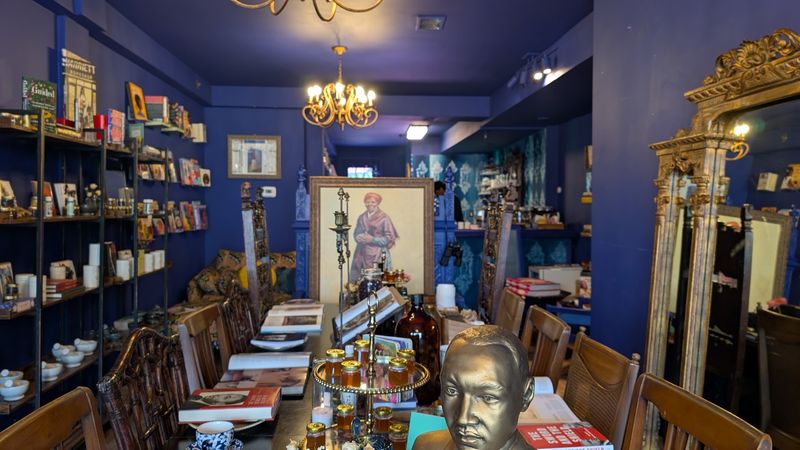
A long communal table with chairs and candles anchors the main room, creating an atmosphere that is part library, part living room, and part community gathering space. Artwork and thoughtfully chosen design elements celebrate Black culture and women’s empowerment without ever feeling like a lecture.
The shop extends beyond the main floor into a children’s area, an outdoor patio nook with seating and greenery, and a lower level with additional seating, apparel, and more books. The layered layout means there is always another corner to discover, another shelf to linger over, another reason to stay just a little longer than you originally planned.
Twenty Artists Transformed This Space
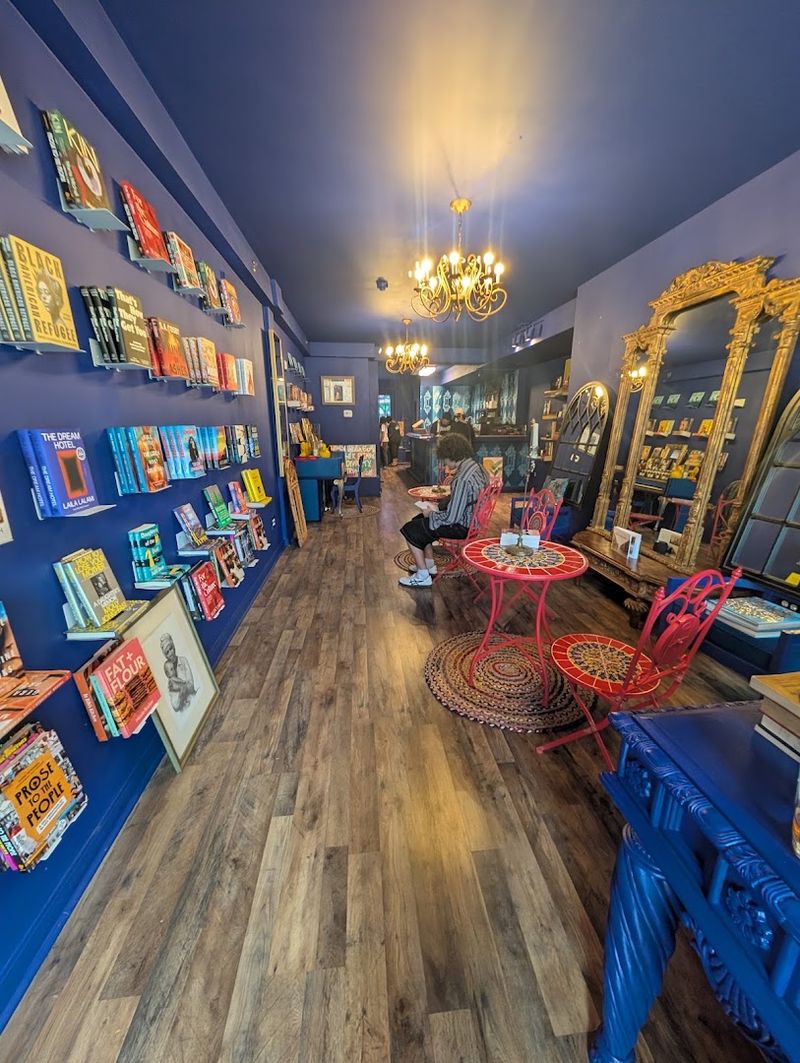
A recent renovation at Harriett’s brought together more than twenty artists from a wide range of disciplines, including industrial designers, illustrators, wallpaper makers, and furniture painters, each contributing their talents to reshape the physical space into something genuinely extraordinary.
The result is an interior that functions as both a bookshop and a gallery, where the walls, furniture, and fixtures all carry creative intention. No surface feels generic or off-the-shelf, which makes browsing feel more like exploring an installation than running a simple errand.
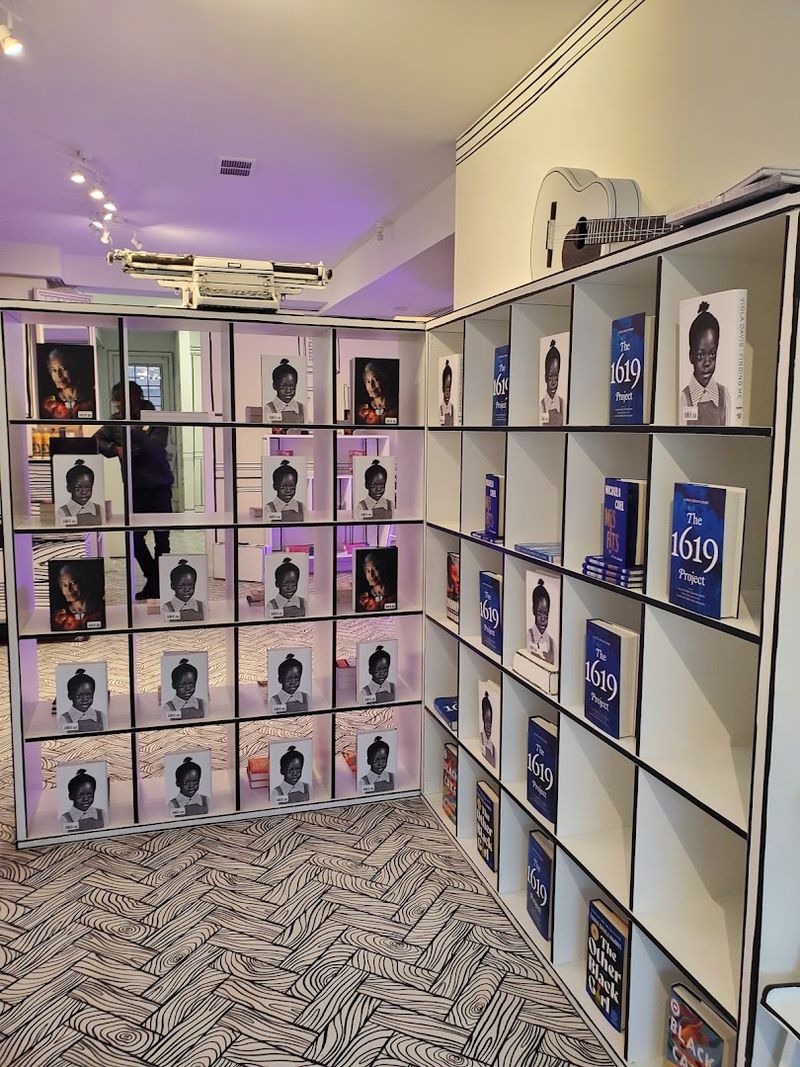
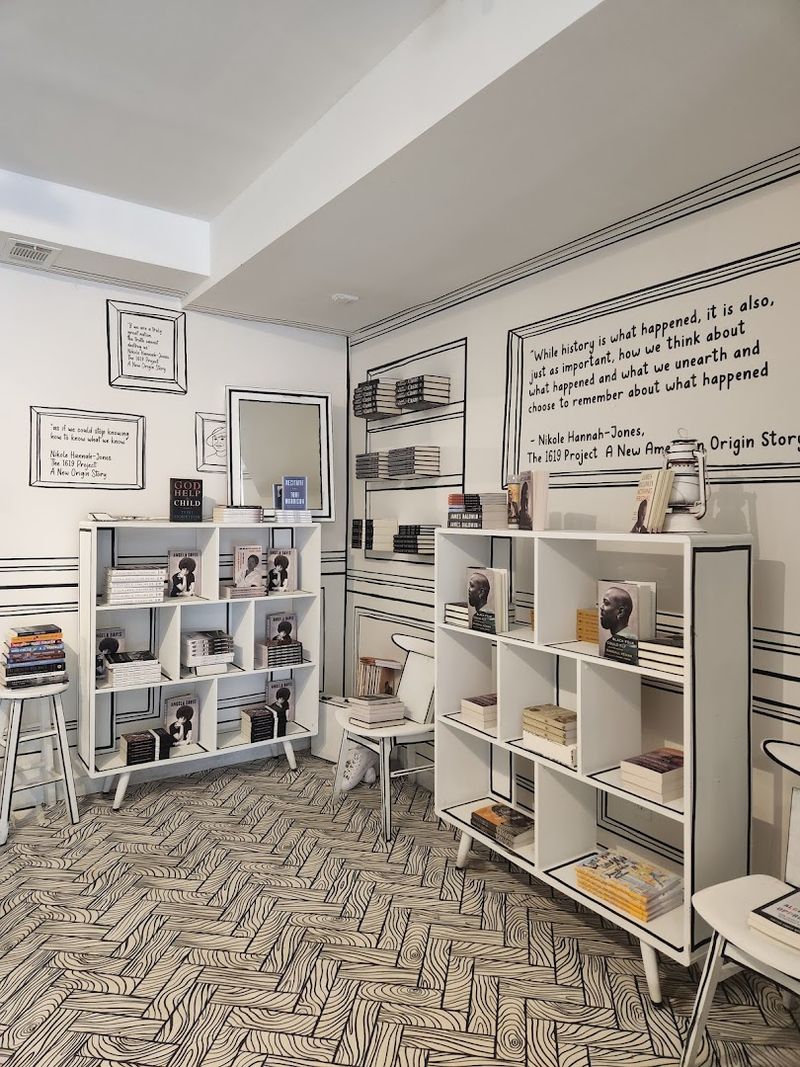
This collaborative approach to design mirrors the shop’s broader philosophy: that creativity is most powerful when it draws from many voices rather than a single authority. The renovation also produced a small replica of the children’s section at Philadelphia International Airport, inspired by The 1619 Project and designed explicitly as a statement against book-banning. That airport installation brought the shop’s mission into one of the city’s most public and high-traffic spaces, reaching audiences far beyond Fishtown.
Events That Actually Mean Something
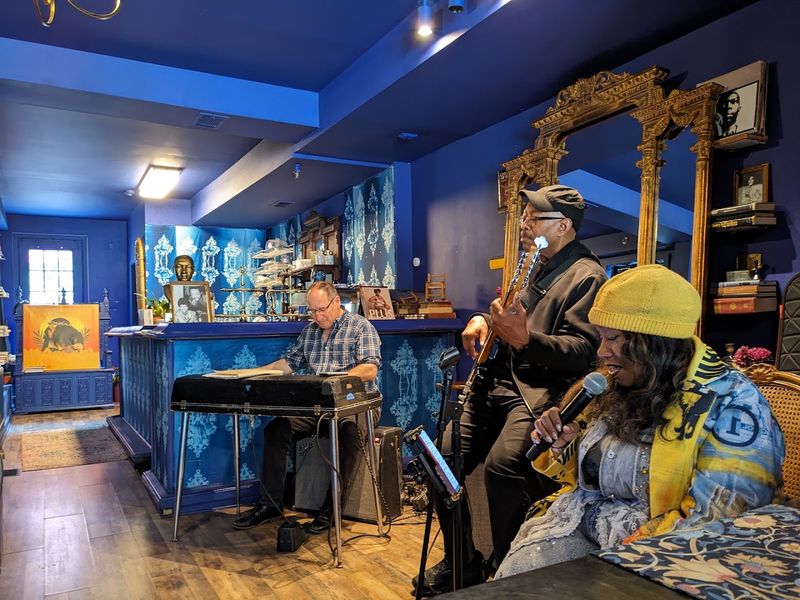
The events calendar at Harriett’s reads less like a promotional schedule and more like a carefully assembled season of experiences. Author readings, book signings, jazz appreciation concerts, Juneteenth celebrations, and sisterhood sit-ins have all taken place within these walls, each one reflecting the shop’s commitment to making literature a living, communal practice.
Celebrated writers including Alice Walker, Sonia Sanchez, and Isabel Wilkerson have appeared here, giving the community direct access to voices that normally fill auditoriums or university lecture halls. Visitors who attended the Juneteenth gathering described it as feeling like a family reunion, which says a great deal about the kind of atmosphere Cook cultivates.
The shop has also hosted jazz events and pop-up experiences that blend music, spoken word, and social gathering into something that transcends any single category. Each event is designed to leave attendees feeling connected, informed, and energized rather than simply entertained, a distinction that regular visitors clearly notice and deeply appreciate.
The Deeply Rooted Trolley Tour
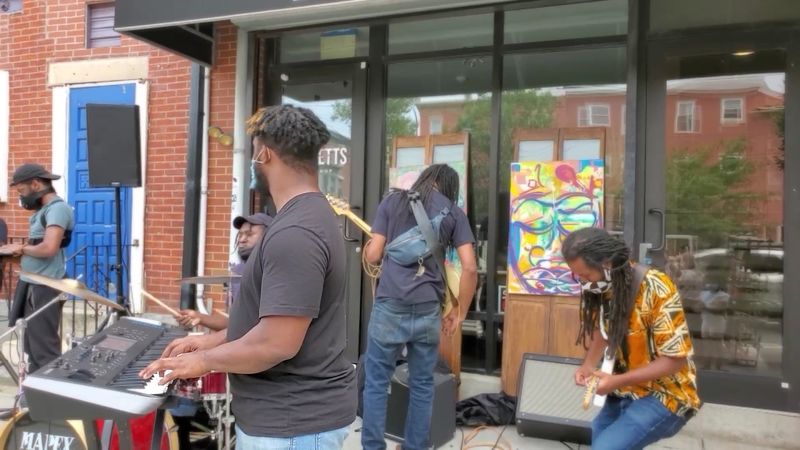
One of the most inventive things to emerge from Harriett’s Bookshop is the Deeply Rooted Trolley Tour, a hop-on-hop-off experience that takes riders through Philadelphia’s food, art, music, and cultural landscape with a specific focus on Black-owned businesses and historic institutions.
The tour grew out of a desire to protect and support other local establishments after the bookshop itself faced threats and harassment, a sobering context that gives the experience an added layer of meaning. Participants have visited Hakim’s Bookstore, Uncle Bobbie’s Coffee and Books, and The Colored Girls Museum, among other stops, each location rich with its own history and community significance.
Riders consistently describe the experience as joyful, reflective, and socially connective in ways that a typical city tour simply cannot replicate. It’s a moving classroom, a celebration, and a solidarity exercise all wrapped into one rolling adventure through a city with an extraordinary depth of Black cultural heritage waiting to be explored.
Growing Beyond One Storefront
A mission as clear and compelling as Harriett’s was never going to stay contained to a single address for long. Cook expanded the vision by opening Ida’s Bookshop in Collingswood, New Jersey, carrying the same philosophy of celebrating women authors and diverse voices into a neighboring community across state lines.
In an even bolder move, a Josephine’s Bookshop installation was established in Paris, bringing the spirit of the Fishtown original to one of the world’s most storied literary cities. Each sister location carries a name honoring a significant woman, Ida B. Wells and Josephine Baker respectively, continuing the tradition of naming spaces after heroines whose legacies deserve constant remembrance.
This expansion is not dilution. Each location feels rooted in its own community while drawing from the same foundational belief that literature, when thoughtfully curated and actively championed, can shift culture. The fact that this vision has now crossed an ocean suggests the world was ready for exactly this kind of bookshop all along.
A Children’s Section With a Clear Purpose
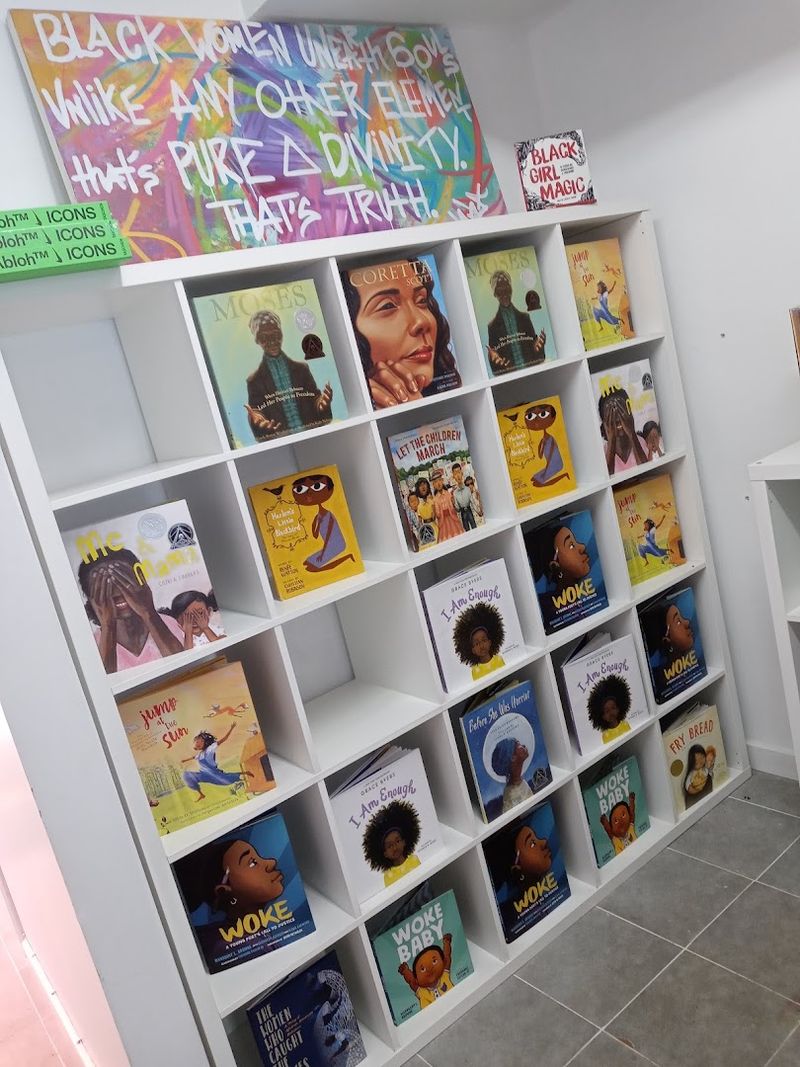
The children’s area at Harriett’s occupies its own dedicated space within the shop, and the care that goes into selecting those titles is every bit as deliberate as the adult collection. Young readers encounter books that reflect their own faces, families, and experiences, alongside stories that introduce them to cultures and histories beyond their immediate world.
Titles like Brown Like Me by Yolanda have found a home on these shelves, available in both hardback and paperback, chosen because they speak directly to the identity and self-worth of young Black readers. This is not tokenism or box-checking. It is a sustained commitment to ensuring that children see themselves as the heroes of stories, not just the audience for someone else’s narrative.
The airport installation inspired by The 1619 Project extended this mission into a public space where thousands of families pass through daily. Reaching children before they have formed fixed ideas about whose stories matter most is, as Cook clearly understands, one of the most powerful interventions a bookstore can make.
Why This Place Stays With You Long After You Leave
Most bookstores sell you a book and send you on your way. Harriett’s gives you something harder to quantify but impossible to ignore, a sense that you have participated in something that matters. Visitors leave carrying their purchases tied up with a bow, a gesture so small and so deliberate that it reframes the entire experience of buying a book.
The shop’s 4.9-star rating is built on moments like meeting Jeannine Cook and having her sign a copy of her novel, or discovering a rare title that somehow speaks directly to exactly what you needed that week. It is also built on the cumulative effect of a space designed to make everyone who enters feel genuinely welcome rather than merely tolerated.
Harriett’s Bookshop earns its reputation not through spectacle but through sustained intention, a daily commitment to the idea that books are not passive objects but active forces capable of shifting how people see themselves and each other. That is a rare thing, and Philadelphia is lucky to have it.
Share this story