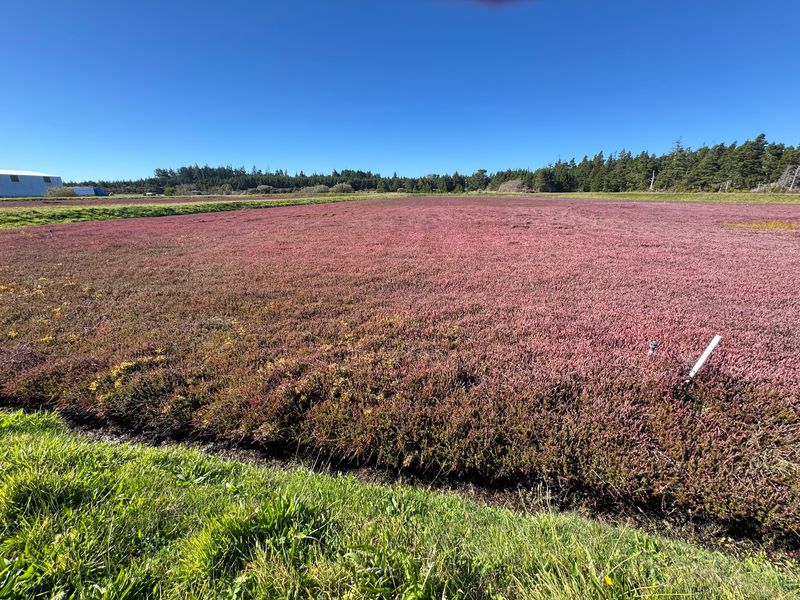
Some of my favorite Oregon surprises start with a slow drive and a double take. You round a bend on the South Coast, and instead of the usual dunes and driftwood, you spot low, reddish fields that look like a patchwork quilt.
Cranberries grow here, and they are part of a working landscape that many Oregonians never think about. Stick around, and you will learn what those fields really are, how the fruit gets picked, and how to see it the right way.
Cranberry fields mark a working stretch of the South Coast
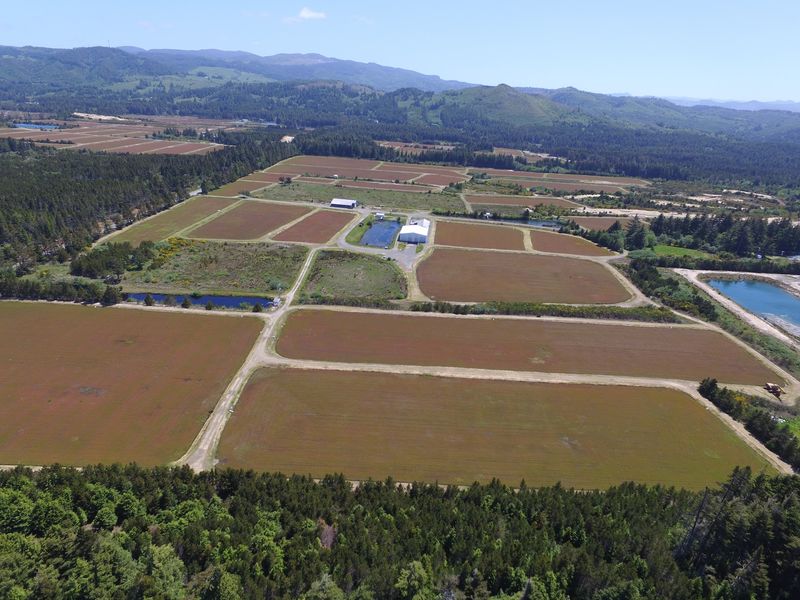
Commercial cranberry farming is a real part of life in Coos and Curry counties, especially along the Port Orford to Bandon corridor. Oregon’s transportation plan for the South Coos byway describes reddish cranberry fields along the highway as a local cultural and economic resource.
That does not mean every stretch of coastal road hands you a bog. The fields sit in particular pockets, and you may drive a good while before one appears.
Farming here is also not new or imaginary. An OSU Extension nutrient guide for South Coastal Oregon exists because growers have long worked this ground.
When a reddish field does show up, you are looking at someone’s livelihood, and that makes the discovery feel earned.
Shore pine belongs to the setting, not a blanket explanation
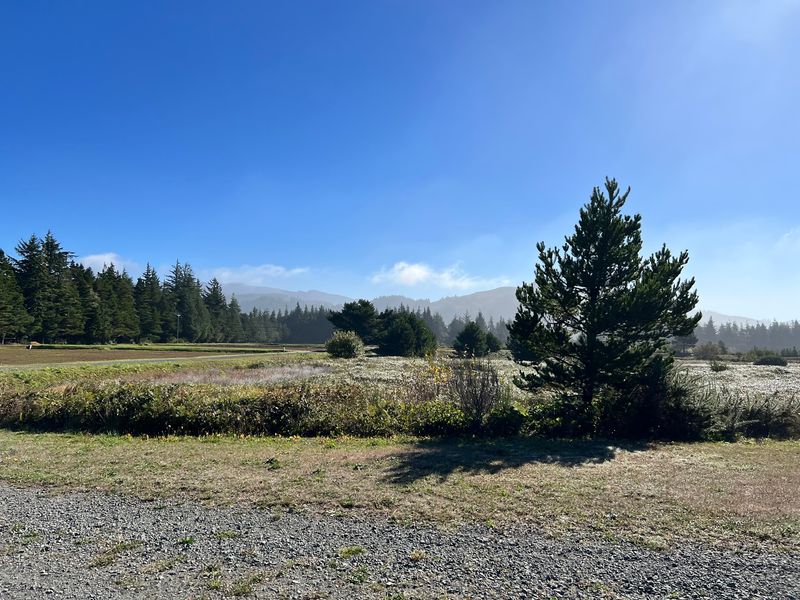
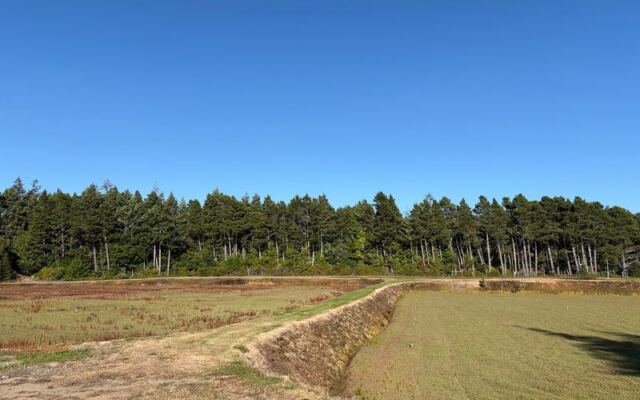
Shore pine is a true coastal local. OSU Extension says it grows in boggy areas and sandy soils along the Oregon coast, so its gnarled shapes fit the scenery nicely.
Here is the catch. Nothing shows that cranberry farms are generally tucked inside shore pine forests.
The idea of farms hiding among the pines is a pretty picture, not a map.
What is documented is simpler. The transportation plan mentioned earlier places cranberry fields along parts of the highway corridor.
Shore pine and cranberries share a coastal neighborhood, but you should not count on pines to point you to a field.
What does a cranberry bog actually look like?
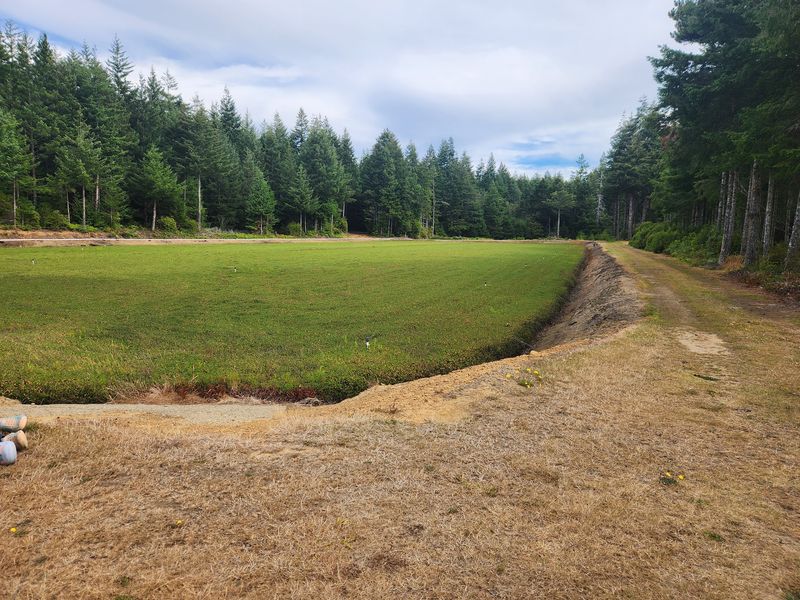
Picture a flat, tidy bed of low, trailing vines rather than a wild swamp. Cranberries grow on short vines in cultivated beds, and Oregon Agriculture in the Classroom explains how these fields are managed.
“Bog” is the familiar industry word, and it sounds romantic. In practice, the beds have drainage and water systems, with ditches and gates that let growers move water when they need to.
The crop is generally not kept underwater while it grows. Washington State University’s guide to Pacific Northwest production shows how much farm engineering sits behind the pretty label.
Water makes the wet harvest possible
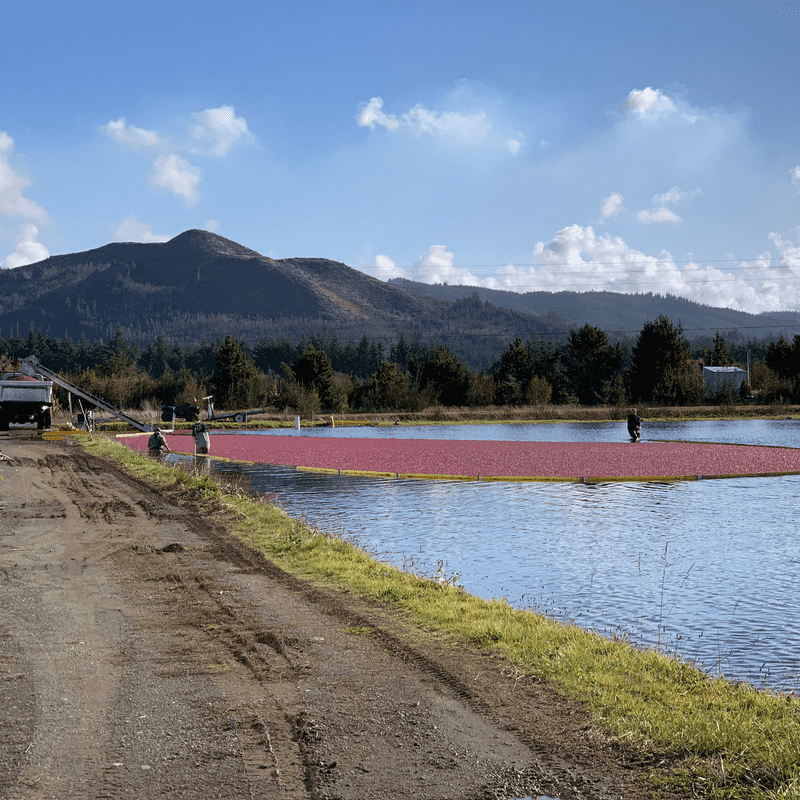
Harvest day is when water takes the spotlight. In wet harvesting, growers flood a bed, agitate the vines to loosen the fruit, then corral and remove the floating berries, as described by OSU Extension’s cranberry management plan.
Dry harvesting is also used, particularly for fruit meant for fresh-market sale. Machines move through the beds without flooding them.
So a flooded field is a harvest scene, not a picture of how cranberries grow day to day. And not every farm picks the same way, so two neighboring fields can look quite different on the same week.
The red arrives on the crop’s schedule
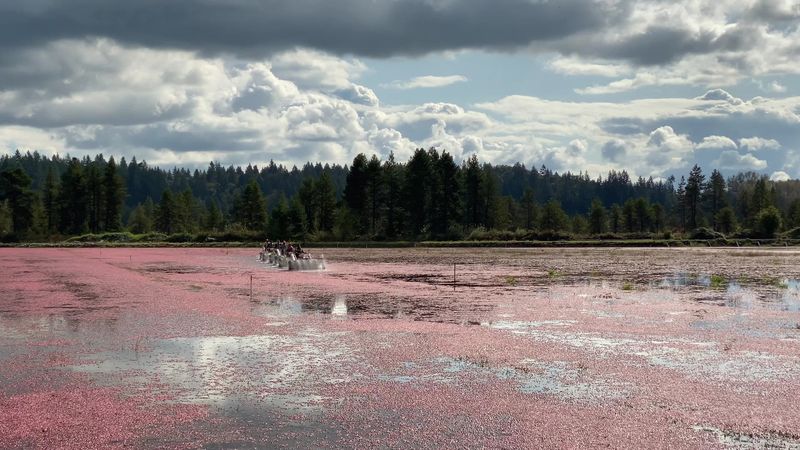
The color in the story belongs to the fruit. OSU Extension describes Oregon’s berries as dark red, and the highway plan notes reddish cranberry fields along the route.
Timing and color shift with variety, harvest stage, and method. OSU gives a broad August to November window and says most Pacific Northwest fruit is harvested by the end of October.
That means you should not expect a crimson landscape on a set autumn date. Some fields may glow, others may already be picked, and plenty may look plain green-brown.
A modest-looking coast supports a substantial crop
Numbers help explain why these quiet fields matter. In 2025, USDA reported that Oregon harvested 2,400 acres and produced 529,000 barrels of cranberries.
USDA defines a cranberry barrel as 100 pounds, so that works out to 52.9 million pounds of fruit.
Those are statewide totals, and they should not be credited entirely to the South Coast. Still, the state’s transportation plan calls the corridor’s cranberry fields a local cultural and economic resource, which tells you the crop carries real weight in communities along the highway.
See the farms on their terms
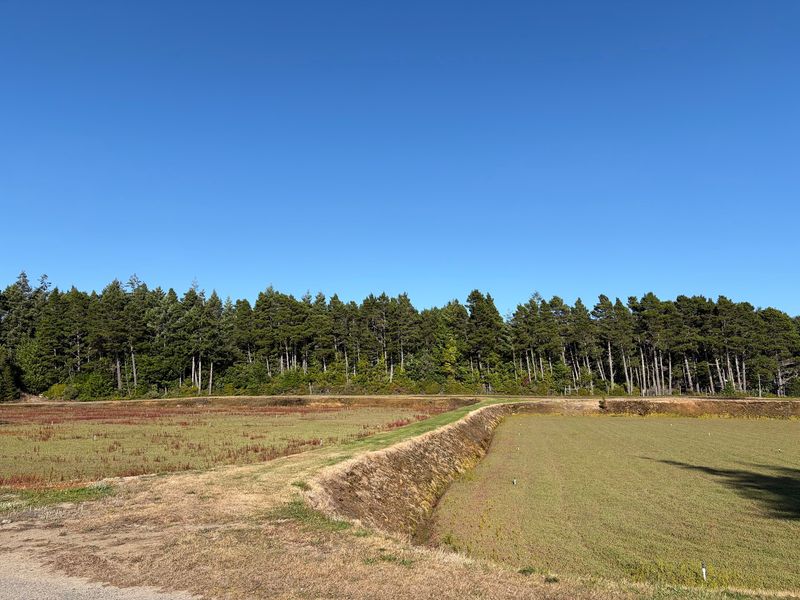
Treat every bog as a working farm. The state’s plan notes that the corridor’s cranberry bogs are privately owned, so walking in for photos is not an option.
If you want a closer look, visit only farms that clearly welcome guests and follow their directions. One listed option is a farm that offers tours and advises calling ahead.
It is one choice, not a promise of public access or a set schedule.
Confirm timing before you go, since harvest varies. Some of the best coastal finds are the ones you admire from the road with a little patience.
Share this story