One of the world’s most important collections of British Pre-Raphaelite art is not in London. It is in Wilmington, Delaware.
The Delaware Art Museum holds the largest collection of British Pre-Raphaelite art and manuscript materials outside the United Kingdom, thanks largely to Wilmington collector Samuel Bancroft Jr. His decades of collecting brought works and archival materials connected to artists such as Dante Gabriel Rossetti, John Everett Millais, and William Holman Hunt to Delaware.
But the museum goes well beyond Victorian British art. Its collections also explore the work of Wilmington illustrator Howard Pyle and his influential students, along with American artists including John Sloan, Edward Hopper, and Andrew Wyeth.
Outside, the experience continues through the nine-acre Copeland Sculpture Garden, giving visitors another reason not to treat this as a quick gallery stop.
A Stately Address with a Surprisingly Rich Origin Story
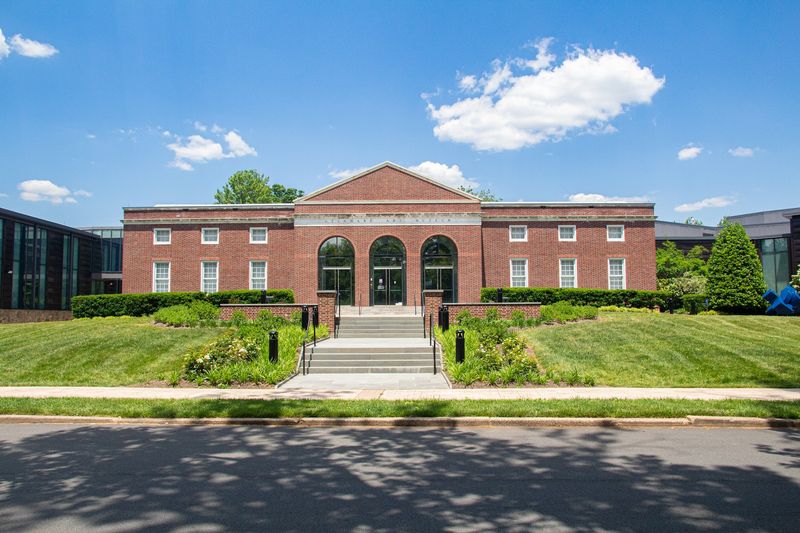
The Delaware Art Museum sits at 2301 Kentmere Pkwy, Wilmington, Delaware 19806, a graceful Colonial Revival building that opened in 1938 during the height of the Great Depression. That it was built at all during such a difficult economic period says a great deal about how deeply this community valued art and culture.
The museum traces its origins back to 1912, when it began as the Wilmington Society of the Fine Arts, founded specifically to honor the legacy of celebrated local illustrator Howard Pyle. Its earliest collection comprised more than 100 paintings, drawings, and prints purchased directly from Pyle’s widow, Anne, giving the institution an immediate sense of personal history.
Designed by the firm of Victorine and Samuel Homsey Inc., the building raised an impressive $350,000 from community donors, a remarkable feat for its era. That founding spirit of communal investment still feels present today, making the museum feel less like a formal institution and more like a shared neighborhood treasure that happens to hold world-class art.
The Brotherhood That Dared to Break All the Rules
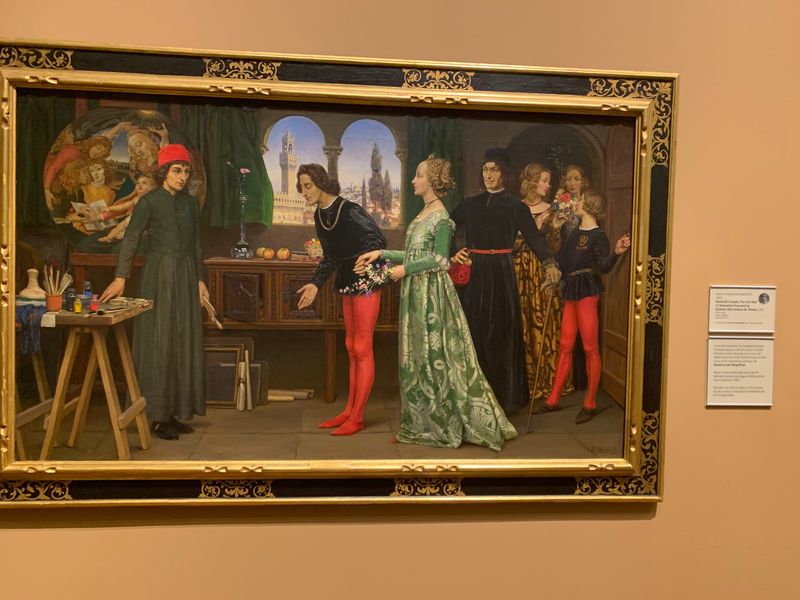
In 1848, seven young British artists and writers decided they had seen enough of the stuffy conventions promoted by the Royal Academy, and they formed the Pre-Raphaelite Brotherhood in direct defiance of everything the Academy championed. Their name was a deliberate provocation, signaling their rejection of the High Renaissance style associated with the painter Raphael.
Instead of idealized, polished compositions, they looked backward to the medieval period, embracing intricate detail, vivid color, and symbolic storytelling. They were also deeply concerned with the social upheaval of the Industrial Revolution, and their early works tackled contemporary moral and ethical issues with unflinching honesty.
Key figures like Dante Gabriel Rossetti, John Everett Millais, and William Holman Hunt led the charge, initially drawing sharp criticism from figures including Charles Dickens. The influential art critic John Ruskin eventually championed their cause, encouraging them to observe nature with precision and paint it truthfully.
That rebellious energy still radiates from their canvases today, making every encounter with their work feel electric.
One Man’s Obsession That Became Delaware’s Greatest Artistic Gift
Samuel Bancroft Jr. was a Wilmington textile mill owner with an unusual hobby: spending decades acquiring some of the most significant Pre-Raphaelite artworks in existence. His journey began in 1880 after he encountered a painting by Dante Gabriel Rossetti, and that single experience set off a 35-year collecting obsession that would reshape Delaware’s cultural identity.
Bancroft didn’t just buy paintings. He built relationships with living Brotherhood members and their families, including Jane and Jenny Morris, Winifred Sandys, and Phillip Burne-Jones, acquiring archival documents alongside the artworks themselves.
By the time of his passing in 1915, he had assembled what is now recognized as the largest collection of British Pre-Raphaelite art and manuscript materials outside the United Kingdom.
His family donated the entire collection to the Wilmington Society of the Fine Arts in the 1930s, along with 11 acres of land that made the museum’s current building possible. Without Bancroft’s quiet, determined passion, this extraordinary collection would almost certainly have stayed in Britain, and Delaware’s cultural story would look very different.
Howard Pyle and the Illustrators Who Shaped American Visual Storytelling
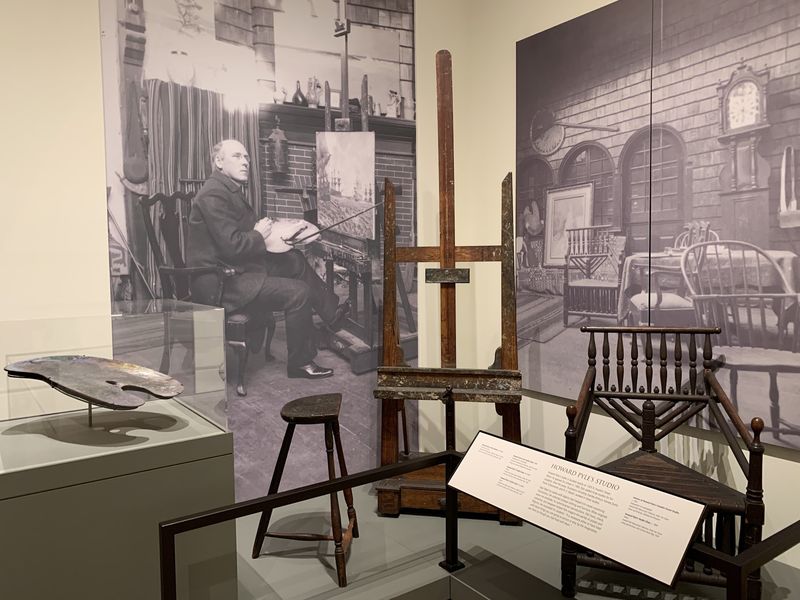
Long before the Pre-Raphaelite collection became the museum’s international calling card, the institution was built around a single name: Howard Pyle. A Wilmington native, Pyle became one of the most influential illustrators in American history, and his students went on to define the visual language of an entire era.
Names like N.C. Wyeth, Frank Schoonover, Jessie Wilcox Smith, Stanley Arthurs, and Violet Oakley all passed through Pyle’s teaching circle, and the museum proudly showcases their work alongside his own.
Seeing their illustrations together creates a vivid sense of artistic lineage, almost like watching a family tree rendered in paint and ink.
Pyle’s lighted stained-glass window, “Anthony van Corlaer,” displayed in the museum, reveals a side of his talent that goes beyond the book illustrations most people associate with his name. Violet Oakley’s monumental study “The Tempest and Hamlet” further demonstrates the ambition and scale that Pyle’s circle consistently brought to American art.
This is a chapter of creative history that deserves far more recognition than it typically receives.
The Ashcan School and the Art of Painting Real Life Without a Filter
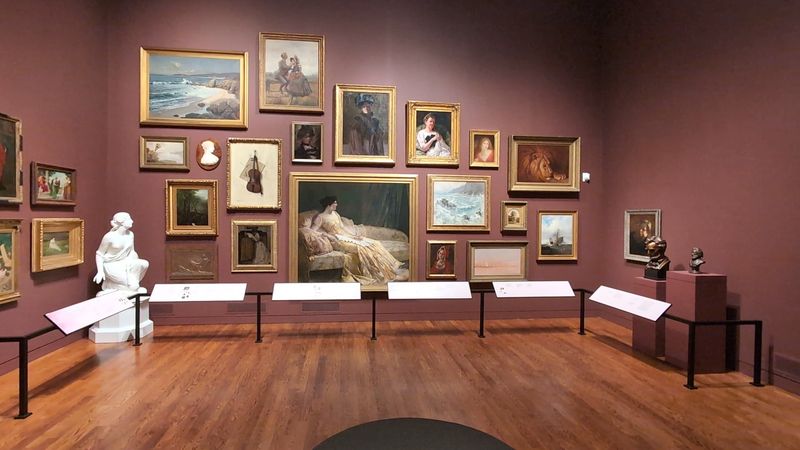
Not every artist at the Delaware Art Museum was interested in medieval romance or Arthurian legend. John Sloan and the group known as “The Eight,” often called the Ashcan School, had a very different agenda: painting the raw, unvarnished reality of American city life in the early 20th century.
Their work depicted crowded tenements, clotheslines strung between buildings, and ordinary people going about their daily routines, subjects that polite society preferred to ignore. This willingness to find beauty and meaning in overlooked corners of urban existence was genuinely radical for its time, and it helped pave the way for American modernism.
The museum holds a significant collection of Sloan’s work, enriched enormously by the 1978 donation of his manuscript and library collection by his wife, Helen Farr Sloan, after whom the museum’s library and archives are now named. Spending time with Sloan’s paintings after seeing the Pre-Raphaelites creates a fascinating contrast, two movements separated by an ocean and decades, yet both driven by the same impulse to show the world as it truly is.
Masterpieces You Cannot Miss Inside the Galleries
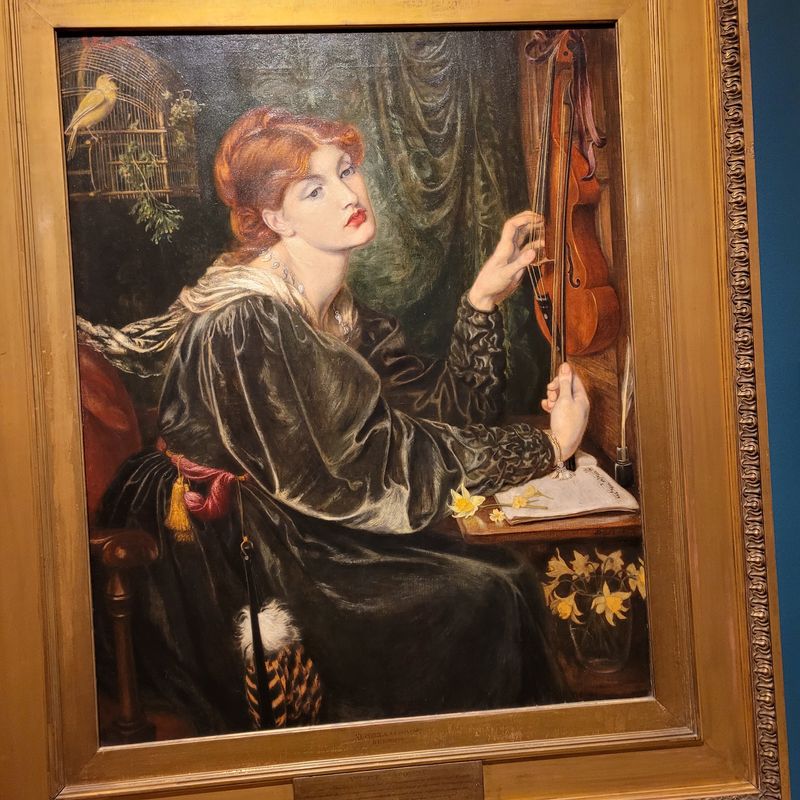
Certain works inside the Delaware Art Museum have a way of stopping you mid-stride, demanding your full attention before you can take another step. Dante Gabriel Rossetti’s “Water Willow” is frequently cited as one of his finest paintings, and standing before it in person confirms why.
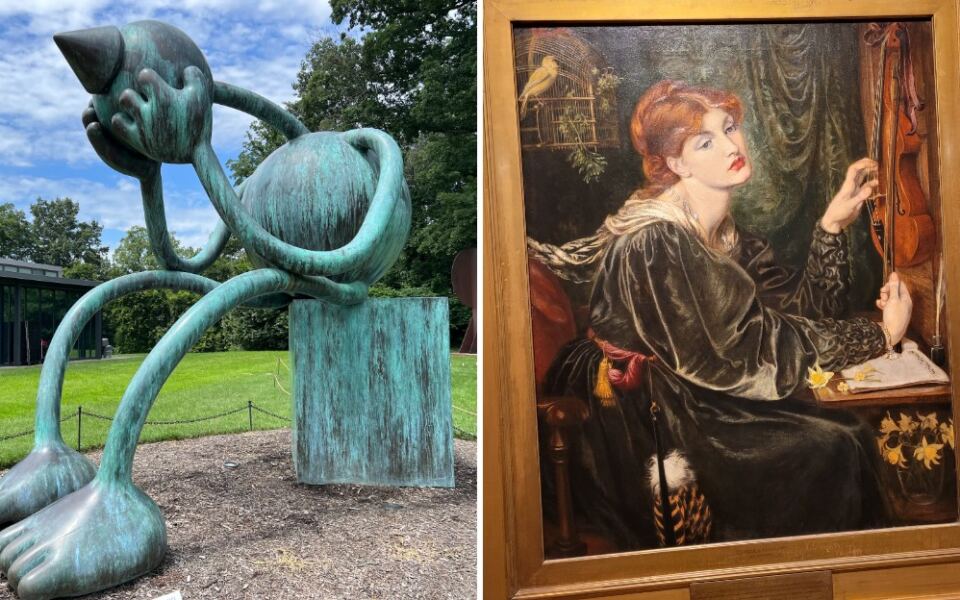
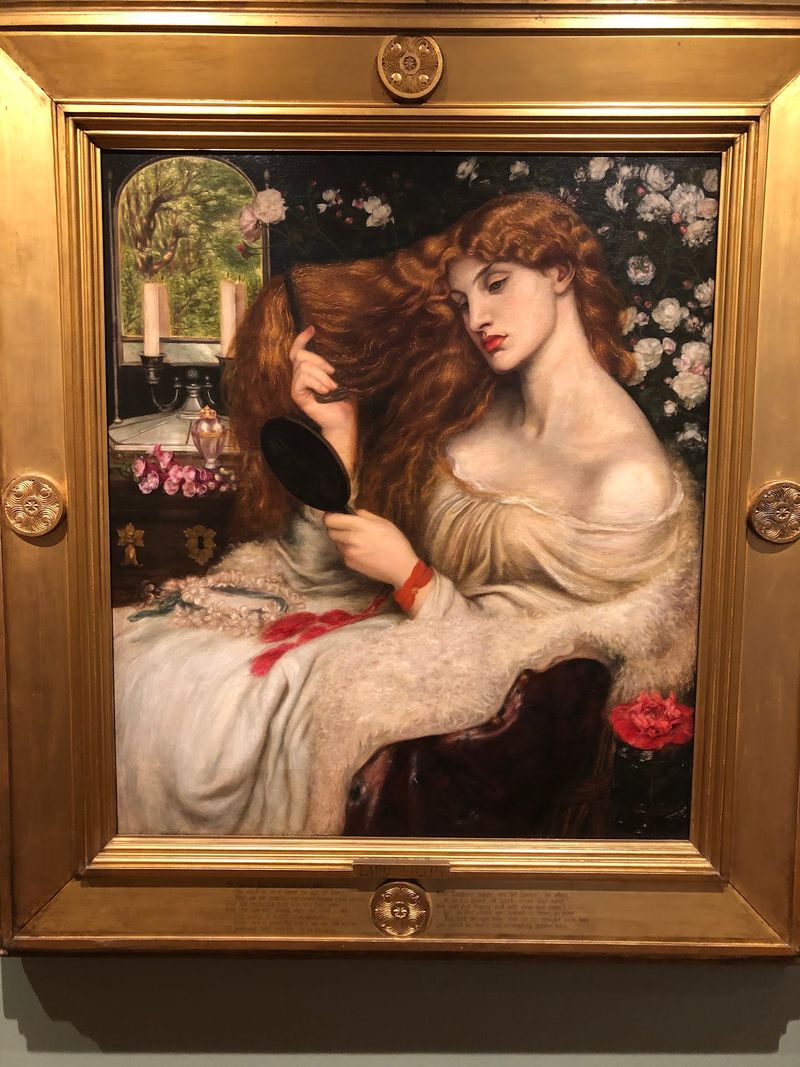
His portraits “Lady Lilith” and “Veronica Veronese” are equally arresting, their subjects rendered with a psychological intensity that feels almost uncomfortably intimate.
Frederick Sandys’s “Mary Magdalene” brings a striking realism to religious subject matter, while John Everett Millais’s “The Waterfall” captures nature with the precise, almost scientific observation that defined the early Brotherhood. Marie Spartali Stillman’s “Love’s Messenger” offers a quieter beauty, her watercolors imbued with literary resonance and quiet dignity.
A collaborative piece by William Morris and Dante Gabriel Rossetti, “The Arming of a Knight,” speaks to their shared vision of medieval craftsmanship. For American art lovers, major works by Edward Hopper, Andrew Wyeth, and Frederic Edwin Church round out a collection that consistently rewards close looking, no matter how many times you visit.
The Copeland Sculpture Garden: Nine Acres of Outdoor Artistry
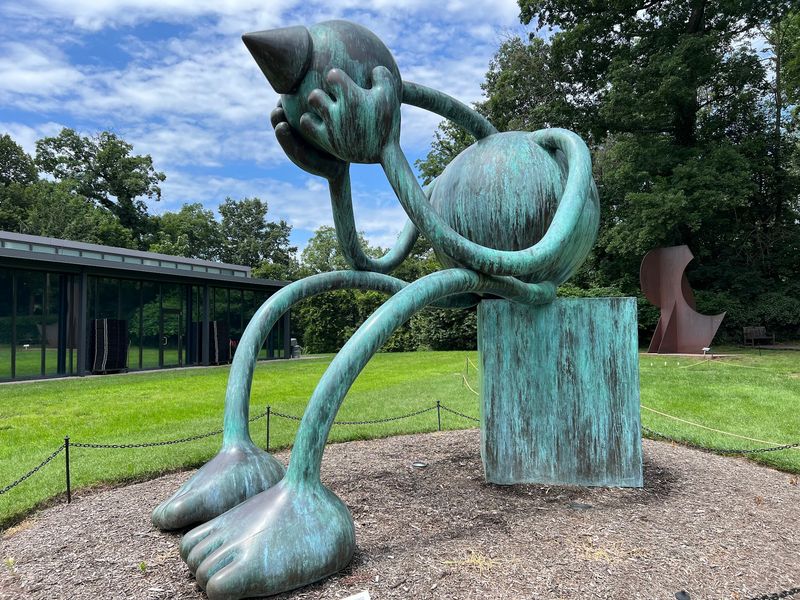
Most art museums ask you to stay indoors, but the Delaware Art Museum extends its creative conversation into the open air through the Copeland Sculpture Garden, a thoughtfully designed nine-acre outdoor space that wraps around the building. Wandering its pathways feels like discovering a series of pleasant surprises, with contemporary sculptures appearing around bends in ways that feel both intentional and spontaneous.
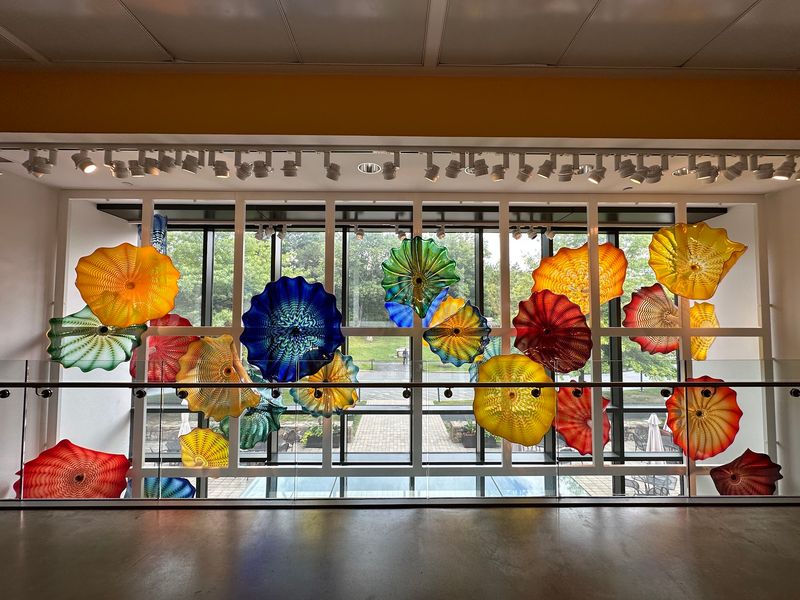
One of the garden’s most talked-about features is a dazzling glass installation by renowned artist Dale Chihuly, whose delicate, colorful forms catch sunlight and shift as you move around them. The garden also contains a labyrinth, a meditative walking path that encourages visitors to slow down and engage with their surroundings in a genuinely reflective way.
On Thursday evenings from April to December, the sculpture garden transforms into a lively outdoor gathering spot, with live music, food vendors, and free admission after 4 PM creating a festival atmosphere that draws both art lovers and curious neighbors. It is proof that a museum experience doesn’t have to end at the gallery door, and frankly, the garden alone is worth the trip.
Art Classes, Kids’ Corners, and Learning That Goes Beyond the Galleries
The Delaware Art Museum takes its role as a community educator seriously, offering a calendar of studio art classes and workshops that covers an impressive range of disciplines: painting, drawing, printmaking, photography, metalsmithing, ceramics, and even writing. These programs are designed for all skill levels, from curious beginners to practicing artists looking to refine their craft.
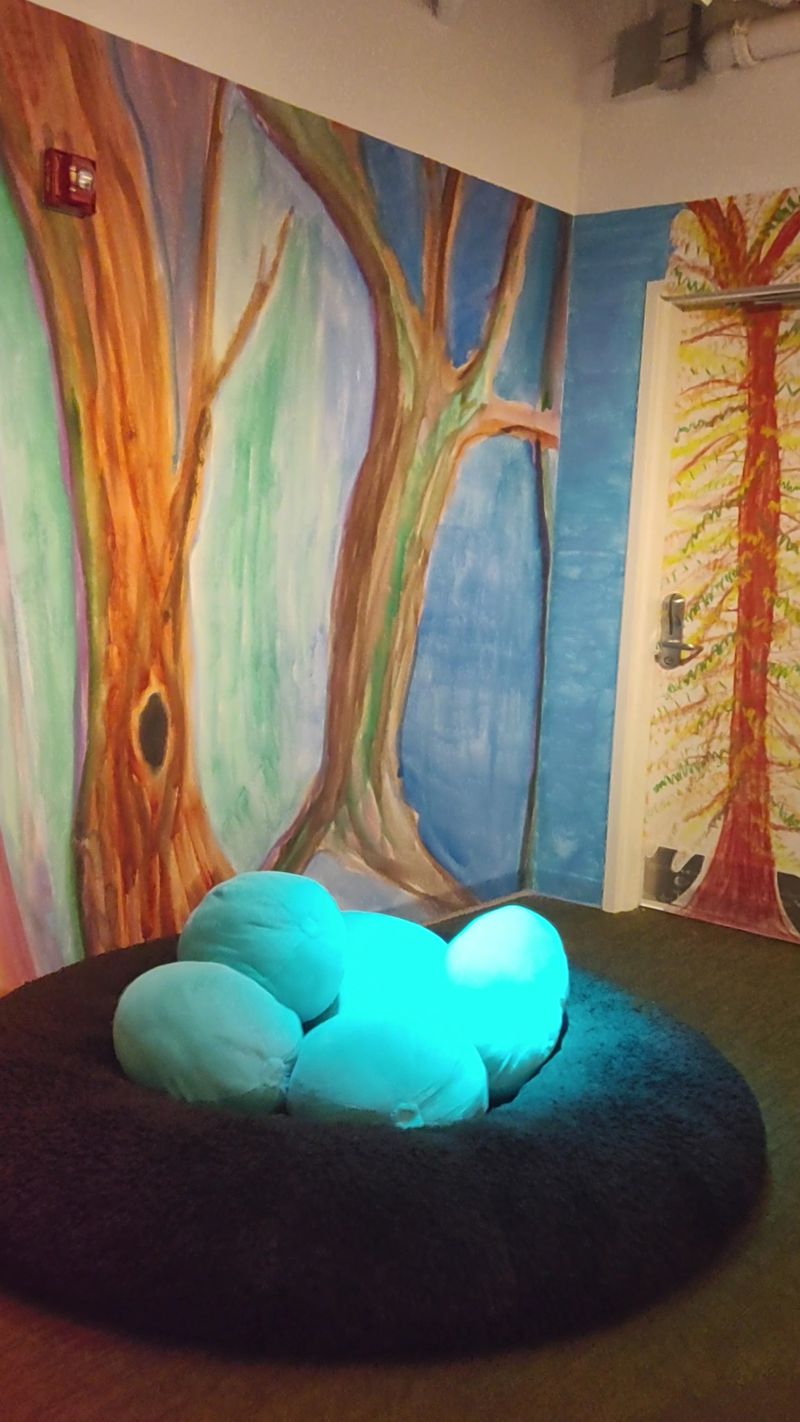
Younger visitors are especially well-served here. The museum’s kids’ corner, located on the lower level, gives families with small children a dedicated space for creative play that keeps noise contained and other visitors comfortable.
School tours for students from Pre-K through college can be arranged both onsite and online, with programs carefully aligned to Delaware state visual arts learning standards.
Financial access is a genuine priority. The Art Smart Fund for Student Enrichment provides grants to cover admission and transportation for K-12 field trips, while the Mildred Hanby Thompson Red Apple Fund offers scholarships for studio art classes.
The museum also coordinates with local school districts to display student artwork in its galleries, giving young creators a chance to see their work displayed in a professional setting.
Everything You Need to Know Before You Visit
Planning a visit to the Delaware Art Museum is refreshingly straightforward. The museum is open Wednesday through Sunday, with hours running from 10 AM to 4 PM on most days.
Thursday hours extend to 8 PM year-round, and from April to December, admission is free between 4 PM and 8 PM on Thursday evenings, making those extended hours one of the best deals in Delaware.
General adult admission is $18, with reduced rates for seniors at $16, students with valid ID at $7, and youth aged 7 to 18 at $6. Children aged 6 and under are always admitted free.
Free parking is available in the lot behind the building, which removes one of the most common urban museum frustrations entirely.
Inside, visitors will find a cafe, a well-stocked museum store with thoughtful gift options, and accessible facilities throughout, including elevators, spacious restrooms, and level pathways both indoors and in the sculpture garden. A sweater is recommended, as the galleries are kept cool to protect the artwork, a small trade-off for being in the presence of such remarkable art.
Private group tours can also be arranged in advance.
A Living, Evolving Cultural Hub That Keeps Getting Better
What makes the Delaware Art Museum feel genuinely alive rather than simply preserved is its commitment to change and community engagement. The museum regularly mounts special exhibitions that bring new artists and fresh perspectives to its galleries, giving repeat visitors a compelling reason to return throughout the year.
Film screenings, author talks, and music performances are also part of its regular programming, creating a space where different art forms can coexist and converse.
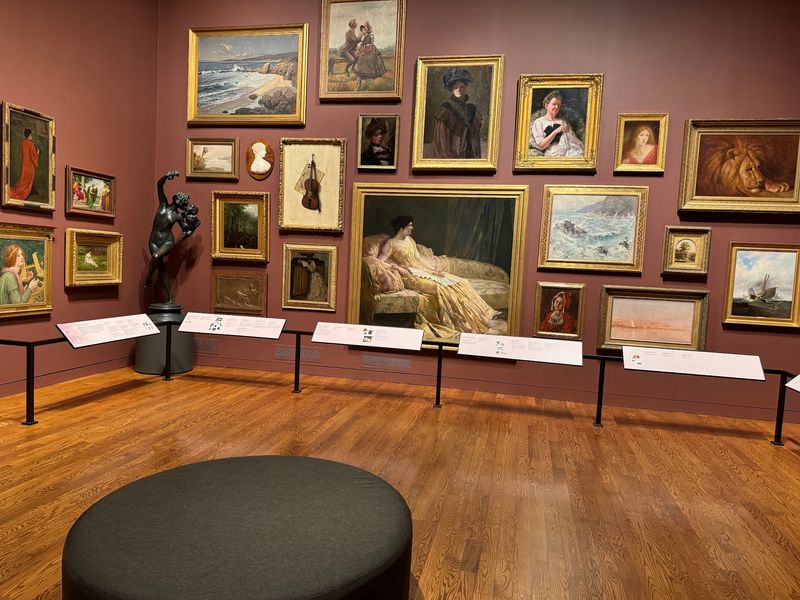
In recent years, the museum undertook a thoughtful reinstallation of many of its permanent galleries, a process guided by years of visitor feedback and community focus groups. The result is a presentation that feels more inclusive and more attuned to the diverse range of people who walk through its doors.
Works by contemporary American artists like Luis Cruz Azaceta, Deborah Butterfield, Wendell Castle, Robert Colescott, and Louise Nevelson now share wall space with historical masters.
On Thursday evenings during the warmer months, the museum buzzes with live music and outdoor activity, drawing a crowd that extends well beyond the typical art museum audience. This willingness to evolve while honoring its roots is exactly what keeps the Delaware Art Museum relevant, surprising, and deeply worth visiting again and again.
Share this story