A giant bronze fist hangs from a frame in downtown Detroit, and it weighs about 4,000 pounds. Just a short walk away, a steel fountain on two tall legs sprays water into the air near the edge of the Detroit River.
Both sit inside the same open public space in Michigan. Every summer, this riverfront spot fills with music fans for some huge free and ticketed festivals.
On a quiet morning, though, it can feel calm, with freighters drifting by and Canada sitting right across the water. I like places that can be both loud and peaceful depending on the day.
So how did one concrete plaza end up holding so many big pieces of Detroit history?
Fourteen Acres Where Detroit Meets the River
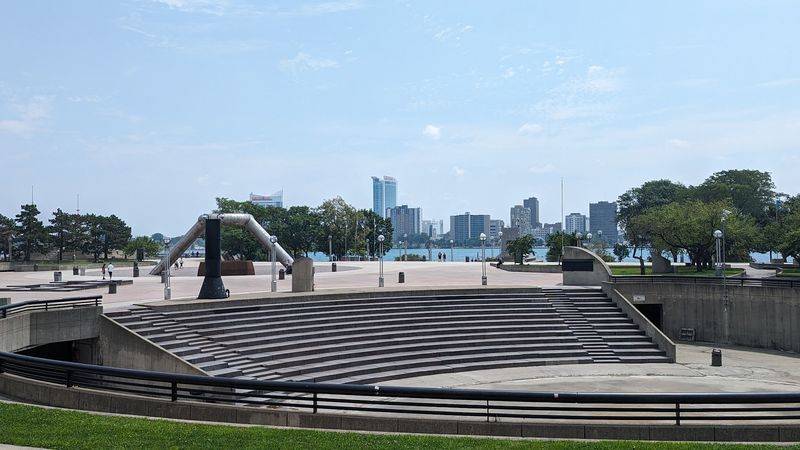
Hart Plaza covers about 14 acres along the Detroit River, and its address is 1 Hart Plaza, Detroit, MI 48226. It sits at the foot of Woodward Avenue, the main street that runs through the heart of the city.
The plaza is named after Philip A. Hart, a United States senator from Michigan.
It opened in the 1970s and was designed with help from Isamu Noguchi, a well known Japanese American artist and designer. He shaped much of the space, including its famous fountain.
Big open areas make the plaza feel roomy, even on busy days. You’ll see wide steps, flat paved zones, and a sunken outdoor stage area built for crowds.
The design mixes art and practical space in a way that still works decades later.
Google lists daily hours of 8 a.m. to 5 p.m., though festival hours can run much later. I’d check the Detroit Riverfront Conservancy updates before going, since big events change how the plaza is used.
The real fun starts once you look at what Noguchi built in the middle, a fountain that hardly looks like a fountain at all.
A Fountain That Stands on Two Legs
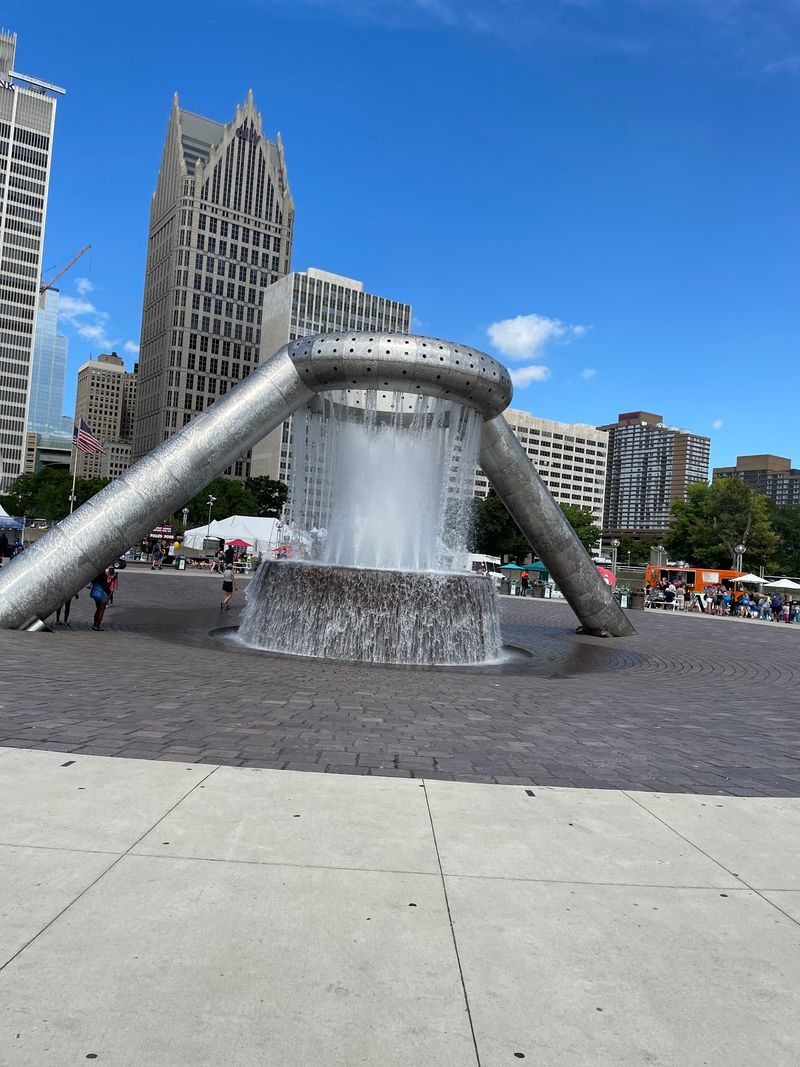
Water shoots up from a giant stainless steel ring held high on two slanted legs. That ring is the Horace E.
Dodge and Son Memorial Fountain, the centerpiece of the plaza.
Isamu Noguchi designed it, and it was finished in the late 1970s. The money came from Anna Thomson Dodge, who left funds for a fountain honoring her husband and son.
The Dodge name is tied to Detroit’s car history, which fits a city known as the Motor City.
The shape looks like something from a space movie. Some people say it looks like a giant machine part, which feels right for Detroit.
I like that it doesn’t try to be a classic stone fountain with statues.
Water sprays both from the ring and from below, so the look changes as you walk around it. At night, lights can make the fountain glow, and one recent festival visitor was happy to see it running with lights again.
Bring your phone for photos from a few angles. Standing low and shooting up at the ring makes it look even taller against the sky.
Not far away, another metal artwork carries a very different message.
The Fist That Honors a Boxing Legend
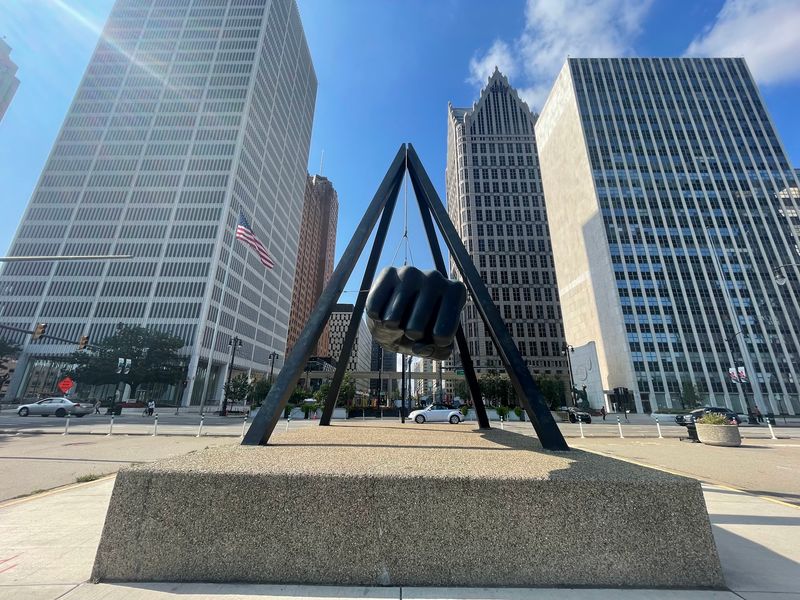
Joe Louis grew up in Detroit and became one of the most famous boxers in history. The city honors him with a sculpture that is hard to miss, a huge bronze arm and fist.
Called the Monument to Joe Louis, it was created by artist Robert Graham and unveiled in 1986. The 24-foot arm hangs from a pyramid-shaped frame near the edge of the plaza at Jefferson and Woodward.
Many people simply call it The Fist. It doesn’t show his face or his whole body.
Instead, it focuses on the power he carried, and that choice makes people stop and think.
Louis held the heavyweight title for nearly 12 years. He also became a symbol of pride for Black Americans during a time of deep unfair treatment.
That history gives the sculpture extra weight beyond its size.
The Fist is one of the most photographed spots downtown. Expect people lining up for pictures, especially on festival days.
If you want a clean photo, early morning is a smart time to try. Right across the street, another famous statue watches over the area.
Underground Railroad History by the Water
Detroit was one of the last stops on the road to freedom for many people escaping slavery. Canada sat just across the river, and reaching it meant safety.
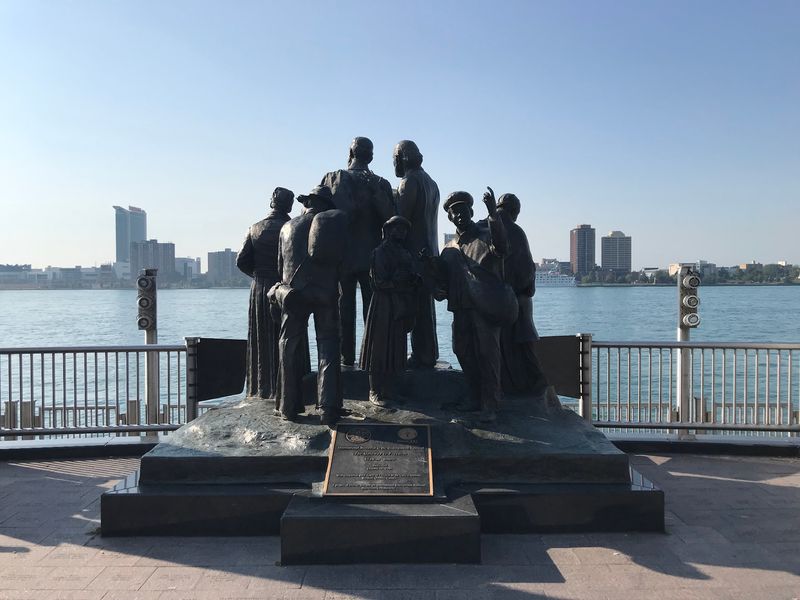
The Gateway to Freedom International Memorial to the Underground Railroad stands in Hart Plaza to tell that story. Created by sculptor Ed Dwight, it shows a group of freedom seekers with a guide, all looking toward Canada.
The figure at the front is George DeBaptiste, a Detroit conductor on the Underground Railroad. The memorial was dedicated in 2001.
Here’s a detail I find powerful. A matching sculpture, Tower of Freedom, stands across the river in Windsor, Ontario.
The two pieces face each other, linking both sides of the journey.
Families visiting with kids can use this spot to talk about history in a real place. It’s easier to understand when you can see how close freedom actually was across the water.
Take a moment to read the plaques. Then turn around and look at the river yourself, since the view is part of the meaning here.
That view, by the way, is one of the plaza’s best features.
Canada Is Right Across the River
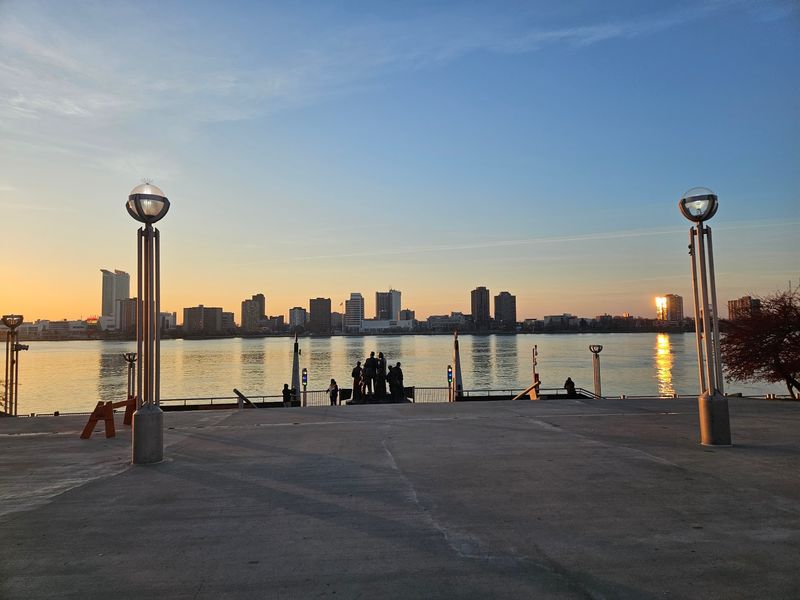
Here’s a fun geography fact. From Hart Plaza, you look south across the Detroit River into Canada, specifically Windsor, Ontario.
That surprises a lot of people, since most think Canada is only north of the U.S. The river is a busy shipping route too.
Huge freighters slide past the plaza, and watching them is a simple pleasure on a slow afternoon.
One festival fan described sitting on the steps near the river stage, listening to music while ships passed. That mix of sound and moving boats is hard to plan, but it happens often in summer.
Early risers can catch the sunrise over the water here. The riverfront tends to feel quiet in the morning before downtown gets busy.
Turn around and the city view is just as strong. The Renaissance Center towers rise nearby, a key part of the Detroit skyline.
I’d suggest bringing a light jacket even in warm months. Breezes off the river can make the air feel cooler than streets a few blocks away.
Of course, the river views get even better once you start walking along the water.
Your Starting Line for the Detroit Riverwalk
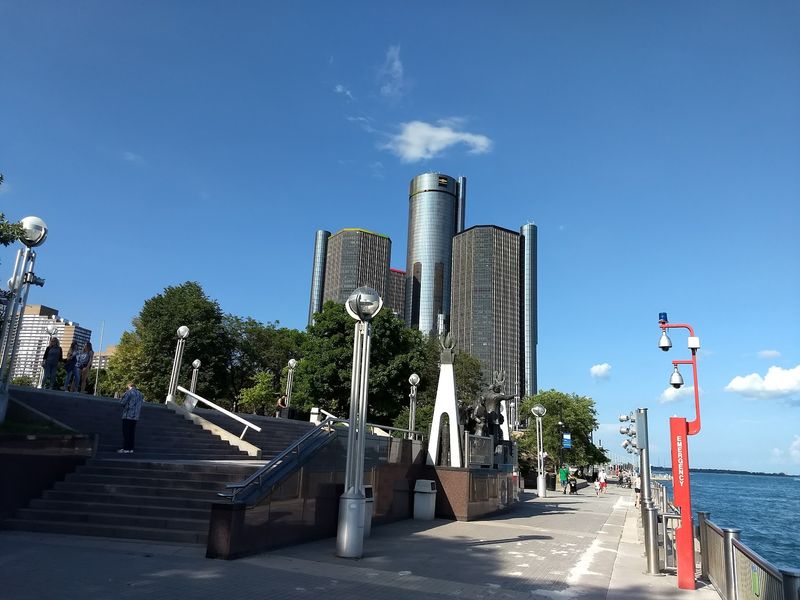
Walking paths lead straight from the plaza to the Detroit Riverwalk. It stretches for miles along the water and connects several parks and public spaces.
The Detroit Riverfront Conservancy cares for the riverfront, and Hart Plaza is part of that bigger network. The group has worked for years to turn old industrial land into open space for everyone.
Heading east takes you toward the Renaissance Center and on to spots like Milliken State Park. Going west connects you toward newer riverfront projects.
Either way, you get steady water views the whole time.
People use the path for morning runs, bike rides, and easy evening strolls. It’s flat, paved, and simple to follow, which helps if you’re new to downtown.
If you have kids, the riverfront has playgrounds along the way. One visitor mentioned walking from the plaza to a nearby playground before continuing on.
A good plan is to see the art first, then walk off a snack along the river. Comfortable shoes help, since it’s easy to keep going farther than planned.
Back at the plaza, summer weekends bring something much louder than footsteps.
Labor Day Means Jazz on the Riverfront
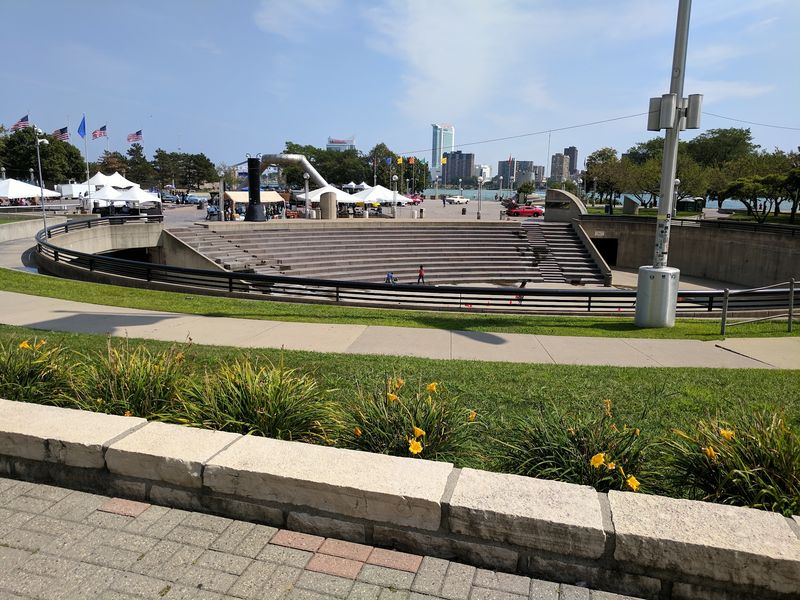
Every Labor Day weekend, Hart Plaza turns into one of the country’s major jazz stages. The Detroit Jazz Festival is known as one of the largest free jazz festivals in the world.
Multiple stages spread across the plaza and nearby streets. Big names and rising players perform over several days, and the music often runs into the night.
The free admission is a huge draw. Families, longtime fans, and curious newcomers all share the space, which gives the event an easygoing feel.
One review describes a recent night with pianist Bob James playing to a crowd so large that people listened from behind the stage. Another fan says they’ve attended since age 12.
The amphitheater area near the river is a great place to sit. Those steps let you enjoy the music while watching the water.
I’d show up early for headliners. Popular sets fill fast, and getting close can be tough.
Bringing a small chair or blanket can make a long evening more comfortable, as long as event rules allow it.
Jazz isn’t the only sound that rules this plaza, though. Memorial Day weekend brings a much different beat.
Electronic Beats Over Memorial Day Weekend
Detroit helped create techno music in the 1980s. So it makes sense that one of the world’s best known electronic music festivals happens right here.
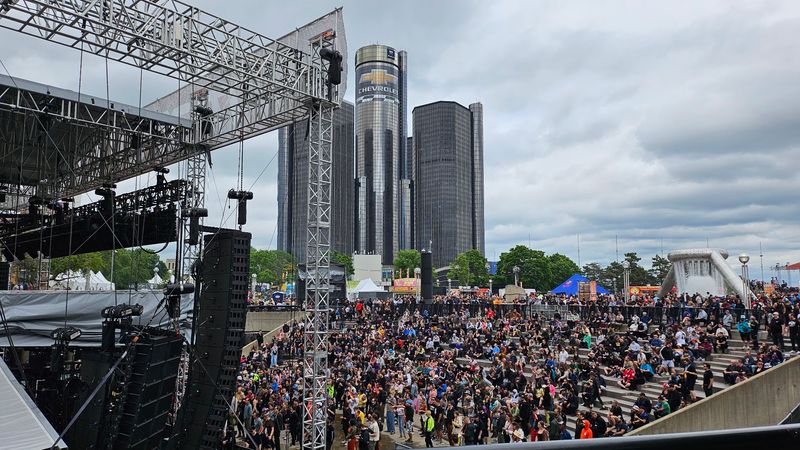
Movement takes over Hart Plaza each Memorial Day weekend. It started in 2000 as the Detroit Electronic Music Festival, and longtime fans still remember the old name.
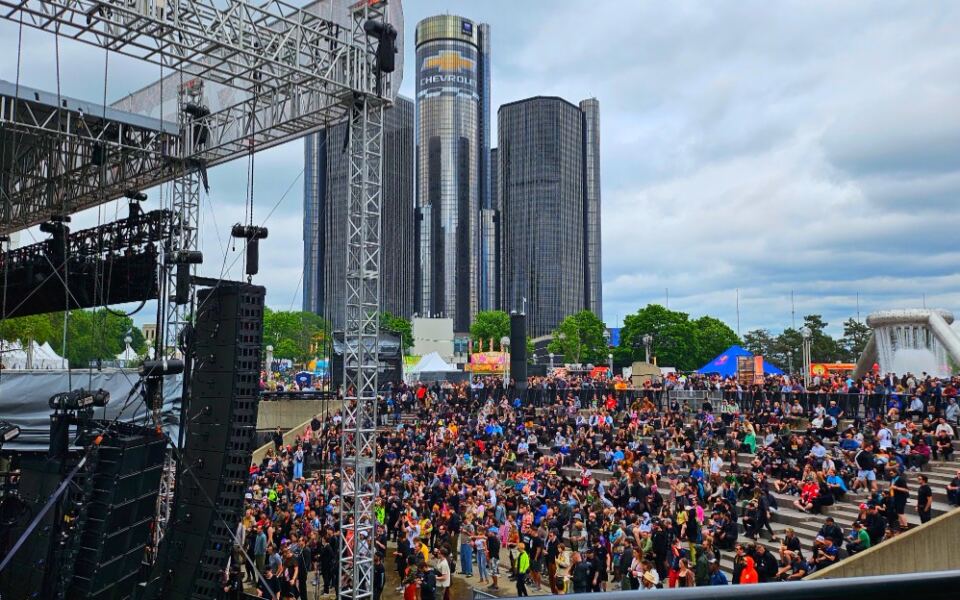
Unlike the jazz festival, Movement is a ticketed event. Several stages run across the plaza, including the sunken area that turns into a packed dance floor.
A recent visitor praised the waterfront setting and strong sound, saying the music kept going all weekend. Staff kept crowds moving smoothly, which matters at a festival this busy.
The festival brings fans from all over the world. That helps explain why downtown feels so lively during that holiday weekend.
If you plan to go, buy tickets early and check the festival’s rules before packing. Comfortable shoes, sunscreen, and water are smart choices for long days outdoors.
Even if dance music isn’t your style, it’s fun knowing this plaza plays a role in music history. And the event calendar keeps going well past these two weekends.
A Packed Summer Calendar of Festivals
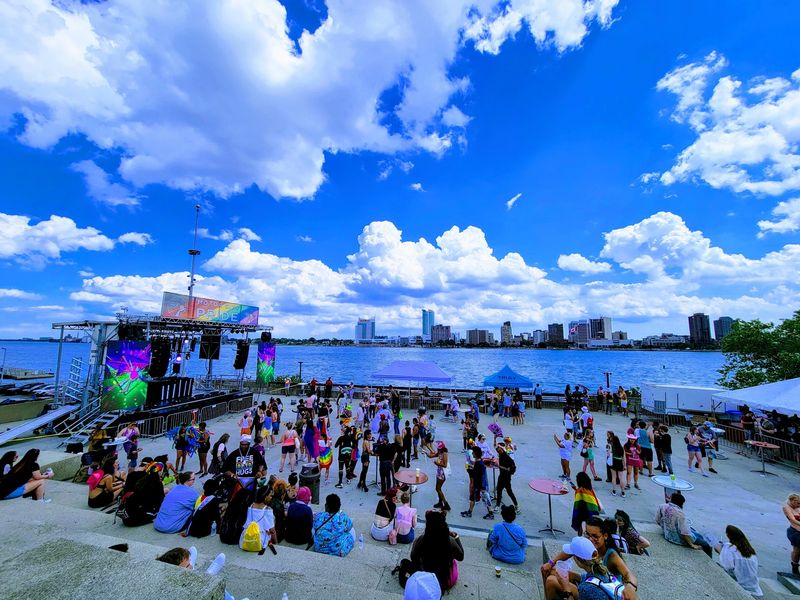
Summer at Hart Plaza rarely stays quiet for long. Beyond jazz and techno, the plaza hosts a long list of community events.
Recent visitors mention the Rib and R&B Festival, Motor City Pride, and the African World Festival style celebrations of Black culture. Others remember country music events and plenty more over the years.
Each festival gives the plaza a new look. One weekend might feature poetry and drumming, while another is all about barbecue and soul music.
Food trucks and vendors show up at many of these events. That makes it easy to grab a snack, browse local crafts, and keep listening without leaving.
Event days can bring big crowds and street closures downtown. Planning ahead helps a lot.
I’d check the Detroit Riverfront Conservancy or the event’s own pages before visiting. Dates change from year to year, and some events require tickets while others are free.
A smart tip is to arrive with a rough plan for meeting friends. Phones can be slow in big crowds, so picking a landmark like the Dodge Fountain helps.
Getting downtown for any of these events raises one practical question, and that’s parking.
Smart Tips Before You Head Downtown
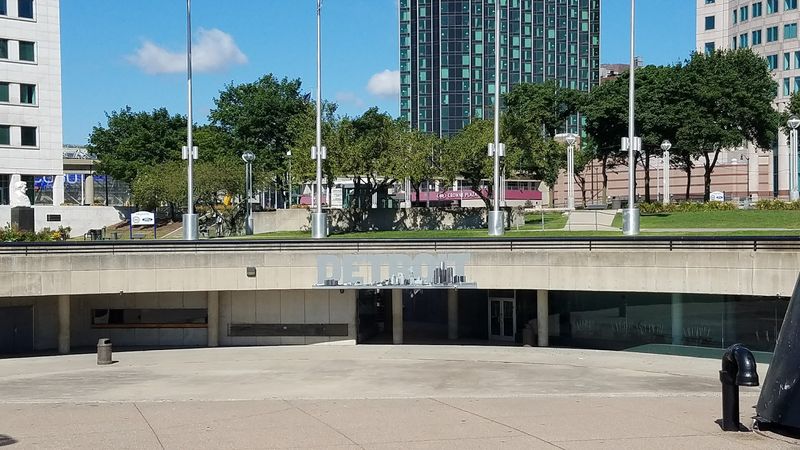
Underground parking sits right at Hart Plaza, which surprises many first-time visitors. One festivalgoer drove in and parked below the plaza with ease.
On big event days, though, spots fill fast. Nearby garages and the Detroit People Mover are good backups.
The QLINE streetcar also runs along Woodward Avenue, close to the plaza.
Across Jefferson Avenue, the Spirit of Detroit statue sits outside the city’s municipal center. Many people combine both stops into one walk.
Google lists the plaza as open from 8 a.m. to 5 p.m. daily. Festival nights follow their own schedules, so check event details before you go.
A recent visitor described the space as clean and peaceful on a regular day. That makes quiet visits a nice option if crowds aren’t your thing.
The concrete can feel warm on hot afternoons. Shade is limited in some open areas, so sunscreen and a hat help.
For photos, mornings and evenings tend to bring softer light. Those times also make the fountain and The Fist easier to enjoy.
Big art, river views, and music history all fit into one riverside stop, and that mix makes the plaza feel like Detroit itself.
Share this story