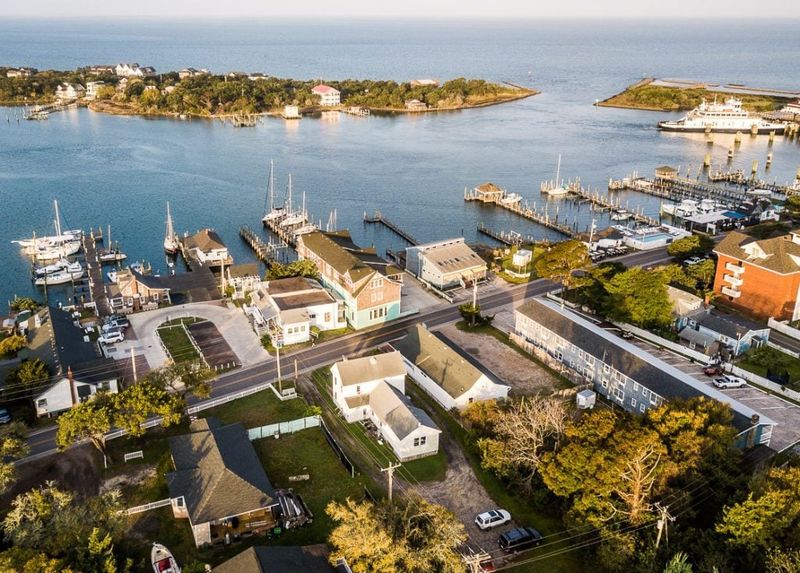
Ocracoke Island draws steady crowds to its ferry docks, its narrow lanes, and the legend of Blackbeard’s final stand in the inlet just offshore. Across that same inlet, on a barrier island with no roads and no restaurants, sits Portsmouth Village, a place that tells a different but equally layered story about life along the North Carolina coast. Portsmouth was never a pirate settlement, but it was the commercial heart of Ocracoke Inlet for more than a century, and its preserved buildings, difficult history, and boat-only access make it one of the most distinctive spots on the Outer Banks. If you are willing to plan ahead and pack your own water, the trip is worth understanding before you go.
Portsmouth is close to Ocracoke but not easy to reach
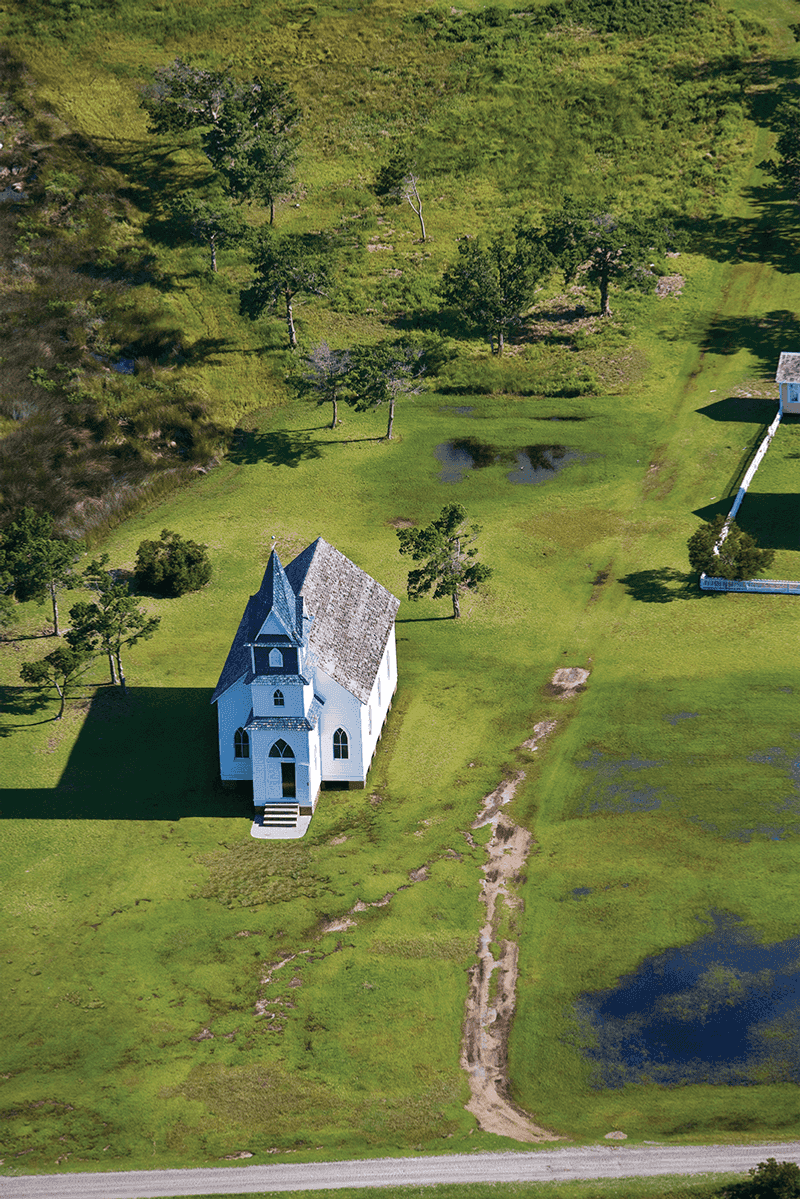
A glance at a map suggests Portsmouth Village is just a short hop from Ocracoke. Geographically, that is accurate: the village sits across Ocracoke Inlet on Portsmouth Island, which the National Park Service also identifies as the northern end of North Core Banks, roughly five miles from Ocracoke Village. What the map does not show is that no road reaches Portsmouth, no bridge connects it to anything, and no scheduled service runs on a fixed daily timetable the way a commuter ferry might.
Most visitors reach Portsmouth by arranging a passenger boat after they have already arrived on Ocracoke. That means the trip is actually two legs: first, getting to Ocracoke by ferry from Hatteras or Cedar Island, and then separately booking a boat across the inlet. NPS directions for Portsmouth Village make clear that the crossing requires contacting an authorized operator rather than showing up at a dock and expecting a boat. The crossing takes roughly 20 minutes under normal conditions, but schedules shift with the season and with demand.
Ocracoke has restaurants, lodging, a developed waterfront, and the kind of visitor infrastructure that accumulates over decades of tourism. Portsmouth has none of that. The NPS visitor page for Portsmouth describes a preserved historic site with limited facilities, no food vendors, and no guarantee that every building will be staffed on a given day. The contrast is real, but it is a product of access and upkeep, not of secrecy.
Portsmouth is not undiscovered; it is simply remote, and remote takes planning.
Ocracoke owns the strongest Blackbeard record
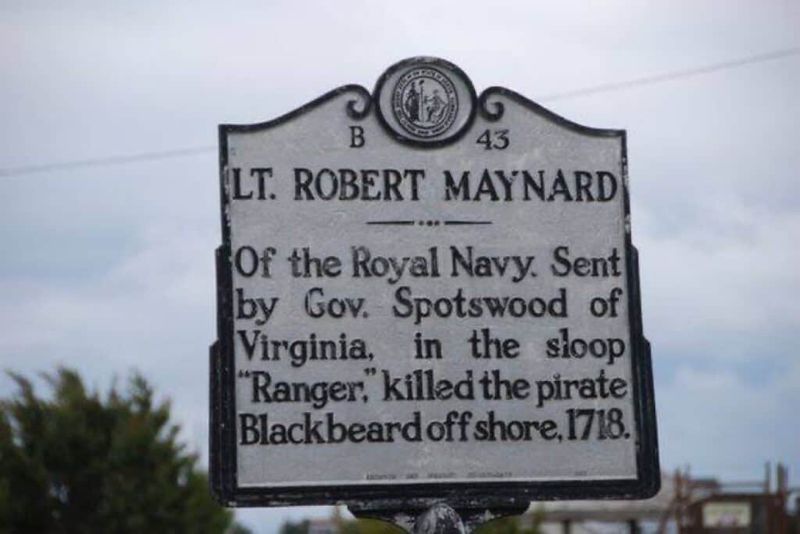
Before comparing the two islands fairly, the pirate history needs to be sorted out. Ocracoke holds the better-documented Blackbeard story, and that distinction matters. National Park Service accounts of Edward Teach place him around Ocracoke during much of his final five months, with his sloop Adventure anchored near the channel now called Teach’s Hole. On November 22, 1718, Lieutenant Robert Maynard’s force attacked Blackbeard in Ocracoke Inlet, and Blackbeard was killed in that fight.
Those are specific, sourced events tied to a specific place. Ocracoke Inlet and Ocracoke Village carry that association because the historical record supports it. Portsmouth Village sits across the same inlet and was part of the same maritime environment, but the documented record does not place Blackbeard in Portsmouth, and the village was not established as a colonial port until 1753, more than three decades after his death.
Sharing an inlet is not the same as sharing a history. Portsmouth’s connection to the pirate era is contextual: the shallow, complex waters around Ocracoke Inlet made the whole region attractive to pirates who could navigate them better than naval pursuers. The NPS Portsmouth history page describes a commercial maritime village, not a pirate stronghold. Visitors who travel to Portsmouth expecting Blackbeard landmarks will not find them.
What they will find is the working world of the inlet that made Ocracoke’s pirate chapter possible, and that story turns out to be substantial on its own terms.
Portsmouth built its importance on shipping
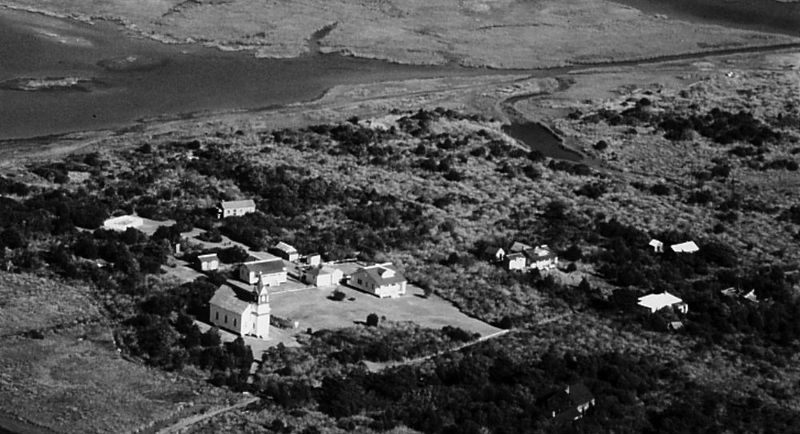
Portsmouth Village was not founded by accident or by pirates. North Carolina’s colonial assembly established it in 1753 specifically because Ocracoke Inlet was the primary entry point for ocean-going ships trying to reach the sounds and rivers of the Carolina interior. The problem was that deep-draft vessels could not navigate the shallow waters beyond the inlet, so cargo had to be moved from large ships to smaller, flat-bottomed boats capable of crossing Pamlico and Albemarle sounds. That process was called lightering, and Portsmouth was built to handle it.
Within two decades of its founding, Portsmouth had grown into one of the largest settlements on the Outer Banks. Warehouses lined the waterfront. Pilots who knew the inlet’s shifting channels guided ships safely through. Dockworkers, merchants, and boat operators built a functioning port economy around the transfer of goods moving in and out of colonial North Carolina.
The NPS Portsmouth history records that in 1842, more than 1,400 vessels and two-thirds of North Carolina’s exports passed through Ocracoke Inlet. Portsmouth’s infrastructure supported that entire volume of trade.
That figure helps put the village’s importance in perspective. Portsmouth was not a quiet backwater during its peak years; it was an economic chokepoint for an entire state’s commerce. The decline came gradually after new inlets opened and railroads shifted trade routes inland, reducing the inlet’s strategic value. By the late nineteenth century the lightering economy had collapsed, and Portsmouth began the long contraction that would eventually leave it empty.
Understanding that arc, from colonial founding to commercial peak to slow decline, gives the preserved buildings their meaning. Each structure represents a specific function in a working port, not a stage set for pirate stories.
The preserved village holds a harder history
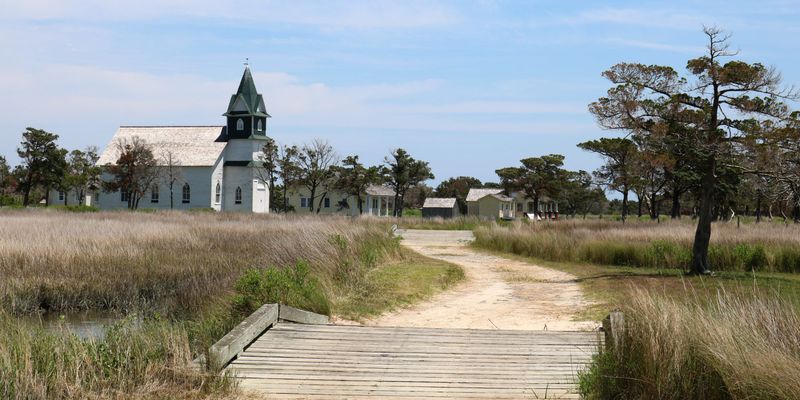
Portsmouth’s history does not begin and end with commerce. The village was shaped by war, forced labor, and the eventual departure of a community that had lived there for generations, and those chapters deserve more than a footnote.
Military conflict touched Portsmouth twice in ways that changed the inlet’s character. British forces occupied both Portsmouth and Ocracoke for five days during the War of 1812, a reminder that the inlet’s strategic value attracted enemies as well as traders. The Portsmouth Village timeline traces these events alongside the village’s commercial rise and fall. During the Civil War, control of Ocracoke Inlet and the nearby forts became a military objective, and NPS documentation on the war’s arrival at Portsmouth describes how the conflict disrupted the village and the surrounding inlet communities.
Slavery was part of Portsmouth’s economy from early in its history. Enslaved people worked the docks, warehouses, and households that kept the lightering trade running. NPS research on Portsmouth and the transatlantic human trade addresses this directly, placing the village within the broader Atlantic economy that depended on enslaved labor. Indigenous communities also inhabited the barrier islands long before European settlement, and their presence shaped the landscape that colonists later occupied and transformed.
The village’s final chapter was the departure of its last permanent residents in the early 1970s. By then, the commercial reason to live there had been gone for nearly a century, and the remaining community, mostly elderly, chose to leave rather than age in place without services or support. That decision was not a dramatic abandonment; it was a practical response to genuine hardship. Treating Portsmouth as a picturesque ghost town misses that reality entirely.
Historic buildings make the maritime past visible
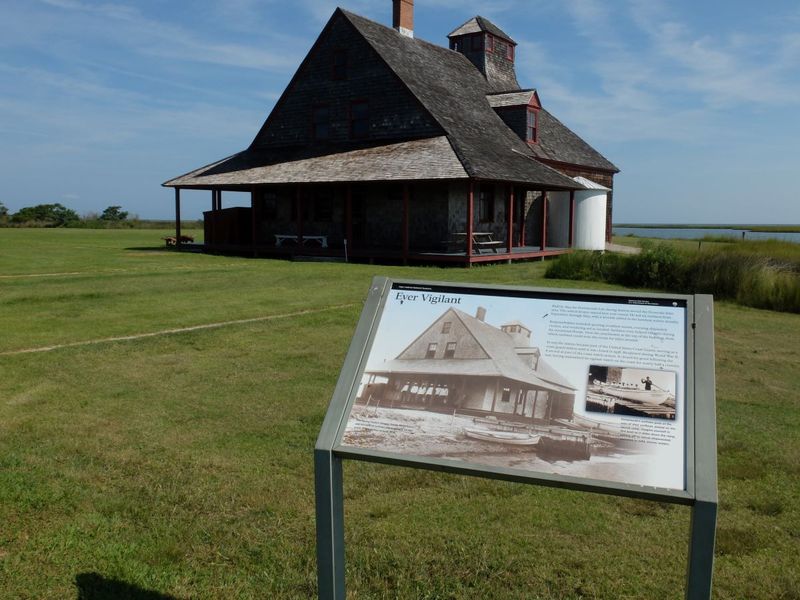
Arriving at Portsmouth Village, visitors encounter something unusual for the Outer Banks: a collection of historic structures that have been preserved rather than repurposed or demolished. The school, post office, general store, and Life-Saving Station are all still standing, and together they sketch the outline of a self-contained community that once handled everything from mail delivery to maritime rescue.
Each building corresponds to a specific role in the village’s working life. The Life-Saving Station, in particular, connects Portsmouth to a federal program that stationed crews along the Atlantic coast to rescue sailors from wrecked or grounded ships, a constant hazard on the shallow, storm-prone Outer Banks. The NPS Portsmouth history situates the station within the village’s broader maritime identity, where saving lives at sea was as much a part of daily life as moving cargo.
Seasonal staffing means the experience varies by time of year. The NPS visitor page notes that historic buildings are generally staffed from mid-April through late October, but visitors should verify current staffing before traveling. Outside those months, or on days when staff are unavailable, the buildings may be closed to entry while the grounds remain accessible.
The site is a protected historic and archaeological area, and that status comes with specific rules. Removing artifacts is prohibited. Metal detectors are not allowed. Visitors may not damage ruins or excavate.
The Portsmouth timeline helps place each structure in context, and reading it before visiting makes the buildings considerably more legible once you are standing in front of them.
Plan the visit around boats and basic conditions
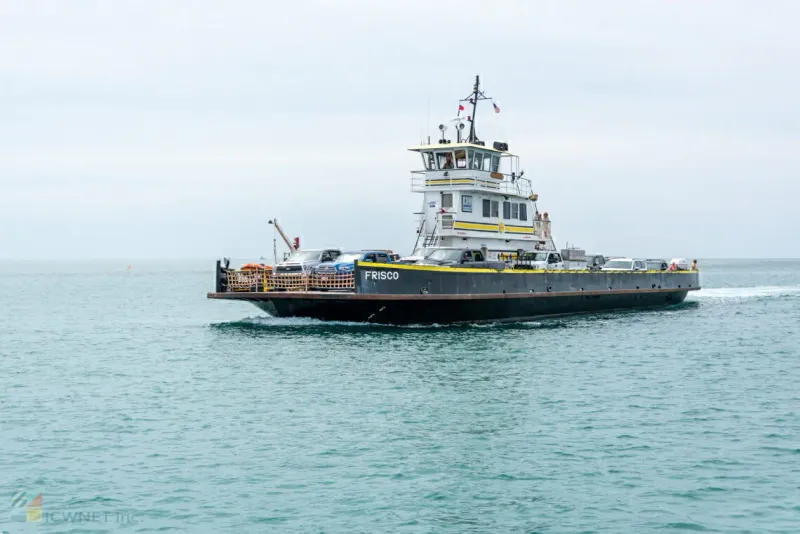
Getting to Portsmouth requires sequencing two separate trips. First, you reach Ocracoke. The Hatteras-Ocracoke vehicle ferry is free and runs on a first-come, first-served basis with no reservations accepted, according to current NCDOT ferry route information. For travelers who prefer not to bring a vehicle, the Ocracoke Express passenger ferry runs between Hatteras and Ocracoke at $15 round trip, and 2026 NCDOT information on the Ocracoke Express recommends reservations during busy periods.
Neither option guarantees a seamless connection to Portsmouth.
Once on Ocracoke, arranging the Portsmouth crossing means contacting the authorized passenger-boat operator directly. NPS ferry information for Portsmouth identifies the crossing as approximately five miles and 20 minutes, but schedules shift seasonally and the NPS directs visitors to call ahead rather than assume availability. Do not plan to book the Portsmouth boat on the morning of arrival without having confirmed it in advance. NCDOT reservation guidance covers the state ferry system, but the Portsmouth passenger boat is a separate, privately operated service with its own schedule and pricing that should be verified before you travel.
NPS guidance on visiting Portsmouth is specific about what to bring: drinking water, food, sunscreen, insect repellent, a hat, suitable clothing for weather exposure, and sturdy walking shoes. Trails can contain standing water and sand, mosquitoes are a documented problem particularly in warmer months, and facilities on the island are minimal. The historic buildings are not wheelchair accessible, and the open terrain offers little shade or shelter.
Driving within the historic district is prohibited, and camping is not permitted there either. The combination of limited facilities, no food vendors, no cell service in parts of the island, and weather exposure means this is a trip that rewards preparation and penalizes improvisation. Plan the logistics before you leave the mainland, not after you step off the Ocracoke ferry.
Choose Portsmouth for the inlet’s wider story
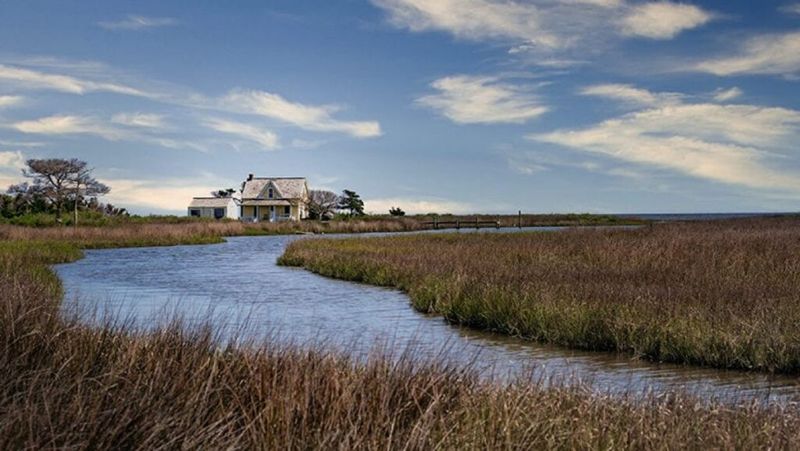
Portsmouth and Ocracoke are not interchangeable. Ocracoke holds the clearest documented record of Blackbeard’s presence, his anchorage, and his death, and the NPS account of Edward Teach is specific about where those events occurred. Visitors who want to stand near Teach’s Hole Channel and read the historical markers should go to Ocracoke for that reason.
Portsmouth offers something adjacent but different: the working world that surrounded the pirate era without being defined by it. The lightering economy, the pilotage system, the Life-Saving Service, the wartime occupations, the enslaved labor that kept the port running, and the community that eventually chose to leave – Portsmouth’s documented history covers all of it. That is a full and serious story, not a consolation prize for missing the Blackbeard tour.
The tradeoff is honest. Portsmouth can feel quieter and more remote than Ocracoke because it is harder to reach, has no commercial infrastructure, and requires a visitor to do more logistical work before arriving. That remoteness is not manufactured atmosphere; it is the direct result of limited access and limited facilities. The NPS visitor page describes the conditions plainly, and the conditions are basic.
Ocracoke tells the story of one famous outlaw who used the inlet as a refuge. Portsmouth tells the story of everyone else who lived and worked and died along the same water for two centuries. Both are worth knowing, and the inlet connects them more than it separates them.
Share this story