Turtles sun themselves on logs beside a canal that was dug by hand back in the 1820s. That alone made me stop scrolling.
A flat towpath runs right alongside the water, built for the horses that once pulled boats through the woods.
The walk is free, gentle, and wide open to strollers, wheelchairs, bikes, and leashed dogs. Old mill country surrounds the trail, and signs of busy beavers show up along the banks.
Deer and hawks appear even in winter.
I love that this slice of Massachusetts history doubles as an easy family outing. You can learn something, spot wildlife, and still be home before dinner.
No tickets, no lines, no fancy gear required.
So why do so few people outside the area seem to know about it? Let’s walk the path together and find out.
A Canal-Side State Park Built for Easy Wandering
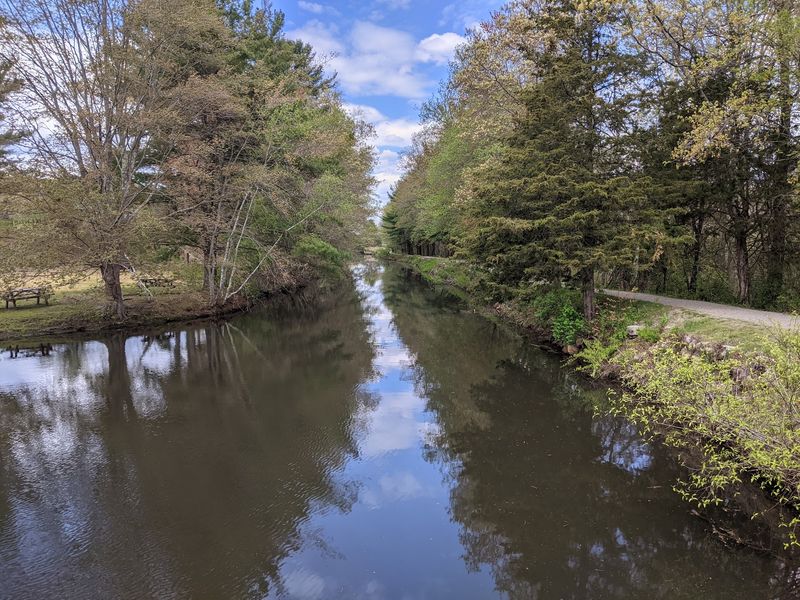
Tucked along the Blackstone River in south-central Massachusetts, Blackstone River and Canal Heritage State Park mixes nature with real industrial history. The main draw is a flat towpath that hugs an old canal for a relaxed stroll.
The park sits in the Blackstone Valley, an area shaped by water power and busy mills. Today the same water feels calm, quiet, and surprisingly wild.
Families love how simple it is to get started. Park the car, cross the footbridge, and you are already on the trail.
The canal path covers roughly two miles out and back, which suits little legs well. Side trails branch into the woods for anyone craving a bit more adventure.
Picnic tables, grilling spots, and benches make it easy to stretch a short walk into a full afternoon. A visitor center adds exhibits and a friendly starting point.
Best of all, the outing costs next to nothing. For Massachusetts families hunting an affordable weekend plan, that is a pretty sweet deal.
Bring comfortable shoes, a snack, and a curious mindset. The rest takes care of itself once the water comes into view.
The Old Waterway That Once Moved Goods Through the Valley
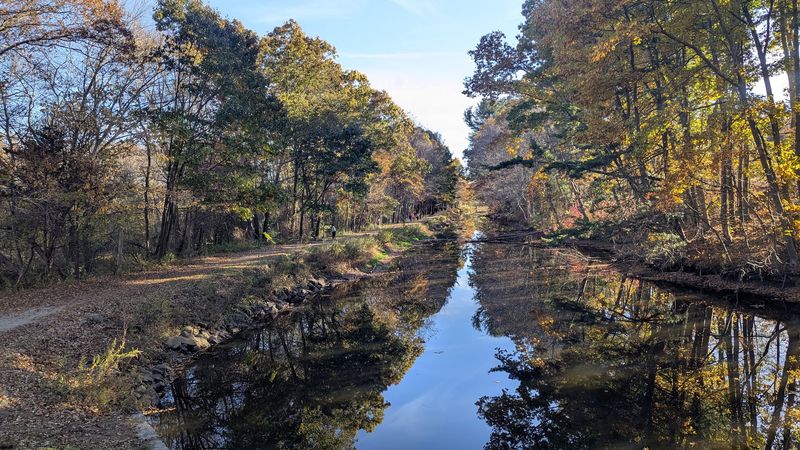
Long before highways, goods floated through this valley on a man-made waterway. The Blackstone Canal opened in the late 1820s, linking Worcester to Providence by boat.
Horses and mules walked the towpath, pulling canal boats along the water. That same packed path is now the trail families stroll today.
Railroads eventually took over the shipping work, and the canal faded from daily use. Sections of it survived, though, and this park protects one of the best.
Walking here feels a little like reading a history book with your feet. History signs along the main path point out spots worth a pause.
Kids may find it wild that people once dug channels like this mostly by hand. It is a great conversation starter on a slow walk.
The river powered mills that dotted the valley in the 1800s. Their story shaped the towns around the park and much of Massachusetts industry.
Nobody needs to be a history buff to enjoy it. Still, knowing the backstory makes every quiet stretch of water feel a bit more special.
Mill Ruins and Stone Bridges Along the Route
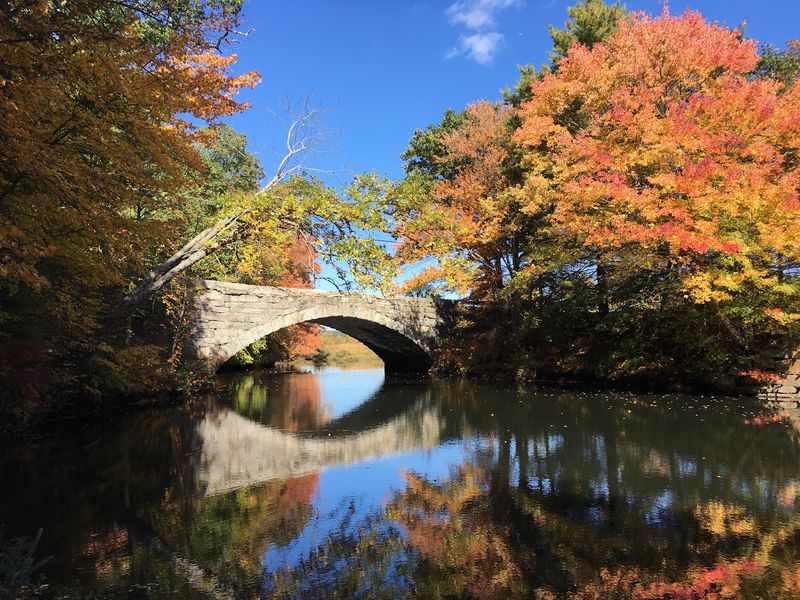
Stone walls and old foundations tell quiet stories here. The trail connects with remnants of the valley’s mill era, giving walkers a peek at its working past.
One end of the canal path reaches the Stanley Woolen Mill area. It is a fitting bookend for a trail born from industry.
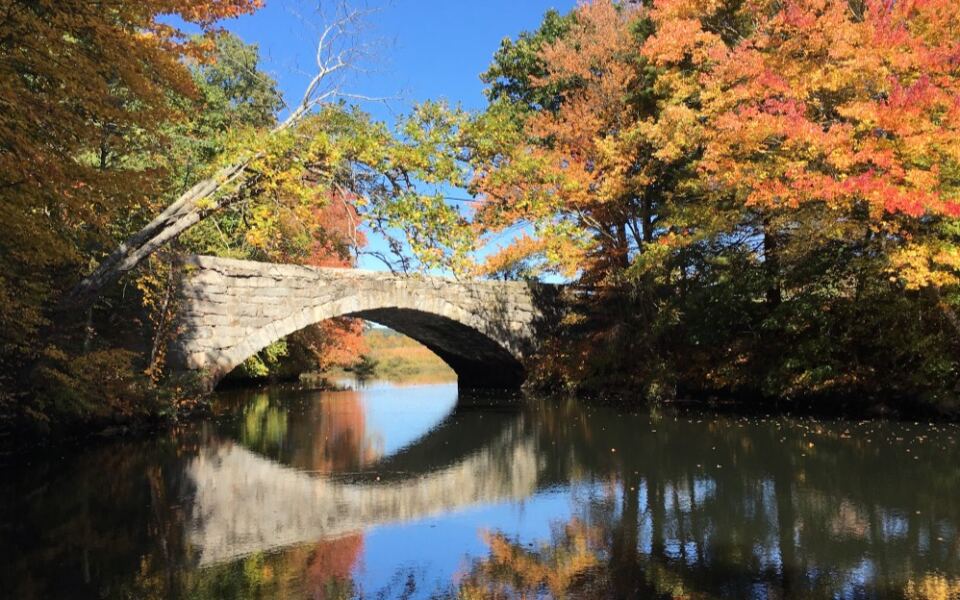
Turn left after the footbridge and a short canal section leads toward a stone arch bridge. That little detour is worth it for the photos alone.
Old stonework framed by trees and water looks great in any season. Fall color makes it even better, with leaves reflecting off the canal.
Heads up for sensitive noses, though. Some visitors mention algae and a stronger smell near the mill end during warmer months.
That small quirk rarely spoils the outing. Most families simply enjoy the scenery, snap a few pictures, and keep moving.
Ruins like these spark questions from kids in the best way. Who built them, and what happened inside?
A walk here turns into a mini history lesson without anyone noticing.
A Flat Towpath Friendly to Strollers, Bikes, and Wheelchairs
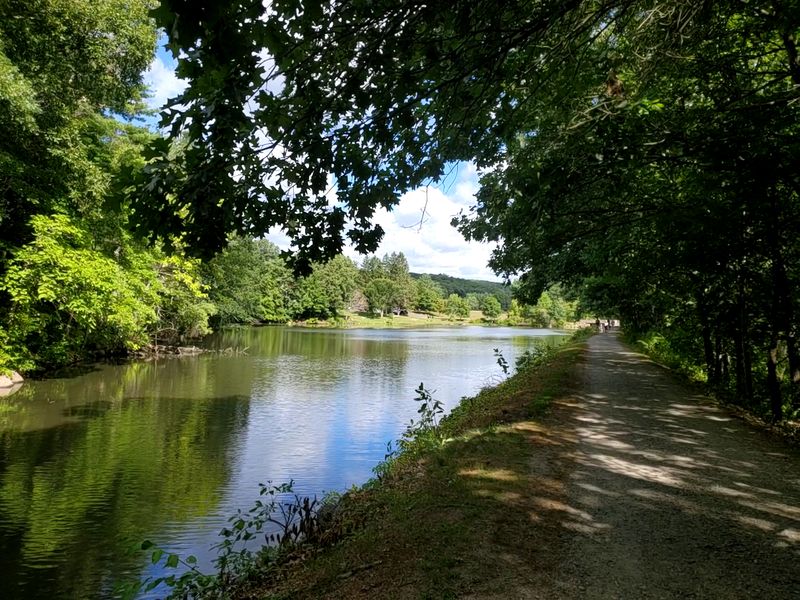
Good news for tired legs: the main path barely rises at all. It runs fairly straight beside the water with no real hills to fight.
The towpath works well for wheelchairs and bikes, according to people who use it often. Strollers roll along it easily too.
Gravel covers the first stretch, and packed dirt continues beyond it. After rain, the surface tends to hold up nicely, though side trails can get muddy.
One caution is worth sharing. Parts of the trail run narrow with a steep drop to the water, so keep runaway toddlers close.
Older kids usually do great here. The round trip of about two to three miles feels manageable without any complaining from the back seat later.
Benches and spots to sit appear along the way. Grandparents can rest, take in the view, and still keep up with the group.
For families with mixed ages and energy levels, that balance matters. Everyone gets fresh air, and nobody has to be carried home.
Turtles, Frogs, and Other Wild Neighbors
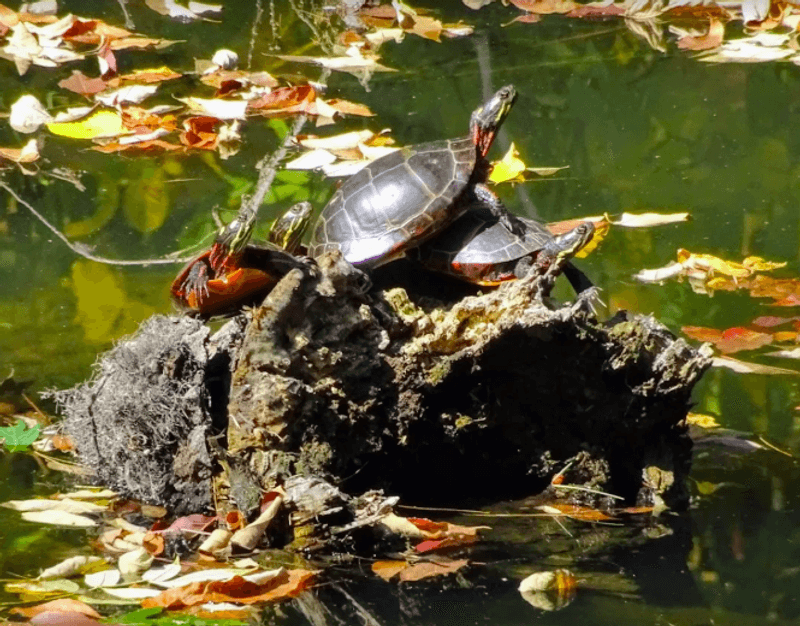
Sunning turtles steal the show on warm days. They line up on logs and rocks like tiny sunbathers ignoring the crowd.
Frogs, fish, chipmunks, and squirrels round out the regular cast. Birdwatchers can watch for waterfowl and hawks gliding overhead.
Look closely at the banks for signs of beavers. Chewed stumps and gnawed branches are easy clues for kids to spot.
Deer wander through too, sometimes even in winter. Some walkers have also heard reports of river otters in the area.
A few snakes live here as well, so watch your step in grassy spots. They are part of the healthy wetland mix.
Spring brings wildflowers and fresh greenery along the trail. Summer adds buzzing life, which also means bugs, so pack some repellent.
Turning the walk into a wildlife scavenger hunt works wonders. Make a simple list, hand it to the kids, and watch them slow down and really look.
Suddenly a short stroll becomes a nature adventure everyone remembers.
Woodland Detours and the Climb Up Goat Hill
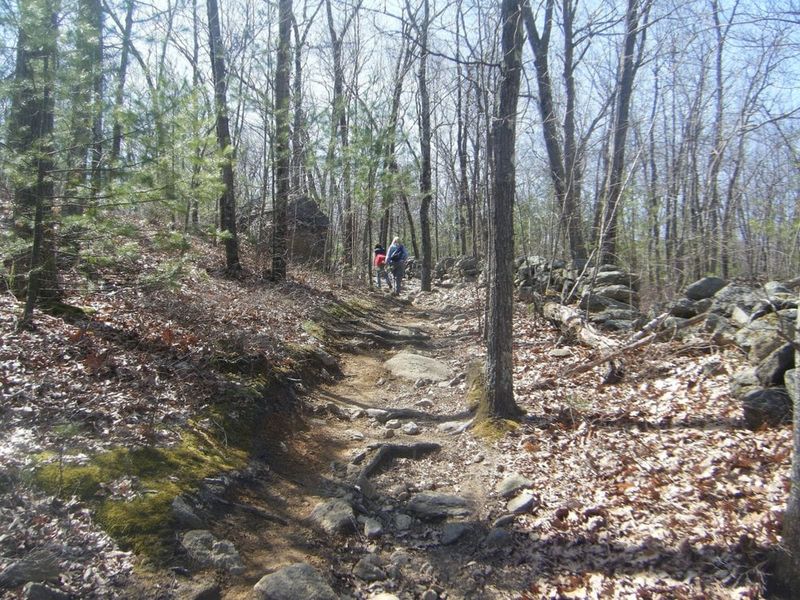
Ready for something tougher than a stroll? Cross the street to the river path and the terrain changes fast.
That side becomes a true hiking trail through the woods. Experienced mountain bikers also tackle it for a bigger challenge.
Goat Hill is the name to remember. Hiking up and around it offers a solid workout and a nice break from the flat canal.
Bring a map or a phone app, though. Some hikers admit the trails can get confusing if you wander too far.
Grass paths through the woods offer another option between the extremes. They feel quieter and more tucked away than the main towpath.
A longer walk also connects the woolen mill area with Plummer’s Landing. It makes a satisfying route for anyone with energy to burn.
Families with teens may love splitting up for a bit. Younger kids enjoy the canal while older ones conquer the hill, then everyone meets back at the picnic tables with stories to trade.
Picnic Tables, Grills, and Fishing by the Water
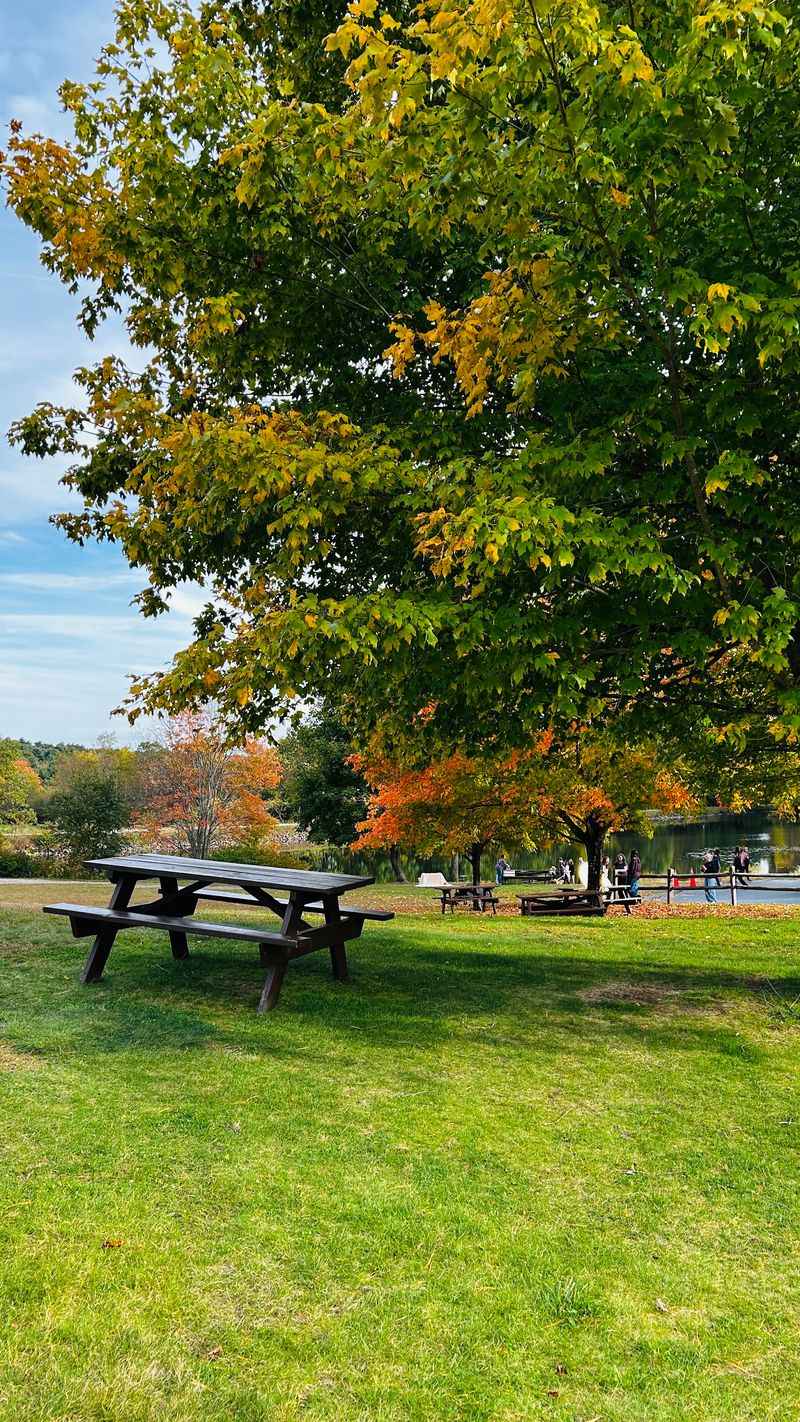
Packing lunch might be the smartest move of the day. The park offers picnic tables plus sitting and grilling areas for outdoor meals.
A sandwich tastes better beside moving water, honestly. Add a cooler of juice boxes and you have a cheap family feast.
Plummer’s Landing provides benches and tables near the river. Some walkers note those older tables could use a refresh.
Fishing is another popular pastime here. Anglers cast from the banks, and walkers often spot fish swimming along the path.
Check Massachusetts fishing license rules before casting a line. Kids under a certain age usually have it easy, but verify the details first.
Photographers love these spots too. Day picnics often turn into casual photoshoots with fall leaves or spring greens as backdrops.
Simple plans can make the best memories. A blanket, some snacks, and a slow afternoon by the canal beat a pricey outing more often than not.
Leashed Pups Welcome on Every Mile
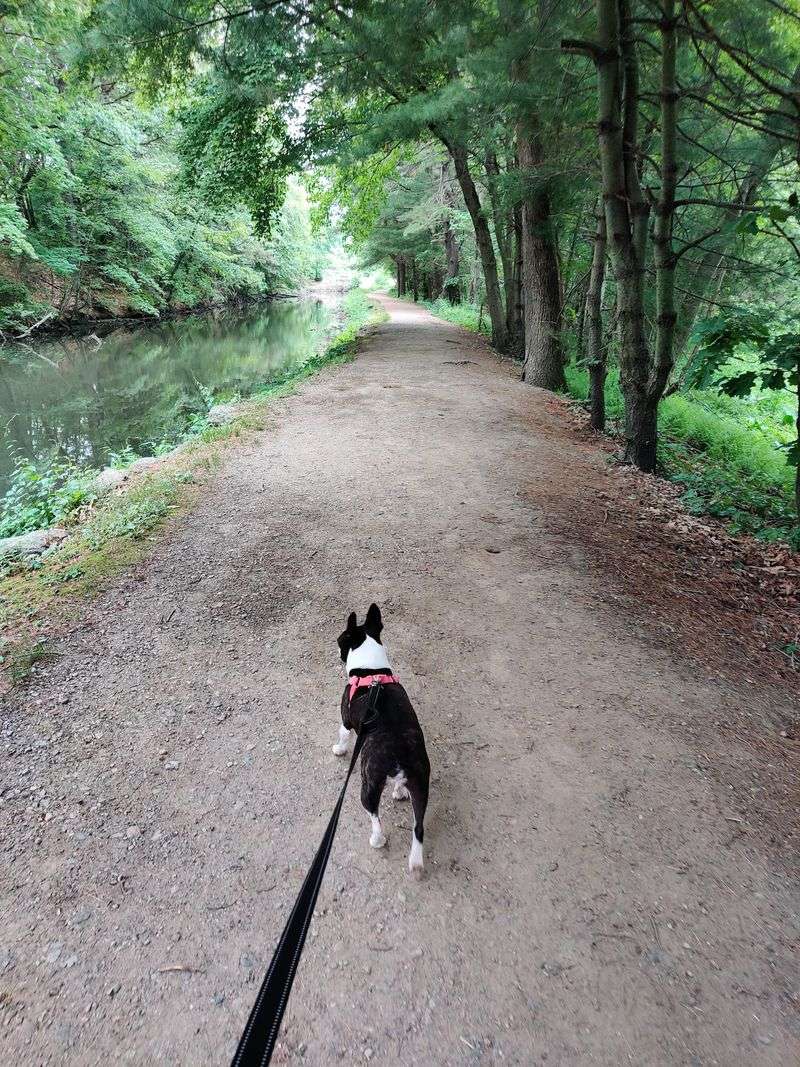
Dogs practically grin on this trail. Plenty of smells, shady paths, and water views make it a favorite for four-legged walkers.
Leashes are required, and the rule matters here. Wildlife lives close to the path, and narrow edges drop toward the water.
You will likely share the towpath with lots of other dog owners. Friendly nods and quick sniffs are part of the routine.
Please pick up after your pet every time. Keeping the trail clean helps everyone enjoy it, including the turtles.
Bring water for your pup on warmer days. A collapsible bowl fits in any backpack and saves a thirsty walk back.
Off-path corners give curious noses room to explore. Just keep your dog close and out of the canal itself.
Families who walk dogs daily can turn this into a weekend tradition. It feels like a big upgrade from neighborhood loops, without any added cost.
Your pup may start recognizing the parking lot before you even open the door.
Visitor Center Exhibits and Helpful Park Staff
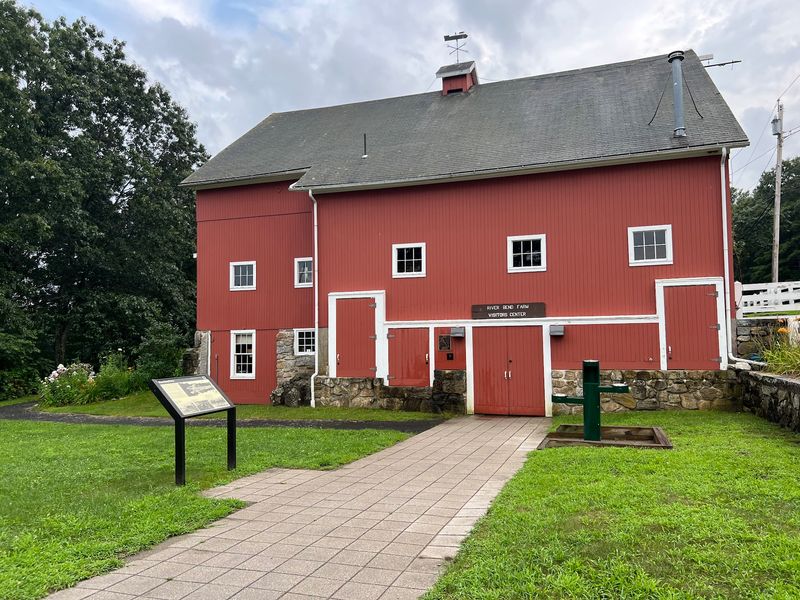
Curious minds should start at the visitor center. It holds exhibits about the area, including displays upstairs.
The staff earns praise for being friendly and knowledgeable. Some guests have enjoyed quick informal tours packed with local history.
Restrooms are located at the visitor center, which helps a lot with kids. Hours may vary, so plan a quick stop before hitting the trail.
The building has been closed during some off-season visits. Calling ahead before a winter trip is a smart idea.
The park also hosts community events throughout the year. Checking the state park page helps you catch something fun.
Exhibits give context to everything you see outside. The canal, the mills, and the river suddenly connect in a clearer way.
Kids who usually rush past museums might stay longer here. The space feels small and approachable rather than overwhelming.
Fifteen minutes inside can make the next two miles of trail much more interesting for everyone.
Parking, Seasons, and Smart Planning Tips
Finding the park is easy. The visitor center sits at 287 Oak St, Uxbridge, MA 01569, in the heart of the Blackstone Valley.
Paved parking sits near the visitor center, with an extra grass lot across the road. Parking also exists at both ends of the canal trail.
Visiting is free, which makes it a budget winner for Massachusetts families. Check the official state page for current hours and seasonal updates.
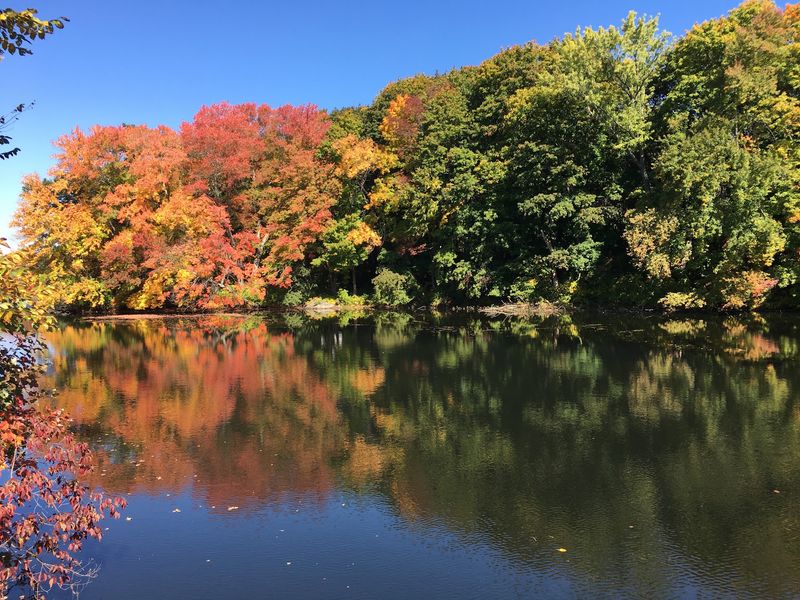
Fall might be the prettiest time to go. Trees around the canal turn bright, and the cooler air makes walking comfortable.
Spring brings flowers, fresh leaves, and active wildlife. Winter walks offer quiet paths and a decent chance of spotting deer or hawks.
Summer can get buggy near still water, so plan accordingly. Early mornings usually feel cooler and calmer.
Pack layers, bug spray, and sturdy shoes. Boots help on side trails after rain, while sneakers handle the main towpath just fine.
Why This Easy Escape Earns a Spot on Your List
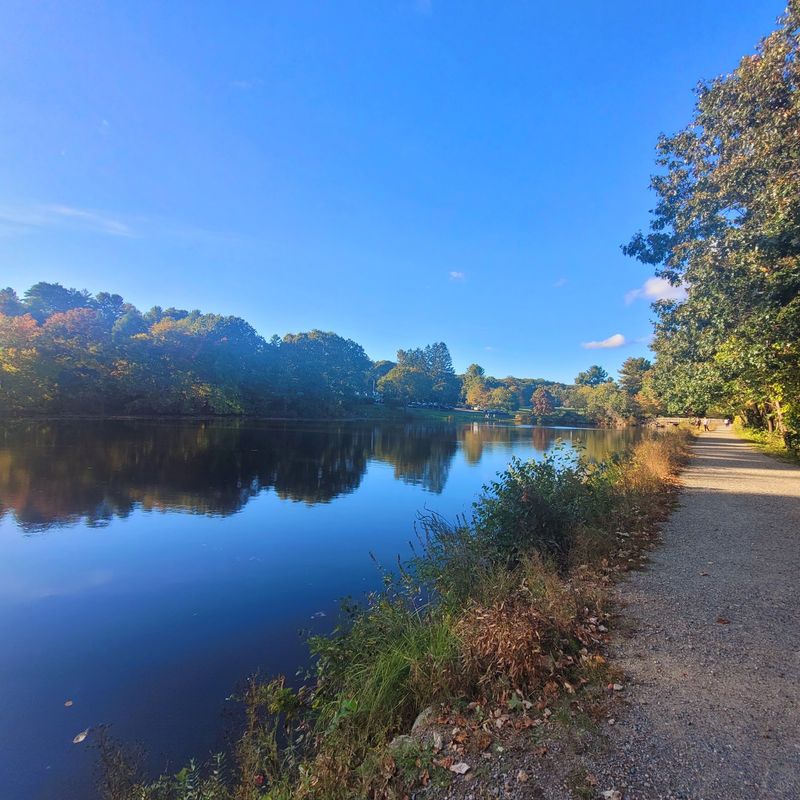
Few outings check this many boxes for so little money. Blackstone River and Canal Heritage State Park blends history, wildlife, and easy walking into one stop.
Toddlers can ride in strollers while teens tackle Goat Hill. Dogs get exercise, and grandparents get benches with a view.
The canal itself feels like a secret slice of old Massachusetts. Not many places let kids walk the same path that canal horses once used.
Of course, it is not fancy. Some stretches feel buggy in summer, and the mill end can smell a bit.
Those small trade-offs fade quickly once turtles appear on a log. Moments like that stick with kids far longer than any expensive attraction.
It also rewards repeat visits. Each season changes the colors, the wildlife, and the mood of the water.
So grab a picnic, leash up the pup, and point the car toward the Blackstone Valley. You might just become the friend who always knows the best free family walk around.
Share this story