More than 4,000 artifacts, authentic Civil War battlefield relics, presidential possessions, World War II memorabilia, celebrity curiosities, and even a 3,000-year-old Egyptian mummy head are packed into just five rooms at this unassuming Gettysburg museum. The collection was assembled by fourth-generation Gettysburg resident Erik L. Dorr, whose family once lived on land where Pickett’s Charge unfolded during the Battle of Gettysburg.
What makes the experience even more surprising is its range. Visitors can encounter battlefield bullets and artillery shells, presidential memorabilia, Easy Company artifacts, Marilyn Monroe items, Elvis memorabilia, and unusual pieces of ancient history during the same visit. Best of all, admission remains completely free, reflecting Dorr’s belief that these pieces of history should be accessible to everyone.
Here’s why Gettysburg Museum of History has become one of Pennsylvania’s most fascinating free attractions and a place where even serious history enthusiasts can encounter something they never expected to see.
A Family Legacy Rooted in Battlefield Ground
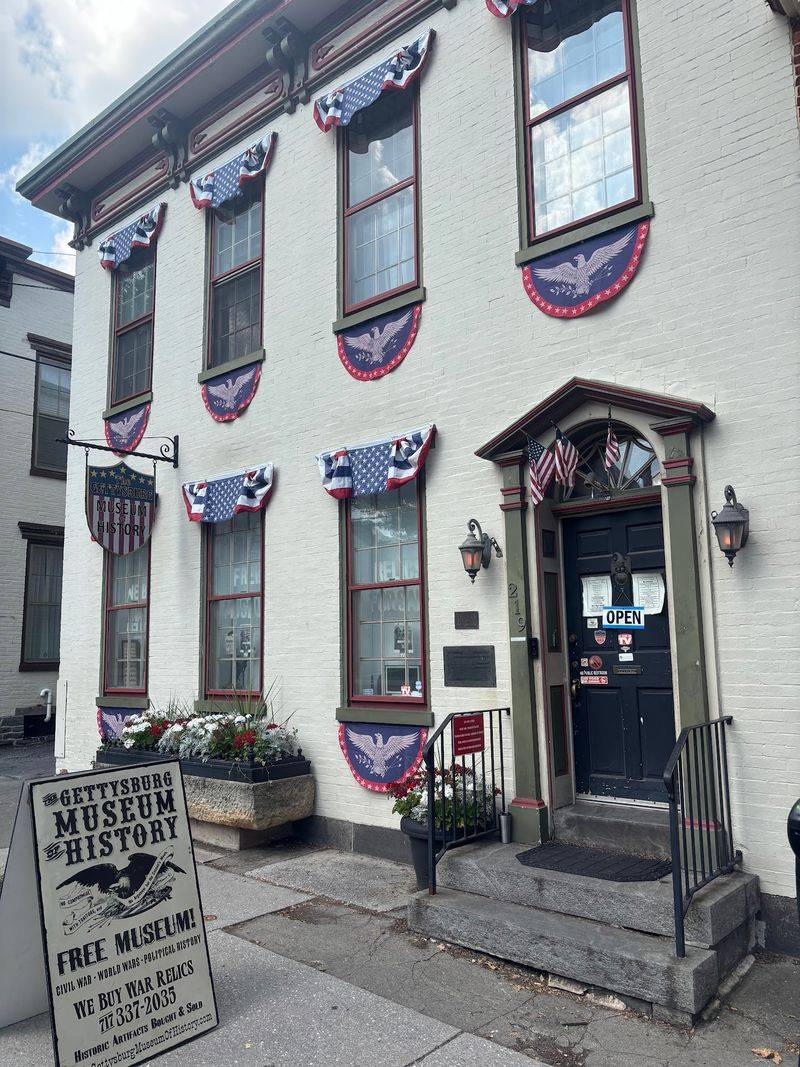
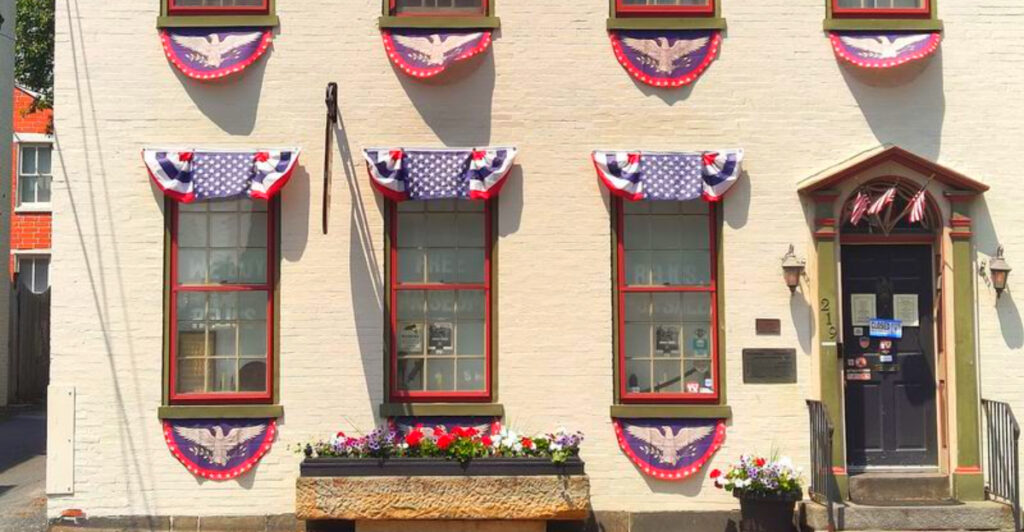
Long before the museum’s front door ever opened to the public, the Dorr family was already living inside this history. The Gettysburg Museum of History stands at 219 Baltimore Street, Gettysburg, PA 17325, in the heart of Adams County, Pennsylvania, and it carries a deeply personal origin story that most institutions simply cannot match.
Curator Erik L. Dorr is a fourth-generation resident of Gettysburg. His ancestors settled here in 1818, and their family farm once occupied land within Ziegler’s Grove, the very ground where Pickett’s Charge unfolded on July 3, 1863.
Relics discovered on that farm by Erik’s forebears became the earliest seeds of the collection visitors explore today. Erik opened the museum in 2008, converting the first floor of his family home into a public space. His guiding belief has always been that these artifacts belong to everyone, not just to those who can afford a ticket or travel to a major national institution.
Over 4,000 Artifacts and Absolutely No Velvet Ropes
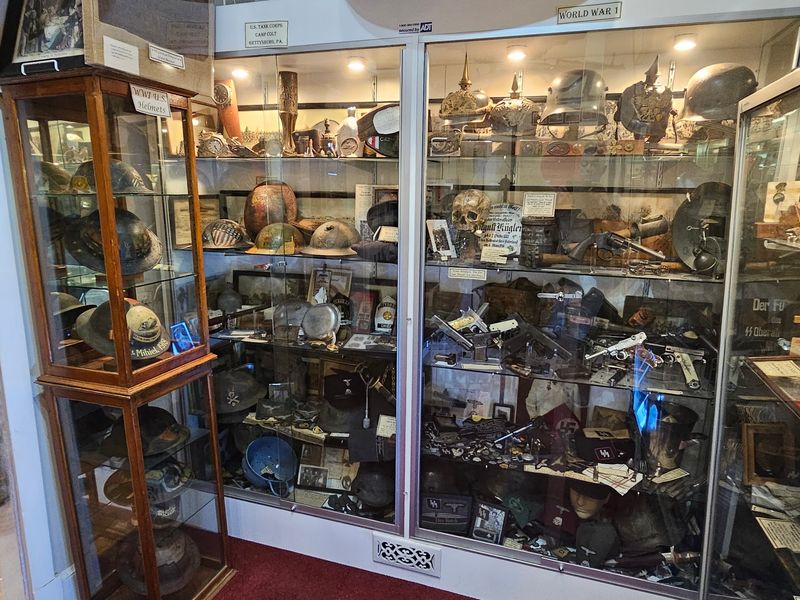
Most museums ask you to keep your distance. This one practically leans in and tells you a secret. The Gettysburg Museum of History fills five rooms from floor to ceiling with more than 4,000 artifacts, creating a sensory experience that feels closer to exploring a brilliantly curated attic than walking through a conventional exhibition hall.
Erik Dorr never intended to run a Gettysburg-only museum. His stated vision was always to be a history museum located in the town of Gettysburg, a distinction that shapes every inch of the collection. Civil War relics share wall space with World War II weapons, presidential mementos, pop culture curiosities, and genuinely bizarre ancient finds.
The density of the displays can feel overwhelming at first, but that sensation quickly turns into delight. Visitors regularly report noticing entirely new items on a second or third visit, which says everything about how much this place rewards careful, unhurried attention. Every corner holds something worth stopping for.
Civil War Relics That Came Straight from the Battlefield
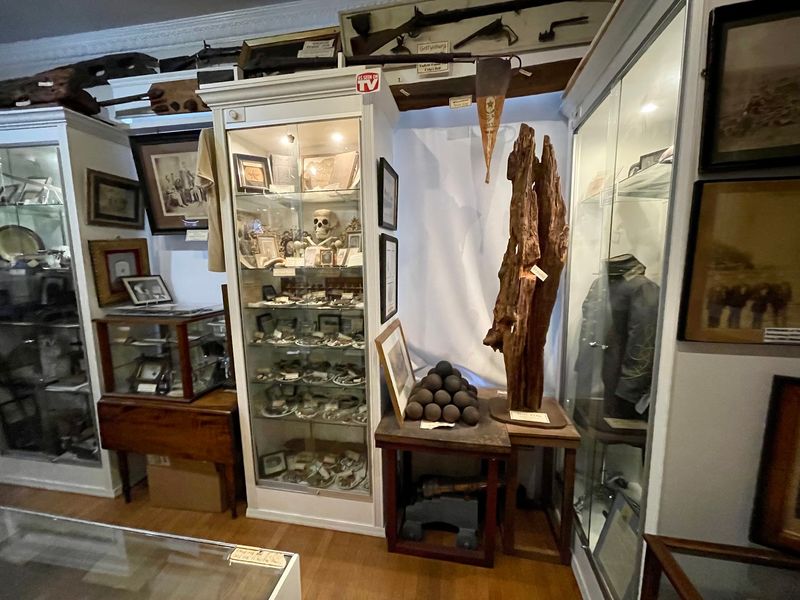
Few collections carry the raw authenticity of the Civil War artifacts here, largely because many of them were pulled directly from the ground beneath what is now a national historic site. Bullets, artillery shells, and belt buckles recovered from the Dorr family farm represent some of the earliest pieces in the collection, each one a tangible fragment of the fighting that consumed this land in July 1863.
Among the standout pieces is the actual 20th Maine Infantry headquarters desk used by Colonel Joshua Lawrence Chamberlain, the officer credited with saving the Union left flank at Little Round Top. A U.S. plate found on that same ridge bears a visible Confederate bullet strike, frozen mid-story.
Two bullets discovered to have collided mid-air during the battle offer a statistical improbability made concrete. A Confederate pistol left on Erik’s great-grandfather’s kitchen table as the family fled the fighting adds an almost unbearably personal note to a conflict that can sometimes feel abstract from a distance.
Presidential Artifacts That Bring the Oval Office Down to Earth
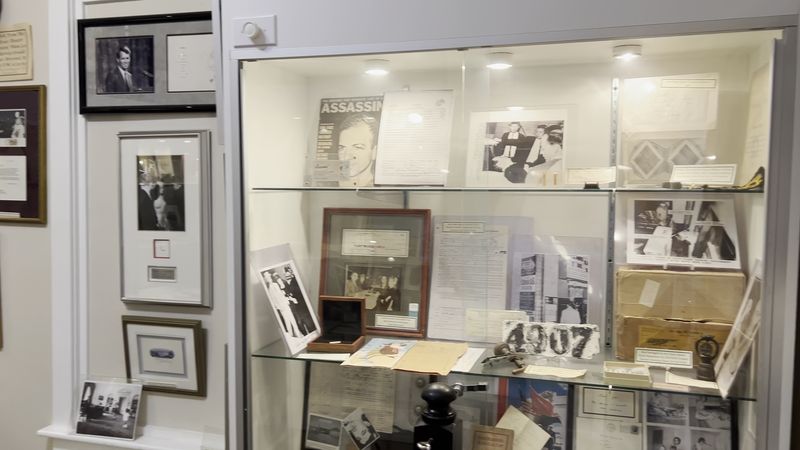
There is something quietly remarkable about standing within arm’s reach of objects that once belonged to the people who shaped American history at the highest level. The presidential collection here spans from the founding era all the way through the Cold War, and it manages to feel intimate rather than ceremonial.
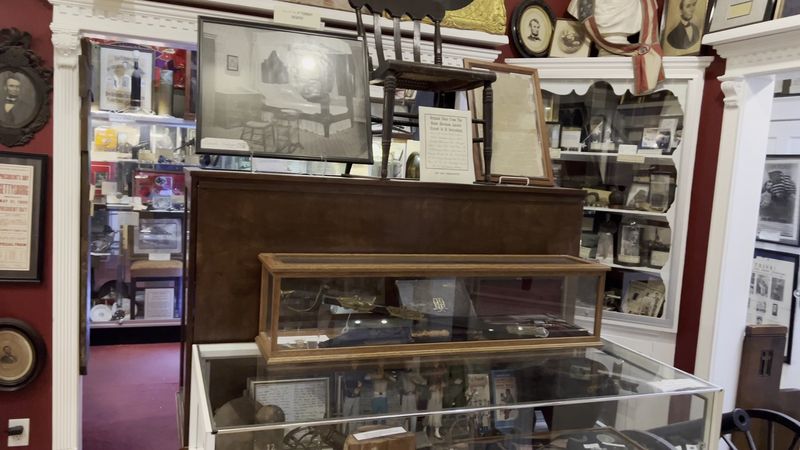
Locks of hair from both George and Martha Washington sit preserved under glass, offering a surprisingly tender connection to the nation’s first First Family. A piece of the flag carried up San Juan Hill by Theodore Roosevelt’s Rough Riders brings a burst of early-twentieth-century boldness into the room.
President Harry S. Truman’s personal hat rests nearby, a quietly ordinary object worn by an extraordinary figure. The John F. Kennedy section draws particular attention, featuring his actual White House chair, the last autographed portrait he signed on November 21, 1963, and Abraham Lincoln’s personal wallet, a small leather object that once traveled everywhere with the president who redefined the nation.
The JFK Corner That Stops Visitors Cold
A single room corner at the Gettysburg Museum of History carries more weight than most entire museum wings. The Kennedy collection is not large in physical footprint, but the significance of what it holds makes it one of the most affecting stops in the building.
The last autographed portrait Kennedy signed, dated November 21, 1963, the day before his final trip to Dallas, sits on display with a quiet gravity that words struggle to capture. A fragment of leather from the seat of his presidential limousine, bearing a visible stain, serves as one of the most sobering artifacts in the entire collection.
The original shell casing from Jack Ruby’s firearm, the weapon used to end Lee Harvey Oswald’s life two days after the assassination, completes a chilling triangulation of one of America’s most enduring national tragedies. Visitors who wander in expecting Civil War memorabilia often find themselves standing here the longest, caught off guard by the emotional pull of these objects.
World War II Weapons, Uniforms, and Chilling Third Reich Finds
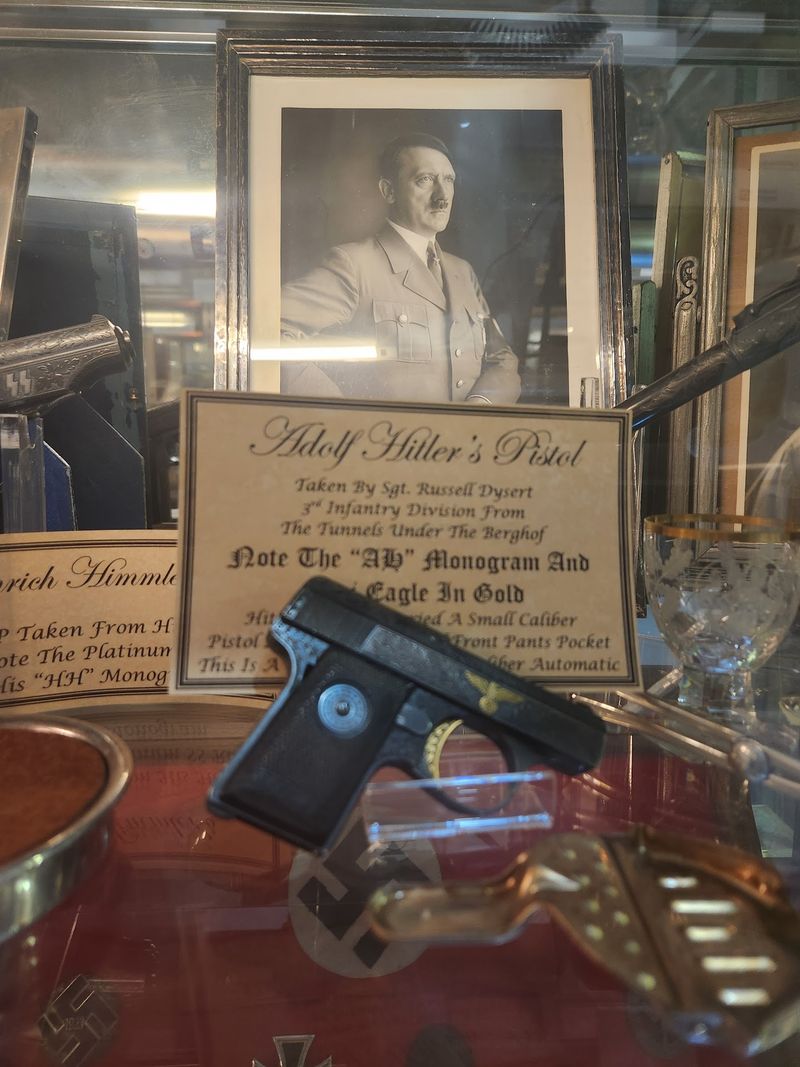
The World War II collection at the Gettysburg Museum of History is deep enough to stop even the most well-traveled military history enthusiast in their tracks. An MG42 German machine gun stands alongside an American M1 Garand rifle, while a canteen punctured by three bullets and a German mess kit riddled with holes speak plainly about what combat actually looked like.
The Third Reich artifacts push the collection into genuinely unsettling territory. A silver tea set reportedly taken from Adolf Hitler’s Munich home, what is believed to be one of his personal pistols, and an X-ray of Hitler’s head purportedly obtained from his dentist by U.S. Army personnel all occupy the same space.
A fabric scrap from the couch in the Führerbunker, stained with Hitler’s blood, is among the most disturbing relics on display anywhere. The uniform and service ribbons of Audie Murphy, one of America’s most decorated combat veterans, offer a powerful counterpoint, honoring courage in the same breath that the collection documents atrocity.
Band of Brothers Memorabilia That Earns Its Own Room
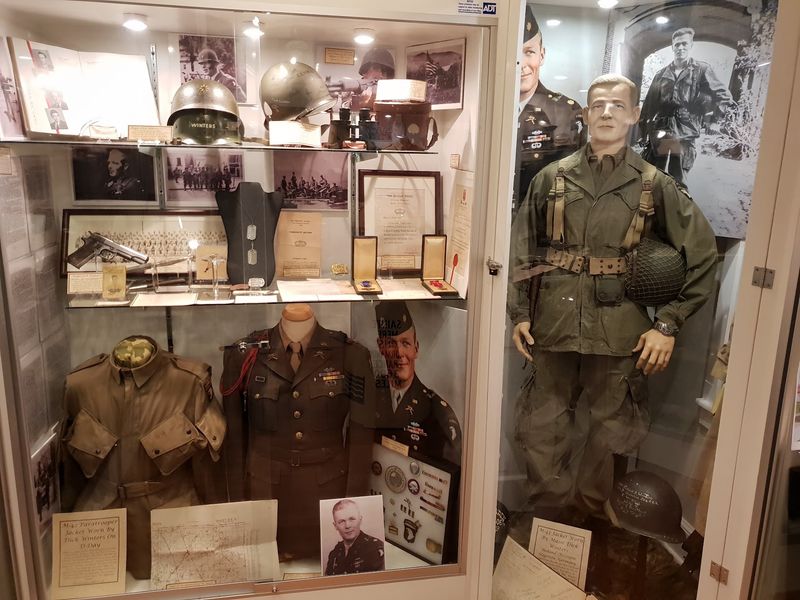
For fans of the legendary Easy Company, 506th Parachute Infantry Regiment, the Gettysburg Museum of History has assembled a collection of personal items and artifacts tied to the men immortalized in both history books and the celebrated HBO miniseries. This section consistently earns some of the most passionate responses from visitors, many of whom travel to Gettysburg specifically because of it.
Personal items connected to figures like Richard D. Winters and William “Wild Bill” Guarnere are displayed here, bringing the human dimension of those famous names into sharp focus. For anyone who has read the books or watched the series, seeing these objects up close carries a weight that no screen can replicate.
The planned expansion of the museum includes a fully immersive Easy Company exhibit as part of Phase I, which promises to give this remarkable collection the dedicated space it deserves. For now, what exists already makes a compelling case for a special trip, and the upcoming upgrade makes a return visit well worth planning in advance.
Marilyn Monroe, Elvis, and a 3,000-Year-Old Mummy Head
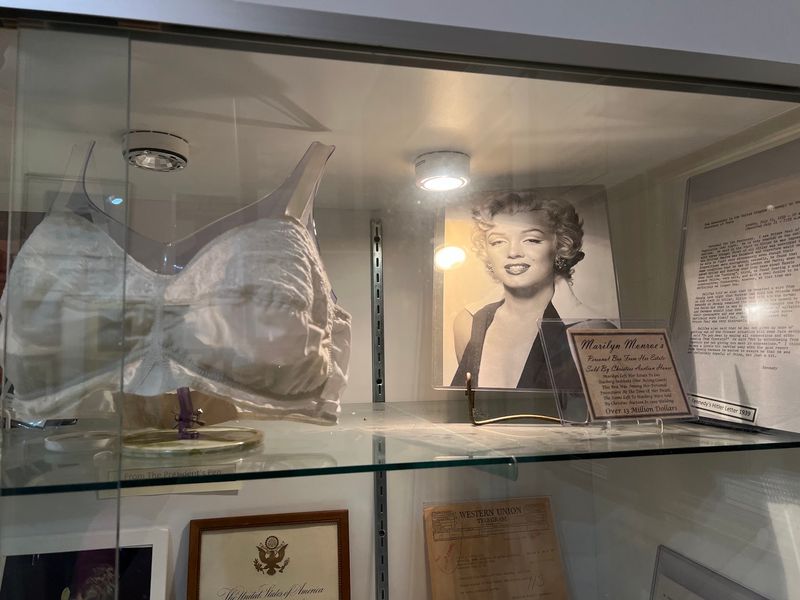
History, it turns out, does not follow a neat timeline when Erik Dorr is doing the curating. One of the most talked-about items in the collection is one of Marilyn Monroe’s bras, displayed alongside a lock of her hair, a piece of pop culture history that sits comfortably among battlefield relics and presidential mementos without apology.
Elvis Presley memorabilia adds another layer of unexpected celebrity to the mix, while original photographs of Bonnie and Clyde, provided by Blanche Barrow, the wife of Clyde’s older brother, offer a rare personal window into the lives of two of America’s most notorious outlaws.
Then there is the 3,000-year-old Egyptian mummy head resting under glass, an artifact that defies easy explanation and raises questions about its long journey to a private museum on a Pennsylvania street. A Victorian rapping hand, once used in spiritualist seances, rounds out this section with a touch of nineteenth-century strangeness. The variety here is not accidental; it reflects a philosophy that history belongs to everyone and everything.
Free Admission and the Philosophy Behind It
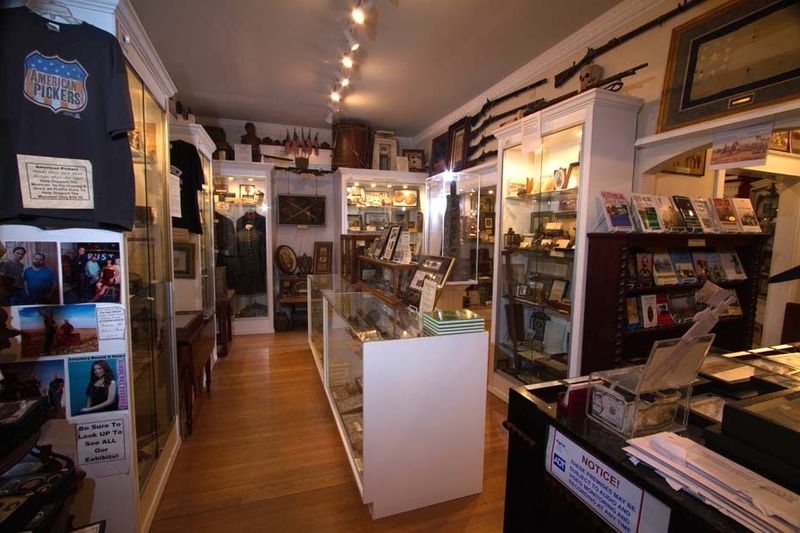
In a town where nearly every attraction carries an entry fee, the Gettysburg Museum of History proudly holds the distinction of being the only free museum in Gettysburg. That policy is not a marketing strategy; it is a core belief that Erik Dorr has articulated clearly and consistently over the years.
His reasoning is straightforward: he views himself as a caretaker of these artifacts, not their owner. Sharing them publicly is simply the right thing to do, and no financial barrier should stand between a curious visitor and a piece of authentic history. The museum sustains itself through donations and through the buying and selling of verified historical relics, with every item in the gift shop certified 100% authentic and accompanied by official museum documentation.
Visitors are encouraged to leave a donation on the way out, and many do so enthusiastically after spending an hour or two inside. That generosity directly funds new acquisitions and the ongoing expansion project that promises to double the museum’s capacity and reach in the coming years.
Practical Tips for Getting the Most Out of Your Visit
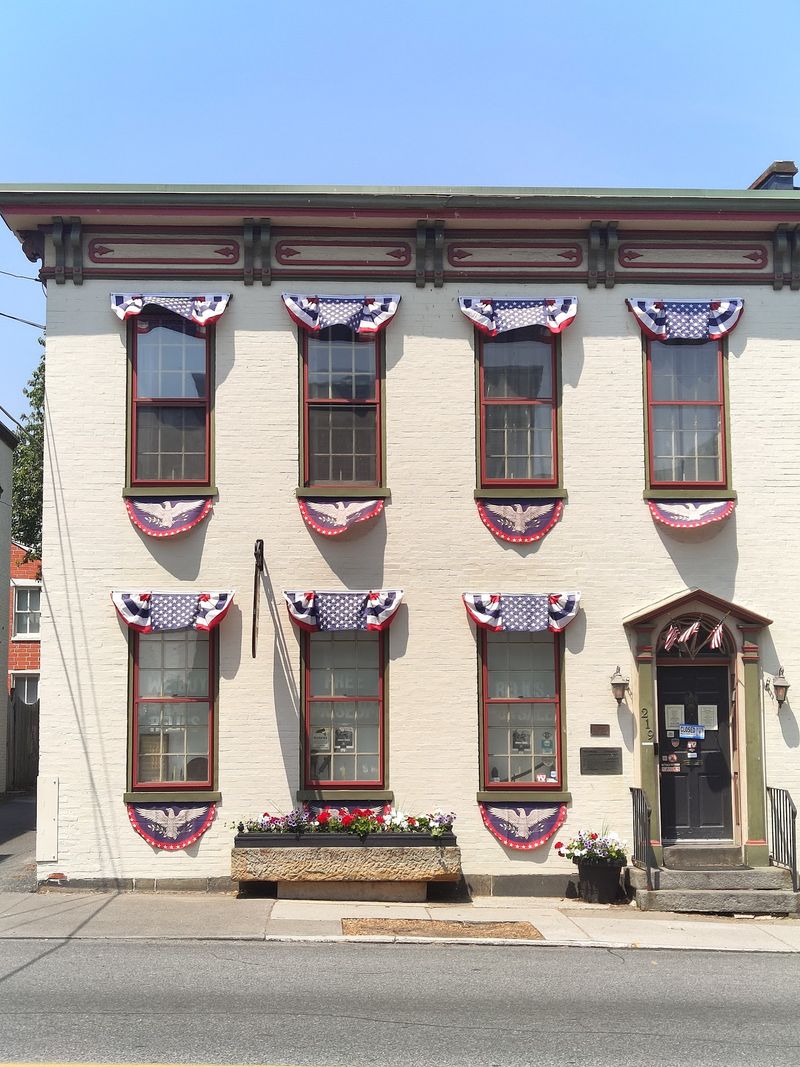
A few practical details can make the difference between a good visit and a great one. The Gettysburg Museum of History is open Wednesday through Sunday from 11 AM to 5 PM, and is closed on Mondays and Tuesdays. Calling ahead at 717-337-2035 or checking the official website before your trip is always a smart move, as hours can shift by season.
Most visitors find that 45 to 90 minutes covers the collection at a comfortable pace, though history enthusiasts regularly stretch that to two hours or more. The museum does not have a public restroom, so plan accordingly before you arrive. Parking on Baltimore Street and in nearby public lots is generally manageable, especially on weekday mornings.
The location places it within easy walking distance of other downtown Gettysburg attractions, making it a natural anchor for a full day of exploration in the area. Erik Dorr or his colleague Cheryl Reichling are typically on hand, and both are genuinely happy to answer questions and share the stories behind the artifacts on display.
Share this story