Tucked away in the North Shore region of Massachusetts, there is a 721-acre state park that started its life as the private retreat of a wealthy Boston lawyer. The grounds once belonged to a single family, complete with a grand early-1900s mansion, manicured fields, and winding carriage paths.
Today, those same paths are open to hikers, cyclists, horseback riders, and families looking for a full day outdoors. The transformation from exclusive estate to beloved public park is a story worth telling, and the land itself holds plenty of surprises for anyone willing to explore it.
The Man Behind the Land: Bradley Palmer’s Story
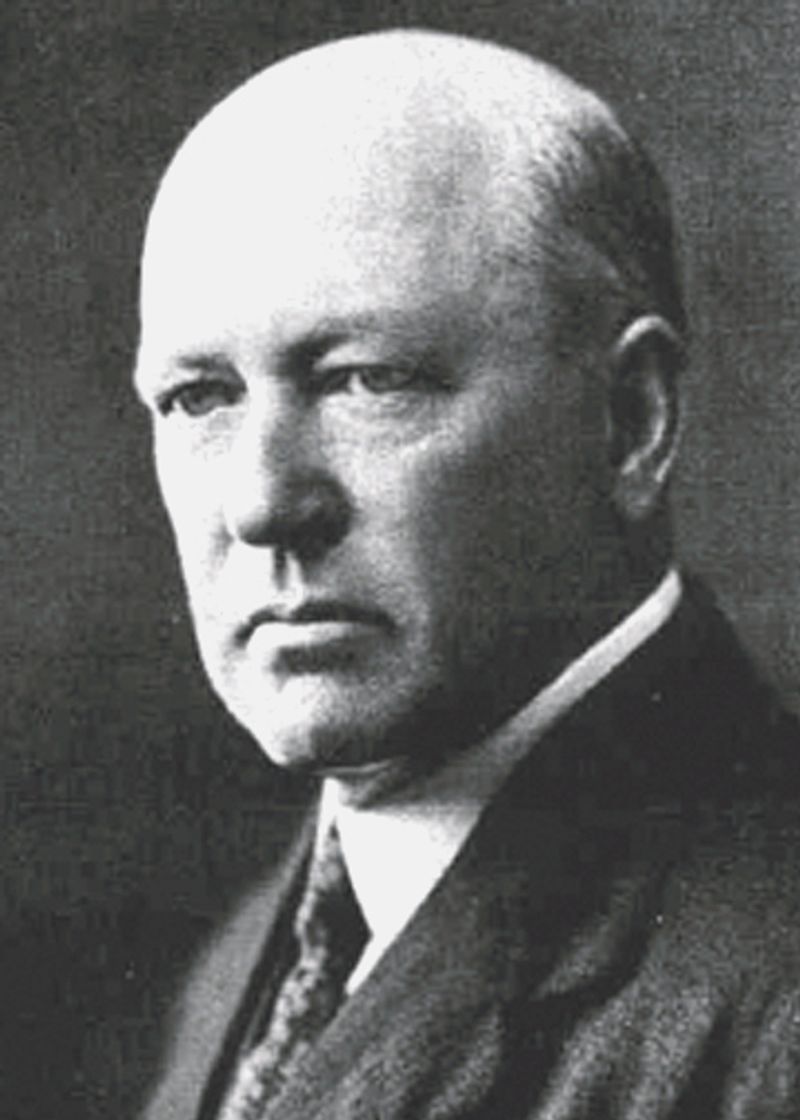
Bradley Palmer was a prominent Boston attorney who made his fortune in the early twentieth century. He used that wealth to build a sprawling private estate in Topsfield, complete with a mansion, working farm, and extensive grounds designed for personal recreation.
Palmer was known for hosting social gatherings on the property, and the estate reflected his taste for both elegance and the outdoors. The mansion itself still stands on the grounds today, a quiet reminder of the private life the land once supported.
After Palmer’s passing, the estate was eventually transferred to the Commonwealth of Massachusetts, which converted it into the state park that thousands of people enjoy today. That transition took a piece of privileged history and handed it back to the public, which is a genuinely rare outcome for private estates of that era.
The story behind the land adds a layer of depth that most green spaces simply cannot offer.
721 Acres of Green: What the Size Actually Means
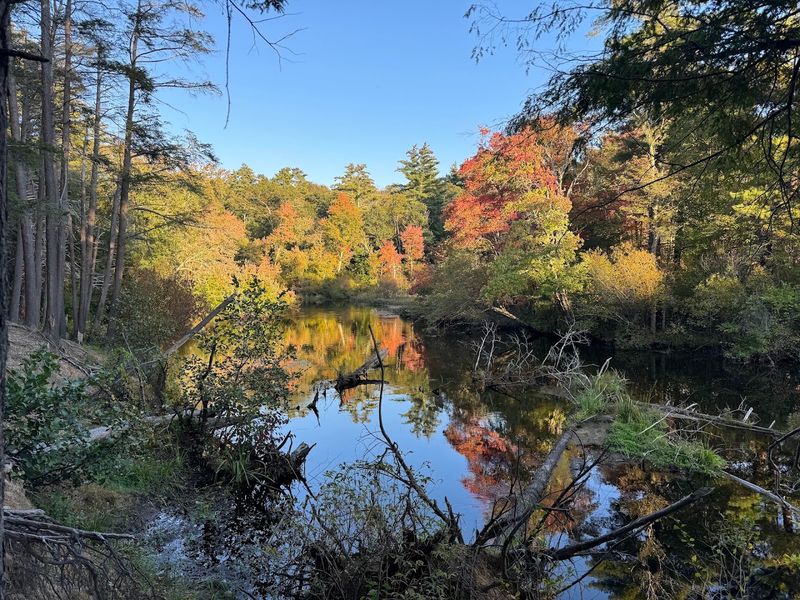
Seven hundred and twenty-one acres is a number that sounds impressive on paper, but walking through the park makes that figure feel real in a way that no map quite captures. The property is large enough that different corners of it have completely different personalities.
Some sections are wide open meadows where light falls across the grass in broad patches. Other parts are dense with forest, where the trail narrows and the canopy closes in.
Near the Ipswich River, the landscape shifts again into something quieter and more reflective.
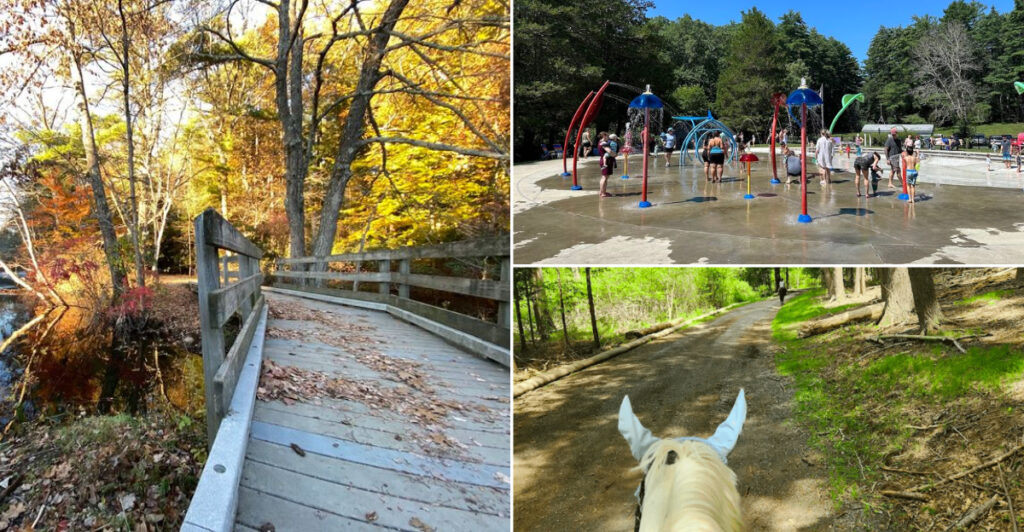
That variety across a single property is what keeps repeat visitors coming back. A family with young children might stick to the paved paths near the splash pad area, while a more ambitious hiker can push deeper into the trail network and find stretches that feel genuinely remote.
The sheer scale of the park means there is always a new section to discover, no matter how many times someone has visited before.
The Mansion That Still Stands
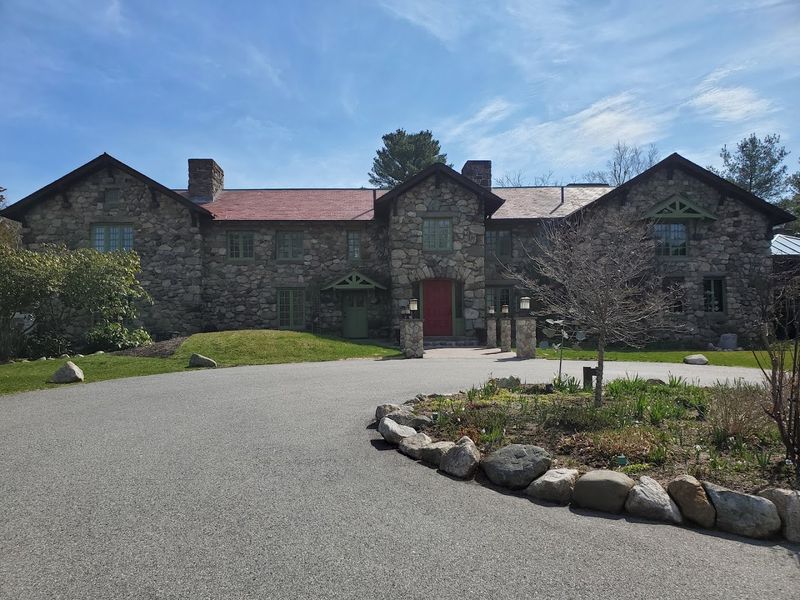
The original mansion built by Bradley Palmer remains on the property and is one of the more unusual features of the park. Most state parks do not come with a historic building sitting quietly at their center, and this one adds a genuinely distinct character to the grounds.
The structure has been described as having a rustic exterior with an old-world wooden interior, featuring several rooms that reflect the craftsmanship of its era. It has been used as an event venue, particularly for smaller weddings, with a capacity of up to 300 guests.
The surrounding gardens, though not always fully accessible to the general public, hint at the original landscaping vision that Palmer had for the estate. Seeing the mansion while out on a trail walk is one of those unexpected moments that makes this park feel unlike any other in the region.
It is a piece of living architectural history sitting right in the middle of a public green space.
Trails for Every Pace and Purpose
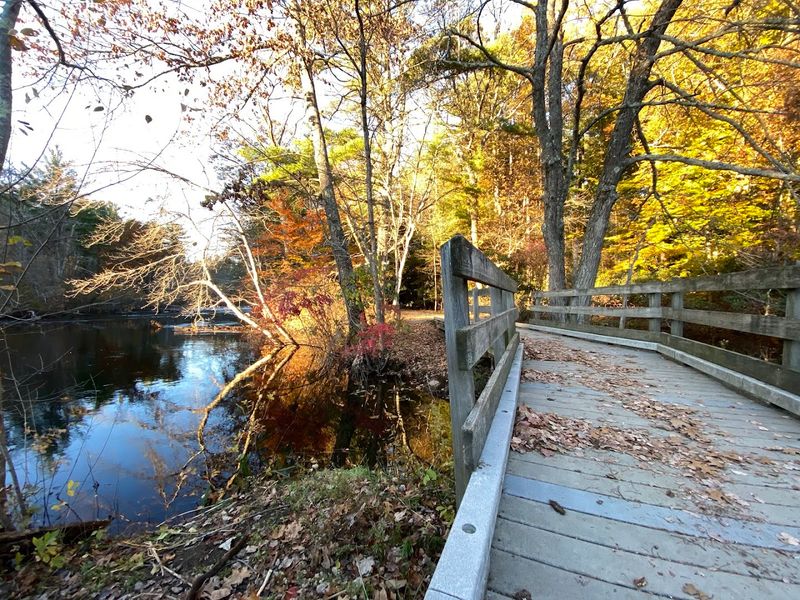
The trail network at Bradley Palmer is one of its strongest features. The park contains a wide variety of paths that range from flat, paved routes to narrower dirt trails that wind through forested sections and open fields.
Most of the trails connect to one another, which means getting turned around is not a major concern. The layout is forgiving for new visitors while still offering enough variety to keep experienced hikers engaged over multiple trips.
Flat terrain dominates much of the park, making the trails well-suited for casual walks, jogging, and family outings with strollers or wheelchairs.
Fall is widely considered the best season to tackle the trails, partly because the foliage transformation across 721 acres is a genuinely impressive sight. The off-season also brings a practical bonus: the speed bumps installed along the paved road for summer traffic are removed, making the entire route smoother for cyclists and runners alike.
Every season offers a different version of the same trails.
Cycling Through the Carriage Paths
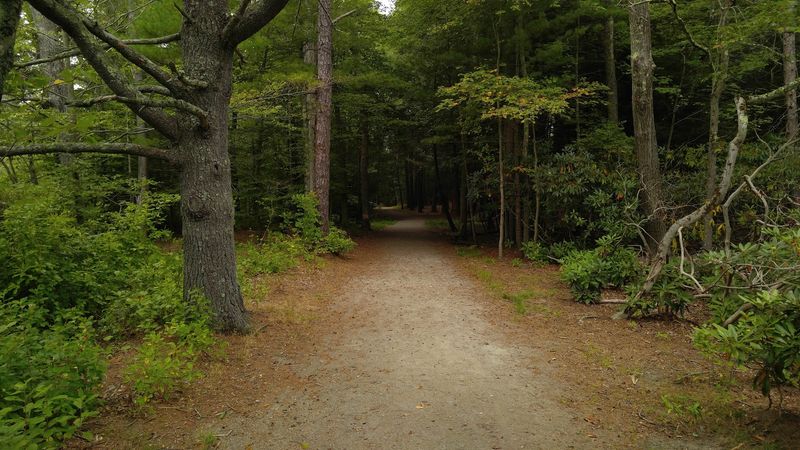
Cycling is one of the most popular activities at the park, and the layout of the property makes it particularly well-suited for riders of all skill levels. The paved main road stretches from the Willowdale entrance to the splash pad area, covering roughly one mile of smooth, accessible surface.
That one-mile stretch becomes a favorite loop for families, with parents running alongside younger children on bikes. Going back and forth four to six times adds up to a meaningful workout without requiring any technical skill or off-road confidence.
During the summer months, cyclists share the road with cars heading to the splash pad, so awareness of traffic is part of the experience. Off-season cycling is a different story entirely.
Without speed bumps or vehicle traffic, the road opens up in a way that feels almost private. The combination of paved paths and surrounding forest trails gives cyclists options that few other North Shore parks can match in terms of variety and accessibility.
Horseback Riding on Historic Grounds
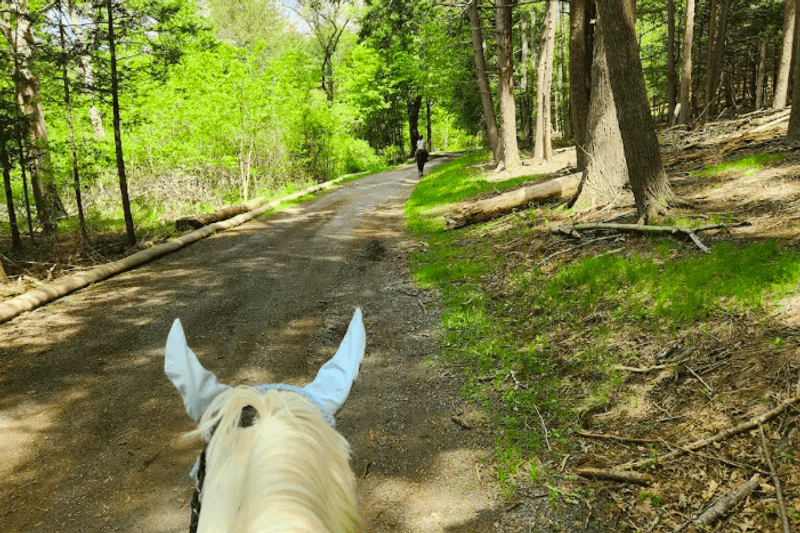
Horseback riding has a long history at Bradley Palmer, which makes sense given the estate’s origins as a private recreational property. The trails and open fields that Palmer once used for his own leisure now serve as riding routes for equestrians from the surrounding region.
The park is one of the few state parks in Massachusetts where horseback riding is both permitted and genuinely practical. The wide carriage-style paths and open meadow sections give riders plenty of room to move comfortably, and the terrain is flat enough to be manageable for horses of varying experience levels.
Riders who have visited describe the experience as something that feels fitting for the land, as if the horses belong there in a way that connects to the property’s past. The big open field at the center of the park is a particular highlight for equestrians, offering a wide stretch of ground that is hard to find at most public parks in the region.
It is a genuinely special use of the space.
The Ipswich River: A Trail Within a Trail
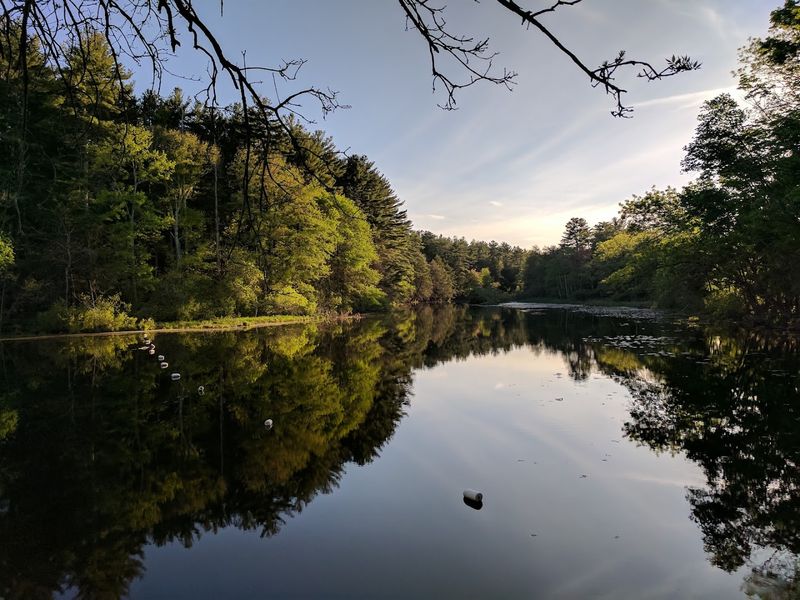
One of the quieter rewards of exploring the full trail network is finding the path that runs alongside the Ipswich River. The river forms part of the park’s natural boundary and adds a water element that changes the character of the surrounding landscape considerably.
Walking along the riverbank puts visitors in close proximity to the wildlife that gathers near the water. Frogs, turtles, and various bird species are commonly spotted in this section of the park, and deer are known to appear near the water’s edge, particularly at dusk.
The river also opens up paddling opportunities. Kayaking and canoeing are possible on the Ipswich River, giving the park an activity that most trail-only parks simply cannot offer.
For anyone who wants to combine a land-based hike with time on the water, this corner of the property delivers exactly that combination. The river section feels like a park within the park, distinct enough to warrant its own dedicated visit.
The Splash Pad: Summer’s Main Event for Families
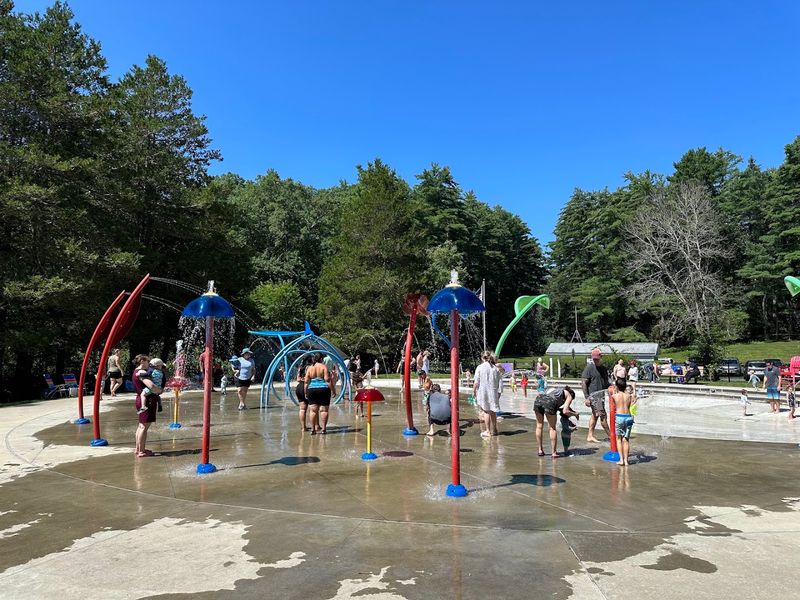
The splash pad at Bradley Palmer is the undisputed centerpiece of the park’s summer season, drawing families from across the North Shore and beyond. It is a fully fenced water play area with multiple water features designed for younger children, and the setup is thorough enough to make parents feel comfortable letting kids move around freely.
The enclosed area includes changing rooms and restrooms, which removes one of the most common logistical headaches of outdoor water play. A nearby playground designed for children roughly ages two to five sits within the same fenced zone, giving kids options when they need a break from the water.
Shade is available along the edges of the fenced area, making it a practical spot to set up a picnic while keeping an eye on the kids. An ice cream truck makes occasional appearances near the splash pad during peak summer hours.
Massachusetts residents pay around $5 to access the splash pad, a fee that most families consider well worth the afternoon it provides.
Picnicking and Open Fields: The Slower Side of the Park
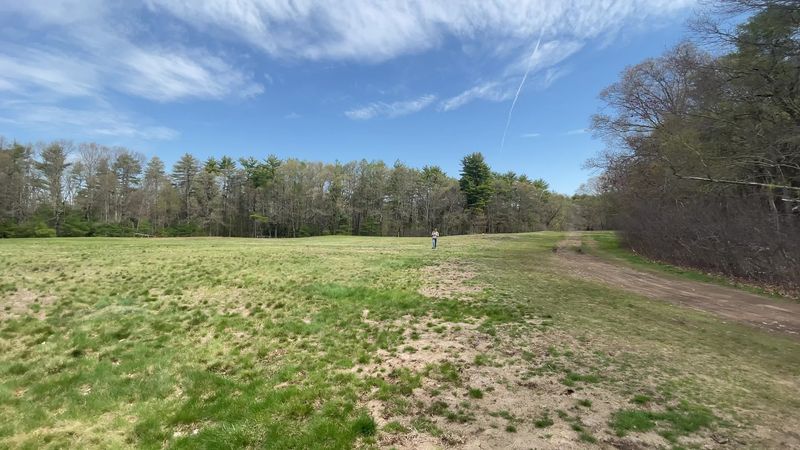
Not every visit to Bradley Palmer needs to involve a long hike or an active water session. The park has generous open field areas and designated picnic spots that make it an equally strong destination for anyone who just wants to slow down for a few hours.
Picnic tables are spread throughout the property, and the open meadow sections offer plenty of informal space to spread out a blanket and stay awhile. The combination of shade from surrounding trees and open sky above the fields creates a setting that works well for groups of all sizes.
The open fields also serve as natural gathering points during the park’s busier days, where the energy shifts from quiet trail walking to something more communal and relaxed. Families with very young children, older adults looking for a comfortable outdoor afternoon, and groups planning casual get-togethers all find this part of the park well-suited to their needs.
The slower pace here is a genuine feature, not an afterthought.
Wildlife Watching Across the Seasons
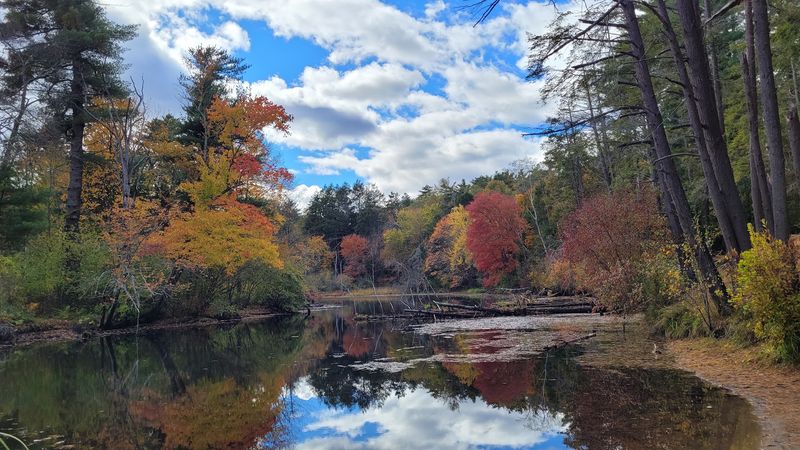
The wildlife at Bradley Palmer is one of those park features that surprises first-time visitors. The property’s mix of forest, open meadow, and river habitat creates conditions that support a genuinely varied range of animals throughout the year.
Turtles and frogs are regulars near the water, while birds are active across most sections of the park. Deer are frequently spotted in the open fields and along the forest edge, particularly during the quieter early morning and late afternoon hours.
There have even been reports of larger animals, including what some have described as a particularly large hedgehog moving through the fields near the main road.
Stargazing is another option the park supports after dark, given the relative lack of light pollution in this part of Essex County. Summer brings more insects and warmer conditions, which some find less comfortable, but it also increases the overall wildlife activity across the property.
Fall tends to bring the most deer sightings, making autumn walks especially rewarding for anyone paying attention to the tree line.
Accessibility and Paved Paths: The Park Works for Everyone
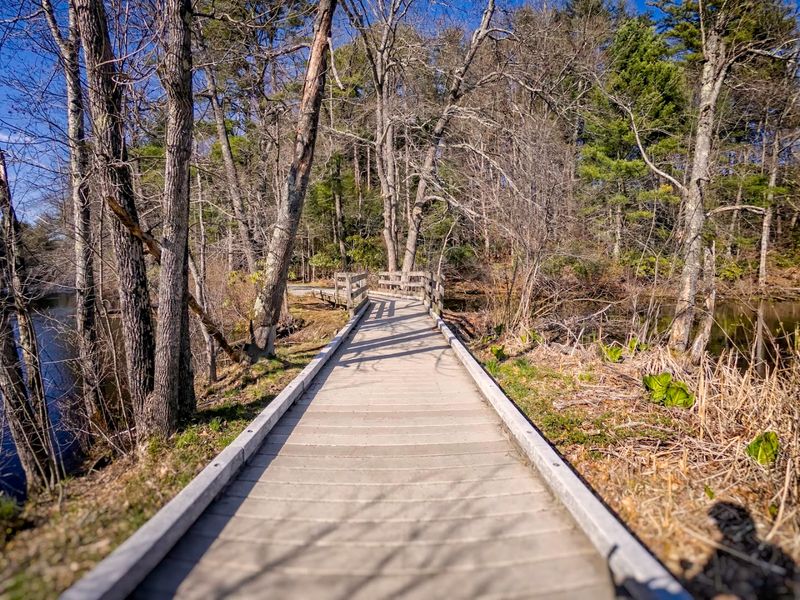
One of the more thoughtful aspects of Bradley Palmer’s layout is its genuine accessibility. The main paved road running through the property is wide, smooth, and flat enough to accommodate wheelchairs, strollers, and anyone who needs a stable surface underfoot.
That accessibility is not limited to a short stretch near the entrance. The paved route covers a meaningful distance, giving visitors with mobility considerations a real option rather than a token path that dead-ends after a few hundred feet.
Families with infants in strollers regularly use the main road as a walking route, and the surface holds up well through the seasons.
The park’s relatively flat terrain across most sections also makes it approachable for older visitors or anyone recovering from physical limitations who still wants time outdoors. Accessibility at a state park often means a single designated spot near the parking lot.
At Bradley Palmer, the whole design of the property works in favor of keeping the experience open to as many people as possible.
Practical Tips Before You Go
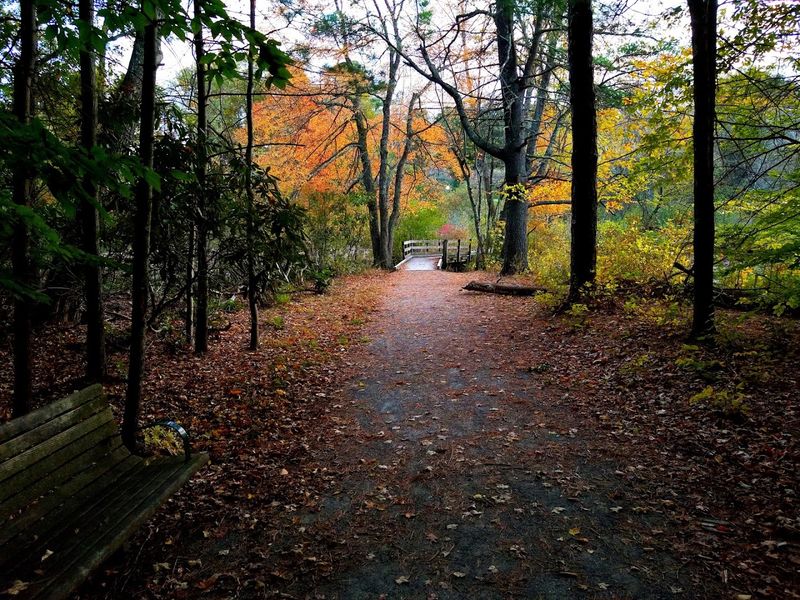
A few practical details can make a significant difference in how smoothly a visit to Bradley Palmer goes. Parking fees kick in after Memorial Day and run through the summer season, so arriving before that date means free access.
Massachusetts residents pay around $5 per day during the fee period, while out-of-state visitors pay a higher rate.
The park uses a digital parking system, and some visitors have found the ticket display instructions unclear, particularly when using a mobile app. Checking the park’s official website at mass.gov before visiting is the most reliable way to understand the current payment process and avoid confusion on arrival.
Bringing water, sunscreen, and a picnic setup is always a good call, especially for summer visits when the splash pad is the main destination. The park opens at 7:30 AM daily, and arriving earlier in the day tends to mean quieter trails and easier parking.
Fall and off-season visits consistently offer a more relaxed experience with fewer crowds and smoother road conditions for cyclists.
Why This Park Keeps Drawing People Back
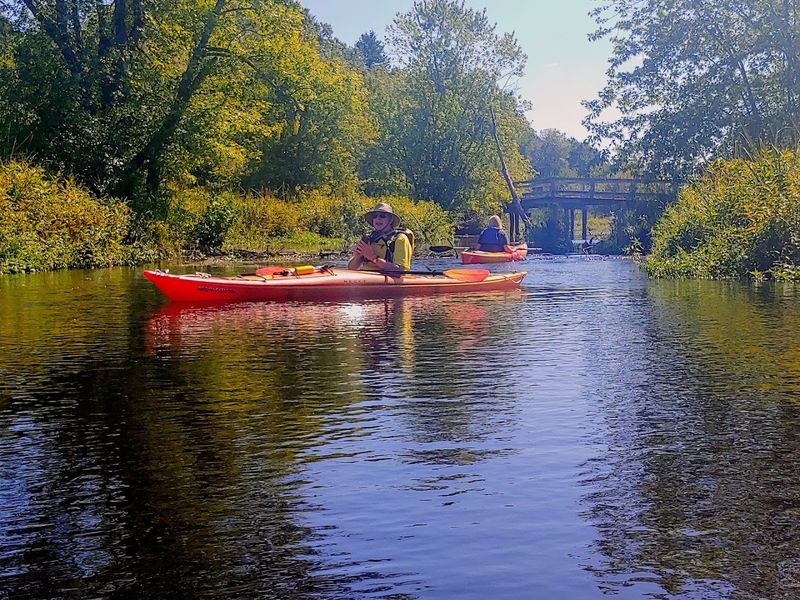
Parks that hold people’s attention across multiple seasons and multiple stages of life are rare. Bradley Palmer manages that trick by offering enough variety that the same property feels genuinely different depending on when and how someone chooses to engage with it.
A toddler’s first splash pad experience, a cyclist’s off-season training loop, a couple’s quiet walk along the Ipswich River, and an equestrian’s afternoon ride can all happen on the same day across the same 721 acres without those groups ever crossing paths. That kind of spatial generosity is hard to manufacture and even harder to find.
The historical layer, from the original estate to the mansion still standing on the grounds, gives the park a story that goes beyond trails and amenities. Bradley Palmer State Park earns its reputation not by doing one thing exceptionally well, but by doing many things well enough that almost anyone who visits leaves thinking about when they can come back.
That is a genuinely difficult balance to strike.
Where the Estate Begins: Location and Access
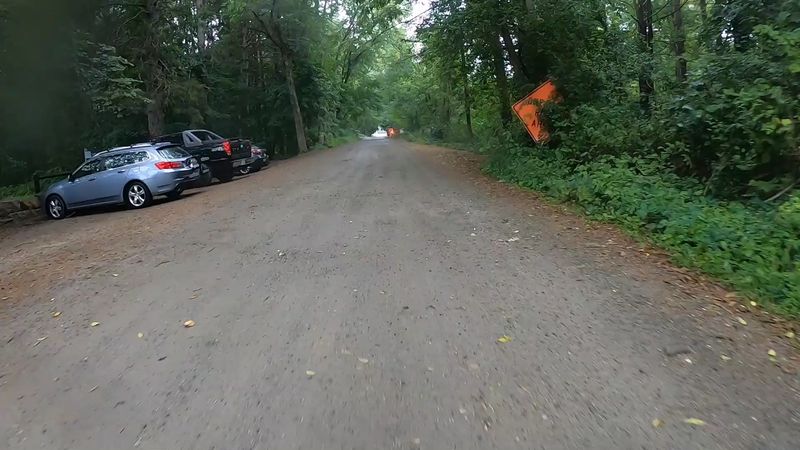
Bradley Palmer State Park sits at 40 Asbury St, Topsfield, MA 01983, in Essex County on Massachusetts’s North Shore. The park is less than twenty miles from downtown Boston, making it a genuinely accessible escape without requiring a long drive.
The main entrance off Asbury Street leads visitors down a wide, paved road flanked by mature trees that stretch high overhead. The setting announces right away that this is not a typical roadside park.
The park operates daily from 7:30 AM to 5 PM, giving families, solo hikers, and cyclists a solid window to explore without feeling rushed. Parking fees apply during the busy summer season, with Massachusetts residents paying around $5 per day.
Out-of-state guests pay a higher rate, so planning ahead is a good idea. The official website at mass.gov has up-to-date fee schedules and seasonal information worth checking before any visit.
Share this story