An ordinary walk in New Jersey can turn into a search for clues about George Washington’s army. Behind an unassuming outdoor stop are recreated soldiers’ huts, a historic farmhouse, and paths through land used during the winter of 1779-1780.
The surprise is how easily a little exercise becomes a lesson about everyday life during the American Revolution. Keep reading for the history worth stopping for and the practical details that help turn curiosity into a well-planned outing.
A Historic Camp Beyond the Parking Lot
A short stop can grow into several hours here, especially once the historical markers start answering questions you had not thought to ask.
Jockey Hollow is a historical destination in Morristown, NJ 07960, United States. The supplied address identifies the town and ZIP code rather than a street number, so use the destination name when planning directions.
George Washington’s troops camped on this land during the winter of 1779-1780. Today, hiking trails, recreated soldier huts, the Wick Farmhouse, and educational exhibits give the outing several different starting points.
The appeal is not limited to people who already know Revolutionary history. A walk can include a few signs and one historic stop without becoming an afternoon of dates and names.
Allow room in the plan for curiosity. The combination of outdoor paths and historical features makes a quick drive through possible, but a longer outing gives the details more attention.
The Winter Behind the Story
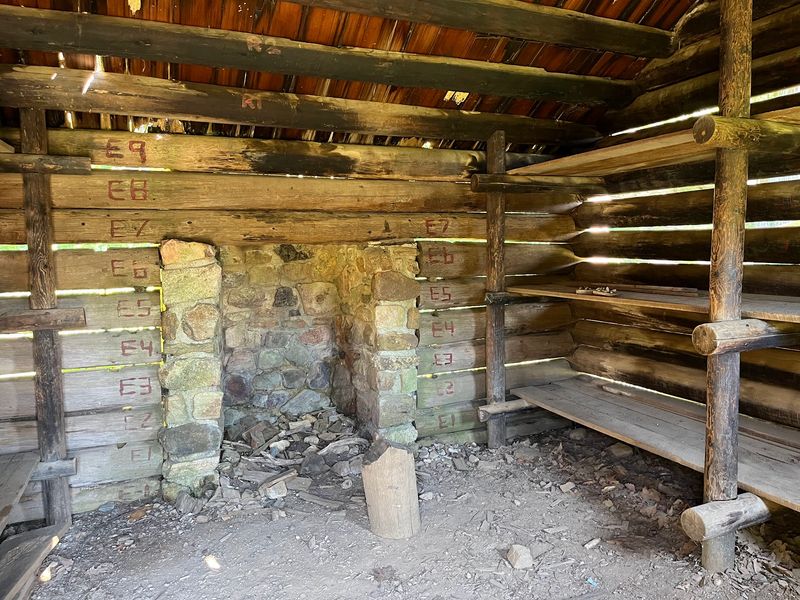
The date matters: 1779-1780 places this landscape within a difficult winter for Washington’s Revolutionary army.
That connection gives the paths a purpose beyond exercise. The land was a camp where soldiers needed shelter and carried on daily routines through demanding conditions.
Historical signs explain parts of that story across the grounds. Rather than treating every stop as a separate attraction, connect the information about housing, the camp, and everyday life as you go.
The educational material helps make a large historical subject manageable. A cabin or a short explanation of sleeping arrangements can offer a clearer starting point than a long list of events.
Keep the distinction between the historic setting and its modern interpretation in mind. The camp’s story belongs to this land, while the recreated structures help explain it today.
That difference makes the outing more meaningful, not less: the setting supplies context, and the exhibits supply useful explanations.
Small Huts, Practical Questions
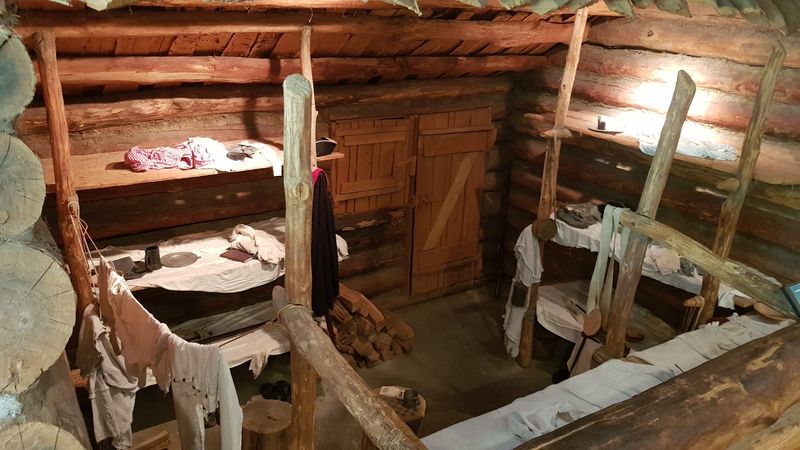
Twelve soldiers sharing one small cabin is the kind of detail that makes people pause.
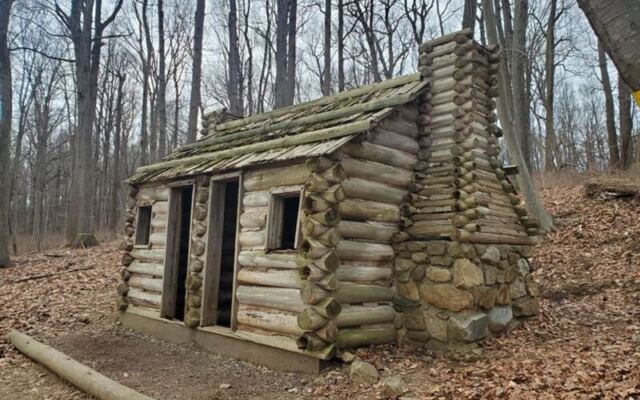
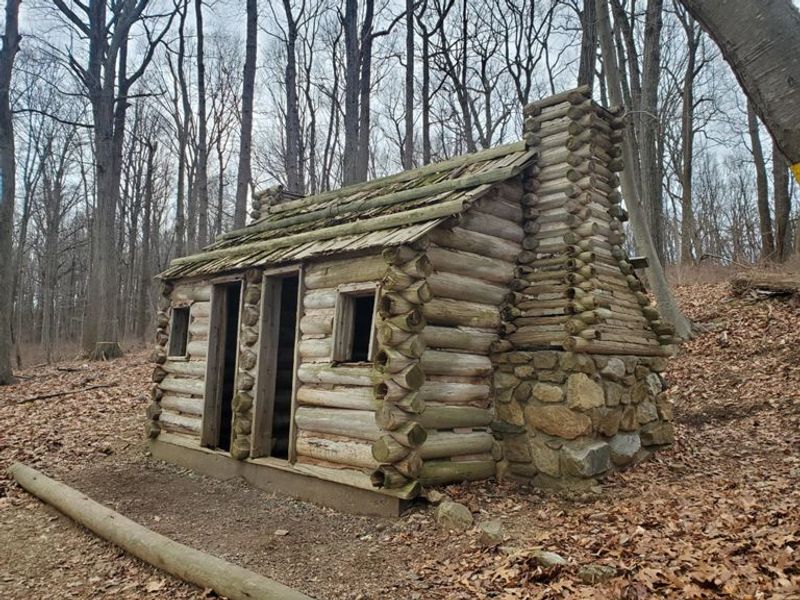
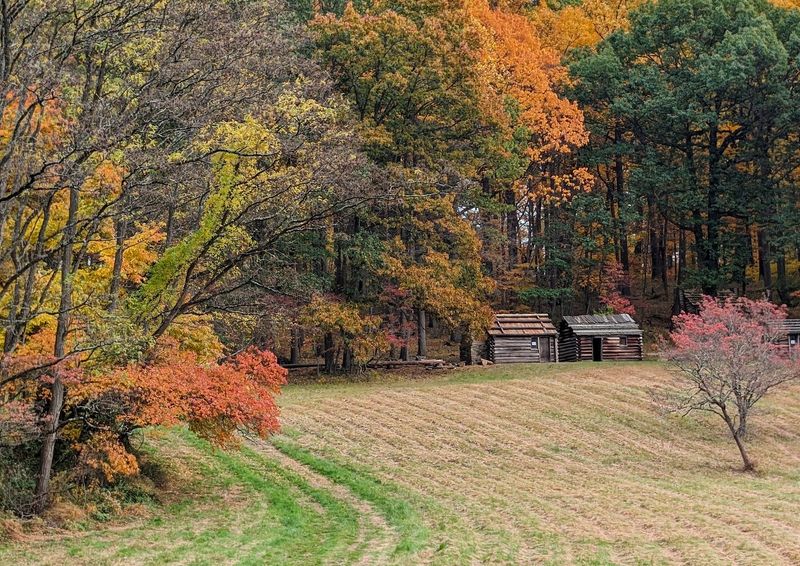
The recreated huts explain the compact housing used during the encampment. The supplied accounts describe cabins intended for twelve soldiers, along with a recreation of an officer’s cabin.
Be clear about what stands here now: these are reconstructed examples, not surviving original soldiers’ homes. Their value comes from helping explain arrangements that can otherwise remain abstract.
A useful approach is to consider ordinary questions about shared space. Where did everyone sleep, how much room remained, and what did daily life require?
Signs and related displays provide historical context without requiring a long guided itinerary. The huts are also among the features accessible during a drive through the grounds, followed by stops where access permits.
Give this area more than a passing glance. Its strongest lesson concerns the people inside those tight quarters, rather than the cabins alone.
The Wick Farmhouse and Its Grounds
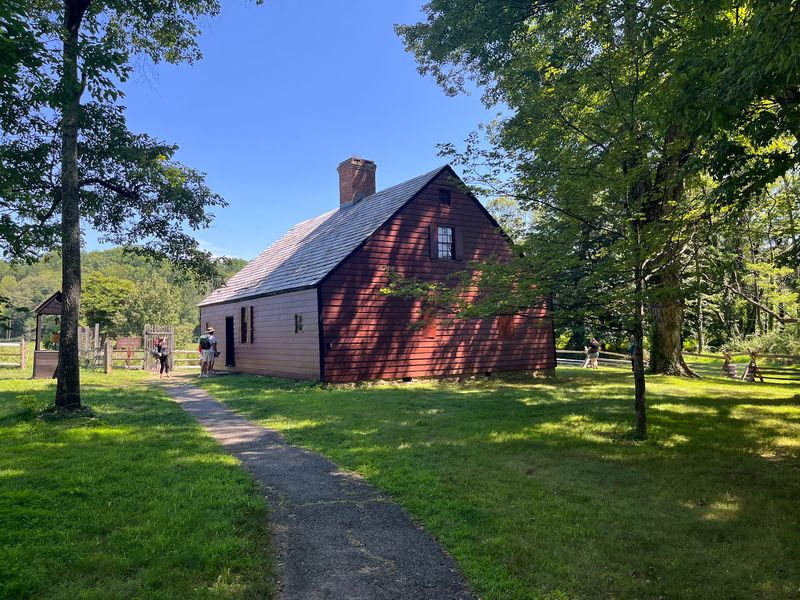
Not every historical stop here is a soldier’s hut.
The Wick Farmhouse adds another part of the destination’s story, with a garden and orchards also identified in the supplied information. It gives a walking route a distinct stop beyond the camp housing.
A ranger-led house tour has been offered without charge, although that past experience does not establish a current schedule. Check availability before making an indoor tour the main reason for your trip.
The farmhouse works well as a place to pause between trail sections and historical exhibits. Its presence broadens the outing beyond a single subject, while keeping attention on the same grounds.
Resist the urge to fill gaps with assumptions about the house’s interior or its residents. Let the on-site interpretation explain the details that are available during your visit.
Even a straightforward stop around the farm adds variety to an afternoon otherwise centered on paths, signs, and reconstructed cabins.
Trail Choices Without a Huge Commitment
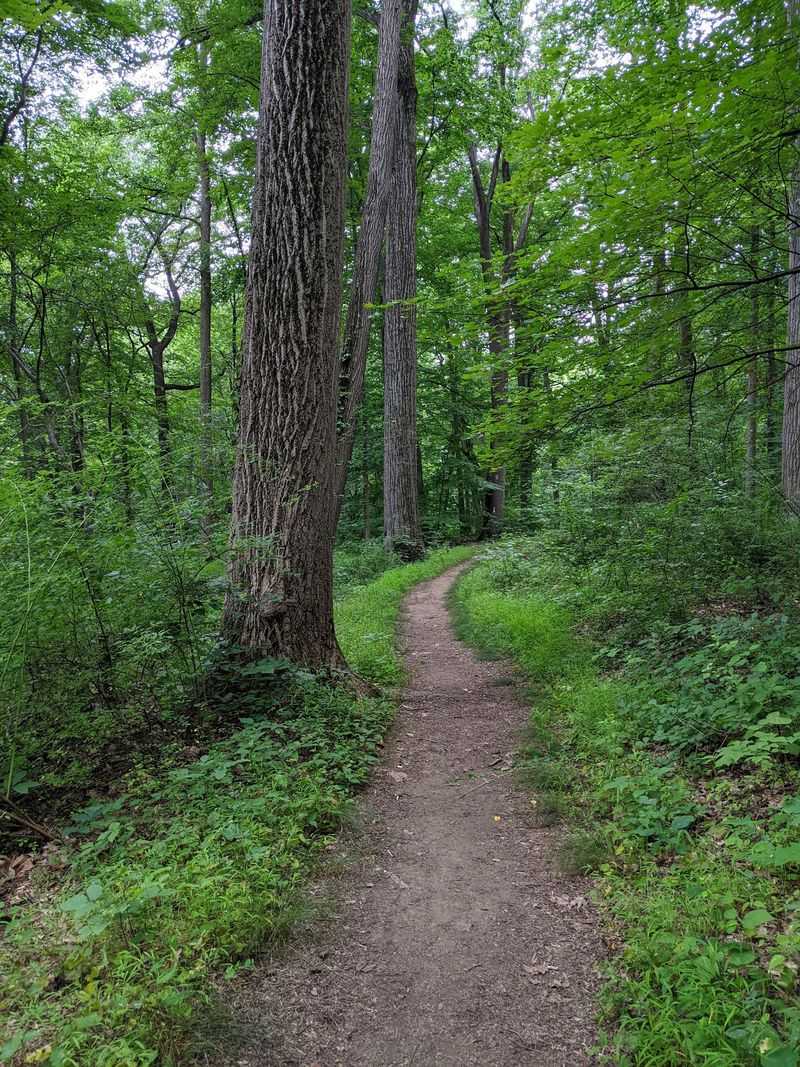
A history outing does not have to mean standing still all afternoon.
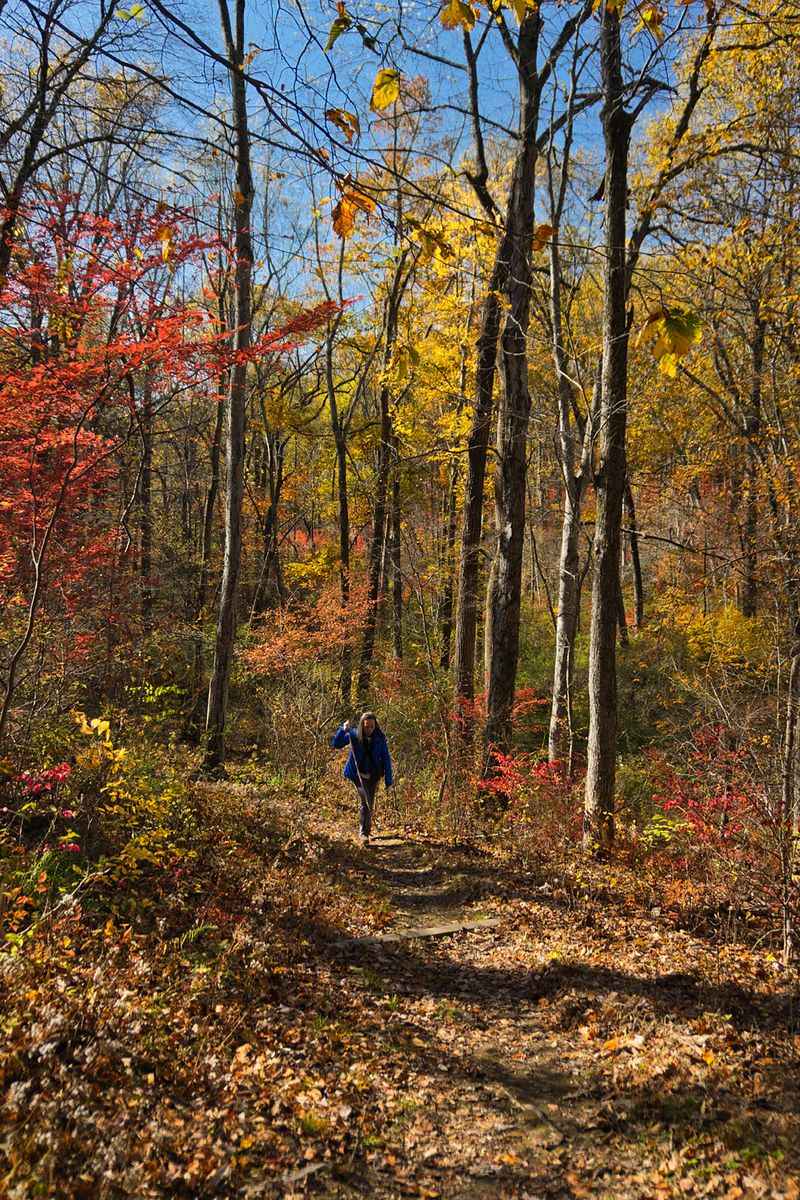
Wooded trails provide options for shorter walks and longer hikes. Accounts describe much of the walking as easy to moderate, with rolling slopes rather than consistently demanding terrain.
The blue route is identified as the New York Brigade Trail. A yellow loop has also been described as roughly three miles, passing the replica huts along the way.
Treat those distances as planning guidance, not a substitute for checking the current trail map. Route choices and access conditions deserve a look before setting out.
Footing can include loose rocks, uneven ground, and wet sections. Supportive footwear is a sensible choice, especially after weather that may affect the paths.
Choose the walk that fits your group rather than collecting mileage for its own sake. A manageable route leaves time to stop at the historical features that make these trails different from an ordinary exercise circuit.
Exhibits for Curious Minds
Some questions are easier to answer before the walk begins.
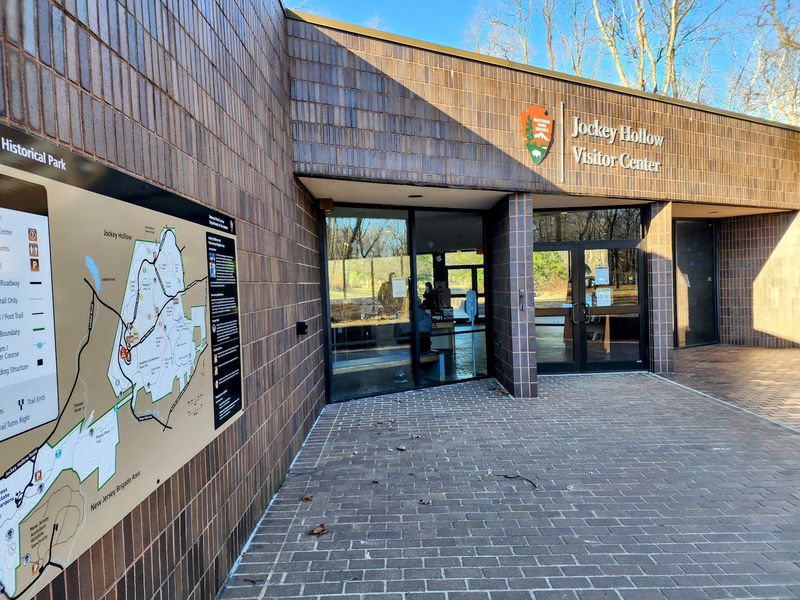
The visitor center offers information and displays, including a short educational film. The supplied material also describes an audiovisual presentation about soldiers’ housing and daily life, plus a hands-on exhibit for children.
Those features give younger learners something more approachable than a page full of dates. Adults who want a little background can also use the center to add context before exploring the grounds.
A gift shop is mentioned, but the main reason to stop is the interpretation. A few minutes spent understanding the camp can change which details you notice at the huts and historical markers.
Indoor access should not be assumed merely because outdoor areas are available. One holiday account specifically describes the center being closed while a nearby restroom remained open.
Plan the exhibits as a useful addition, with an outdoor alternative ready if the building is unavailable that day.
Access Details Worth Checking
A little preparation prevents the most avoidable disappointments.
Parking areas and restrooms are described throughout the supplied accounts, and some points of interest can be reached by driving between stops. Roadside signs leading from Routes 287 and 202 have also been noted.
A roughly five-mile paved loop is described for walking or driving. Confirm current access before relying on the full circuit, particularly if your plan depends on reaching specific features by car.
The supplied information does not establish current opening hours or general admission charges. A previously free farmhouse tour should not be treated as a promise about every activity.
Past accounts mention both repaving restrictions and trail closures, so check the official National Park Service website before leaving. Verify outdoor access, building schedules, and any tour arrangements separately.
Bring a route plan that can change. Convenient parking helps, but an available space does not guarantee that every trail or building is open.
A Local Outing With More to Learn
The best reason to come is the combination, not a single must-see feature.
History-minded travelers can spend more time with the markers, housing exhibits, and farmhouse. Casual walkers can choose a manageable path and add historical stops without building the entire day around them.
Families have educational displays to consider, while groups with different interests can balance walking with time at the historic features. Driving between some stops also offers flexibility when a longer hike is not the goal.
Expect a place centered on woodland routes and historical interpretation, rather than a destination defined by sweeping viewpoints. That expectation makes it easier to appreciate what the grounds actually offer.
The reconstructed cabins deserve honest attention as teaching tools, not original structures. Their role is to make the camp’s everyday arrangements easier to understand.
For a nearby outing with exercise and substance, leave enough time for both. The paths provide movement; the history provides a reason to pause.
Share this story