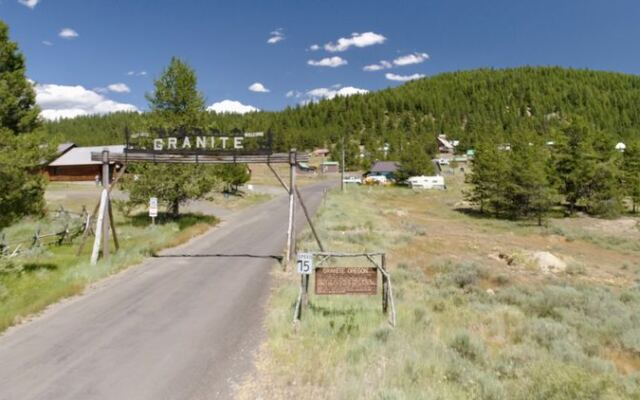
Somewhere in eastern Oregon, tucked into the folds of the Elkhorn Mountains, there is a place where the buildings seem to outnumber the people who call it home. You probably have not heard of it, and that is exactly what makes it worth knowing about.
Stumbling onto a community this small, this remote, and this layered with history feels less like a road trip stop and more like uncovering a secret that the landscape has been quietly keeping for over 160 years.
Granite Is a Living Ghost Town, Not an Abandoned One
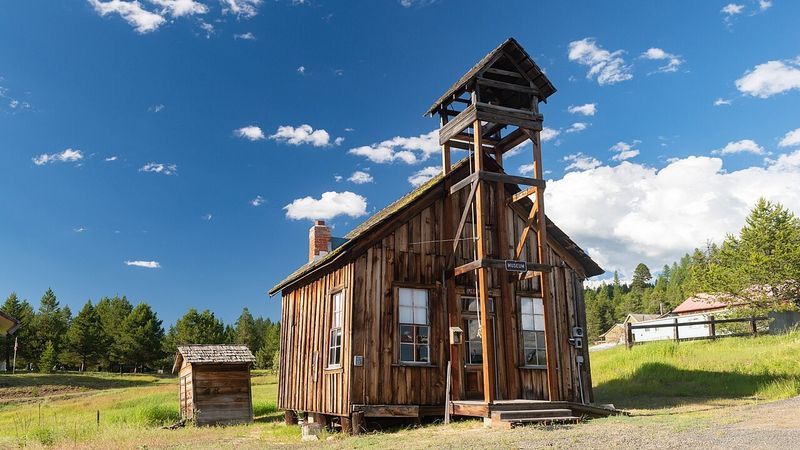
Somewhere in Grant County, eastern Oregon, a tiny incorporated city sits at an elevation of 4,695 feet with more history packed into its landscape than its current population might suggest. That city is Granite, and the claim that has circulated about it – that it has more old storefronts than people – turns out to be a striking impression rather than a verified count.
No reliable source provides a current tally of commercial buildings in Granite, so that comparison cannot be confirmed. What can be confirmed is that the 2020 Census counted 32 residents in Granite, making it one of the smallest incorporated communities in the state.
That figure matters because Granite is not abandoned. It is not a preserved relic or an empty movie set.
Residents still live there, and the city retains its incorporated status. The more accurate label is a living ghost town, a phrase that Travel Oregon uses to describe places that may be mostly uninhabited but still retain a small year-round population.
Granite fits that description precisely: a functioning community with a documented population that coexists with the aging remnants of a much larger settlement.
The real tension here is not a storefront count. It is the visual and historical contrast between 32 people and the evidence of a gold-rush town that once drew thousands.
Historic structures, mining-era remnants, and a commercial landscape shaped by a very different era stand alongside a community that never quite disappeared. That contrast – a small living population inside the footprint of a far busier past – is what makes Granite genuinely worth a closer look.
Gold Put Granite on the Map in 1862
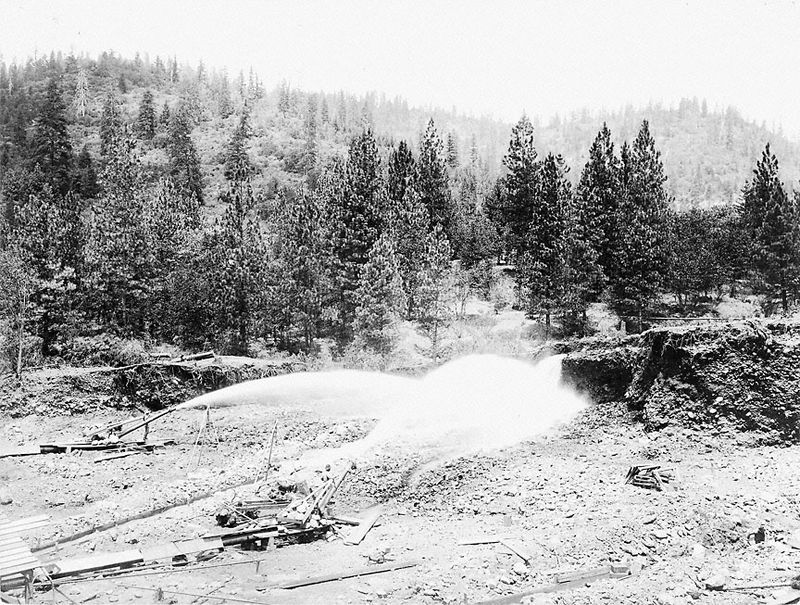
On July 4, 1862, gold was discovered in what would become one of eastern Oregon’s more enduring mountain communities. The timing of that discovery – a national holiday, a dramatic landscape, a rush of ambition – set the tone for everything that followed.
Miners flooded the area, and a settlement took shape with the kind of speed that only the promise of gold can produce.
The community’s first name was Independence, chosen in a spirit that matched both the holiday and the frontier mood of the era. That name did not last.
When the growing settlement sought to establish a post office, historical records document that another Oregon community already held the name Independence, so the miners and settlers reached for something that reflected their surroundings instead. The granite outcroppings visible across the local landscape gave the town its permanent identity.
The name change turned out to be fitting in more ways than one. Granite the rock is hard, enduring, and difficult to move – qualities that the community would need as the boom years eventually gave way to something quieter.
The mining origin explains not just why people came but why they built so ambitiously once they arrived. A town that expected to grow and thrive needed stores, places to sleep, places to gather, and the infrastructure of a permanent settlement.
Granite’s founders built all of that, and the scale of what they constructed is still legible in the landscape today, even if the population that once filled those spaces has largely moved on.
The Boom Town Built a Full Commercial Center
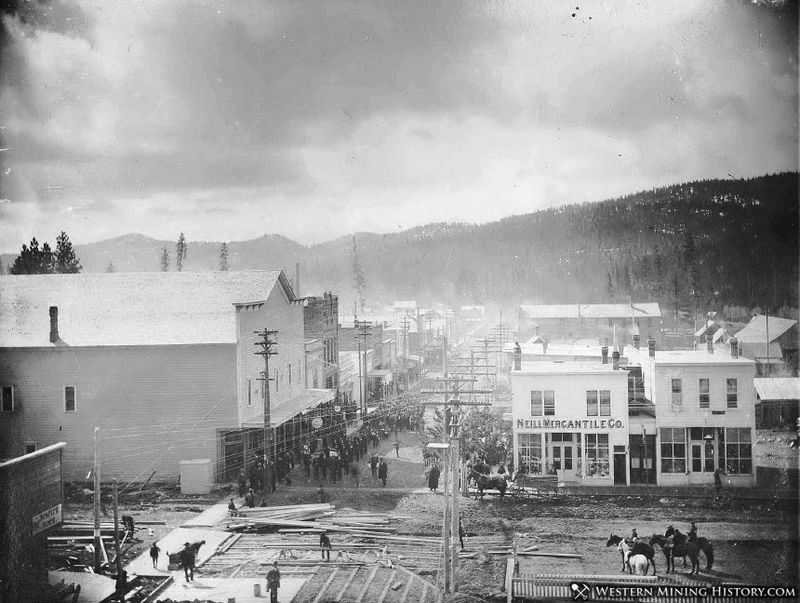
Picture Granite around the year 1900. The town was not a collection of scattered cabins.
It was a functioning commercial hub with the kind of inventory that served a real working population. Historical records document three stores, two hotels, five saloons, a drugstore, a livery stable, and numerous permanent homes at Granite’s peak.
That list describes a town built to last, not a temporary camp.
Each entry on that inventory tells a small story. Three stores meant that residents could buy goods locally rather than making long trips to larger supply points.
Two hotels meant that the town drew visitors, traveling workers, and commercial traffic. A livery stable meant that the transportation infrastructure was in place to support all of it.
A drugstore meant that the community had enough permanent residents to sustain professional services. Together, those elements describe a settlement that took itself seriously as a place where people intended to stay.
That historical inventory is important to understand clearly. Those numbers reflect Granite as it existed in its boom period, not the number of commercial buildings that survive today in any particular condition.
Travel Oregon describes Granite’s historic character through the lens of what it once was, and that framing is exactly right. What visitors encounter today are aging structures and remnants that suggest a settlement far larger than 32 people – not because someone has counted the storefronts against the census, but because the physical scale of what was built here simply exceeds what a small modern population would need or maintain.
Mining Decline Left a Small Incorporated Community
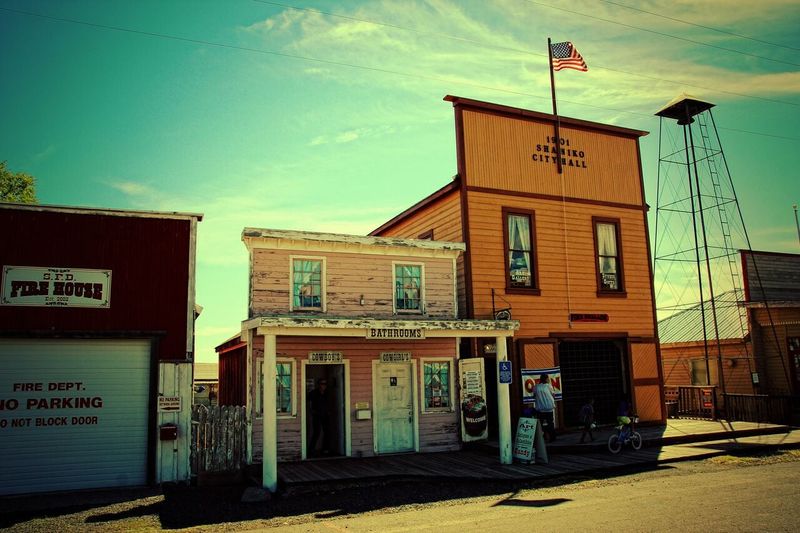
Gold rushes follow a familiar arc: discovery, excitement, rapid growth, and then the long, slow exhale as the richest deposits run thin and the economics shift. Granite followed that arc.
Mining activity that once sustained a large and busy settlement gradually slowed, and the population that had built hotels and stores and a livery stable began to scatter toward other opportunities.
Travel Oregon has described Granite as a town that once had approximately 5,000 people – a figure that captures the scale of the boom period but should be understood as a historical estimate tied to the peak mining era rather than a precisely documented census count. Population estimates from that period vary by source, and the important thing is the direction of the change: from thousands to dozens over the course of the twentieth century.
The verified modern number comes from a more precise source. The 2020 Census recorded 32 residents in Granite, a figure that should be understood as a count from that specific survey year rather than a continuously updated measurement of who lives there today.
What that number makes clear is the magnitude of the transformation: a community that once supported thousands of residents now supports a few dozen.
And yet Granite did not disappear. The Oregon Blue Book records Granite’s incorporation date as May 17, 1900, and that incorporated status has never lapsed.
Granite is still a city – small, remote, and shaped by its past, but a city nonetheless. That distinction matters when you visit, because the people who live there are neighbors, not museum exhibits.
Granite Sits Along a Remote Scenic Byway
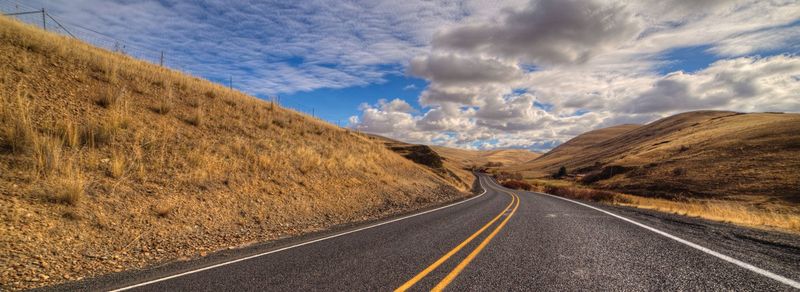
Getting to Granite requires intention. The town is not a convenient exit off a major interstate, and travelers who reach it have usually planned to do so.
The route that connects Granite to the broader landscape is the Elkhorn Drive Scenic Byway, a 106-mile loop through the Elkhorn Mountains that Recreation.gov identifies as a corridor connecting gold-mining ghost towns, hiking, camping, fishing, and mountain scenery. Granite is one of the communities along that route.
The byway’s character sets the tone for the entire visit. This is mountain terrain in eastern Oregon, with the kind of scenery that rewards slow travel and punishes impatience.
The route passes through the Elkhorn Range, offering views of peaks and forests that shaped the mining era and still define the region’s identity. Granite sits within that landscape as a geographic and historical anchor point, a place where the byway’s gold-rush narrative becomes tangible rather than abstract.
Calling Granite easy to overlook is a description, not a traffic measurement. The town is remote enough that travelers focused on better-known eastern Oregon destinations – the Painted Hills, Crater Lake, the coast – can spend years exploring the state without ever turning onto the Elkhorn loop.
Travel Oregon places Granite roughly 15 miles northwest of Sumpter, deep enough into the mountains that finding it feels like a reward rather than a coincidence. That remoteness is not a flaw.
For the kind of traveler who values the feeling of arriving somewhere most people have not, it is exactly the point.
See the Historic Landscape Without Treating It as a Ruin
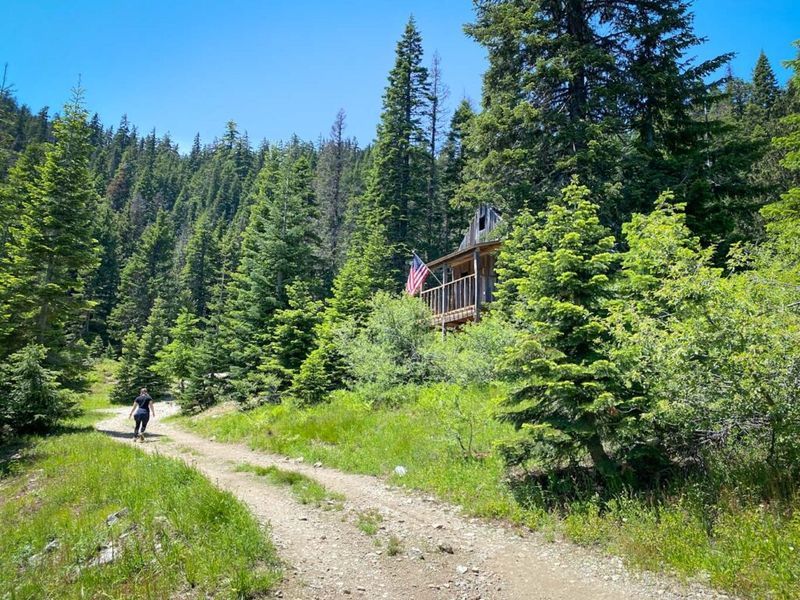
Visiting a place like Granite carries a kind of responsibility that not every traveler thinks about before they arrive. The historic structures visible from public roads are genuinely interesting, and the temptation to get closer, to step inside an old building, or to peer into an opening in the hillside is understandable.
Acting on that temptation, though, can be dangerous and legally problematic in ways that are worth understanding before you go.
The Bureau of Land Management identifies abandoned mine lands as serious hazard sites, and the region around Granite has its share of mining-era openings. The specific risks are not abstract.
The BLM’s guide to dangers at abandoned mines documents unstable ground, hidden vertical shafts, standing water, decaying timber supports, and hazardous gases or materials as documented hazards at sites like these. A structure that looks solid from the outside can be structurally compromised in ways that are not visible until something gives way.
Private property is another boundary worth respecting. Not every building or piece of land in and around Granite is publicly accessible, and crossing onto private land without permission is trespassing regardless of how historic or picturesque the destination looks.
Stay on public roads and clearly designated areas, and treat the landscape as something to observe rather than something to enter.
Oregon’s Department of State Lands advises visitors not to remove artifacts or disturb archaeological resources, and Oregon DSL guidance on cultural resources makes clear that these protections apply broadly across state lands. A piece of rusted equipment or a fragment of old glass may look like litter, but it is part of the historical record of a place.
The best souvenir from Granite is a photograph taken from the road.
Prepare for Seasonal Roads and Limited Services
Planning a trip to Granite without accounting for the logistics is a reliable way to have a frustrating experience. The Elkhorn Scenic Byway is beautiful, but it is also remote, and the gap between what travelers expect from a road trip and what this route actually provides can be significant if you have not done your homework.
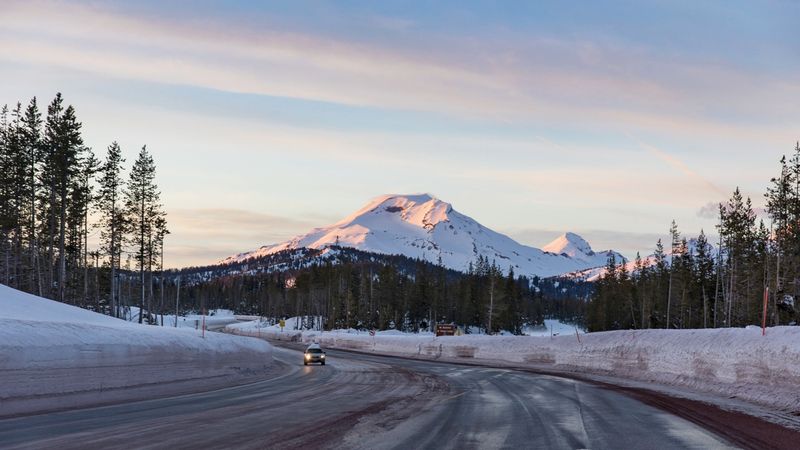
Timing matters first. Oregon’s scenic byway guide identifies summer and fall as the best travel seasons for the Elkhorn route and specifically warns that the segment between Granite and Anthony Lakes closes in winter.
That closure is not a minor inconvenience. It means that a loop you planned to complete may require significant backtracking if you arrive after conditions deteriorate.
Snow and ice can affect the route even in shoulder seasons at elevations approaching 5,000 feet, so checking conditions before you leave is not optional – it is the baseline for a safe trip.
ODOT directs travelers to TripCheck for current road conditions, closures, weather updates, and traffic cameras before departure. Using TripCheck the morning of your drive takes about two minutes and can prevent hours of backtracking or a night stranded on a remote mountain road.
Fuel deserves its own paragraph. The byway guide warns that open gas stations can be difficult to find outside Baker City, and that advice should be taken literally.
Fill the tank in Baker City before heading onto the loop. Carry water and food beyond what you think you need, because services along the route are limited and spaced far apart.
Recreation.gov notes that the byway connects outdoor recreation areas rather than commercial corridors, which means the amenities that travelers take for granted on busier routes simply may not be there. Plan for self-sufficiency, and the drive becomes one of the most rewarding in eastern Oregon.
ODOT winter driving guidance applies even in early or late season visits at elevation. Carry chains if you are traveling in October or later, and check the forecast for the Elkhorn range specifically rather than relying on lowland weather reports.
Granite’s Real Story Is the Contrast
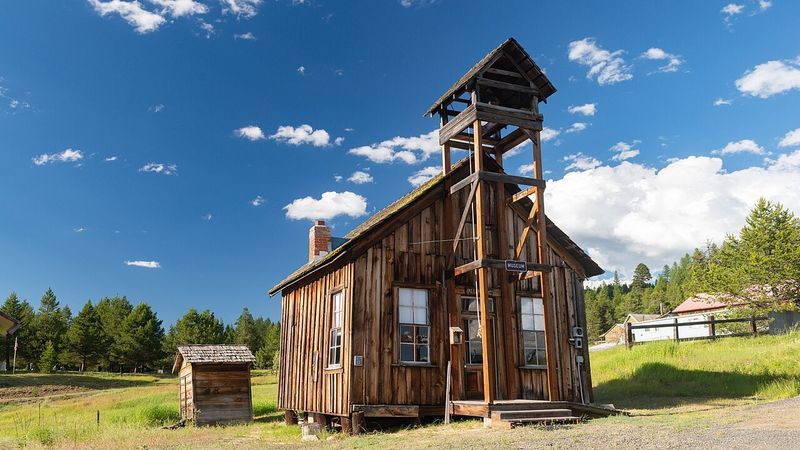
No reliable source confirms that Granite has more old storefronts than residents. What the record does confirm is something arguably more interesting: a community where 32 people counted in the 2020 Census live within the physical footprint of a gold-rush settlement that once drew thousands.
The scale of what was built here – stores, hotels, saloons, a drugstore, a livery stable – remains legible in the landscape even as the population that built it has largely moved on.
Granite is not a theme park version of the past. Travel Oregon frames it as a living piece of Oregon’s gold-rush history, and that framing holds up.
The people who live there now are not caretakers of a museum. They are residents of an incorporated city that happens to carry more history per square foot than most places ten times its size.
The drive out on the Elkhorn Scenic Byway gives you time to think about what a place like Granite actually represents: not a failure, not a ruin, but a community that outlasted its original reason for existing and kept going anyway. That kind of quiet persistence, set against a mountain backdrop most travelers never bother to find, is the real story worth driving out to see.
Share this story