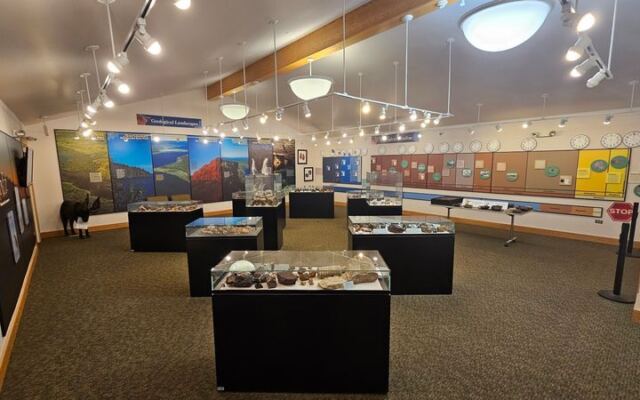
A museum full of glossy, banded agates sits inside a state park ranger station. That is not a typo.
You pull up expecting trail maps and campsite info, and you find a room loaded with stones.
I love that kind of surprise. The agates here are the official gemstone of Minnesota, and many of them shine with rusty reds, warm oranges, and creamy stripes.
Some came from donated collections built by people who clearly spent years staring at gravel.
The space is small, but it does not act small. A wall timeline shrinks all of human history into a tiny sliver at the very end.
A short film fills in the science while you browse.
I believe the best Minnesota finds are the ones you almost drive past. So how many rock lovers have cruised right by this one?
A Rock Museum Inside A State Park Ranger Station
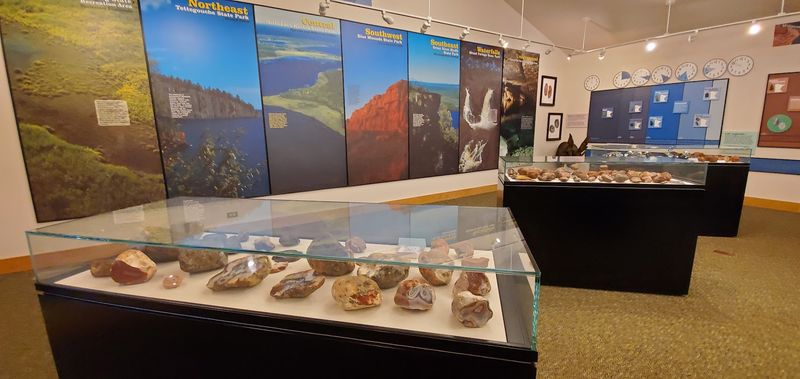
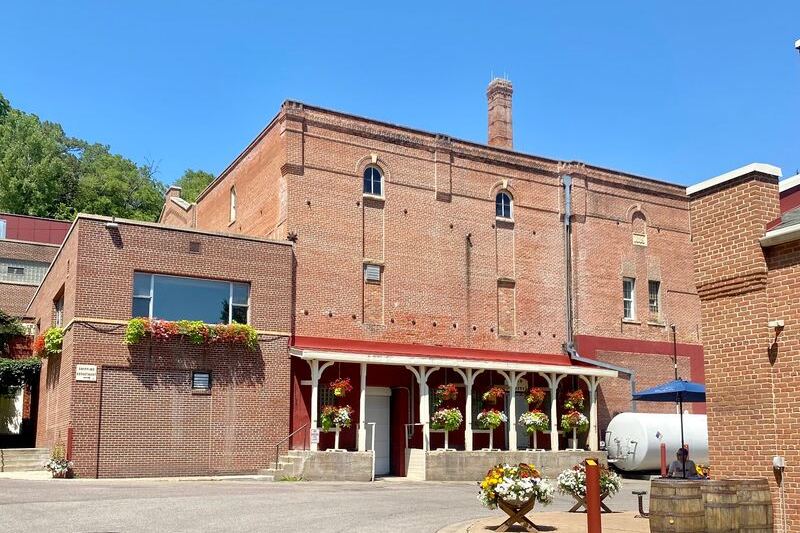
Few museums share a front desk with campsite check-ins. The Moose Lake Agate and Geological Center does exactly that, living inside the ranger station at Moose Lake State Park in Minnesota.
That setup makes the visit feel wonderfully low-key. You come for a park, and you leave knowing far more about stones than you planned.
The center focuses on agates, especially the famous Lake Superior variety. It also covers rocks, minerals, and the long geological story of this region.
Think of it as a classroom that swapped desks for display cases. Everything sits in one room, so nothing feels overwhelming or rushed.
Its location makes it an easy add-on to a weekend outing. Hiking, picnicking, or camping in the park pairs naturally with a quick stop indoors.
Minnesota has plenty of big museums in big cities. This one proves that a modest room in a north-woods park can hold its own with real treasures.
Better yet, it rewards curiosity without demanding a whole day. A short visit can spark a lifelong habit of scanning gravel roads for a flash of banded orange.
Minnesota’s Official Gemstone Takes Center Stage
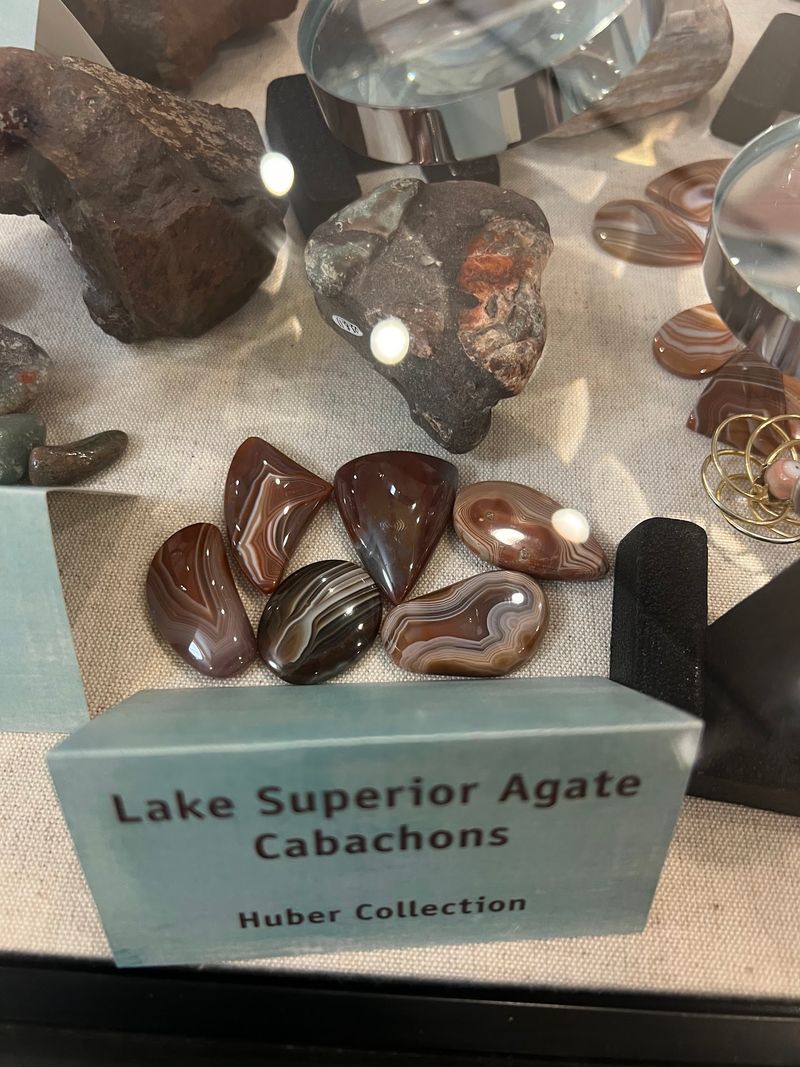
Back in 1969, Minnesota named the Lake Superior agate its official state gemstone. Few choices could feel more fitting for a state shaped by ancient lava and grinding glaciers.
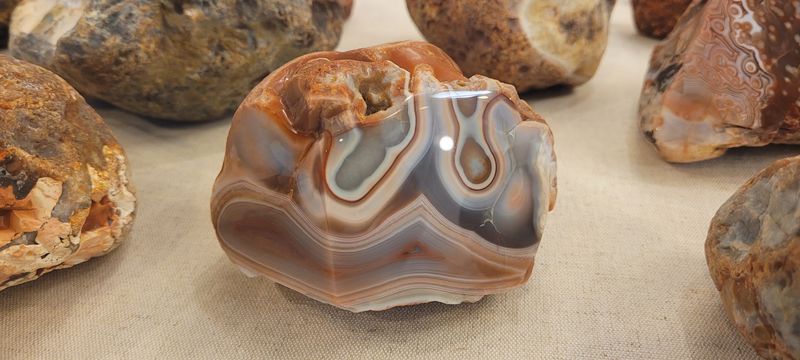
These stones are known for their tight, wavy bands. Iron is often responsible for the warm reds and oranges that make collectors stop in their tracks.
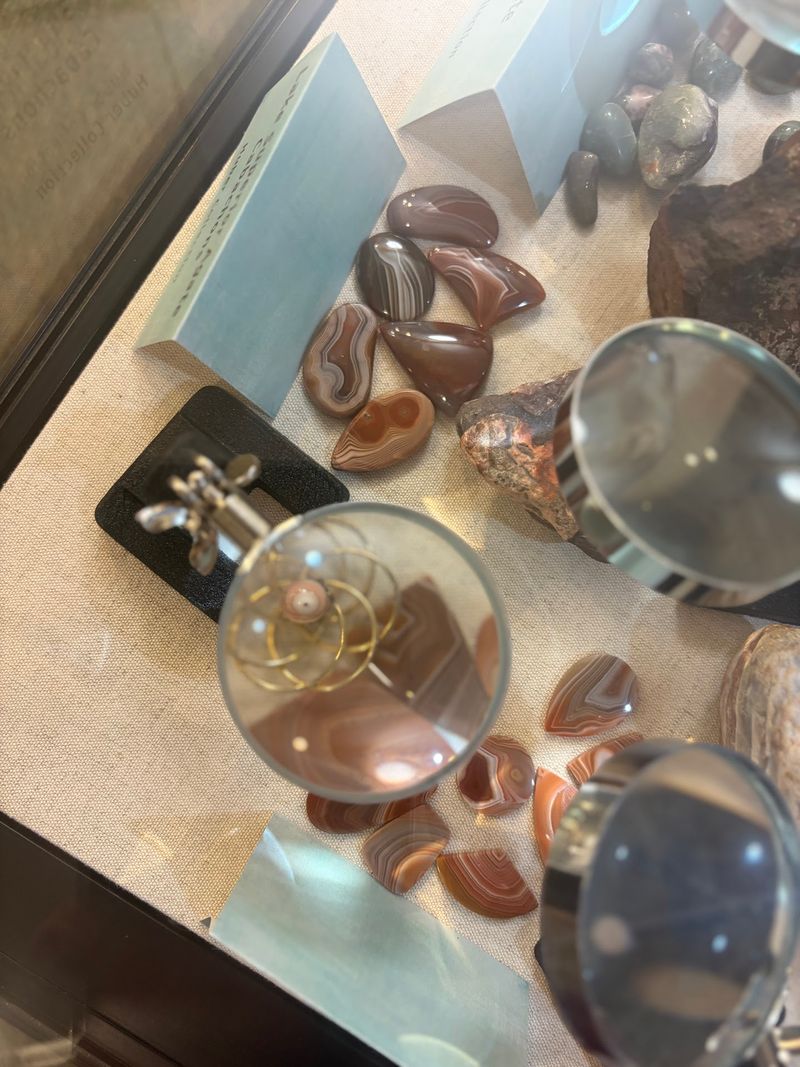
At the center, agates are the clear headliners. Case after case shows how much variety one type of stone can hold.
Some pieces look like tiny sunsets frozen in rock. Others show softer cream and gray layers that reward a closer look.
Seeing so many side by side helps the patterns make sense. Your eyes start picking up details that a single stone on a windowsill would never reveal.
That is the quiet magic here. A gemstone that many Minnesotans have heard about suddenly becomes something you can actually recognize.
Plenty of state symbols live mostly on paper. The agate gets an entire room in its honor, and honestly, it earns every inch.
Why Agate Country Reaches All The Way To Moose Lake
Lake Superior gets the name, but the stones did plenty of traveling. Glaciers are widely credited with carrying agates far from their original lava beds and scattering them across the region.
That history helps explain why a museum about these stones sits well inland. Moose Lake lands squarely in territory where agates may turn up in gravel and fields.
The center connects those dots through its exhibits. You get the big-picture geology alongside the pretty stones, which makes both more interesting.
Rocks become more than decoration once you know their backstory. Each banded pebble suddenly carries a long tale of heat, water, ice, and time.
For anyone who grew up in Minnesota, the local angle hits home. The ground under your boots holds a story worth learning, and this room tells it clearly.
It also gives a road trip some purpose. Driving north on Interstate 35 feels different once you realize the landscape itself is part of the exhibit.
So the setting is not random at all. It is a museum placed right where the story happens.
One Room, Crammed With Color
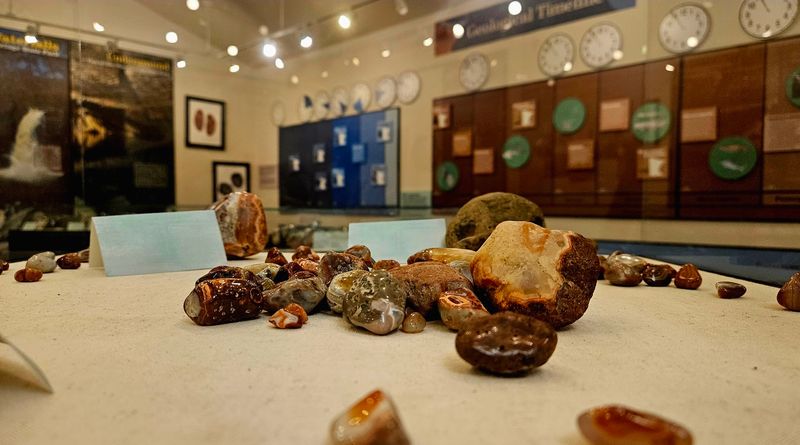
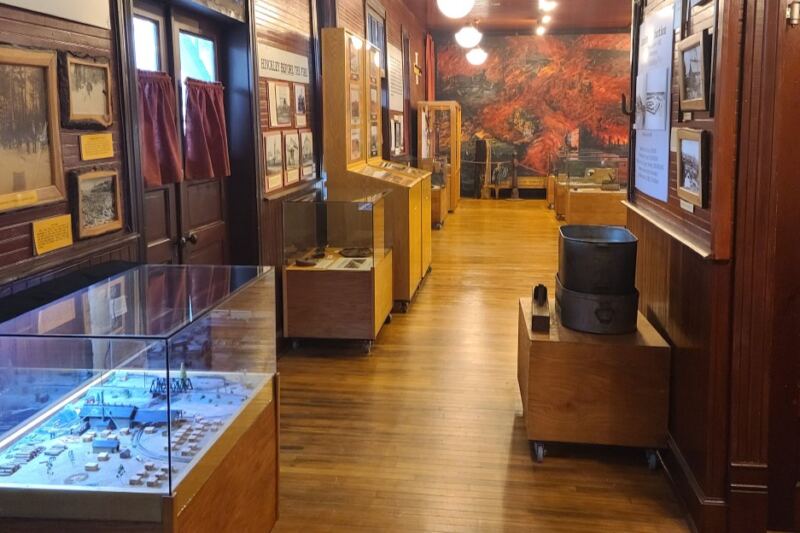
Small does not mean sparse. The Moose Lake Agate and Geological Center fits its whole collection into a single room, and that room is busy in the best way.
Display cases line the space with agates, rocks, and minerals. Informative panels sit nearby, so the learning happens right alongside the looking.
Size works in your favor here. You can take in the entire exhibit without a map, a schedule, or sore feet.
It also means short attention spans stay happy. Kids can bounce from case to case before boredom has any chance to show up.
Don’t mistake compact for quick, though. The sheer number of stones invites you to slow down and notice the differences.
Every case seems to hide a favorite waiting to be discovered. One person may love a fiery red piece while another lingers over a soft banded gray.
Big-city museums often require a full afternoon and a strategy. Here, the whole show fits into one friendly room, which feels refreshingly Minnesotan.
Collections Shared By Generous Rock Hounds
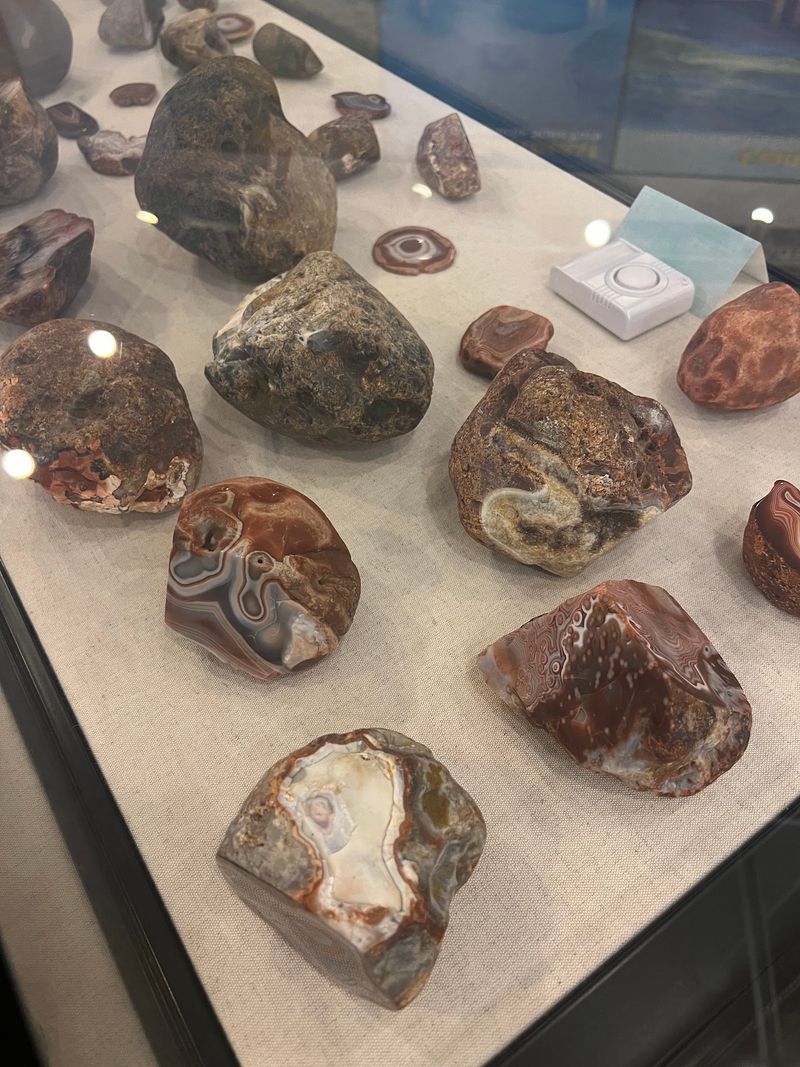
Behind many great rock displays stands a patient collector. Several of the collections at the center were donated, bringing together many varieties and sizes in one place.
That gives the exhibit a personal, community-built feel. These stones were gathered, sorted, and treasured before they ever reached a museum case.
Donated collections also add range. One collector might favor tiny pebbles while another chased big, chunky showpieces.
Put together, they create a fuller picture of what Minnesota soil can produce. You see the full spectrum instead of one person’s taste.
There is something very Minnesota about sharing a hobby this way. Instead of hiding a lifetime of finds in a basement, collectors let everyone enjoy them.
It may even inspire your own search. Many collectors start with a single lucky find, and a room like this shows where that habit can lead.
Just be warned. After studying these cases, you might start eyeing every driveway and roadside ditch a little differently.
Minerals And Oddities Beyond The Agates
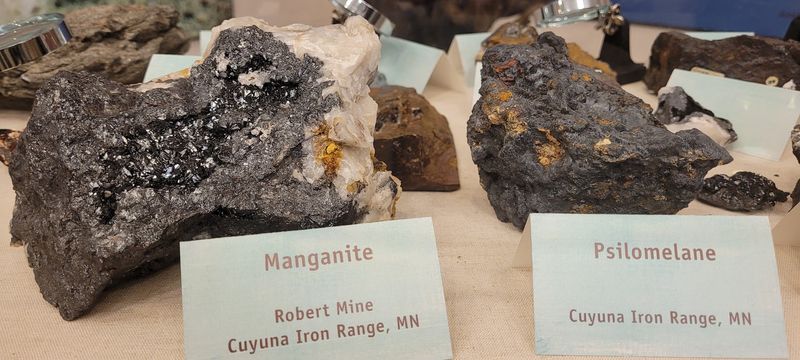
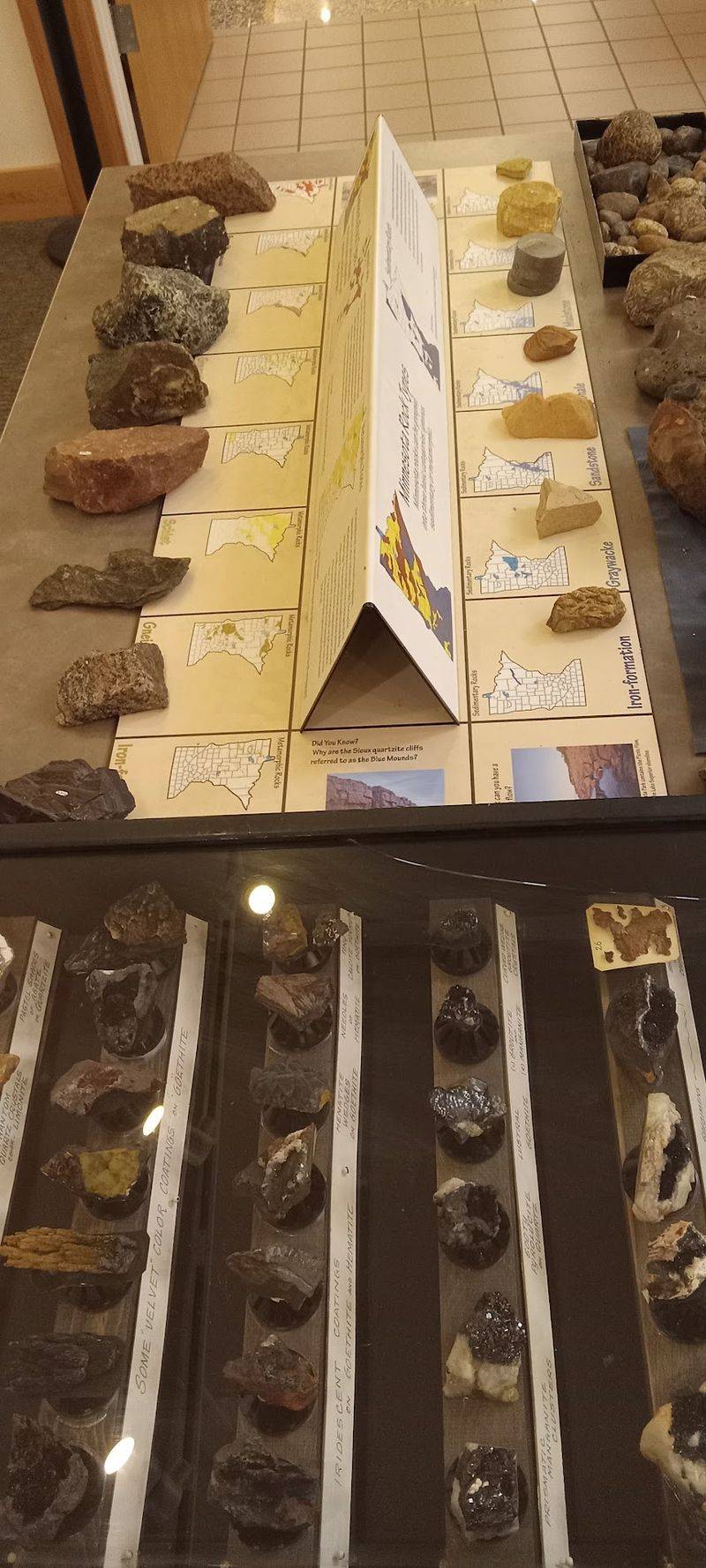
Agates may get top billing, but they share the stage. The center also displays rocks, minerals, and other objects that round out the geological story.
That variety keeps the visit lively. Just when your eyes adjust to bands and swirls, a different texture or color pulls you somewhere new.
Minerals tell their own story about how the earth forms. Seeing them next to agates helps explain how different stones come to be.
For budding geologists, this is a sneaky lesson in comparison. You start noticing grain, shine, and shape without anyone handing out a quiz.
Families often appreciate the mix. A child who shrugs at one case may light up at the next.
The exhibits blend beauty with information. Panels add context, so the pretty stuff comes with real answers about what you are seeing.
Consider it a sampler platter for rock lovers. Agates remain the main course, yet the side dishes make the whole visit more satisfying and complete.
A Wall Timeline That Puts Humans In Their Place
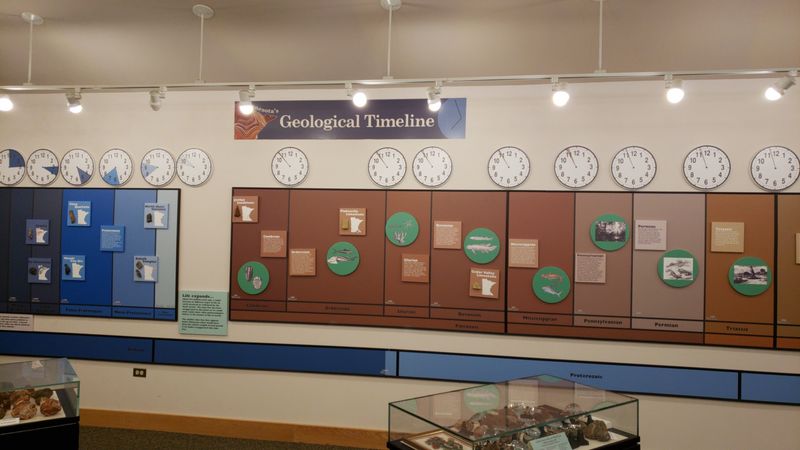
Humbling might be the best word for it. A timeline on the wall shows when different rocks formed, how long their creation took, and how long humans have been around.
Spoiler: our part is a tiny sliver at the very end. Everything else belongs to ages of rock-making that stretch far beyond any history book.
Visual tools like this work wonders. Big numbers about billions of years are hard to grasp, but a long wall makes the scale obvious.
Kids tend to get it instantly. Adults may find themselves stepping back for a second, quietly rethinking their sense of time.
It also ties the collection together. The agates in the cases suddenly have a place in that sweeping story.
Few exhibits manage to be simple and mind-bending at once. This one pulls it off with nothing more than a wall and a clear design.
Snap a photo before you leave. It makes a great conversation starter at dinner, especially when someone complains that their morning commute felt long.
The Short Film Worth A Seat
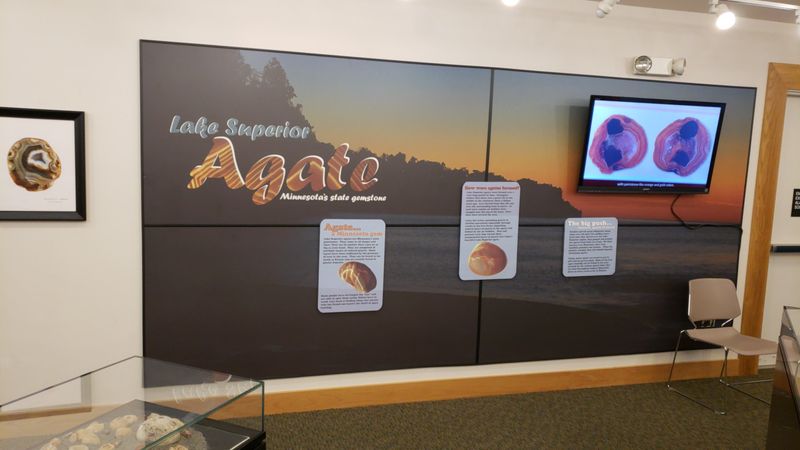
Reading every panel is optional when a film does some heavy lifting. An informative movie plays on a TV inside the center, filling in the science behind the stones.
That is a welcome option for visual learners. Some people absorb more from moving pictures than from paragraphs on a placard.
The film gives the collection helpful background. Once you understand the process, the cases feel less like random rocks and more like chapters.
It is also a nice pause button. Families can regroup, rest their legs, and soak up facts at the same time.
Short films often work best for curious kids. They provide a quick burst of knowledge before everyone heads back to hunt for favorite stones.
You can easily pair the movie with the timeline wall. Together, they turn a small room into a surprisingly thorough geology lesson.
Not bad for a stop inside a ranger station. Most visitors probably expect a brochure rack, not a mini documentary about their state’s ancient past.
Your Pace, Your Path, And Displays That Change
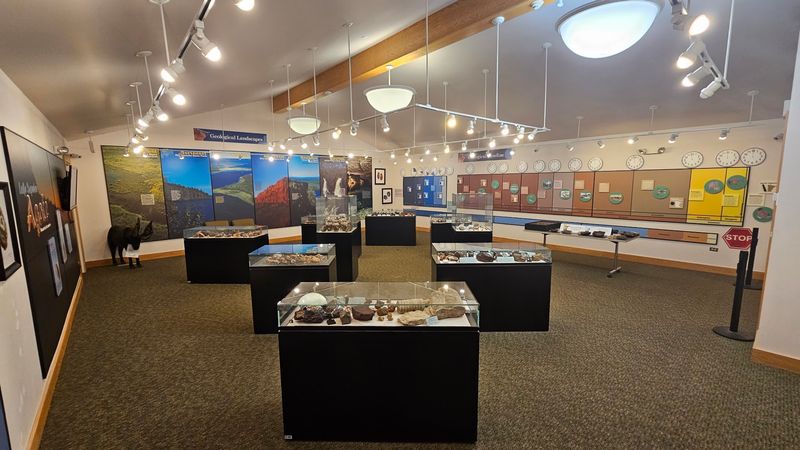
Nobody hands you a strict route here. The visit is a self-guided tour, with written information in English beside the exhibits.
That freedom suits all kinds of visitors. Speed readers can breeze through, while detail lovers can study every label.
Here’s a bonus many museums cannot match. Displays at the center may change from time to time, so a return trip could show you something new.
That makes repeat stops genuinely worthwhile. If you camp at the park every summer, the room may look a little different each year.
Self-guided visits also fit unpredictable family schedules. You can arrive, explore, and head back outdoors without waiting for a tour time.
The relaxed format matches the park setting well. It feels like an extension of the trails rather than a formal indoor obligation.
Bring a notebook if you have a young collector along. Jotting down favorite stones and fun facts can turn a quick browse into a keepsake.
Park Staff Who Know Their Stones
Good questions deserve good answers. Staff at the center are known for being friendly, courteous, and knowledgeable about the exhibits and the area.
Since the museum shares space with the ranger station, help is often close at hand. That makes it easy to ask about agates and park trails in one conversation.
A knowledgeable guide can change a visit. One quick explanation might make a whole case of stones suddenly click.
Families with curious kids especially benefit. Children tend to ask the toughest questions, and having experts nearby helps keep the momentum going.
The atmosphere matches that welcoming spirit. There is a clear passion for agates and for this corner of Minnesota running through the place.
It feels less like a formal museum and more like a shared hobby. That warmth fits right in with small-town Minnesota hospitality.
Don’t be shy about striking up a chat. You might leave with tips on park spots, local geology, or what makes a good agate worth pocketing.
Perfect For Young Rock Hounds And Road-Trip Families
Kids who fill their pockets with pebbles will feel right at home. The center makes a great spot for children to learn about Minnesota’s state rocks in an easy, hands-on-friendly setting.
Its small size keeps things manageable. Young visitors can see everything before restlessness sets in.
Rock hounds of every age get plenty to admire. Casual visitors also enjoy it, since the displays are pretty even without any background knowledge.
Nature lovers have the park right outside. That combo means one family member can geek out over minerals while another dreams about the trails.
Grandparents with young collectors make an especially sweet pairing. Sharing a love of stones across generations is a classic Minnesota pastime.
Value-minded families will appreciate the setup too. One park visit covers both outdoor fun and an indoor learning stop.
Even teens may crack a smile at the timeline. Watching all of human history shrink to a sliver tends to impress just about anyone who sees it.
Getting There, Park Permits, And Checking Hours
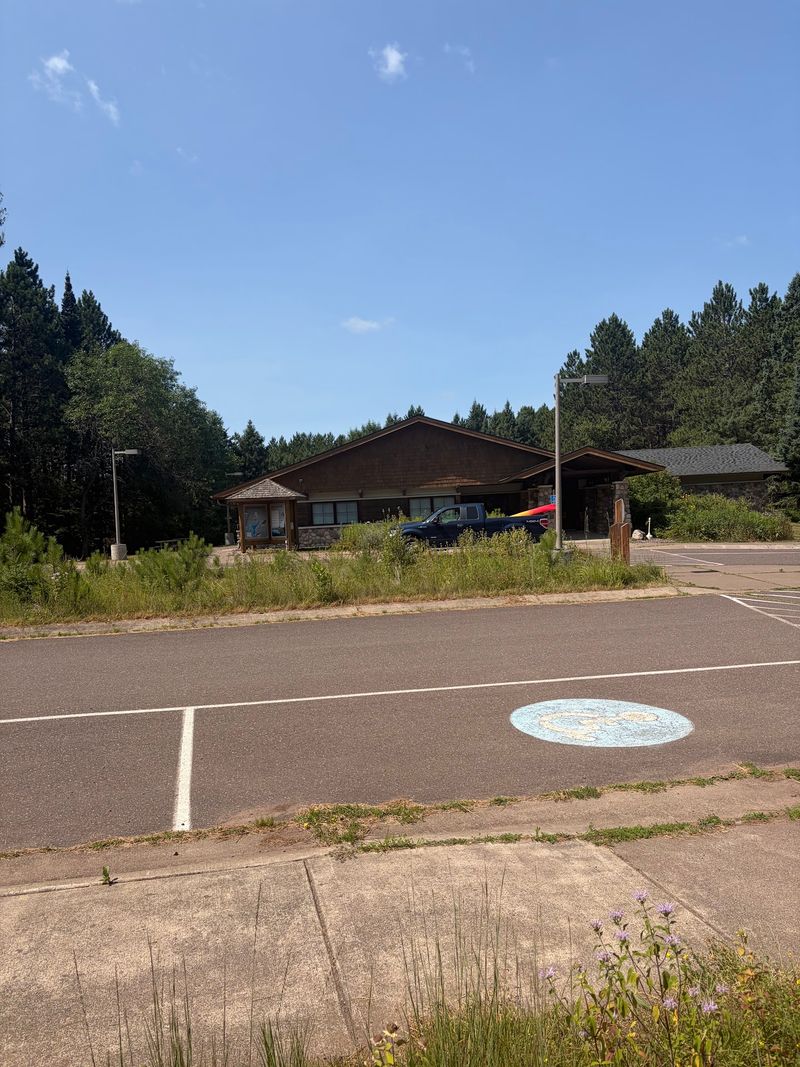
Finding it is easy. The center sits at the Moose Lake State Park Ranger Station, 4252 Co Rd 137, Moose Lake, MN 55767.
The park lies close to Interstate 35, making it a handy stop between the Twin Cities and Duluth. From the metro, the drive typically runs around two hours.
Now about that word free. Entry is included when your vehicle has a Minnesota state park day pass or annual permit, which many park visitors already carry.
Without a permit, you will need to buy one at the park. For frequent park-goers, an annual permit makes the museum feel like a free bonus.
Hours may be limited and can vary by season. Calling ahead or checking the Minnesota DNR park page before you drive is a smart move.
Staffing can affect when the doors open. A quick check helps avoid arriving to a locked room and a disappointed young collector.
Winter visits may need extra planning, too. Snowy paths and short days can change things, so confirm before heading up north.
Small Room, Big Minnesota Bragging Rights
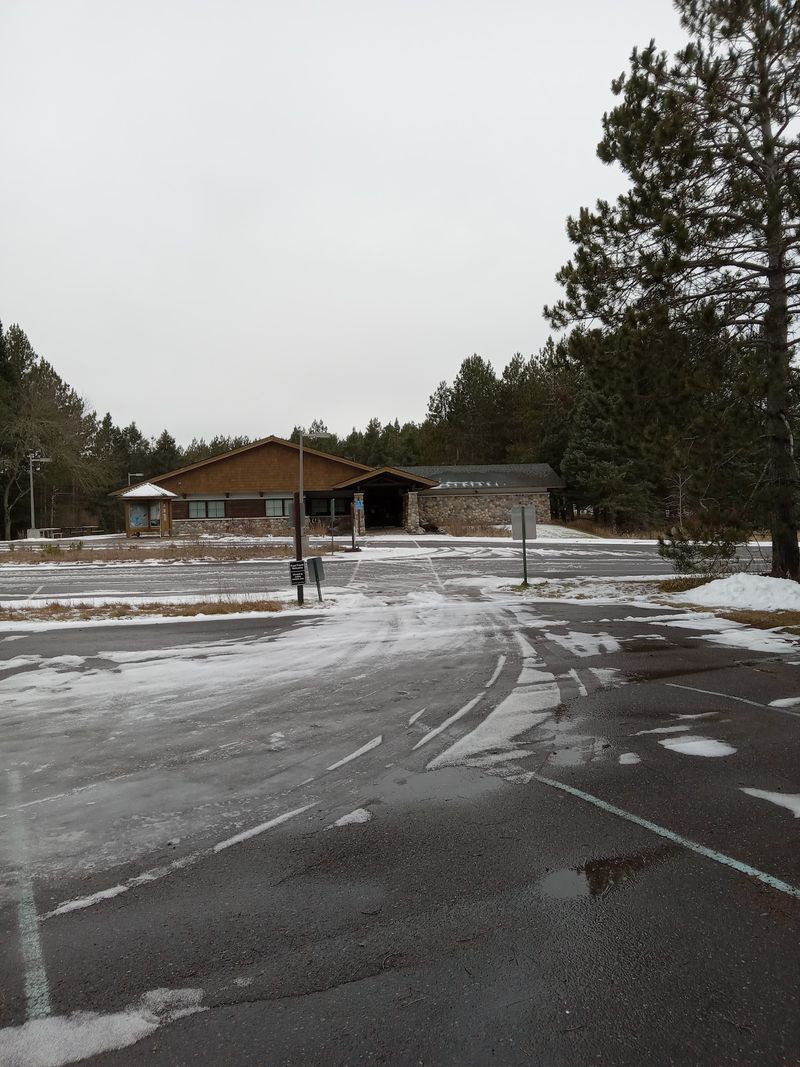
Some stops earn a spot on the itinerary simply by being delightful. The Moose Lake Agate and Geological Center belongs firmly in that category.
It packs a state gemstone, donated collections, a mind-bending timeline, and a helpful film into one tidy room. That is a lot of payoff for a short visit.
Pair it with Moose Lake State Park, and the trip gets even better. Trails, picnic spots, and campsites turn a quick stop into a full Minnesota outing.
Big cities may have grander museums. Few can claim a stone collection rooted this deeply in the ground right outside the door.
That local connection is the real treasure here. You leave understanding why Minnesota prizes its agates and maybe hoping to find one yourself.
Tag the friend who never walks past a cool rock. They will thank you, and they might just plan the drive north this weekend.
Minnesota wins again, one banded little stone at a time. Not bad for a museum hiding in a ranger station.
Share this story