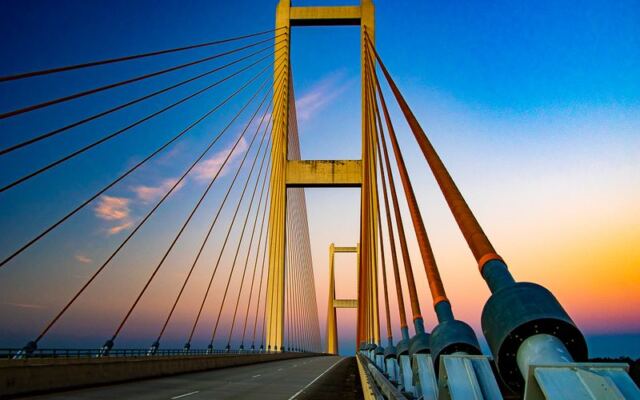
Somewhere in south central Louisiana, a set of soaring towers rises above the Mississippi River, holding a roadway aloft on a web of steel cables. For decades, people in this stretch of the state relied on a slow ferry to reach the other side, and then engineers built something that changed the daily commute forever.
This crossing ranks among the longest cable-stayed spans in the entire Western Hemisphere, yet it sits quietly between small river communities most travelers have never heard of. Drivers who cross it often reach for their phones at the last second, hoping to capture the towers before they pass.
The story behind this structure blends engineering ambition, local history, and a good bit of Louisiana character. Keep reading to learn where it stands, how it came to be, and why so many people take the long way just to drive across it.
Where the Towers Rise Over the River
The address is simple enough to write down and surprisingly rural once you arrive: LA-10, Ventress, LA 70783, in south central Louisiana. The bridge carries Louisiana Highway 10 across the Lower Mississippi River, linking Pointe Coupee and West Feliciana parishes.
What makes the setting so interesting is the contrast. The crossing itself is a modern megastructure, yet the roads feeding into it run through cane fields and quiet countryside.
Part of LA-10 just west of the bridge is even a gravel road.
The nearest towns are New Roads on the west side and St. Francisville on the east, with the roadway open twenty-four hours a day, every day of the week. Regulars mention that this is the only bridge on the Mississippi for roughly ninety river miles between Natchez and Baton Rouge, which gives it real significance.
A Record-Setting Cable-Stayed Span
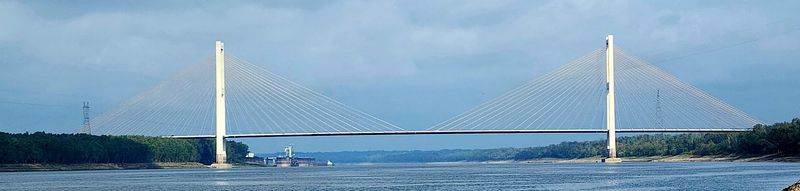
Numbers tell a big part of this story. The main span, meaning the distance between the two towers, stretches 1,583 feet, or about 482 meters.
That measurement places it as the second longest cable-stayed span in the Western Hemisphere.
Only Mexico’s Baluarte Bridge edges it out, with a span of 1,706 feet. Yet the Louisiana crossing has a trick of its own when it comes to total length.
Counting all its approaches, the full structure runs 12,883 feet, roughly 3,927 meters. That is nearly three and a half times longer than the Baluarte Bridge’s total length of 3,688 feet.
Cable-stayed design means the deck hangs from cables that fan out directly from the towers. People who take note of engineering often rank this among the three longest such bridges in all of North America, a fact worth remembering as you cross.
From Ferry Line to Fixed Crossing
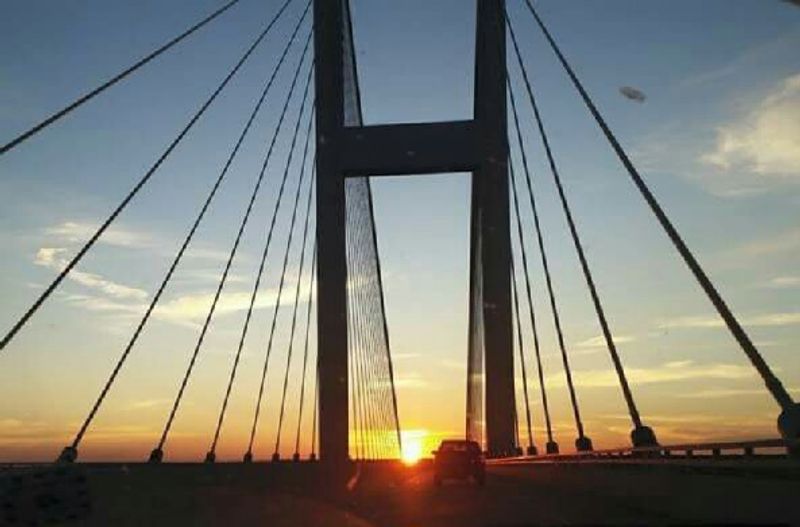
Before the towers went up, getting across this part of the river meant waiting for a ferry. That old boat service connected the communities of New Roads and St. Francisville, and it set the daily rhythm for anyone who needed to reach the other bank.
The bridge, opened in May of 2011, replaced that ferry entirely. For many locals, the change turned a slow wait into a quick drive of just a few minutes.
Not everyone was thrilled to see the ferry retire, and a few longtime residents still speak fondly of those crossings. Change on the river always stirs a little nostalgia.
Still, the practical benefit is hard to argue with. Angola employees and countless commuters gained a reliable link, and travelers heading toward the west side of the Mississippi now have a smooth, dependable route where a boat once ruled the schedule.
The Hands That Built It
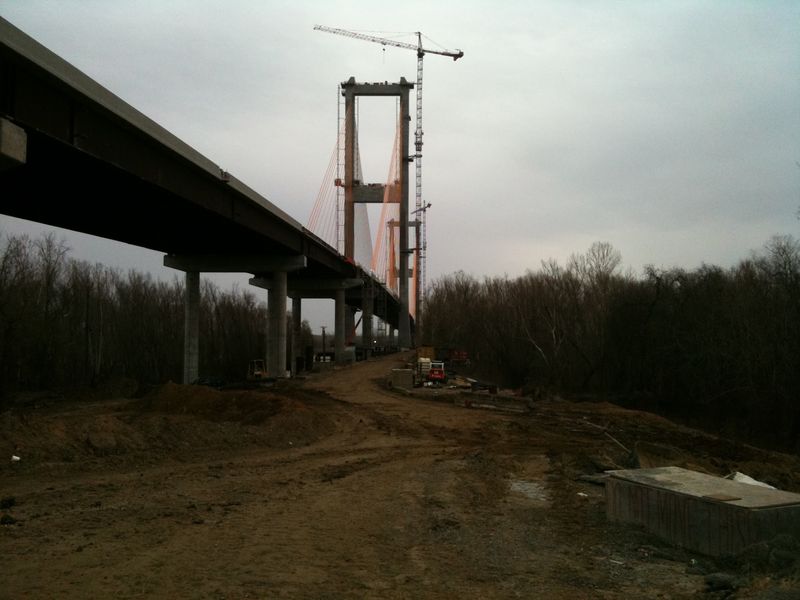
Every rivet and panel here represents serious labor. Flatiron Construction served as the builder, and crews poured concrete, pulled cables, and tied rebar to bring the design to life.
The work was detailed and demanding. Deck panels required careful concrete pours, and the drainage components proved especially tricky to keep level and square during construction.
The bridge did not stand alone either. A series of seven additional bridges leads up to the main crossing, each requiring its own piles, girders, and beams.
People who spent time on the project describe years of effort invested in these components. There is real pride in the way they talk about pulling cables and setting the stirrups that hold everything together.
That kind of craftsmanship rarely gets celebrated once traffic starts flowing. Yet the smooth ride across those panels is the quiet result of countless hours spent getting each piece exactly right.
A Modern Landmark in Cane Country
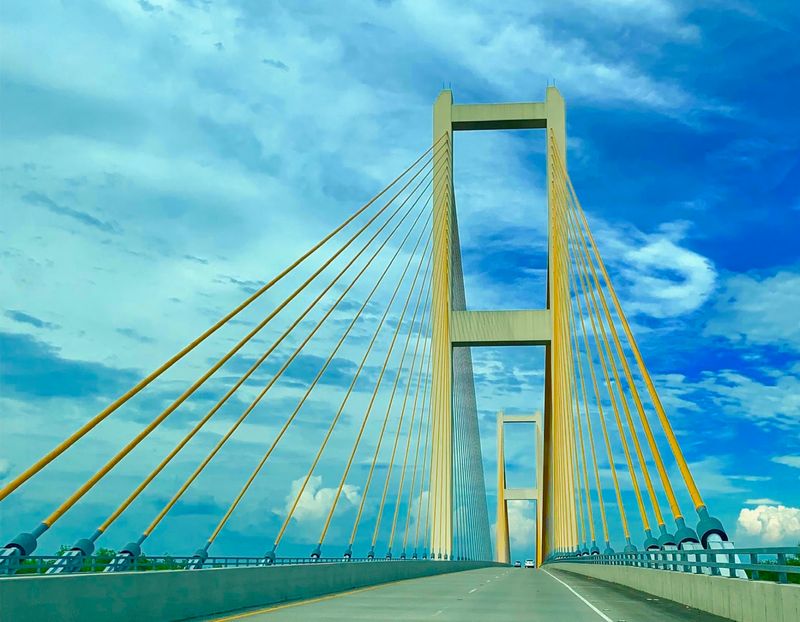
Louisiana has a long habit of dropping enormous engineering feats right into farm country, and this crossing fits that tradition perfectly. Cane fields spread out on both sides, and then these bright modern towers appear seemingly out of nowhere.
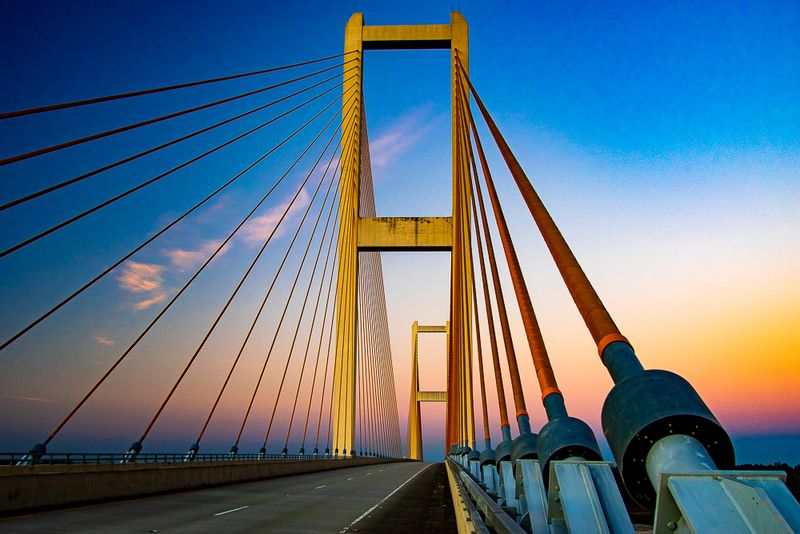
The design leans clean and contemporary. The fresh concrete and sleek lines give it a look that stands apart from older river structures in the region.
Against the flat rural surroundings, the towers dominate the horizon for miles. That sudden shift from countryside to megastructure is exactly what makes the drive memorable.
People describe it as strikingly modern, and the appearance draws plenty of admiration. It has become a genuine landmark for this corner of the state.
Locals seem to take pride in seeing something this ambitious rise from familiar ground. It is a reminder that big ideas can take shape even in the quietest of places.
The Drive Worth Taking
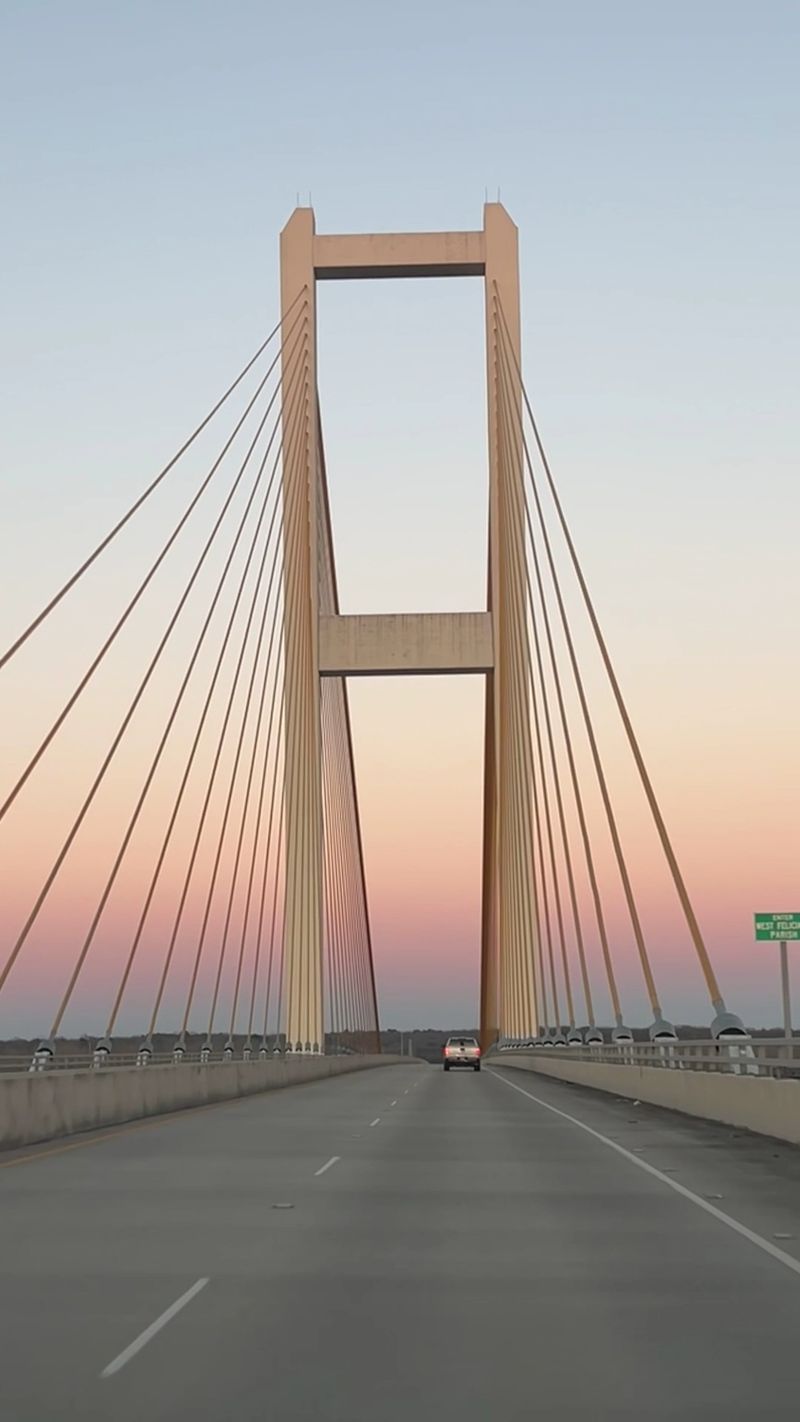
Crossing this bridge tends to catch people off guard in the best way. Passengers often fumble for their phones at the last minute, scrambling to snap a photo as the towers loom overhead.
Drivers who ferry friends across it have learned the routine. They warn everyone ahead of time to get the camera ready, and the towers still arrive faster than expected.
The route offers a scenic ride along the Mississippi, and many people cross simply for the pleasure of it. Some make it a small event on road trips through the South.
For daily commuters, the appeal is more practical. The crossing saves considerable time compared to the old routes, turning a long detour into a quick and pleasant leg of the journey.
Whether taken for beauty or convenience, the drive leaves an impression. Few short stretches of highway feel this worth the trip.
Who Loves It and Who Misses the Boat
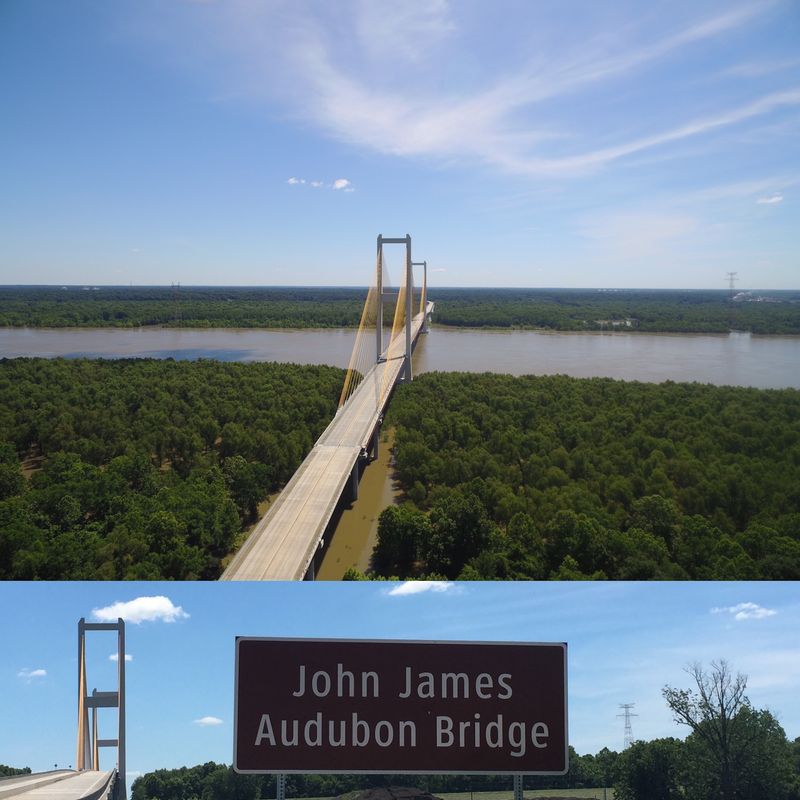
Opinions about this crossing carry a bit of Louisiana flavor. Plenty of people call it beautiful and are thrilled to have a fast, reliable link across the river.
Commuters between New Roads and Baton Rouge especially appreciate the time it saves. Road trippers traveling all the way from overseas have even detoured just to drive its span.
Not everyone joined the fan club, though. A few folks debated the cost and wondered whether it should have charged a toll, and a handful still pine for the old ferry days.
One playful suggestion floated the idea of adding rainbow lights to jazz up the towers. Small wishes like that show how much the structure has become part of local conversation.
Overall the crossing earns strong affection, holding a 4.6-star rating across 40 reviews. That balance of pride and gentle debate feels right at home here.
Planning Your Crossing
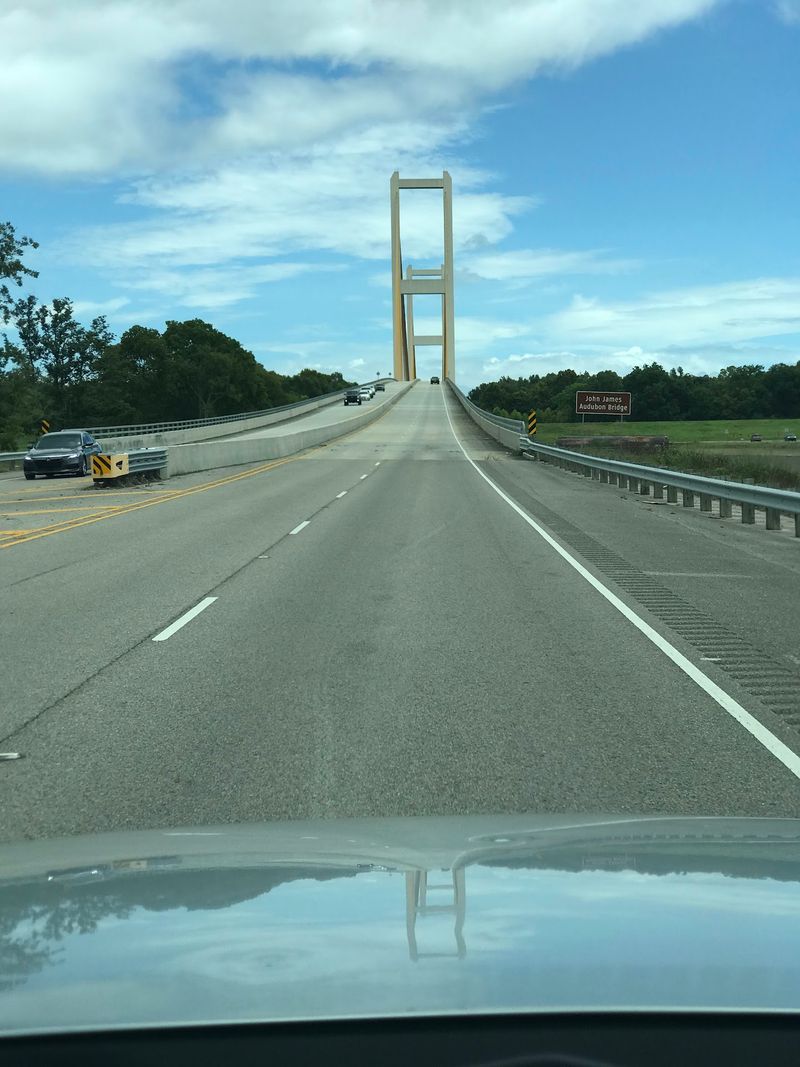
Getting here is refreshingly straightforward, and the timing is even easier since the bridge is open twenty-four hours a day, all week long. There are no gates, no closing times, and no toll to slow you down.
The crossing carries Louisiana Highway 10, which runs concurrent with the Zachary Taylor Parkway at this point. Approaching from the east brings you in near St. Francisville, while the west side connects toward New Roads and beyond.
Keep in mind that part of LA-10 just west of the bridge turns to gravel, so the surroundings stay rural right up to the span.
For official information, the Louisiana Department of Transportation and Development maintains details at dotd.la.gov. Pair a crossing with a visit to nearby river towns and plantation country to make the trip complete.
Bring a camera, pick your direction, and enjoy one of the region’s most impressive drives.
Share this story