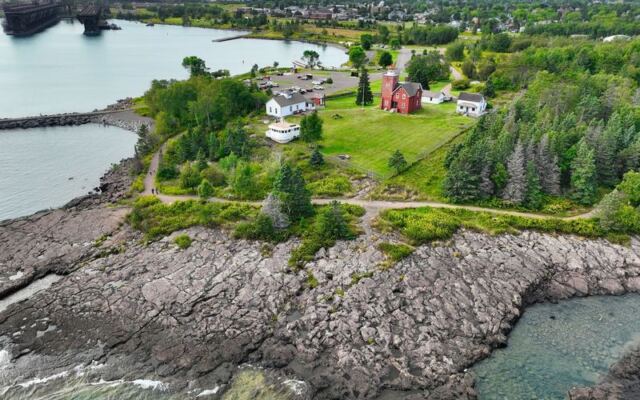
A red-brick lighthouse from the 1800s still stands watch on the Minnesota shore, and part of it now works as a history museum and a bed and breakfast. Yes, people can actually sleep inside a working piece of Great Lakes history.
I love that detail. Most old lighthouses become postcards.
This one kept its job and picked up a second career.
The grounds are open around the clock. A long concrete breakwater stretches out into the lake toward a smaller light at the far end.
Giant ore docks rise nearby, and freighters glide in to load.
I believe the best places feel bigger than their size. This tiny museum sits on one of the most dramatic waterfronts in the state.
So what happens when a quiet lighthouse turns out to hold a front-row seat to Lake Superior itself?
A Red-Brick Lighthouse Standing Guard Over Agate Bay
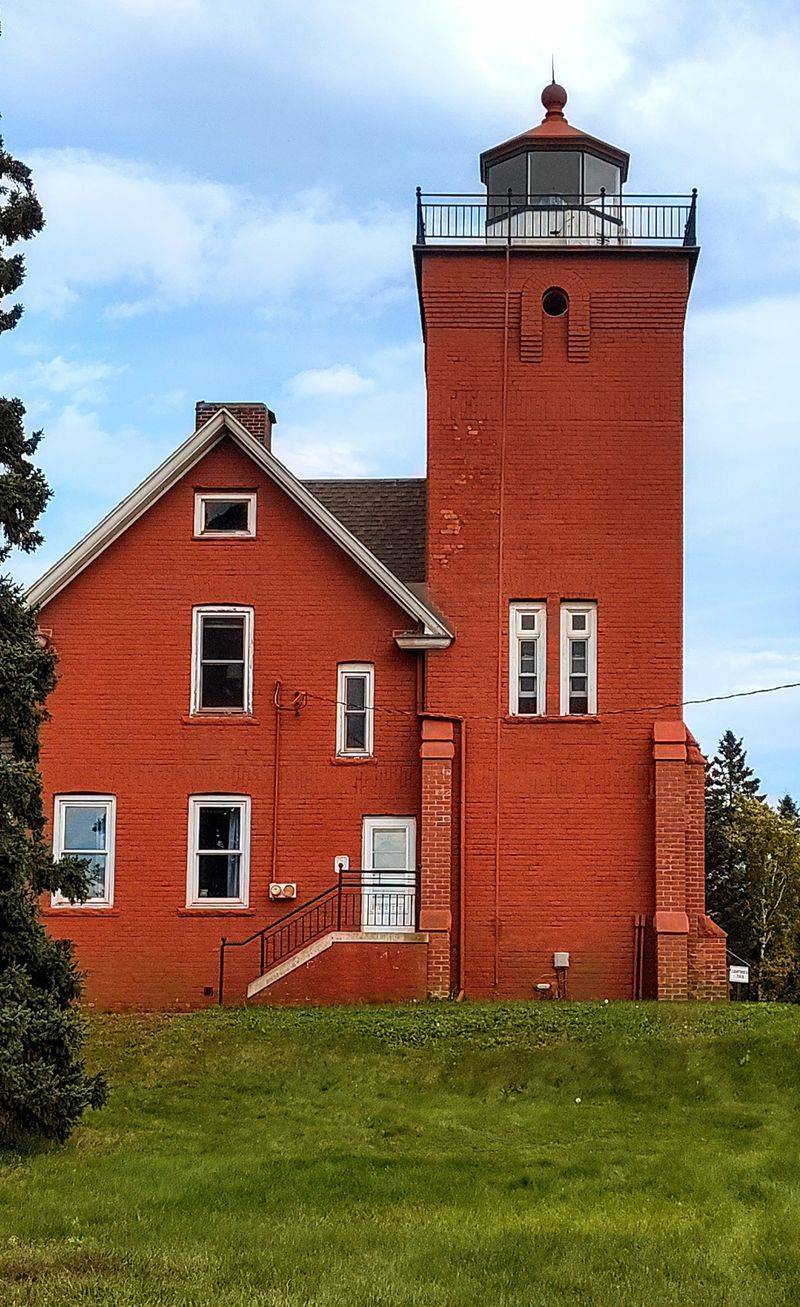
Bright red brick against deep blue water makes quite the first impression. The Two Harbors Light Station rises from a rocky point above Agate Bay on Lake Superior’s North Shore.
Built in the 19th century, the lighthouse still feels sturdy and proud. Today it houses history exhibits and a bed and breakfast, which gives the old tower a fun double life.
The station is listed as a historical landmark, and that title fits. Few spots in Minnesota pack this much maritime story into such a compact place.
You’ll find it at 1 Lighthouse Point, Two Harbors, MN 55616. The town sits along the North Shore, a classic route for anyone heading up the lake from Duluth.
Size is part of the charm here. The museum is small, but the setting is anything but.
Lake Superior stretches to the horizon in front of you. Ore docks loom over the harbor beside you.
And that red tower ties the whole scene together like the star of a postcard.
Honestly, Minnesota does a lot of things well. Lighthouses with this kind of view rank near the top.
Iron Ore, Busy Harbors, and the Reason the Light Exists
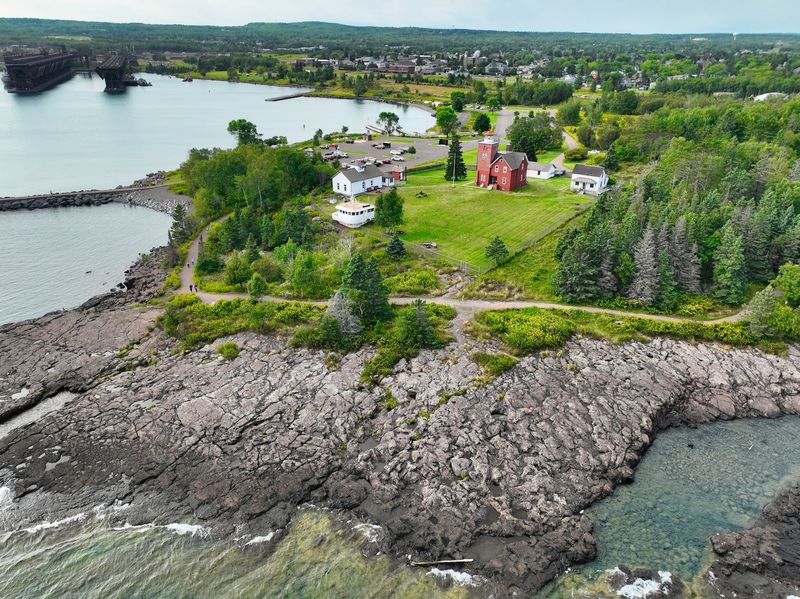
Iron built this harbor. In the late 1800s, growing ore shipments brought heavy ship traffic to Agate Bay, and navigation on Lake Superior got trickier.
The lighthouse came out of that rush. As boats multiplied, the harbor needed reliable lights to guide crews safely in from the open lake.
Think about what those captains faced. Superior is famous for sudden storms, cold fog, and rocky shores that show no mercy to a careless course.
A steady beam from a brick tower meant everything in those conditions. It marked the safe way home and kept cargo moving toward the docks.
That connection to the iron range runs deep in northern Minnesota. Ore from inland mines traveled by rail to the shore, then onto ships bound for distant mills.
Two Harbors became a key link in that chain. The lighthouse stood watch over all of it, quietly doing the job season after season.
Knowing the backstory changes how the place feels. It isn’t just pretty scenery.
It’s a working piece of the industry that helped shape the region.
The Little Museum Inside the Station
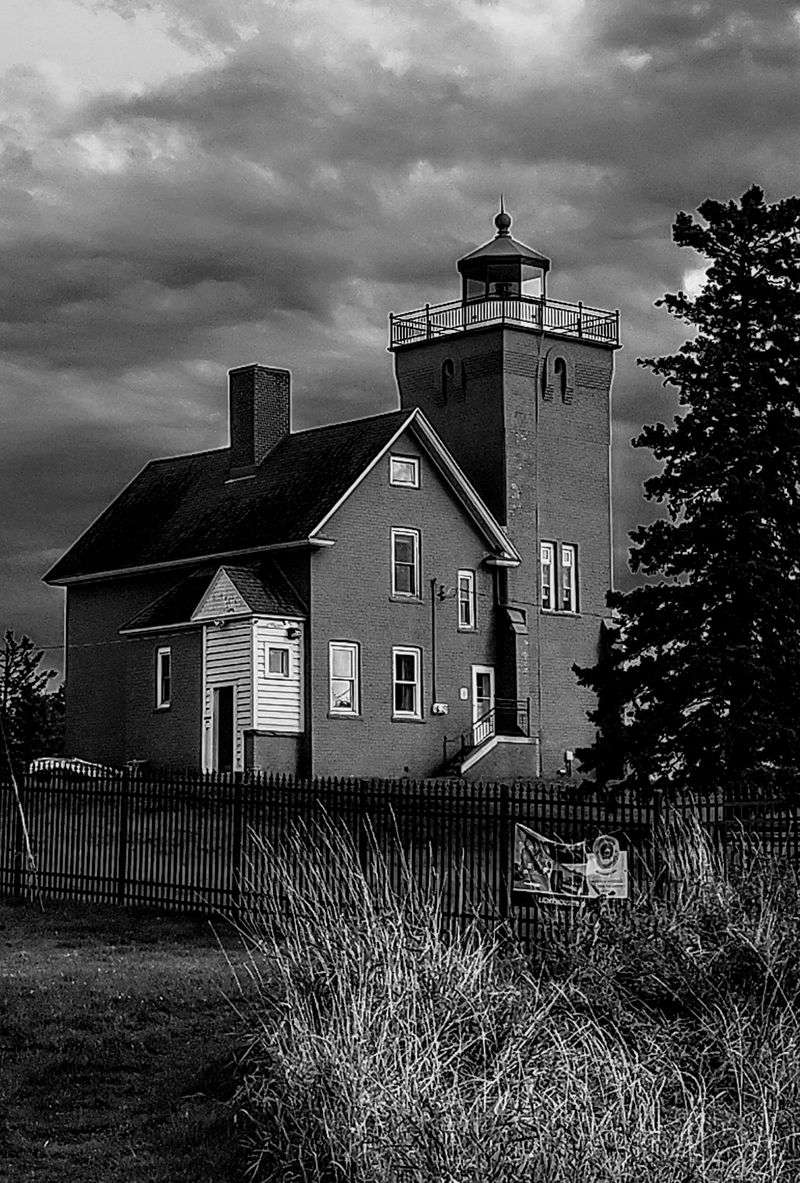
Small museums often hide the best stories. The Two Harbors Light Station keeps its history exhibits right inside the station, so the building itself becomes part of the lesson.
That’s the magic of a site museum. You’re not looking at photos of a lighthouse from somewhere else.
You’re standing in the actual place where keepers kept the light burning.
Tours of the lighthouse are offered, and they let curious visitors climb into the story instead of just reading about it. Expect a compact space rather than a sprawling hall.
The exhibits focus on the station and its role on Lake Superior. For history fans, that tight focus is a plus, since every detail connects back to where you’re standing.
A gift shop sits on the grounds too. It may close during winter, so plan accordingly if souvenirs are on your list.
Tour pricing can change, so check ahead before you go. Even a quick visit gives kids and adults a real feel for life at a North Shore light.
Sleeping Under a Working Lighthouse
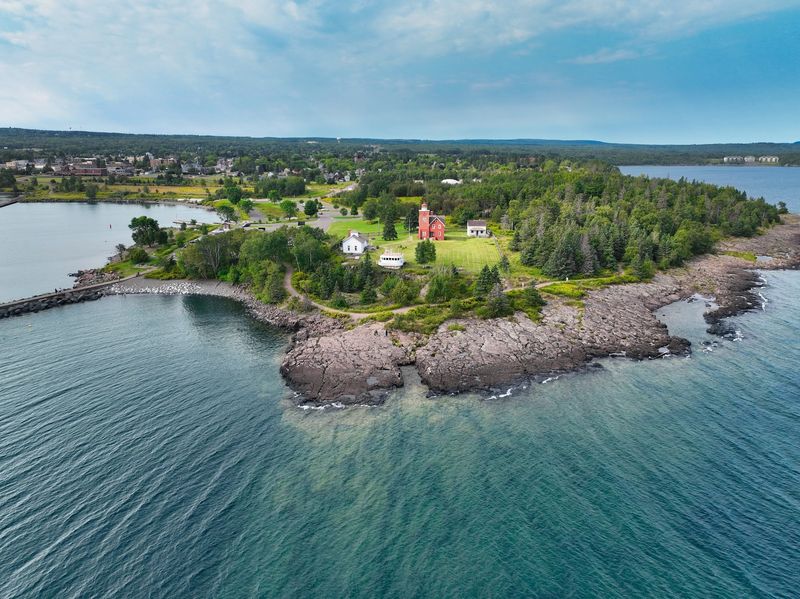
Most people tour a lighthouse and head home. Here, you can actually stay the night, because the station also operates as a bed and breakfast.
That’s a rare treat on the North Shore. Waking up beside Lake Superior in a historic light station sounds like something out of a storybook.
The idea fits the building’s long history of keepers living on site. Families once called these stations home, watching the water day and night.
Staying over lets guests feel a little of that rhythm. Evening light over the bay and early ships on the horizon become part of the visit.
Availability and booking details can change by season. Reach out to the station directly before planning around an overnight stay.
For a Minnesota getaway with real character, this beats a generic hotel by a mile. It turns a quick history stop into a full experience you’ll talk about for years.
And let’s be honest. Telling friends you slept in a lighthouse is a pretty great conversation starter.
A Long Breakwater Walk Straight Into Lake Superior
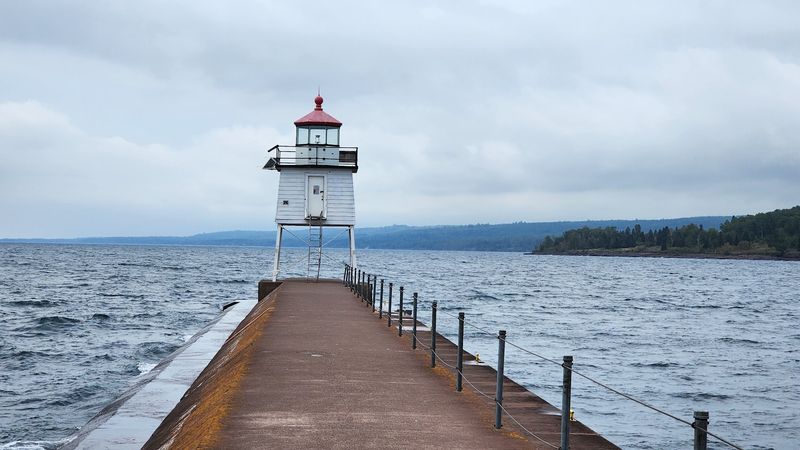
Concrete underfoot, open water on both sides, and a small light waiting at the end. The breakwater walk might be the most talked-about part of a visit.
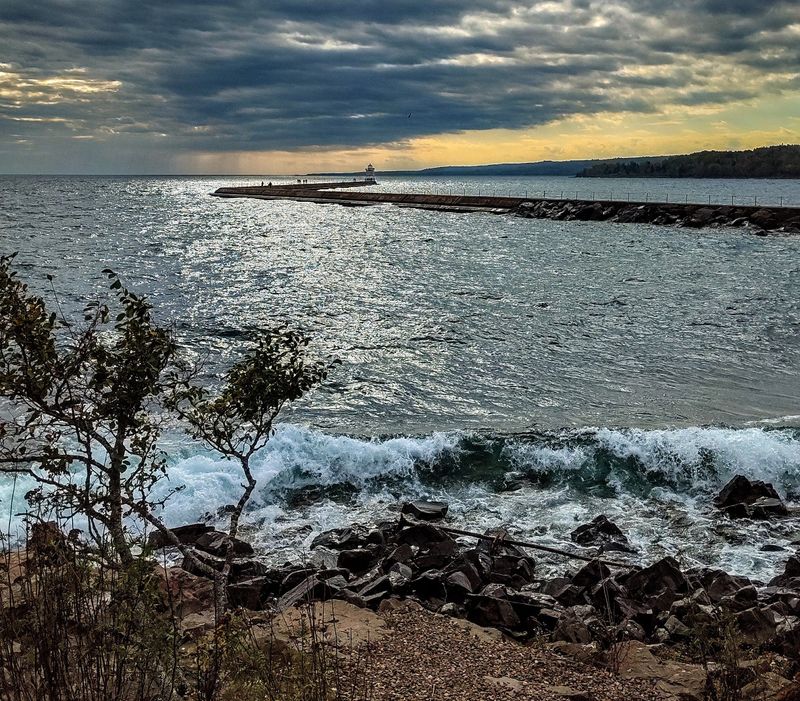
The path runs along the eastern breakwater out into Agate Bay. It’s an easy walk on a hard surface, and a railing helps on windy days.
Walking far out changes your view of the lake completely. Shore noise fades, and Superior starts to feel as vast as an ocean.
Waves crash against the rocks and concrete, especially when the wind picks up. Even a light breeze from the east can send water splashing over the wall.
Dogs are welcome on the walkway, so four-legged travelers can join the fun. Benches nearby offer a spot to sit and watch the water.
Caution matters here. Ice and wind can make the surface slick, and the water off the wall runs very deep.
Stick to the main path, watch your footing, and save the bold moves for the photos. The view rewards patience more than daring.
The Breakwater Light Has Its Own Story
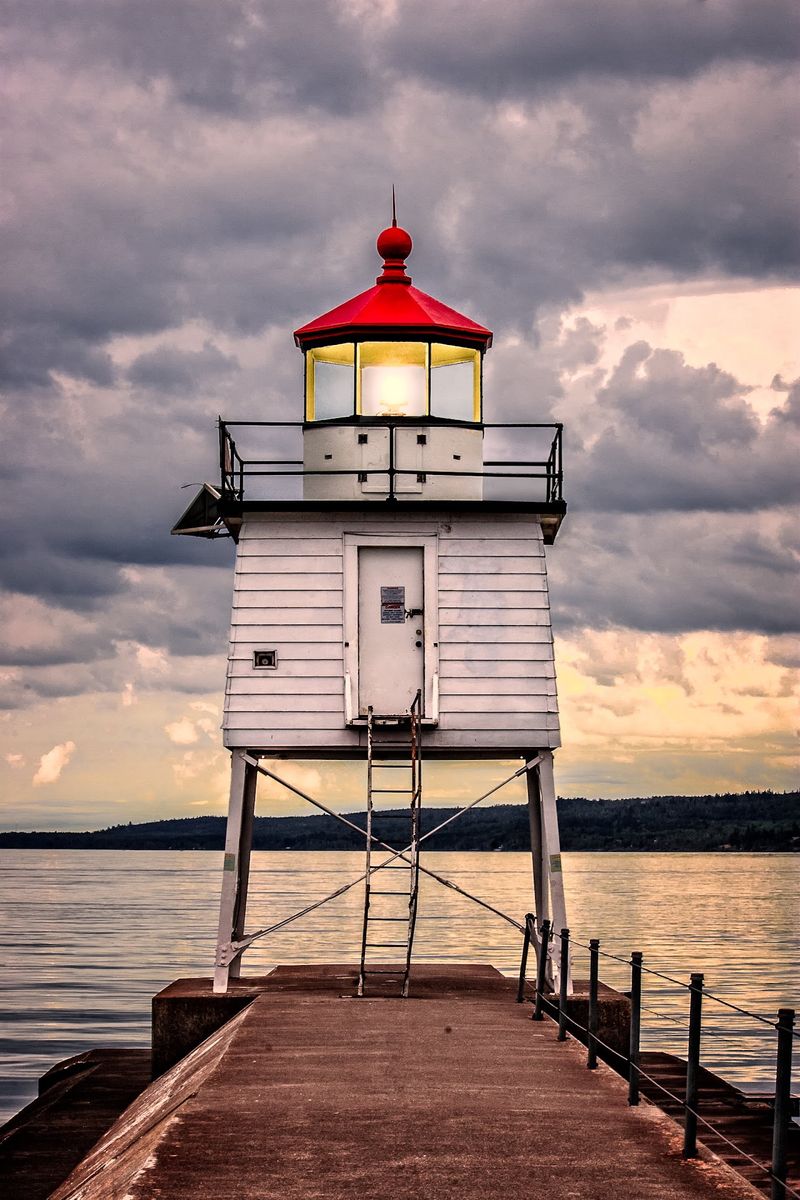
Completed in 1906, the breakwater light at the end of the pier is a tiny tower with big responsibility. It helps guide ships into the harbor from the open lake.
Before any tower existed, a simple lantern on an iron post marked the spot. Pretty humble beginnings for such an important job.
Early lighting relied on a gas system. The fuel came from storage tanks built right into the breakwater, which is a clever bit of engineering.
Fog was another challenge. The light first used a mechanical fog bell that needed regular manual work, later replaced by electric sound signals.
The light even took a break. It went out of service in the late 1940s while crews extended the breakwater, then returned to duty in 1950.
All that history sits quietly at the end of your walk. Knowing it makes the little white tower feel a lot less little.
It’s a fun bonus for history buffs. Two lights, one harbor, and plenty of stories between them.
Front-Row Seats to the Giant Ore Docks
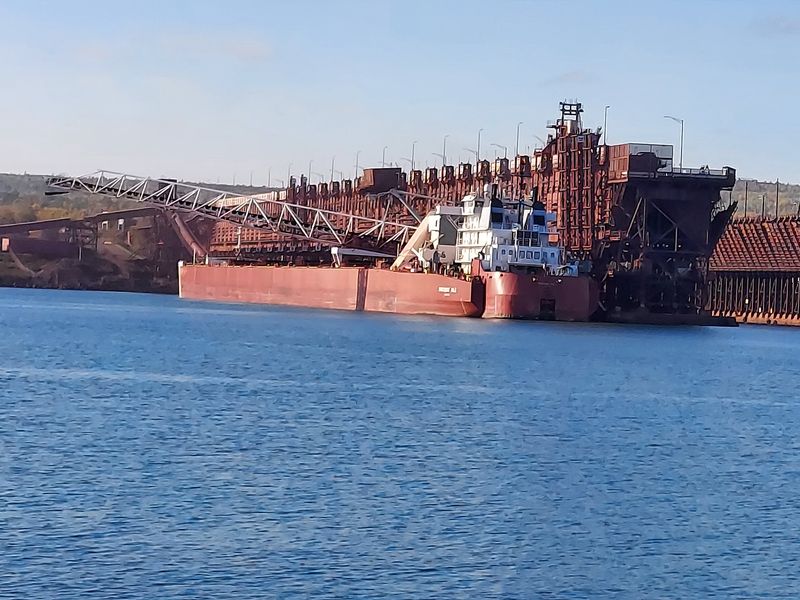
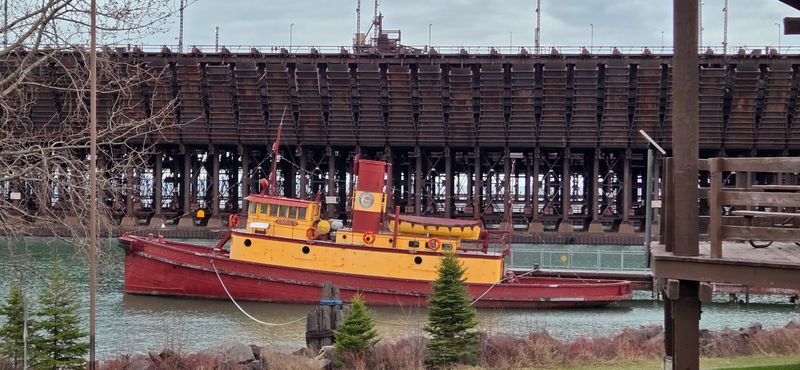
Huge doesn’t quite cover it. The ore docks near the station are massive structures that tower over Agate Bay and steal plenty of attention.
From the breakwater, you get a striking view of the big loaders. They show how the harbor still connects to the iron industry that built it.
Seeing them up close helps kids understand the region’s story. Rail cars bring ore to the docks, and ships carry it across the Great Lakes.
The scale makes for dramatic photos. Brick lighthouse on one side, industrial giants on the other, and blue water in between.
That contrast is part of the appeal. It’s a scenic lakeshore and a working harbor at the same time.
Bring a camera with a decent zoom if you have one. Details on the docks and any waiting ships come through better that way.
Few places in Minnesota show off industry and nature side by side like this. It’s history you can still watch in action today.
Freighter Watching Worth Pulling Up a Bench For
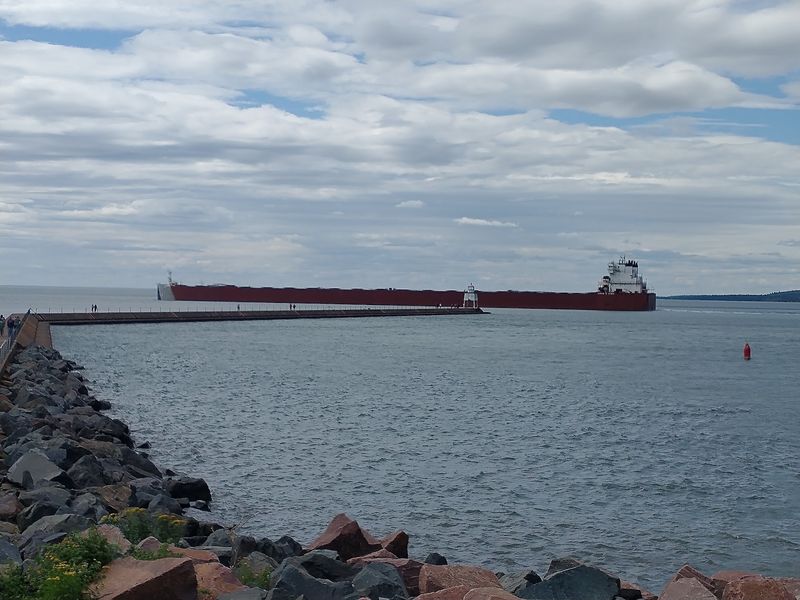
Ships the length of city blocks glide past, slow and steady. Watching freighters come in to load is one of the favorite pastimes at the station.
Benches near the water make it easy to settle back and wait. Lake traffic doesn’t run on a strict schedule, so a little patience pays off.
When a ship appears on the horizon, the whole scene shifts. Kids point, cameras come out, and the harbor suddenly feels alive.
Iron ore ships come and go from the docks. Seeing one ease into Agate Bay shows exactly why that lighthouse was built in the first place.
It’s surprisingly relaxing too. Big boats move gently, waves roll in, and time seems to slow down a bit.
Shipping season on Lake Superior generally slows in the deep of winter. Warmer months typically offer better odds of catching a freighter.
No ticket is needed for this show. The grounds are open, and the lake provides the entertainment for free.
Sunsets, Clear Water, and Lake Superior Views
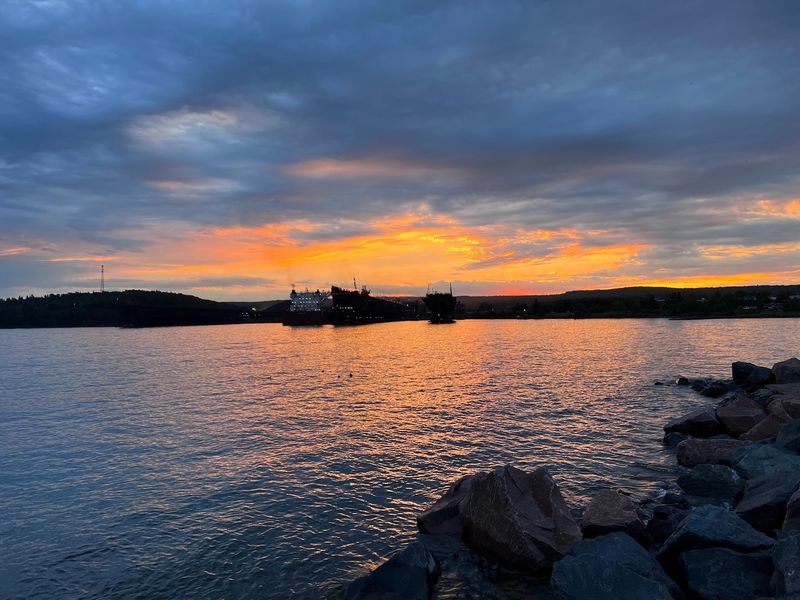
Golden light hitting red brick is a combination that’s hard to beat. Sunset is a popular time to visit, and the views explain why.
Lake Superior stretches wide from the point. On calm days, the water near the breakwater can look remarkably clear.
The rocky shoreline adds texture to every shot. Waves wash over dark stones, and the whole bay glows as evening arrives.
Photographers love the variety here. You can frame the lighthouse, the ore docks, the breakwater, or just the endless water.
Going a little off the main trail opens up fresh angles of the lake. Explore carefully, and you may find a favorite spot of your own.
Sunsets shift with the seasons, so timing your visit takes a quick check. Arriving early gives you time to wander before the colors peak.
Minnesota has no shortage of lakes, but Superior plays in its own league. Watching the sky change from this point feels like a reward for making the drive.
Room to Roam for Kids, Dogs, and Anglers
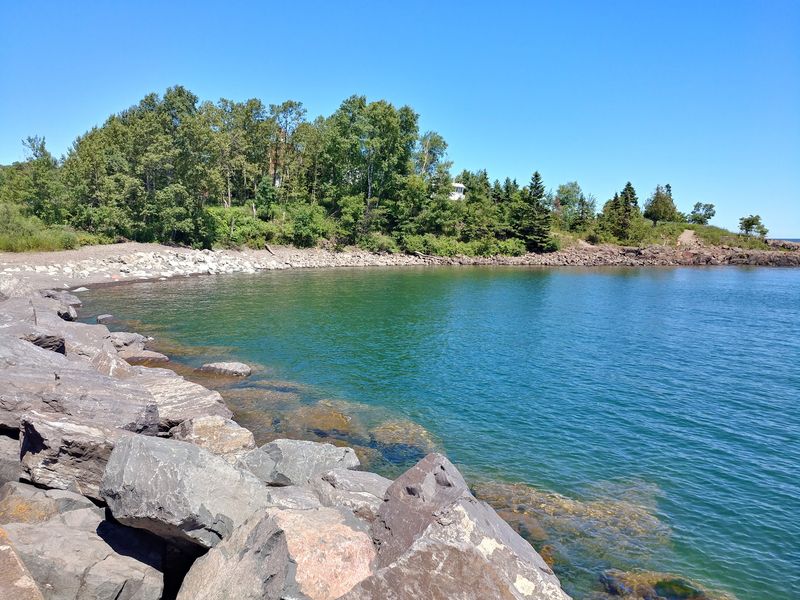
Wide open grounds make this a natural stop for restless travelers. Kids can stretch their legs, and families can relax while taking in the lake.
The area offers plenty of space to walk, hike, or bike. That makes it more than a quick photo stop for active families.
Dog owners get good news too. The breakwater walkway is dog friendly, so pups can enjoy the lake breeze alongside everyone else.
Fishing is another draw. The breakwater offers water access for anglers, though footing near the ledge requires real care because waves can rise.
Nature fans may spot deer around the grounds. Geocaching also pops up as a fun activity for treasure-hunting families.
Free public restrooms are available, which parents will appreciate. Parking is generally plentiful, especially on weekdays.
That mix of history, outdoor time, and easy amenities is a winning combo. It’s a budget-friendly Minnesota outing that keeps everyone happy, from toddlers to grandparents.
Winter Ice and Wild Wind on the North Shore
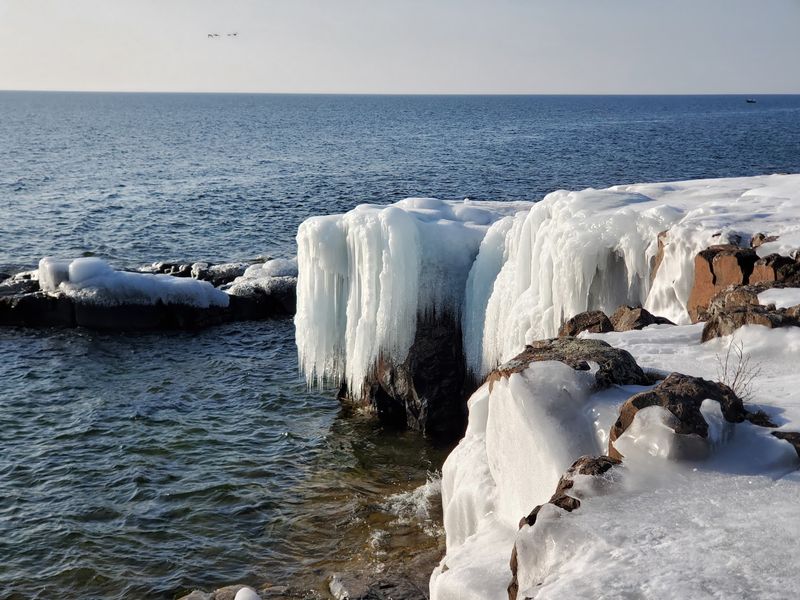
Ice-coated rocks turn the shoreline into a glittering sculpture garden. Winter brings a completely different look to the station.
Spray from the lake freezes on the stones, creating striking shapes along the shore. Photographers often find this season especially rewarding.
Bundle up seriously, though. Wind chill off Lake Superior can surprise even seasoned Minnesotans, so cover all exposed skin.
The breakwater demands extra caution in cold months. Ice and wind can make the surface slippery and the walk risky.
Some services pause too. The gift shop may close for winter, but the grounds and views remain open to enjoy.
Stormy days have their own appeal. Waves pound the rocks and concrete with impressive force, a reminder of how powerful this lake can be.
For travelers who love dramatic weather, winter might be the best season of all. Just pack warm layers and respect the conditions.
Nearby Stops That Round Out the Day
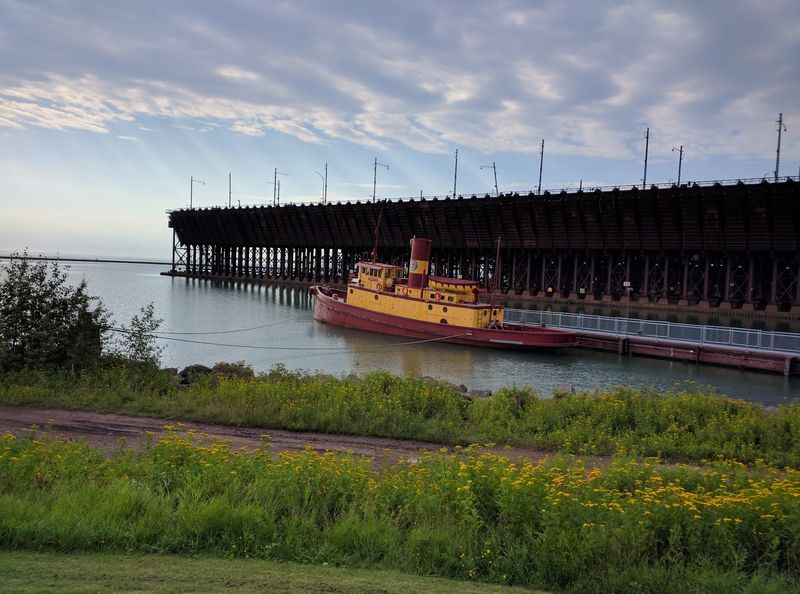
History doesn’t stop at the lighthouse door. Two Harbors keeps the maritime theme going with more stops close by.
The Edna G tugboat is a popular neighbor. Paired with the lighthouse, it gives a fuller picture of the town’s working waterfront.
Train fans have reason to smile too. Rail history ties directly into the ore docks, and the area celebrates that connection.
Shops and restaurants sit a short distance from the station. That makes it easy to grab a bite before or after exploring the grounds.
Agate Bay itself is worth a slow look. The harbor, shoreline, and docks all tell pieces of the same story.
Planning a half day here makes sense for most families. You can tour, walk the breakwater, watch for ships, and still have time for lunch in town.
Stringing these stops together creates a small-town Minnesota adventure. It’s proof that great day trips don’t need big-city price tags.
Hours, Parking, and Smart Planning Tips
Good news for early birds and night owls. The grounds at Two Harbors Light Station are listed as open 24 hours, every day of the week.
Museum tours and the gift shop run on their own schedules. Those may vary by season, so check before you head out.
Parking is generally easy, with plenty of spaces available. Weekdays tend to be simpler than busy weekends.
Road construction affected access during summer and fall of 2026. Allow extra travel time and follow posted detours near the bay.
Free public restrooms sit on site, a welcome detail on long road trips. Benches along the water offer nice resting spots too.
Pack layers no matter the season. Lake Superior breezes can feel refreshing in summer and bitter in winter.
Sturdy shoes help on the breakwater. Bring a camera, some patience for ships, and a sense of curiosity, and you’re ready to go.
Why This Little Lighthouse Earns a Spot on Your Minnesota Road Trip
Small places can deliver big memories. The Two Harbors Light Station proves that with history, scenery, and plenty of room to explore.
Where else can you tour a 19th-century lighthouse, walk a breakwater into Superior, and watch ore ships load in one stop? That combo is hard to find anywhere.
It works for history lovers and casual travelers alike. Families, photographers, anglers, and dog owners all find something to enjoy.
The free grounds make it a genuine value too. Even without a tour, the views alone justify the drive up the North Shore.
Minnesota pride runs strong here. This is a working harbor with deep roots, not a polished tourist trap.
Visiting in summer offers ship traffic and gentle breezes. Winter brings ice sculptures and dramatic waves for the brave.
Either way, the red-brick tower keeps its quiet watch. Tag a friend, plan the drive, and let Lake Superior’s history pull you right in.
Share this story