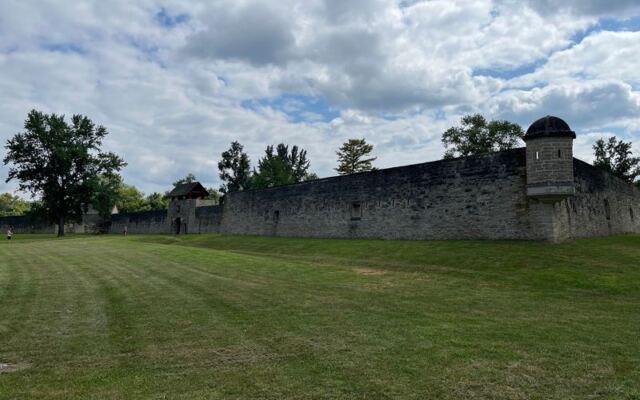
Hidden along a quiet stretch of the Mississippi River in southwestern Illinois, there sits a massive stone fort that most road-trippers never even know exists. Built by the French in the early 1700s, it stands as one of the most remarkable colonial landmarks in the entire Midwest, yet somehow slips under the radar of nearly everyone passing through.
Stumbling onto a place like this feels like finding a page torn out of a history book and dropped into an open pasture. Once you see those limestone walls rising out of the Illinois countryside, you will wonder how you ever drove past without stopping.
Where Fort de Chartres Actually Sits
Prairie du Rocher is a name most Illinois drivers have never heard, and that is exactly why Fort de Chartres State Historic Site feels like such a discovery. Tucked along State Route 155 in the far southwestern corner of the state, the fort sits in open river-bottom country where the Mississippi runs wide and slow just beyond the fields.
Getting here requires a deliberate choice. There is no interstate exit pointing the way, and the surrounding landscape gives little hint of what waits around the bend.
Flat farmland stretches in every direction, broken only by distant tree lines and the occasional grain elevator.
Visitors coming from the St. Louis area often cross the river by ferry from Ste. Genevieve, Missouri, which adds a genuinely old-fashioned layer to the whole adventure.
Arriving that way, by water and rural road, sets the mood perfectly before the fort even comes into view.
The French Colonial Origins of the Fort
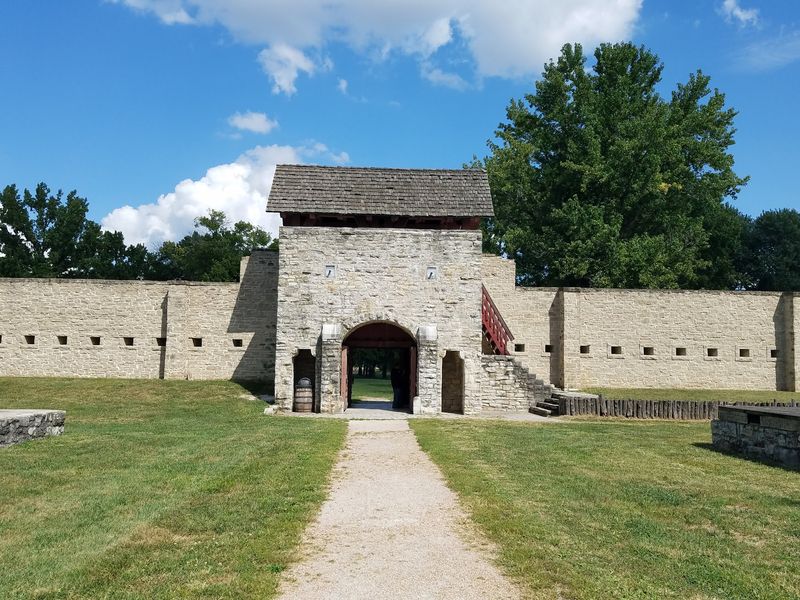
Back in 1720, the French colonial government set out to build a permanent stronghold along the Mississippi that would help them control the Illinois Territory. Fort de Chartres was the result, and it became the administrative and military center of French Louisiana for decades.
The limestone construction was a deliberate statement of permanence. Native communities in the region had no tradition of building in stone, so those thick walls rising from the prairie must have looked almost otherworldly to anyone approaching for the first time.
The fort went through several versions over the years before the current stone structure was completed around 1753. At its peak, it was considered the largest and most formidable colonial fortification in all of French Louisiana.
That kind of historical weight is hard to fully absorb standing inside the quiet grounds today, but it hits you slowly the longer you stay.
The Limestone Walls That Still Stand
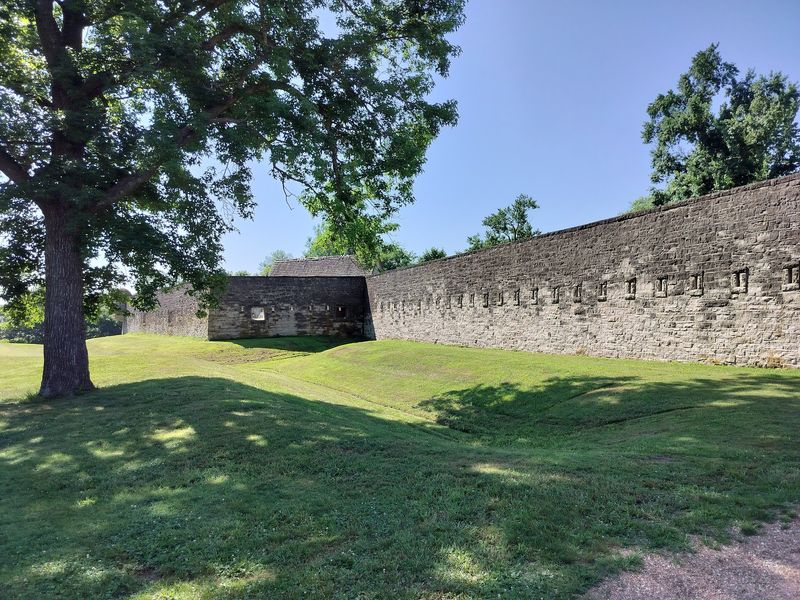
Few things prepare you for the sheer physical presence of those walls. Massive limestone blocks, quarried and shaped by hand centuries ago, form a perimeter that feels genuinely fortress-like rather than museum-like.
Standing beside them, you get a real sense of the labor and ambition that went into the construction.
Visitors consistently mention being struck by the scale. The walls are impressively tall and thick, built to withstand cannon fire and to project authority across the open landscape.
Even partially restored, they communicate strength in a way that photographs simply cannot capture.
The stonework itself is worth slowing down to examine up close. You can see how individual blocks were fitted together, how corners were reinforced, and where time and the river’s flooding have left their marks.
The texture and color of the limestone shift with the light throughout the day, making the walls look almost amber in the late afternoon sun.
A Fort That Never Fired a Shot in Anger
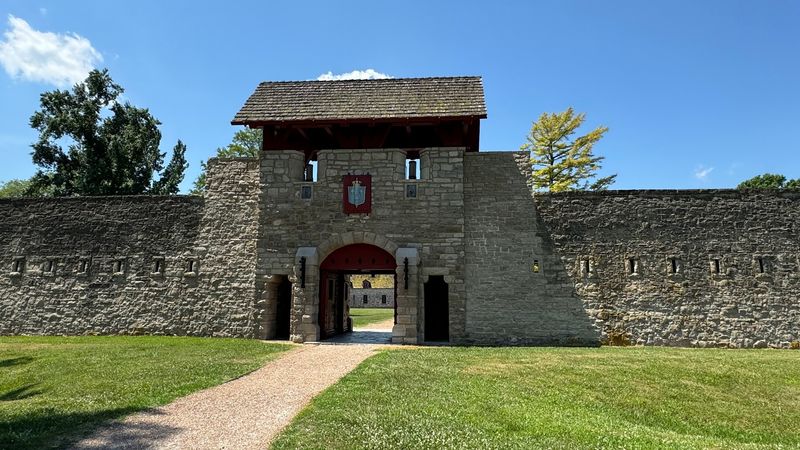
One of the more surprising facts about Fort de Chartres is that it never saw military combat. Built as a seat of colonial authority rather than a battlefield stronghold, the fort spent its active years as an administrative hub, not a fighting post.
After France ceded its North American territories following the Seven Years War, British forces took control of the fort in 1765. The British found it difficult to maintain and eventually abandoned it.
The Mississippi River, which had always been both a resource and a threat, flooded the site repeatedly and contributed to the original structure’s decline.
The French eventually left, the British departed, and the fort sat largely forgotten for generations. A partial restoration effort brought it back to something resembling its former self, and the State of Illinois now maintains it as a historic site.
The quiet that surrounds it today feels almost fitting for a place that was always more about governance than conflict.
The Powder Magazine That Survived
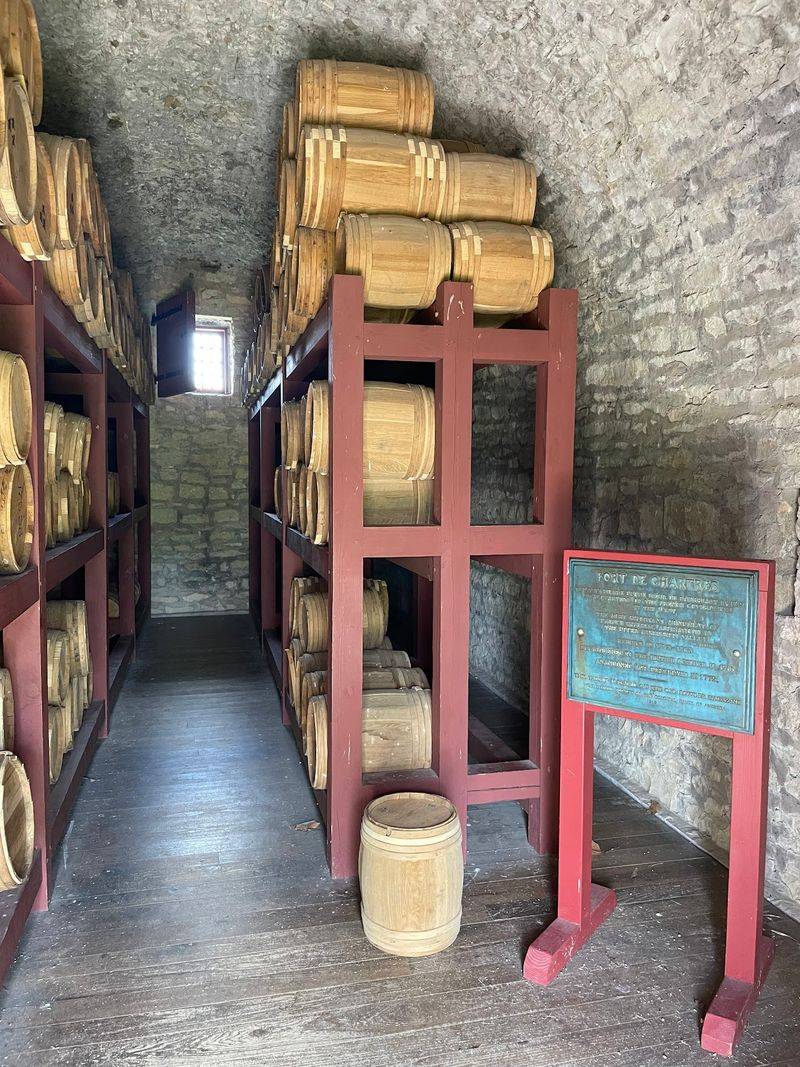
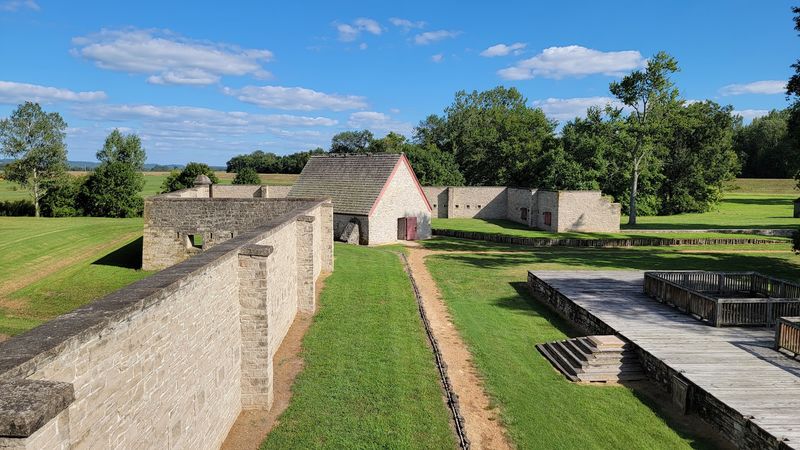
Among the structures on the grounds, the powder magazine stands out as the most historically significant surviving original element. Built to store ammunition safely away from open flame, the structure features thick stone walls and a vaulted ceiling designed to contain any accidental explosion.
Remarkably, this building has endured centuries of flooding, neglect, and the general wear of time far better than most of the fort’s other original components. Walking inside, you notice immediately how the temperature drops and the outside world goes quiet.
The walls feel ancient in a way that the restored sections simply cannot replicate.
Architectural historians consider the powder magazine one of the finest surviving examples of French colonial military construction in the United States. For visitors with an eye for craftsmanship, spending a few minutes inside this small but extraordinary room is one of the most rewarding moments the entire site offers.
It is the real thing, unchanged and unhurried.
The On-Site Museum and Its Artifacts
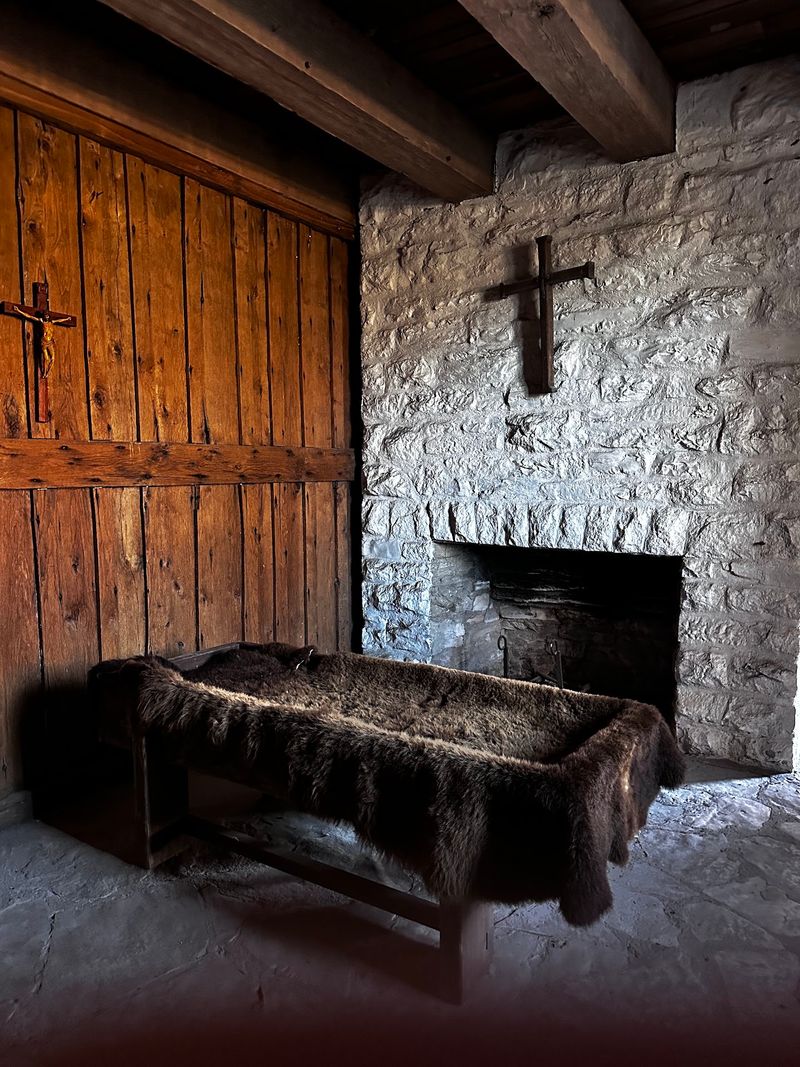
Tucked within the fort’s grounds, the on-site museum punches well above its modest size. Visitors who expect a bare-bones display case or two tend to come away genuinely impressed by the depth of material collected here.
Artifacts recovered from the site and surrounding region fill the exhibits, ranging from everyday colonial household objects to military equipment and documentation. Large maps trace the boundaries of French Louisiana and help place the fort within the enormous territorial ambitions of 18th-century France.
The context provided makes the physical structures outside feel far more meaningful.
Admission to the museum is free, which makes the quality of the collection even more appreciated. Spending time here before wandering the grounds is a smart approach because the background knowledge transforms what might otherwise feel like a pleasant but puzzling ruin into a vivid historical scene.
Visitors regularly describe the museum as a highlight rather than an afterthought, which says a lot for a small-town Illinois historic site.
Guard Towers and the Self-Guided Experience
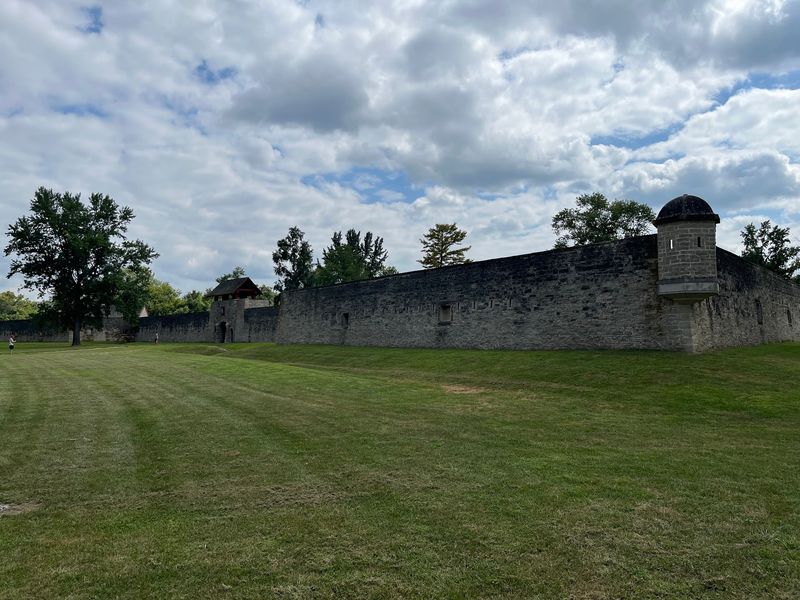
Roaming the grounds at your own pace is genuinely part of the appeal here. Fort de Chartres is a self-guided site, meaning there are no mandatory tours or timed entry windows to worry about.
You simply show up, explore, and linger as long as the mood takes you.
The guard towers are a particular favorite with younger visitors. Climbing up into one gives a sweeping view of the surrounding fields and river valley, and the vantage point makes the fort’s strategic position along the Mississippi suddenly obvious.
Several visitors mention their kids scrambling up the towers repeatedly while adults take in the scenery.
The level, well-maintained grounds make walking easy for most visitors regardless of age or mobility. Pathways connect the major structures, and there is enough open space to wander without feeling crowded.
On quieter weekdays, some visitors report arriving to find the entire site essentially to themselves, which adds a genuinely peaceful, almost meditative quality to the experience.
The Annual Rendezvous Event

If timing a visit around a single event sounds appealing, the annual Rendezvous at Fort de Chartres is the one to plan for. Held each year in late spring, the gathering draws living history enthusiasts, reenactors, craftspeople, and curious visitors from across the region and beyond.
The transformation of the grounds during Rendezvous is remarkable. Reenactors dressed in period-accurate French colonial and frontier attire fill the fort, demonstrating crafts, sharing stories about daily life in the 1700s, and staging demonstrations that bring the history to life in an immediate, tangible way.
Visitors who attend describe it as far exceeding their expectations.
The atmosphere during Rendezvous shifts the site from a quiet historic landmark into something genuinely festive and educational at the same time. Handmade goods, traditional foods, and period activities create a sensory experience that no amount of museum signage can replicate.
For families especially, this event turns a fascinating place into an unforgettable afternoon that kids and adults talk about long afterward.
Reenactors Who Bring the 1700s Back to Life

Even outside the big Rendezvous weekend, reenactors occasionally appear at the site during special programming, and their presence changes everything about the visit. Hearing someone in period clothing explain what daily life inside the fort actually looked like pulls history out of the exhibit cases and places it right in front of you.
Visitors who have caught reenactors in action consistently describe those interactions as the most memorable part of their trip. The combination of authentic costume, detailed knowledge, and genuine enthusiasm creates a kind of immersive storytelling that a placard on a wall simply cannot match.
For anyone planning a visit specifically to catch reenactors, checking the fort’s event calendar in advance is strongly recommended. The site’s website at fortdechartres.us keeps a current schedule of programming.
Showing up on a quiet Tuesday and stumbling onto a demonstration feels like a lucky bonus, but arriving on a scheduled event day guarantees the full experience the fort is capable of delivering.
The Scenic Drive and River Views
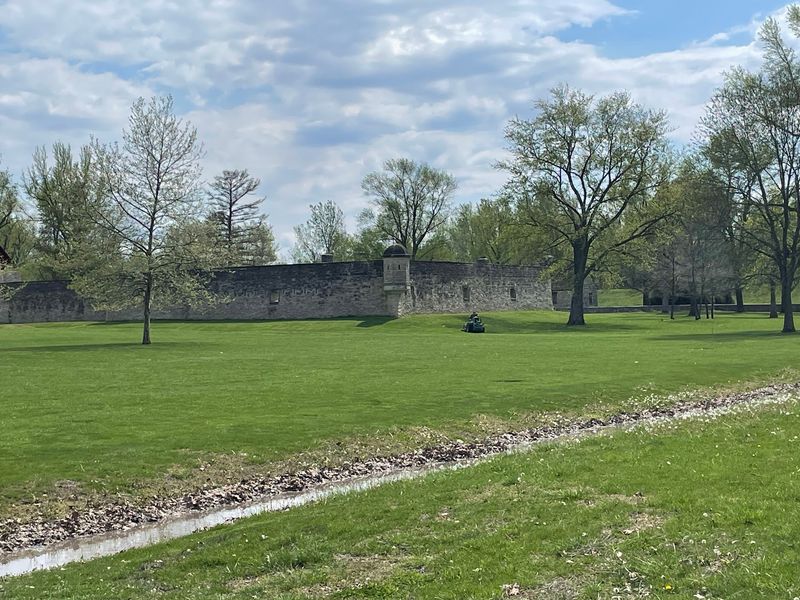
Part of what makes Fort de Chartres feel special is the journey itself. The drive along State Route 155 through the American Bottom region of southwestern Illinois is genuinely scenic in a low-key, unhurried way.
Wide fields, river bluffs in the distance, and the occasional small-town grain elevator line the route.
Visitors who cross the Mississippi by ferry from Ste. Genevieve, Missouri add an extra layer of adventure to the trip.
The Modoc Ferry carries vehicles across the river, and arriving on the Illinois side by water rather than by bridge creates a sense of arrival that feels appropriately old-fashioned for a destination this historic.
The river itself is visible from parts of the fort grounds, and the broad, slow sweep of the Mississippi from this vantage point is striking. Seeing how the river has shaped the landscape over centuries, carving a wide path through the floodplain, adds an almost geological dimension to what is already a historically rich experience.
Picnic Grounds and the Outdoor Atmosphere
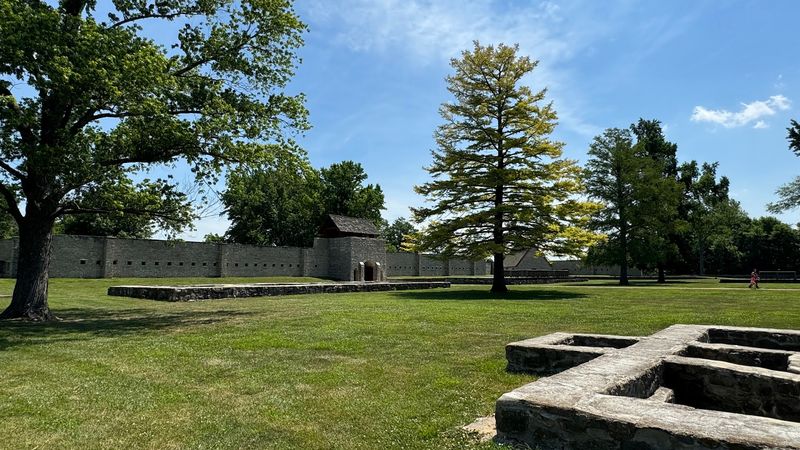
Bringing lunch is genuinely worth planning for. The fort sits well away from any fast food or restaurant options, and the shaded picnic area near the parking lot provides a comfortable, relaxed spot to eat before or after exploring the grounds.
On a pleasant day, the combination of open sky, river-bottom air, and historic surroundings makes an ordinary sandwich feel like a proper outing.
The overall atmosphere at Fort de Chartres leans heavily toward the peaceful and unhurried. Quiet is the default setting here, especially on weekday visits.
The surrounding countryside contributes to a sense of genuine remoteness even though St. Louis is only about an hour away.
A playground near the picnic area gives younger visitors a place to burn off energy, and the grounds are pet-friendly, which makes the site a comfortable choice for families traveling with dogs. Modern restrooms are available on-site, a practical detail that matters more than it sounds at a location this rural.
Hours, Admission, and Getting There
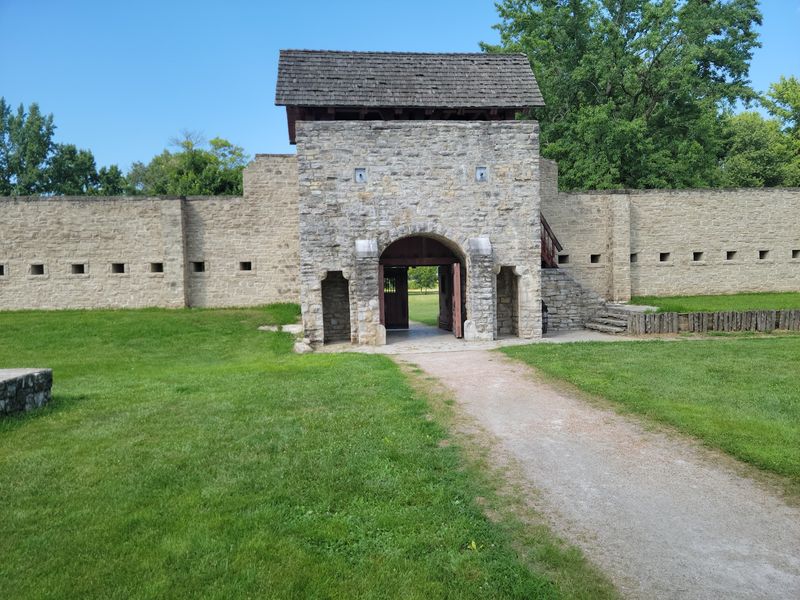
Fort de Chartres State Historic Site is open Tuesday through Sunday from 9 AM to 4 PM, and it is closed on Mondays. That schedule is worth confirming before making the trip, particularly for anyone planning a Monday detour off a longer road trip through southwestern Illinois.
Admission is free, though a donation is welcomed and genuinely appreciated given how well the site is maintained on limited public resources. The self-guided format means there is no pressure to rush through or keep pace with a group, which suits the relaxed atmosphere perfectly.
The address is 1350 State Route 155, Prairie du Rocher, Illinois 62277, and the site can be reached by phone at 618-284-7230. The official website, fortdechartres.us, carries event listings and seasonal updates.
Visitors arriving via the Modoc Ferry from Ste. Genevieve should check ferry operating hours separately, as schedules can vary by season and conditions.
Why This Fort Deserves More Attention Than It Gets
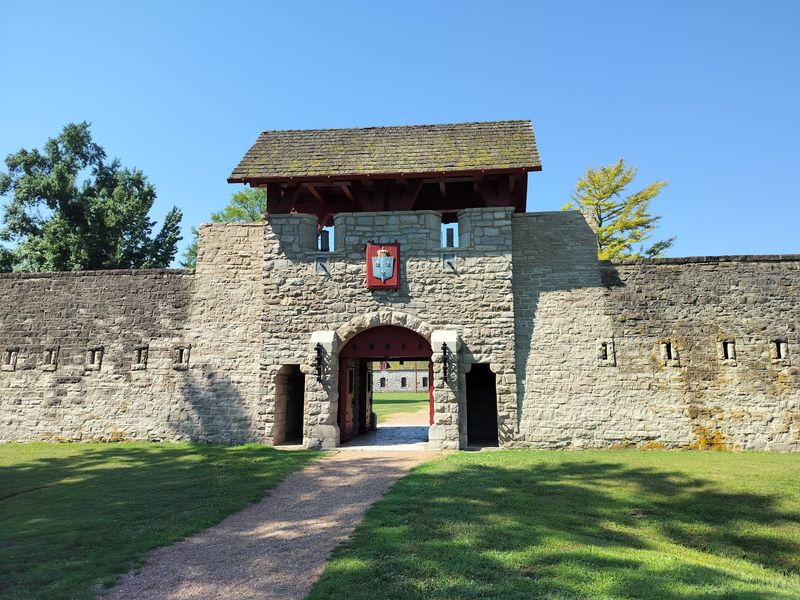
Honestly, a site this significant should be far better known than it is. Fort de Chartres represents a chapter of American history that rarely makes it into school curricula or popular travel guides, covering French colonial ambition, the complexity of early Illinois settlement, and the broader story of European competition for the North American interior.
Visitors who stumble onto it almost universally leave wishing they had known about it sooner. The combination of free admission, well-preserved grounds, a genuinely informative museum, and the occasional bonus of reenactor programming makes it one of the most rewarding off-the-beaten-path stops in the entire state.
For Illinois day-trippers, history enthusiasts, or anyone looking for a destination that feels like a real discovery rather than a tourist checkbox, Fort de Chartres delivers in a quiet, confident way. The drive out, the wide river views, and those ancient limestone walls add up to something worth going out of your way to find.
Share this story