A small railroad stop in northern New Jersey keeps pulling movie fans off their usual routes, and not because it has a long list of attractions. Its fame comes from an indie film that turned an ordinary depot into a place people still want to find for themselves.
The draw is simple: a real historic station, a real track, and a movie memory that has stayed with people for years. Keep reading, because this little stop has more layers than its size suggests.
The Film Connection That Keeps People Coming
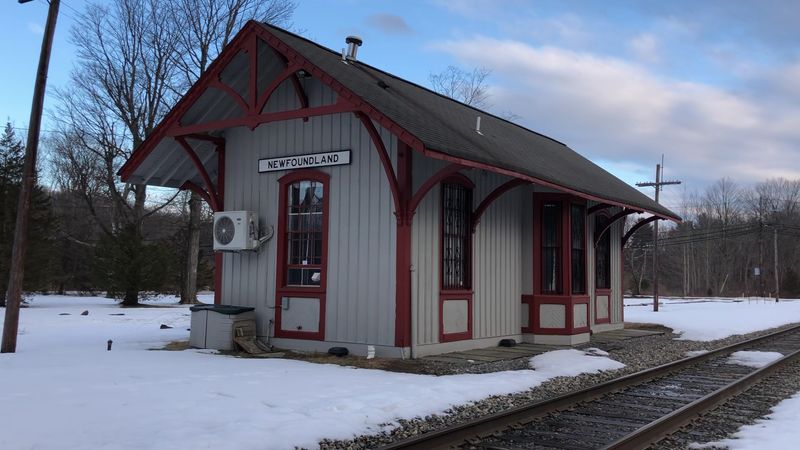
A certain kind of movie fan does not just watch a film and move on. They start wondering where the places are, how real they are, and whether the setting still exists outside the frame.
Newfoundland RR Station is best known to many people as a primary location from the 2003 indie film The Station Agent. The film stars Peter Dinklage, Patricia Clarkson, and Bobby Cannavale, and Dinklage has a New Jersey connection through Morristown.
The movie gave the station a second public life. People who may never have had a reason to track down a small railroad depot in Newfoundland began seeking it out after seeing the film.
The location became part of the story’s identity, not just a background detail.
Many people time their trip after watching The Station Agent, which makes sense. The stop is small enough that the film connection does a lot of the work.
Without that context, someone might pass through quickly and wonder what all the fuss is about.
With the film in mind, the station becomes more than a railroad artifact. It becomes a New Jersey movie landmark that still exists in recognizable form, which is a rare treat for anyone who enjoys finding real places behind memorable scenes.
A Depot Story Older Than The Movie
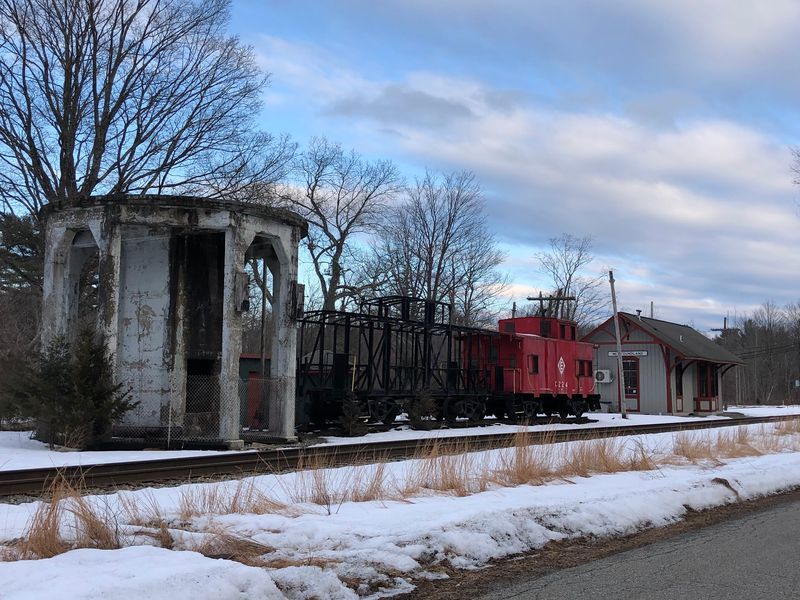
Long before indie film fans added it to their map, the station already had a railroad story worth knowing. The building was constructed for the New Jersey Midland Railroad in 1872, placing it among the older surviving railroad stations in New Jersey.
The available historical notes make one thing clear: the railroad was not shown at this spot on the 1853 county map or the 1868 township map. By the Midland Railway map of 1872, the line and station were indicated, which ties the station closely to that year.
The New Jersey Midland later became part of the New York, Susquehanna, and Western Railroad in 1881. An 1887 township map showed the NYS&W with a station and freight station in Newfoundland, placing the site within a broader rail network that shaped local movement and commerce.
There is some disagreement over the end of passenger service here. Some accounts suggest the station closed in 1944, while passenger service may have continued through 1966.
That uncertainty is part of the challenge with small railroad sites, where local memory and records do not always line up neatly.
The film may have put the depot on many modern lists, but the station’s real backbone is older. Its story begins with rail maps, changing railroad names, and the slow reshaping of transportation in northern New Jersey.
The Restored Wooden Station Building
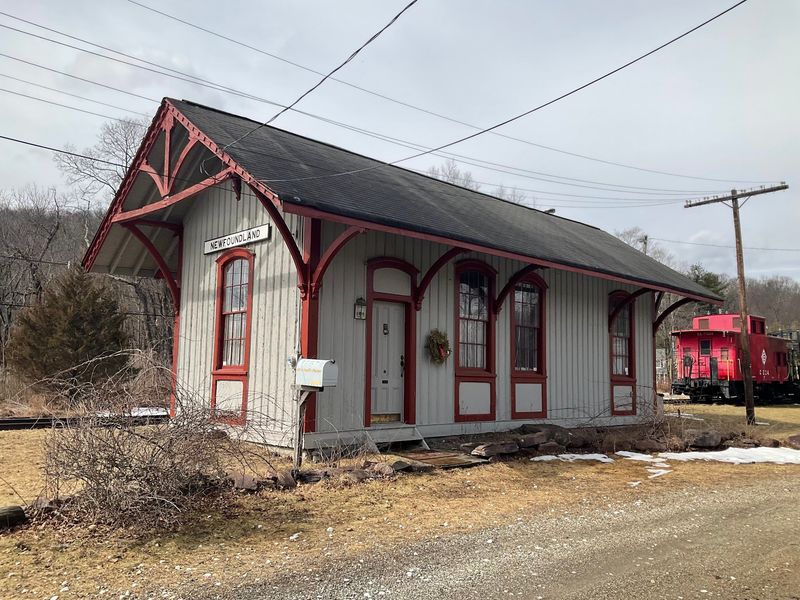
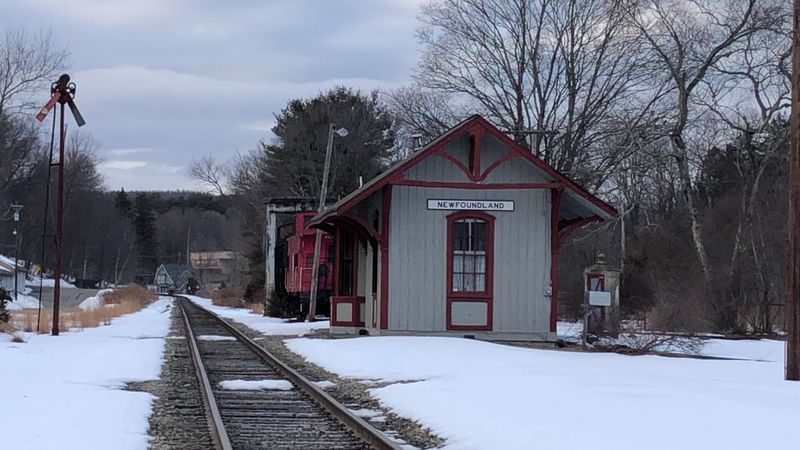
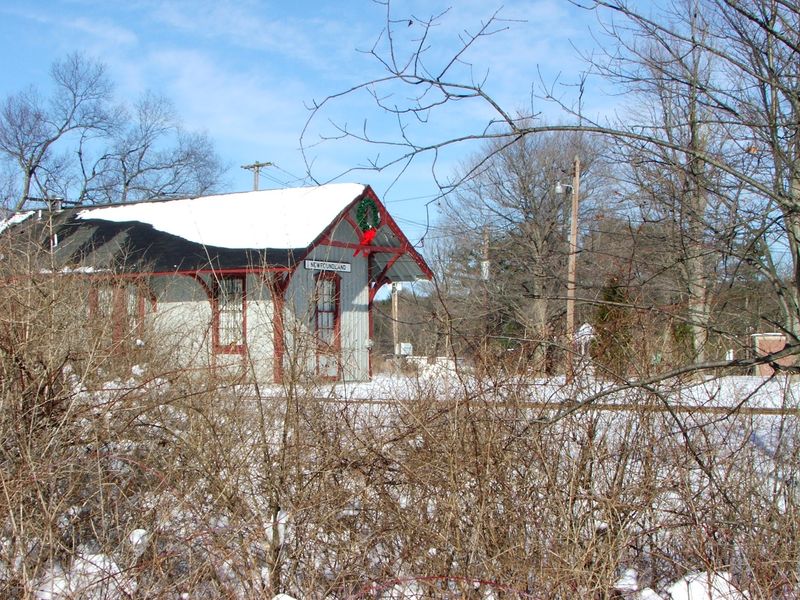
The wooden station building is the main reason people stop, even when they already know the visit will be brief. It has been restored, but it is not open to the public, so the experience is centered on the exterior and the surrounding railroad pieces.
That detail matters for planning. Nobody should arrive expecting indoor displays, ticket windows, or access to rooms connected to the film.
The landmark is best understood as an outdoor stop where the building itself carries the historic and cinematic weight.
The station’s preservation is one of the most commonly appreciated parts of the site. Its continued presence gives fans of The Station Agent a physical connection to the movie, while railfans get a surviving depot tied to 19th-century railroad development.
Small historic buildings can be easy to overlook, especially when they do not announce themselves with large signs or staffed entrances. Here, the lack of fuss works in the station’s favor.
It feels like a local landmark that has stayed in place while new attention gathered around it.
A short stop is enough for most people, but that does not make it less worthwhile. The building’s value comes from being there at all, still standing in Newfoundland with a story that stretches well beyond its compact footprint.
Railroad Relics Around The Site
The station is not the only piece of railroad history at the stop, which is good news for anyone who likes details hiding in plain sight. Around the site are several features that help explain why railfans give the place extra attention.
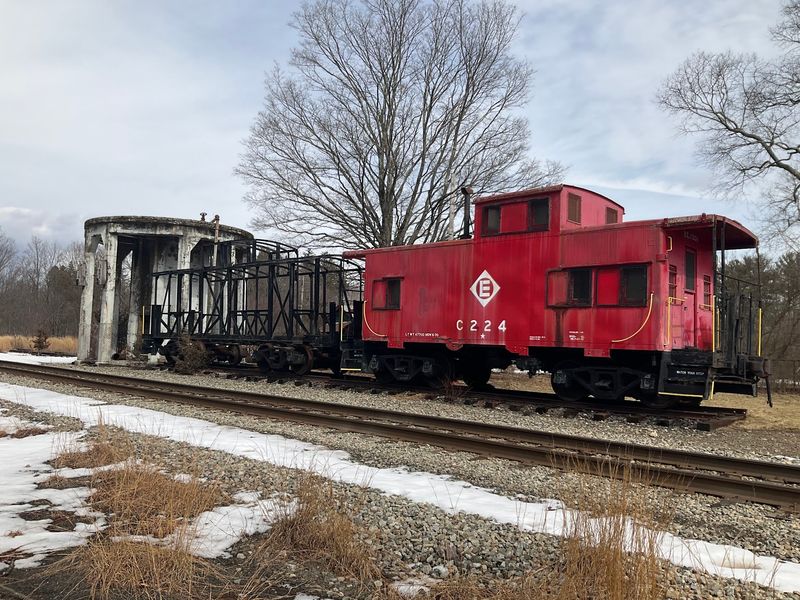
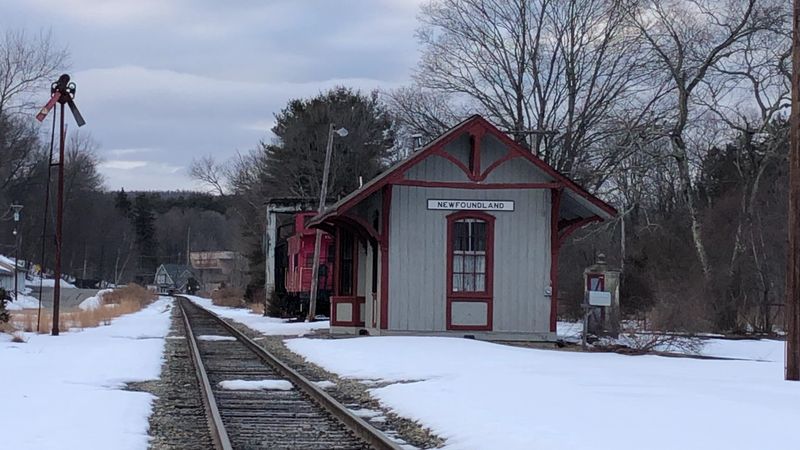
At the landmark, people can find the original wooden station, a concrete railroad phone booth, a red caboose, the skeleton of a caboose, supports for a water tower, and a very small crane car. Each item adds a different clue about how the area functioned when the railroad had a larger presence here.
The red caboose has its own specific note. It is a 1946 Dunmore named for the Erie Railroad shops where it was constructed.
That kind of detail gives the caboose more meaning than a simple photo stop.
Another piece of the site’s history has moved on. Morris County Central Coach No. 1001 sat here for many years, but it was removed in 2021 and can now be found at the Whippany Railway Museum.
A small freight depot once stood halfway between the station and the road crossing, but it was removed sometime in 1970. Even the missing pieces help tell the story, because they show that today’s compact landmark was once part of a busier railroad setting.
The Track That Still Matters
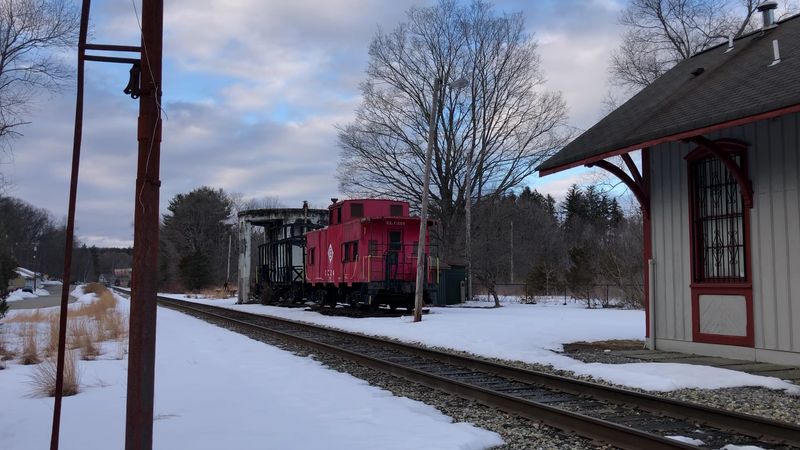
Railroad places can become frozen in the past, but Newfoundland RR Station still has a living connection to rail use. The line beside the station remains active for freight, which gives the landmark a practical link to its original purpose.
The track still uses wooden ties, though it has been upgraded with continuous welded rail. That combination points to a site where old and current railroad needs overlap in a visible, grounded way.
Historic photos of the area show that there used to be two tracks here, while only a single track remains today. That change is a simple way to understand how the railroad footprint has narrowed over time.
The site is smaller now, but it has not been fully cut off from rail activity.
Because the line is still used for freight, common sense matters. The track is not a playground, and the best visit is one that respects the active railroad setting.
Staying clear of the rails is part of treating the landmark properly.
For railfans, the active line adds a different kind of interest than a fully retired display. For movie fans, it adds a reminder that the station was not created for a film set.
It belonged to the railroad first, and that fact still counts.
A Short Stop With A Long Memory
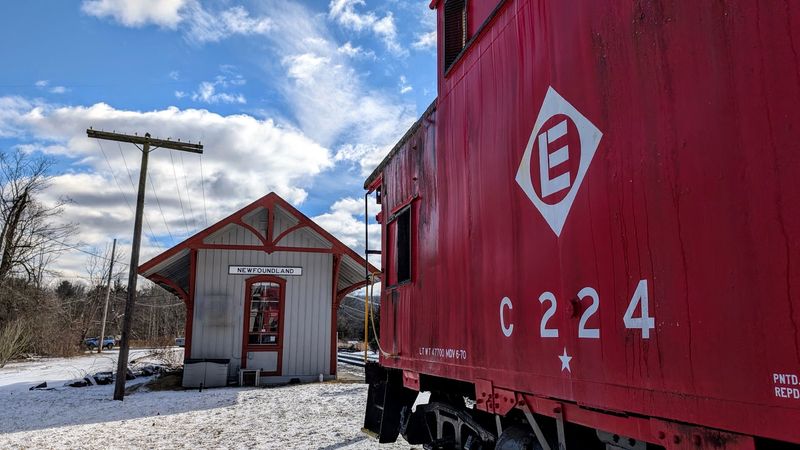
Nobody needs to pretend this is a giant attraction. Newfoundland RR Station is a small location, and that honesty is part of planning a good visit.
People who arrive expecting a major railroad museum may leave puzzled. People who arrive for a compact movie landmark, a historic depot exterior, and a few railroad features are far more likely to understand the appeal.
The stop works especially well as part of a local outing or a route through the area. It does not require a complicated schedule, and it does not ask for much beyond curiosity.
A quick walk around the accessible portions of the site can cover the main features.
The movie connection gives the place emotional pull for fans of The Station Agent, while the railroad background gives it substance for people who care about New Jersey transportation history. That mix is the reason it continues to draw attention after so many years.
Small places often survive in public memory because they connect to something larger. Here, the larger story includes an 1872 railroad station, the New York, Susquehanna, and Western line, freight activity, and a film that keeps sending new people to Newfoundland.
A Better Visit After The Station Agent
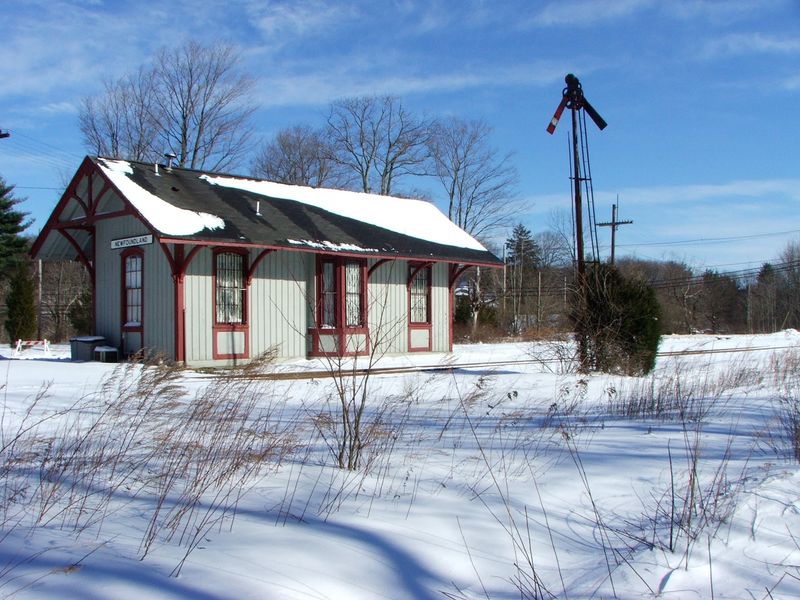
The smartest homework for this trip is not difficult. Watch The Station Agent before going, because the film gives the station its modern context and makes the small details feel more connected.
The 2003 film follows a small story built around three characters facing major life changes and gradually learning how to share space with one another. The station is part of that world, which is why fans keep linking the real place to the movie long after the credits end.
Arriving after the film helps set expectations. The depot is not a theme attraction, and the visit is not built around official movie displays.
The satisfaction comes from recognizing a real location that helped anchor the story.
That approach also helps explain why people who are not railfans still seek it out. The movie made the idea of an abandoned train depot feel specific and memorable, and the fact that the place is real gives the trip a simple payoff.
New Jersey has plenty of film connections, but this one feels especially local because the site remains modest. The station does not need to perform.
It just needs to be there, and for fans of the film, that is enough to make the detour count.
Railfans And Film Fans Under One Roofline
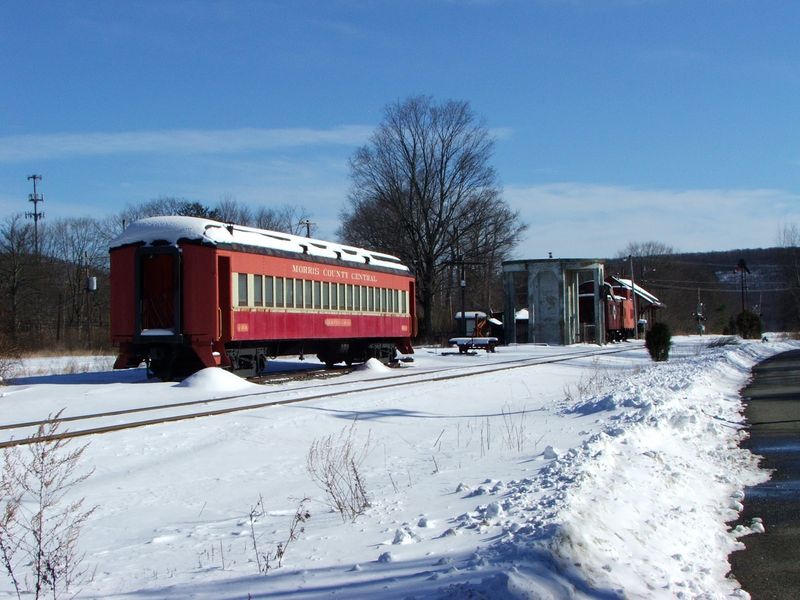
Different kinds of people come to this little depot for different reasons, which is part of its quiet staying power. One person may care about the New Jersey Midland Railroad, while another is there because of a favorite indie film.
Railfans can focus on the station’s 1872 origin, the NYS&W connection, the remaining freight line, the caboose, and the smaller railroad features. Movie fans can focus on The Station Agent and the way the location still connects to the film’s identity.
Families with train-interested kids may also find it worthwhile, as long as the stop is framed accurately. It is a small outdoor landmark with railroad objects to observe, not a hands-on attraction.
That distinction keeps expectations fair and the visit smoother.
The site also suits people who enjoy quick New Jersey history stops. It can be appreciated without turning the day into a long itinerary, and it offers enough background to reward a little reading before arrival.
Not every landmark needs to be big to serve multiple audiences. Newfoundland RR Station manages to speak to film buffs, local-history readers, railfans, and curious North Jersey day-trippers, all while remaining a compact stop in a town many people might otherwise pass by.
Free Access And Simple Logistics
Practical details are refreshingly simple here. Newfoundland RR Station is listed as open 24 hours every day, and the site is free to walk around and explore.
The station building itself is not open to the public, so the visit should be planned as an exterior stop. That means no indoor exhibits, no admission desk, and no need to budget for entry.
The main cost is the time it takes to get there.
Parking is straightforward in normal conditions, with a nearby gravel lot mentioned as the easiest option. When snow covers that area, parking along Bigelow Road has been noted as an alternative.
As with any roadside stop, it is wise to keep access clear and avoid blocking local movement.
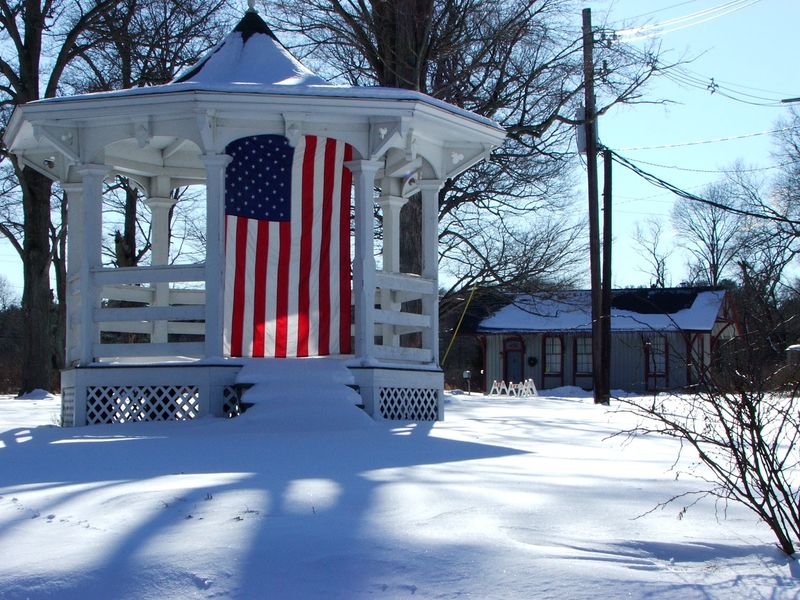
The gazebo is a useful marker for finding the station. Look for it, then the station sits behind it.
That cue is helpful because the site does not operate like a large attraction with a dramatic entrance.
A visit can be short, so it works best when folded into a broader day in the area or treated as a focused pilgrimage for the film. Bring realistic expectations, respect the active rail setting, and the logistics stay pleasantly uncomplicated.
A Modest New Jersey Movie Pilgrimage
The final appeal of Newfoundland RR Station is that it does not try to be bigger than it is. That restraint makes the place more interesting, not less.
Fans of The Station Agent come because the movie made the depot matter, and the real site still offers a direct connection to that story. Railroad history followers come because the station reaches back to 1872 and carries ties to the New Jersey Midland and the New York, Susquehanna, and Western Railroad.
The landmark is best for people who appreciate small, specific New Jersey places. It is not a full-day destination, and it is not loaded with interpretation.
A few people may wish for more historical information on-site, which is understandable given the number of details tied to the station.
Still, the station has a clear identity. It is a preserved wooden depot, a film location, a railfan stop, and a reminder that New Jersey’s quieter corners often hold stories with surprising reach.
That is the soft verdict: go for the film connection, stay a little longer for the railroad history, and leave with a better reason to defend New Jersey’s small landmarks. Newfoundland RR Station may be tiny, but its place on the map feels well earned.
A Small Landmark In Newfoundland
Newfoundland RR Station sits in Newfoundland, NJ 07435, in northern New Jersey, where a modest railroad site has become a steady stop for film fans and railroad history followers.
The place is listed as a historical landmark, and that simple label fits it well. It is not a museum with ticket counters, guided programs, or a packed schedule.
The appeal comes from the station building, the railroad pieces around it, and the fact that the location remains tied to a specific chapter of New Jersey film culture.
The station is easy to identify once someone knows what to seek. A gazebo nearby helps point the way, with the station positioned behind it.
That small detail has become part of the modern pilgrimage, especially for people arriving because of the movie connection.
Newfoundland itself gives the stop a grounded North Jersey feel rather than a polished tourist setup. The station is compact, direct, and best approached with realistic expectations.
It rewards people who enjoy places with a specific story rather than a full afternoon of programmed activities.
For New Jersey residents, that may be exactly the charm. The site proves that an ordinary-looking local landmark can carry railroad history, movie history, and a surprising amount of state pride in one small package.
Share this story