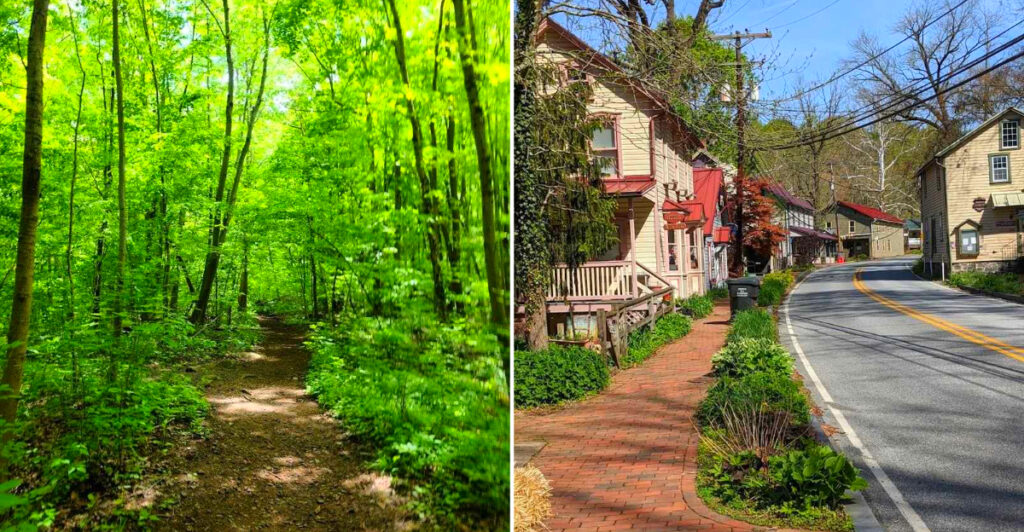
Towering boulders, rushing creek water, wooded hiking trails, a natural swimming hole, and a beautifully preserved 19th-century village come together in one unforgettable corner of Chester County. Visitors come for dramatic rock formations, scenic woodland walks, peaceful creek views, historic stone buildings, artisan shops, and one of Pennsylvania’s most beloved bakeries, all within an easy afternoon adventure. It’s the kind of place where every turn reveals another reason to slow down and explore a little farther.
The experience extends far beyond the hiking trails. Rich industrial history, spectacular geology, family-friendly creek access, local artisan businesses, delicious homemade baked goods, and the timeless atmosphere of a preserved village have made this one of Pennsylvania’s most rewarding outdoor destinations. Few places blend nature, history, and small-town charm as effortlessly as this one.
Here’s why Saint Peters Village Hiking Trails has become one of Pennsylvania’s most memorable hiking destinations and one of Chester County’s most enchanting hidden gems.
A Timeless Address Tucked Into Chester County
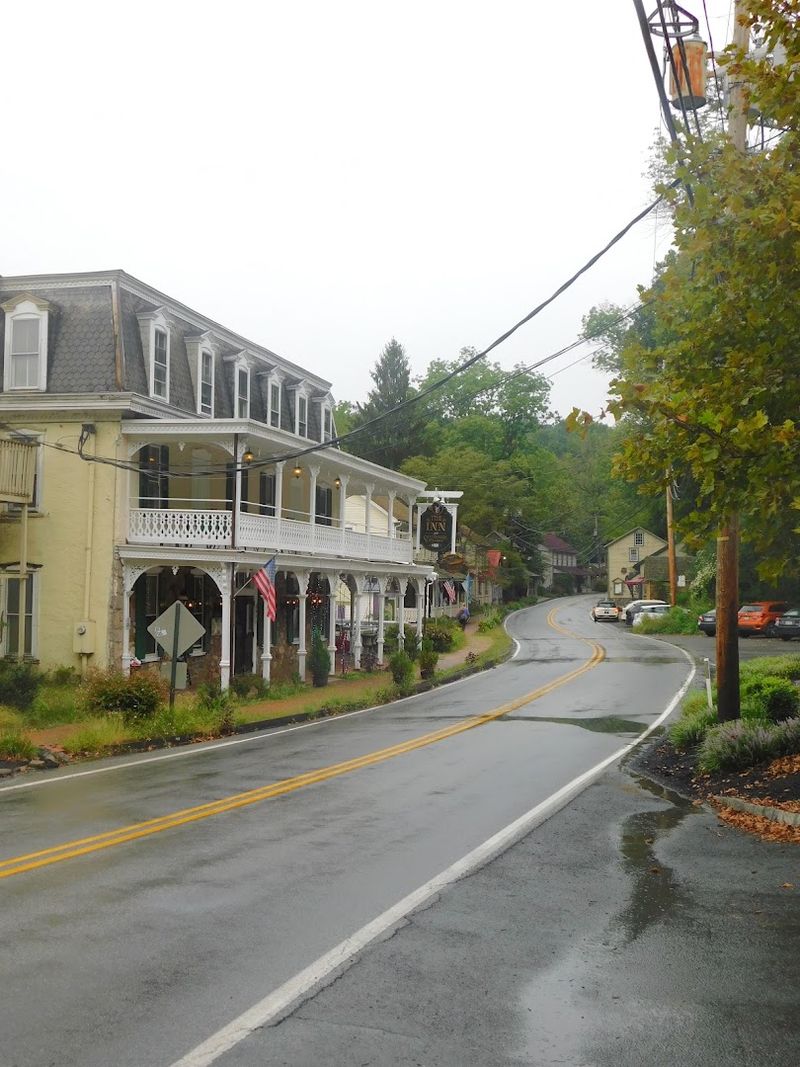
Most GPS devices will guide you to 3033 St Peters Rd, Elverson, PA 19520, but the moment you turn onto that narrow road and the tree canopy closes overhead, the address starts to feel almost irrelevant. Saint Peters Village sits in Warwick Township, Chester County, Pennsylvania, cradled within the Hopewell Big Woods and threaded through by French Creek.
The village occupies a tight ravine carved by the creek over thousands of years, and the result is a setting that feels both dramatic and intimate at once. Stone buildings line a quarter-mile stretch of road, most of them constructed from locally quarried diabase, which gives the whole place a dark, sturdy, permanent quality.
Parking is available in a gravel lot near the end of the shop row, and from there the trailhead is just steps away. The trails are open 24 hours a day, every day of the week, and there is no admission fee, which makes spontaneous visits wonderfully easy.
French Creek and the Boulders That Define the Landscape
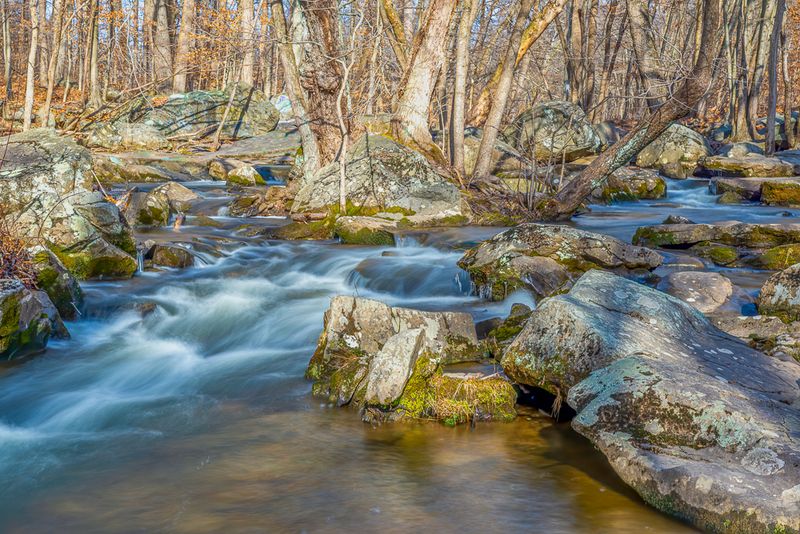
French Creek does not meander politely through Saint Peters Village. It charges through a corridor of massive diabase boulders, splitting into narrow channels, tumbling over stone ledges, and pooling in cold, clear hollows that invite wading on warm afternoons.
The boulders themselves are the geological signature of this place. Diabase, sometimes called black granite locally, is an extremely hard igneous rock that resists erosion far better than the surrounding stone. When the softer material wore away over millennia, these dark giants were left behind, some reaching the size of a compact car and others considerably larger.
The result is a streambed that looks almost theatrical, full of texture, shadow, and the constant sound of moving water. Rock-hopping from one boulder to the next is genuinely fun for visitors of all ages, though wet surfaces can be slippery, so sturdy footwear matters more here than on any ordinary trail. The creek has a way of making every visit feel like a small adventure.
The Swimming Hole With a Rope Swing
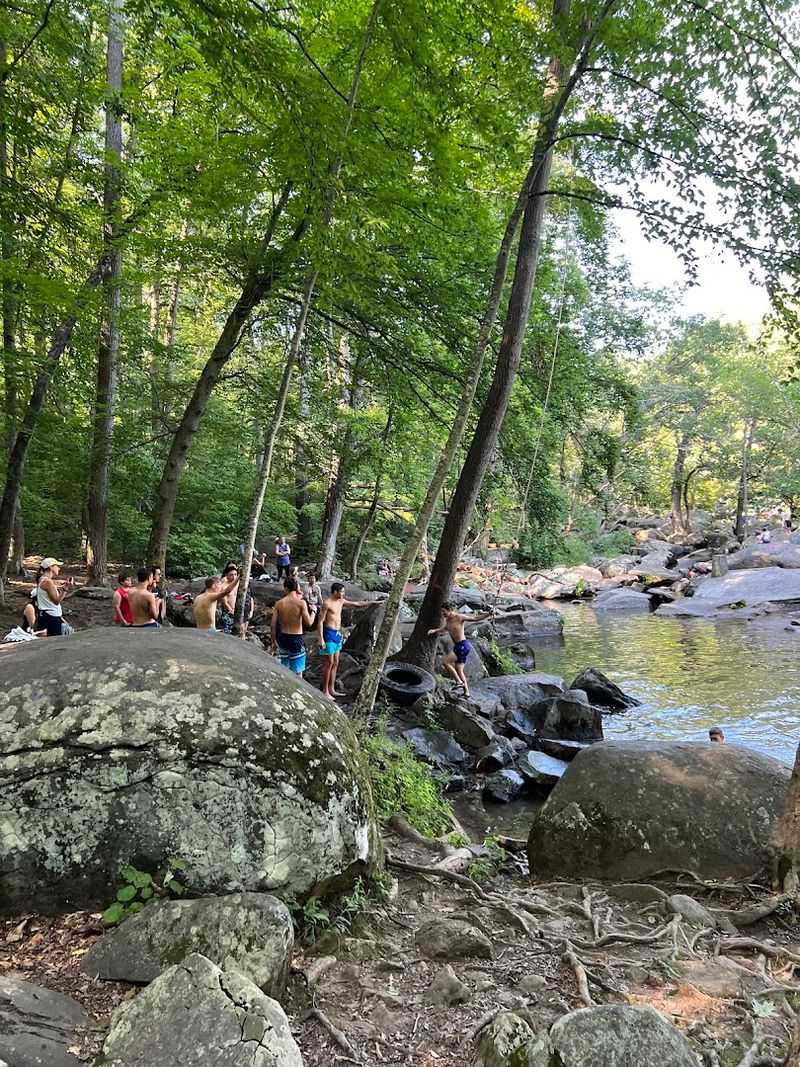
Follow the creek trail to the left after crossing the bridge at the trailhead, and the path rewards you with one of the most satisfying outdoor destinations in the region: a natural swimming hole roughly four to five feet deep and about twenty feet wide, complete with a rope swing hanging from a tree overhead.
The water runs cold even in midsummer, fed by the shaded creek and the deep pools between boulders. That chill makes it especially refreshing after a hot, rocky hike, and the rope swing adds a playful element that draws families back season after season.
Near the trailhead and parking area, a shallower section of the creek offers calm wading for younger children or anyone who prefers to keep their feet on the ground. Dogs are welcome on the trails and in the water, and the whole scene has the relaxed, unhurried energy of a place where people genuinely enjoy slowing down. Just remember that the rocks around the swimming hole become extremely slick when wet.
Trail Character: Rocky, Rewarding, and Refreshingly Honest
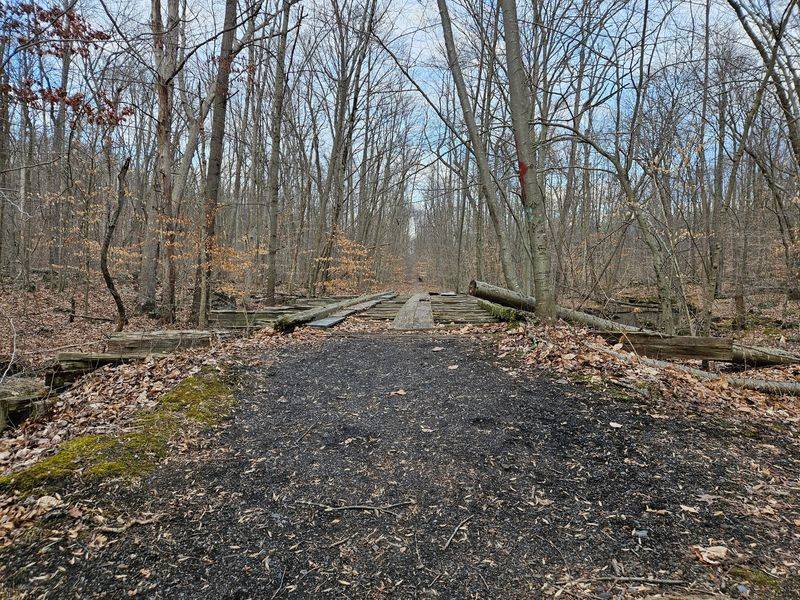
The trails here do not pretend to be anything other than what they are: rocky, root-covered, occasionally muddy, and completely honest about the effort they require. There are no groomed paths with rubber mulch or gentle switchbacks. The terrain demands attention, and it gives back in proportion to what you bring to it.
Difficulty ranges from a casual streamside stroll to more challenging scrambles over boulder fields, making the trail network genuinely usable for a wide range of fitness levels. Families with elementary-age children regularly complete the main creek trail without trouble, while more ambitious hikers can push deeper into the surrounding State Game Lands 43 for longer routes.
One practical note worth emphasizing: there are no official trail markers or posted maps at most junctions, and cell service disappears quickly once you move away from the village. Downloading an offline map before you arrive is a smart habit, and keeping the sound of the creek nearby serves as a reliable natural compass when the path branches unexpectedly. Good boots are non-negotiable.
The Horseshoe Trail and Deeper Woodland Routes
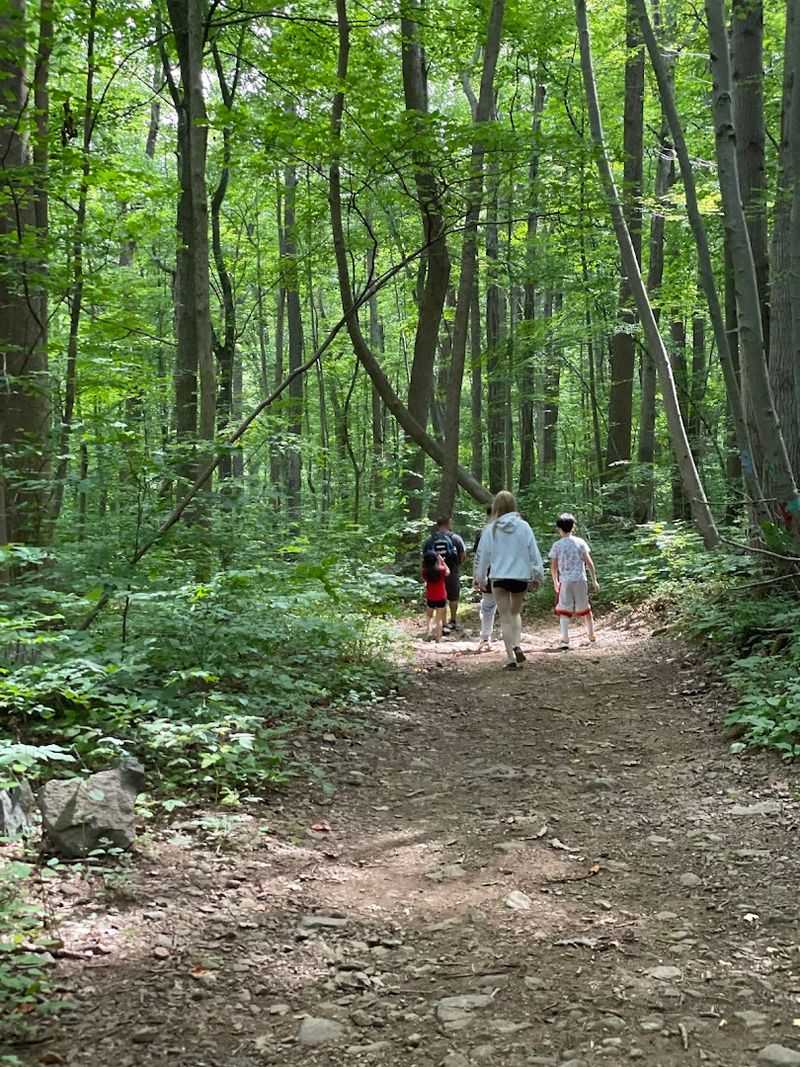
Beyond the immediate creek corridor, a network of longer routes opens up for hikers who want more than an afternoon scramble. The Horseshoe Trail, marked by its distinctive yellow blazes, passes directly through this area as part of its lengthy journey from Valley Forge to the Appalachian Trail, offering a well-established route through the Hopewell Big Woods.
The topside of the trail system, where old railroad beds once carried iron ore and quarried stone, runs relatively flat and makes for a long, peaceful walk through mature forest. The contrast between the rugged creek-level terrain and the gentler upper paths gives the trail network a pleasant variety that keeps repeat visits feeling fresh.
The four-mile Big Woods Trail loop is particularly celebrated in autumn, when the hardwood canopy turns the surrounding hills into a canvas of red, orange, and gold. At the summit of the ridge, an open clearing offers a sweeping overlook and a picnic table, making it a natural stopping point for a rest and a snack before the return descent. That view alone justifies the climb.
Industrial Ghosts Along the Path
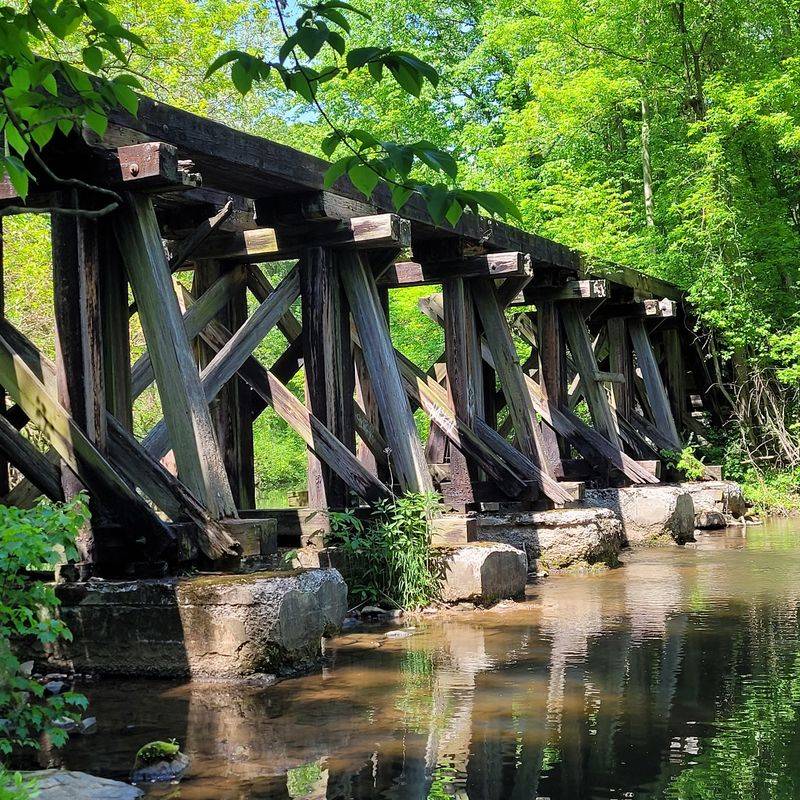
History has a way of surfacing underfoot at Saint Peters Village, sometimes literally. The trails wind past relics of a 19th-century industrial operation that once defined the valley: old railroad beds, stone bridge piers, drill holes pressed into exposed rock faces, and the remnants of a small dam that still crosses the creek in one section.
Iron ore mining along French Creek began around 1845, and the discovery of diabase, marketed as black granite, sparked a quarrying industry that brought railroad spurs and a steady workforce to this narrow valley by 1880. The heavy wooden trestle bridge that still spans the creek is one of the most striking survivors of that era, its massive beams and metal ties holding together with a solidity that feels almost defiant against time.
Mine Run, a tributary that flows underground through rock cavities in places, creates what locals sometimes call an upside-down stream, a genuinely curious geological quirk that rewards curious hikers who pay attention to the ground around them. These industrial remnants transform a simple hike into something closer to a walking history lesson.
The Storybook Main Street Behind the Trailhead
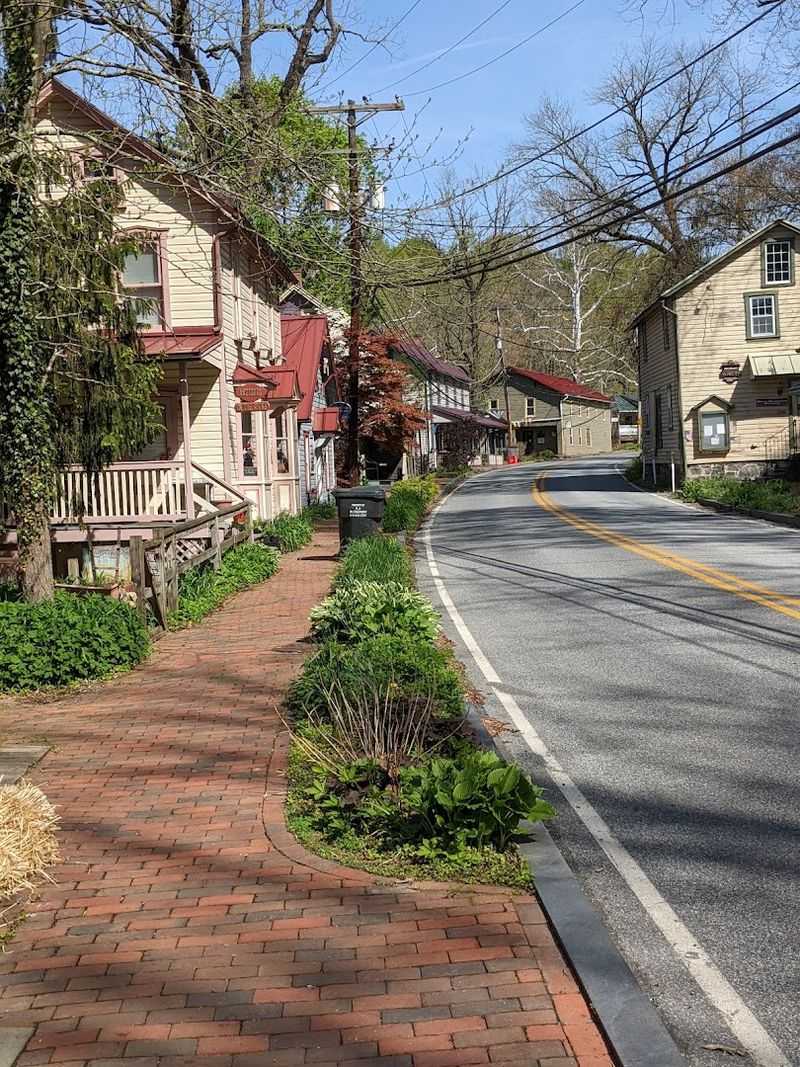
After a morning on the trails, the quarter-mile stretch of St. Peters Road that forms the village’s main street feels like a well-timed reward. The buildings here, most of them constructed from locally quarried stone or timber framing, have stood for well over a century, and the entire village is listed on the National Register of Historic Places as a preserved 19th-century company town.
The street is narrow enough that the buildings feel close and personal rather than grand or imposing, which gives the whole place an intimate, unhurried character. Artisan shops, a vintage arcade, a glassblowing studio, and a celebrated bakery all occupy spaces that once housed workers, managers, and the commercial operations of a working industrial village.
Gaslight Studio is worth a slow visit for anyone curious about the craft of glassblowing, where you can watch molten glass take shape through a process that looks equal parts science and performance art. Classes are available for those who want to try it themselves, and the finished pieces make for a far more interesting souvenir than anything sold in a highway gift shop. The street rewards wandering at a genuinely slow pace.
St. Peter’s Bakery and the Century-Old Starter
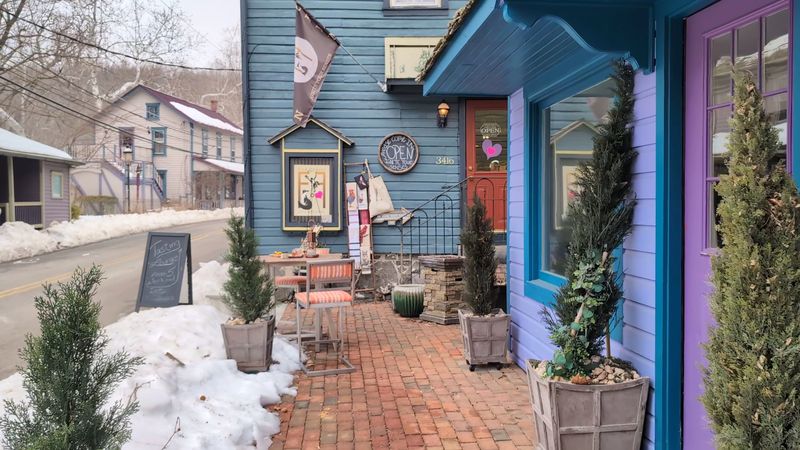
St. Peter’s Bakery earns its reputation quickly. Every item on the menu is made from scratch on the premises, using no preservatives, and the bread and many of the pastries are built on a sourdough starter that is more than a hundred years old. That detail alone is worth pausing over.
The menu covers breakfast and lunch, with fresh pastries, cookies, homemade breads, cakes, pies, and ice cream all rotating through the display cases. On Friday evenings, the bakery shifts gears and offers gourmet pizza accompanied by live music, turning the space into a lively gathering spot that feels completely different from the daytime cafe atmosphere.
The outdoor deck overlooking French Creek is the best seat in the house on a clear day. The sound of the water, the smell of fresh bread, and the view of the boulder-strewn creek combine into an experience that is genuinely difficult to leave. Pack a book or simply sit and watch the creek move, because the bakery has a way of stretching time in the most agreeable possible direction.
The Village Arcade and Its Vintage Machines
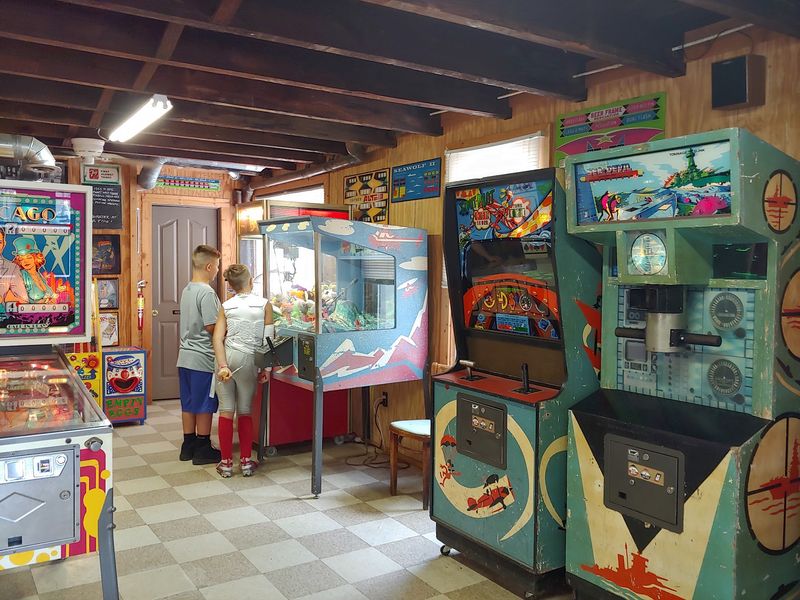
The Village Arcade occupies a spot on the main street that would be easy to overlook if you were in a hurry, which would be a genuine shame. Inside, a collection of vintage pinball machines, primarily from the 1950s through the 1970s, lines the walls alongside other classic arcade games, all of them operational and waiting for a quarter.
There is something immediately disarming about a room full of mechanical pinball machines. The sounds are purely analog: the clack of flippers, the satisfying thunk of a bumper, the rattle of a ball finding its way through a maze of posts and ramps. No screens, no motion sensors, no downloadable updates required.
Kids who have grown up on touchscreens tend to find the machines fascinating rather than dated, and adults who remember them from childhood tend to get quietly competitive in the best possible way. The arcade fits the village’s broader character perfectly: it preserves something from the past not as a museum exhibit but as a living, playable thing. Budget a few dollars in quarters and give yourself permission to stay longer than you planned.
Wildlife, Ticks, and Poison Ivy: The Honest Visitor’s Checklist
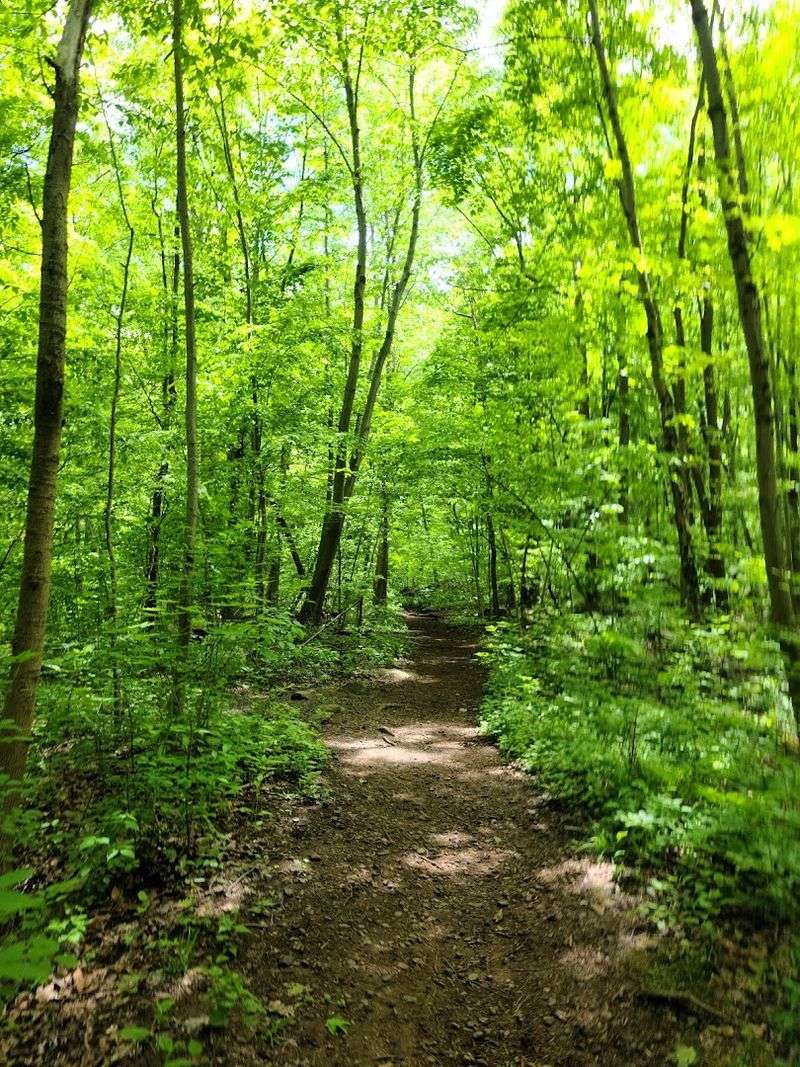
Saint Peters Village is a genuinely wild place, and that wildness comes with a few practical realities that first-time visitors occasionally discover the hard way. Ticks are present throughout the wooded trails, particularly in the warmer months, and a thorough check after any hike is not optional. Checking pets carefully matters just as much as checking yourself.
Poison ivy grows along many sections of the trail, especially near the creek banks and in the understory where the canopy opens up. Learning to identify its three-leaflet clusters before you visit saves a great deal of discomfort afterward. Long pants tucked into socks are genuinely useful here, even when the temperature makes that choice feel unappealing.
Cell service is essentially absent throughout the trail area, so downloading an offline map before leaving the parking lot is a practical step rather than an overcautious one. Some sections of trail become slippery after rain, and the creek rocks are particularly treacherous when wet. None of these factors should discourage a visit, but arriving informed makes the whole experience considerably more enjoyable from start to finish.
Seasonal Rhythms and the Best Times to Visit
Every season applies a different filter to Saint Peters Village, and each one makes a reasonable case for being the best time to visit. Autumn is the most visually dramatic, when the hardwood canopy surrounding the Hopewell Big Woods turns the ridgelines into a display of red, orange, and gold that reflects off the creek surface and makes every photograph look slightly unreal.
Summer brings the swimming hole to life, and the shaded creek corridor stays noticeably cooler than open ground, making midday hikes more comfortable than expected. Weekend visits in peak summer can draw crowds to the parking area, so arriving early on a weekday pays dividends in terms of space and quiet.
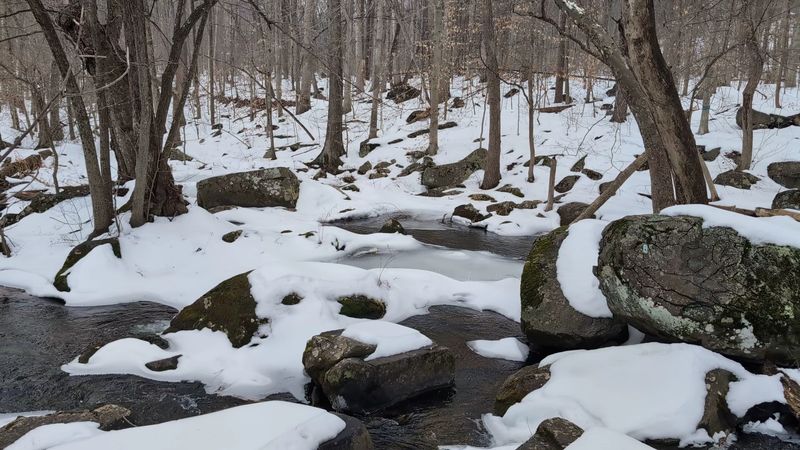
Winter transforms the village into something quieter and almost contemplative. Snow-dusted stone buildings, ice formations along the creek edges, and near-empty trails create a peaceful atmosphere that regular visitors describe as one of the best-kept seasonal secrets in Chester County. Spring brings renewed water flow and fresh greenery, making the creek especially loud and lively. Each season genuinely offers something worth the drive.
Share this story