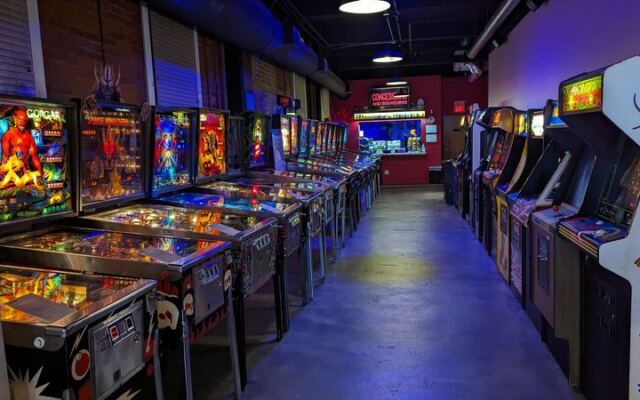
One wristband and one flat admission get you every flipper in the building until closing time. That’s the deal at a Tennessee arcade where one playable pinball machine dates all the way back to 1931.
The collection runs right up to brand-new 2025 tables, lined up by era. Each machine carries a little card explaining when it was built and why it matters.
Then there’s a whole wall of Pac-Man, Galaga, Donkey Kong, and Frogger waiting nearby.
I love the idea of a museum where touching the exhibits is the entire point. No quarters, no tokens, and no sad moment when your last ball drains along with your pocket change.
You just hit start again.
I can’t think of a better plan for a gray afternoon. So how long could you really last before your feet beg for a break?
A Downtown Arcade Wearing a Museum Badge
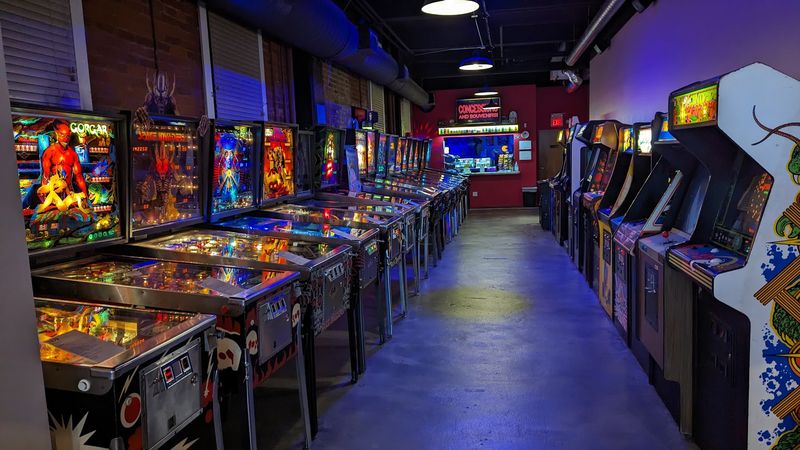
Downtown Chattanooga hides a pretty great surprise on Broad Street. Classic Arcade Pinball Museum sits right in the middle of the city’s busy tourist corridor, packed wall to wall with flashing machines.
The name tells you two things at once. It’s an arcade you can actually play, and it’s a museum that takes the history of these machines seriously.
Most museums ask you to keep your hands to yourself. Here, the whole point is pressing buttons, shaking a cabinet just enough, and chasing a high score on tables older than your grandparents.
The lineup leans heavily on pinball, with roughly two dozen tables spanning nearly a century of design. A row of golden-age video games fills out the rest, so classic joystick fans aren’t left out.
I like how the place manages to feel both nerdy and wildly fun. You get the thrill of a loud arcade along with the quiet satisfaction of learning something.
For Tennessee families hunting for something different downtown, this spot checks a lot of boxes. It’s playful and affordable, with enough history to make you feel smart for showing up.
One Wristband, Zero Quarters, Unlimited Flippers
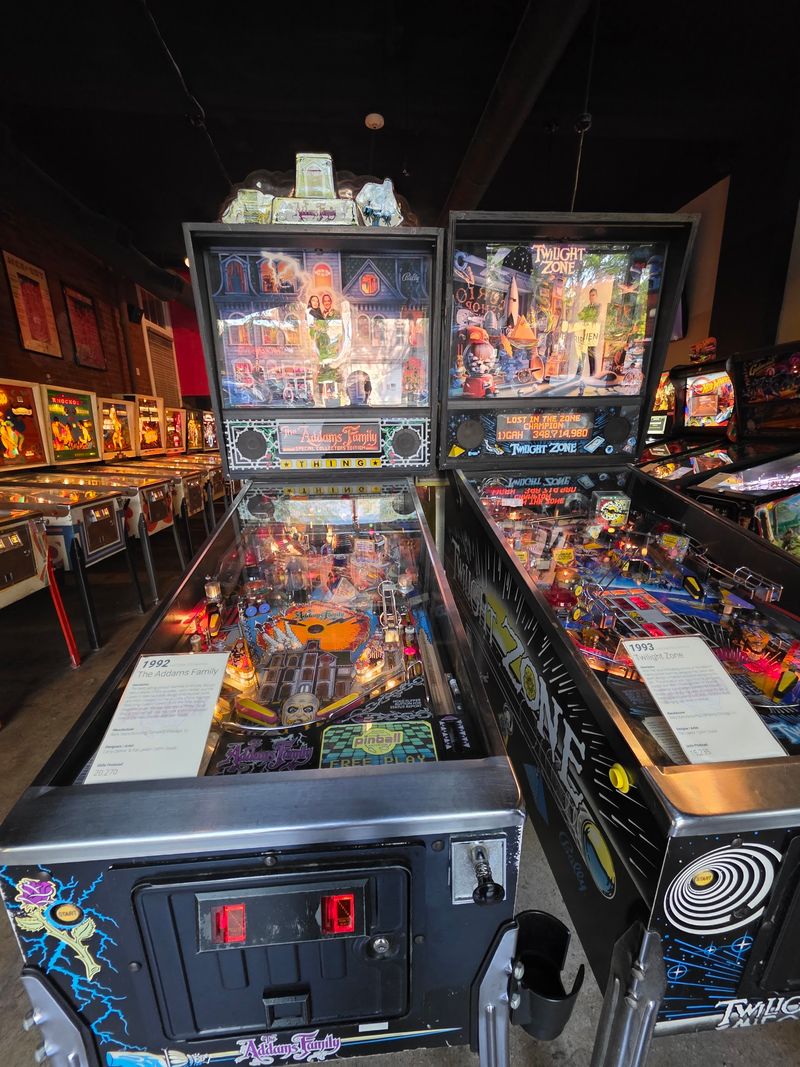
Coins used to be the enemy of a good arcade day. Every bad ball meant another quarter, and every great run ended the moment your pocket ran dry.
Classic Arcade Pinball Museum flips that math on its head. You pay one admission price, slip on a wristband, and every working machine is set to free play.
That changes how you play. A rough game no longer stings, because starting over costs absolutely nothing.
Better yet, the wristband works as a come-and-go pass. Keep it on, head out for lunch or a stroll downtown, then wander back for another round before closing.
Kids get a slightly lower rate than adults, which makes a family outing easier on the budget. Compared with feeding a dollar into each game, a few hours here adds up to a real bargain.
I believe the all-day setup is the secret ingredient. It turns a quick stop into an open-ended afternoon where you can bounce between favorites, try games you’d normally skip, and practice until that tricky ramp finally gives in.
Hang onto that band, though. It’s your ticket back inside.
Nearly a Century of Pinball Under One Roof
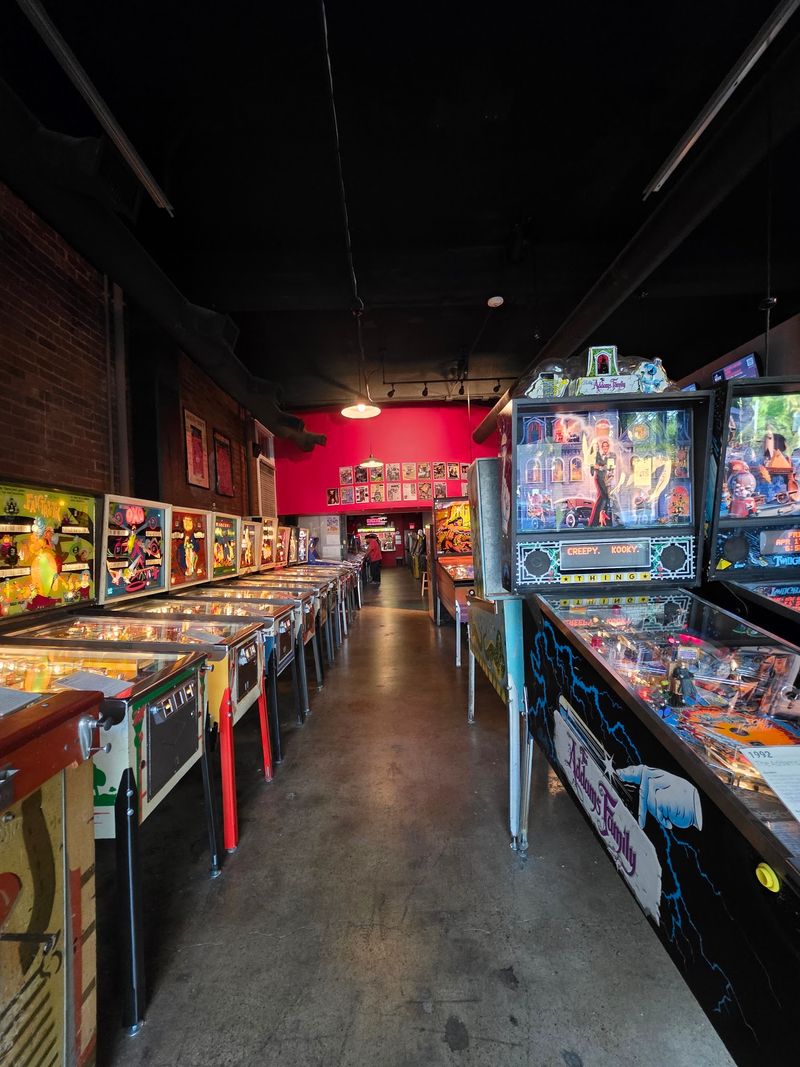
About 25 pinball tables line the floor, and their birth years stretch from 1931 all the way to 2025. That’s a timeline you can literally walk down.
The machines are grouped by type and era, so the room reads like a story. Early wooden cabinets give way to flashy electromechanical tables, which then hand off to modern games packed with lights and sound.
Watching the designs change is half the fun. Scoring reels turn into digital displays, simple bumpers become elaborate ramps, and artwork grows louder with every decade.
Newer tables share the floor too, so this isn’t a dusty time capsule. You can play a modern release, then turn around and try something your great-grandfather might have recognized.
The variety matters for mixed groups. A seasoned player can study the classics while a first-timer gravitates toward the bright, noisy newcomers.
Here’s a fun bit of trivia worth sharing at the next table. Pinball didn’t even have flippers until the late 1940s, so the oldest games played very differently from what most of us picture.
Spotting those changes in person is a small history lesson that never feels like homework.
Old-Timers From 1931 and 1948 Still Ready to Play
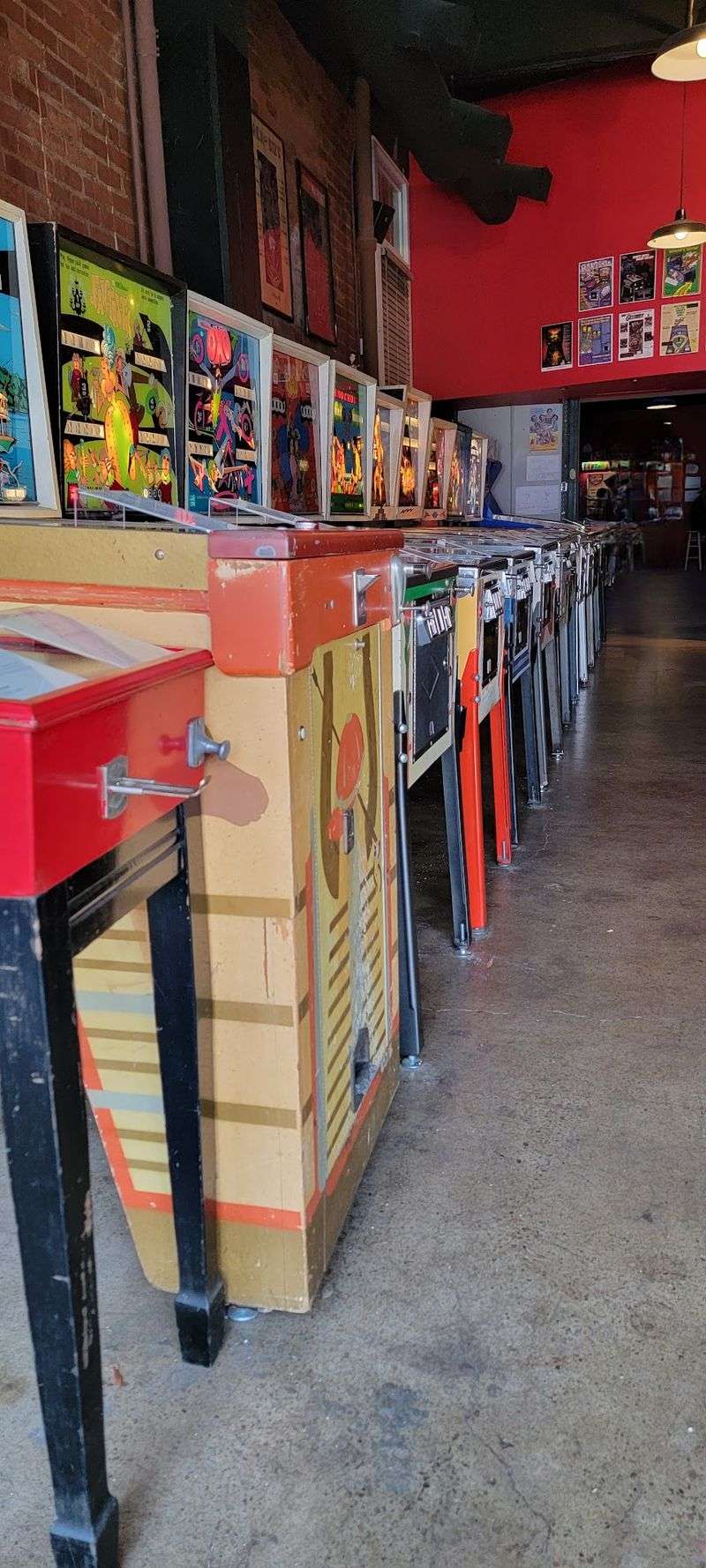
A pinball machine from 1931 sits in this collection, and it still plays. Let that sink in for a second.
That’s the kind of artifact most places would lock behind glass. Here it’s part of the experience, a rare chance to feel how the game worked in its earliest days.
The collection also includes a table from 1948. That puts it right around the era when flippers arrived and pinball started looking like the game we know today.
Playing these old machines is a different rhythm entirely. Everything feels a little more mechanical, a little more patient, and a lot more charming.
I can’t imagine a better way to make history click for kids. Reading about old games is one thing, but pulling a plunger on a machine nearly a century old sticks in your memory.
Classic Arcade Pinball Museum treats these veterans with care rather than just parking them in a corner. Their place in the lineup shows how far the hobby has traveled.
Take your time with them. Older tables reward curiosity, and they make the modern games feel even wilder when you head back across the room.
Little Fact Cards That Make Every Table a Story
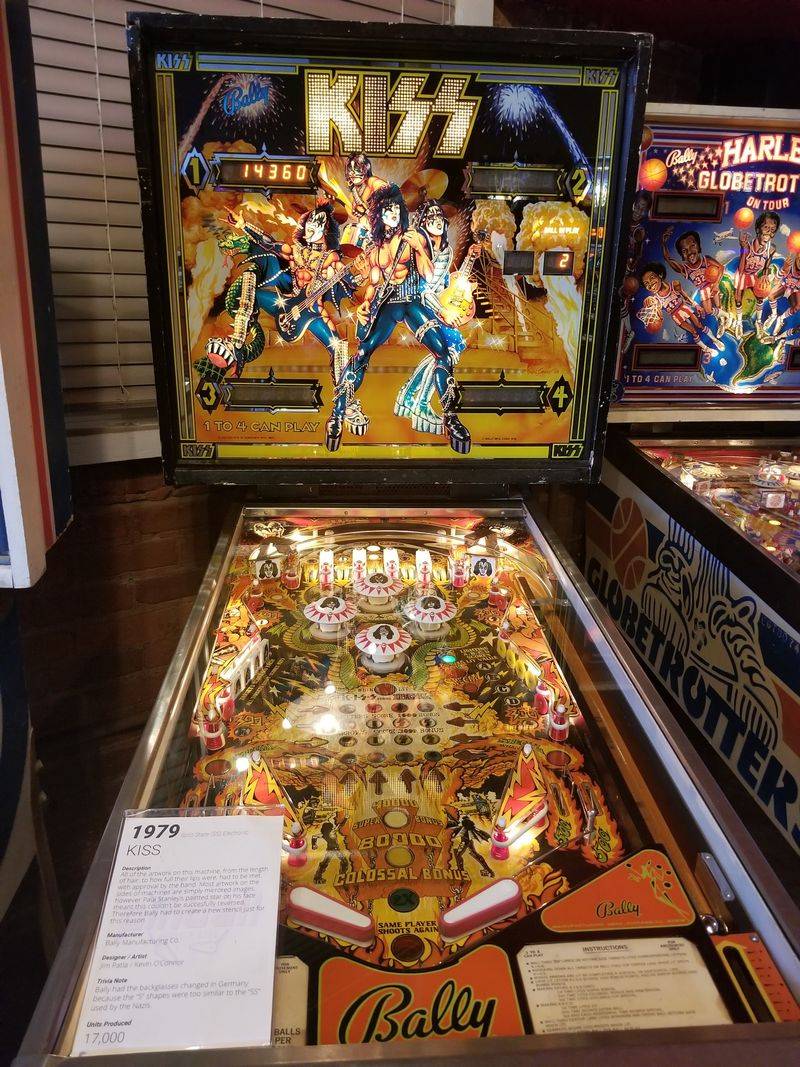
Every pinball machine here comes with its own small biography. A fact card sits with each table, sharing details like its time period and how many were made.
It’s a simple touch with a big payoff. Between games, you can catch your breath and learn why a certain machine became famous or stayed rare.
That’s what earns the museum part of the name. Classic Arcade Pinball Museum gives each game context, so you’re not just playing random cabinets.
History buffs will love reading their way down the row. Casual players might just skim a card or two, then suddenly realize they care about production numbers.
Organized by year and type, the tables tell a bigger story together. You can trace trends in artwork, themes, and technology without ever opening a book.
Parents get an easy teaching moment too. A quick read before a game turns play into a mini lesson about design, engineering, and pop culture from another era.
Honestly, it’s the smartest kind of museum label. Short enough to read in a minute, interesting enough to remember, and placed right beside the fun part.
Pac-Man, Galaga, and a Wall of Golden-Age Legends
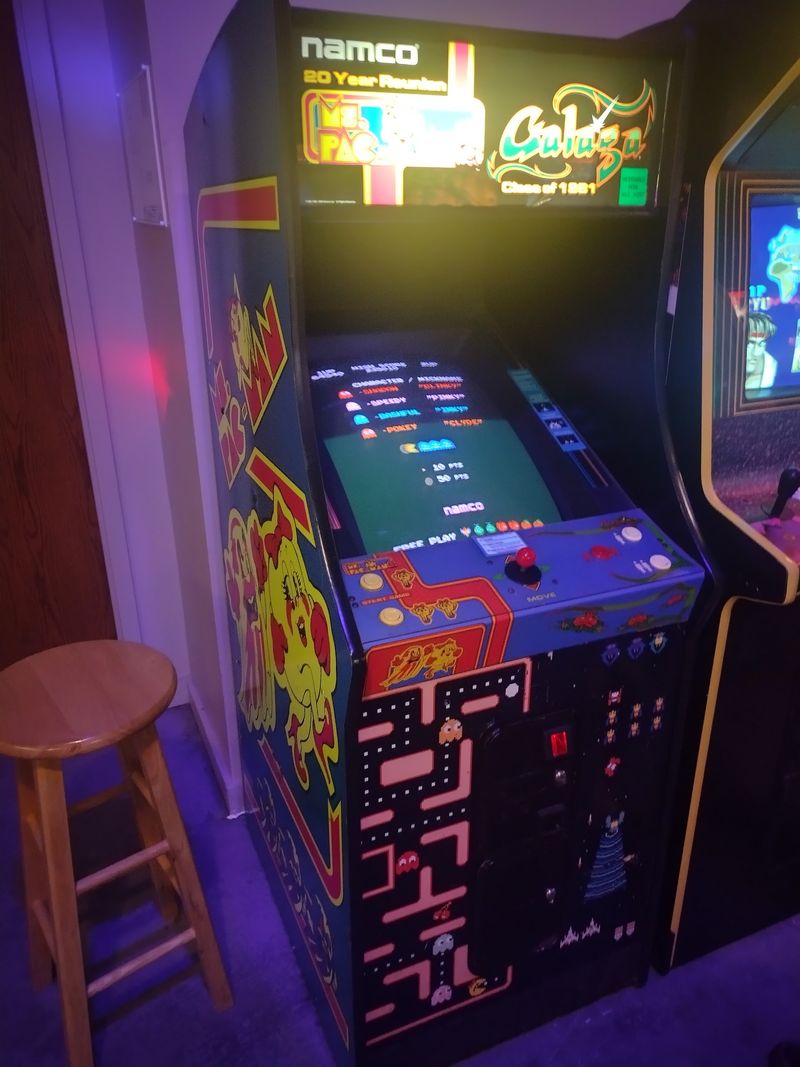
Pinball gets top billing, but the joystick crowd has a whole wall to call home. Classic arcade cabinets line up with names that still sound like the 1980s.
Pac-Man and Ms. Pac-Man are here, ready for your best ghost-dodging strategy. Galaga waits nearby for anyone who still remembers that dual-ship trick.
The roster keeps going with Donkey Kong, Frogger, Centipede, and Dig Dug. Fans of space shooters can also find Tempest, Phoenix, and a Star Wars cabinet.
Because play is unlimited, these games hit differently. You can grind away at a single level until you finally crack it, with nobody tapping your shoulder for a turn on your quarter.
I like how this section bridges generations so easily. Parents can show off old skills, and kids can discover why these simple screens hooked a whole country.
Some cabinets mix retro titles with newer games, keeping the selection from feeling frozen in time. Still, the golden-age classics are the real magnets.
Fair warning for competitive families. Somebody will claim they were the Galaga champ of their neighborhood, and this wall is where they’ll have to prove it.
Tables With Big Personalities Worth Hunting Down
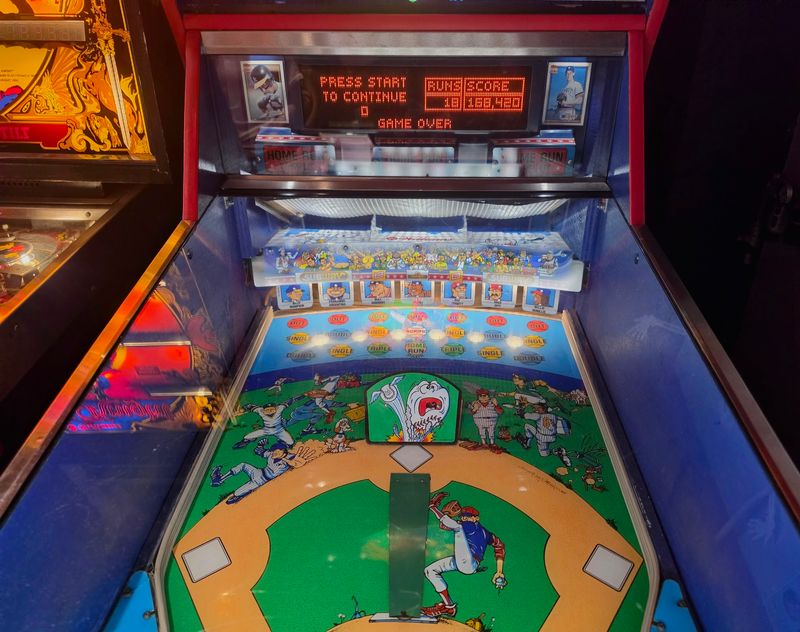
Every collection has its characters, and this one has several. An Elvira table brings campy fun, while a vintage baseball pinball machine is famously tough to master.
That baseball game deserves a warning label. It’s the kind of challenge that seems simple, then pulls you back again and again for one more try.
Galactic Tank Force is another table on the floor, complete with a high score board. Getting your initials up there feels like a minor sports victory.
The fun of a lineup like this is the hunt. You wander, test a table, then find yourself pulled toward one that just clicks with your style.
Since nothing costs extra, you can be bold. Try a theme you’d normally ignore, and you might discover a new favorite you never expected.
Machine lineups can change over time at any arcade, so treat any specific table as a happy bonus. The thrill of discovery is part of the appeal anyway.
Pick a nemesis early. By the end of the day, you’ll either conquer it or promise yourself a rematch on your next trip to Chattanooga.
A Rare Hercules and the One-Game Rule
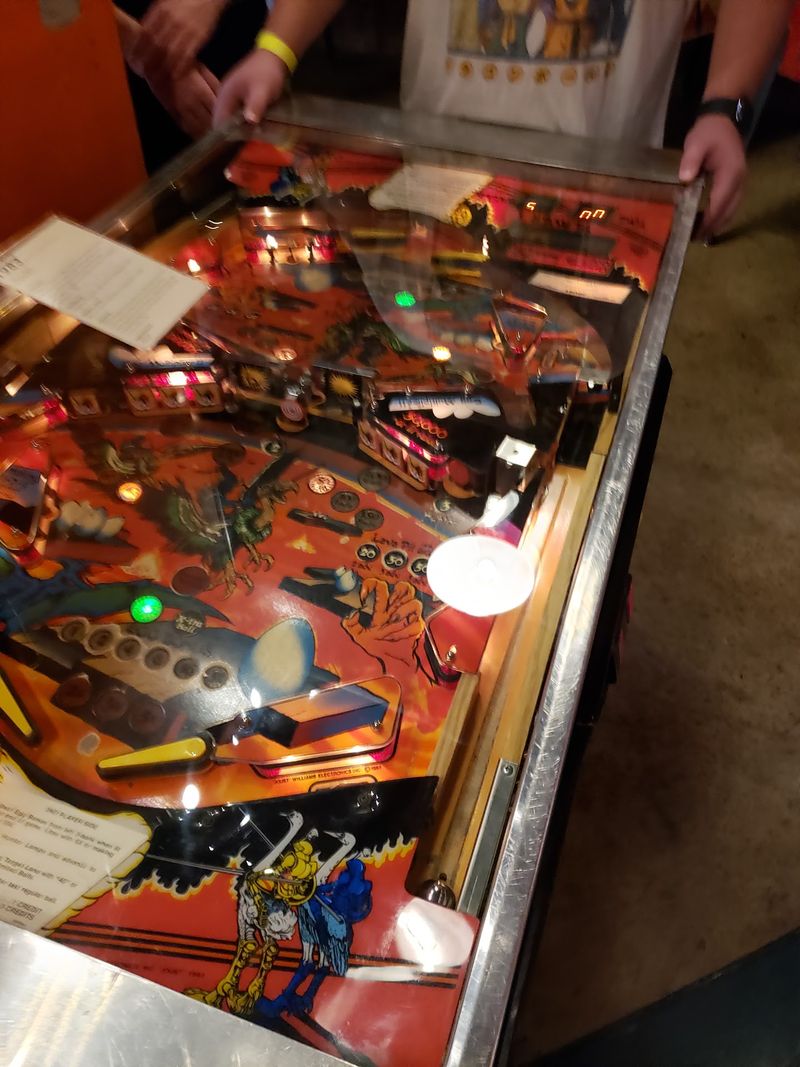
Not every machine is fair game for endless rounds. A few rare tables come with special handling, and that makes them even more exciting.
Among the standouts is a working Hercules pinball machine. Built by Atari in 1979, it’s known as one of the largest pinball machines ever made, with a ball about the size of a cue ball.
Very few still run today, which puts this one in special company. Seeing it in person is a treat even before you touch the flippers.
The rarest machines here may be limited to one play per guest. It’s a smart rule that keeps fragile treasures working for everyone who comes later.
Honestly, the limit adds a little drama. One chance means you slow down, focus, and actually savor every shot.
Classic Arcade Pinball Museum clearly balances fun with preservation here. Letting people play history, while protecting it, is a tricky line to walk.
So save your best concentration for the rare stuff. Warm up on the free-play tables first, then step up to the special ones when your timing feels sharp and your nerves are steady.
Snack Breaks and the Freedom to Wander Out
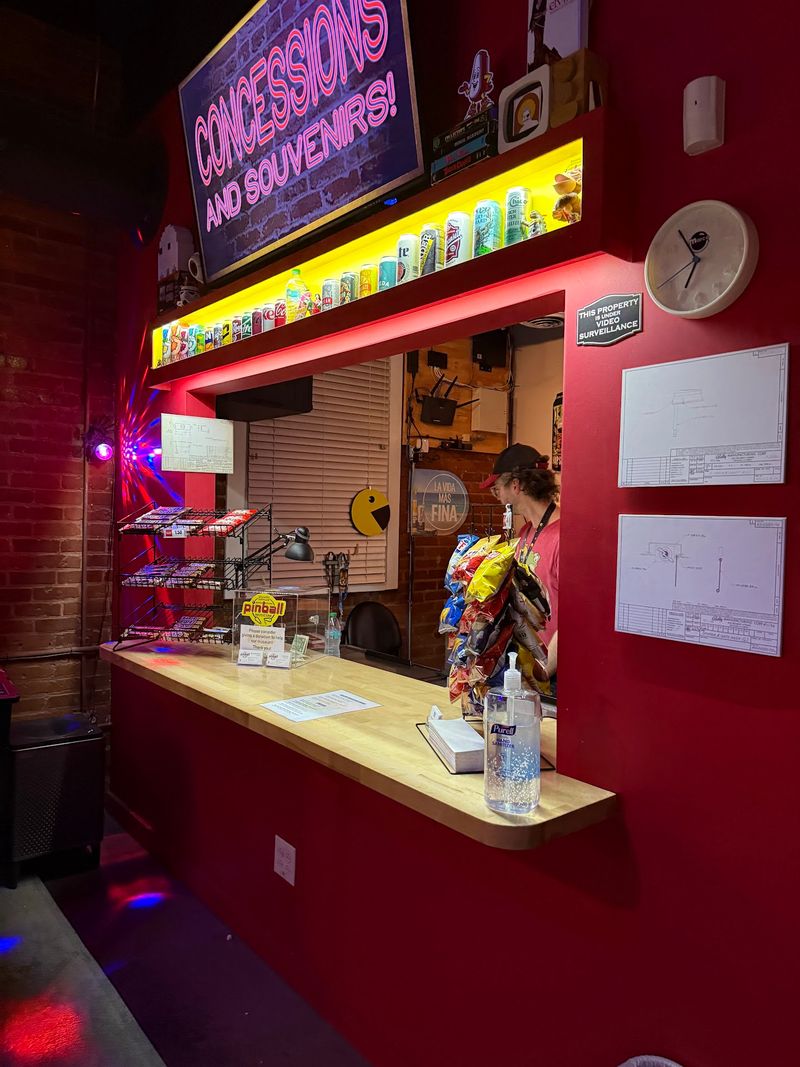
Playing pinball for hours builds an appetite. Luckily, a snack counter toward the back sells snacks and bottled drinks.
The selection is modest, so think quick fuel rather than a full meal. A bag of chips and a cold drink can carry you through another dozen games.
When real hunger hits, the wristband becomes your best friend. You can step out for lunch or dinner downtown, then come right back and pick up where you left off.
That freedom is rare at attractions like this. Most places make you choose between staying put and leaving for good.
Downtown Chattanooga keeps plenty of food options within easy reach, which makes the break painless. A meal outside, a short walk, then round two on the flippers.
I believe that rhythm makes a long visit feel relaxed instead of exhausting. You’re never trapped, and you never have to rush the fun.
One tip worth tucking away. Plan your break around your energy, not the clock, since the machines will still be waiting with free credits when you return.
Friendly Faces and Machines Kept in Fighting Shape
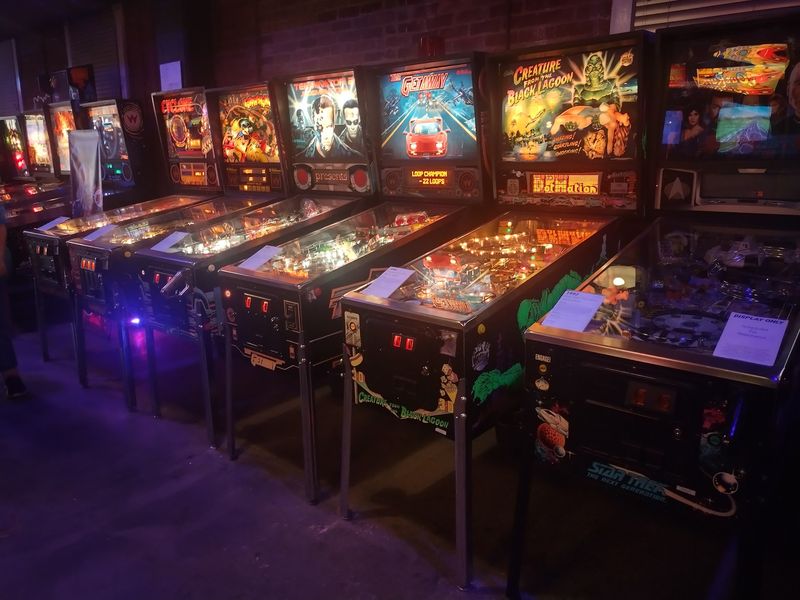
Old machines don’t run on good intentions. They need constant care, and it shows across this floor.
Classic Arcade Pinball Museum keeps its games in strong working order, with only an occasional machine down at any given time. For a collection this old, that’s a real accomplishment.
Well-kept tables matter more than people think. Weak flippers or sticky buttons can ruin a game, while a tuned machine feels crisp and responsive.
The folks running the place add warmth to the clatter. Staff are known for being welcoming, helpful, and happy to talk pinball with anyone curious.
That friendliness helps newcomers relax. If you’re not sure how a vintage table works, a quick question can get you playing faster.
The space is also smoke-free and clean, with tidy restrooms. Anyone who remembers the hazy arcades of decades past will appreciate that upgrade.
All of it adds up to an easy place to spend an afternoon. Good machines, kind people, and a fresh room let the games themselves take center stage, which is exactly how a pinball lover would want it.
Who Will Love It Most (and Who Might Wander Off)
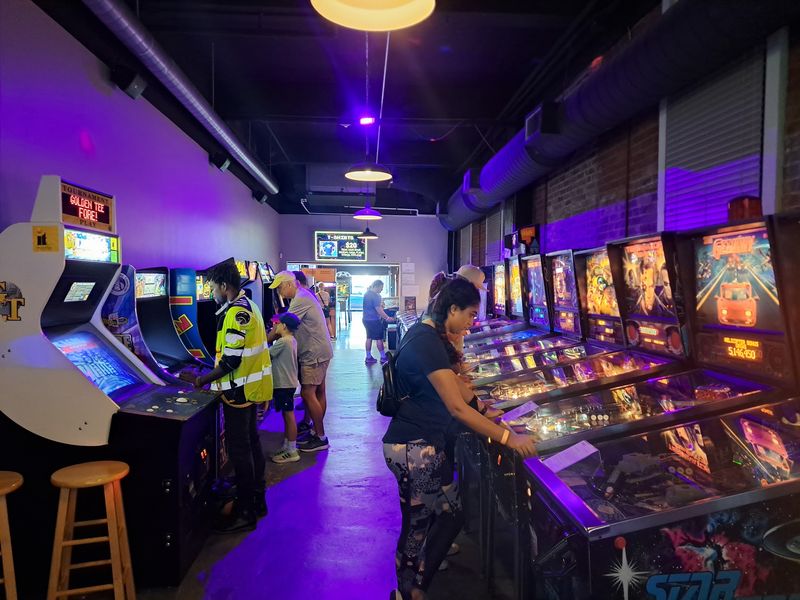
Nostalgia does a lot of heavy lifting here. Anyone who grew up feeding quarters into arcades at the mall or bowling alley will feel right at home.
Parents love introducing kids to games from their own childhood. For many kids, it’s their very first time standing at a real pinball machine.
Friend groups make a strong match too. It’s a playful kickoff for a birthday outing or a night out before dinner downtown.
Teens are a bit of a wild card. Some will lose themselves in high-score battles, while others may lose interest faster than their parents do.
Bringing the right crew helps. Old friends, siblings, or a competitive partner can turn a casual stop into hours of trash talk and rematches.
Even folks who aren’t big pinball fans tend to warm up quickly. The variety and the free replays make experimenting easy and low pressure.
Out-of-town guests are another great fit. If relatives visit Tennessee and you want something beyond the usual sights, this delivers a fun, memorable stop that fits nearly any age group.
Hours, Parking, and Shoes Your Feet Will Thank You For

Timing your trip right is half the strategy. The arcade sits at 409 Broad St, Chattanooga, TN 37402, right in the heart of downtown.
Hours run 1 to 9 PM on Tuesday, Wednesday, and Thursday. Friday stretches to 10 PM, while Saturday opens early at 10 AM and runs until 10 PM.
Sunday hours go from 11 AM to 9 PM. Mondays are closed, so don’t build a road trip around that day.
Paid street parking sits right out front, which keeps things simple. Popping out for a meal and returning is easy with the car nearby.
Comfortable shoes are a must. Pinball is played standing, seating is limited, and legs can get tired after a few hours hunched over the glass.
Saturday offers the longest stretch of play, making it ideal for anyone wanting to squeeze every minute from that wristband. Weekday afternoons are a nice choice for a shorter visit.
Drivers from Nashville, Atlanta, or Knoxville can reach Chattanooga in roughly two hours. That puts this Tennessee stop squarely in easy day-trip territory.
Worth Every Flipper, and Then Some
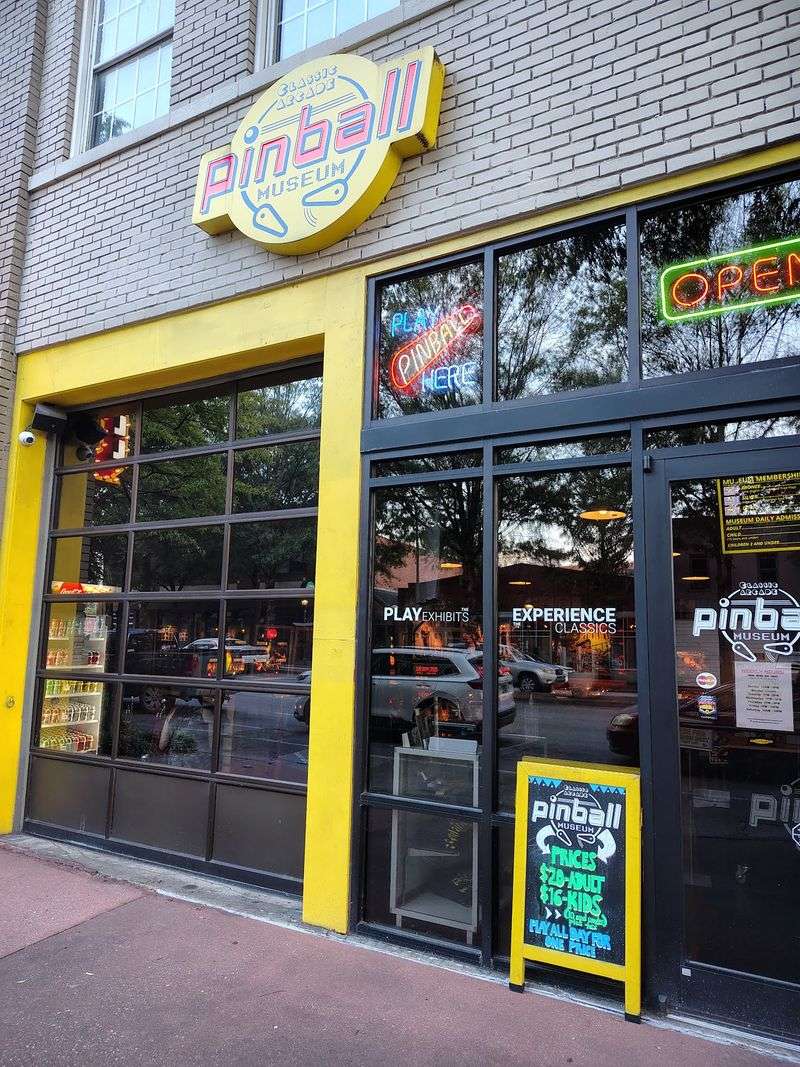
Some attractions eat a whole budget in an hour. This one hands you a full day of play for a single flat price.
Classic Arcade Pinball Museum works because it respects both sides of its name. The games are fun, and the history behind them is shared with real care.
You get a 1931 table and modern 2025 releases under the same roof. Add Pac-Man, Galaga, and a rare Hercules, and the variety speaks for itself.
The come-and-go wristband seals the deal. Leave for lunch, explore downtown, then return for one more shot at that stubborn high score.
It won’t thrill every single teen, and your knees might grumble by evening. Still, those are small trade-offs for this much playful fun.
I believe this is one of the best-value afternoons in Chattanooga. It’s local, quirky, affordable, and packed with personality you won’t find at a big chain arcade.
So grab your crew and pick a day besides Monday. Somewhere on that floor is a machine with your name on it, plus a high score board waiting for your initials.
Share this story