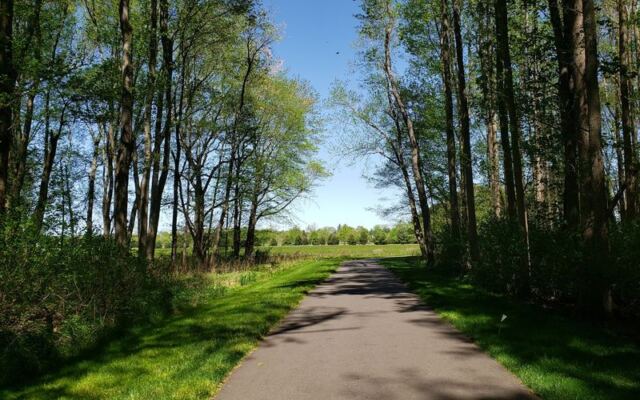
A simple paved path can turn a spare afternoon into a reason to get the bikes out again. In New Jersey, one unassuming trail offers a roughly four-mile round trip through farmland, woods, and open spaces without much climbing.
Its appeal goes beyond the mileage: families can shorten the outing, walkers can set their own pace, and a connected park adds another reason to stay. Here is what makes this straightforward route worth knowing, along with the practical details that help keep the trip simple.
A Local Path With a Park Connection
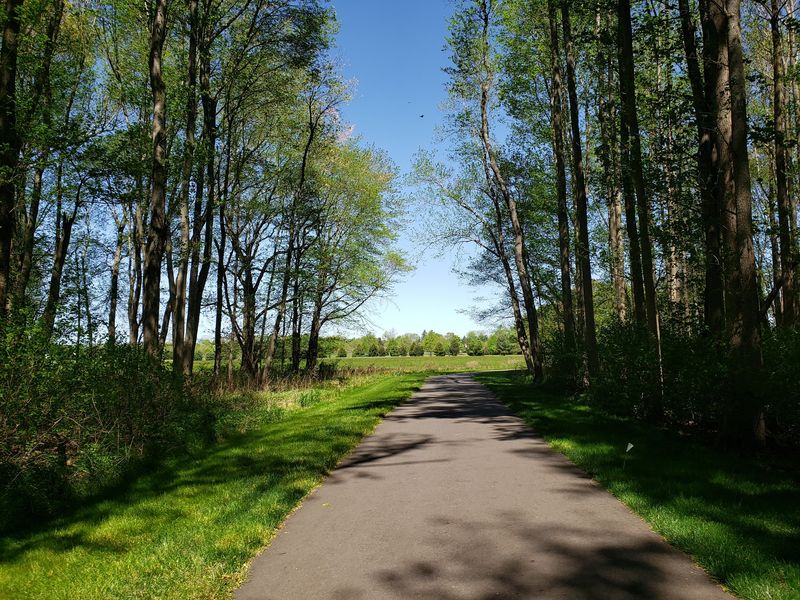
A modest park entrance is the starting point for a ride that reaches beyond the usual recreation grounds. Kinkora Trail is a paved route at 25020 Mt Pleasant Rd, Columbus, NJ 08022, United States.
The path connects the township park with Island Road, passing through farmland, wooded areas, and open spaces along the way. That connection gives the outing a clear shape without requiring a complicated route plan.
Rather than treating the destination as a long-distance cycling challenge, plan around its role as a local place for everyday movement. Walking, running, and biking all fit the route described in the supplied accounts.
The park connection also matters for families who want more than time on a bicycle. Recreation facilities near the route can help turn a short ride into a longer outing, while the trail itself remains the main reason to bring a helmet and get moving.
Four Miles Without a Complicated Route
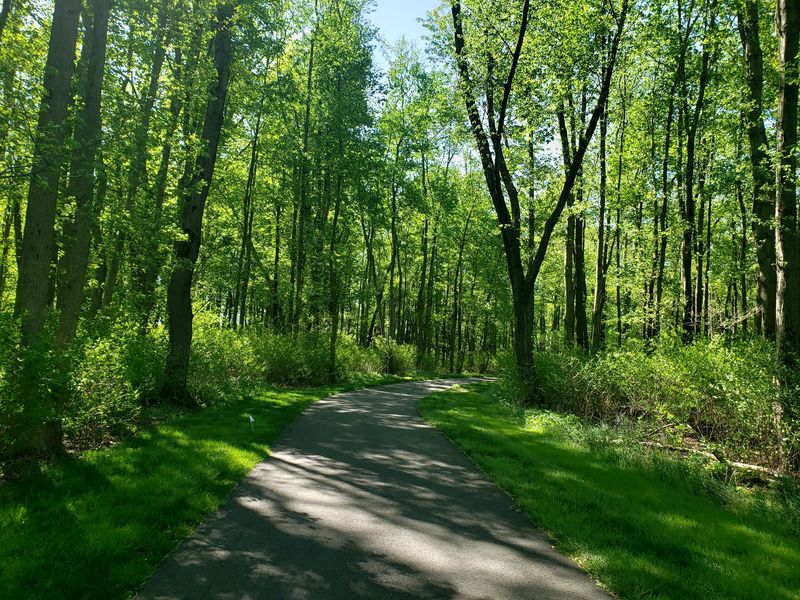
Two miles out and two miles back makes the basic plan easy to remember. The supplied accounts describe an approximately four-mile round trip, with the same path used for the return.
An out-and-back route removes the need to commit to a full loop. Anyone who wants a shorter outing can turn around earlier, making distance a choice rather than a requirement.
That flexibility is especially useful when a group includes different energy levels. Agree on a turnaround point together instead of letting the longest possible ride decide the day.
Keep the four-mile figure approximate, since extra movement around the connected park can add distance. A park lap and the trail ride are not necessarily the same mileage calculation.
The simplest approach is also the most useful here: follow the paved route, keep track of the return distance, and leave enough energy for the trip back to the starting point.
Level Pavement and an Easier Pace
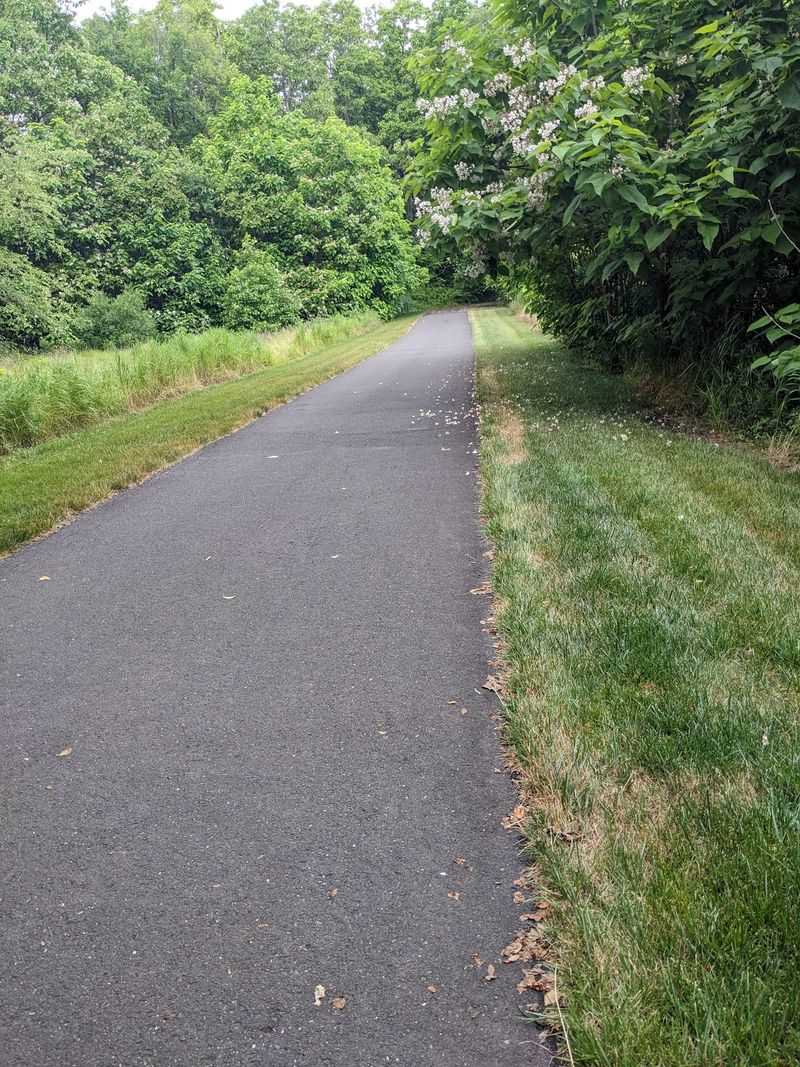
Big climbs are not the attraction here. Accounts consistently describe a paved path with little elevation change, making the route a practical option for people who prefer steady movement over hill work.
The surface is also described as wide, which helps explain its use by cyclists, walkers, and runners. Shared space still calls for attention, especially when someone changes direction or stops.
For a newer cyclist, the combination of pavement and modest terrain can simplify the ride. There is less need to plan around climbing, though every rider should choose a distance that matches their ability.
Accessibility deserves careful wording: a level paved route does not by itself confirm every access feature. The supplied information does not establish details such as grades, curb transitions, or accessible restroom facilities.
Treat the trail as an approachable paved outing, not a promise that every individual access need has already been answered.
Farmland Along the Ride
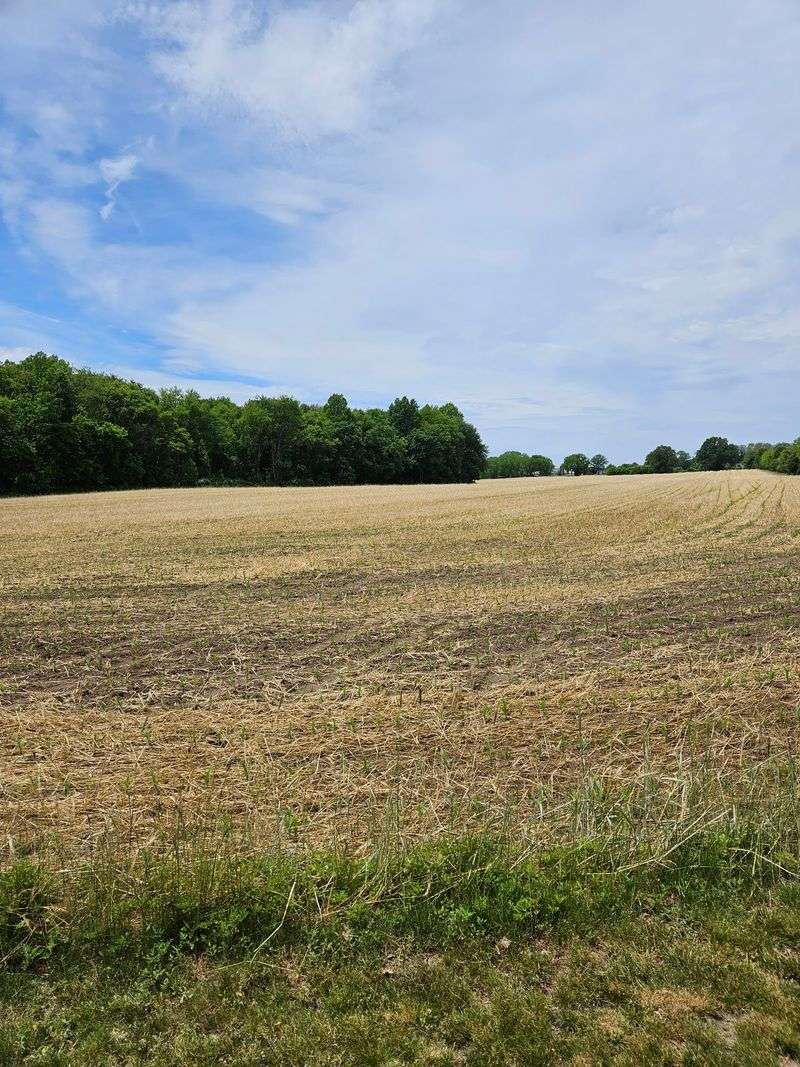
Farm fields give this short route a strong connection to the land around it. Agricultural stretches are a recurring feature in the supplied descriptions, rather than a brief detail at the edge of the park.
For the ride itself, that means portions of the route pass through open country instead of remaining under trees. The setting changes without requiring a detour or a different trail.
Open ground also affects preparation. Shade is not continuous, so bring water and choose sun protection suited to the conditions on the day of the outing.
A field-side trail is best enjoyed from the public path. Keep stops on the route and avoid treating neighboring farmland as an extension of the recreation area.
No crop calendar or working-farm activity is established in the supplied information. The reliable draw is simpler: a paved bicycle outing with farmland forming a meaningful part of the route, not merely its background.
Wooded Stretches Between Open Ground
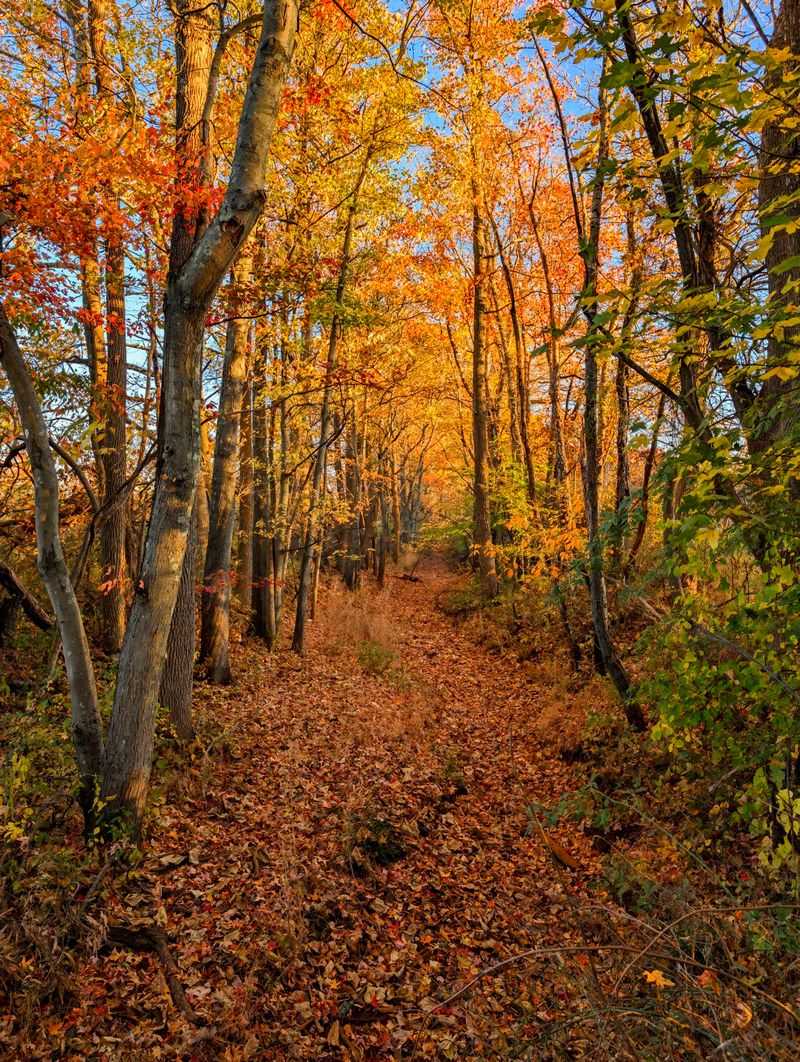
Tree cover changes the character of the outing without changing its basic simplicity. Wooded sections interrupt the open stretches, and the supplied accounts describe a high forest canopy along parts of the route.
Those sections provide some shade, but they should not lead to the assumption that the entire ride is sheltered. Descriptions differ on how much cover the trail offers, so a precise percentage would be misleading.
Plan for both conditions instead. A ride that begins beneath trees can still include a substantial stretch away from them, making preparation more useful than guessing where shade will last.
The woods also add variety to a route that otherwise follows a straightforward out-and-back plan. On the return, the same sections become useful reference points for judging progress.
There is no need to add side trips to keep the outing varied. The changes between tree cover and open land already give the short ride several distinct parts.
Wetlands and Small Wildlife
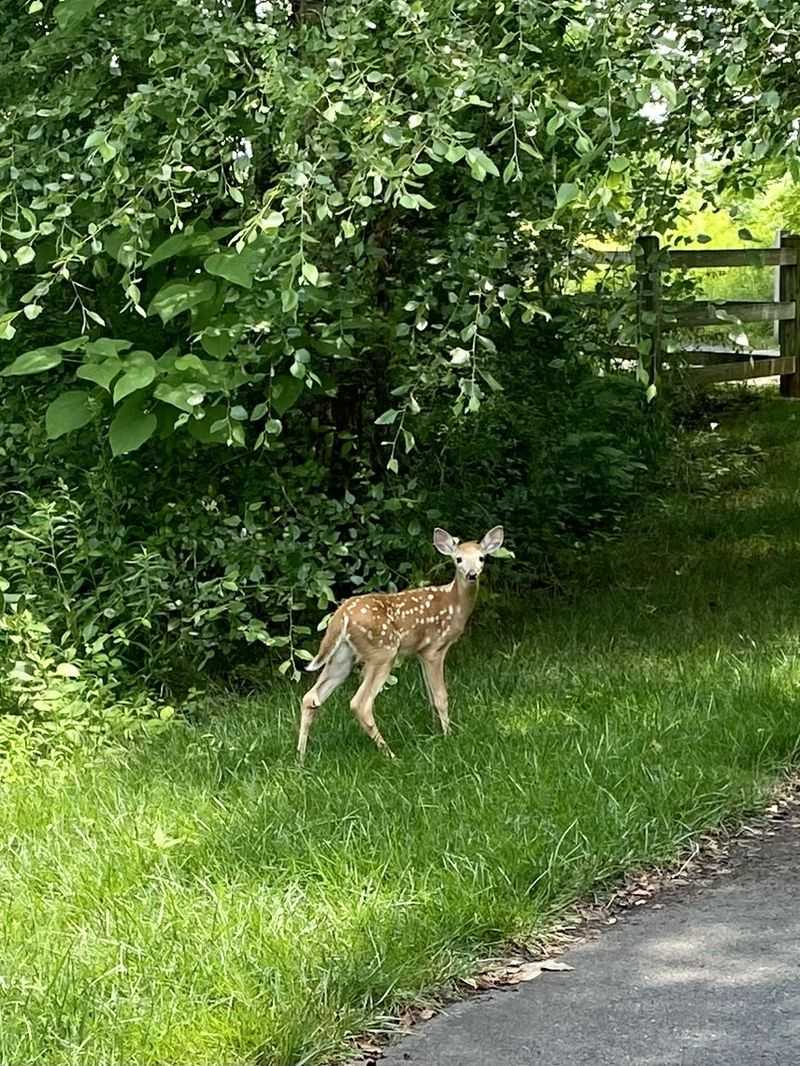
A bicycle does not have to set the agenda for every minute. Freshwater wetlands are included in the supplied trail descriptions, adding another habitat to the mix of fields and woods.
Birding has also taken place here, while butterflies and dragonflies appear in accounts of the route. None of that guarantees a particular species or encounter on a given day.
A slower outing leaves room for brief nature stops without turning the trip into a separate activity. Move aside before pausing, and keep the paved route available for others passing through.
Insect preparation belongs in the plan as well. Mosquitoes have been reported, so carrying suitable repellent is a reasonable precaution rather than an unnecessary extra.
The useful distinction is between opportunity and promise. Kinkora offers several kinds of habitat along one manageable path, but wildlife follows its own schedule, not the timetable attached to a weekend bicycle ride.
Family Time Beyond the Bicycle
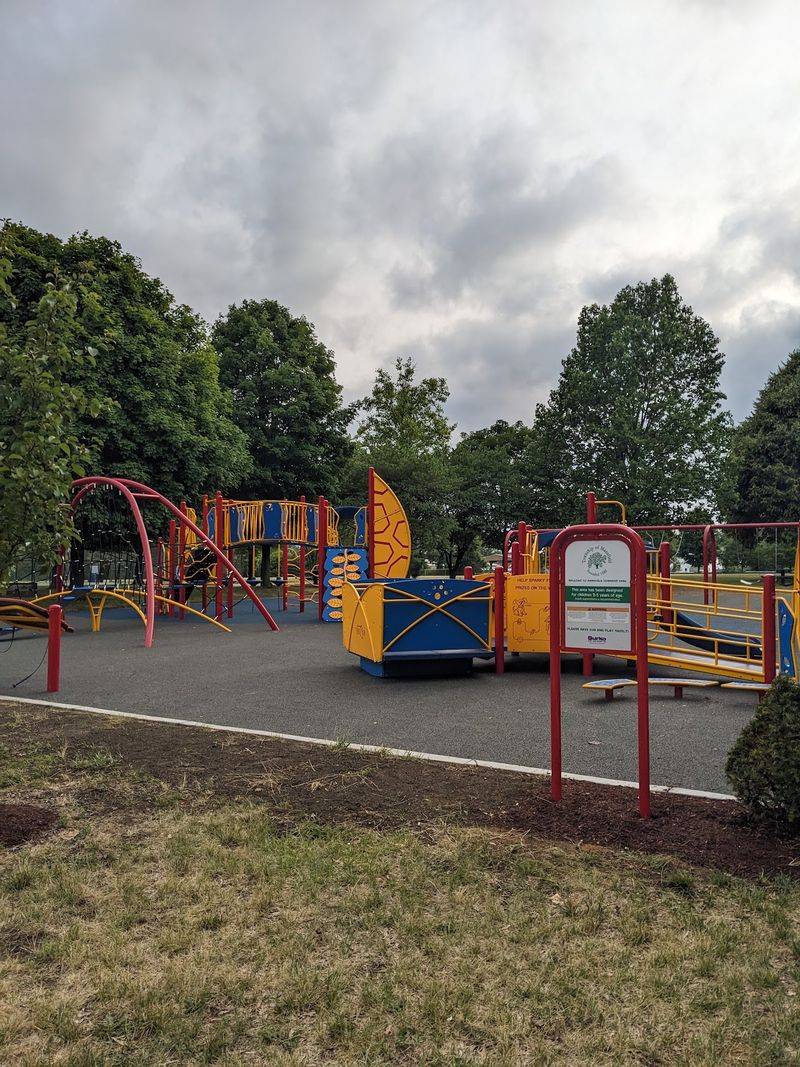
Not every family outing needs everyone to finish the same distance. The option to turn back early makes this route useful when younger riders are still building confidence or adults want a modest afternoon plan.
The connected township park adds another layer of activity. Supplied accounts mention a playground with different equipment and sections, along with basketball courts.
Those facilities belong to the park setting, rather than being features scattered throughout the trail. Keep that distinction in mind when deciding how far to ride before taking a longer break.
A practical family plan starts small: agree on a manageable distance, check how everyone is doing, and save optional park time for afterward. Four miles can be a goal without becoming a rule.
The combination works because it offers choices at one destination. A bicycle ride, a short walk, and time at the playground do not have to become three separate trips.
A Shared Route With a Relaxed Rhythm
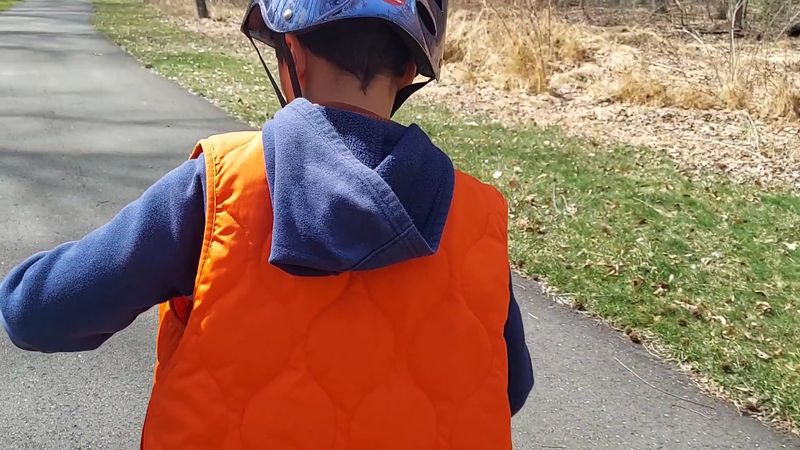
Speed is optional on a trail used for more than cycling. Walking, jogging, family rides, and outings with dogs all appear in the supplied accounts of how people use the path.
The atmosphere is repeatedly described as calm, but that should not become a guarantee of an empty route. The number of people present can change, and a wide path still requires shared attention.
Keep a manageable pace near walkers, allow room when passing, and avoid stopping across the pavement. Those simple habits matter more than trying to fit everyone into the same kind of outing.
Dog-friendly use is reported, though the supplied information does not establish detailed pet rules. Check posted guidance and carry what is needed to clean up after a dog.
The appeal is the freedom to move without making the day competitive. Bring a bicycle for an easy ride, not an expectation that everyone else will match its pace.
Benches and Room for a Break
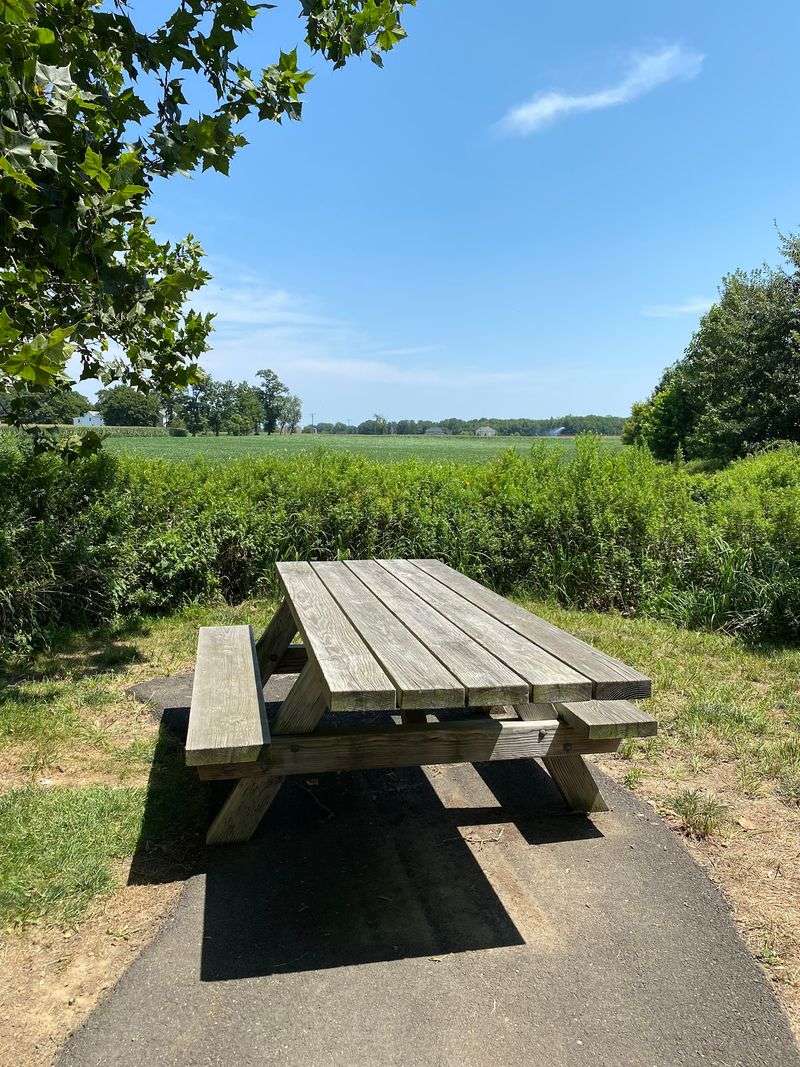
A short route still benefits from places to pause. Benches along the walkway and picnic tables in the trail’s park setting are mentioned in the supplied accounts.
They offer a reason to build a break into the plan instead of treating the entire outing as uninterrupted exercise. A pause can also help a mixed-ability group decide how much farther to go.
Do not assume seating appears at fixed intervals, since no spacing or exact count is established. Anyone who needs frequent rest should plan conservatively and turn back before the return becomes too demanding.
Similarly, the available information does not confirm drinking fountains, restrooms, bicycle repair equipment, or rental services. Bring essentials rather than relying on facilities that have not been documented.
The confirmed extras are modest, which suits the overall destination. A paved route, places to sit, and a connected park provide useful support without turning a simple ride into a complicated production.
Hours, Parking, and the Right Entrance
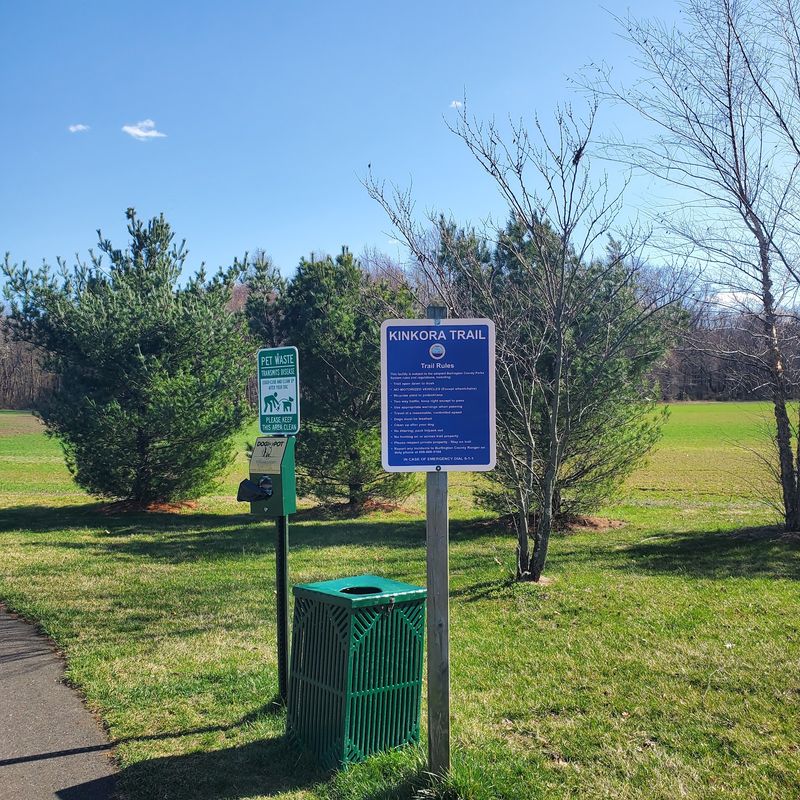
The entrance deserves a little attention before the trip begins. A supplied account describes navigation leading to a roadside farm stand instead of the park access, so confirm that directions end at the township park.
Parking near the trail entrance is reported. Use the park connection as the practical arrival point rather than assuming every map result identifies a suitable place to leave a vehicle.
The supplied schedule lists daily hours of 6:30 a.m. to 6:30 p.m. Check the official Burlington County Kinkora Trail webpage before departure for current access information and any notices.
No admission or parking charge is established by the provided data. That is not enough to promise free access, so verify any cost questions through the official source.
Leave time for the return leg within posted hours. The easiest logistical mistake to avoid is spending the whole available window on the outward ride and forgetting the distance back.
A Short Ride Worth Keeping Simple
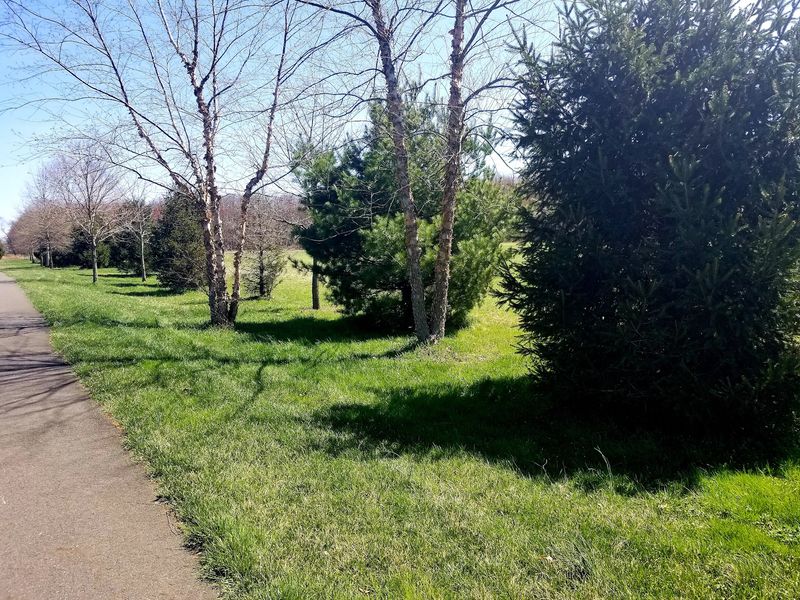
The strongest reason to choose this outing is also the simplest: it does not demand a major expedition. Roughly four miles of out-and-back riding can fit a modest plan, with earlier turnarounds available when needed.
Its defining features work together rather than competing for attention. Level pavement supports an approachable ride, fields and woods give the route variety, and the park adds options beyond the bicycle.
Expect a local shared-use path, not a challenging climb or a destination packed with services. That expectation keeps the focus on what is actually supported by the information available.
Before leaving home, confirm access, check the forecast, and bring the basics for both open and wooded sections. A little preparation is enough to keep most planning questions from taking over the afternoon.
Kinkora Trail earns consideration through a manageable distance and a straightforward setting. Leave room for a break, choose a comfortable pace, and let the short ride remain short.
Share this story