A 70-ton logging locomotive, re-created bunkhouses, interactive crosscut saws, historic cabins, and a steam-powered sawmill that still roars to life several times a year are spread across this 160-acre museum in Pennsylvania’s northern woods. The Pennsylvania Lumber Museum opened in 1972, but its exhibits transport visitors much farther back, revealing the industry that once helped make Pennsylvania one of the world’s great timber-producing regions.
Outside, visitors can wander through a re-created logging camp before encountering the enormous Shay locomotive, a 1945 switch engine, and the country’s only surviving Model 10 Barnhart log loader. Inside, exhibits tell a much bigger story – including how relentless logging left vast clear-cut areas once described as “Pennsylvania’s Desert,” and how conservation efforts eventually helped the state’s forests recover.
Here’s why the Pennsylvania Lumber Museum is one of the PA Wilds’ most fascinating history stops – and why a museum about logging turns out to be far more entertaining than you might expect.
Finding the Heart of Timber Country
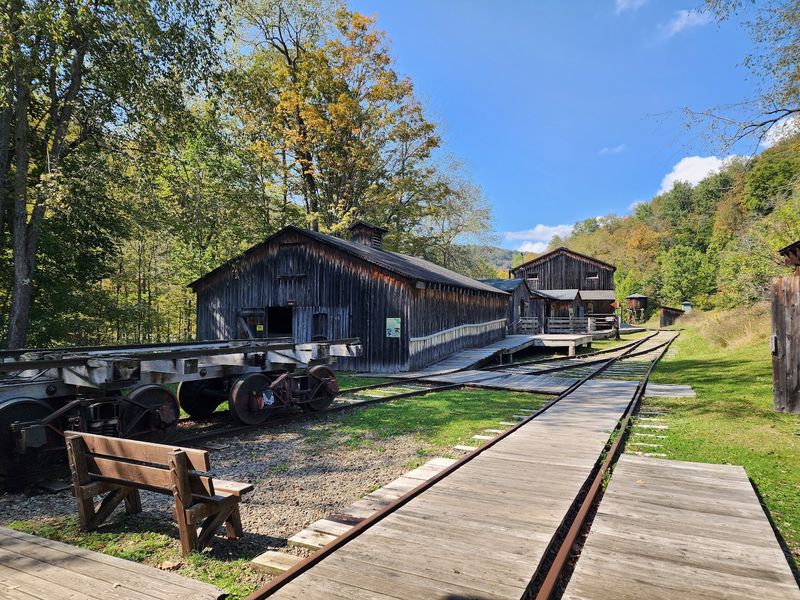
The address alone tells you something interesting: 5660 US-6 W, Ulysses, PA 16948, right in the heart of Potter County, directly across from the entrance to Denton Hill State Park. This stretch of Route 6 winds through some of the most heavily forested terrain in the state, and the drive itself begins to set the mood long before you reach the museum’s lodge-style visitor center.
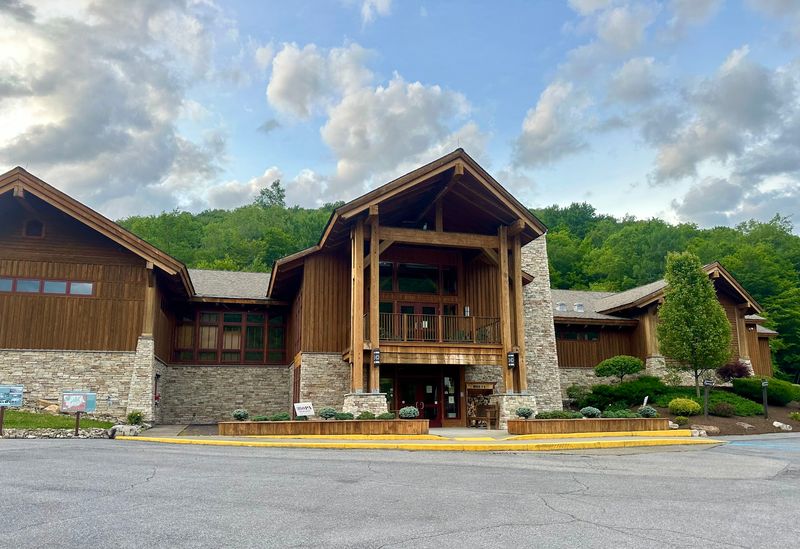
The building is hard to miss. Its architecture echoes the very industry it celebrates, with heavy timber framing and a welcoming front entrance that hints at the depth of history waiting inside and out.
The museum sits on a 160-acre site, and that scale becomes clear the moment you step outside the main building and realize the outdoor exhibits stretch far into the surrounding woods. Free parking makes arrival easy, and the staff at the front desk greets every visitor with genuine enthusiasm that immediately puts you at ease.
How a Lumberman’s Club Built a Legacy
The origin story of the Pennsylvania Lumber Museum is as scrappy and determined as the industry it honors. In the early 1960s, members of the Penn-York Lumberman’s Club began with a modest goal: acquire a logging locomotive to display at their annual Woodsmen’s Carnival, held at Cherry Springs Park since 1952.
That small ambition snowballed fast. The vision expanded into a full museum, the Pennsylvania Historical and Museum Commission came on board as a partner, and a 160-acre site was carved out from Denton Hill State Park. A public dedication happened, funding briefly stalled in 1970, and the club pushed through anyway.
The museum officially opened in 1972, with the visitor center and first exhibits ready for the public. Over the following decades, the lumber camp, sawmill, and Shay locomotive were added one by one, building the comprehensive site that stands today. That kind of stubborn persistence feels entirely appropriate for a museum celebrating people who once felled entire forests by hand.
Walking Into a Re-Created Logging Camp
Nothing prepares you for the moment you leave the visitor center and step into the re-created lumber camp spread across the outdoor campus. The bunkhouses look exactly as you would imagine: low, sturdy, and built for function rather than comfort, with rows of rough bunks where exhausted men would collapse after twelve-hour shifts in the woods.
The cookhouse sits nearby, and it is easy to picture the pre-dawn chaos of feeding dozens of hungry loggers before the first axe swung. Interpretive signs throughout the camp fill in the details with just enough specificity to make the scene feel real rather than staged.
What strikes me most is how the entire 10-acre outdoor campus works together as a single, cohesive story. Each building connects to the next, and wandering between them feels less like touring a museum and more like stumbling through a place where people actually lived and worked. Plan to spend a solid chunk of your afternoon out here, because there is a lot to absorb.
The Steam-Powered Sawmill in Action
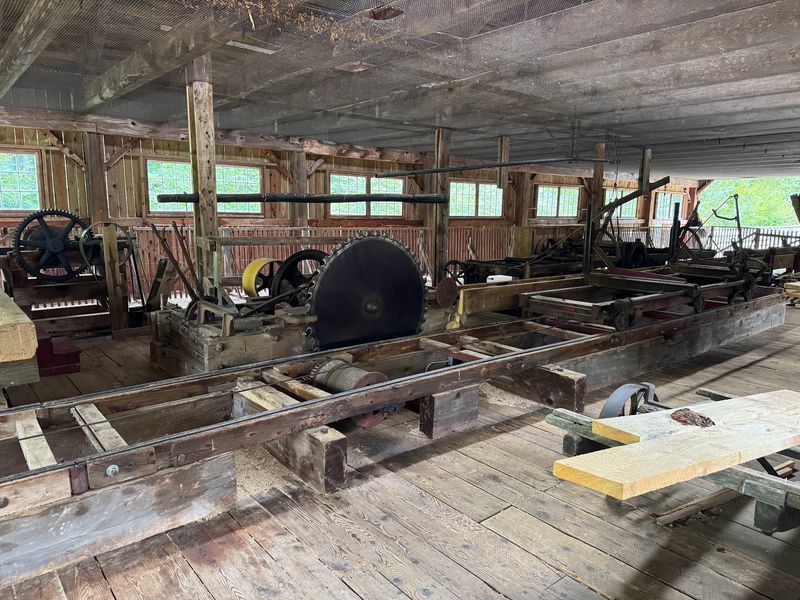
The sawmill is the undisputed centerpiece of the outdoor campus, and seeing it in operation is something you genuinely cannot replicate with a photograph or a video. The museum’s steam-powered circular sawmill runs three times a year during the Spring Antique Show, the Fall Antique Show, and the beloved Bark Peelers’ Festival, and timing your visit around one of those events is absolutely worth the extra planning.
When that blade bites into a log and sawdust starts flying, the noise and energy in the air shift completely. The entire process, from log to plank, happens right in front of you, and it becomes immediately obvious why these mills were the economic engines of entire regions during the late 1800s and early 1900s.
Adjacent to the sawmill, a log pond served the dual purpose of softening timber before cutting and storing logs until they were needed. Nearby interpretive panels explain both functions clearly, and the whole complex paints a vivid picture of industrial ingenuity that once powered Pennsylvania’s economy from the inside out.
The Shay Locomotive and Its Iron Companions
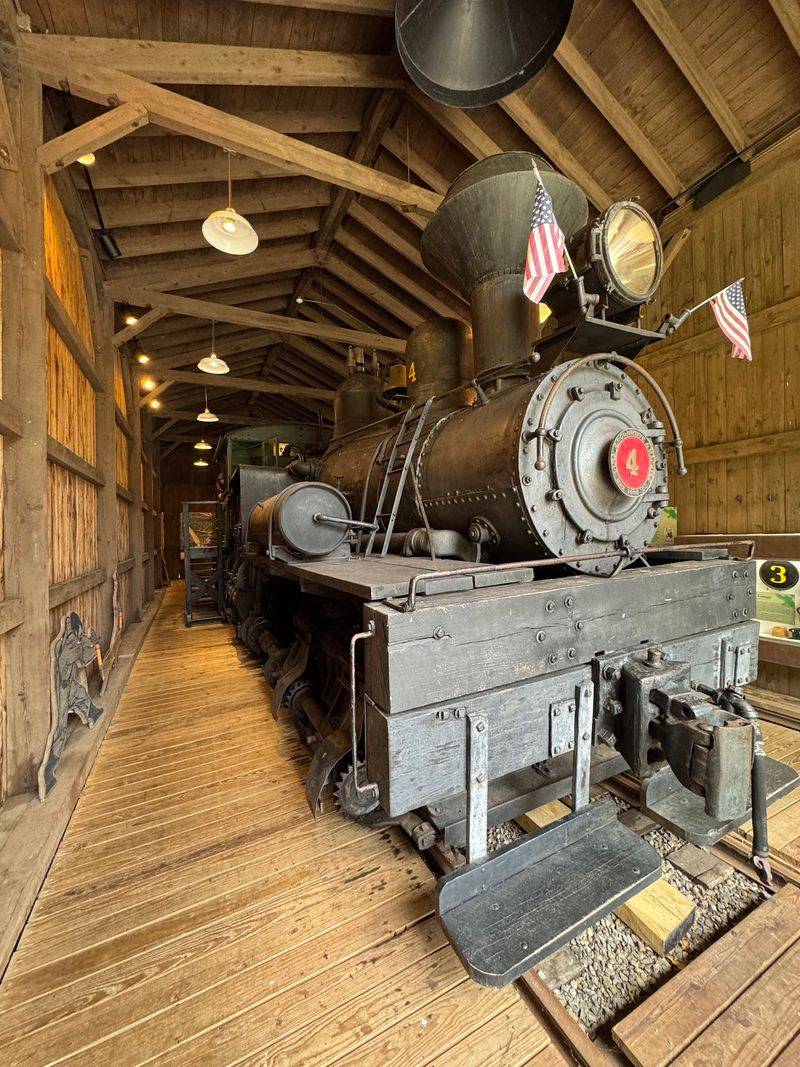
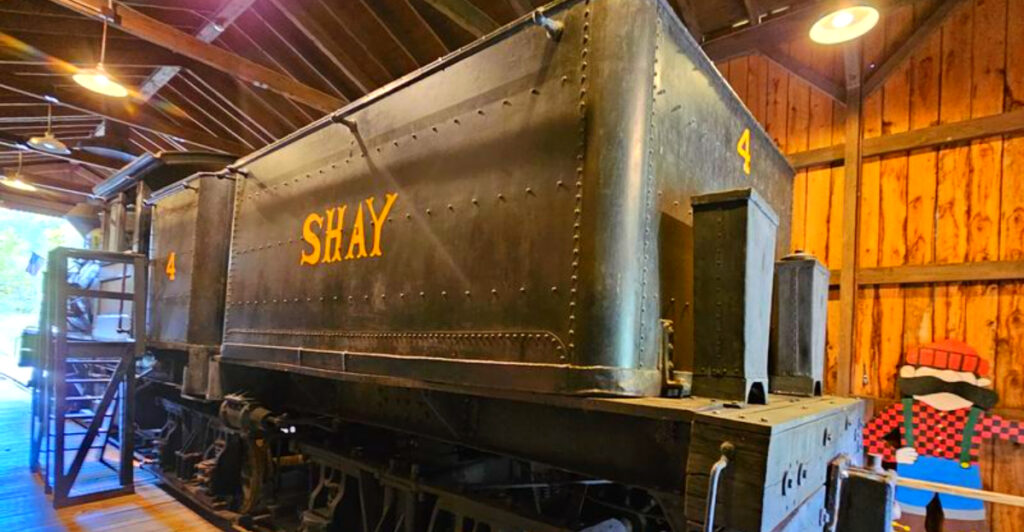
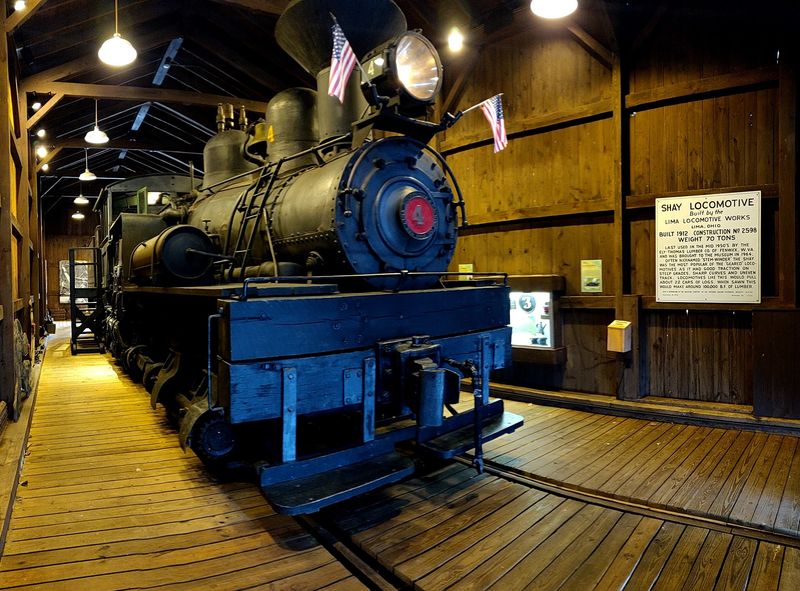
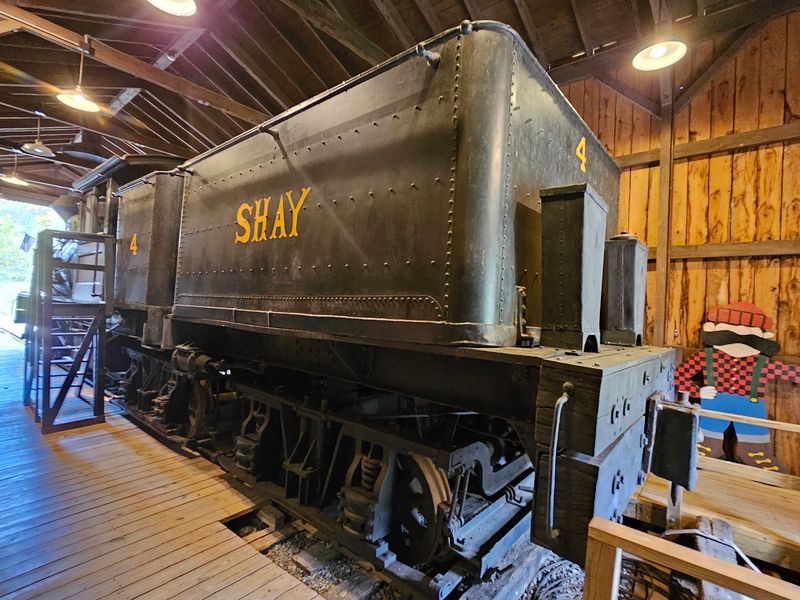
Few things stop visitors in their tracks quite like the 70-ton Shay geared locomotive housed in the museum’s engine barn. Delivered in 1912 to the Davis-Aken Lumber Company in West Virginia, this machine was engineered specifically for the punishing terrain of logging country, with vertical cylinders and a flexible drive shaft that transferred power to every axle.
That design allowed it to climb grades up to 15 percent and handle the light, crudely laid rails common in remote forest operations, making it the workhorse that kept timber moving when conventional locomotives would have struggled badly. Climbing into the cab, as many younger visitors do with barely contained excitement, gives you a real sense of the scale involved.
Alongside the Shay, a restored 1945 Brookville switch engine and the only surviving Model 10 Barnhart log loader in the country round out the locomotive collection. The Barnhart loader, with its rotating cab and stationary boom, revolutionized log loading and stands as a genuinely rare artifact that deserves its own moment of quiet appreciation.
Two Cabins, Two Remarkable Stories
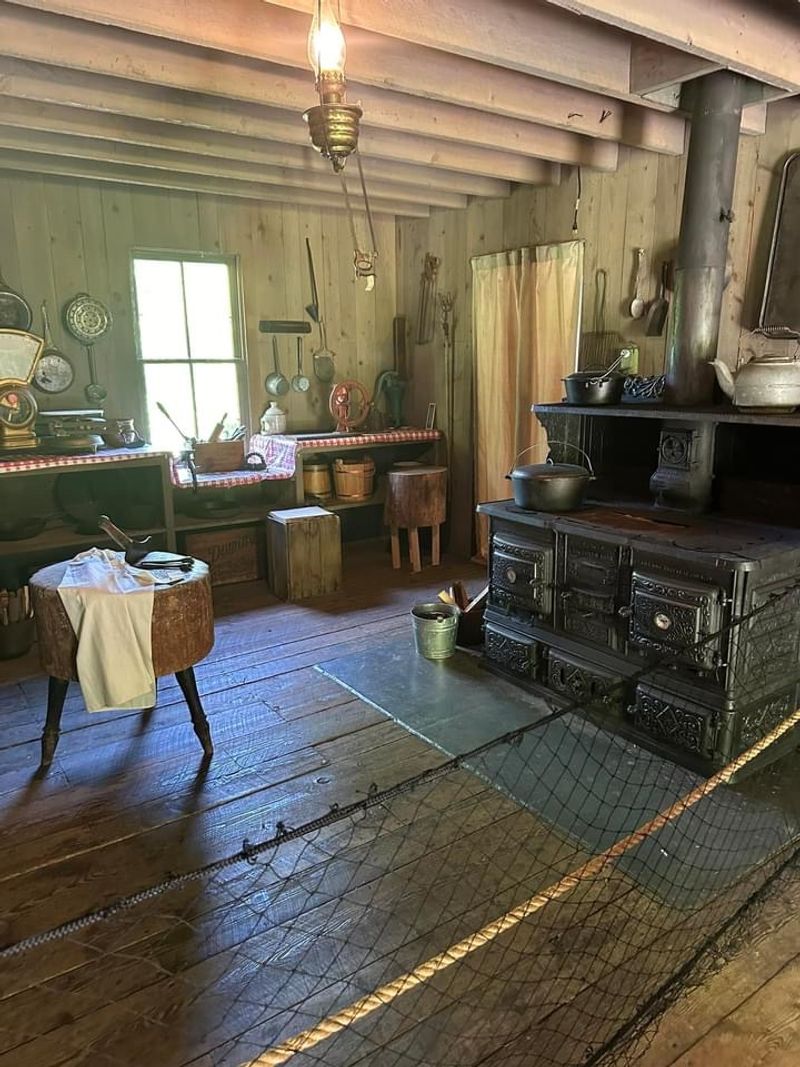
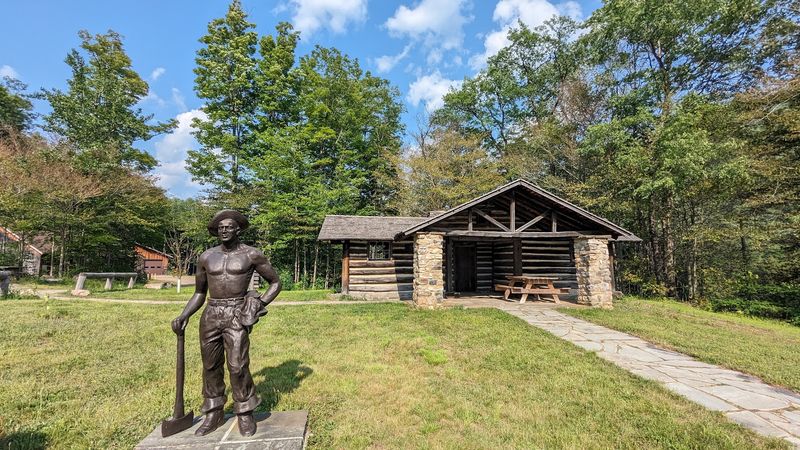
Two small cabins on the museum grounds carry stories that are quietly powerful in very different ways. The first was built by the Civilian Conservation Corps in 1936, and its tight, careful construction reflects the pride those workers brought to every project during the Great Depression. The CCC played a huge role in reforesting Pennsylvania’s stripped hillsides, and this cabin is a tangible reminder of that effort.
The second is the Webber Cabin, relocated to the museum in 2018 from its original site on the west rim of the Pennsylvania Grand Canyon. Bob and Dotty Webber lived here for over 50 years without electricity, running water, or indoor plumbing, a choice that says everything about their connection to the land. A short film inside the cabin tells their story in detail, and it is genuinely hard to watch without feeling a deep respect for that kind of self-reliance.
Bob Webber also developed numerous hiking trails in Tiadaghton State Forest during his career as a DCNR forester, leaving a trail network that still welcomes hikers today.
What the Visitor Center Teaches You
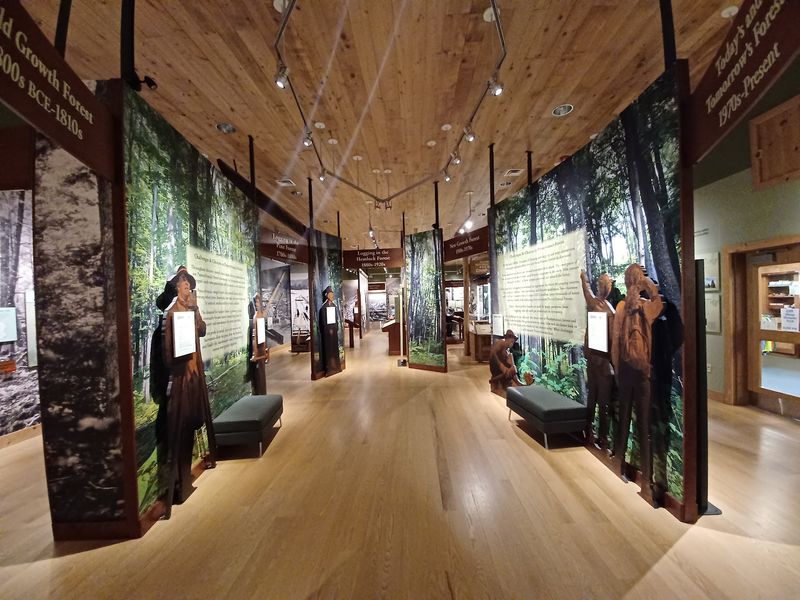
The two-story lodge-style visitor center holds far more than just a ticket desk and a gift shop. The main exhibit hall takes you on a carefully structured journey through Pennsylvania’s forest history, starting with the arrival of European settlers and moving forward to present-day conservation challenges. The core exhibit, titled “Challenges and Choices in Pennsylvania’s Forests,” asks visitors to think critically about how humans have used and misused forest resources over centuries.
One of the most striking displays focuses on Williamsport, which once held the title of Lumber Capital of the World, a fact that surprises many visitors who know the city mainly for Little League Baseball today. Another section addresses “Pennsylvania’s Desert,” the bleak term used for the vast, clear-cut wastelands left behind after unchecked logging stripped entire mountain ranges bare.
The exhibit on Joseph Rothrock, considered the father of Pennsylvania forestry, provides important context for understanding how the state eventually pulled back from the brink of total deforestation. The video shown at the start of many visits is genuinely worth watching and sets the tone for everything that follows.
Hands-On History That Actually Engages You
Museums that ask you to just look can feel passive after a while, but the Pennsylvania Lumber Museum builds in plenty of moments where you actually do something. Inside the visitor center, interactive exhibits let you simulate swinging an axe, feeling the resistance of a blade meeting timber, and try your hand at sawing through a log with a crosscut saw, a task that quickly builds respect for anyone who did it professionally.
Other stations let you try piloting a log raft, a critical method of moving timber down Pennsylvania’s rivers before rail networks took over, and even race locomotives in a lighthearted competition that kids tend to love. The train bell in the engine barn is apparently irresistible to visitors of all ages, based on the wide grins it produces.
These hands-on moments do something that reading a panel cannot: they make the physical reality of the lumber industry land in your body, not just your brain. That sense of connection is what separates a good museum visit from a genuinely memorable one, and this place earns it honestly.
The Tannery, the Model Railroad, and the Birch Still
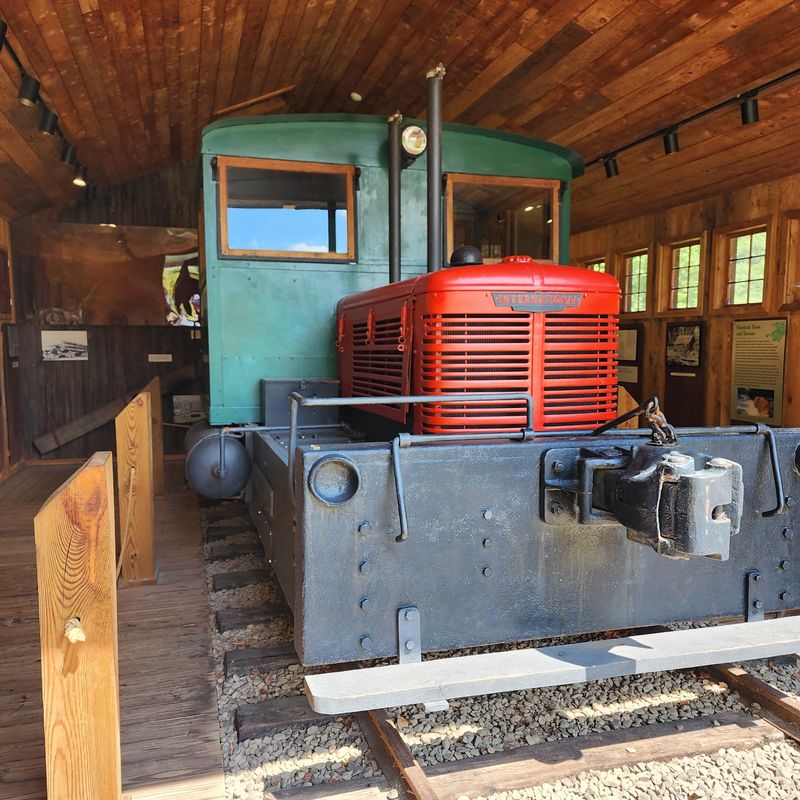
Beyond the main camp and sawmill, the museum tucks away a few exhibits that reward visitors who take the time to explore every corner of the grounds. The Tannery Exhibit explains how animal hides were processed using bark from hemlock trees, a practice that made tanning one of Pennsylvania’s most important secondary industries during the logging era. The 1945 Brookville switch engine displayed here was actually used at an Elk County tannery, connecting the dots between two industries that relied on the same forests.
The Eastern Loggers Model Railroad is a standout surprise. This intricately detailed diorama depicts logging trains hauling timber from mountain camps to valley mills, capturing the full scope of the transportation networks that made the industry function. The tiny scale somehow makes the enormity of the operation easier to grasp rather than harder.
Nearby, a birch still demonstrates how chemical products including birch oil were extracted from wood, a process that squeezed value from every part of the tree. These smaller exhibits collectively show how thoroughly the forest economy was woven into everyday Pennsylvania life during the lumber boom years.
The Bark Peelers’ Festival and Other Annual Events
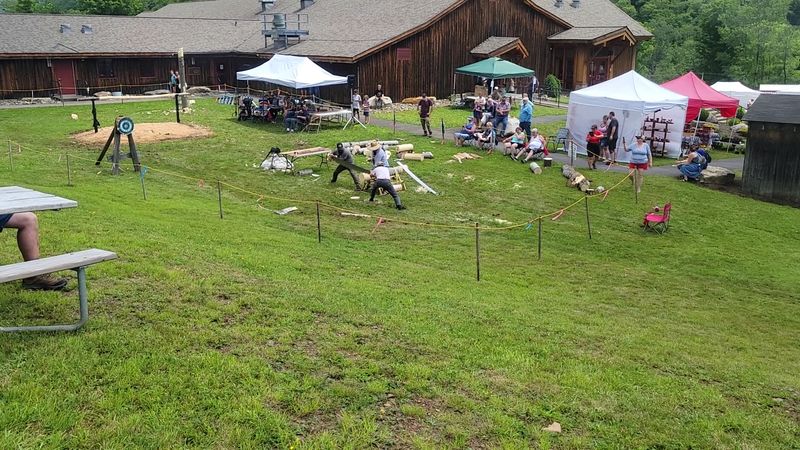
The annual Bark Peelers’ Festival, held on the first full weekend in July, is the museum’s biggest event of the year and draws thousands of visitors to Potter County for a day that feels part history lesson and part county fair. Food trucks, artisan vendors, live music, and a full slate of demonstrations run throughout the weekend, with the steam-powered sawmill and birch still both firing up for the occasion.
Contests add a competitive edge that keeps things lively. A mustache and beard competition, a greased log contest, and a pie-eating challenge give the festival a playful spirit that balances the more educational programming happening nearby. Blacksmiths, wood carvers, and historical reenactors round out the experience with skills that feel almost mythological compared to modern construction methods.
The museum also offers a History Camp for young people aged 10 to 18, where participants spend two full days learning to use crosscut saws, roll logs, peel bark, and cook breakfast on a wood-fired stove. That kind of immersive programming turns a school-age curiosity about history into something that sticks for years.
Practical Tips for Planning Your Visit
Getting the timing right makes a noticeable difference at the Pennsylvania Lumber Museum. From April 1 through November 30, the museum is open Wednesday through Sunday from 9 AM to 5 PM. Winter hours run Friday through Sunday from 10 AM to 4 PM, with outdoor exhibits beginning to close 30 minutes before the main closing time, so arriving at least 90 minutes early is a smart move if you want to see everything.
Admission is reasonably priced at $8 for adults, $7 for seniors 65 and older, and $5 for children aged 4 to 11. Kids 3 and under get in free, as do active military personnel and their immediate families. The museum participates in the “Museums for All” program, offering $2 per person admission for families presenting an EBT card, and groups of 10 or more receive a $1 discount per person.
The phone number is +1 814-435-2652 and the website is lumbermuseum.org for current event schedules. Free parking, clean restrooms, a well-stocked gift shop, and wheelchair-accessible facilities round out the visitor experience without any hidden complications.
Share this story