One small museum in Pennsylvania focuses on a piece of early American history that many people know by the wrong name. The Pennsylvania Longrifle, often called the Kentucky Rifle, was developed by gunsmiths in eastern Pennsylvania and could reportedly hit a small target from 300 yards away.
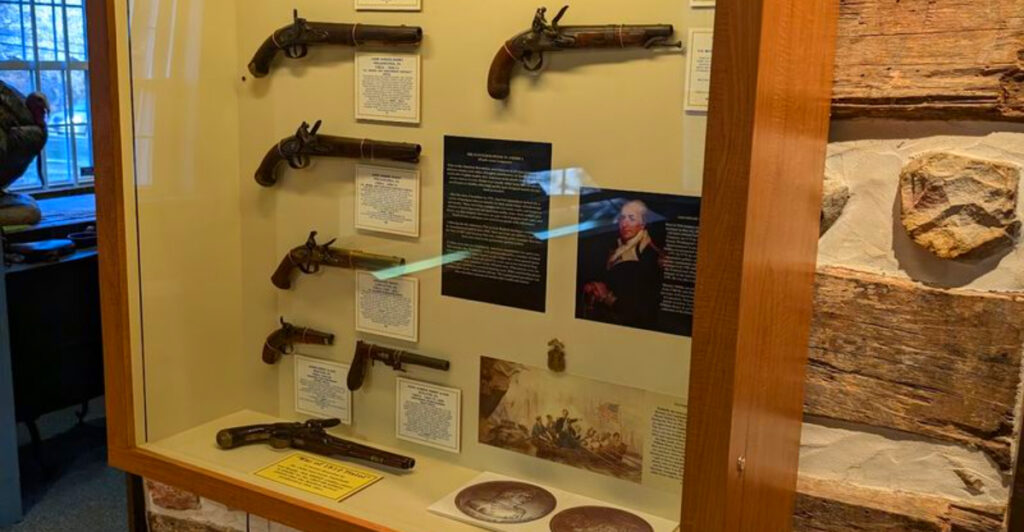
Inside are more than 100 historic arms, with roughly 80 displayed at a time, along with powder horns, bullet molds, specialized gunsmithing tools, and elaborately decorated rifles that blur the line between weapon and American folk art.
But the most surprising story may be the family behind many of them. Five generations of Pennsylvania gunsmiths produced an estimated 100,000 rifles over roughly a century, building a legacy that stretched from the Revolutionary era into the early 1900s.
Finding the Museum: Address, Setting, and First Impressions
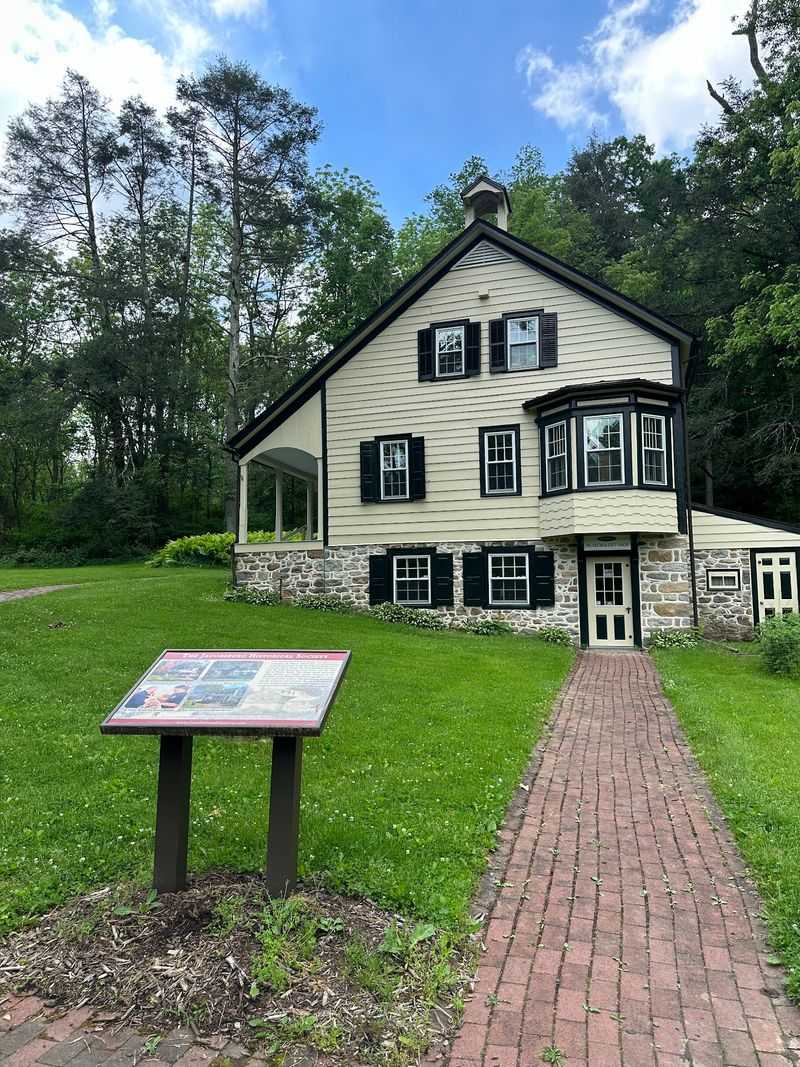
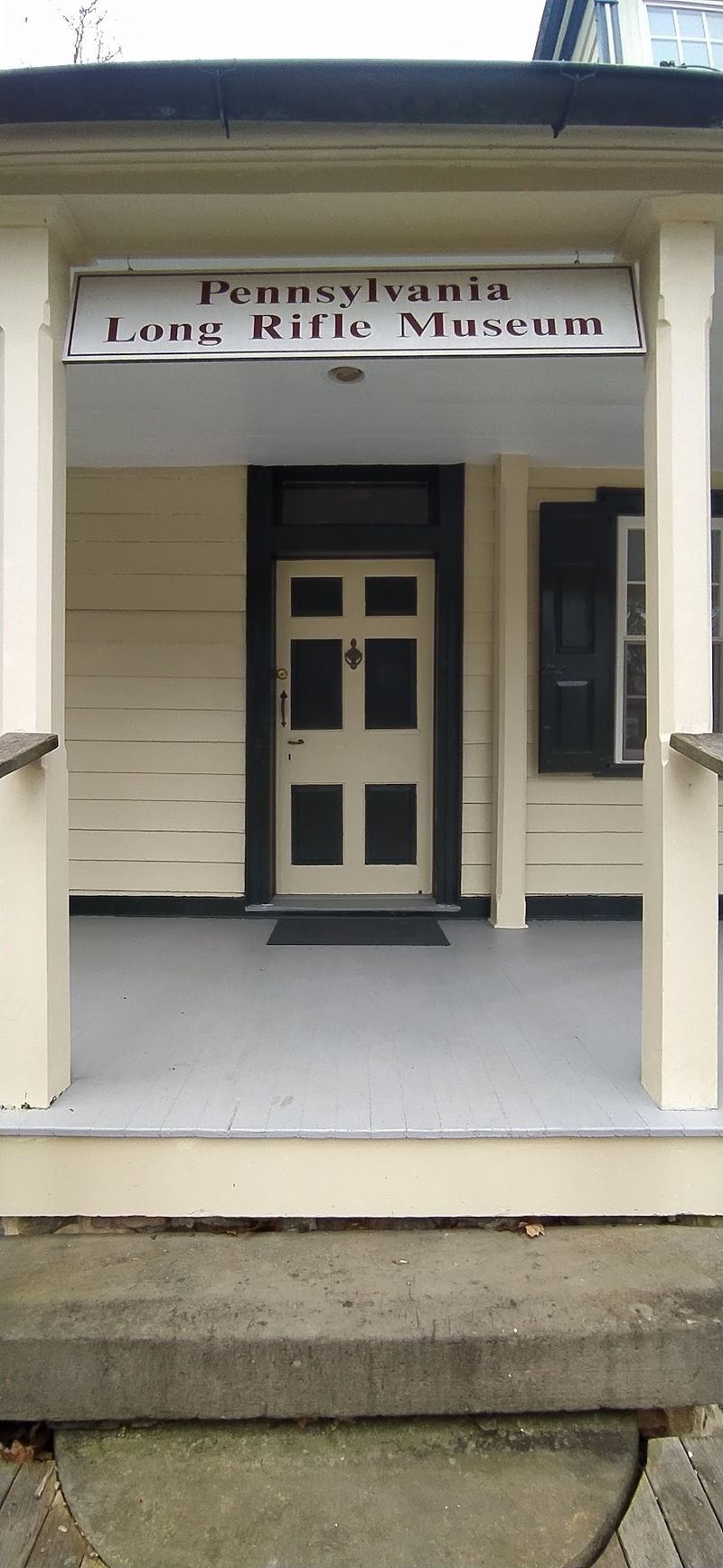
The Pennsylvania Longrifle Museum sits at 401 Henry Road, Nazareth, PA 18064, tucked inside the Boulton Historic Site and managed by the Jacobsburg Historical Society. Getting there feels like a small adventure, because the road winds through a genuinely rural stretch of Northampton County that does not feel like it belongs to the same world as the nearby suburban sprawl.
The setting is bucolic in the truest sense. Old trees, open fields, and a quiet that you notice the moment you step out of your car.
The museum itself occupies a historic structure on the Henry Homestead, a property with deep roots in early American manufacturing.
Nothing about the exterior screams “world-class collection,” and that modesty is part of its charm. The site also sits near the Jacobsburg Environmental Education Center, so there are trails nearby if you want to stretch your legs before or after your visit.
First impressions here reward the patient traveler.
How a Museum This Specific Even Exists
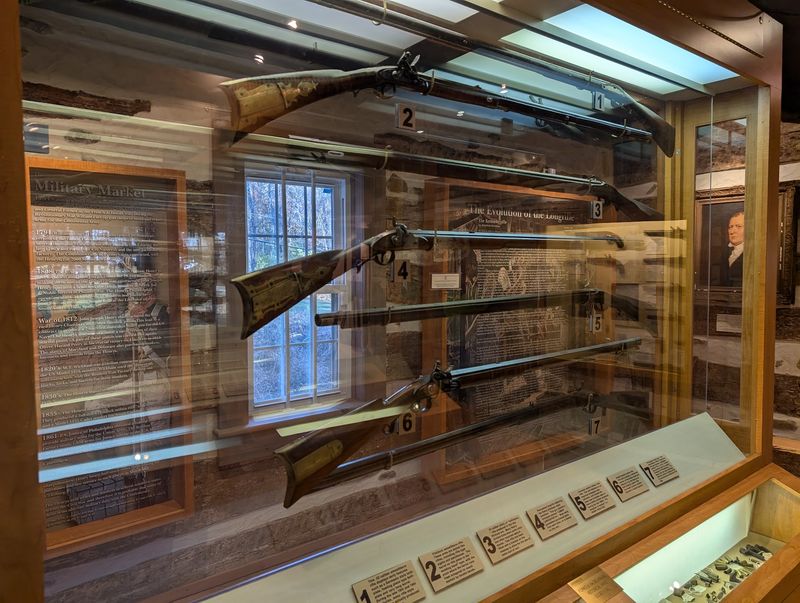
The Pennsylvania Longrifle Museum opened to the public in 2006, and its very existence is the result of decades of dedicated preservation work by the Jacobsburg Historical Society. The mission was precise from the start: preserve and present the art and industry of making early American firearms, along with the community of craftspeople who sustained that tradition.
What makes this museum unusual is that it does not try to cover all of American firearms history. It zeroes in on one specific type of weapon, one specific region, and largely one extraordinary family of gunsmiths.
That kind of editorial focus is rare in the museum world, and it pays off.
Rather than spreading thin across centuries of broad history, every exhibit here connects to a tight, coherent story. Visitors leave with a real understanding of how these rifles were made, who made them, and why they mattered so much.
That clarity of purpose is what separates a good museum from a great one.
The Henry Family: Five Generations of Gunmaking Genius
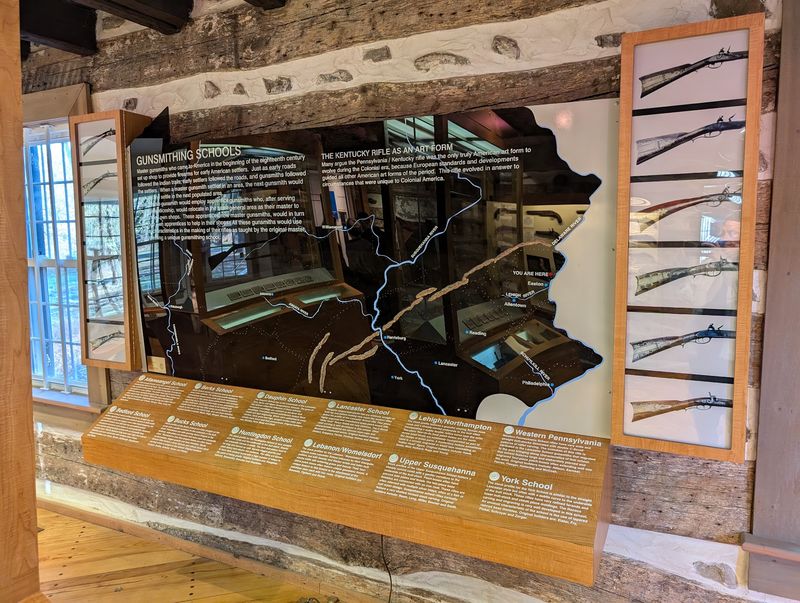
The story at the heart of this museum belongs to the Henry family, a gunmaking dynasty that spanned five generations and produced an estimated 100,000 rifles over roughly a century. That number is hard to wrap your head around, especially when you consider that every single one of those rifles was crafted by hand.
William Henry I started the family tradition in Lancaster in 1750. His son, William Henry II, established a shop near Nazareth in 1778 and later built a manufactory at Jacobsburg in 1792.
That facility, known as the Boulton Factory, became the central hub for longrifle production in the region for nearly a hundred years.
The tradition eventually faded as mass-produced firearms took over the market, and the last hand-crafted Henry longrifle was sold in 1912. Walking through the museum with that timeline in mind makes each rifle on display feel less like an artifact and more like a chapter in a very long family saga.
What Made the Pennsylvania Longrifle So Revolutionary
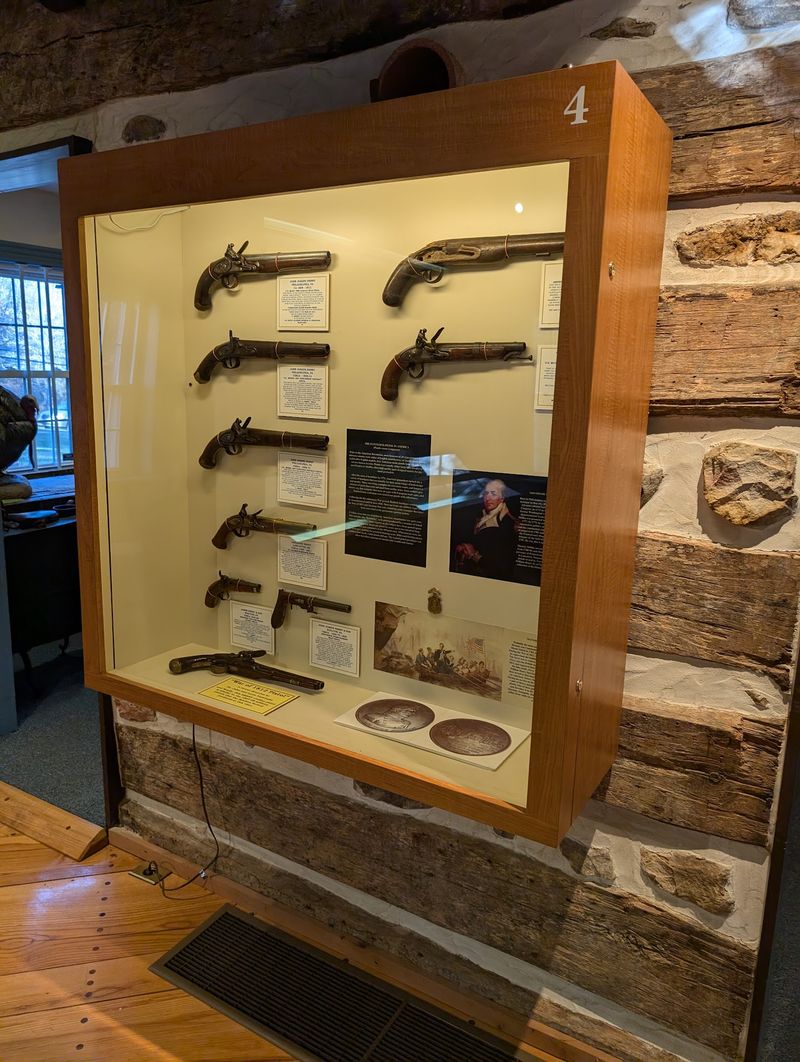
People often call it the Kentucky Rifle, but that name is a historical misfire. The Pennsylvania Longrifle was born in the workshops of eastern Pennsylvania, developed by German immigrant gunsmiths who brought Old World craftsmanship and then pushed it further than anyone had before.
The innovations were specific and meaningful. Early makers reduced the caliber from .70 down to .45, introduced a greased cloth patch to wrap the bullet, and lengthened the barrel to dramatically improve velocity, range, and accuracy.
The result was a rifle capable of hitting a small target at 300 yards, which was roughly five times the effective range of a standard military musket at the time.
That kind of precision changed what was possible on a battlefield. Continental Army sharpshooters armed with these rifles could pick off British officers at distances that seemed almost impossible to the opposing side.
The longrifle was not just a tool; it was a tactical advantage that helped tip the balance of the American Revolution.
Over 100 Historic Arms Under One Roof
The collection at the Pennsylvania Longrifle Museum includes over 100 historic arms, with approximately 80 on display at any given time. The majority are hand-crafted Pennsylvania longrifles from the 18th and 19th centuries, and a significant portion were made by the Henry family themselves.
Seeing that many rifles in one focused space creates a cumulative effect that individual museum pieces rarely achieve. You start noticing subtle differences in barrel length, stock carving, and hardware choice from one rifle to the next, and you begin to understand that each one reflects the specific taste and skill of its maker.
The displays also include accoutrements such as powder horns, bullet molds, and patch boxes, as well as the specialized tools used in rifle construction. That combination of finished product and production process gives the collection an educational depth that goes well beyond simply lining up pretty antiques on a wall.
The next section reveals how far these rifles actually traveled.
Rifles That Traveled from Fur Traders to the Civil War
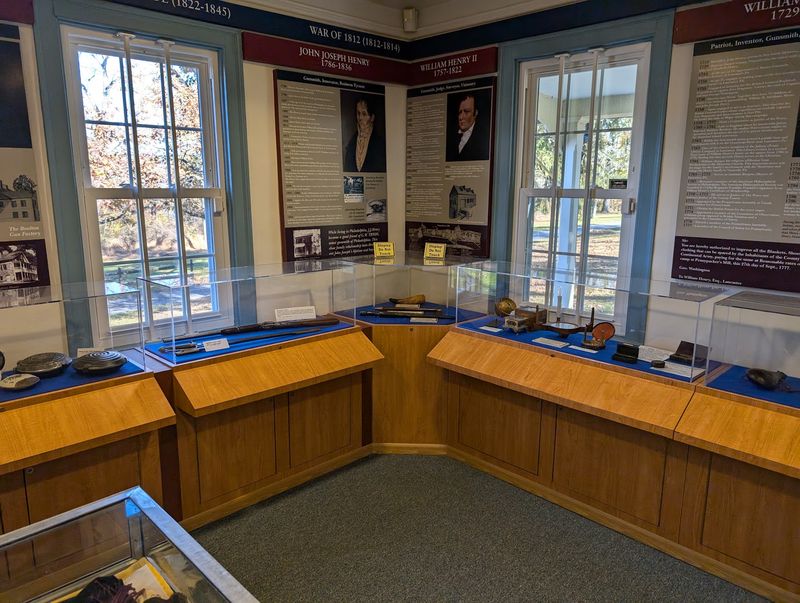
One of the more surprising things about the collection is how broadly these rifles were used across American history. The exhibits trace longrifles into contexts well beyond the Revolutionary War, including the American Fur Trade, the War of 1812, the Civil War, and even the American West.
Each of those chapters adds a new dimension to what could have been a narrowly focused collection. A rifle that started life in a Pennsylvania workshop might have ended up carried by a mountain man trapping beaver in the Rockies, or shouldered by a soldier during a Civil War skirmish.
The physical objects on display carry those journeys in their wear and modifications.
The museum presents these historical threads clearly enough that even visitors with no prior knowledge of firearms history can follow along. Context is everything in a collection like this, and the exhibits deliver it without overwhelming the visitor with dense academic text.
The story keeps moving, and so do you.
The Golden Age of Pennsylvania Longrifles as American Folk Art
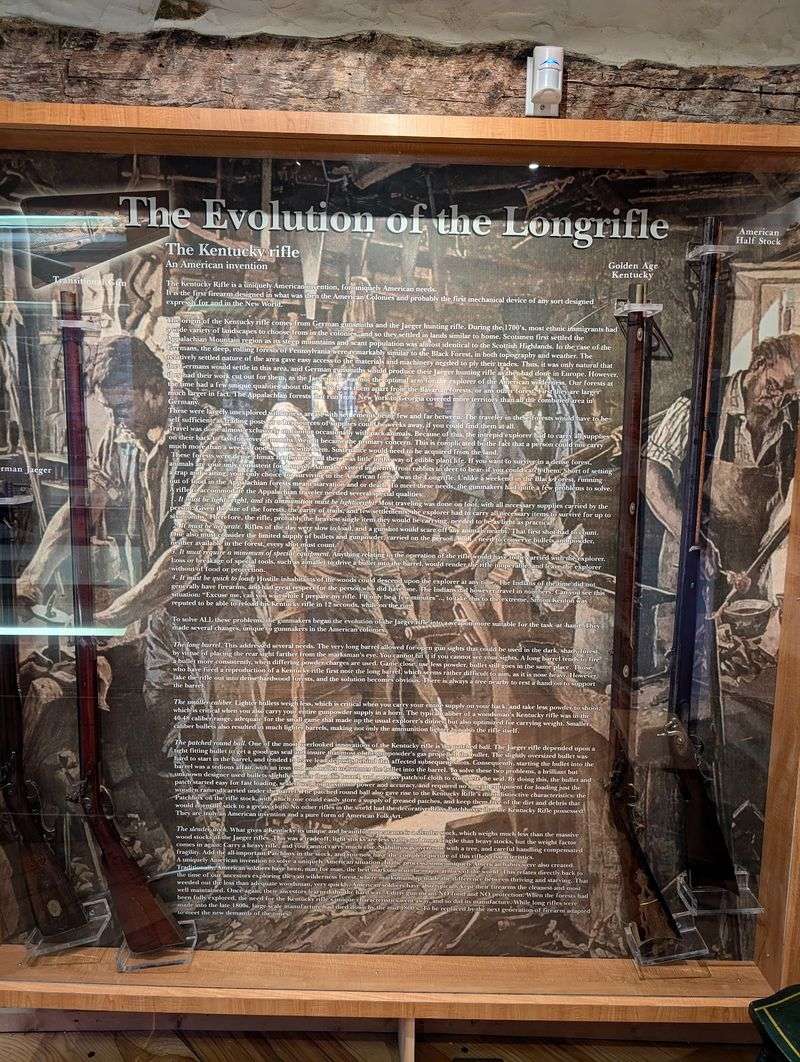
Between 1776 and 1825, something remarkable happened to the Pennsylvania Longrifle. Gunsmiths began treating their work as much as an art form as a functional craft, and the rifles produced during this period are now recognized as a pinnacle of American folk art.
The decorative work on these weapons is genuinely beautiful. Carved maple stocks feature elaborate floral and geometric patterns, brass patch boxes are engraved with intricate designs, and silver inlays catch the light in ways that make you forget you are looking at a weapon.
Each rifle from this era was essentially a custom commission, built to reflect the personality and status of its owner.
The museum displays several examples from this golden age, and standing in front of them you start to understand why collectors and historians treat these objects with the same reverence usually reserved for fine furniture or painted portraits. They represent a moment when American craftsmanship was at its most inventive and most personal.
That artistry is hard to forget.
The Nicholas Hawk Gun Shop: A Relocated Piece of Living History
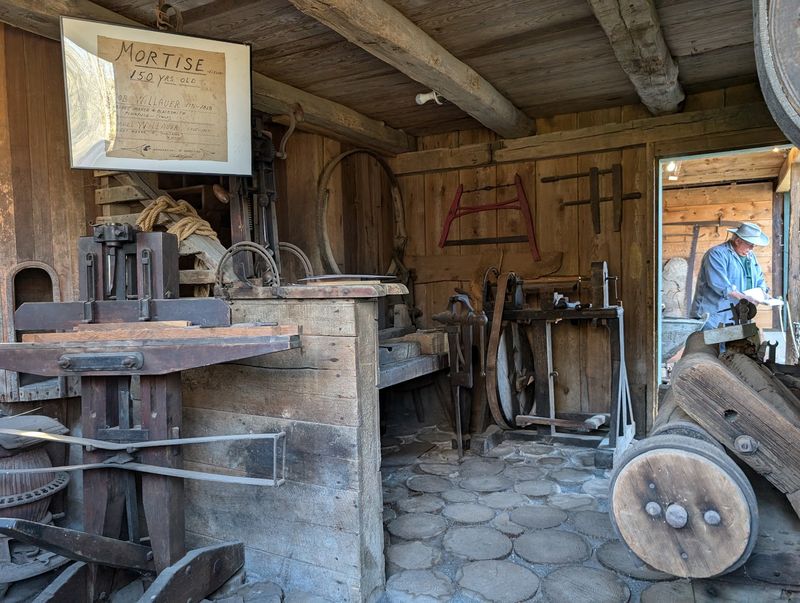
One of the most tangible experiences on the Boulton Historic Site is the Nicholas Hawk Gun Shop, a 19th-century gunsmith workshop that was physically relocated to the property and preserved as a hands-on piece of history. Seeing the actual space where a craftsman would have worked puts the rifles in the main museum into a completely different perspective.
The shop is small, as you would expect for the period, and the tools inside reflect the painstaking, slow process of building a rifle by hand from raw materials. There is no assembly line here, no interchangeable parts, just the workspace of a single skilled tradesperson doing everything himself.
That contrast between the lone craftsman’s shop and the 100,000 rifles the Henry family eventually produced makes you appreciate both the scale of their achievement and the limits of what hand production could sustain. The gun shop is a quiet but powerful exhibit, and it tends to stick with visitors long after they have left the main building.
The J. Joseph Henry House: A Mansion Full of Family Memory
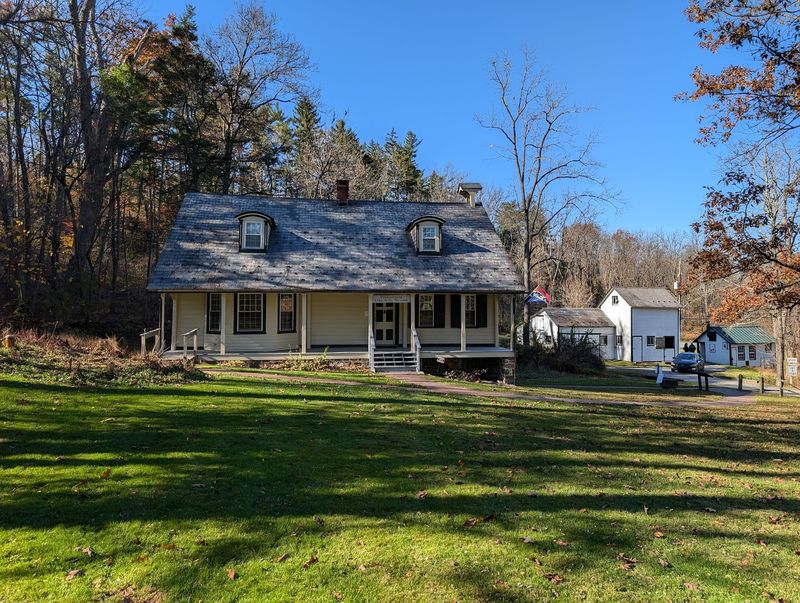
The Boulton Historic Site offers more than just the longrifle museum. The 1832 J.
Joseph Henry House stands nearby, a mansion that serves as a time capsule of how a prosperous gunmaking family actually lived during the height of their success.
Inside, the rooms are filled with Henry family furniture, musical instruments, clothing, and tools, all preserved and displayed to give visitors a sense of daily life in early 19th-century Pennsylvania. It is the kind of domestic history that often gets overshadowed by the drama of wars and manufacturing, but it rounds out the story in a meaningful way.
Seeing where the family ate, played music, and stored their tools makes the longrifle story feel less like a business history and more like a human one. The mansion and the museum work together as a pair, and visitors who take time to explore both come away with a much richer picture of what life at Jacobsburg actually looked like.
The summer kitchen is worth a look too.
What to Expect on Your Visit: Hours, Admission, and Practical Tips
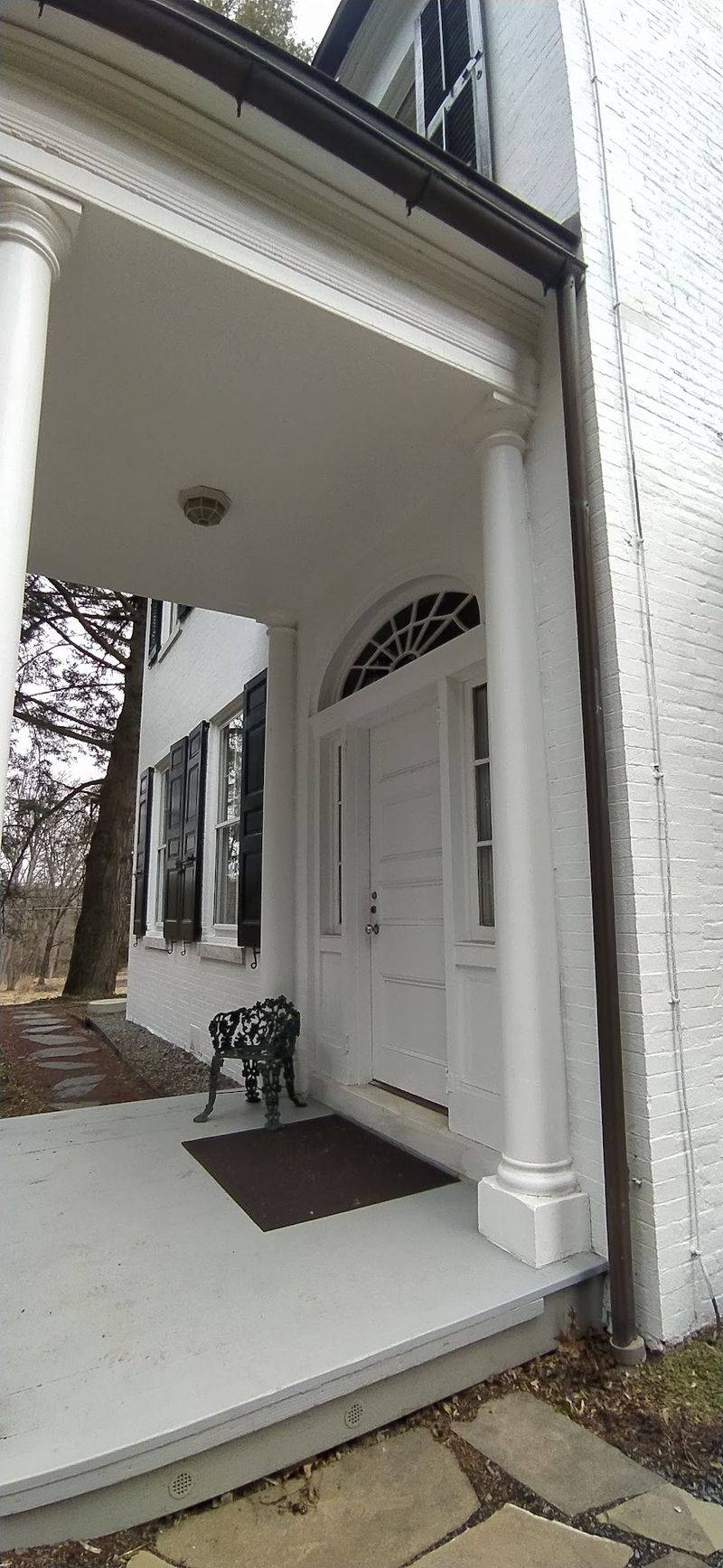
Planning your visit to the Pennsylvania Longrifle Museum requires a little advance thought, because the hours are more limited than a typical museum. The museum is generally open Sundays from 12 PM to 4 PM, running from May through October, with special events extending the season toward December.
Special tours can also be arranged by contacting the Jacobsburg Historical Society office at 610-759-9029.
General admission is $10, which is a fair price for what you get. Members of the Jacobsburg Historical Society, active duty military personnel and their families under the Blue Star Museum program, children under 12, and Scouts in uniform all receive free admission.
The knowledgeable staff is one of the genuine highlights of the visit. The guides clearly love this material and are happy to answer questions, point out details you might miss on your own, and share stories that are not written on any placard.
Come with questions and you will leave with more than you expected.
Living History Events That Bring the Past to Life
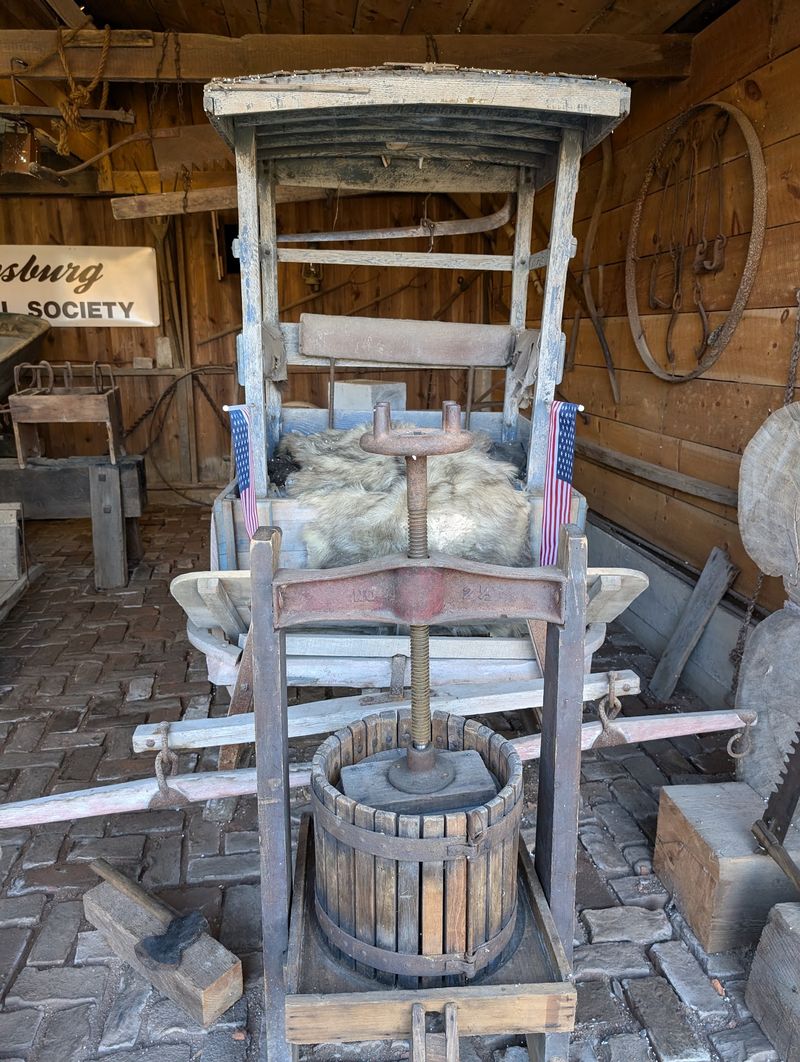
The Jacobsburg Historical Society runs a calendar of events at the Boulton Historic Site that go well beyond a standard museum visit. Living history displays bring the 18th century to life with costumed interpreters, period demonstrations, and activities that make the history feel immediate rather than distant.
Among the most popular events is the Fur Traders Rendezvous, which recreates the culture and commerce of the early American fur trade with remarkable attention to detail. There is also an Outlaws and Cowboys event that draws on the longrifle’s connection to the American West.
December brings a Christmas tour of the Henry Mansion, which offers a completely different atmosphere from the summer and fall programming.
These events are worth planning around if your schedule allows. They attract visitors who are deeply passionate about early American history, and the conversations you can have with fellow attendees and interpreters often add as much to the experience as the exhibits themselves.
Check the society’s website for the current event calendar before you go.
The Gift Shop, the Trails, and Why You Should Stay a While
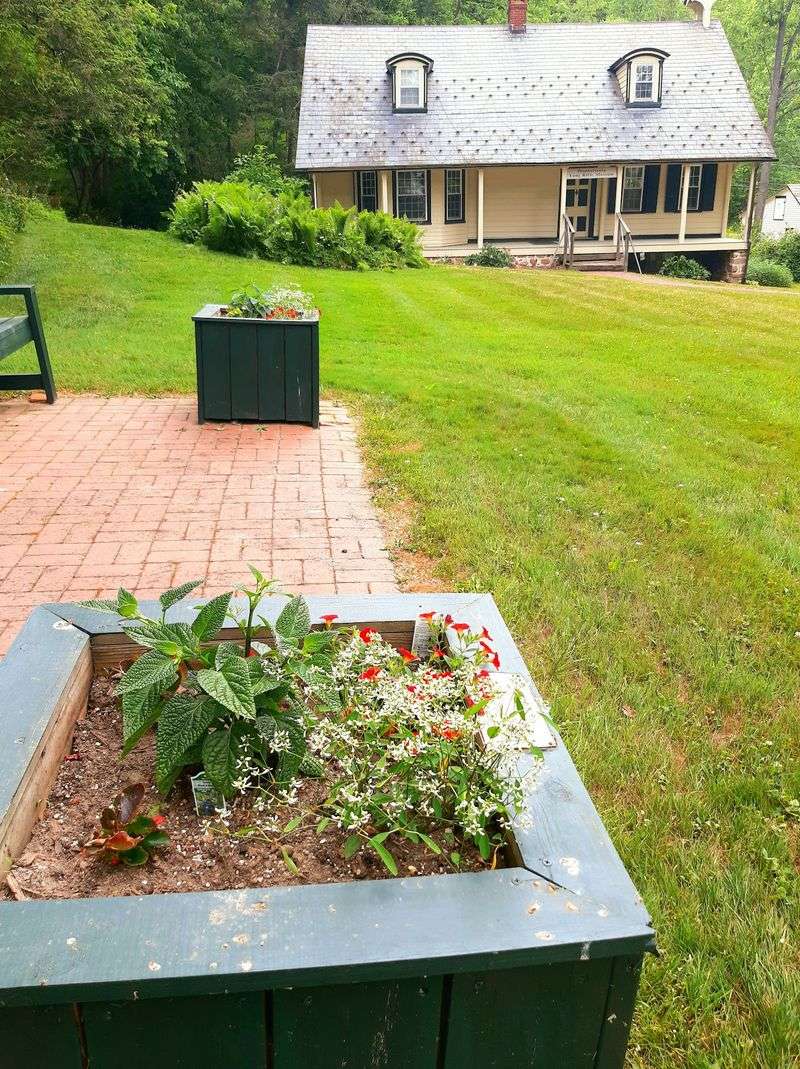
Before you leave the Pennsylvania Longrifle Museum, make a stop at the downstairs gift shop. The selection is focused and thoughtful, with books on Pennsylvania longrifle history, early American gunsmithing, and the Henry family that you will not find at a general bookstore.
A few shirts and other merchandise round out the offerings.
The books in particular are worth browsing carefully. Several titles go deep into the technical and cultural history of the longrifle in ways that complement what you just saw upstairs, and they make excellent reading for the drive home or the weeks after your visit.
Once you have finished inside, the Jacobsburg Environmental Education Center’s trail network is right there waiting. A walk through the surrounding landscape after spending time with 250-year-old rifles has a grounding effect that is hard to describe but easy to appreciate.
The whole site rewards a slow, unhurried afternoon, and that is exactly the kind of afternoon this museum was made for.
Share this story