Just off Interstate 81 in Carlisle, a free military history destination lets visitors walk through a World War I trench, see a Vietnam-era Huey helicopter, stand beside an enormous M60 Patton tank, and explore more than a mile of outdoor exhibits spanning centuries of American military history.
Inside, interactive experiences bring individual soldiers’ stories to life through dog tags, simulations, and remarkable historical collections. With free admission, free parking, and an outdoor trail open from dawn to dusk, this overlooked attraction can easily turn a quick roadside stop into an entire afternoon.
Where History Stands Guard: Address, Location, and First Impressions
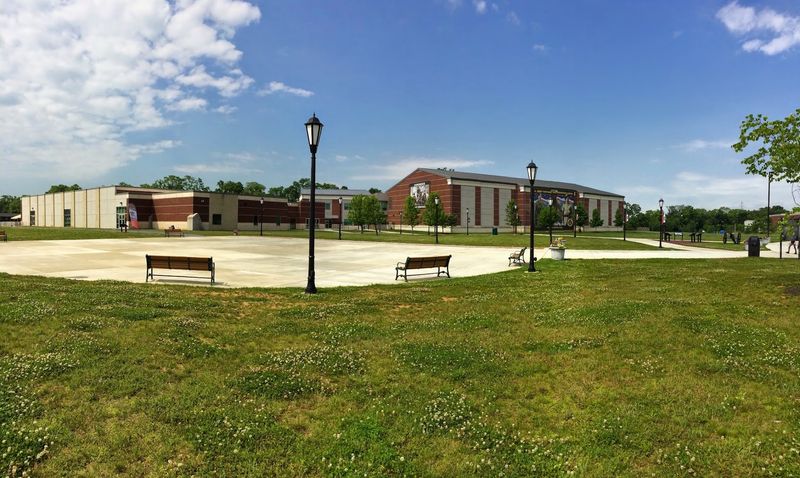
Right off Interstate 81 in Carlisle, Pennsylvania, the U.S. Army Heritage and Education Center sits at 950 Soldiers Drive, Carlisle, PA 17013, and it announces itself with quiet authority rather than flashy signage. The campus spreads across a generous stretch of the Cumberland Valley, and the moment you pull into the free parking lot, the scale of the place becomes clear.
A neatly maintained landscape greets you, with outdoor sculptures and the first hints of military hardware visible even before you reach the front door. The building itself is modern and welcoming, designed to ease visitors into what turns out to be a genuinely expansive experience. Staff members are stationed near the entrance, ready to orient first-timers with helpful maps and friendly conversation.
The center carries a Google rating of 4.8 stars from nearly 2,000 reviews, which tells you something meaningful before you even set foot inside. Both admission and parking are completely free, making this one of the most accessible historical destinations in the entire mid-Atlantic region.
The Army Heritage Trail: A Mile-Long Walk Through Time
The Army Heritage Trail is the feature that genuinely sets this center apart from every other military museum I have visited. Stretching roughly one mile, this open-air path guides visitors through fourteen to seventeen distinct exhibits, each representing a different chapter in U.S. Army history, arranged in chronological order so the story unfolds naturally as you walk.
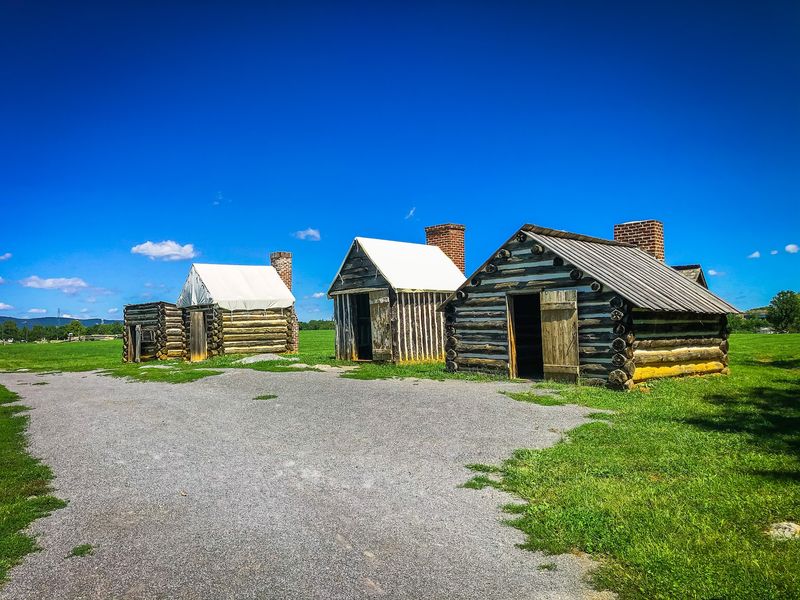
The trail begins with a French and Indian War way station built from rough-hewn timber, and it keeps delivering surprises around every bend. A faithful reconstruction of Redoubt Number 10 from the Siege of Yorktown captures the desperate energy of the Revolutionary War. Civil War winter encampment cabins offer a sobering look at the daily hardships soldiers endured far from home.
The cinder path is stroller-friendly and wheelchair accessible, and leashed dogs are welcome, making it an easy outing for families of all configurations. The trail is open from dawn to dusk every day, even when the indoor museum is closed, so there is almost always a reason to visit.
Full-Scale Reconstructions That Put You Inside History
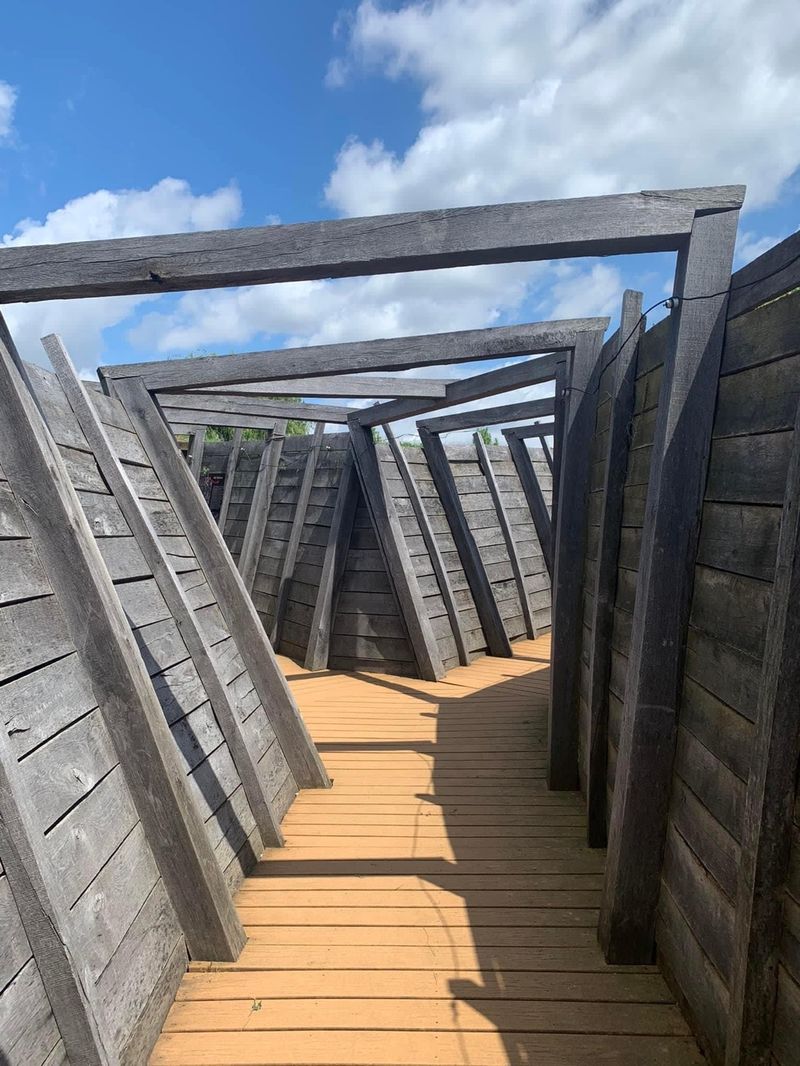
Few things prepare you for the moment you step down into the World War I trench system on the Heritage Trail. Sandbags line the walls, duckboards run along the floor, and the narrow corridor forces you to move the way soldiers once did, hunched and careful, with the sky a thin strip above your head.
The attention to detail across all of the trail’s reconstructions is genuinely impressive. The Normandy bocage scene from World War II captures the dense hedgerow terrain that made that campaign so brutally difficult, while the World War II company area gives a clear picture of how soldiers organized their daily lives during extended campaigns. Each structure is built to authentic scale, not miniaturized or sanitized for comfort.
Children who might fidget through a traditional museum tend to light up here, running between exhibits and climbing into spaces that adults approach more carefully. The physical experience of moving through these environments creates a kind of understanding that reading about them simply cannot replicate, and that is the whole point.
Tanks, Helicopters, and Hardware That Commands Attention
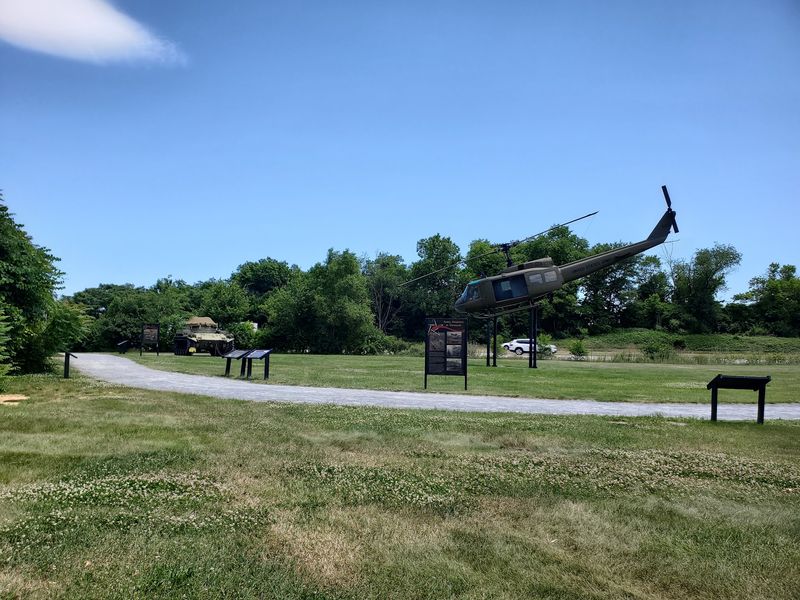
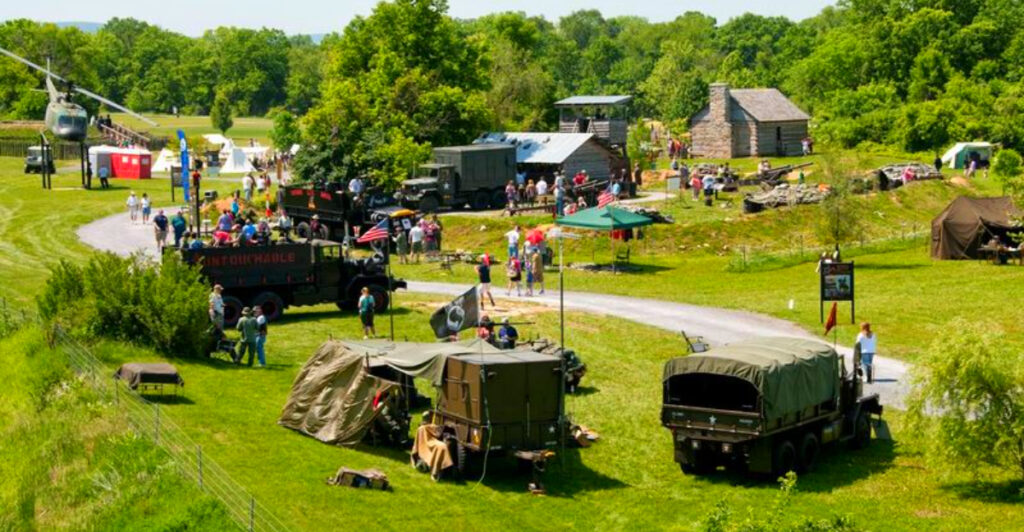
Scattered along the Heritage Trail, a collection of authentic military vehicles and aircraft delivers a powerful sense of the technology that has defined American warfare across generations. These are not replicas or scale models. They are the real machines, weathered and worn, that once served the nation.
An M-18 Tank Destroyer, nicknamed the Hellcat for its speed and agility, sits close enough to touch, its low profile and wide tracks hinting at the tactical thinking behind its design. A Vietnam-era Huey helicopter stands nearby, its rotors silent but its outline instantly recognizable to anyone who has ever seen footage from that conflict. The M60 Patton tank is simply enormous in person, and standing next to it reshapes your understanding of what armored warfare actually looks like at ground level.
Visitors frequently mention the helicopters and military vehicles as highlights, and it is easy to understand why. The sheer physical presence of these machines creates a kind of reverence that no photograph or documentary fully captures. Keep walking the trail and more surprises are waiting around the next curve.
The Soldier Experience Gallery: One Dog Tag, One Story
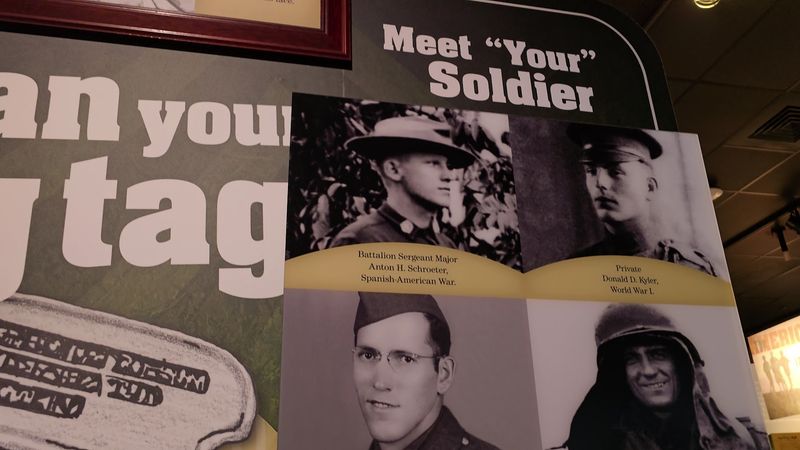
The indoor Visitor and Education Center houses the Soldier Experience Gallery, and the first thing you do when you walk in is pick up a dog tag from the information desk. Each tag represents a real soldier whose personal story is woven through the exhibit, and scanning it at various stations throughout the gallery reveals new chapters of that individual’s life and service.
The gallery spans military history from the Spanish-American War through operations in Afghanistan, and it manages to cover that enormous range without ever feeling rushed or superficial. Artifacts including personal letters, worn uniforms, mess kits, and field equipment fill the cases, while oral history recordings bring actual voices from the past into the present moment.
The personal angle is what makes this gallery work so well. Following one soldier’s journey transforms what could easily become an overwhelming flood of dates and facts into something genuinely human and emotionally resonant. By the time you finish the gallery, that dog tag feels like more than a prop, and the story attached to it stays with you long after you leave.
Hands-On Fun: Simulations, Shooting Ranges, and Parachute Jumps
History museums that ask you to only look and never touch can feel exhausting after a while, which is exactly why the interactive elements inside the Soldier Experience Gallery come as such a welcome change of pace. The digital shooting range lets visitors test their aim in a simulated scenario, offering a small but telling glimpse into the concentration required of a trained soldier.
The simulated World War II parachute jump is a crowd favorite, particularly with younger visitors who approach it with the kind of fearless enthusiasm that makes adults slightly envious. A basic combat training simulation adds another layer of physical engagement, giving a playful but informative sense of what recruits experience. The Vietnam-era booby trap and tunnel display rounds out the interactive options with a more strategic, problem-solving perspective.
These features ensure the gallery never becomes a passive experience. Families with energetic kids especially appreciate having something to do between reading the exhibit panels, and the activities are designed to reinforce the historical content rather than distract from it. The gift shop nearby stocks some genuinely interesting souvenirs, including custom dog tags.
Ridgway Hall: The Army’s Largest Research Archive
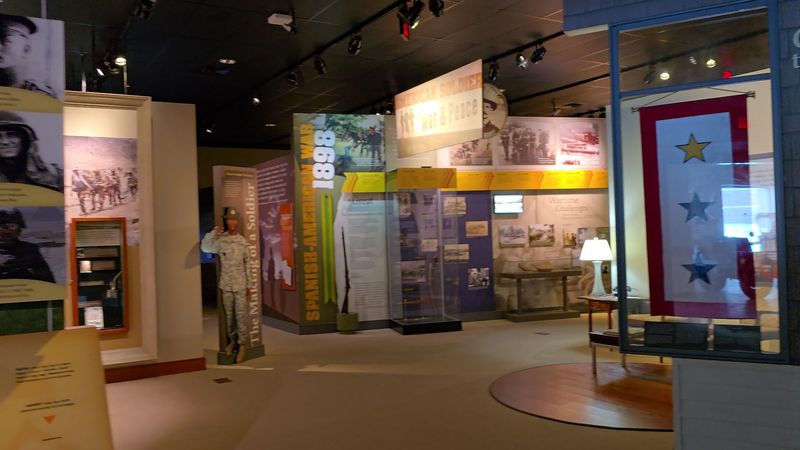
Tucked within the campus, Ridgway Hall serves as the home of the U.S. Army Military History Institute, and its holdings are staggering in both volume and historical depth. The collections contain over 14 million items, making it the Army’s preeminent research facility and one of the most significant military archives anywhere in the country.
The Civil War holdings alone are extraordinary. Ridgway Hall houses the world’s largest collection of Civil War photographs, with approximately 85,000 images offering silent testimony to that defining conflict. Alongside those photographs sit 64,000 Civil War books, including 16,000 regimental histories, plus unpublished letters, diaries, and memoirs from thousands of Federal and Confederate soldiers.
Genealogists, historians, and serious researchers regularly make the trip to Carlisle specifically for access to these primary sources. If you plan to use the archive, scheduling an appointment in advance and submitting a pull list of desired materials beforehand is strongly recommended. Even if research is not your goal, simply knowing this depth of documentation exists, dedicated entirely to preserving individual soldier voices, carries its own quiet power.
The Hessian Powder Magazine: A Revolutionary War Relic Still Standing
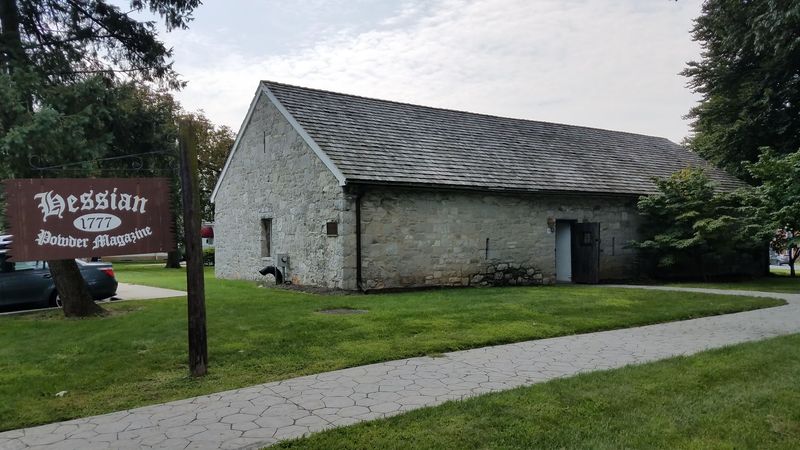
Just a short distance from the main campus, on the grounds of Carlisle Barracks itself, stands one of the most quietly remarkable structures in Pennsylvania. The Hessian Powder Magazine was built in 1777 by captured German soldiers during the American Revolution, and it still stands today as a tangible link to the very birth of the United States Army.
The building now houses an exhibit titled “From Powder to Purpose: Carlisle Barracks from Revolution to Today,” which traces the long and layered history of this military installation from its earliest days as a supply and training hub through its present-day role. It is a compact but compelling exhibit that places the entire campus in its proper historical context.
Carlisle Barracks holds the distinction of being one of the oldest continuously operating military posts in the country, and the powder magazine makes that claim feel real rather than abstract. Standing beside a structure built by Revolutionary War prisoners, you get a sudden, vivid sense of just how long this land has been connected to the American military story.
Modern Wars on Display: Afghanistan, Iraq, and the Army Reserve
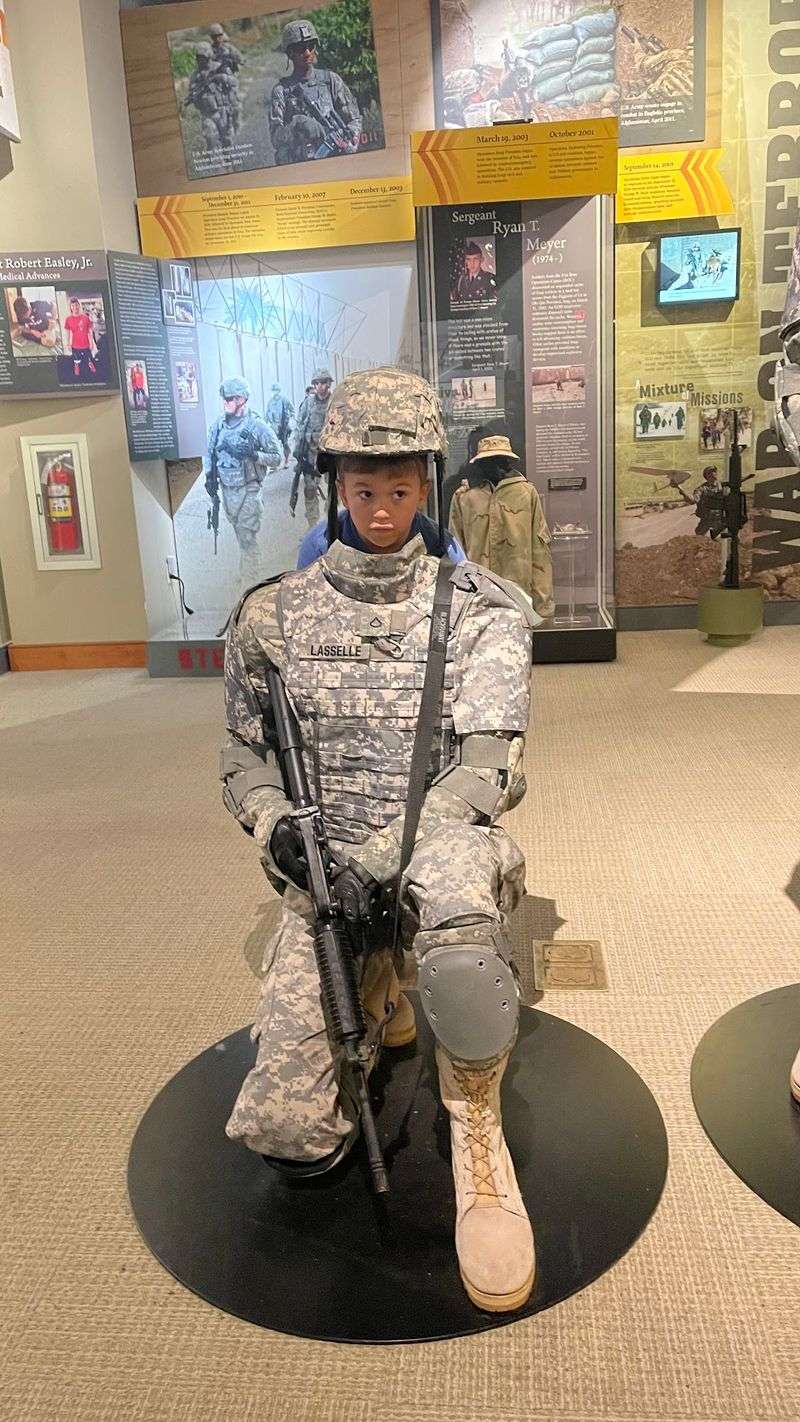
The Army Heritage Trail does not stop at World War II or Vietnam. One of its newer additions, “Operating for Freedom: The U.S. Army in Afghanistan and Iraq,” brings the narrative right up to the present, honoring the service of men and women who deployed in wars that many visitors remember watching on the news.
The exhibit uses authentic materials, defensive structures, and military vehicles to place visitors inside the environments experienced during more than two decades of operations in those regions. The tone is respectful and focused on the operational realities of modern warfare, without sensationalizing or oversimplifying deeply complex events.
Inside, the “A Call to Arms” exhibit dedicated to the U.S. Army Reserve completes the contemporary picture. Using photographs, artifacts, and visuals, it traces the Reserve’s evolution from its early days to its current role in both domestic responses and international missions. Highlighting the contributions of service members who balance civilian careers with military commitment adds an important dimension to the center’s overall story, one that connects history to the present in a very direct way.
Planning Your Visit: Hours, Accessibility, and Practical Tips
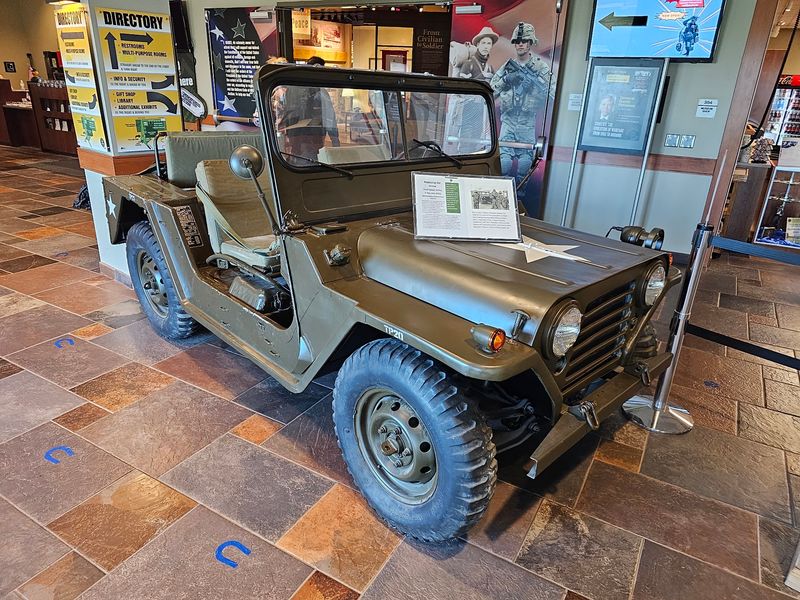
Getting the most out of a trip to the center starts with a few practical details. The indoor Visitor and Education Center is open Tuesday through Saturday from 10 AM to 5 PM, and it is closed on Sundays and Mondays, so checking the current schedule before you go is worth the extra minute. The Army Heritage Trail is accessible from dawn to dusk every day of the week, giving early risers a peaceful option.
Plan for at least two to three hours if you want to cover both the indoor galleries and the full outdoor trail without rushing. A full day is entirely reasonable, and many visitors report wishing they had more time. The campus is completely wheelchair accessible, and complimentary wheelchairs are available at the information desk for anyone who needs one.
Leashed dogs are welcome on the outdoor trail, which makes this an easy stop for travelers journeying with pets. A donation box sits near the entrance, and while there is no admission charge, a small contribution helps support ongoing programming. The gift shop carries books, clothing, military art, and custom dog tags at reasonable prices.
National Recognition and Community Events: A Museum That Keeps Giving
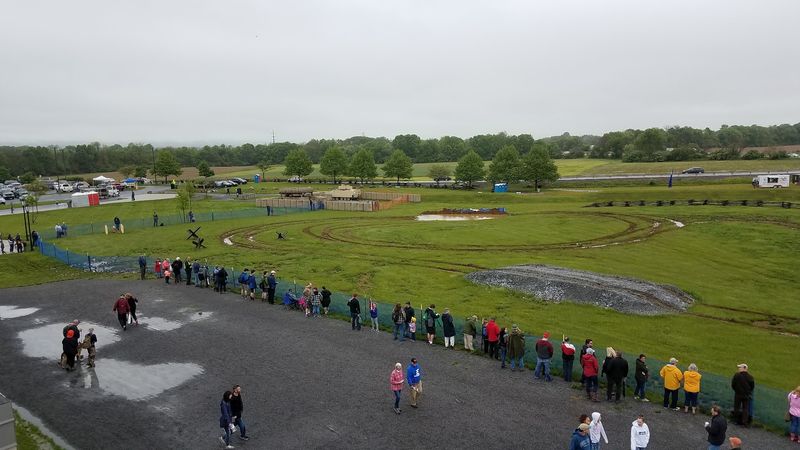
Newsweek named the U.S. Army Heritage and Education Center to its Reader’s Choice list of the Top 10 Best Free Museums for 2025, a recognition that reflects what visitors have been saying in reviews for years. A 4.8-star rating from nearly 2,000 reviewers is not an accident; it is the result of consistent quality, thoughtful curation, and a staff that genuinely cares about the visitor experience.
Beyond its permanent exhibits, the center runs a dynamic calendar of events throughout the year. A regular lecture series brings historians, authors, and subject-matter experts to campus for talks that go deeper than any exhibit panel can. The annual Army Expo, typically held in September, features living history presentations and reenactors who embody soldiers from different eras with impressive authenticity.
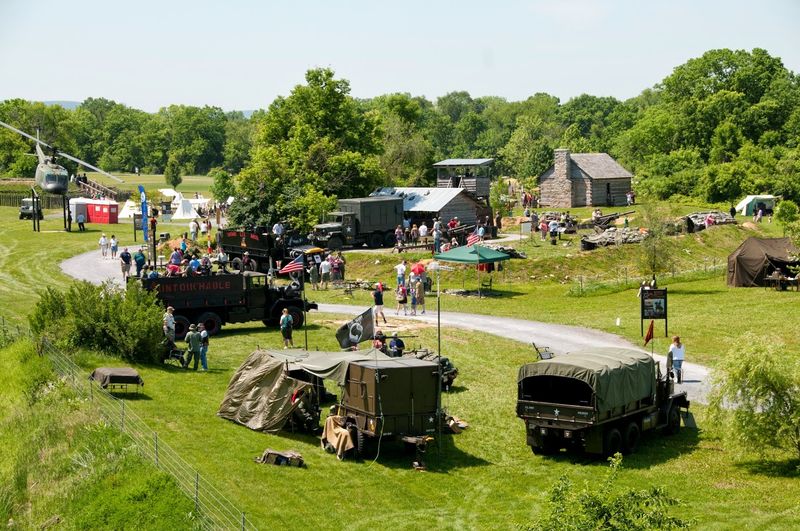
Weekend visits occasionally coincide with reenactors on the grounds, transforming the already vivid outdoor trail into something even more alive and immediate. These events extend the center’s reach beyond its walls and reinforce its role as an active community institution rather than a passive repository of old objects. Every visit has the potential to offer something a little different, which is a rare quality in any museum.
Share this story