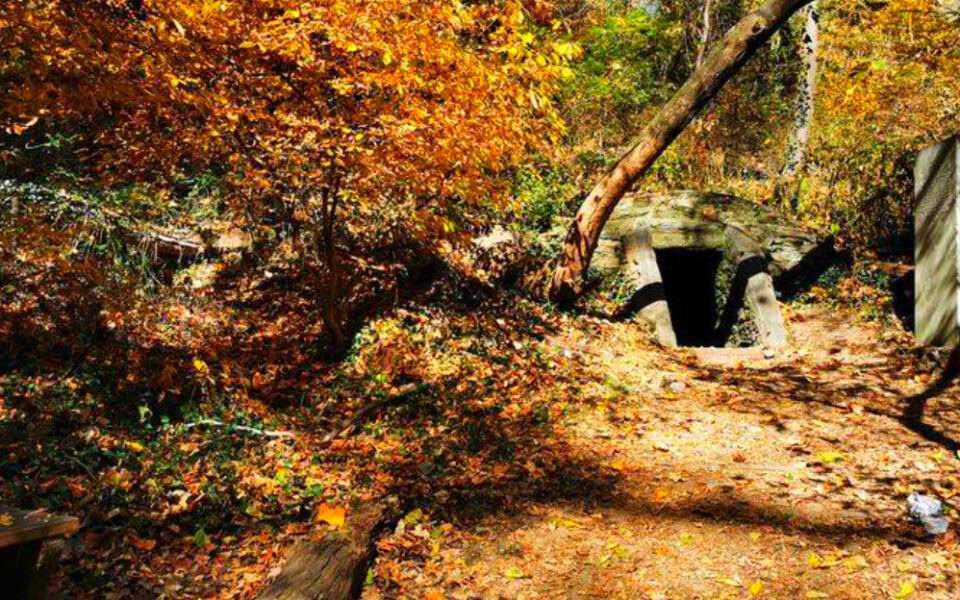
Somewhere in the forested folds of Philadelphia, a small stone chamber sits quietly on a hillside, holding secrets that stretch back more than three centuries. A group of learned German mystics once gathered here, convinced the world was about to end, scanning the night sky with telescopes and filling their days with prayer, alchemy, and ancient wisdom.
They called this wilderness their sanctuary, and the hollow they retreated to still stands today, tucked inside one of the most surprisingly wild urban parks in the entire country. What makes this place so compelling is not just the dramatic prophecy that brought these men here, but the remarkable lives they built while waiting for an apocalypse that never came.
From a scholar-hermit who composed hymns in the forest to a painted portrait that became the first oil painting in the New World, the story layered into this modest cave is far richer than its unassuming entrance suggests. Keep reading, because this is one Pennsylvania destination that genuinely earns its mystery.
The Exact Spot Where History Hides in Plain Sight
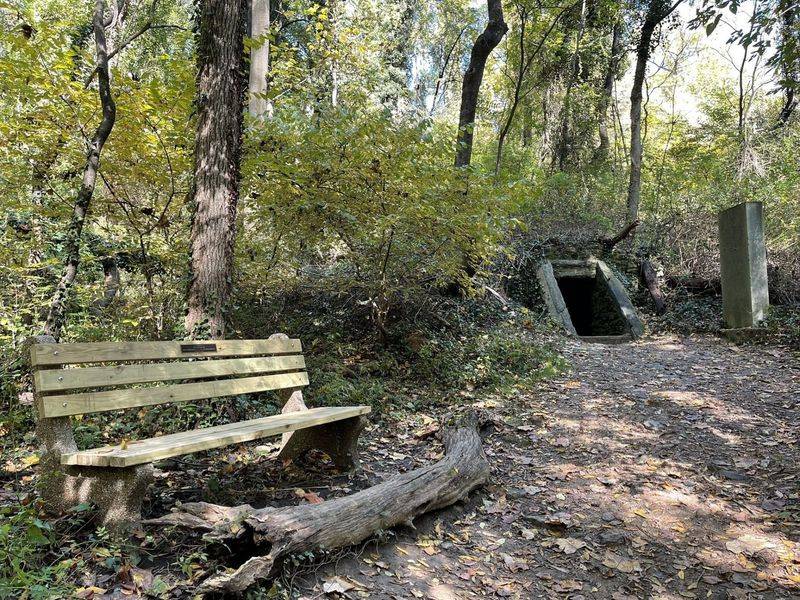
Most people drive past Hermit Lane without giving it a second thought, but that quiet road in the Roxborough neighborhood of Northwest Philadelphia leads to one of the most historically loaded sites in the entire state.
Kelpius Cave sits at 777 Hermit Ln, Philadelphia, PA 19128, nestled within the stunning Wissahickon Valley Park, on a forested hillside overlooking Wissahickon Creek. The site is open daily from 9 AM to 8 PM, making it accessible for both morning hikers and late-afternoon explorers.
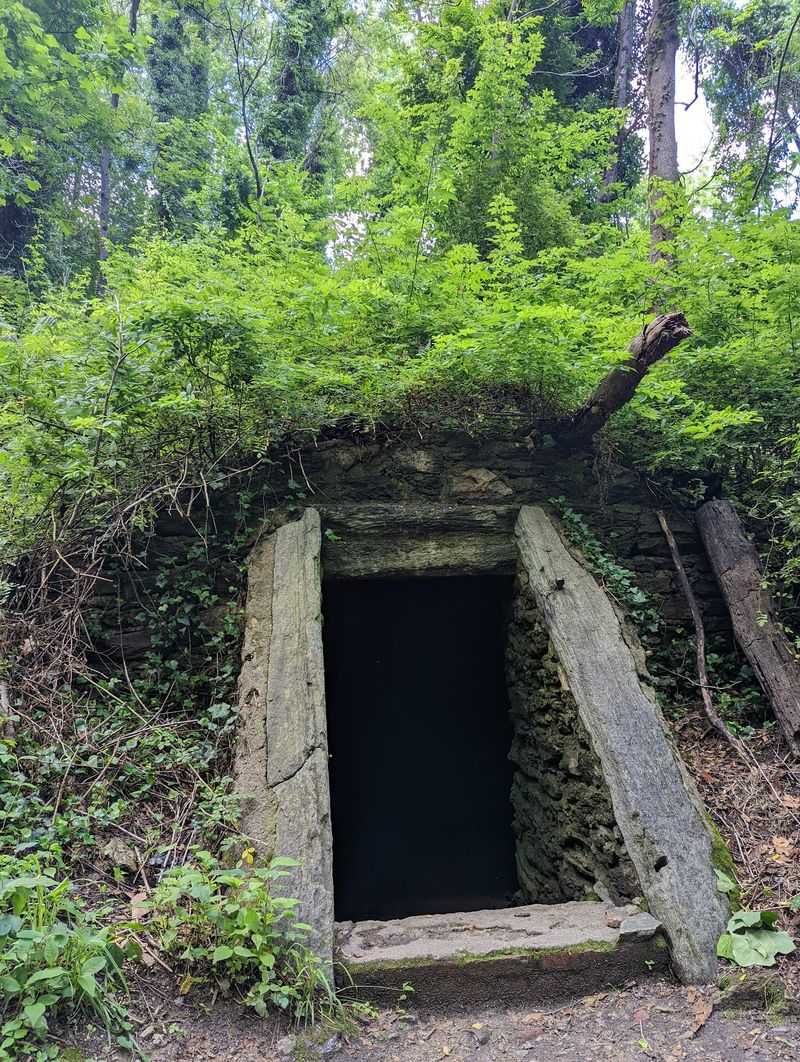
The cave’s coordinates place it at approximately 40.024 degrees north latitude, deep within a valley so lush and secluded that the city practically disappears around you. A stone-framed entrance built into the slope greets visitors who make the short but rewarding trek from the trailhead.
The Friends of the Wissahickon conservancy helps maintain the surrounding area, ensuring the site remains protected and accessible for anyone curious enough to seek it out.
A Band of German Mystics Who Bet Everything on 1694
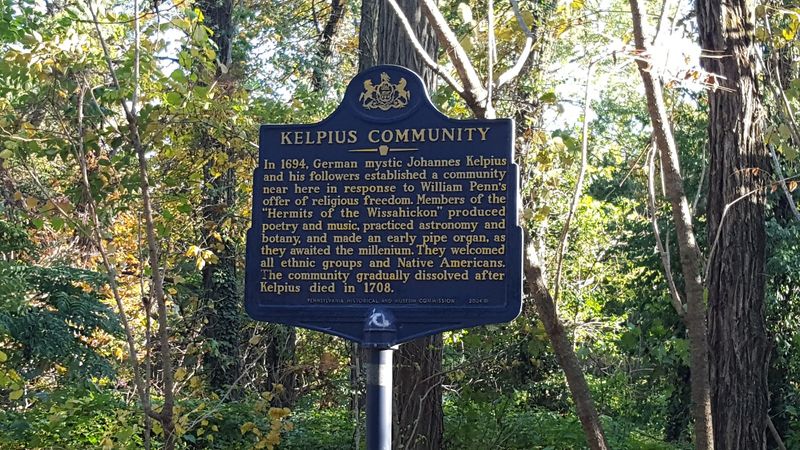
The year 1694 was not just a calendar entry for Johannes Kelpius and his followers. It was, in their deeply held belief, the final chapter of human history, the precise moment when the biblical millennium would begin and the world as they knew it would transform forever.
Kelpius led roughly 40 celibate, highly educated German Pietists across the Atlantic Ocean, guided by their interpretation of the Book of Revelation, specifically chapter 12, which described a woman fleeing into the wilderness for divine protection. They called themselves the Society of the Woman of the Wilderness, and they chose the Wissahickon Valley as their sacred refuge.
William Penn’s promise of religious freedom made Pennsylvania the obvious destination for groups facing persecution in Europe. The dense, untamed wilderness along the creek felt like the very edge of the known world, which suited their prophetic expectations perfectly.
Their conviction was absolute, their preparation meticulous, and their arrival marked the beginning of one of colonial America’s most extraordinary spiritual experiments.
The Scholar-Hermit Who Ran the Whole Operation
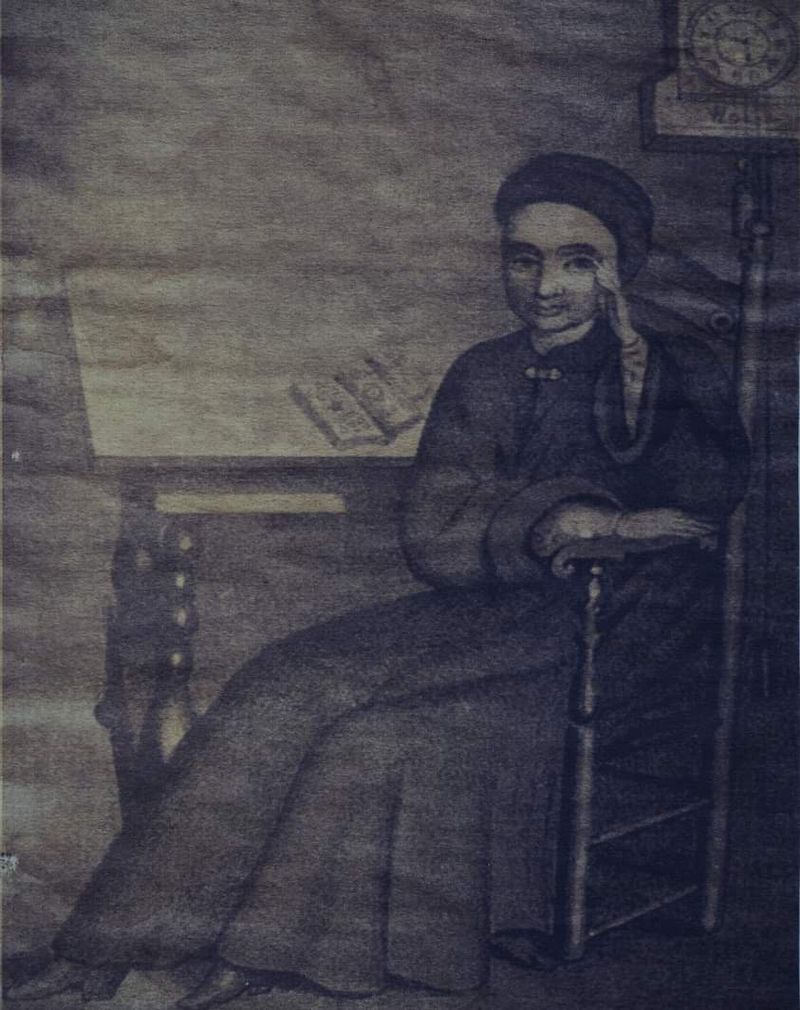
There is something almost paradoxical about a 26-year-old prodigy choosing to live in a forest cave while waiting for the apocalypse, but Johannes Kelpius was no ordinary young man.
Born in Transylvania and educated across Europe, Kelpius arrived in the Wissahickon Valley fluent in multiple disciplines: alchemy, botany, mathematics, astronomy, theology, and music. His followers were equally accomplished, including trained physicians, lawyers, skilled musicians, and practiced astrologists.
This was not a band of frightened peasants fleeing chaos; it was an intellectual community operating at the frontier of both science and spirituality.
Kelpius personally sought out the cave as a space for solitary meditation and deep contemplation, using its seclusion to sharpen his spiritual focus. He also composed hymns during his time in the glen, including a piece titled “A Loving Moan of the Disconsolate Soul in the Morning Dawn,” which reflects both his artistic sensitivity and his genuine longing for divine connection.
His brilliance made the community’s story far more layered than a simple tale of misguided prophecy.
What Life Actually Looked Like in Hermit’s Glen
The image of 40 men huddled in a single cave is a romantic one, but the reality of daily life in Hermit’s Glen was far more structured and surprisingly sophisticated.
The community built a large log tabernacle said to measure 40 feet square, a number they believed carried mystical significance. Inside, the structure contained a communal worship space, a modest dining area, individual monks’ cells called kammern, and a belfry fitted with a window that doubled as an astronomical observatory.
From that observatory, using a telescope brought from Europe by Johann Zimmerman, the brethren scanned the heavens nightly for celestial signs of the Second Coming. Their days were filled with gardening, studying medicinal herbs, conducting legal and medical consultations for nearby settlers, and practicing music together.
They even maintained peaceful relations with the Lenni-Lenape tribe, sharing their knowledge freely. The cave itself served as a quieter annex to this busy communal life, a place where Kelpius retreated when he needed stillness that even the tabernacle could not provide.
The Cave Itself: Smaller Than You Expect, Bigger Than You Think
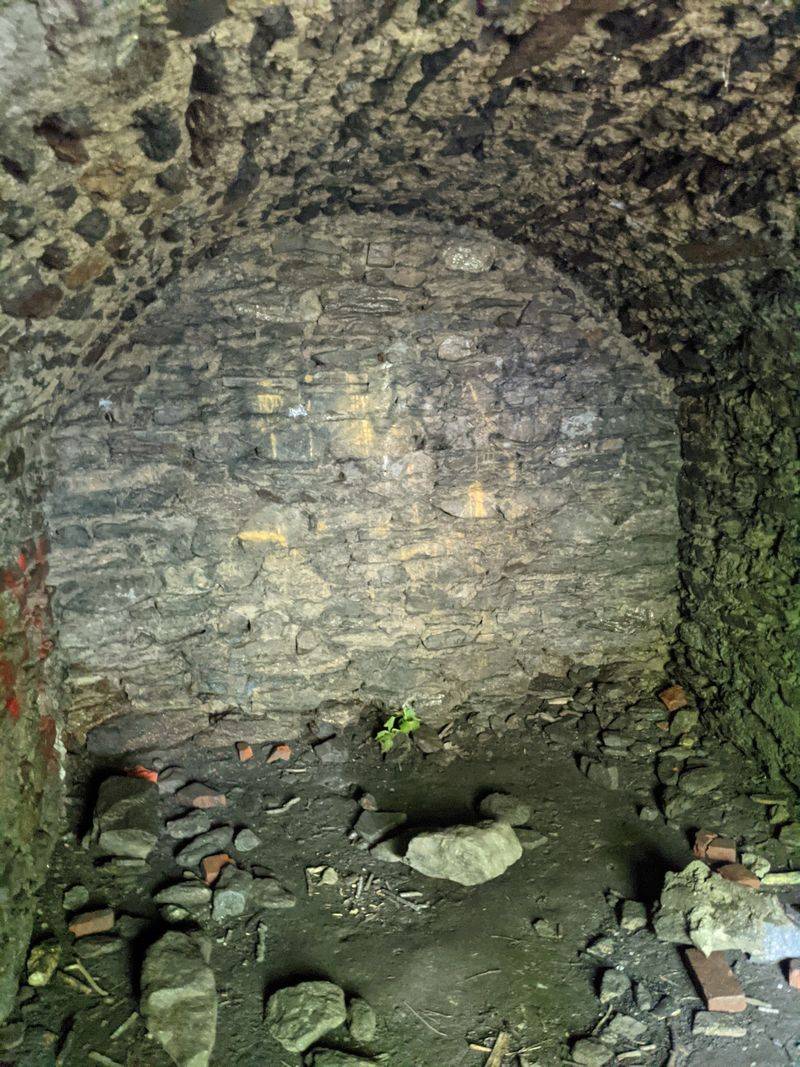
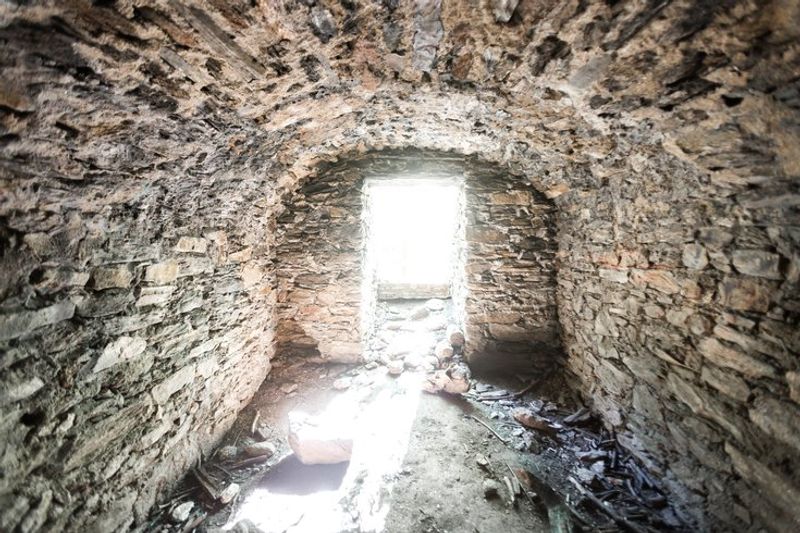
Honestly, the first thing most visitors notice about Kelpius Cave is that it is much smaller than the word “cave” implies. The structure is a compact, man-made chamber built into the hillside using stone and mortar, with a solid dirt floor and walls that press in close enough to remind you that personal space was clearly not a priority for 17th-century hermits.
Historians have long debated whether the site was originally a springhouse or root cellar that the mystics later adapted for their purposes. Until the 1940s, the chamber even had a fireplace and chimney, suggesting it may have served as a functional shelter rather than a purely symbolic retreat.
Those features were unfortunately removed after repeated acts of vandalism.
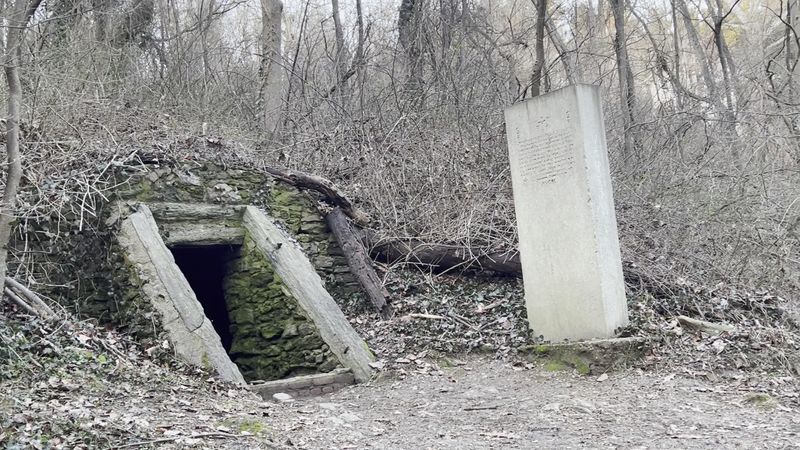
Today the interior is dim, damp, and atmospheric in the best possible way. A stone-framed entrance frames the opening like a portal, and a granite monolith placed outside in 1961 tells part of the site’s story for visitors who arrive without prior knowledge.
Small as it is, the cave carries a presence that genuinely surprises people.
When the Apocalypse Didn’t Show Up
The year 1694 came and went without incident. Then 1700 arrived, carrying with it another wave of prophetic anticipation, and departed just as quietly.
For a community built entirely around the belief that time was nearly up, the continued ticking of the clock presented a spiritual challenge that no amount of star-gazing could resolve.
Kelpius handled the disappointment with a kind of stubborn grace, continuing his solitary meditations in the cave and maintaining his scholarly routines even as the group’s cohesion slowly unraveled. His health, however, did not hold up as well as his faith.
The damp conditions of the Wissahickon took a toll on his body, and he passed away from tuberculosis in 1708 at just 35 years old.
With their visionary leader gone and the prophesied end nowhere in sight, the Society of the Woman of the Wilderness gradually disbanded. Former members married, settled into Germantown, and applied their skills to colonial life as doctors, teachers, lawyers, and bookbinders.
The apocalypse never came, but a fascinating community quietly dispersed into the fabric of early Pennsylvania.
A Legacy Woven Into Philadelphia’s DNA
Few people realize that the ripple effects of Kelpius and his followers can still be felt across Philadelphia today, embedded in everything from neighborhood names to the history of American art.
Dr. Christopher Witt, one of the community’s members, painted what is widely recognized as the first oil portrait created in the Western Hemisphere, with Kelpius himself as the subject. That painting now resides at the Historical Society of Pennsylvania, making it a genuinely significant artifact hiding in plain sight.
Kelpius is also credited with performing the first regular ordination of an orthodox Lutheran clergyman in the Western Hemisphere, a theological milestone that rarely gets the recognition it deserves. Even the name Roxborough, the Philadelphia neighborhood that borders Wissahickon Valley Park, is thought to trace back to a 1706 letter in which Kelpius referred to the area as “Rocks-burrow.”
A granite monolith outside the cave, placed by a local Rosicrucian woman in 1961, claims Kelpius as the original American Rosicrucian master, a connection that remains unverified but continues to fuel the site’s mystical reputation.
The Rosicrucian Connection That Keeps Things Interesting
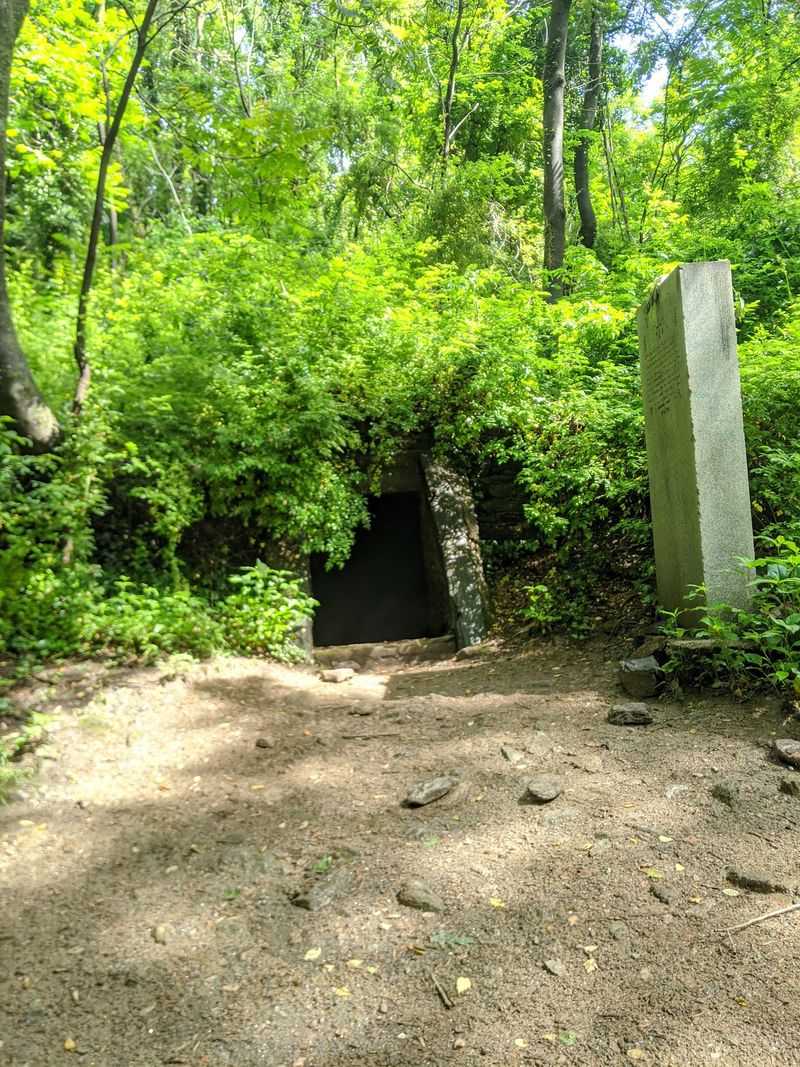
If the story of a group of German apocalypse-watchers living in a forest cave was not intriguing enough, the Rosicrucian angle adds another layer of mystery that historians are still sorting through centuries later.
The Rosicrucians are a worldwide mystical brotherhood that claims access to ancient secret wisdom with roots stretching back to Egypt. In 1961, a local woman associated with this organization placed a granite monolith just outside the cave entrance, declaring Kelpius the original American Rosicrucian master.
The inscription makes a bold claim, and it draws Rosicrucian pilgrims to the site to this day.
The problem, and the intrigue, is that Kelpius’s own writings never authenticate this connection. He was deeply spiritual and intellectually eclectic, drawing from multiple mystical traditions, but whether he considered himself a Rosicrucian in any formal sense remains an open question.
The ambiguity only adds to the cave’s magnetic pull. Visitors who arrive expecting a simple historical marker often leave with a head full of questions, which is arguably the best souvenir a historical site can offer.
Hiking to the Cave: What the Trail Actually Feels Like
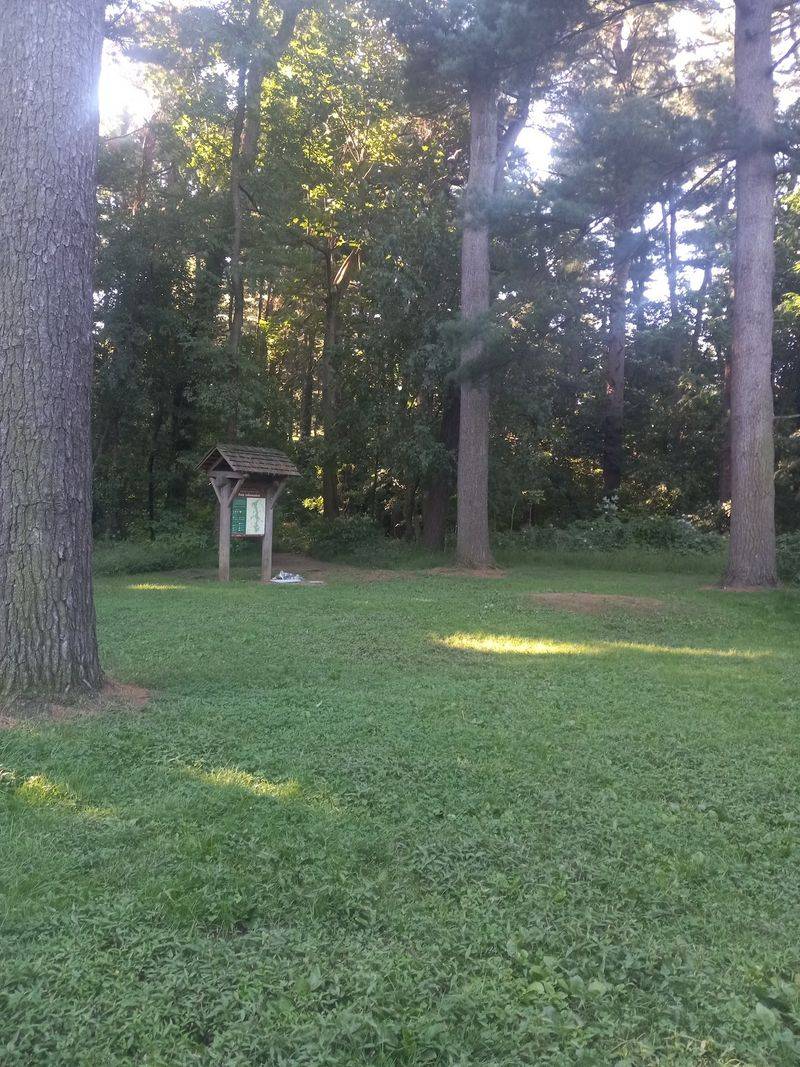
Getting to Kelpius Cave is half the experience, and the trail system that winds through Wissahickon Valley Park does not disappoint on that front.
Most visitors start from parking areas along Hermit Lane and follow the Yellow Trail into Hermit’s Glen. A small detour sign reading “Hermit’s Cave 0.1 miles” marks the turn-off, and the short loop hike to reach it typically covers between 0.9 and 1.4 miles depending on your chosen route.
The path mixes wide, flat gravel sections along the famous Forbidden Drive with rougher, root-crossed terrain that feels genuinely wild.
Sturdy footwear is a smart choice, especially after rain, when the hillside paths can get slippery. Dogs are welcome throughout the park as long as leash rules and waste disposal guidelines are followed.
The cave itself sits just off the main trail, marked clearly enough to find without too much wandering, though first-time visitors often appreciate checking trail maps in advance.
The hike back out, with the creek sounds fading behind you, has a way of making the city feel very far away indeed.
Wissahickon Valley Park: The Urban Wilderness That Shouldn’t Exist
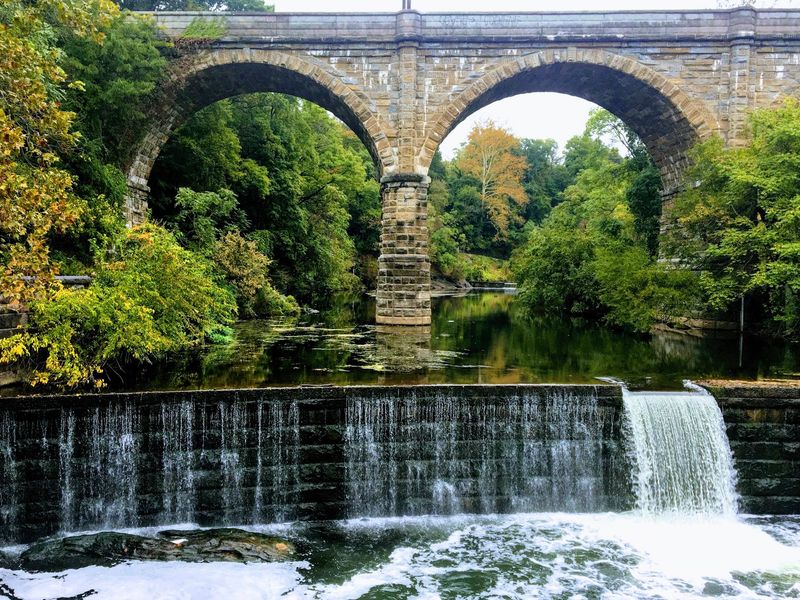
The fact that a 1,800-acre forested valley exists inside the boundaries of one of America’s largest cities is the kind of thing that takes a moment to fully register.
Wissahickon Valley Park draws more than a million visitors each year, offering hiking, biking, horseback riding, fishing, and birdwatching within a landscape that genuinely feels removed from urban life. The park also plays a practical role in protecting drinking water for a significant portion of Philadelphia’s population, making it as ecologically vital as it is historically rich.
Beyond Kelpius Cave, the park contains a collection of other landmarks worth exploring. The Valley Green Inn, a historic riverside building, has served visitors for generations.
Thomas Mill Covered Bridge, the only covered bridge remaining in Philadelphia County, spans a quiet section of the creek. A statue titled “Toleration,” honoring William Penn and erected in 1883, stands along one of the trails.
Each of these sites adds a different thread to the park’s already complex tapestry, making a single visit feel like reading several chapters of a very long and very good book.
Practical Tips Before You Make the Trip
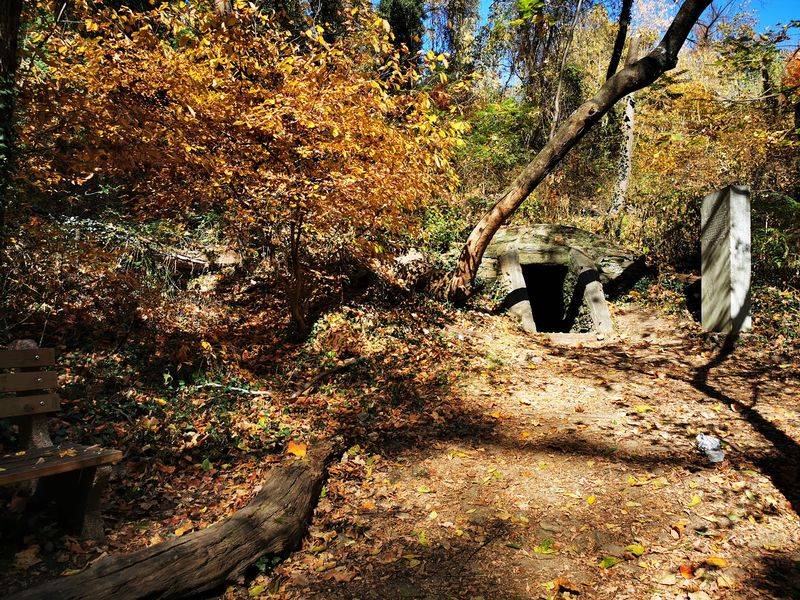
A visit to Kelpius Cave rewards the prepared, and a few practical details can make the difference between a smooth adventure and a frustrating one.
The site is open daily from 9 AM to 8 PM, which gives you a generous window across all four seasons. Spring brings wildflowers along the trail and a freshness to the forest floor that makes the whole glen feel newly minted.
Autumn turns the canopy into something spectacular, with the creek reflecting the reds and golds above it.
Parking along Hermit Lane is the most straightforward option for first-time visitors, though spots can fill up on busy weekend mornings. Arriving early or on a weekday dramatically improves your chances of having the trail to yourself.
Carrying water is always a good call, particularly during summer months when the hike can feel warmer than expected under the tree cover.
The cave interior is small and dark, so temper your expectations about the physical space and focus instead on the layered story it represents. That shift in perspective tends to make the experience considerably more satisfying for everyone who makes the journey.
Share this story