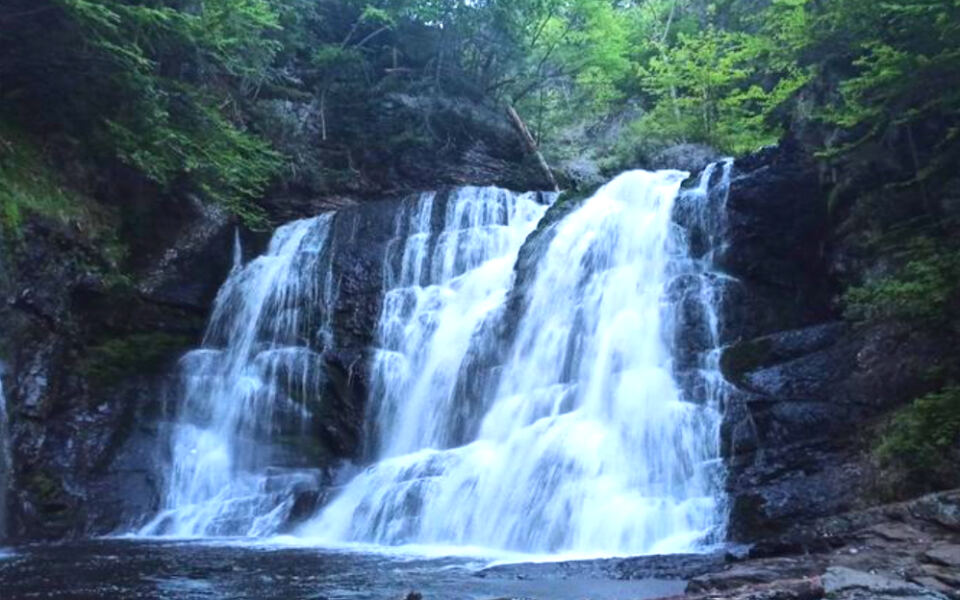
There is a waterfall in Pennsylvania that comes within a few feet of matching the height of Niagara Falls, and most people have never heard of it. Three separate cascades stack on top of each other, combining for a total drop of 178 feet through a hemlock-shaded gorge carved by glaciers millions of years ago.
The trail to reach it is barely half a mile long, admission is completely free, and the views from the two wooden observation platforms are the kind that make you stop mid-sentence and just stare. Whether you are a serious hiker or someone who simply wants a short walk with a jaw-dropping payoff, this spot in Pike County, Pennsylvania, delivers something that feels almost impossible to find so close to major East Coast cities.
Keep reading to find out exactly what makes this waterfall so special, what to expect on the trail, and how to plan a visit you will actually remember.
Where to Find Pennsylvania’s Record-Breaking Waterfall
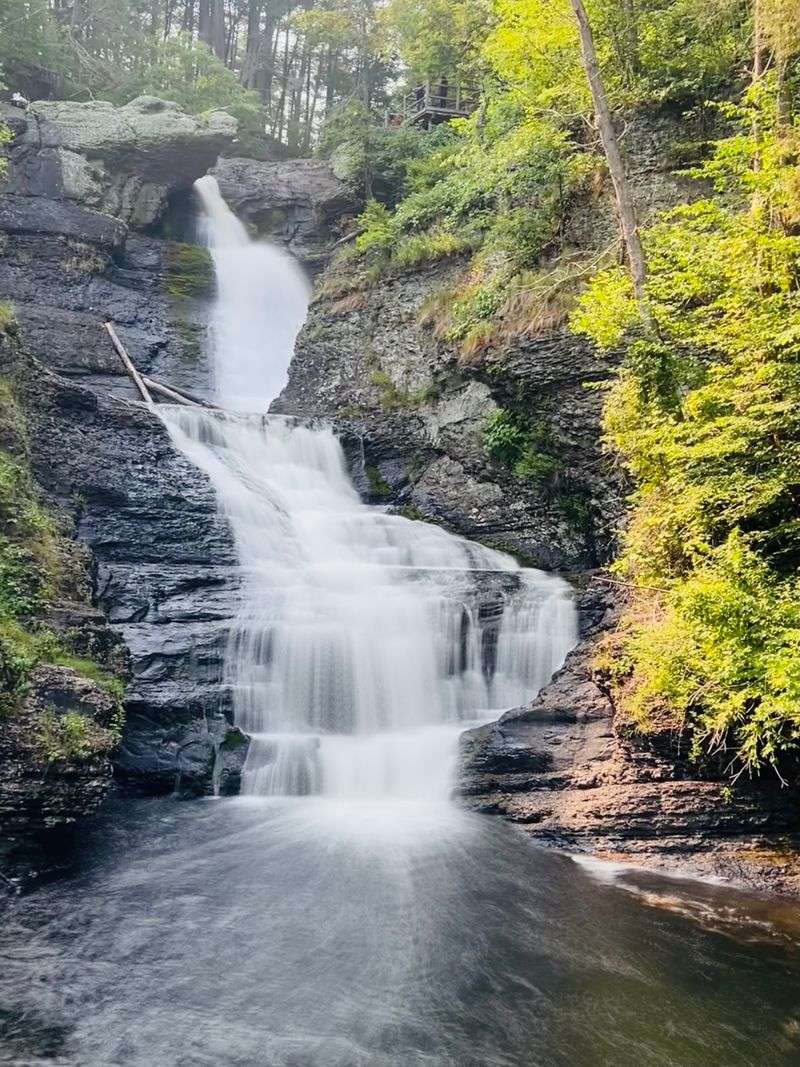
Raymondskill Falls sits at 917 Raymondskill Rd, Milford, PA 18337, tucked inside the Delaware Water Gap National Recreation Area in Pike County, Pennsylvania. The drive from New York City takes roughly two hours, and the route from Philadelphia is similarly quick, making this one of the most accessible natural wonders on the East Coast.
The falls are managed by the National Park Service as part of a 70,000-acre park that stretches across both Pennsylvania and New Jersey. There is no entry fee to visit the waterfall itself, which is a refreshing surprise given how spectacular the scenery turns out to be.
The parking area is labeled separately on mapping apps as “Raymondskill Falls Parking Lot,” so searching for that specific name will get you to the right spot without any confusion. First-time visitors should know there are actually two parking lots, and arriving at only the first one can mean a longer wait than necessary.
The Jaw-Dropping Numbers Behind the Three Tiers
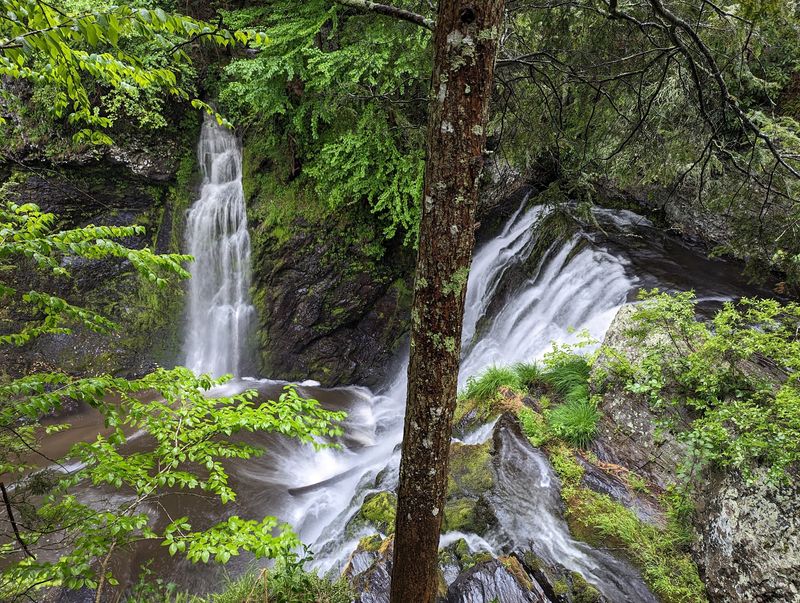
At 178 feet tall in total, Raymondskill Falls holds the official title of Pennsylvania’s tallest waterfall, and the number alone is worth sitting with for a moment. Niagara Falls drops approximately 167 feet on the American side, which means this relatively quiet waterfall in the Pocono Mountains actually edges it out by a comfortable margin.
The falls are divided into three distinct drops. The middle tier is the showstopper at roughly 90 feet, while the lower tier adds another 55 feet of cascading water.
Some measurements break the individual segments down as a 50-foot upper tier, a 40-foot angled middle slide, and a final 50-foot lower plunge.
Each tier has its own personality. The upper section rushes with force, the middle one fans out across the rock face in a wide curtain of white water, and the lower cascade pools at the base in a way that practically begs you to stand there and listen.
The sound alone is worth the trip.
How Ancient Glaciers Sculpted This Masterpiece
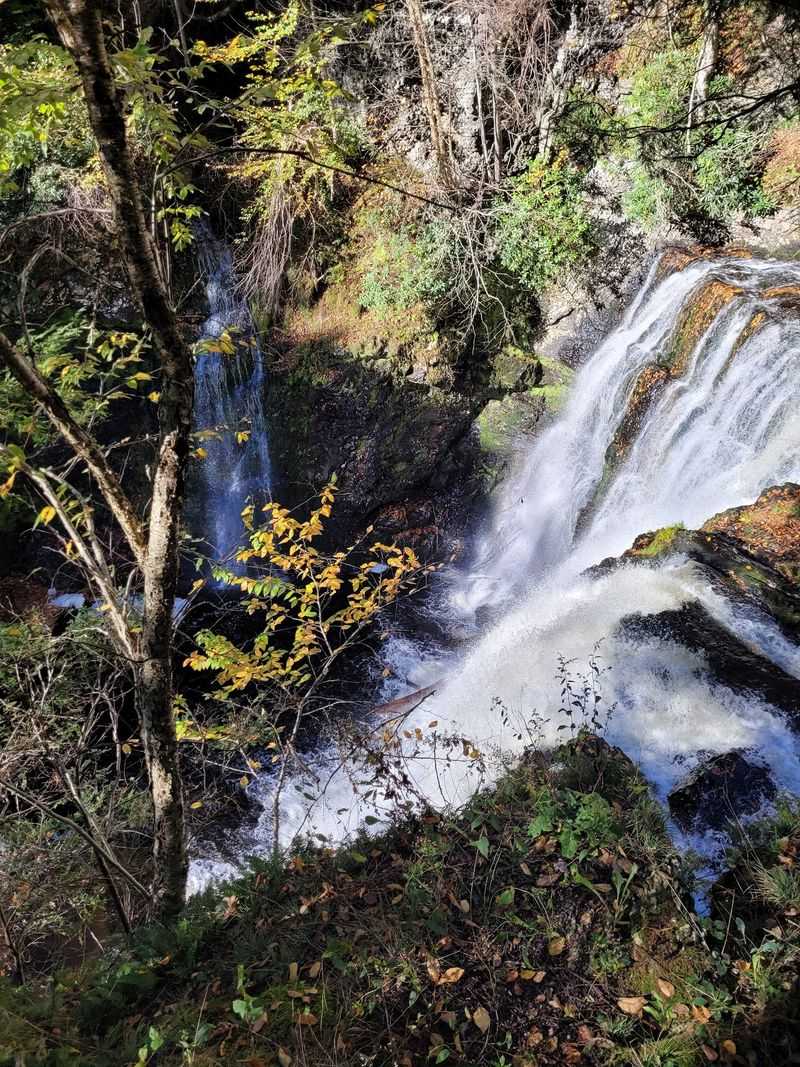
The story of Raymondskill Falls begins not with a trickle of water but with an enormous sheet of ice. During the Pleistocene epoch, glaciers advanced southward into northern Pennsylvania, dramatically deepening the Delaware River valley.
That deepening left Raymondskill Creek “hanging” high above the river, and the water has been tumbling down ever since to close the gap.
The rock the water carves through belongs to the Mahantango Formation, a mix of ancient sandstones, interbedded shales, and siltstones that formed hundreds of millions of years ago. You can see the layered texture clearly on the cliff faces surrounding the falls, and it gives the whole setting a sense of deep, geological weight.
This is not just a pretty waterfall. It is a living record of forces that shaped an entire region over millions of years, and standing in front of it, even briefly, connects you to a timeline that is genuinely hard to wrap your head around.
The geology here rewards a slow, curious look.
What the Trail Actually Feels Like Underfoot
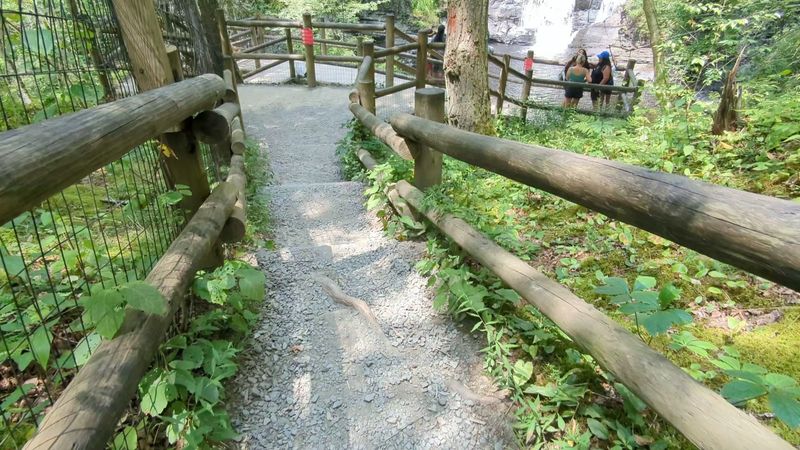
The Raymondskill Creek Trail is a loop that measures between 0.3 and 0.5 miles, depending on which sections you include. That short distance might suggest a casual stroll, but the trail has some genuinely steep sections with grades reaching up to 31 percent and brief stretches that push close to 50 percent incline.
Rock stairs, exposed roots, and uneven ground make up much of the path, so sturdy footwear is not optional. Wet conditions or winter visits make the surfaces noticeably slippery, and the railings along certain sections become genuinely useful rather than decorative.
Seniors and young children should take their time and use the handrails.
The trail is not wheelchair accessible or stroller-friendly, and the terrain makes that clear quickly. Despite the physical demands in certain spots, the overall distance is short enough that most visitors complete the full loop, including both viewing platforms, in under an hour.
The trail rewards effort with scenery that genuinely earns the climb every single time.
Two Viewing Platforms and the One That Wins Every Argument
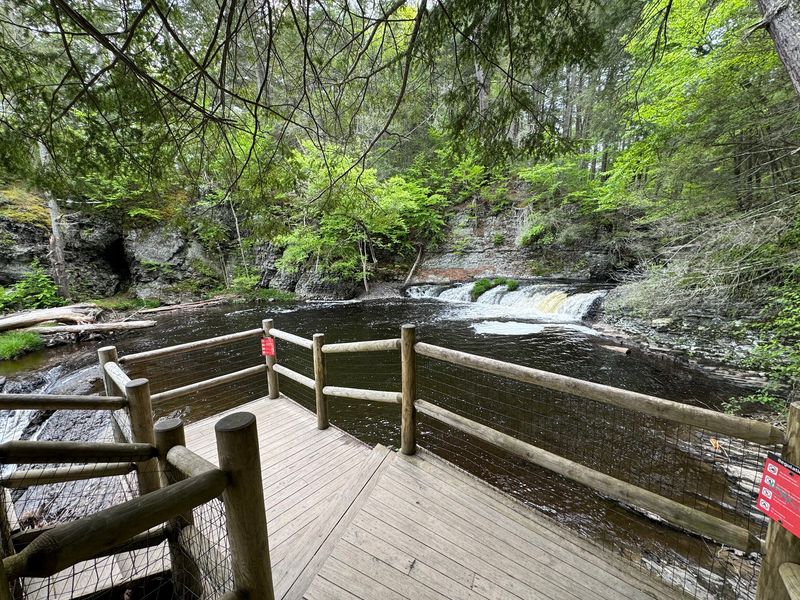
Two wooden observation platforms sit along the Raymondskill Creek Trail, each offering a completely different experience of the same waterfall. The upper platform positions you near the head of the falls, giving an intimate, close-range look at the water as it begins its dramatic descent over the first tier.
The lower platform is where most people stop and simply stare. From that vantage point, all three tiers come into view simultaneously, and the full scale of the 178-foot drop becomes undeniable.
Photographers tend to plant themselves here for extended periods, and it is easy to understand why once you see the composition it offers.
Both platforms are solidly built and provide enough space for groups to spread out comfortably. The lower one can be reached either by continuing down from the upper platform along the loop trail or by taking a more direct path from the secondary parking area.
Either way, the lower platform is the one that tends to stay in your memory long after the visit ends.
The Hemlock Ravine That Wraps the Whole Experience in Shade
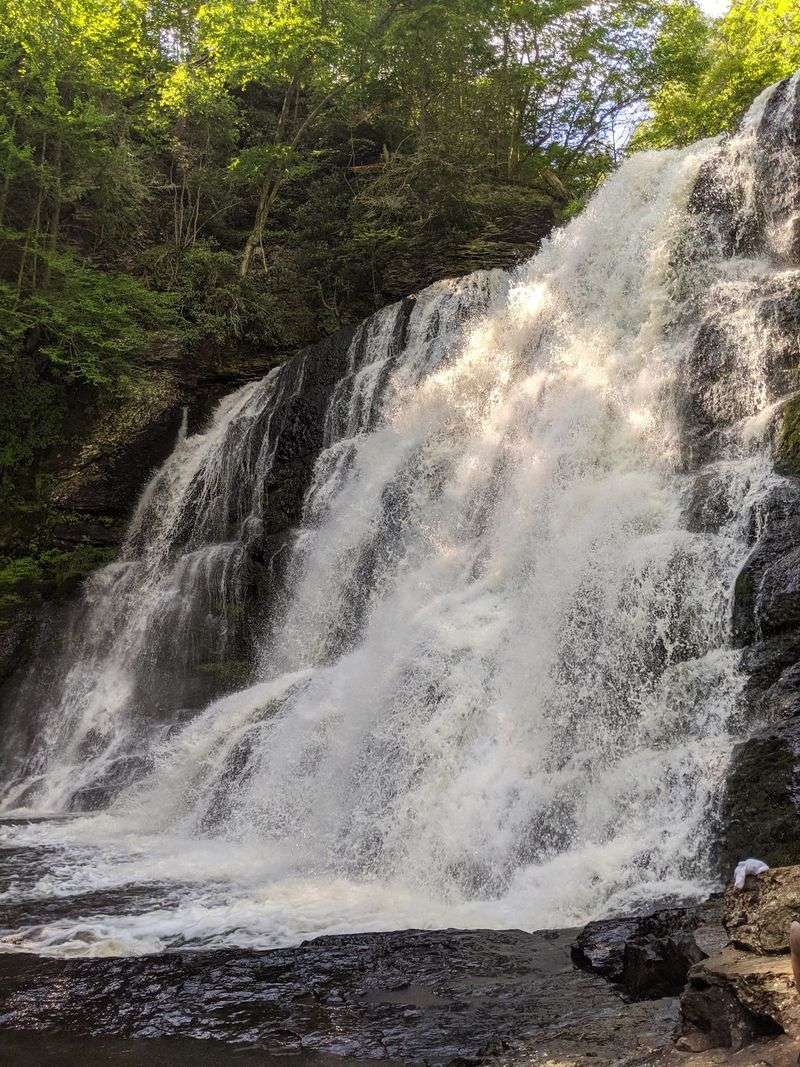
The walk to the falls is not just a means to an end. The trail passes through a hemlock ravine that feels genuinely cool and quiet even on warm summer days, with the dense canopy filtering sunlight into soft, scattered patches on the forest floor.
Hemlock trees dominate the landscape here, their feathery branches creating a cathedral-like ceiling above the trail. The air carries a distinct freshness, and the sound of Raymondskill Creek builds gradually as you move deeper into the ravine, adding a kind of natural soundtrack to the approach.
Mossy boulders, fern-covered slopes, and the occasional glimpse of rushing water through the trees make the ravine feel like its own destination, separate from the falls. The ecosystem is diverse and active.
Woodpeckers tap away at the hemlocks, warblers flit through the understory, and white-tailed deer move quietly through the brush when the trail is not too busy. Bald eagles have been spotted soaring above the gorge on clear days, which adds an unexpected thrill to an already rewarding walk.
Wildlife Encounters Worth Keeping Your Eyes Open For
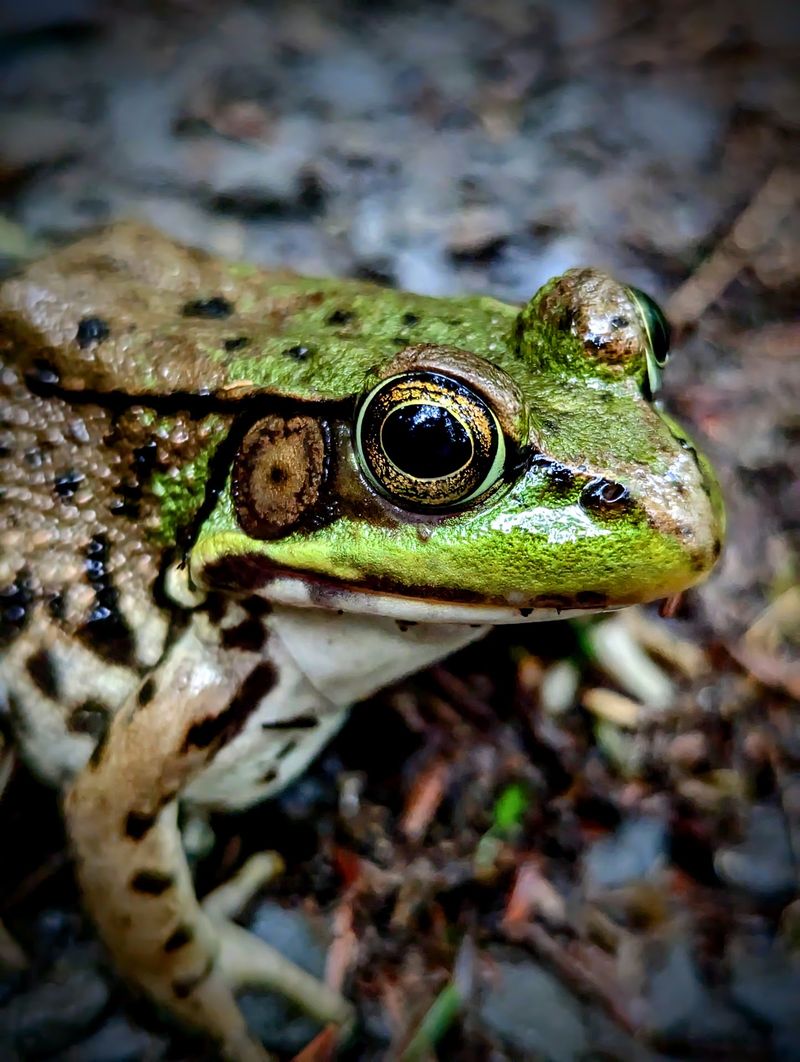
The Delaware Water Gap National Recreation Area surrounding Raymondskill Falls supports a surprisingly rich variety of wildlife, and the trail to the falls is a good place to encounter some of it. Woodpeckers are frequent companions along the hemlock ravine, their rhythmic tapping audible even over the sound of the creek.
Warblers pass through the area during migration seasons, making spring and fall particularly rewarding for anyone who enjoys birdwatching. White-tailed deer move through the underbrush with a quiet confidence that suggests they are used to sharing the space with respectful visitors.
Bald eagles have been observed riding thermals above the gorge, a sight that tends to bring any conversation to an immediate halt.
Bears are also present in the broader recreation area, and while encounters on the main trail are uncommon, awareness is always sensible. The biodiversity here reflects the health of the larger ecosystem, and the falls sit at the center of a natural environment that rewards patience and quiet observation just as much as the dramatic waterfall itself does.
The Best Seasons to Visit and What Each One Offers
Spring is when Raymondskill Falls performs at full volume. Snowmelt and heavy spring rains push the water flow to its peak, and the roar of the falls can be heard from well back on the trail.
New leaves and early wildflowers add color to the hemlock ravine, and the whole scene feels freshly charged with energy.
Summer brings a lush, green canopy that shades the trail effectively and keeps temperatures manageable. The flow is lower than spring but still impressive, and the cool air near the base of the falls provides a natural respite on hot afternoons.
Fall transforms the surrounding hillsides into a canvas of reds, oranges, and yellows that frame the waterfall in a way that feels almost theatrical.
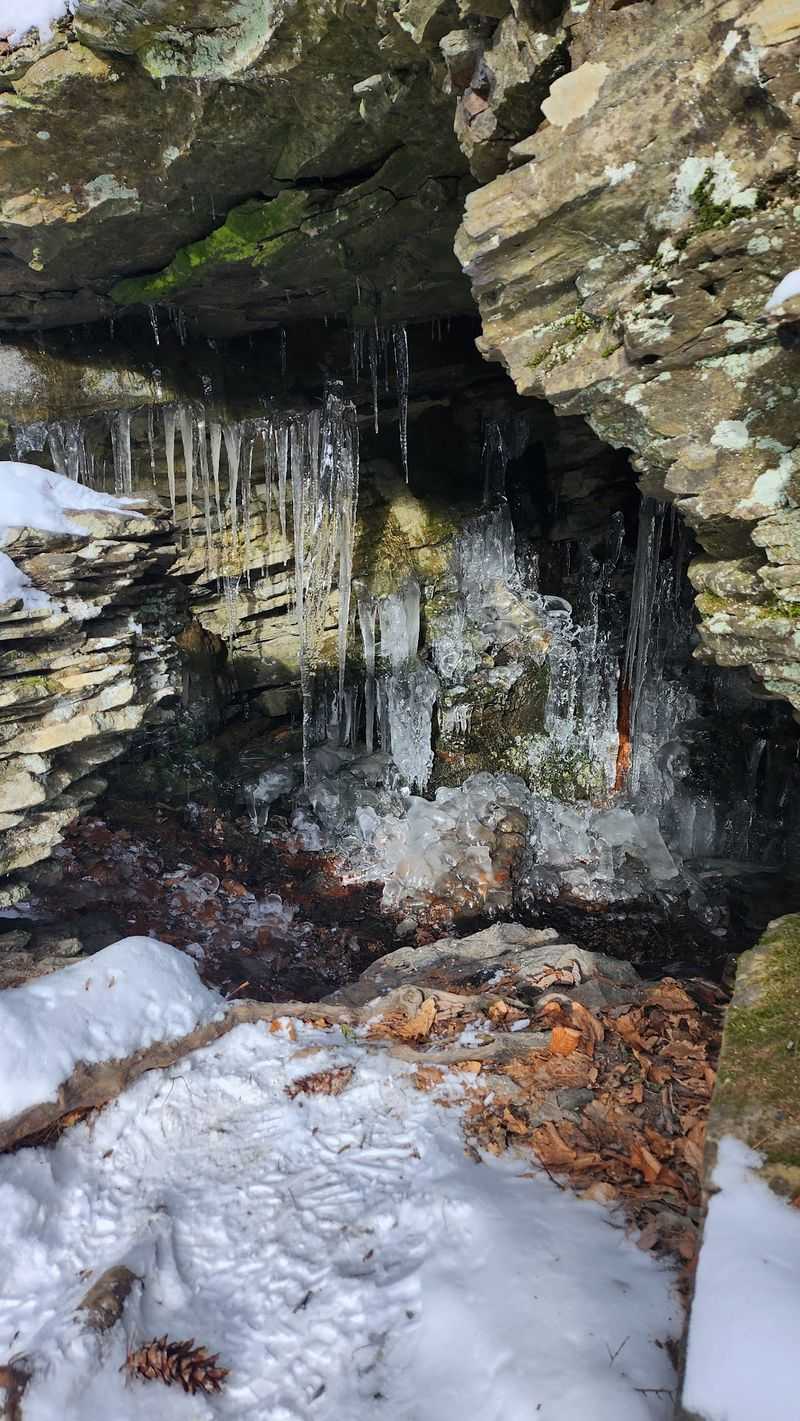
Winter visits are possible but require caution. The upper parking lot closes annually from early January through mid-April, and icy conditions on the trail make proper footwear non-negotiable.
That said, the falls in winter carry a stark, dramatic beauty that attracts photographers willing to navigate the conditions. Each season genuinely reframes the experience.
Practical Tips That Will Save You a Frustrating Morning
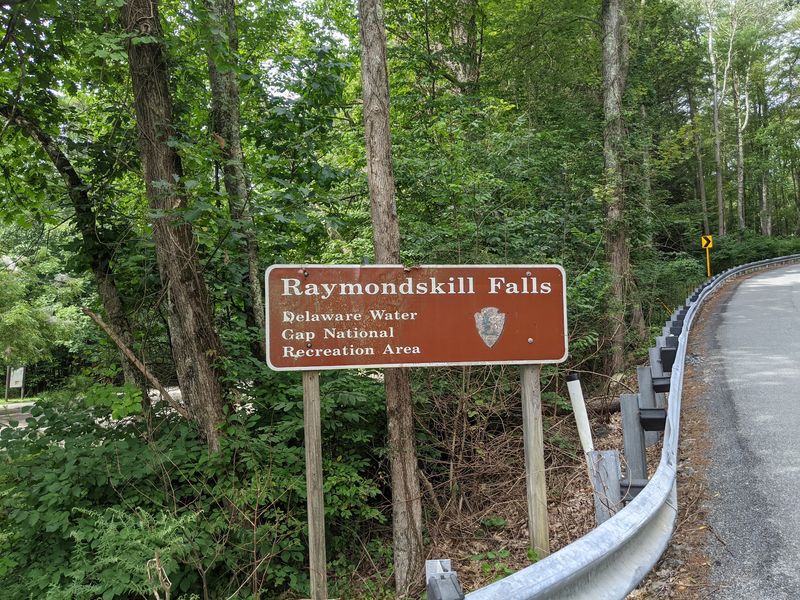
The parking situation at Raymondskill Falls is the one detail that catches most first-time visitors off guard. The lots are small, and on summer weekends or during peak fall foliage season, they fill up fast.
Arriving before 9 a.m. is the most reliable strategy for securing a spot without a long wait.
There are two separate parking areas, and the second one is easy to miss if you have not looked it up in advance. Mapping apps list the parking lot separately as “Raymondskill Falls Parking Lot,” which helps clarify where to aim.
The road leading to the falls is narrow and winding, so slower speeds and attentive driving are genuinely necessary, not just recommended.
Composting toilets are available at the main parking lot, which is a useful amenity for a free natural attraction. No food is permitted on the trail, and pets are not allowed on the Raymondskill Falls trail, with trained service animals being the exception.
Checking current conditions before a winter visit is also worth the two minutes it takes.
The Dutch Word Hidden Inside the Waterfall’s Name
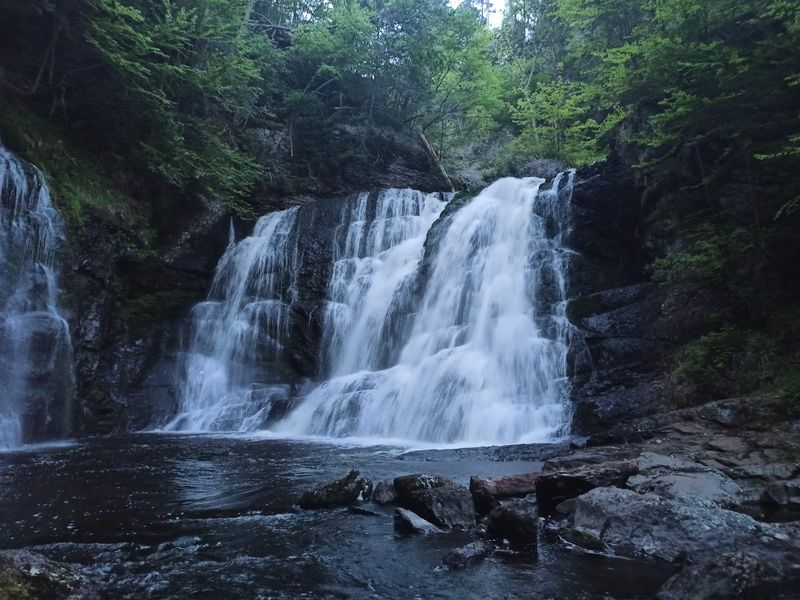
The name “Raymondskill” carries a small but satisfying piece of regional history inside it. “Kill” is a Dutch word meaning stream or creek, a linguistic remnant of early European settlement in the broader New York and Delaware River region. The Dutch influence on place names throughout this area is well documented, and Raymondskill is one of the clearer examples still in everyday use.
The land surrounding the falls also has a documented ownership history. The Buchanan family held the property that now includes Cliff Park and the falls from 1803 until 2003, when it was donated to the National Park Service.
That two-hundred-year span of private stewardship ended with a gift that preserved the land for public enjoyment in perpetuity.
The Delaware Water Gap National Recreation Area itself was established on September 1, 1965, giving the falls and the surrounding landscape formal federal protection. Knowing that history adds a quiet layer of appreciation to the visit.
The land has been valued, cared for, and eventually shared, and that story is worth a moment of recognition.
Why This Free Waterfall Outshines Pricier Alternatives Nearby
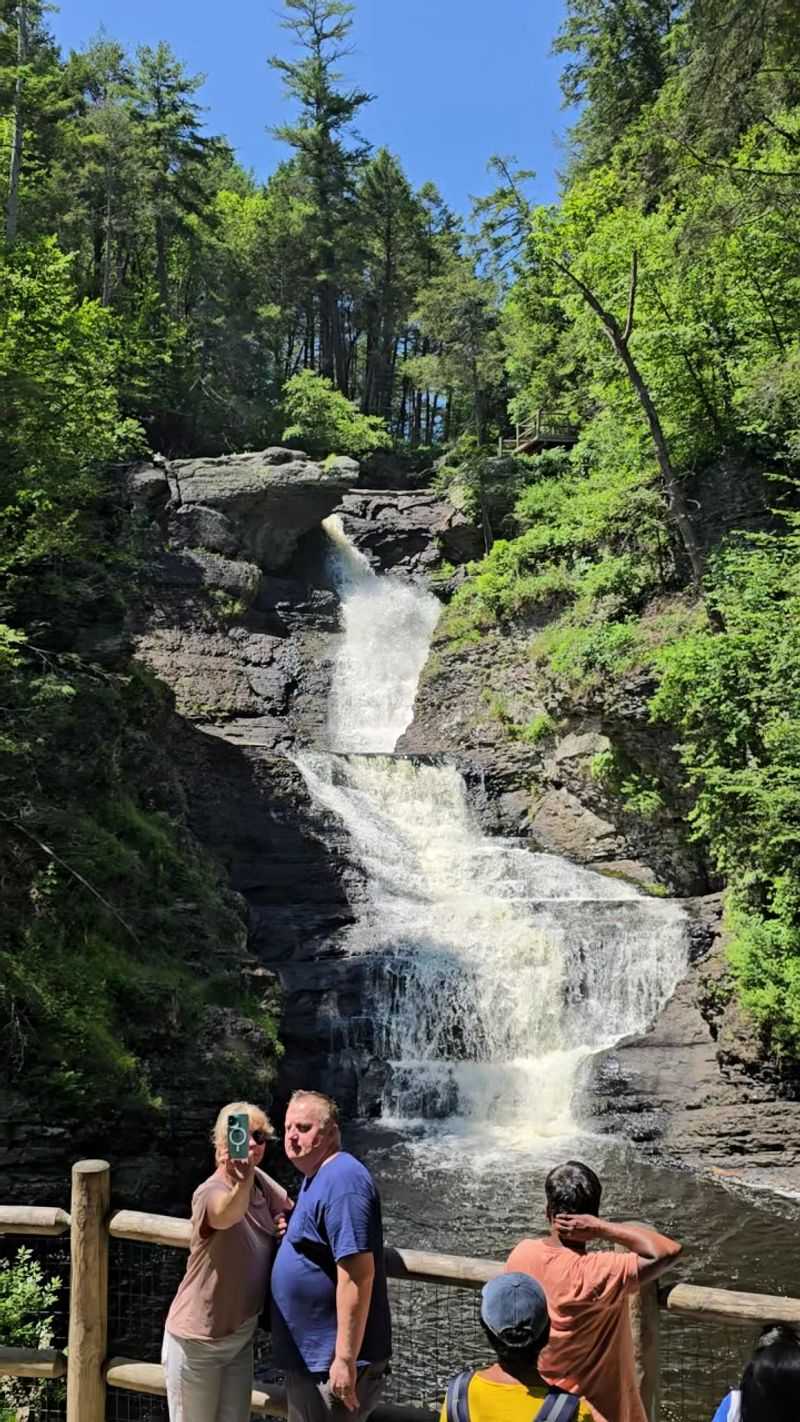
Raymondskill Falls costs nothing to visit, which becomes even more striking when you compare it to other regional waterfall attractions that charge entry fees of twenty dollars or more per person. The quality of the scenery here is not discounted to match the price.
The falls are genuinely taller, the trail is well maintained, and the viewing platforms offer clear, safe sightlines to the full cascade.
The crowd levels, at least on weekday mornings, tend to stay manageable. The atmosphere at the falls feels peaceful rather than theme-park busy, and the short trail length means turnover is steady enough that the platforms rarely feel overcrowded for long.
The natural setting does most of the heavy lifting, and it does it without any admission booth.
Visitor ratings back this up consistently. The falls carry a 4.8-star average across nearly 1,500 reviews, with the most common praise centering on the beauty of the falls, the ease of the walk, and the free access.
For a short drive from one of the most expensive metro areas in the country, that combination is genuinely hard to beat.
Share this story