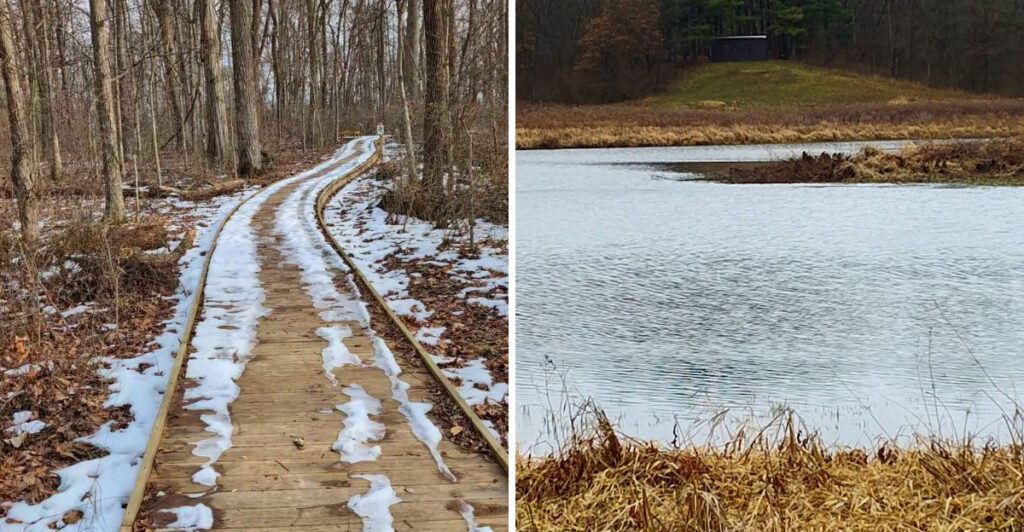
There is a wooden boardwalk in central Ohio that stretches over a pond formed at the end of the last Ice Age, roughly 12,000 years ago. Most people driving through Pickaway County have no idea it exists.
The pond sitting beneath that boardwalk is not a man-made reservoir or a seasonal wetland. It is a glacial lake, shaped by retreating glaciers thousands of years before anyone thought to build a trail across it.
Once you know that, every step you take on that boardwalk feels completely different.
A Glacial Lake That Has Been Here Since the Ice Age
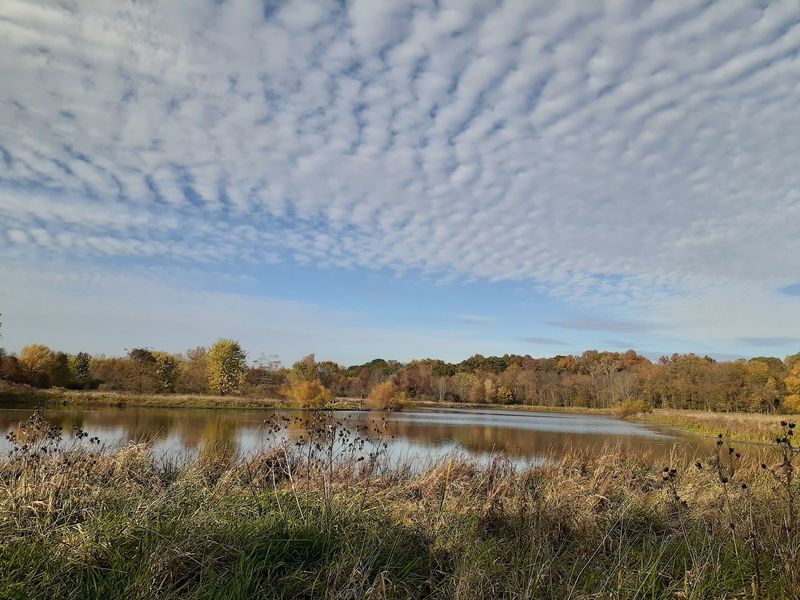
Long before Ohio had cities, highways, or even a name, glaciers were doing the heavy lifting. As they crept southward and eventually retreated, they left behind depressions in the land that slowly filled with water.
Stage’s Pond is one of those depressions, making it what geologists call a kettle lake.
A kettle lake forms when a large chunk of ice breaks off from a retreating glacier, gets buried under sediment, and then melts, leaving a bowl-shaped hole. That is exactly what happened here in Ashville, Ohio, more than 12,000 years ago.
The pond you see today is sitting in that same ancient bowl.
What makes this especially striking is that the landscape around the pond has barely been disturbed. You are looking at something that has existed in nearly the same form since the end of the Pleistocene epoch.
That kind of geological continuity is genuinely rare in the Midwest.
Where Stage’s Pond State Nature Preserve Actually Is
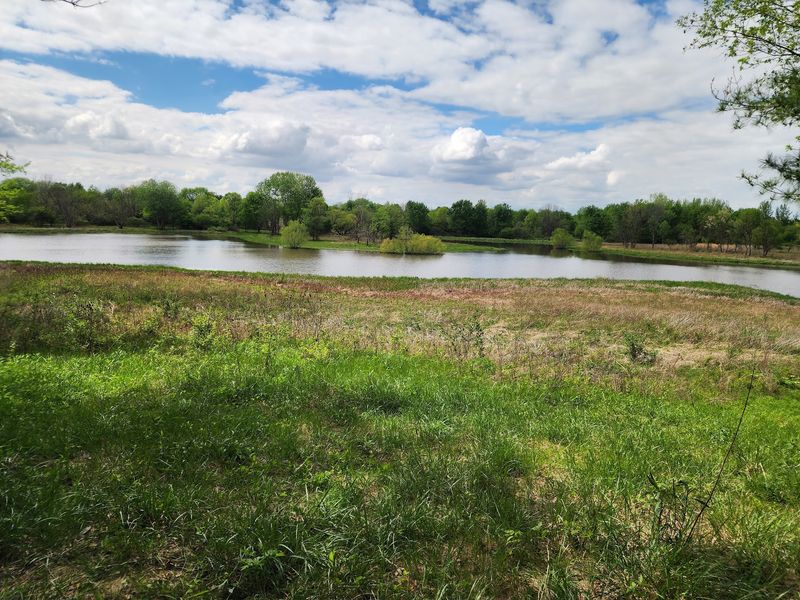
Stage’s Pond State Nature Preserve is located at 4792 Hagerty Road, Ashville, Ohio 43103, managed by the Ohio Department of Natural Resources. It sits in Pickaway County, roughly a 30-minute drive south of Columbus, which makes it surprisingly accessible for a place that feels so far removed from city life.
The preserve is open daily from 8 AM to 5 PM, giving visitors a solid window of time to explore without rushing. A small parking area near the entrance gets you oriented quickly, and the trail system begins just a short walk from where you leave your car.
No pets are allowed inside the preserve, which is worth knowing before you load up the car. The rule exists to protect the wildlife that calls this place home, and once you start spotting deer and herons along the trails, you will understand exactly why that policy is in place.
The Wooden Boardwalk That Crosses the Ancient Water
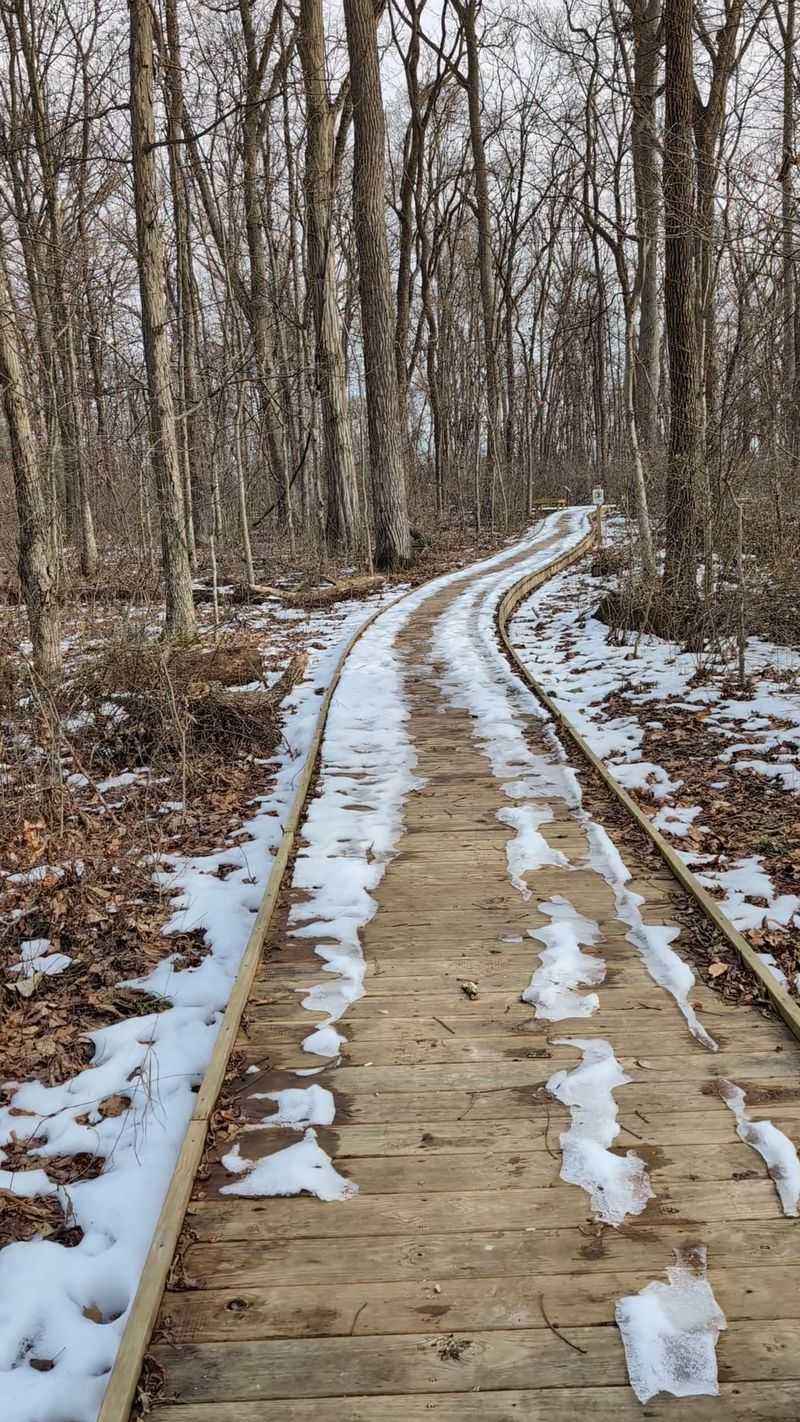
The boardwalk at Stage’s Pond is the kind of trail feature that makes you stop and think for a moment. You are walking on wood planks suspended over water that has been sitting in this exact spot since woolly mammoths still roamed North America.
That is not something most hiking trails can claim.
The boardwalk runs through the wooded section of the preserve, and the designers made a smart practical choice by adding wire mesh to the surface. Wet wood boardwalks are notoriously slippery, and the mesh gives your feet something to grip even after rain.
It is one of those small details that shows genuine care for the people using the trail.
Walking through this section feels quieter than the open meadow trails. The tree canopy closes overhead, the light changes, and the sounds shift entirely.
Birds call from branches you cannot see, and the water below the planks sits perfectly still most mornings.
Two Bird Blinds With Very Different Personalities
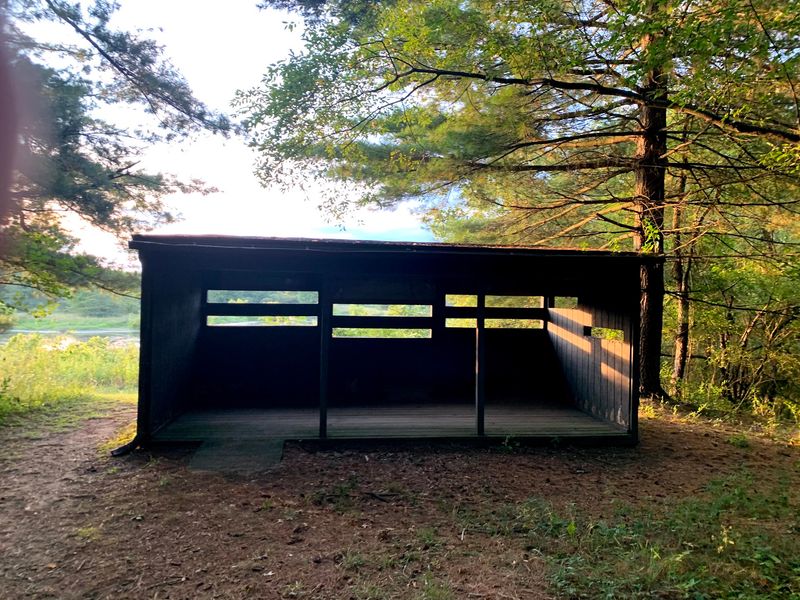
Stage’s Pond has two bird blinds positioned at different points along the trail system, and they offer two very different experiences. The first blind, accessible via a paved path, looks out over the main pond and is genuinely impressive.
Three informational signs inside identify the bird species commonly seen on the water, which is a thoughtful touch for visitors who cannot tell a gadwall from a bufflehead.
The second blind sits in the northwest corner of the preserve near a smaller rear pond. The walk to reach it is longer, and the view is more modest by comparison.
Some visitors find it a little anticlimactic after the main blind, but it rewards patient visitors who sit quietly and wait.
Both blinds serve the same basic purpose: they let you watch waterfowl without disturbing them. Getting close to wildlife without startling it is harder than it sounds, and these structures make that possible even for first-time visitors with no birding experience.
The Meadow Trail and Its Open Prairie Landscape
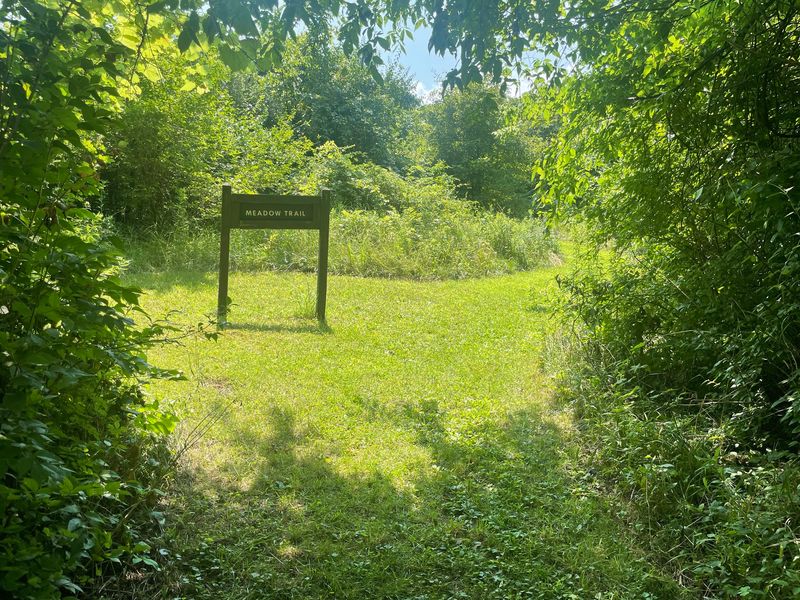
Not every part of Stage’s Pond looks like a woodland. A significant section of the preserve opens up into a broad meadow filled with wildflowers and grasses, and the contrast from the wooded trails is striking.
One moment you are under a canopy of oak trees, and the next you are walking through an open field with birds scattered across the landscape in every direction.
The meadow trail is mowed regularly, which keeps it navigable even when surrounding vegetation grows tall. After a rainy stretch, some grassy sections can get wet underfoot, so waterproof shoes are worth considering.
The concrete and boardwalk sections stay much more manageable in wet conditions.
The meadow is especially rewarding near sunset. The low light catches the seed heads of the grasses and turns the whole field a warm amber color.
Visitors who time their walk for late afternoon consistently find this section to be one of the most photogenic spots in the entire preserve.
Accessibility Features That Set This Preserve Apart
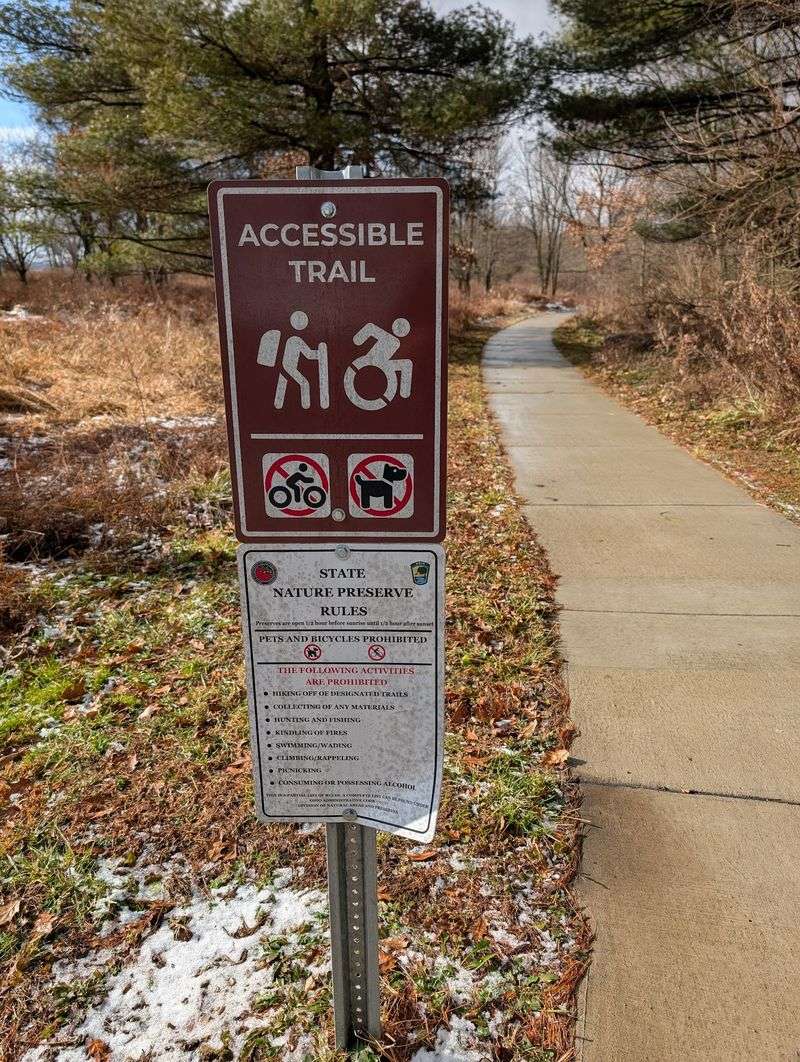
Many nature preserves are beautiful but difficult to access for people with mobility limitations. Stage’s Pond takes a different approach.
Two of the trails are fully paved with concrete, making them usable for visitors in wheelchairs or those who cannot manage uneven terrain. That is not a small thing in a setting like this.
One of the paved trails leads directly to the main bird blind overlooking the pond, which means one of the best views in the entire preserve is reachable without navigating grass or gravel. The thoughtfulness behind that design choice does not go unnoticed by visitors who depend on accessible paths.
The wire mesh on the wooden boardwalk sections also contributes to safer footing for everyone, not just those with mobility concerns. Small design decisions like these reflect a genuine effort to make the natural world available to more people, and Stage’s Pond does a better job of that than most preserves its size.
Wildlife That Shows Up Without Any Encouragement
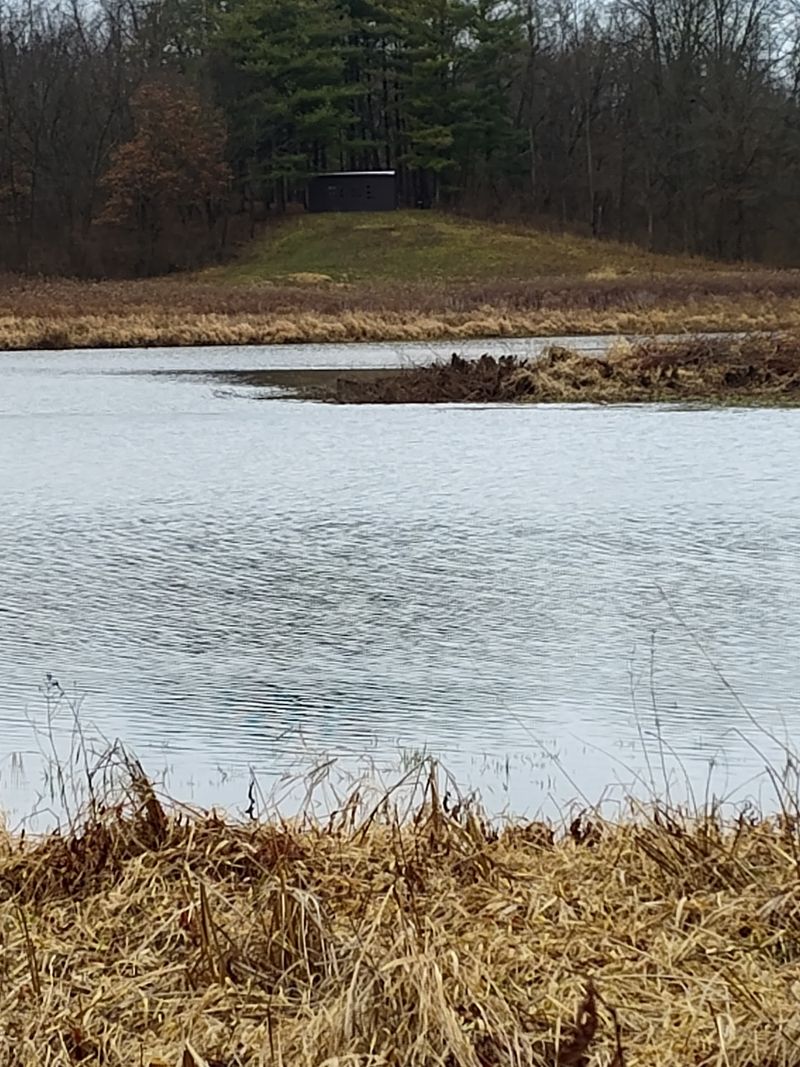
White-tailed deer, woodpeckers, blue jays, American robins, and a rotating cast of waterfowl are regular sights at Stage’s Pond. The preserve does not need to stock or attract wildlife because the habitat does that work naturally.
The combination of open meadow, dense woods, and a large glacial pond creates exactly the kind of varied environment that supports a wide range of species.
Waterfowl are particularly abundant, and the informational signs inside the main bird blind help visitors identify what they are actually looking at. Ducks, herons, and other water birds use the pond regularly, especially during migration seasons when traffic through central Ohio increases significantly.
Bugs are part of the deal here, particularly in the wooded sections during warmer months. Mosquitoes come with the pond territory, and anyone visiting between late spring and early fall should bring repellent.
The wildlife density is high enough that a little preparation is well worth the trade-off.
The Old-Growth Forest Section That Surprises Everyone
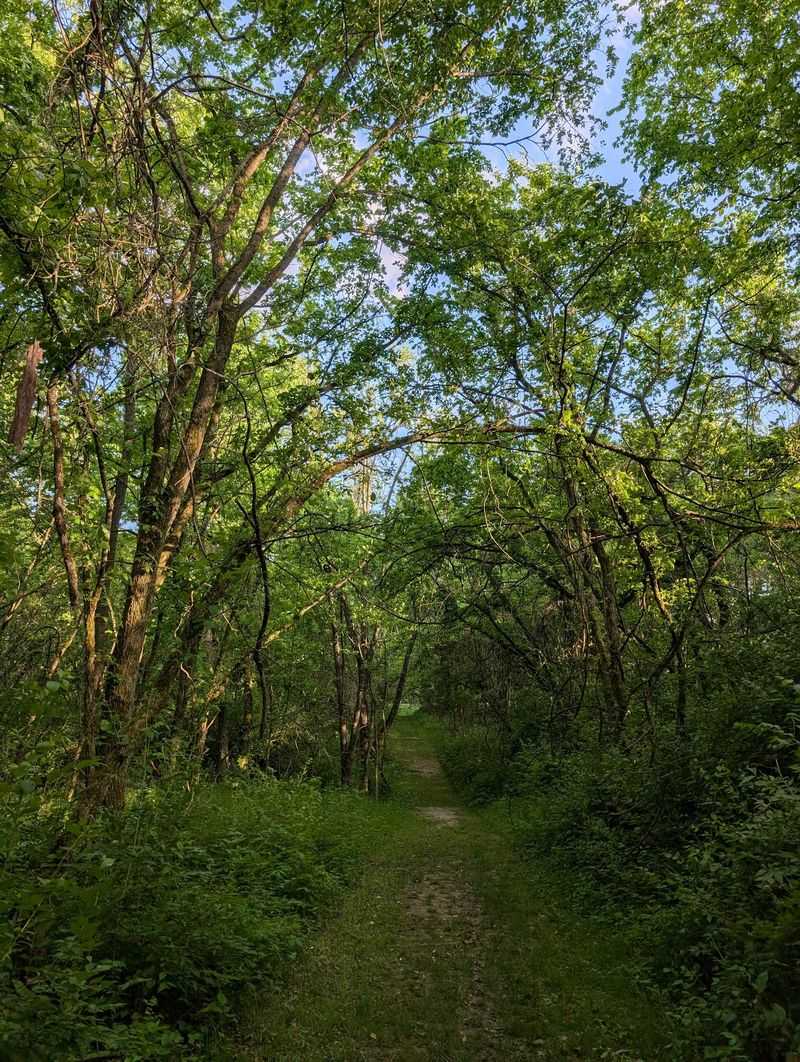
Trail B at Stage’s Pond passes through a section of old-growth forest that visitors consistently describe as one of the most memorable parts of the hike. The trees in this area are mature and dense, creating a canopy thick enough to change the feel of the air beneath it.
The sounds shift noticeably once you enter this section.
Old-growth forest in Ohio is not common. Much of the state was cleared for agriculture over the past two centuries, so pockets of mature woodland carry a different kind of weight.
Walking through this section, you get a sense of what the land looked like long before modern development reshaped the region.
Birdsong is particularly rich in the forest section. The canopy provides cover and nesting sites for species that prefer wooded interiors, and on a calm morning, the variety of calls layered on top of each other is genuinely striking.
First-time visitors often slow down here without meaning to.
How Long the Hike Actually Takes and What to Expect
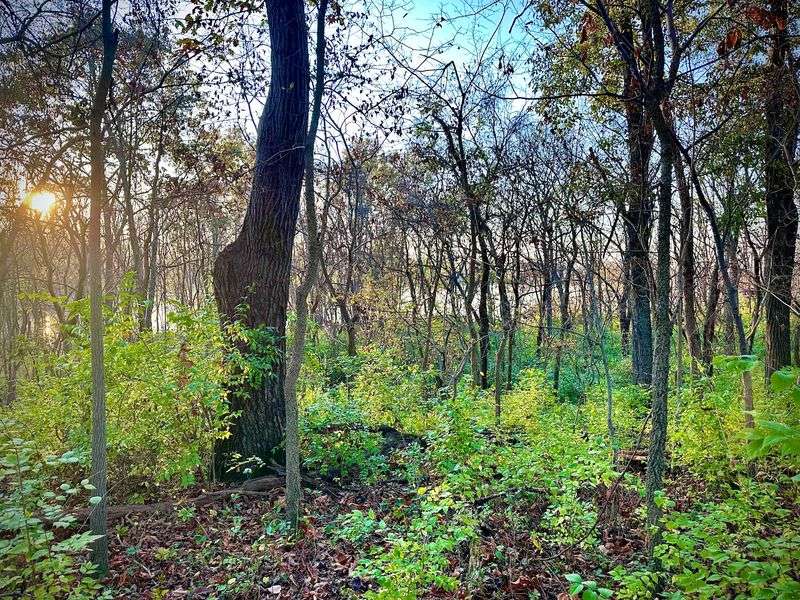
The trail system at Stage’s Pond covers a little over three miles in total, and the terrain is almost entirely flat. There are no significant elevation changes, which makes this a comfortable outing for most fitness levels.
A full loop of all the trails takes roughly an hour to an hour and a half at a relaxed pace.
The variety of surfaces keeps things interesting. Concrete paths, mowed grass trails, and the wooden boardwalk each have a different feel underfoot, and the scenery shifts enough between sections that the walk does not feel repetitive.
Taking a photo of the trail map near the entrance is strongly recommended, since additional maps are not posted frequently along the route.
The preserve is rarely crowded, even on pleasant weekend days. That quiet is a significant part of what makes it worth the drive.
A conversation with a friend here carries easily without competing with background noise from other visitors.
The Boundary Trail and Its Sunrise Photography Potential
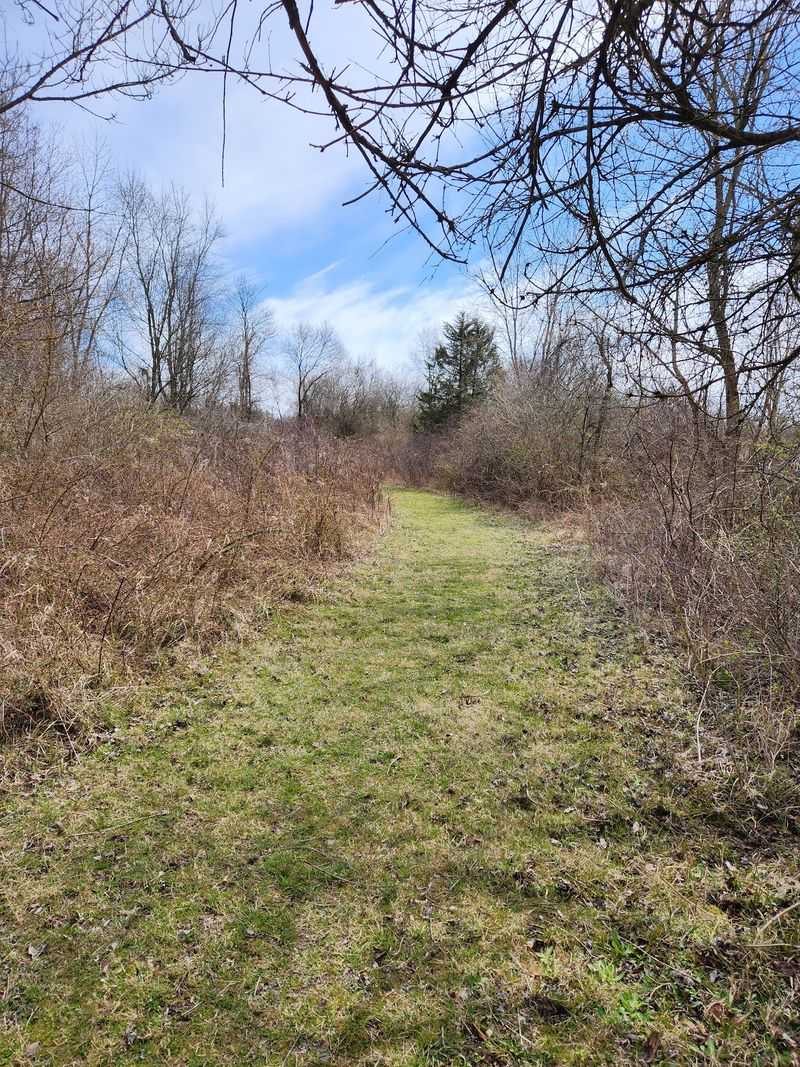
The Boundary Trail runs in a nearly straight line from the parking area to the far end of the preserve, following a fence line the entire way. It is a simple trail by design, but the long, unobstructed sightline makes it surprisingly effective for photography, particularly at sunrise when the light comes in low and warm from the east.
Photographers who visit specifically for the golden hour often set up along this trail to capture the way early morning light travels across the open land. The flat terrain and clear horizon give the light somewhere to go, and the fence line provides a natural leading element for composition.
The trail connects to other sections of the preserve, so it works well as a starting point for a longer loop rather than an out-and-back route. Most visitors pass through it quickly, but those who pause and look around tend to find more worth seeing than they initially expected.
ODNR Programs and Seasonal Events at the Preserve
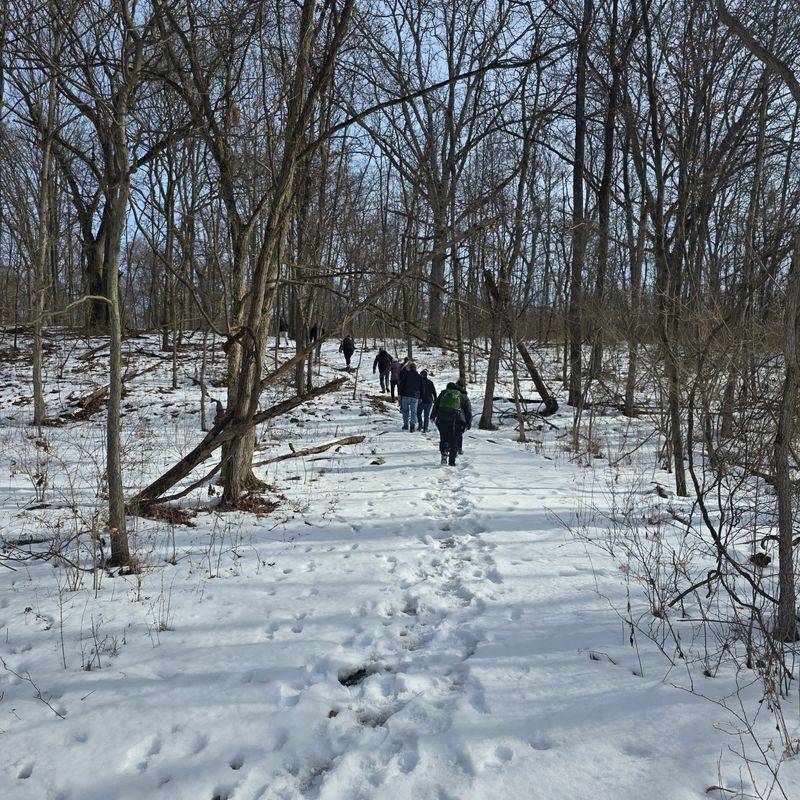
The Ohio Department of Natural Resources runs programs at Stage’s Pond throughout the year, including seasonal events like winter hikes that draw visitors who might not otherwise think to visit a nature preserve in colder months. These programs add an educational layer to what is already a visually interesting place.
One visitor described attending a program where a speaker covered the geological history of the pond, the plant life in the preserve, and the animals that depend on the habitat. That kind of guided context makes a significant difference.
Knowing that you are standing next to a kettle lake formed by glacial activity changes how you look at the water.
Checking the ODNR website before your visit is worth the effort, since programs vary by season and some require advance registration. The preserve’s official page at ohiodnr.gov lists upcoming events and any updates to trail conditions or hours.
Practical Tips for Getting the Most Out of Your Visit
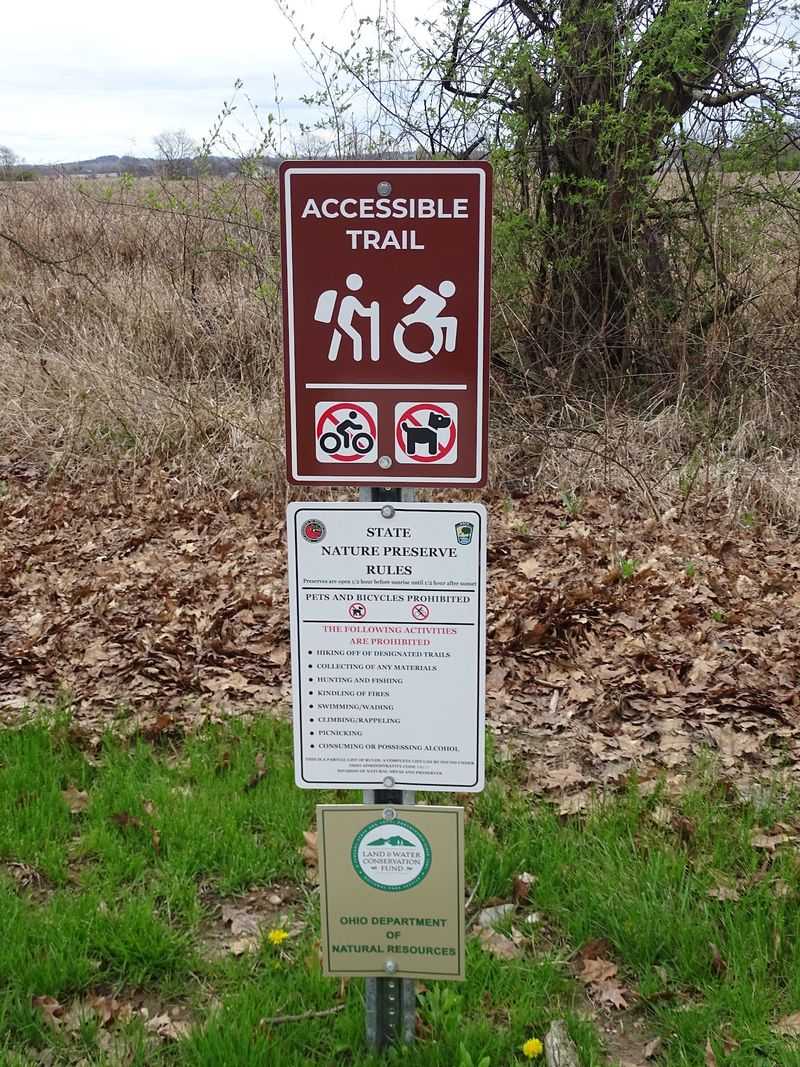
A few practical details make the difference between a great visit and a frustrating one at Stage’s Pond. Pets are not permitted anywhere in the preserve, so leave them at home.
The preserve opens at 8 AM daily and closes at 5 PM, so early morning arrivals get the best light and the most wildlife activity before foot traffic increases.
Bug spray is genuinely useful here, especially from late spring through early fall. The pond creates the kind of humid, sheltered environment that mosquitoes favor, and the wooded sections can be particularly active with insects on still days.
Lightweight long sleeves help too.
Restroom facilities at the preserve are limited, so plan accordingly before arriving. The parking area is small but functional, and the entrance is easy to miss from the road, so using GPS navigation to the Hagerty Road address is the most reliable way to find it on your first visit.
Share this story