Oklahoma has a gift for surprising you when you least expect it. You could be cruising down a familiar highway, half-thinking about lunch, when a roadside sign plants a seed of curiosity you simply cannot ignore.
Somewhere in the southern part of the state sits a monument so wonderfully absurd that it has become a genuine bucket-list checkbox for quirky roadside collectors across the country. Pack your camera, rally the kids, and prepare to laugh out loud at one of the most charmingly offbeat stops the Sooner State has to offer.
Durant, Oklahoma and Its Unlikely Claim to Fame
Tucked into Bryan County in southern Oklahoma, the city of Durant sits close to the Texas border and carries a quiet, small-town confidence that visitors tend to find disarming. It is the kind of place where the streets feel familiar even on a first visit, lined with historic storefronts and friendly faces who wave at strangers without a second thought.
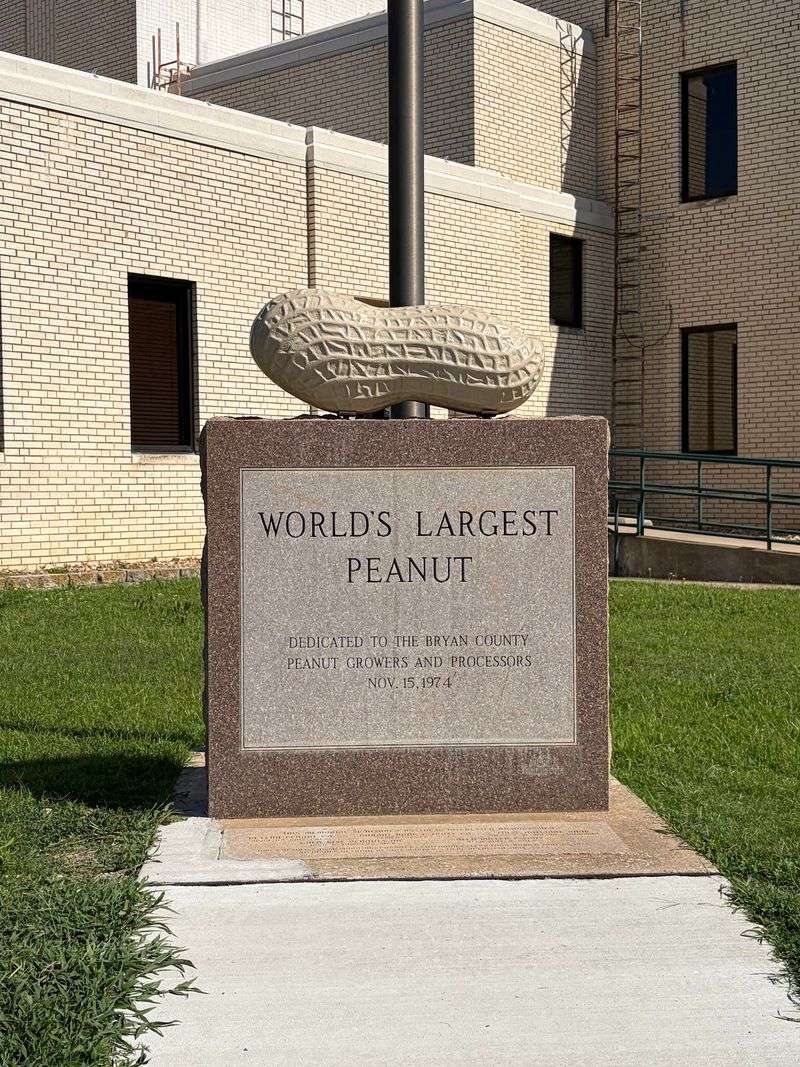
What makes Durant genuinely stand out on the roadside-attraction circuit is a single, gloriously odd monument planted right at City Hall. The World’s Largest Peanut Monument has claimed a corner of 300 W Evergreen St and dared the world to argue with it.
Visitors rolling through on road trips or looping down from the Dallas-Fort Worth area have made it a regular detour, drawn by curiosity and the promise of a photo worth sharing.
The surrounding town rewards those who linger. Visitors frequently mention that Durant itself is pretty and walkable, with historic architecture that gives the stop a little extra texture beyond the peanut alone.
Getting here is straightforward, and the monument sits right beside City Hall, making it easy to spot once you know where to look.
The Monument Itself – Size, Shape, and Sculptural Quirk
Concrete, painted, and perched on a pedestal like a trophy for the ages, the peanut sculpture at the heart of this attraction is genuinely larger than most people expect when they first hear the words “largest peanut.” Some visitors arrive imagining something closer to a building-sized novelty, while others show up half-expecting an actual legume. Reality lands somewhere in between, and the reaction is almost always a laugh.
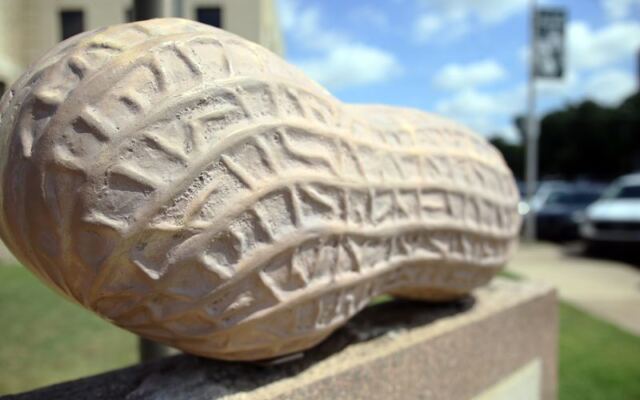
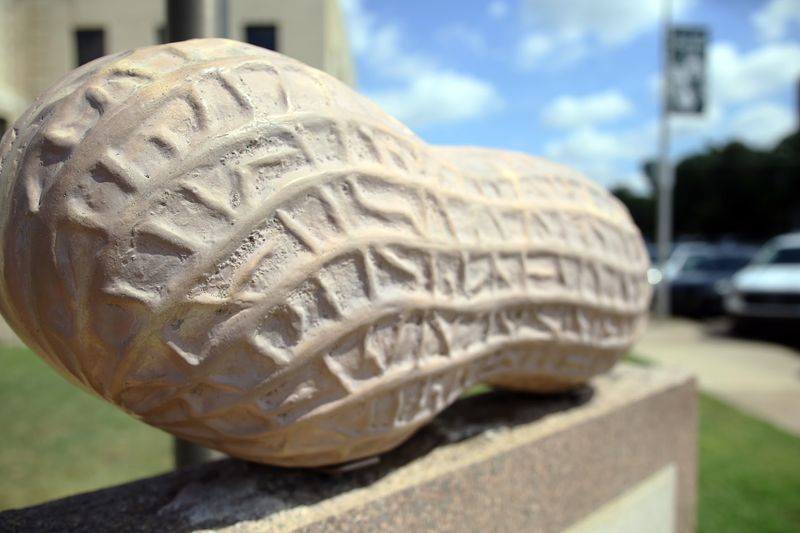
The monument presents the classic double-lobed peanut shape with surprising fidelity, capturing those familiar ridges and curves in solid, weathered form. Mounted on a headstone-style base, it commands attention without trying too hard, which is perhaps the most endearing thing about it.
There is no flashy lighting, no ticket booth, and no velvet rope. Just a peanut, doing its thing on a street corner.
Visitors who have seen other giant-food monuments around the country often compare it to similar roadside sculptures, noting that the size here is more modest than some expected. Still, the sheer commitment to honoring a peanut with a permanent stone monument gives the whole thing an earnest, lovable quality that keeps people talking long after they have driven away.
Why Durant Built a Monument to a Peanut
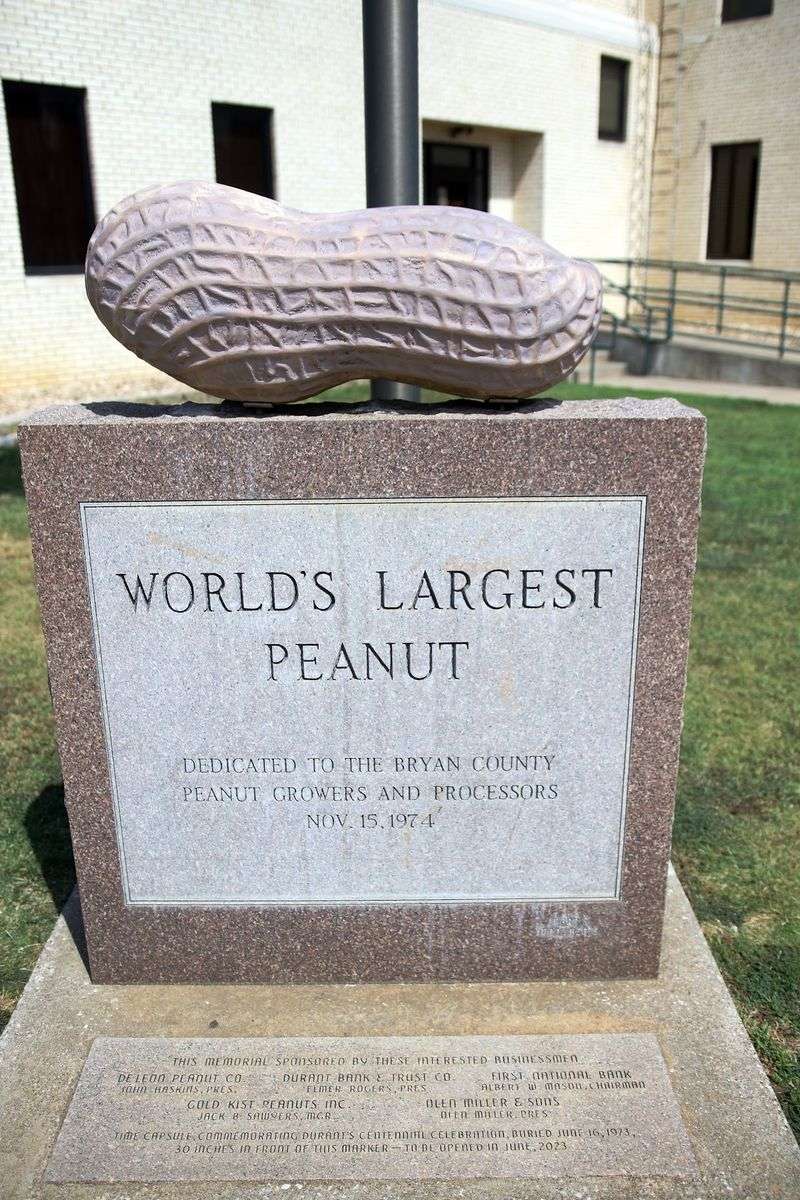
Every great roadside monument needs a backstory, and this one delivers. Durant and the surrounding Bryan County region had a meaningful connection to peanut farming that made the tribute feel earned rather than random.
Peanuts were a legitimate agricultural staple in this corner of Oklahoma, and the monument was installed in the 1970s as a nod to that farming heritage.
One detail that adds a layer of historical intrigue is the time capsule reportedly buried beneath the sidewalk near the monument. Visitors who have read up on the site mention the capsule with genuine excitement, and local lore suggests it was scheduled to be opened in 2023, giving the monument a built-in sense of mystery that most peanut sculptures simply cannot match.
Interestingly, the agricultural landscape around Durant has shifted over the decades. Soybeans have largely replaced peanuts as the dominant crop in the area, which gives the monument a bittersweet, nostalgic dimension.
Rather than a live celebration of an active industry, it now reads more like a loving tribute to what the land once grew, a small bronze-age artifact of Oklahoma farming history frozen in concrete form.
The Time Capsule Buried Beneath the Sidewalk
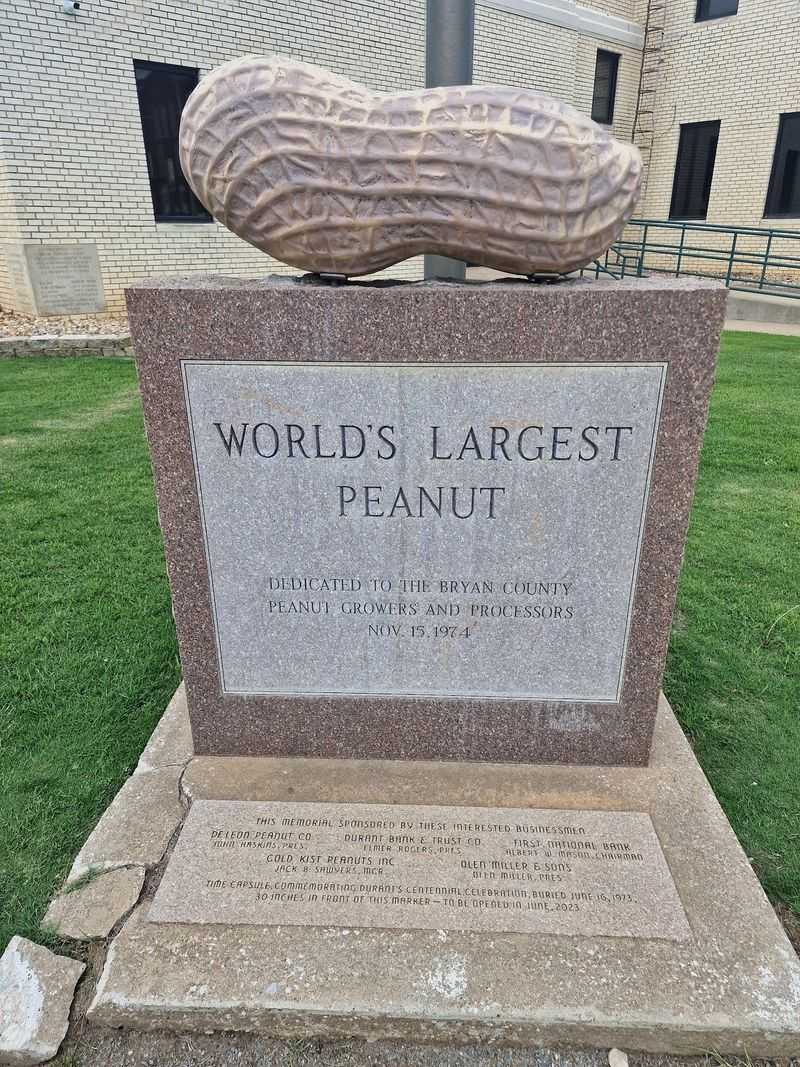
Hidden just below the surface near the monument lies one of its most talked-about secrets: a time capsule sealed into the ground and scheduled for a future reveal. Visitors who dig into the monument’s history before arriving tend to get noticeably more excited about this detail than those who stumble upon it by accident.
The capsule has generated genuine anticipation among regulars and roadside-attraction enthusiasts. Online discussions around the monument frequently circle back to the 2023 opening date, with curious travelers wondering what was sealed inside and whether the ceremony matched the buildup.
That kind of slow-burn suspense is rare for a free roadside stop, and it gives the monument a storytelling depth that most comparable attractions lack entirely.
For families with kids, the time capsule angle opens up a natural conversation about history, preservation, and the idea of leaving something behind for future generations. Younger visitors especially seem to light up when they learn that something is literally buried under their feet.
Whether you catch the monument before or after the capsule event, that underground element adds a layer of wonder to what might otherwise be a quick snap-and-go photo stop.
The City Hall Corner Setting
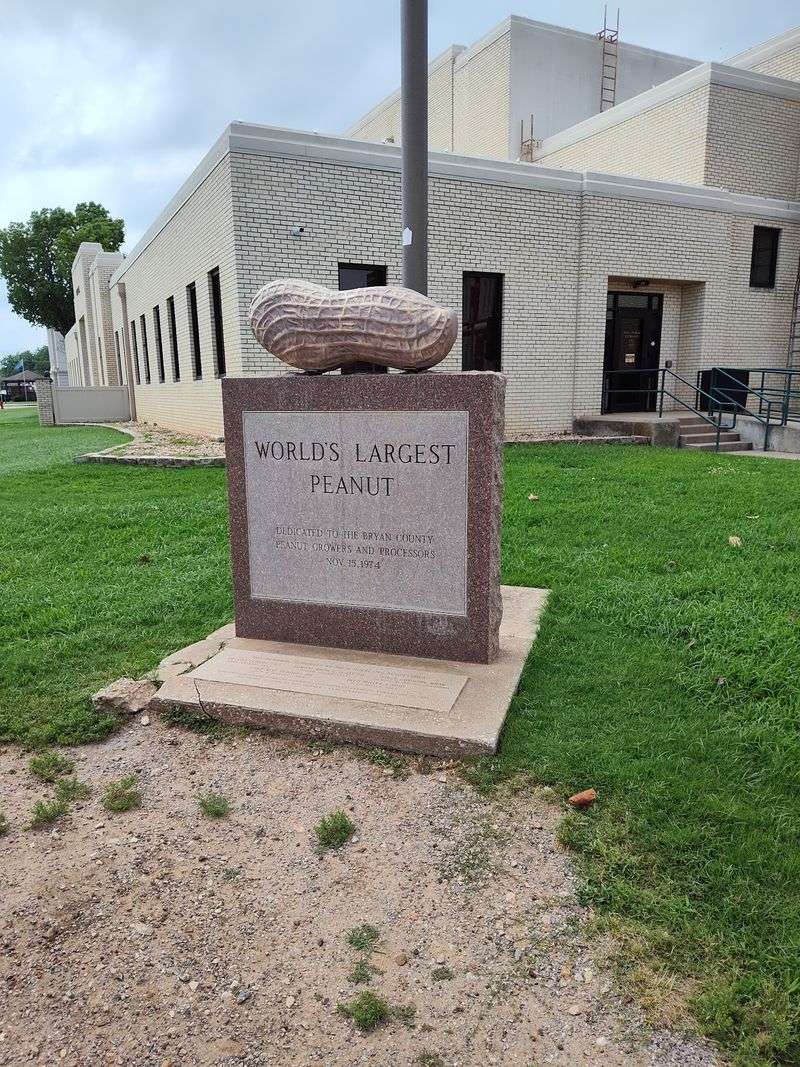
Placement matters when you are a roadside monument, and the World’s Largest Peanut has landed in a genuinely interesting spot. Sitting right on the corner of City Hall at 300 W Evergreen St, it occupies civic space in a way that feels both official and delightfully out of place.
There is something inherently funny about a giant peanut sharing real estate with local government offices.
The surrounding area is open and easy to navigate on foot. Parking near City Hall is generally accessible, and the corner location means the monument is visible from multiple directions as you approach, though some visitors admit they drove past it a couple of times before zeroing in.
Once you spot it, there is no mistaking the shape.
A few visitors have noted that the landscaping around the monument could use some attention, and the overall presentation is fairly bare-bones compared to some more polished roadside attractions. But that stripped-down simplicity is part of the charm.
No gift shop, no admission gate, no tour guide. Just a peanut on a pedestal on a government corner, available to everyone who shows up, any hour of the day or night.
Free, Open 24 Hours, and Beautifully Low-Maintenance
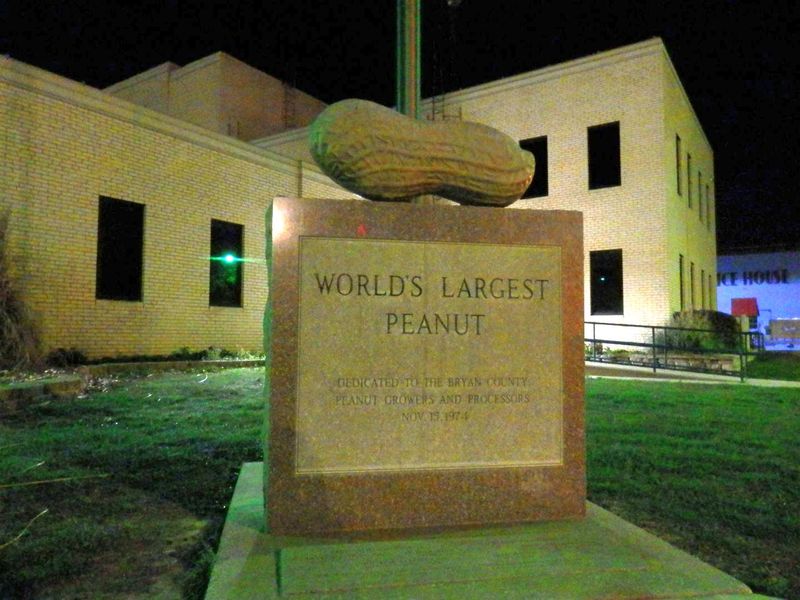
Some of the best stops on any road trip cost absolutely nothing, and this one fits that mold perfectly. Admission to see the World’s Largest Peanut Monument is free, with zero barriers between you and your photo opportunity.
Pull up, step out, snap your shot, and carry on – no reservations, no ticket lines, no timed entry windows.
The monument operates around the clock, every single day of the week. Whether you are passing through Durant at noon on a Saturday or rolling through at two in the morning on a Tuesday road trip, the peanut will be waiting.
That 24-hour availability makes it an effortless addition to almost any itinerary without requiring any scheduling gymnastics.
For budget-conscious travelers and families trying to keep costs down, free roadside attractions like this one are genuinely valuable. They break up long drives, give kids something to point at and laugh about, and create the kind of spontaneous memories that tend to outlast more expensive planned experiences.
The only investment required here is a few minutes of your time and the willingness to feel a little silly standing next to a giant concrete legume – which, for most visitors, turns out to be a very easy ask.
The Photo Opportunity Factor
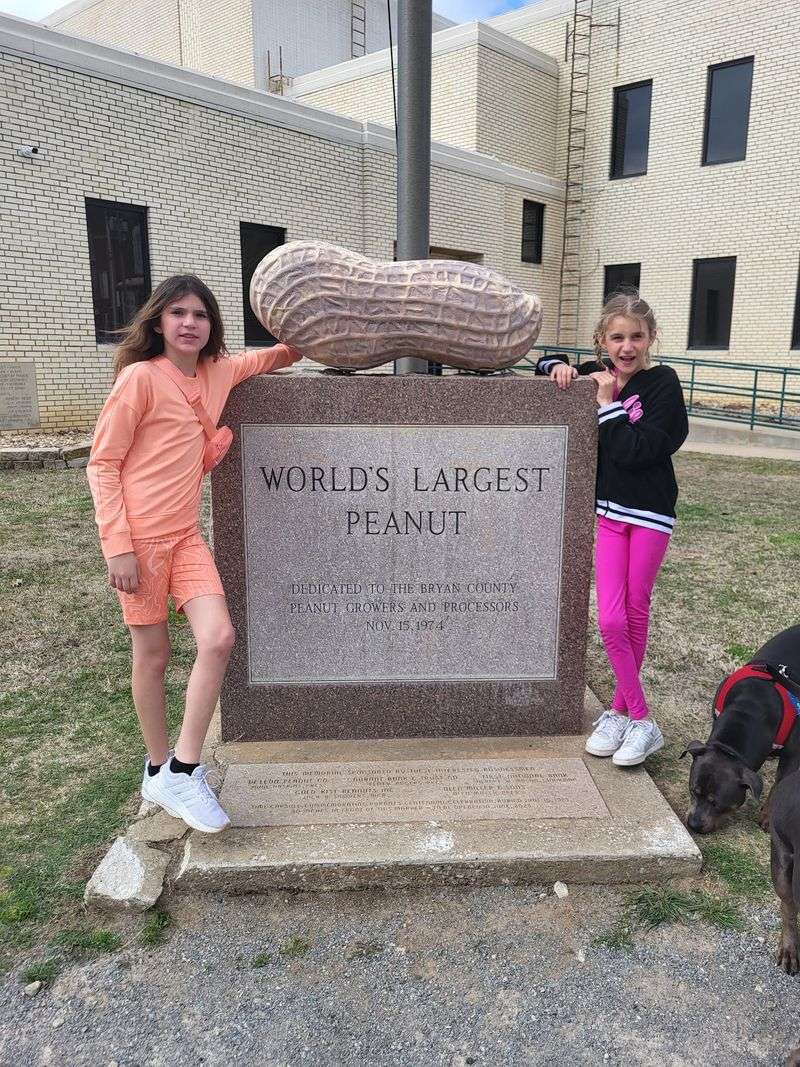
Road trip culture runs on photos, and the peanut monument delivers a genuinely shareable moment. Visitors consistently mention the photo opportunity as the main draw, and it is easy to see why.
The shape is immediately recognizable, the setting is open and well-lit during daylight hours, and the inherent absurdity of posing next to a giant concrete peanut practically guarantees a grin in every frame.
Families tend to have particular fun with the shot. Kids who arrive skeptical often end up being the most enthusiastic posers once they see the monument up close.
One visitor shared that their child had expected a real peanut, which led to a moment of confusion followed by genuine laughter – exactly the kind of unscripted family memory that no theme park can manufacture on demand.
Selfie-takers, group photographers, and motorcycle riders passing through from the Dallas-Fort Worth corridor have all made the peanut a regular stop on their visual itineraries. Adding a little creative flair to your shot, whether through angles, props, or some playful post-processing, seems to be a popular approach among visitors who want their peanut photo to stand out from the crowd.
The monument is endlessly patient with repeat shooters.
A Bucket-List Stop for Roadside Collectors
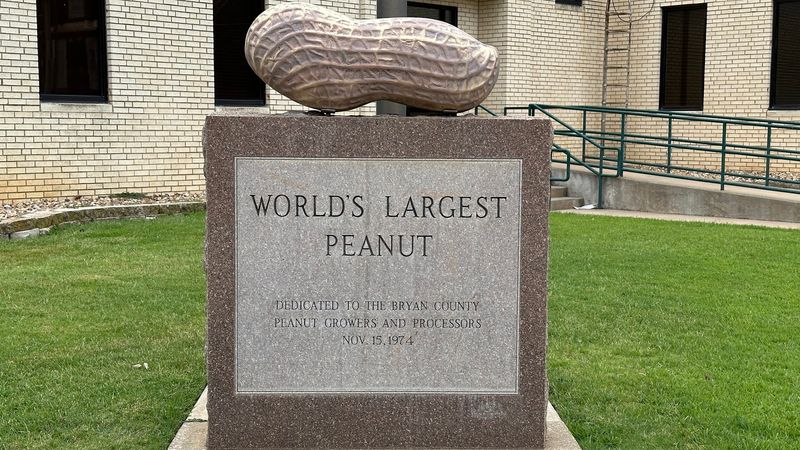
A dedicated community of travelers has made it their mission to visit every “World’s Largest” roadside attraction across the country, and the Durant peanut holds a legitimate spot on that checklist. For this crowd, the monument is not just a quirky photo op – it is a verified entry in a personal catalog of American roadside oddities, and crossing it off carries genuine satisfaction.
Visitors who travel this lane often compare the peanut to similar giant-food monuments they have encountered elsewhere. Some note that the scale here is more understated than expected, while others argue that the modest size is precisely what makes it feel authentic rather than manufactured.
There is a difference between a monument built for spectacle and one built out of genuine local pride, and the Durant peanut lands firmly in the second category.
For anyone building a road trip around Oklahoma’s quirky roadside stops, this monument pairs naturally with other offbeat attractions in the region. Its location in southern Oklahoma also makes it a logical add-on for travelers coming up from Texas or heading toward the Choctaw Nation area.
The sense of completing a leg of a larger adventure gives the stop extra meaning beyond the monument itself.
What First-Time Visitors Actually Experience
Arriving at the monument for the first time tends to produce a very specific emotional arc: anticipation, mild confusion, and then genuine amusement. Several visitors admit they drove past the corner multiple times before spotting the peanut, which is a testament to how unassuming the presentation really is.
There is no dramatic entrance, no flashing marquee, and no oversized parking lot to signal your arrival.
Once you find it, the reaction is almost universally some version of laughter. Whether visitors feel slightly underwhelmed by the scale or genuinely impressed by the monument’s commitment to its own existence, the experience tends to land as a net positive.
The absurdity of the whole thing – a concrete peanut on a city hall corner, honored as a world record holder – is funny in a way that earns affection rather than disappointment.
Visitors who come in with calibrated expectations, understanding that this is a quirky community landmark rather than a massive theme-park-style installation, consistently report enjoying the stop. The surrounding town adds to the experience, with attractive historic buildings and a walkable downtown area that gives curious visitors a reason to stretch their legs a little longer than the monument alone might warrant.
Kids, Families, and the Irresistible Silliness Factor
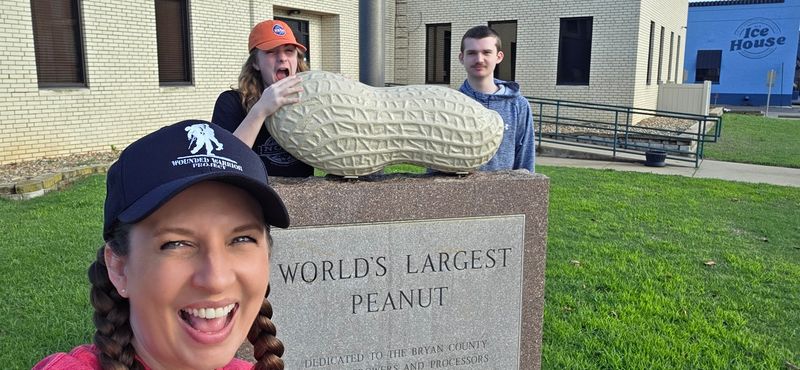
Traveling with children requires a certain willingness to embrace the ridiculous, and the peanut monument rewards that openness generously. Kids who visit tend to engage with the monument in ways adults simply cannot replicate – crawling around the base, debating whether it is really the biggest peanut in the world, and demanding to know why someone built it in the first place.
Those questions, it turns out, lead to some of the best roadside conversations a family can have. The agricultural history angle, the buried time capsule, the mystery of who decided a peanut deserved a monument – all of it gives parents something substantive to talk about while the kids burn off energy on the sidewalk.
Learning wrapped in silliness is still learning.
Visitors with younger children specifically mention the monument as a highlight of drives through southern Oklahoma, noting that kids respond to the novelty with infectious enthusiasm. The free admission and open-access format mean there is no pressure to rush or maximize value against a ticket price.
You can spend five minutes or thirty, depending entirely on how many photos your crew needs and how long it takes the youngest member of your party to stop asking if they can eat it.
The Engagement Story That Nobody Saw Coming
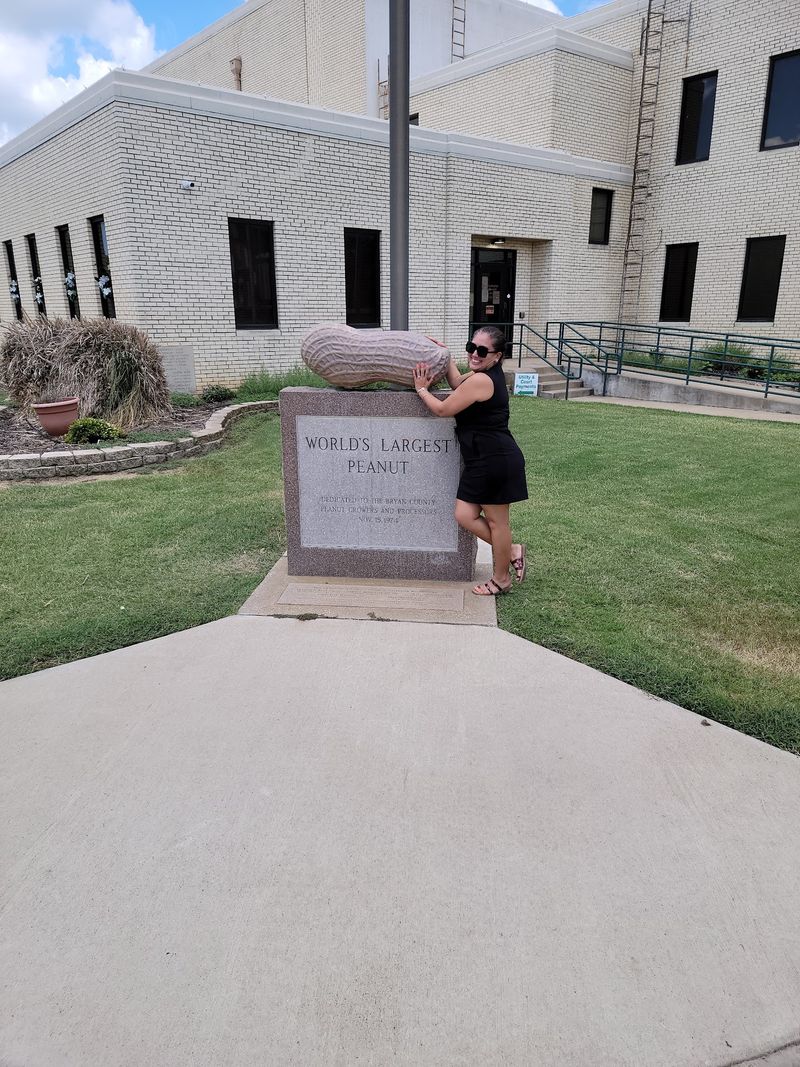
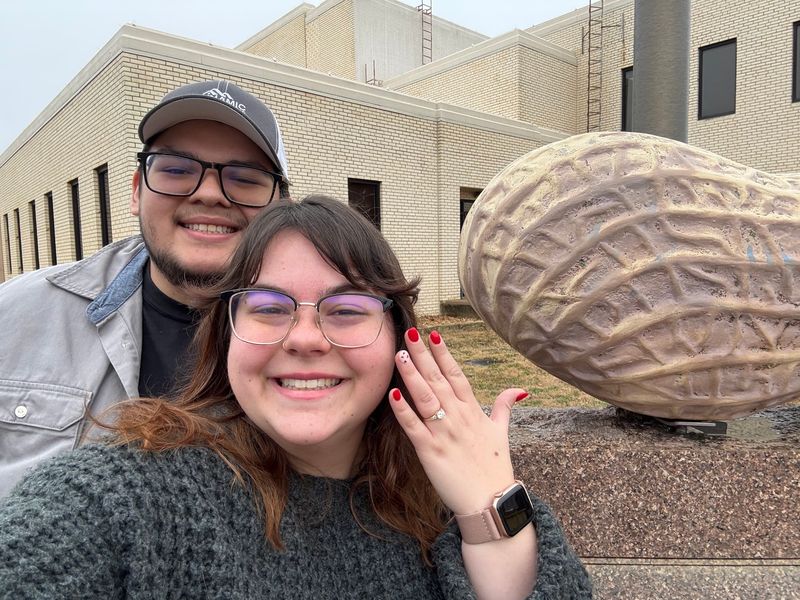
Among all the visitor stories attached to the World’s Largest Peanut Monument, one stands out with particular warmth. A couple chose this corner of Durant as the setting for a marriage proposal, turning a giant concrete peanut into the backdrop for one of the most personal moments two people can share.
The date – February 15, 2025 – was shared by the newly engaged visitor with obvious joy.
What makes the story genuinely touching is the specificity of it. Not a scenic overlook, not a famous landmark, but a peanut monument on a city hall corner in southern Oklahoma.
The choice says something lovely about the couple: they found meaning in the offbeat, and they picked a place that would always make them smile when they told the story.
For a monument that some visitors describe as underwhelming, the engagement story reframes the whole experience. A location does not need to be grand to be meaningful.
Sometimes the most memorable moments happen in the most unexpected places, and the fact that this peanut now holds a permanent place in at least one couple’s personal history gives it a kind of sentimental weight that no amount of landscaping or signage could manufacture.
Durant’s Historic Downtown as a Natural Extension of the Visit
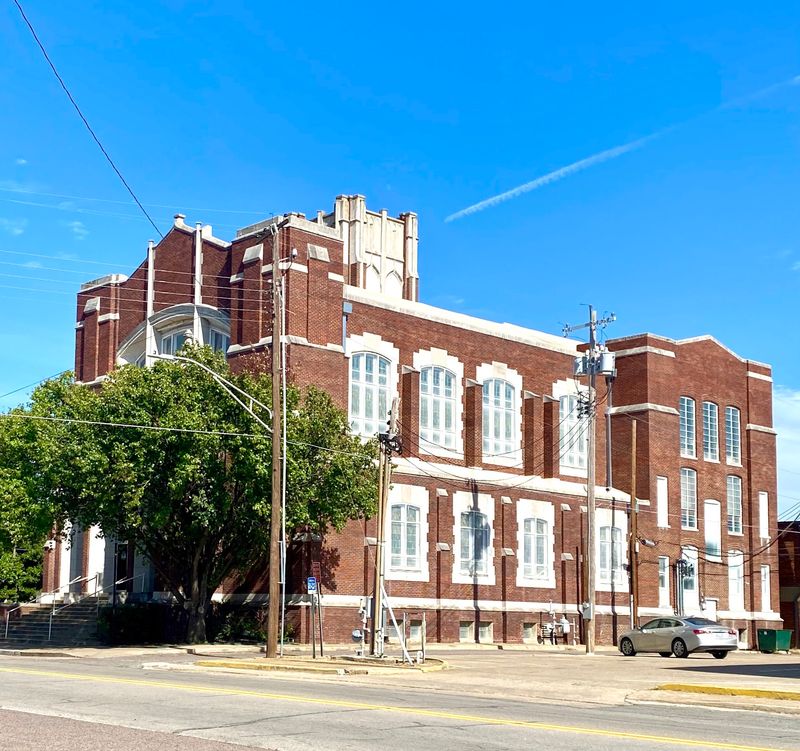
Spending a few extra minutes in Durant after visiting the monument is genuinely worth considering. The downtown area carries the kind of lived-in historic character that makes small Oklahoma towns so appealing to road-trippers who are willing to slow down and look around.
Brick facades, wide sidewalks, and a relaxed pace give the area a warmth that lingers.
Visitors who have explored the surrounding blocks consistently mention that the town itself is pretty and pleasant to walk around. The architecture reflects decades of history, and while not every storefront is active, the overall atmosphere is far more inviting than a quick monument stop might suggest.
Durant rewards the curious traveler who treats the peanut as an entry point rather than the entire destination.
One practical note worth keeping in mind: visiting on a Sunday may mean quieter streets and fewer open businesses, as some visitors have noted the town feels slower on that day. Weekday or Saturday visits tend to offer more activity and easier access to services.
Planning your arrival around midday gives you the best light for photos and the best chance of finding the town at its most animated and welcoming.
Getting to the Monument and Practical Logistics
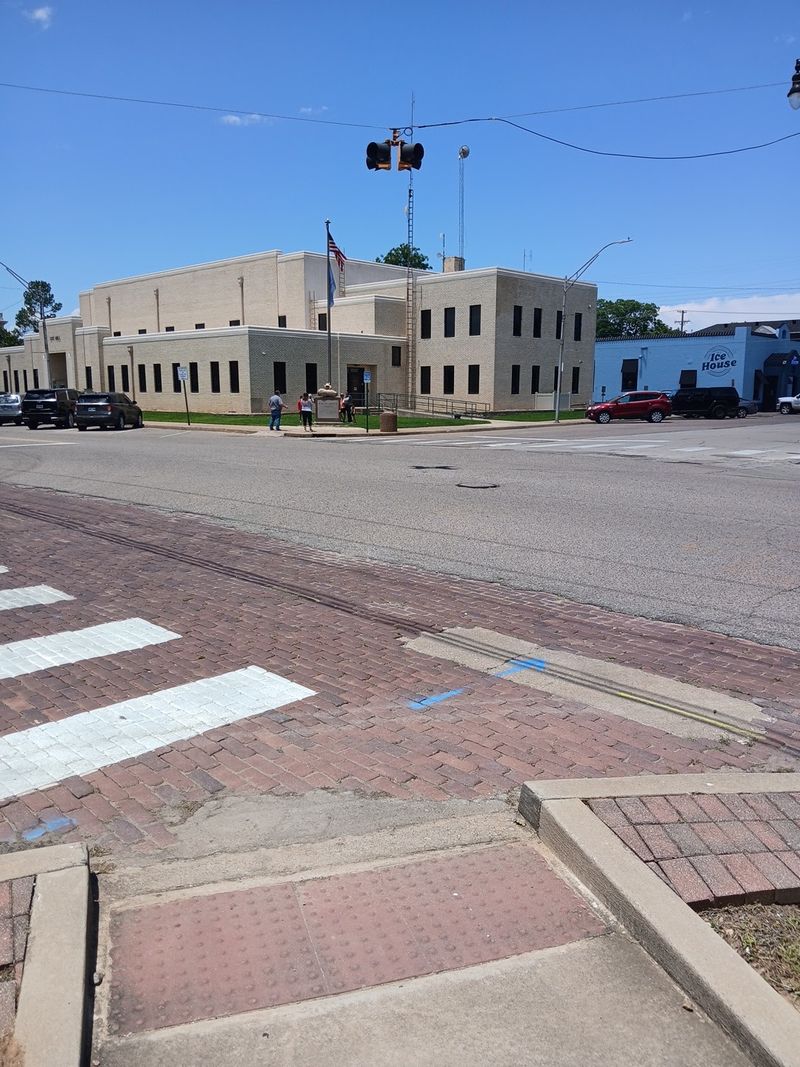
Finding the World’s Largest Peanut Monument is straightforward once you know what you are looking for. The address is 300 W Evergreen St in Durant, Oklahoma, and the monument sits right on the City Hall corner, which makes it a natural landmark within the larger civic block.
GPS navigation handles the trip without any drama from most directions.
Durant sits along US-69 and US-70, making it accessible from both north-south and east-west routes through southern Oklahoma. Travelers coming up from the Dallas-Fort Worth area have made this a popular motorcycle and road trip stop, with the drive running roughly 90 minutes to two hours depending on your starting point across the DFW metro.
Parking is generally easy to find near City Hall, with street parking available on surrounding blocks. Since the monument is outdoors and open around the clock, there is no need to time your arrival around operating hours or worry about crowds.
Mornings tend to offer the cleanest light for photography, while late afternoon sun can create a warm glow on the concrete that photographs beautifully. The whole stop, including parking, photos, and a short walk around, typically takes between 10 and 30 minutes depending on your pace.
The Honest Verdict on Whether the Detour Is Worth It
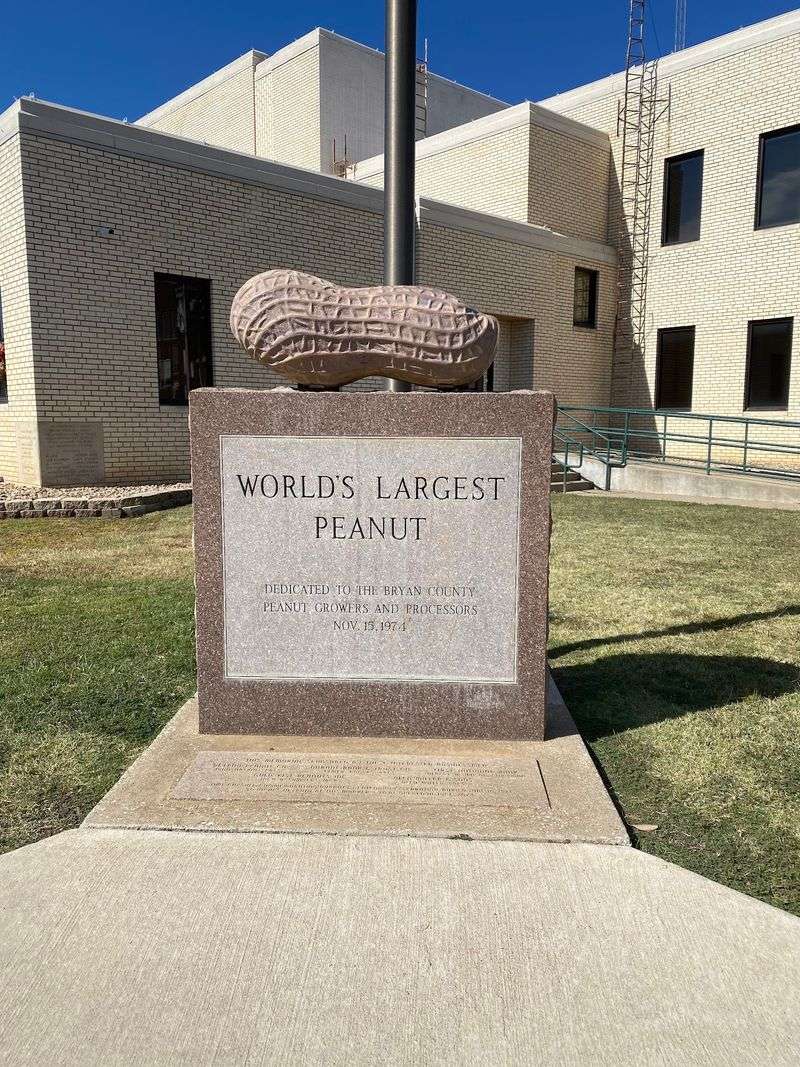
Honest assessments of the monument tend to split along a single fault line: visitors who arrived expecting a towering spectacle and those who arrived expecting a charming piece of roadside Americana. The second group almost always leaves satisfied.
The first group still tends to laugh, take the photo, and admit the stop had its own low-key appeal.
For anyone already passing through southern Oklahoma or making the drive up from Texas, adding the monument to the itinerary requires almost no extra effort. The free admission, 24-hour access, and easy parking mean the barrier to entry is effectively zero.
Even if the peanut itself takes you by surprise in terms of scale, the surrounding town and the story behind the monument give the stop enough substance to feel worthwhile.
Road trips are built on exactly this kind of stop – the ones that were not in the original plan, that cost nothing, and that end up being the stories you tell for years. The World’s Largest Peanut Monument in Durant, Oklahoma is not trying to compete with national parks or major museums.
It is simply a wonderfully committed tribute to a humble legume, sitting on a street corner in a pretty small town, waiting patiently for anyone curious enough to pull over and say hello.
Share this story