Oklahoma has a way of hiding its most thrilling stories deep in the hills, and few places pack more outlaw legend into a single afternoon than the sandstone bluffs of eastern Oklahoma. Robbers Cave State Park sits tucked into the Sans Bois Mountains near Wilburton, where generations of bandits and folk heroes are said to have vanished into the rocks.
Fall strips the canopy back just enough to reveal cave mouths, shadowy crevices, and trail views that feel genuinely cinematic. Come for the history, stay for the scenery, and leave with a story worth telling.
The Outlaw Sanctuary Hidden in the Sans Bois Mountains
Long before it carried a state park sign, this rugged pocket of the Sans Bois Mountains served a very different kind of visitor. Local lore holds that the cave system at the heart of the park was a preferred refuge for some of the most notorious outlaws of the post-Civil War era, including figures connected to the infamous James Gang.
The sandstone formations provided natural shelter, concealed passages, and elevated vantage points that made pursuit nearly impossible.
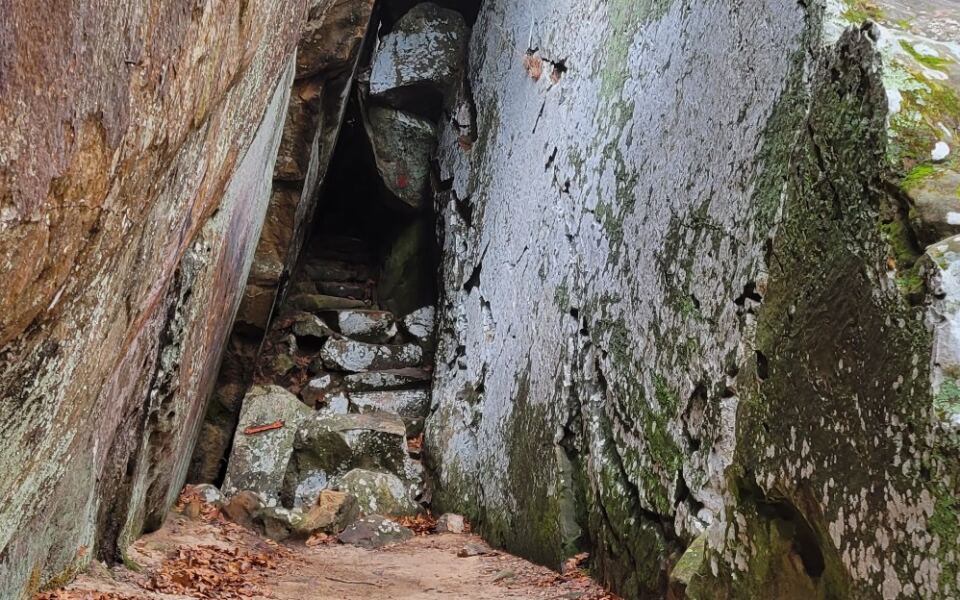
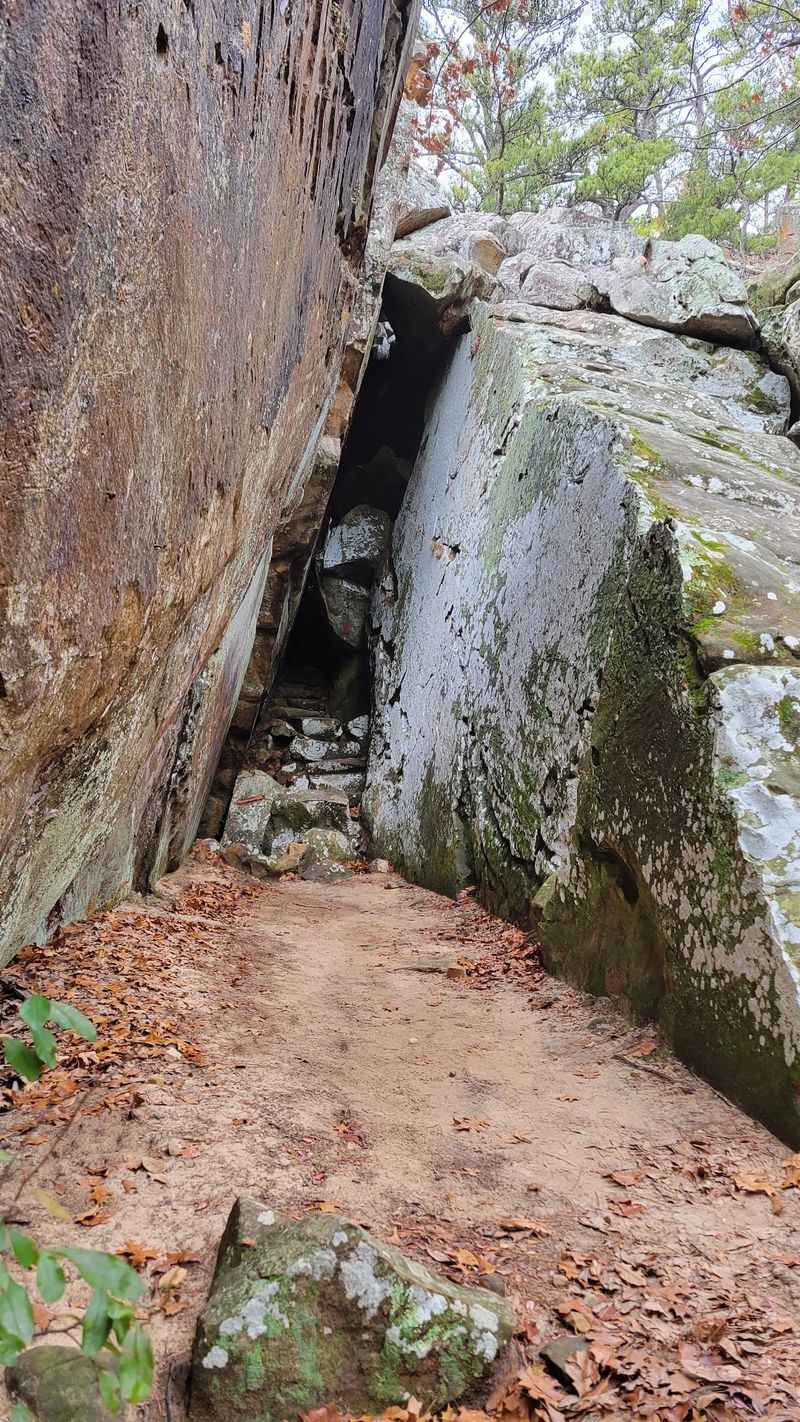
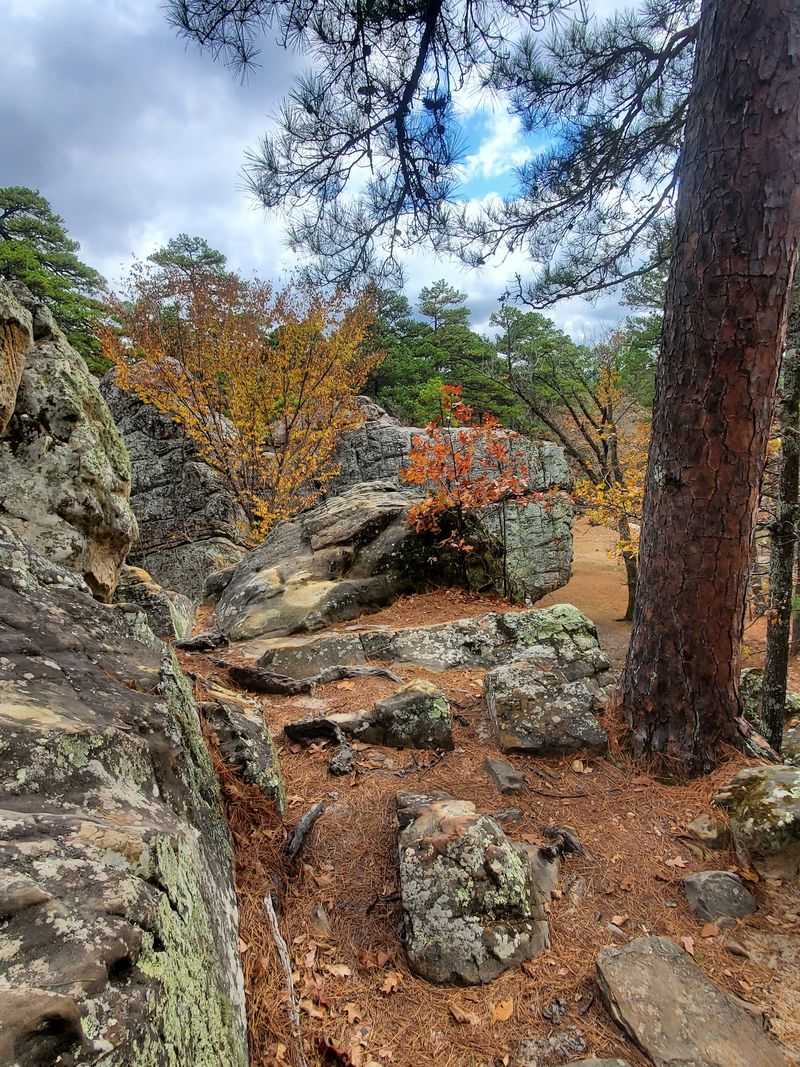
The terrain itself tells the story better than any museum placard. Massive boulders lean against each other at odd angles, creating shadowy corridors wide enough for a person to slip through but easy to defend from above.
Visitors walking the main cave trail today still get a genuine sense of why this place appealed to people who needed to disappear quickly.
Situated near Wilburton in Latimer County, the park covers scenic, hilly woodlands that feel surprisingly remote even on a busy weekend. Fall adds an extra layer of atmosphere, with amber and rust tones deepening the already dramatic rock faces.
Getting here means heading into the hills on NW 146th Rd, and the drive alone signals that something genuinely wild waits at the end of it.
The Cave Itself and Its James Gang Connections
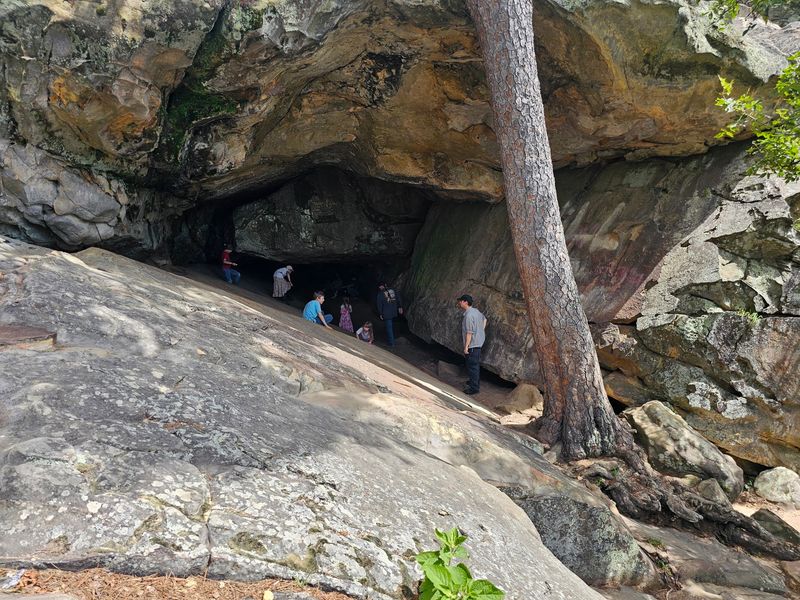
Few natural features in Oklahoma carry as much legend per square foot as the main cave at Robbers Cave State Park. According to local tradition, members of the James Gang used this sandstone hideout as a resting point between raids, taking advantage of the cave’s depth, multiple entry points, and the general inaccessibility of the surrounding terrain.
Whether every detail of that story holds up historically, the cave itself is absolutely real and genuinely impressive to walk through.
Visitors who make it to the cave describe the experience as surprisingly immersive. The rock walls close in at certain points, the light shifts dramatically as you move deeper, and carved markings left by past visitors add a layer of mystery that no tour guide can fully explain away.
The cave earns consistent praise from families and solo hikers alike for delivering exactly the kind of hands-on history that a textbook never could.
Reaching the cave requires a moderate hike along well-marked trails, so comfortable footwear matters. Fall is a particularly rewarding time to make the trek because cooler temperatures make the climb far more pleasant, and the re0duced leaf cover opens up rock face views that stay hidden during summer.
Bring a flashlight and a healthy sense of curiosity.
Moonshine-Era Lore Baked Into the Landscape
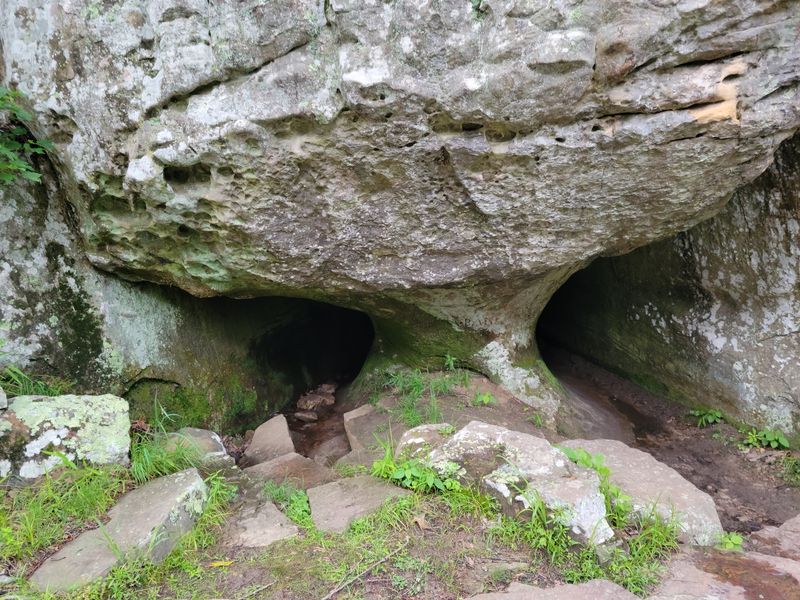
Beyond the outlaw legends, Robbers Cave carries a strong thread of moonshine-era folklore that feels completely at home in these hills. The remote canyons and boulder-choked hollows of the Sans Bois range were natural territory for anyone who needed to operate out of sight, and local stories suggest the cave network sheltered more than just traveling bandits during the Prohibition years.
The landscape practically invites that kind of history.
What makes the moonshine angle so compelling is how well the physical environment supports it. Deep rock overhangs, narrow ravines, and dense second-growth forest create natural barriers that would have made detection genuinely difficult.
Walking the trails with that context in mind transforms an ordinary nature hike into something closer to a detective exercise, reading the land for clues about how it was used by people who needed privacy above everything else.
Park staff and interpretive materials at the nature center touch on this layered history, giving visitors enough background to appreciate what they are looking at without over-explaining the mystery. The park’s educational offerings are noted by visitors as genuinely informative rather than dry.
Fall weekends, when crowds thin slightly compared to summer peaks, offer the best opportunity to explore these corners of the park at a relaxed, contemplative pace that the history really deserves.
Trail Network That Rewards the Curious Explorer
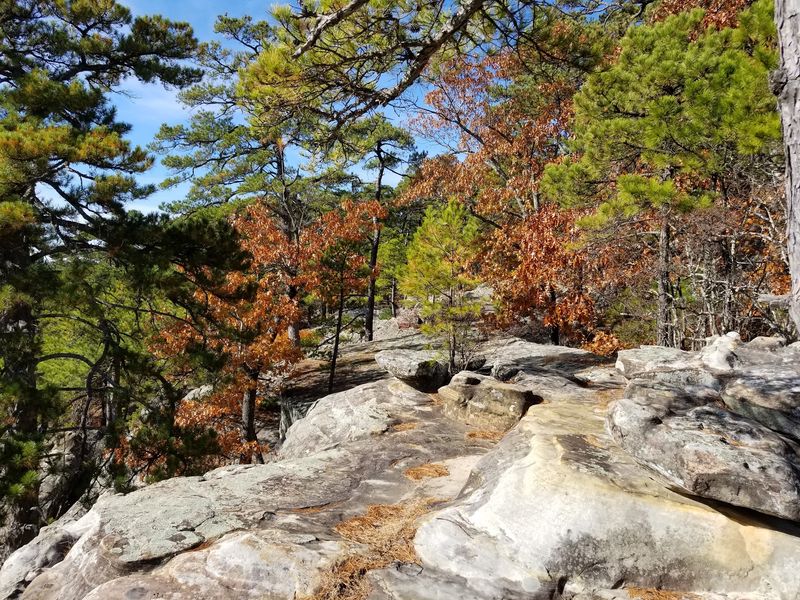
Variety is the defining quality of the trail system here, and that makes Robbers Cave unusually welcoming across a wide range of fitness levels. Some paths are short, relatively flat loops suited to families with young children or visitors who simply want a taste of the scenery.
Others climb aggressively through boulder fields and along exposed ridgelines, rewarding the effort with panoramic views across the forested Sans Bois range that visitors consistently describe as stunning.
Trail markers throughout the park earn high praise for clarity and consistency. Multiple visitors note that routes are well-signed and easy to follow, which matters a great deal in terrain this rugged.
The hand-held trail maps available at the park office are a useful complement, though a few reviewers mention that some of the outdoor sign maps could use updating to match current trail layouts.
Fall hiking here carries a particular appeal because the changing canopy opens up sight lines that the summer greenery conceals entirely. Rocky outcrops that barely register in July suddenly emerge as dramatic foreground elements against a backdrop of red and gold.
The Robbers Cave lookout point draws consistent enthusiasm from visitors who make the climb, with several describing the view as worth the trip on its own. Morning light on a clear October day makes that lookout genuinely unforgettable.
The Lookout Point and Its Panoramic Payoff
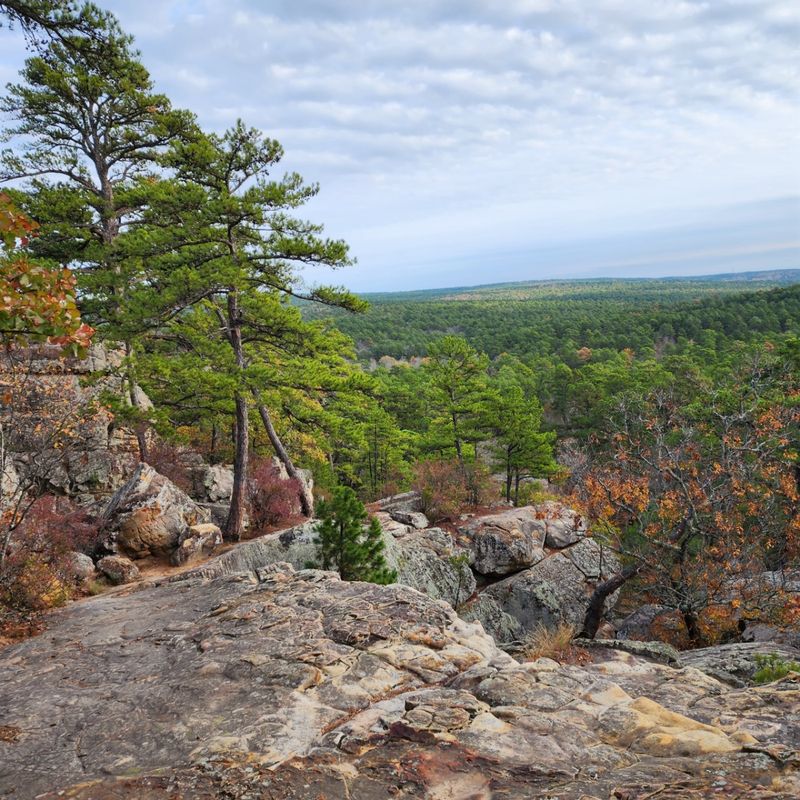
Earning the lookout view at Robbers Cave requires some genuine effort, but the payoff is the kind of sight that makes people stop mid-sentence and just stare. From the top, forested ridgelines roll away in every direction, broken only by the occasional glint of water from the park’s small lake below.
On a clear fall morning, the color spread across those hills is nothing short of spectacular, with the warm tones of Oklahoma’s oak and hickory canopy filling the entire frame.
Visitors who reach the top frequently mention that the view shifts meaningfully with the seasons, and that fall offers the most dramatic presentation by a considerable margin. The combination of crisp air, reduced haze, and peak foliage color turns a good view into a genuinely memorable one.
Several visitors note that they return specifically to catch this seasonal window, treating the lookout as a personal benchmark for the year.
Getting to the top involves navigating some rocky, uneven terrain, so trekking poles are a smart addition for anyone who prefers extra stability on the descent. The trail itself is well-marked, and the intermediate sections offer their own rewards in the form of close-up sandstone formations and occasional wildlife sightings.
Squirrels, songbirds, and the odd white-tailed deer make regular appearances along the upper trail corridor in autumn.
Rock Climbing and Boulder Scrambling on Sandstone
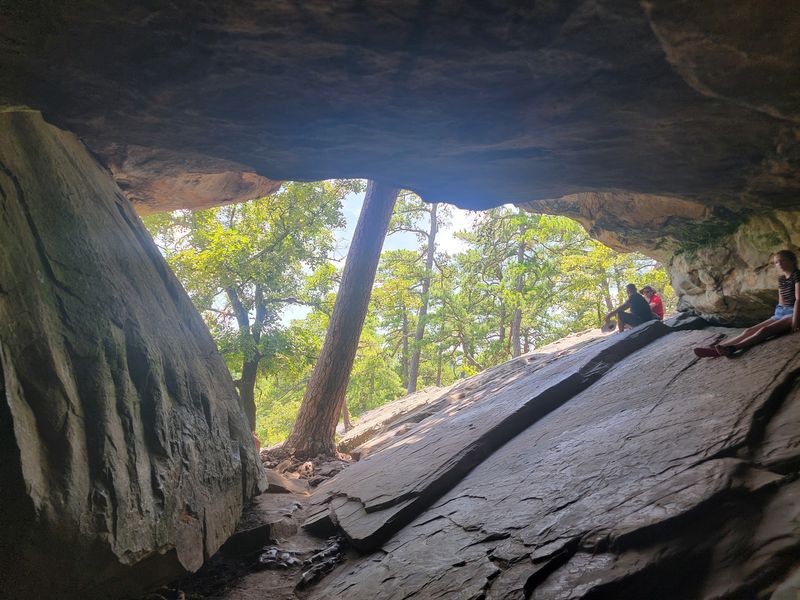
Sandstone has a texture that climbers genuinely love, and the formations at Robbers Cave offer more than enough variety to keep both beginners and experienced scramblers engaged. Rock climbing appears as one of the park’s most frequently mentioned activities, with the boulder fields near the cave providing natural routes that range from casual scrambles to legitimately technical challenges.
No manufactured holds, no plastic walls, just honest Oklahoma stone.
The appeal here goes beyond the physical challenge. Climbing through the same rock formations that once sheltered outlaws and wanderers adds a storytelling dimension that indoor gyms simply cannot replicate.
Reaching a high ledge and looking out over the tree canopy below gives a visceral sense of why this terrain was so valued by people who needed elevation and visibility in equal measure.
Fall conditions are particularly favorable for this kind of activity. Cooler temperatures reduce the physical toll of exertion on sun-warmed rock, and the lower humidity that typically accompanies October and November improves grip on the sandstone surface.
Visitors planning to do serious climbing should bring appropriate footwear and check in with park staff for current conditions on specific formations. The park phone at 918-465-2562 is the fastest way to get current access information before making the drive out.
Horseback Riding Through History on Equestrian Trails
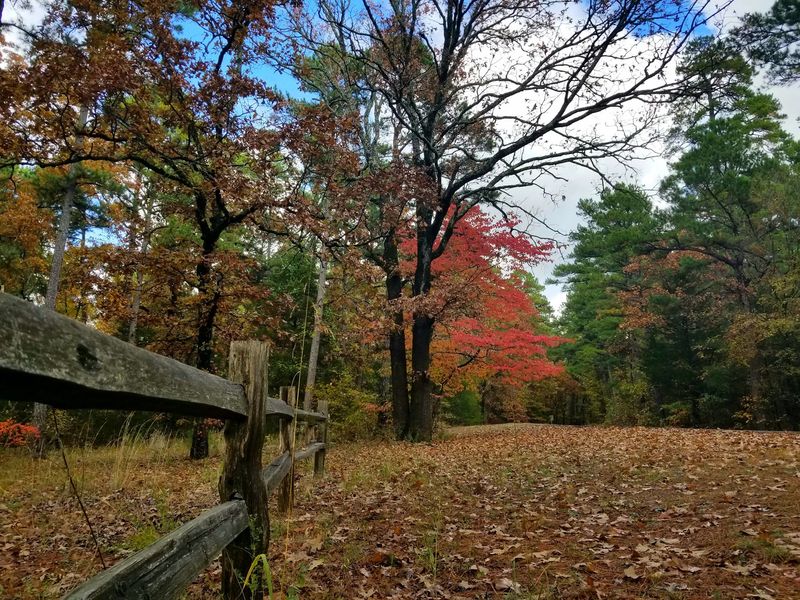
Horseback riding ranks among the most popular activities at Robbers Cave, and it is easy to understand why once you consider the setting. Moving through these oak-covered hills on horseback, with sandstone bluffs rising through the autumn canopy on either side, creates a connection to the landscape that feels almost historical.
The park maintains equestrian-friendly sites and riding stables that make the experience accessible even for visitors who do not trailer their own horses.
The equestrian trail network winds through sections of the park that foot traffic rarely reaches, opening up perspectives on the terrain that hikers simply do not get. Riders pass through dense woodland corridors, skirt open ridgelines, and occasionally catch glimpses of the rock formations that define the park’s character.
Several visitors specifically praise the park’s equestrian accommodations as reasonable and well-maintained relative to comparable state park options in the region.
Fall is a particularly atmospheric time to ride here. The crunch of leaves underfoot, the cooler air, and the shifting light through thinning canopy all contribute to an experience that feels genuinely timeless.
For visitors interested in connecting with the outlaw history of the area, moving through the landscape on horseback adds a dimension that walking trails alone cannot quite deliver. It is the kind of afternoon that sticks with you long after the drive home.
The Lake, Paddle Boats, and Quieter Water Pursuits
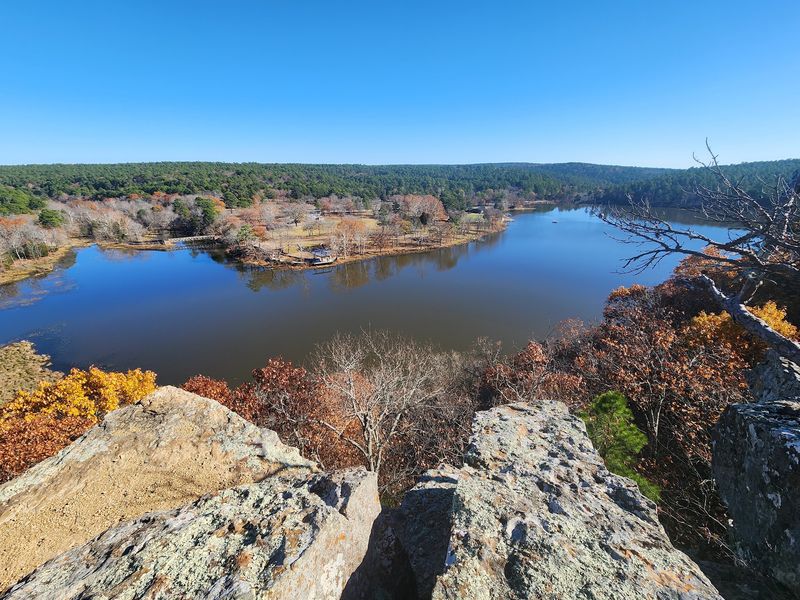
Not every moment at Robbers Cave needs to involve a steep climb or a history lesson. The park’s small lake offers a genuinely relaxing counterpoint to the more rugged trail experiences, with paddle boats available for visitors who want to drift across calm water and simply take in the surrounding hills from a different angle.
The lake draws consistent mentions from families as a favorite low-key stop during longer park visits.
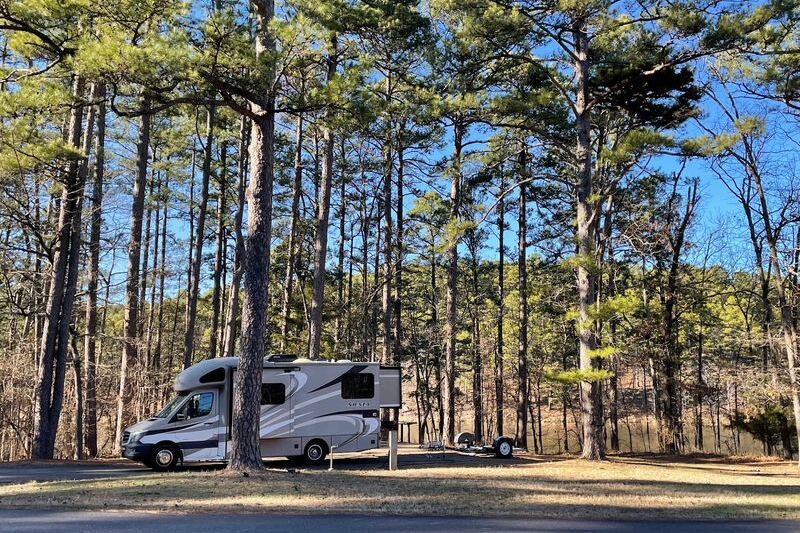
Fishing is another draw here, and the park accommodates anglers across a range of experience levels. Visitors note that the forested campsites near the lake have a particularly pleasant feel in fall, when the reflected color of the surrounding canopy turns the water surface into something that looks almost painted.
A few reviewers mention that they packed fishing gear as an afterthought and ended up spending far more time at the water than originally planned.
The lake area also works well as a natural gathering point for groups who arrive with mixed interests. While some members of a party tackle the cave trail or the lookout climb, others can settle comfortably near the water with minimal exertion required.
The park’s group facilities nearby, including a dining hall and kitchen noted for being clean and well-stocked, make the lake zone a natural hub for family reunions and larger outdoor gatherings.
Cabins, Yurts, and Overnight Stays in the Hills
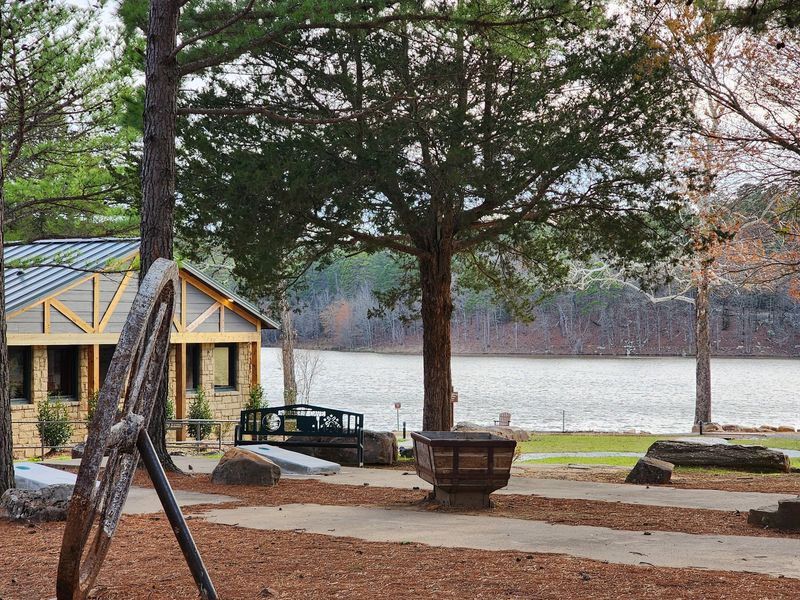
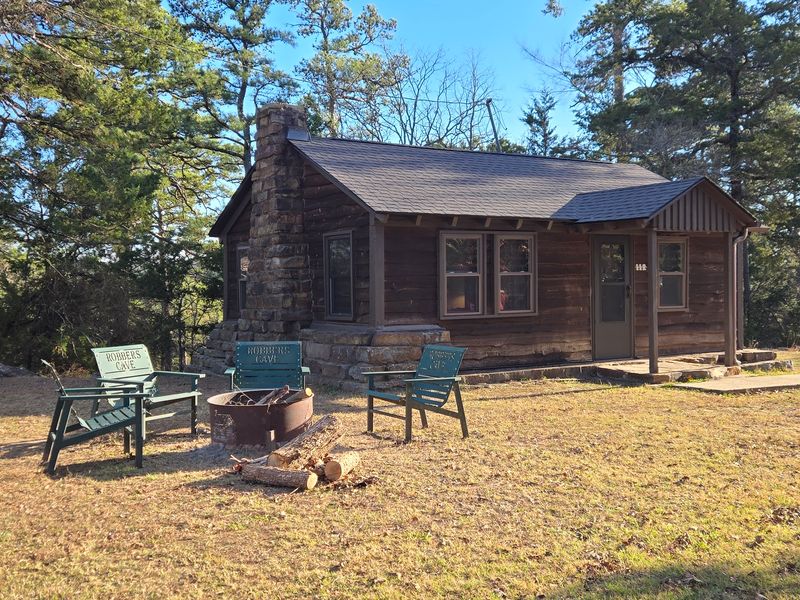
Staying overnight at Robbers Cave transforms the visit from a day trip into something genuinely immersive. The park offers a range of accommodation options that span from basic tent camping to recently renovated cabins that visitors consistently describe as comfortable, clean, and surprisingly well-appointed.
A typical cabin comes equipped with a full kitchen, a dining table, a queen bed, a pullout couch, a fire pit, and a picnic table outside, which covers most of what a family needs for a relaxed few days in the hills.
Yurts provide a middle ground between camping and cabin comfort, though a few visitors note that air conditioning in some units can be inconsistent, so packing a fan for warmer nights is a practical move. Fall visits largely sidestep that particular issue, since evening temperatures in the Sans Bois range drop pleasantly once October arrives, making open-air sleeping arrangements genuinely appealing rather than just tolerable.
The lodge is another strong option for visitors who prefer hotel-style accommodation without leaving the park entirely. Rooms are spacious, the staff earns repeated praise for friendliness and helpfulness, and the porch with rocking chairs overlooking the landscape is specifically called out as a highlight by multiple guests.
Waking up inside the park, with trail access just steps away, changes the whole rhythm of the experience in the best possible way.
Nature Center, Gift Shop, and Educational Stops
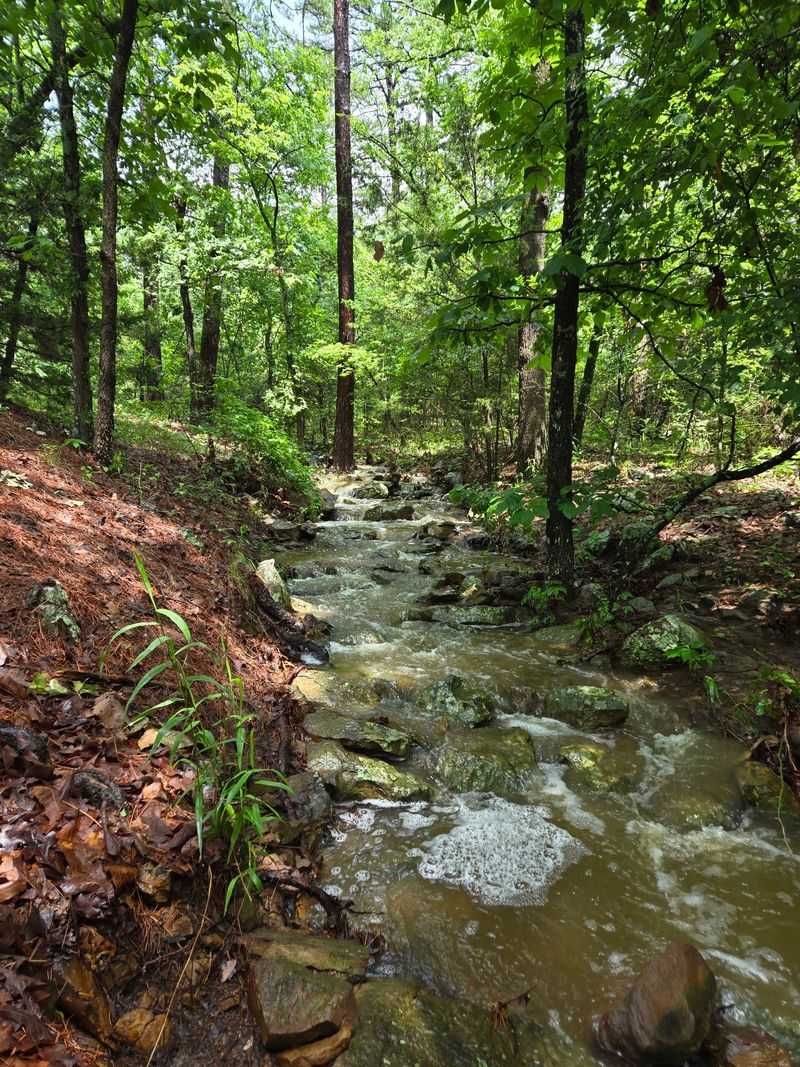
History and natural science get equal billing at the park’s nature center, which visitors describe as genuinely educational without feeling like a lecture. Exhibits touch on the geology of the sandstone formations, the ecology of the surrounding woodland, and the human history that makes this particular corner of Oklahoma so layered and interesting.
Families with school-age children tend to find the center a useful anchor point that gives the rest of the visit more context and meaning.
The gift shop adjacent to the nature center draws its own share of appreciation. Visitors note that the selection feels appropriately local rather than generic, with items that connect meaningfully to the park’s identity and history.
Staff throughout the park, including at the gift shop and the lodge office, earn consistent praise for being approachable, knowledgeable, and genuinely enthusiastic about helping visitors get the most out of their time here.
For visitors who prefer to learn as they walk rather than stopping at a single interpretive facility, the park’s trail signage provides enough historical context to make the route feel like a guided experience. The combination of on-trail information and the nature center creates a layered educational experience that rewards both casual visitors and people who arrive with a genuine interest in the outlaw history and natural character of the Sans Bois Mountains.
Practical Details for Planning a Fall Visit
Getting the logistics right makes a big difference at a park this spread out and varied. Robbers Cave State Park is located at 2084 NW 146th Rd, Wilburton, OK 74578, in the heart of the Sans Bois Mountains in eastern Oklahoma.
The drive in is part of the experience, with winding roads and forested hillsides signaling the transition from everyday life to genuine wilderness well before you reach the park boundary.
Standard operating hours run from 8 AM to 6 PM Sunday through Thursday, with extended hours until 8 PM on Fridays and Saturdays. Fall weekends benefit from those Friday and Saturday evening hours, which allow enough time for a late-afternoon hike followed by a relaxed sunset from the lookout.
Parking requires a small fee, typically around seven to eight dollars per vehicle, which covers all-day access across the park’s various activity areas.
Visitors planning to camp or stay in a cabin should reserve in advance, particularly for fall weekends when demand picks up as the foliage season peaks. The park can be reached directly at 918-465-2562, and the official website at travelok.com/robberscave carries current reservation information and amenity details.
Checking ahead for specific campsite hookup availability is worth the extra step, as amenity listings for some sites have caused occasional confusion among visitors in the past.
Who Should Make the Trip and Why Fall Is the Right Time
Robbers Cave State Park suits a genuinely wide audience, which is part of what makes it such a reliable destination for mixed groups. Solo hikers who want solitude and challenge find it on the upper trails.
Families with young children can stick to shorter, flatter loops and the lake area without missing the park’s essential character. History enthusiasts get the cave and the outlaw lore.
Outdoor photographers get the sandstone formations, the lookout views, and the fall color all in a single location.
Fall sharpens every one of those appeals. The cooler temperatures make long hikes far more comfortable, the foliage color adds visual drama to every rock face and ridgeline, and the slightly thinner crowds compared to summer peaks mean more space to explore at your own pace.
The park’s combination of history, geology, and natural beauty hits a particular sweet spot in October and November that other seasons simply do not match.
Budget-conscious visitors will find the entry cost refreshingly low relative to the range of experiences available. A single parking fee unlocks hiking, cave exploration, lake access, and the full trail network for the entire day.
For anyone within a reasonable drive of eastern Oklahoma who has not yet made the trip out to Wilburton, this fall offers the most compelling possible reason to finally go.
Share this story