You follow the smell before you see the stand. Somewhere in Illinois, a sizzling griddle and a cloud of onion steam can make a plain sausage sandwich feel like a small discovery.
That first bite, with mustard, soft onions, and maybe a pepper nearby, sticks with you. Here is the story behind it, and what history can and cannot tell us.
The market gave street food a broader stage

Picture a street where you could buy almost anything from a cart, a table, or the back of a wagon. That was Maxwell Street, and Chicago made it the city’s official open-air market by ordinance in 1912, according to the Maxwell Street Foundation.
The market’s story is not about one group. The Foundation describes an early market built mainly by Eastern European Jewish immigrants, with African American and Latino merchants, shoppers, and performers shaping it in later years.
Food stands fit naturally into that busy scene. The Polish sausage sandwich is one chapter in a much bigger street-food story, so treating it as the work of a single community or vendor would shrink the history.
Who first put Polish sausage on a bun?
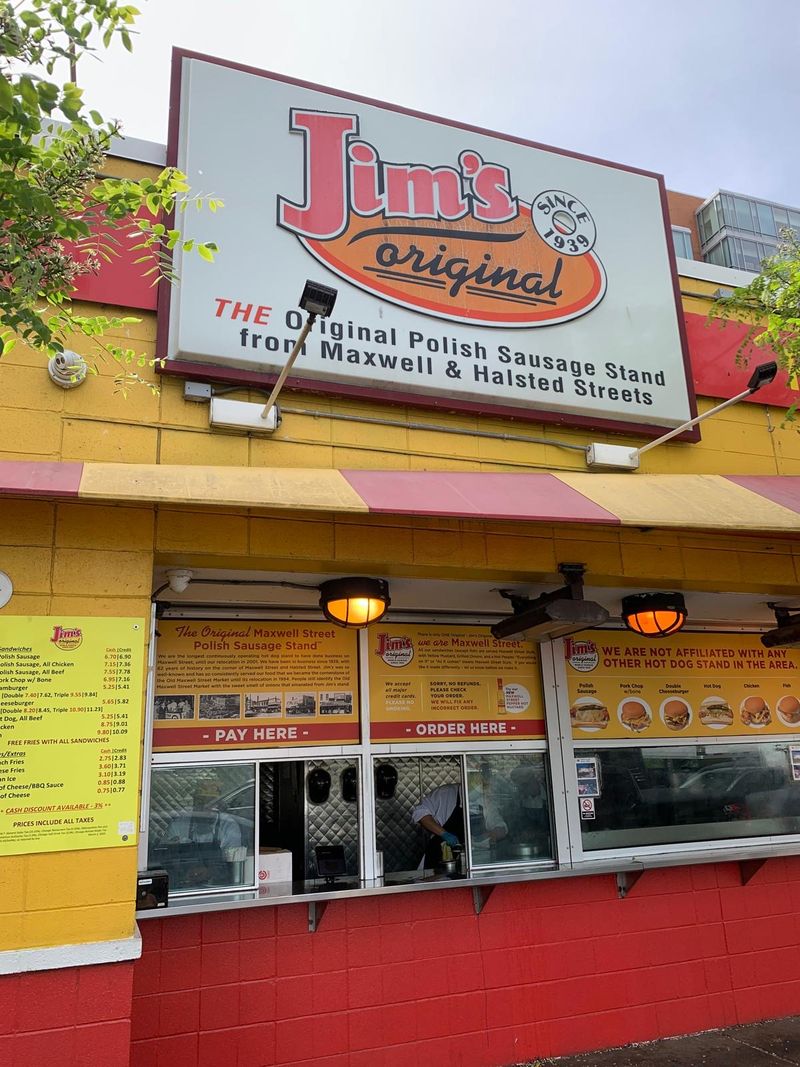
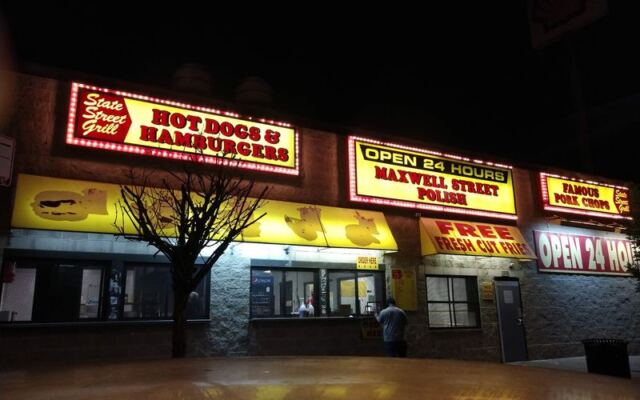
Ask three stands who started it, and you may get three proud answers. The Maxwell Street Foundation says Jimmy Stefanovic started a street stand in 1939 and is said to have been the first to put Polish sausage on a bun, as noted on its market history page.
Jim’s Original sees it differently. The stand’s own site says its founder created the Maxwell Street Polish in 1943.
Then there is Express Grill, which WTTW reports also claims the invention.
Note the dates. 1939 is when the Foundation says Stefanovic started at a stand, not a confirmed birthday for the sandwich. Nobody has settled this one, and the friendly argument is part of the fun.
Grilled onions have the clearest historical connection
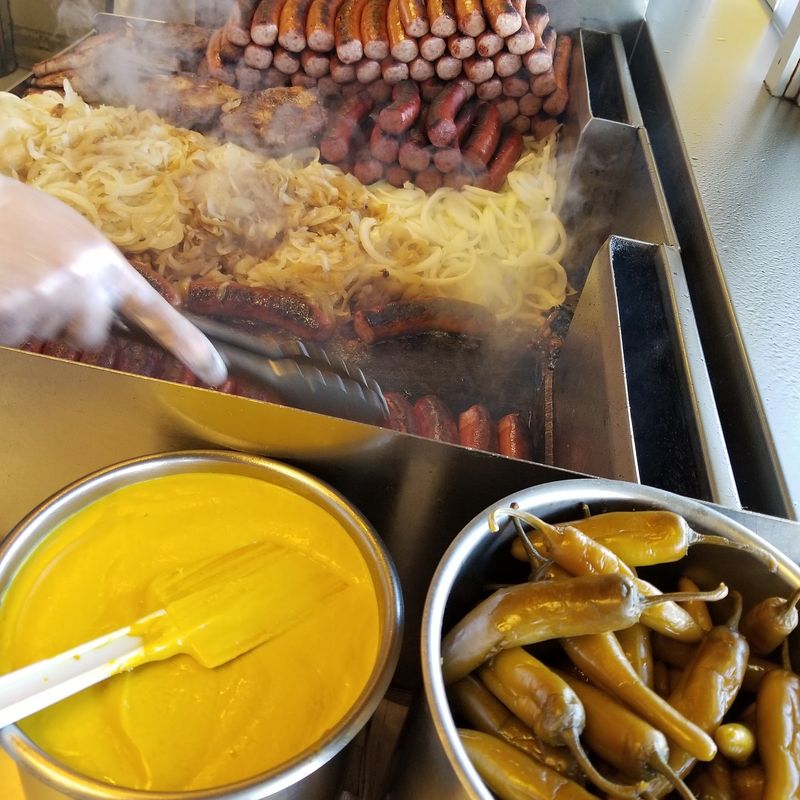
If one topping can claim the history, it is the onion. The Foundation says Stefanovic’s stand added grilled onions to its sausage and pork-chop sandwiches, and that the aroma drew crowds, as described in its account of the market.
You can still see that onion-forward approach today. WBEZ’s report on Jim’s Original documents the same grilled onion preparation at a stand that has been going for decades.
Careful, though. The sources say the smell pulled people in, but they do not say why the onions were used or why a stand might pile on a certain amount.
Any tidy explanation about flavor or the rhythm of a busy grill is a guess, not a documented fact.
Sport peppers are familiar, but they vary
Sport peppers feel like part of the picture, yet the sources do not agree on how they arrive. WBEZ’s account of Jim’s describes a pepper served on the side rather than tucked into the bun.
Other descriptions put them right on the sandwich. WTTW lists sport peppers among the toppings, and an O’Hare menu does too.
So call them a common, customary extra in some versions. They are not a universal rule, and nothing here shows they were on the first sandwich.
A Polish is not a Chicago-style hot dog
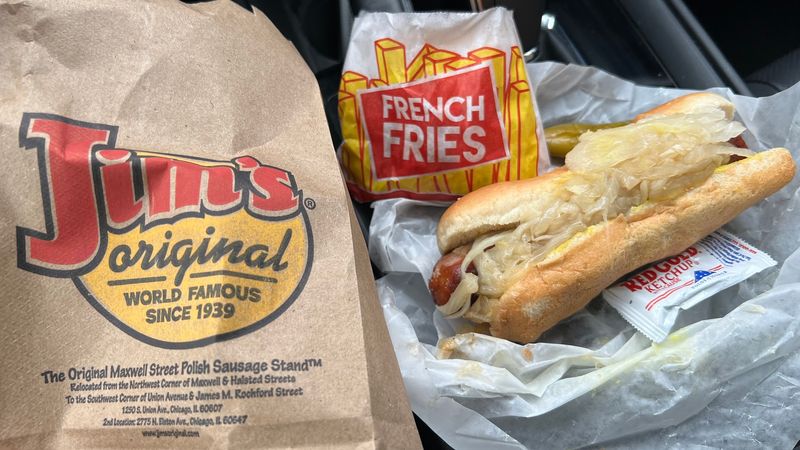
Here is the quick picture. A common Maxwell Street Polish is a pork-and-beef Polish sausage, which WTTW describes as a Chicago kielbasa, set in a bun with yellow mustard and onions.
Sport peppers show up in some descriptions, such as the O’Hare menu, and arrive alongside in other preparations.
A Chicago-style hot dog is a different order altogether. It carries its own set of toppings, so if you ask for one and get the other, you will notice.
Next time you are at a counter, check the sausage first and the toppings second.
A lasting tradition, not a fixed topping rule
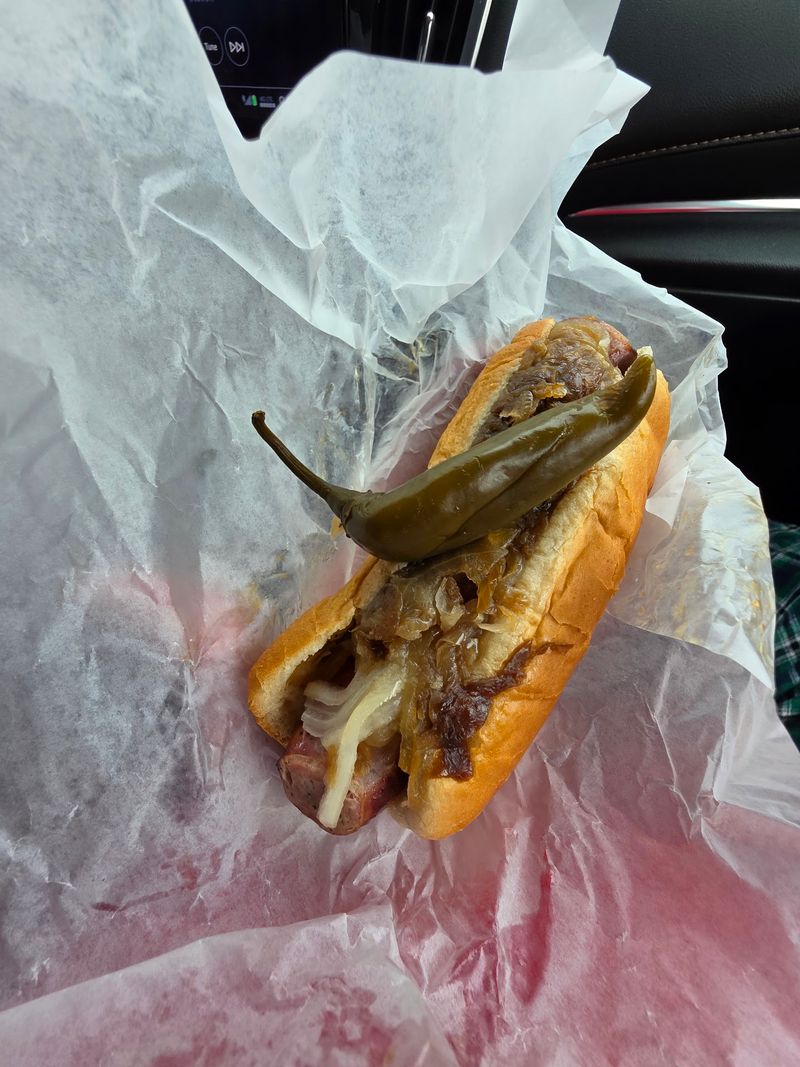
Put it all together and the sandwich looks less like a strict recipe and more like a habit that stuck. Onions have the strongest paper trail, with the Foundation’s market history tying them to Stefanovic’s stand and WBEZ showing them at Jim’s today.
Peppers, mustard fans, and who gets credit for the first bun all vary by stand and by storyteller, as WTTW’s mention of rival claims hints.
Maybe that is why locals defend it so fiercely. The argument is half the flavor.
Share this story