There is a small airport in Tullahoma, Tennessee, where two of the most talked-about aircraft in Beechcraft history sit under the same roof. One looks like it belongs in a 1930s mystery novel, with its unusual staggered wings that turned heads from the moment it rolled out of the factory.
The other looks like it was sketched by someone who had already seen the future. Together, they anchor one of the most underrated aviation museums in the entire country.
The Beechcraft Heritage Museum tells the full story of a company that changed how Americans thought about flying, and it does so with a collection of restored aircraft, rare artifacts, and historical exhibits that reward anyone willing to make the detour.
The Mystery Ship With Staggered Wings
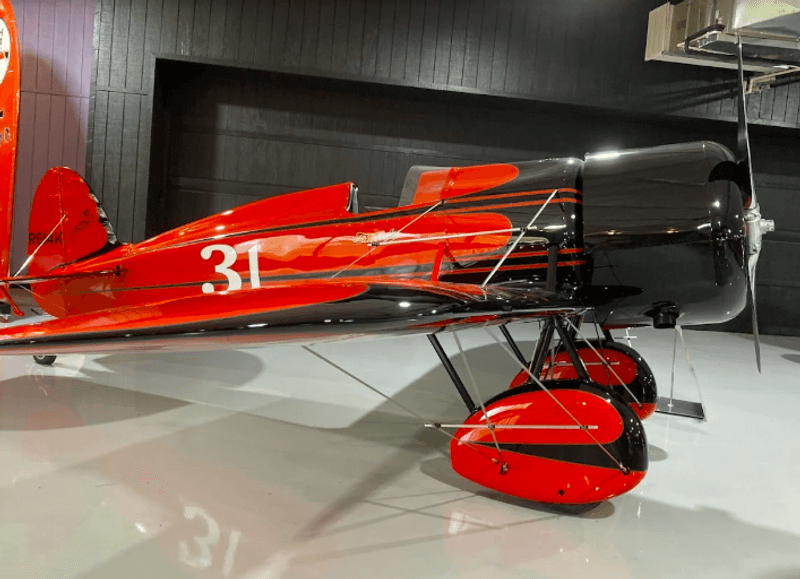
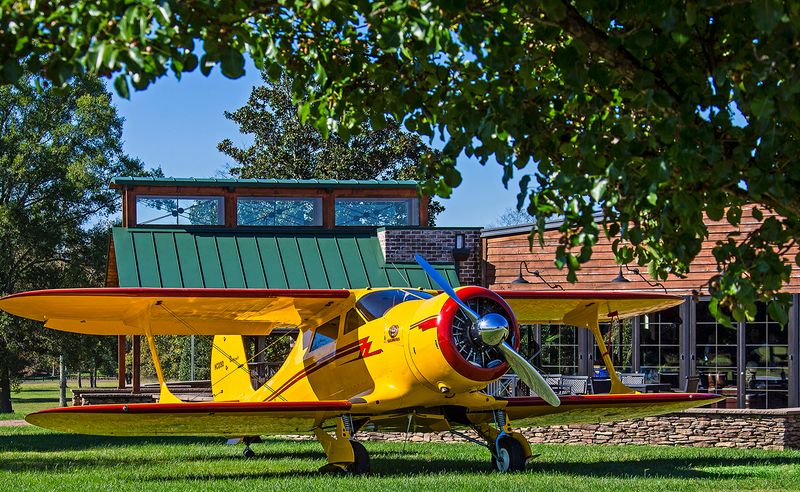
Few aircraft in history have earned a nickname as dramatic as the Staggerwing. Officially known as the Beechcraft Model 17, this biplane was designed in 1932 with a feature so unusual that people still do a double take when they see it for the first time.
Most biplanes have a lower wing that sits behind the upper wing. The Staggerwing flipped that arrangement, placing the lower wing ahead of the upper one.
That negative stagger configuration gave the pilot better visibility and improved aerodynamic performance at the same time.
The result was a fast, elegant aircraft that quickly became a favorite among business travelers and racing pilots during the 1930s and 1940s. The museum holds multiple meticulously restored Staggerwings, and each one tells a slightly different chapter of the same remarkable story.
Up close, the craftsmanship on these machines is genuinely hard to walk past without stopping for a long look.
The Starship That Looked Decades Ahead
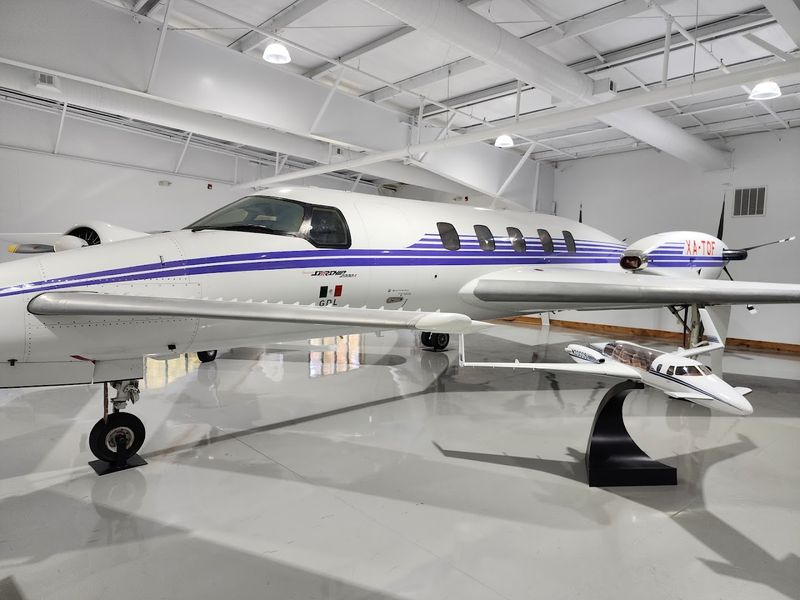
The Beechcraft Starship is the kind of aircraft that makes people stop mid-sentence. Developed in the 1980s and certified in 1988, it was unlike anything the general aviation world had seen from a production manufacturer.
Built largely from composite materials, the Starship used a canard configuration, meaning small forward wings replaced the traditional tail. Two pusher turboprop engines sat behind the main wing, driving propellers that faced backward rather than forward.
The overall silhouette looks more like a science fiction prop than a certified passenger aircraft.
Beechcraft built only 53 Starships, and most were later recalled and retired by the company, making surviving examples genuinely rare. The museum’s Starship is one of the most photographed objects in the entire collection.
For anyone who thought general aviation peaked decades ago, this aircraft is a compelling reminder that bold ideas were alive and well long before the current era of aviation innovation.
Walter Beech and the Company Behind It All
Walter Beech was not the kind of person who built airplanes to follow trends. He co-founded Travel Air Manufacturing in 1925 and later established Beech Aircraft Corporation in 1932 alongside his wife, Olive Ann Beech, who would go on to run the company for decades.
Olive Ann Beech became one of the most influential figures in American aviation history, serving as president and chairman of the board after Walter’s passing in 1950. Under her leadership, the company grew into a major force in both civilian and military aviation markets.
The museum dedicates significant exhibit space to the full arc of the Beech story, from the early years in Wichita, Kansas, through the company’s expansion and its eventual acquisition by Raytheon in 1980. Archival photographs, personal artifacts, and detailed timelines help connect the human story to the hardware on the floor.
This is not just a collection of planes; it is a portrait of a family-built American enterprise.
The Bonanza: Half a Century of Production
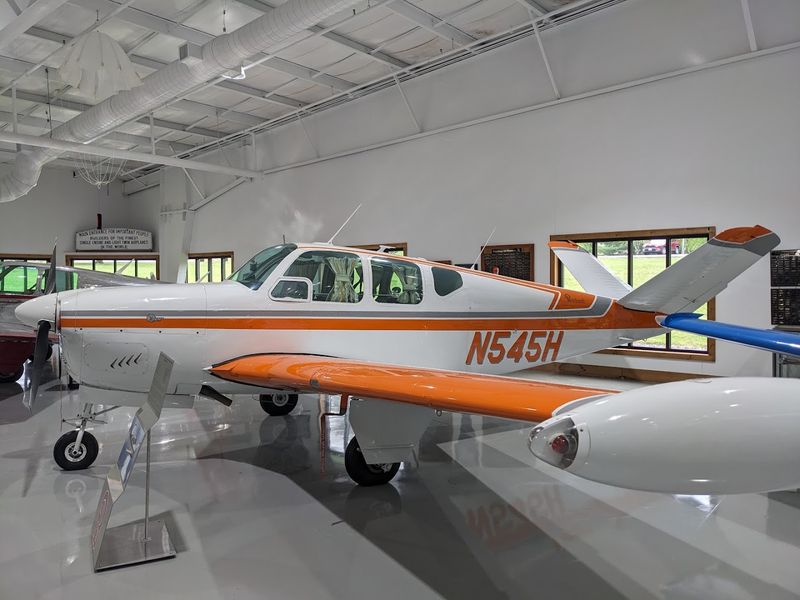
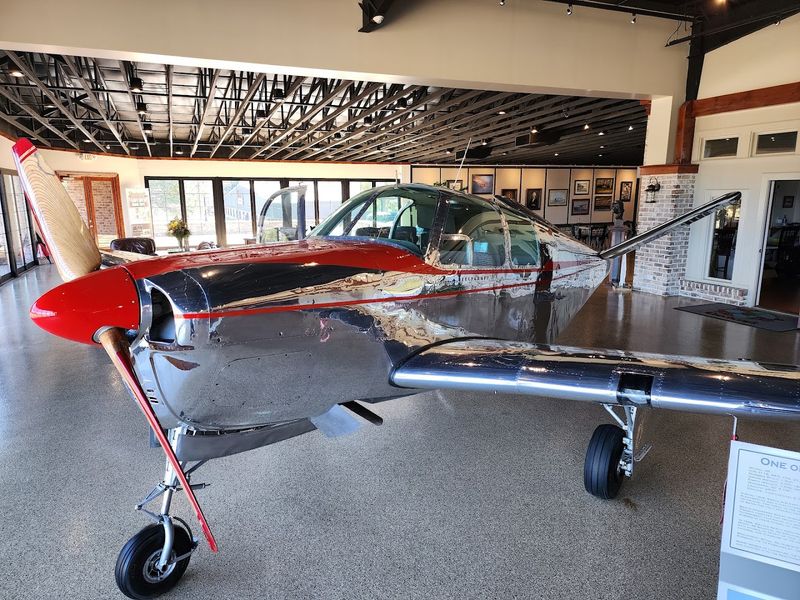
No single aircraft represents Beechcraft’s legacy in general aviation quite like the Bonanza. First flown in 1945 and entering production in 1947, the Bonanza holds the record for the longest production run of any aircraft in history, a distinction that still stands today.
The original V-tail design, which replaced the conventional horizontal and vertical stabilizers with two angled surfaces, became one of the most recognizable silhouettes in aviation. Later models switched to a conventional tail, but both versions remained in continuous production for an extraordinary span of time.
The museum features Bonanza examples from different eras, allowing visitors to trace the model’s evolution across decades. Changes in cockpit instrumentation, engine specifications, and interior design tell a quiet story of how the aircraft adapted to shifting technology and pilot expectations.
For anyone who has ever flown one, or dreamed of doing so, the Bonanza section of the museum carries a particular kind of weight.
Two Hangars Full of History
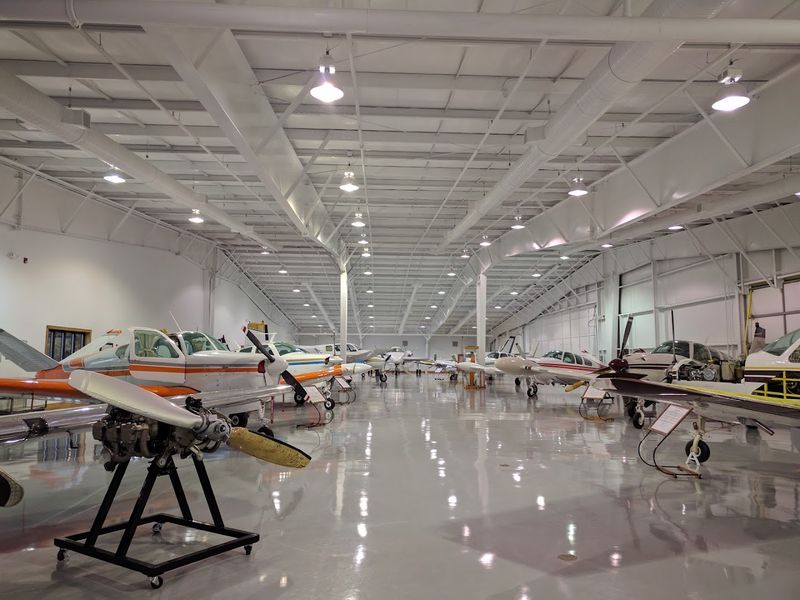
The physical scale of the Beechcraft Heritage Museum catches a lot of first-time visitors off guard. The collection spreads across two full hangars, giving the aircraft enough room to be displayed properly rather than crammed together for the sake of quantity.
Each hangar is kept clean, well-lit, and easy to navigate. Informational placards accompany the aircraft with enough detail to educate newcomers without overwhelming them, while experienced pilots and aviation historians will find enough depth to keep them reading carefully.
The layout encourages a natural flow through the collection, moving roughly from the earliest Beechcraft designs through to the more modern examples. That chronological thread makes the technological progression feel tangible rather than abstract.
By the time a visitor reaches the far end of the second hangar, the full sweep of what Beechcraft accomplished over several decades becomes genuinely clear. The space itself is part of what makes the experience work as well as it does.
The Cockpit Simulator Experience
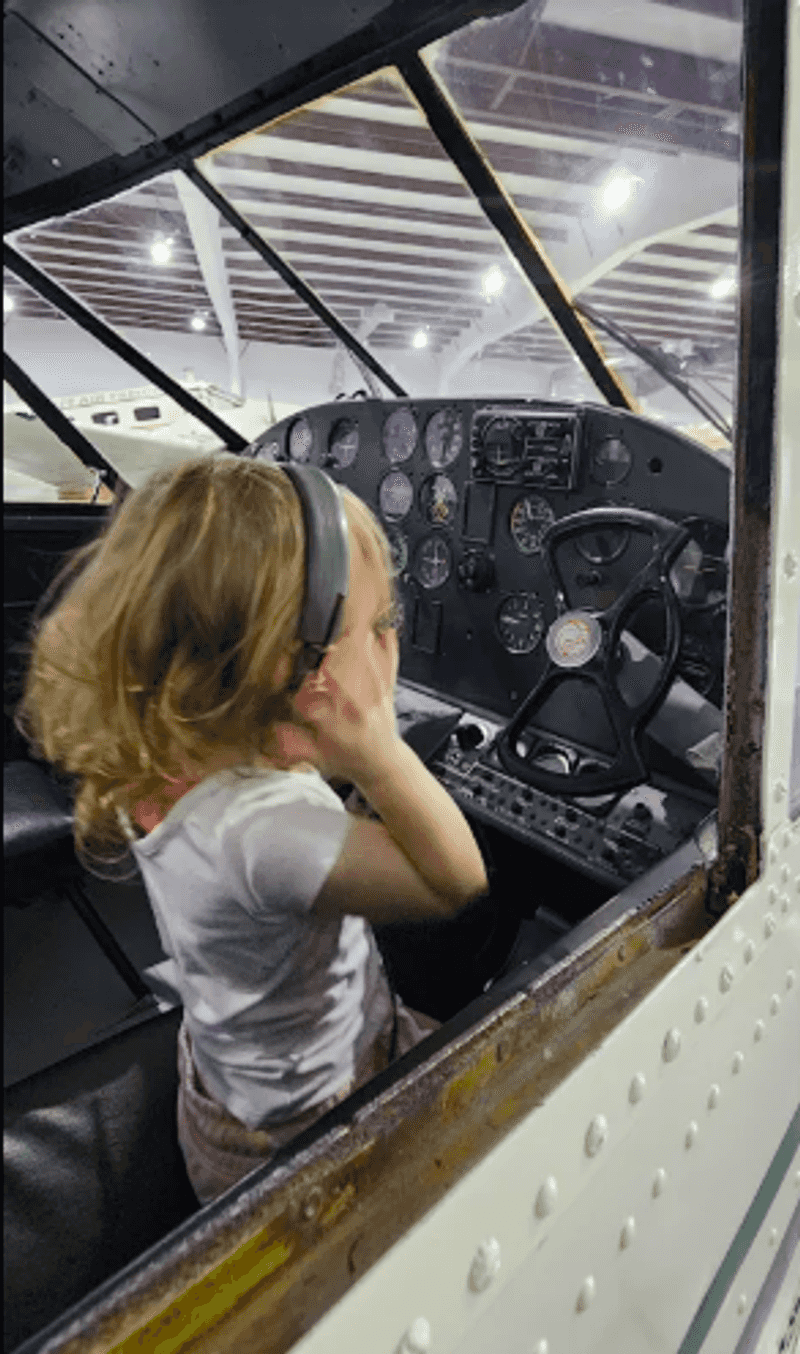
Not every exhibit at the Beechcraft Heritage Museum asks visitors to keep their distance. The cockpit simulator offers a hands-on element that shifts the experience from purely observational to genuinely participatory.
The simulator gives younger visitors in particular a chance to engage with the instruments and controls in a way that a static display simply cannot provide. Parents have noted that children who might otherwise lose interest in a traditional museum setting tend to light up when given the chance to sit behind a real-looking panel and interact with the equipment.
For adults with some aviation background, the simulator is a chance to compare the feel of older instrument layouts with what modern cockpits offer. The museum does not rush anyone through any part of the visit, and the simulator is no exception.
Whether someone spends five minutes or twenty at the controls, the experience adds a practical dimension to what is otherwise a beautifully curated historical collection.
The Annual Beech Party Fly-In
Once a year, the Beechcraft Heritage Museum becomes the center of gravity for owners and enthusiasts from across the country. The annual Beech Party, held each October, draws pilots who fly their own Beechcraft aircraft directly to Tullahoma Regional Airport for a multi-day celebration of the brand.
The event includes aircraft displays, educational sessions, and the kind of informal conversation that only happens when a group of people share a deep and specific passion. Seeing dozens of Bonanzas, Barons, King Airs, and Staggerwings lined up on the ramp outside the museum is a sight that even casual observers tend to find compelling.
For Beechcraft owners specifically, the fly-in is considered a must-attend event. The museum’s connection to the active airport makes the logistics straightforward for pilots who want to fly in rather than drive.
Those who have attended multiple times consistently describe it as the highlight of their aviation calendar, and the community it builds extends well beyond the event weekend itself.
Military Service and the Beechcraft Legacy
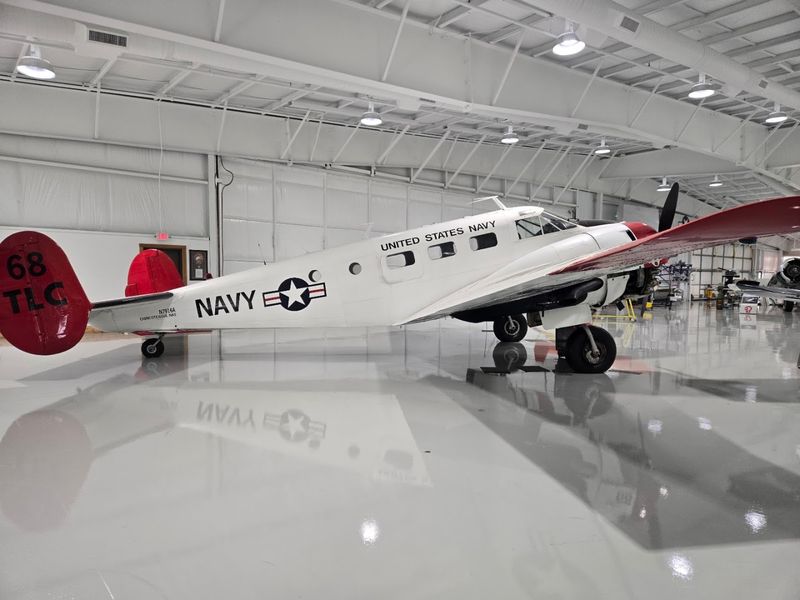
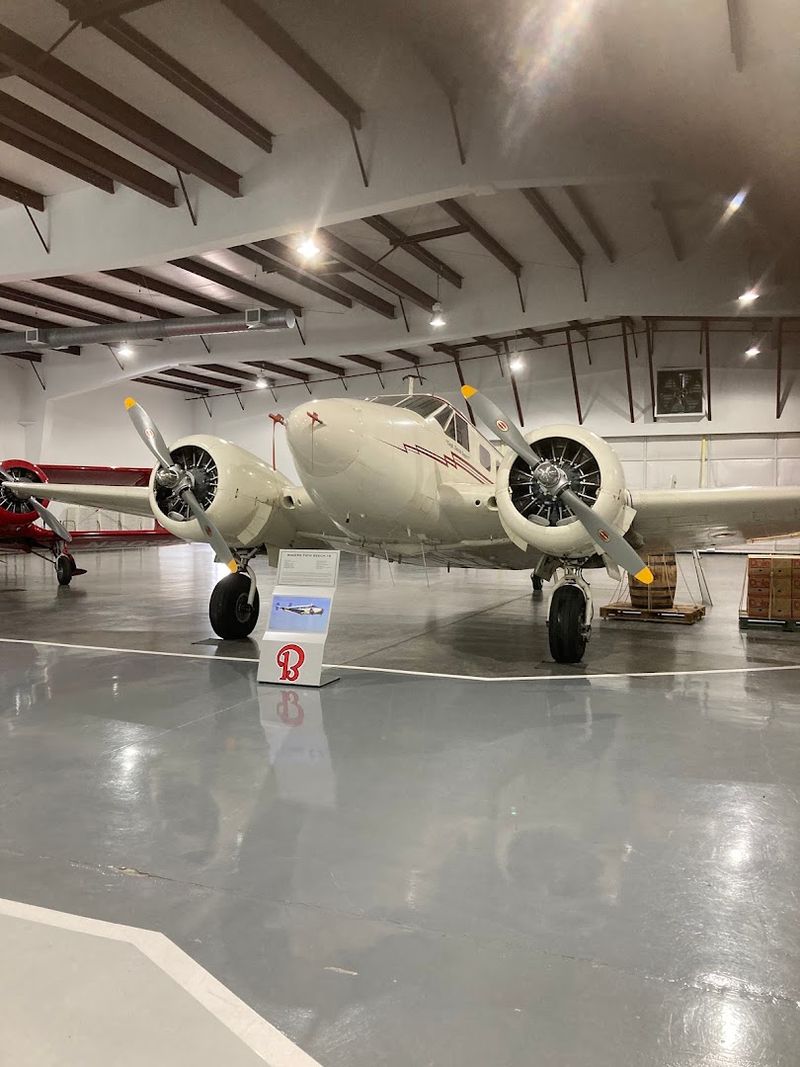
Beechcraft’s contribution to military aviation runs deeper than most people realize. During World War II, the company produced thousands of aircraft for the United States military, including the AT-10 Wichita trainer and the AT-11 Kansan, which was used extensively for bombing and navigation training.
The C-45 Expeditor served as a light transport and utility aircraft across multiple branches of the armed forces and remained in service well into the Cold War era. Later Beechcraft models, including the King Air platform, continued to serve in military and government roles around the world.
The museum addresses this military chapter of the Beechcraft story with dedicated exhibits that include period photographs, technical documentation, and examples of aircraft that saw active duty. For veterans who flew or traveled in Beechcraft aircraft during their service, the exhibits carry a personal resonance that goes well beyond general interest.
The military history section adds a dimension of national significance to what might otherwise be seen as a brand-specific collection.
Why This Museum Deserves More Attention

Aviation museums exist across the United States, but very few focus with this level of depth and care on a single manufacturer’s complete history. The Beechcraft Heritage Museum is not trying to cover everything; it is trying to cover one thing exceptionally well, and that focused approach pays off throughout the visit.
The facility is clean, the staff are welcoming, and the pace of a visit is entirely self-directed. Nobody rushes anyone toward the exit, and the layout rewards visitors who take their time reading the placards and examining the aircraft up close.
The museum is also dog-friendly and air-conditioned, details that matter when planning a full-day outing.
For anyone traveling through Middle Tennessee, the museum represents the kind of stop that turns a routine road trip into something genuinely memorable. The combination of rare aircraft, honest history, and a real working airport in the background creates an experience that holds up long after the drive home is finished.
Where to Find This Aviation Treasure
The Beechcraft Heritage Museum sits at 570 Old Shelbyville Hwy, Tullahoma, TN 37388, right on the grounds of Tullahoma Regional Airport. That location alone adds a layer of authenticity that most museums simply cannot offer.
While touring the exhibits inside, visitors can step outside and watch actual aircraft land and take off on the runway nearby. The museum is open Tuesday through Saturday from 9 AM to 4 PM and is closed on Sundays and Mondays.
Admission is priced at $15 per adult, with discounts available for military personnel and seniors at $13. The facility is housed in a contemporary hangar-style building that gives the collection plenty of room to breathe.
Its location in Middle Tennessee makes it an easy stop for road trips through the region, and the airport setting gives the whole visit an extra layer of real-world aviation energy that no indoor replica could replicate.
Share this story