Ohio quietly became one of the best states in the country for biking on old railroad lines turned into smooth, flat trails. The fun part is not just the pedaling, though.
Roll into the right little town and your bike ride suddenly turns into a reason to grab pie, poke around a historic square, or dip your feet in a creek. Here are 5 Ohio rail-trail towns worth building a whole day around.
1. Loveland – Little Miami Scenic Trail
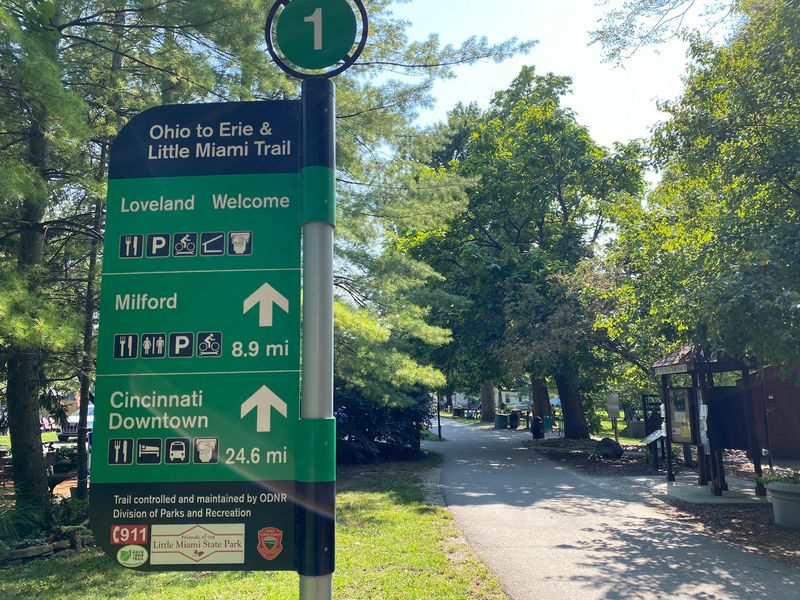
Loveland is one of the easiest places in Ohio to understand how a rail-trail can become part of a town’s identity. The Little Miami Scenic Trail runs directly through the community, following a former railroad corridor beside the Little Miami River.
The larger paved trail stretches 78 miles from the Cincinnati area north to Springfield, but Loveland makes an especially convenient stopping point. Downtown businesses sit close to the trail, including places to eat, drink, shop, and handle basic cycling needs.
Ohio Trail Towns notes that the route is locally known as the Loveland Bike Trail and that bike shops, cafes, and pubs have developed around its trail-friendly identity. Riders can therefore park the bike and explore without making a major detour.
The combination of river scenery, a walkable downtown, and direct trail access makes Loveland more than somewhere cyclists simply pass through. It works naturally as a destination within the ride itself.
2. Springfield – Little Miami Scenic Trail and Simon Kenton Trail
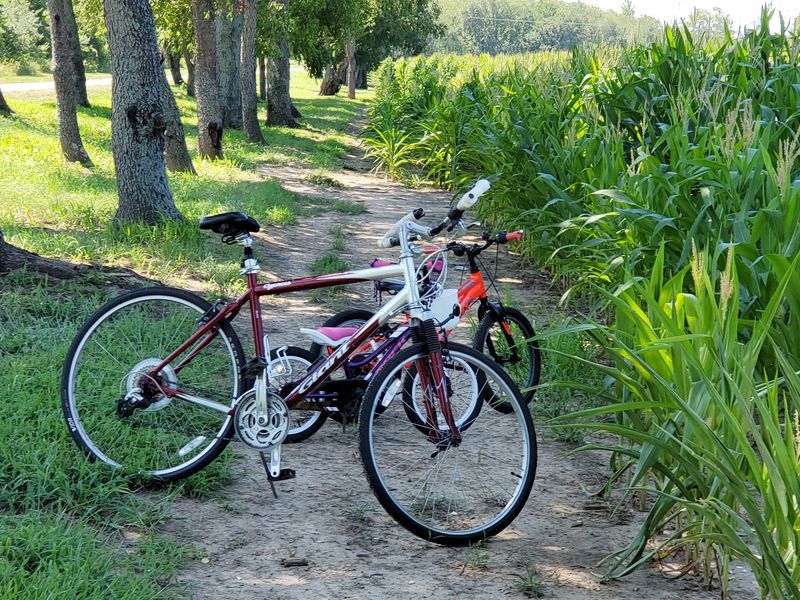
Springfield sits at an important transition point in western Ohio’s trail network. The Little Miami Scenic Trail reaches its northern endpoint here after traveling 78 miles from the Cincinnati area, while the Simon Kenton Trail continues north toward Urbana and Bellefontaine.
That allows riders to arrive from one long trail and continue onto another. There are also genuine reasons to get off the bike.
Miami Valley Bike Trails highlights downtown Springfield’s dining and arts, the Clark County Heritage Center, and the Westcott House, a Prairie-style home designed by Frank Lloyd Wright. The nearby Buck Creek Trail provides another recreational connection and leads toward the ECO Sports Corridor and Buck Creek State Park area.
The Simon Kenton route quickly changes character after leaving Springfield, moving from the city into rolling agricultural countryside. That contrast is part of Springfield’s usefulness as a stop.
Riders can combine an urban break with a longer countryside ride rather than choosing between the two experiences.
3. Millersburg – Holmes County Trail
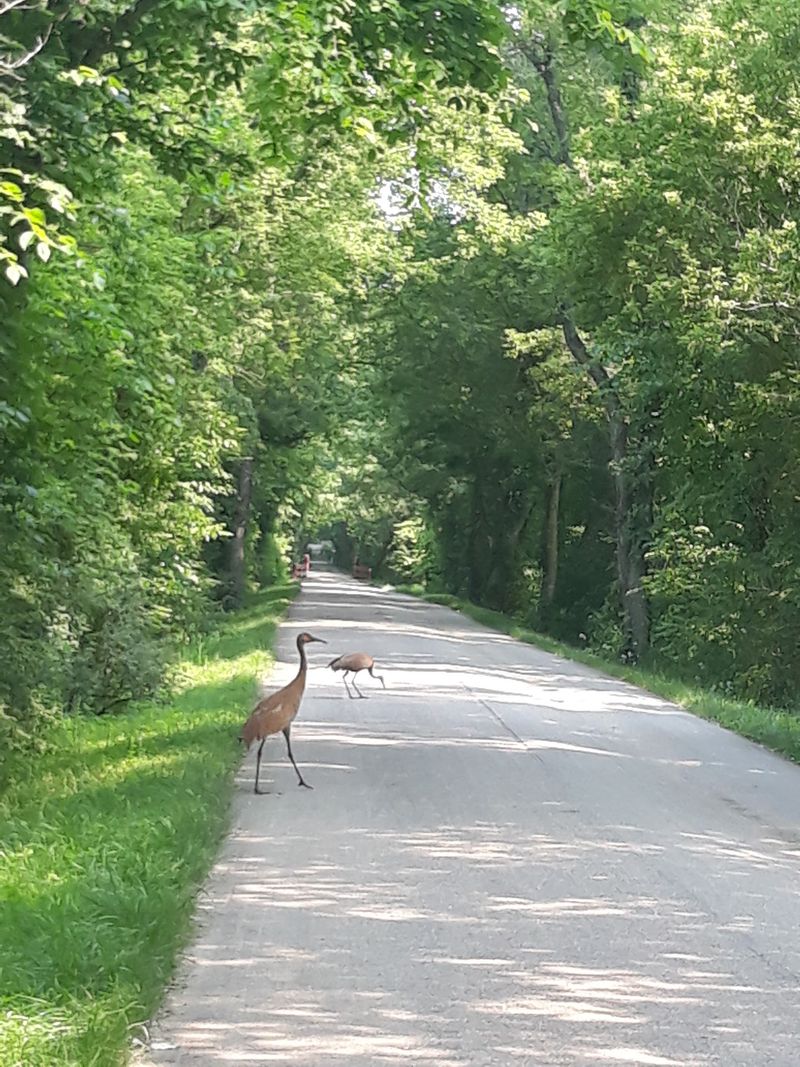
Millersburg offers one of the more unusual rail-trail experiences in Ohio because bicycles are not the only wheeled transportation using the corridor. The Holmes County Trail is designed with an asphalt lane for cyclists, walkers, runners, wheelchairs, and similar users alongside a separate chip-and-seal lane that accommodates Amish buggies and horseback riders.
The trail organization describes it as the first trail in the nation built to accommodate Amish buggies. Millersburg sits on the open Fredericksburg-to-Killbuck section and has one of the trail’s most useful facilities.
The Millersburg Depot stands directly beside the route and serves as a trail and railroad information center. Restrooms and a picnic area are available there, along with a horse-watering trough.
The surrounding community places riders in the heart of Holmes County and Ohio’s Amish Country. Instead of simply providing scenery between trailheads, Millersburg gives cyclists a practical stopping point where the region’s transportation history and present-day transportation traditions meet.
4. Athens – Hockhocking Adena Bikeway
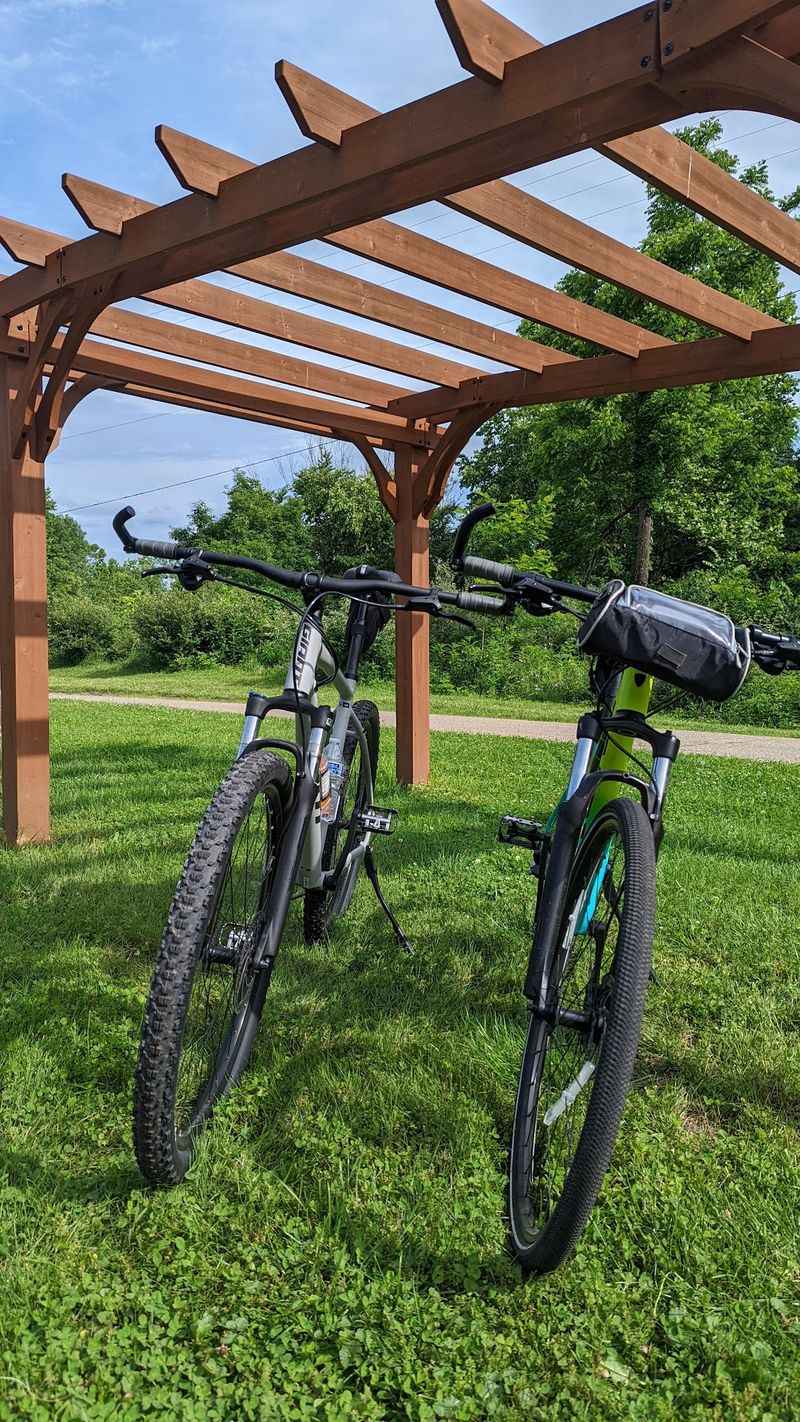
Athens adds a lively college-town stop to the 22-mile Hockhocking Adena Bikeway. The paved route follows the Hocking River and uses an old railroad bed, creating an unusually level ride through a part of Ohio otherwise known for Appalachian hills.
It connects Athens with Nelsonville and the historic Eclipse Company Town area. Within Athens, the bikeway serves more than recreational cyclists.
Local information notes that people use it to commute to work, school, and shopping, including trips to the Athens Farmers Market. The route also passes through areas associated with Ohio University, placing riders close to one of the defining institutions of the city.
That makes Athens particularly suitable for the premise of a ride becoming an excuse to explore. A cyclist can leave the quiet river corridor and spend time discovering the city’s restaurants, university surroundings, and other local attractions before returning to the trail.
The flat former railroad grade also makes Athens an accessible starting point for exploring the wider Hocking River valley by bicycle.
5. Mount Vernon – Kokosing Gap Trail
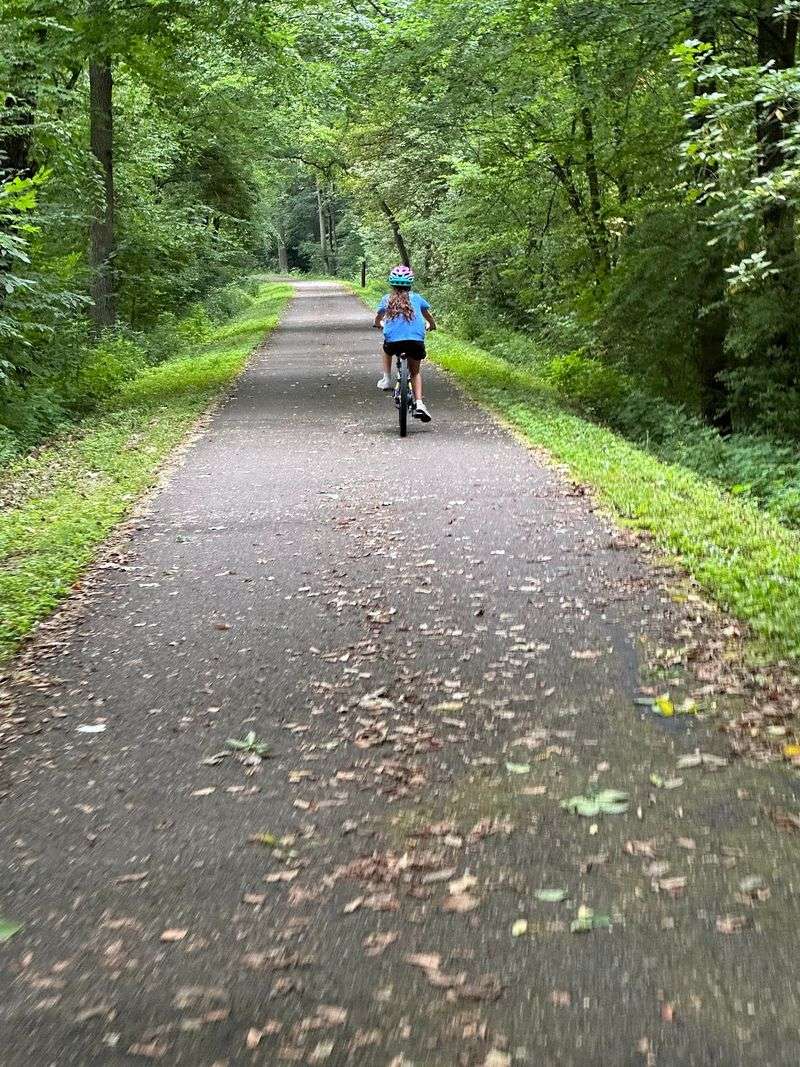
Mount Vernon is a stronger final choice than Zoar for this particular article because the Kokosing Gap Trail is a true rail-trail. The paved 14-mile route was built on the former Pennsylvania Railroad corridor and connects Mount Vernon with Gambier, Howard, and Danville.
From Mount Vernon, riders follow the Kokosing River through a landscape that includes forests, wetlands, farmland, and former railroad infrastructure. Two trail bridges crossing the river are more than 250 feet long.
The trail also connects with Mount Vernon’s wider trail network, allowing cyclists to continue beyond the city. Rails-to-Trails Conservancy notes that riders can reach the Downtown Connector Trail, while nearby Ariel-Foundation Park occupies the former site of a glass factory and preserves pieces of the city’s industrial past.
This combination makes Mount Vernon especially appropriate for a rail-trail-town article. The ride itself reveals railroad history, but getting off the bike opens up another layer of industrial history and a walkable Ohio community worth exploring.
Share this story