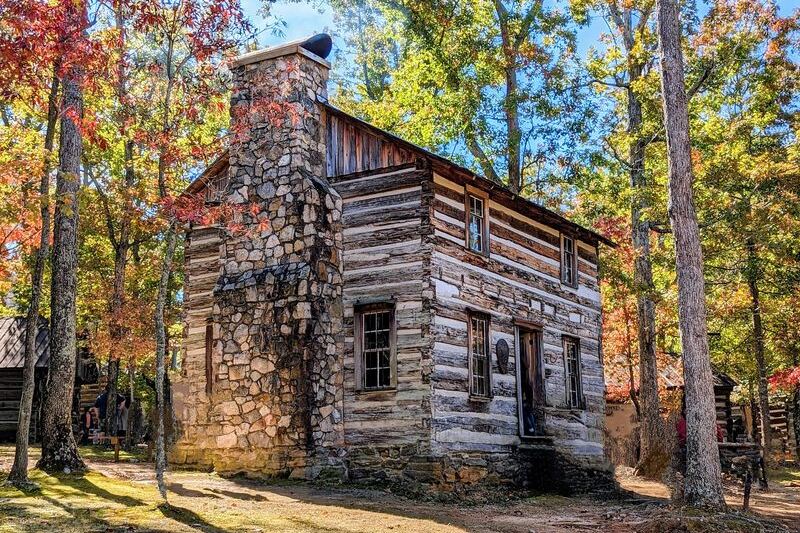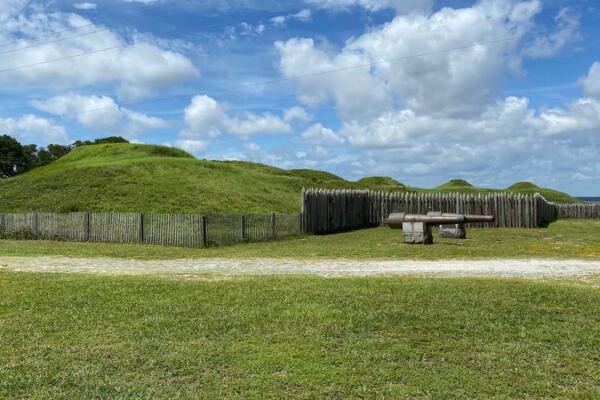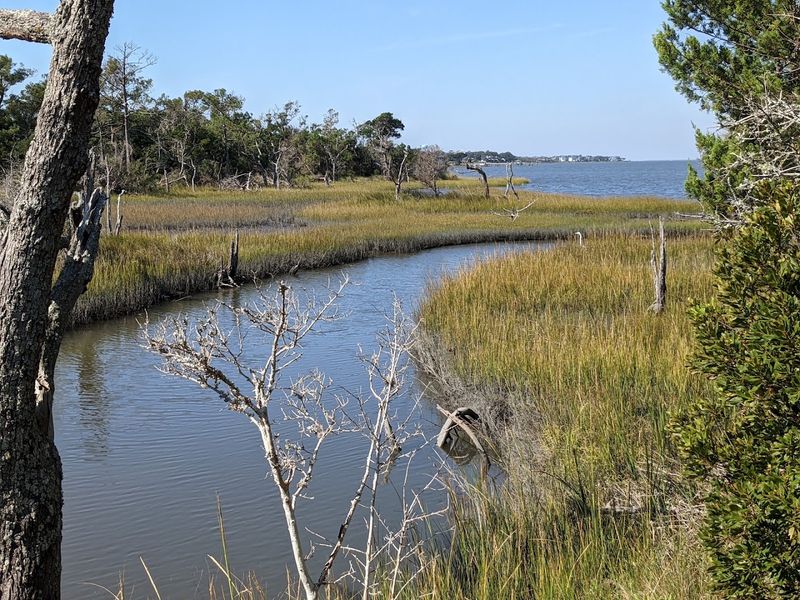
Tucked behind the North Carolina Aquarium in Pine Knoll Shores, there’s a short walking trail that most tourists breeze right past. It winds through a shady maritime forest of live oaks before opening onto a quiet little beach along Bogue Sound, and the best part is that it costs nothing to explore. The walk takes about an hour round trip, so it’s easy for almost anyone. If you like the idea of finding a peaceful coastal spot before the crowds catch on, this trail is worth putting on your list.
A Coastal Preserve Hiding In Plain Sight
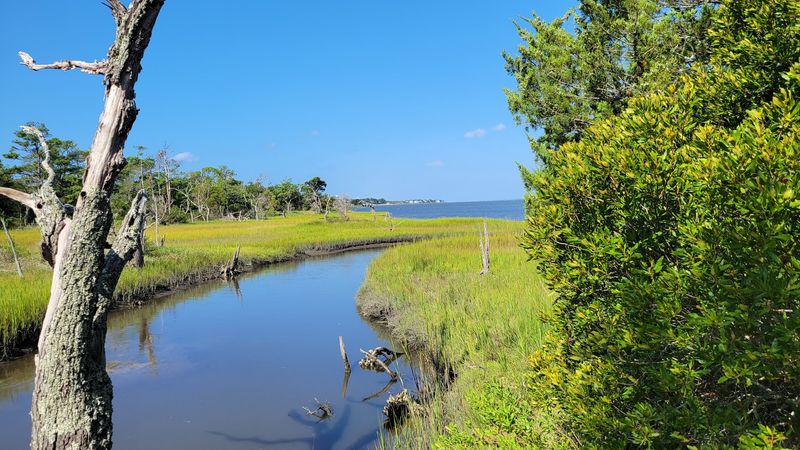
Right along the coast in Pine Knoll Shores sits the Theodore Roosevelt Natural Area, a scenic preserve that many folks drive past without ever knowing it’s there. The address reads 1 Roosevelt Blvd, and it shares its neighborhood with the busy North Carolina Aquarium, which explains why the trail itself stays so quiet.
The preserve protects a stretch of maritime forest and marshland, the kind of tangled, salty landscape that defines this part of the North Carolina coast. Self-guided trails let you set your own pace, and wildlife viewing is a big part of the draw.
With a 4.6-star rating across roughly 140 reviews, the spot has quietly earned the affection of people who’ve wandered its paths. It isn’t a headline destination, and that’s exactly the point. For anyone who loves finding the real, overlooked corners of the state before the tour buses arrive, this preserve feels like a small personal discovery.
The Trailhead Behind The Aquarium Parking Lot
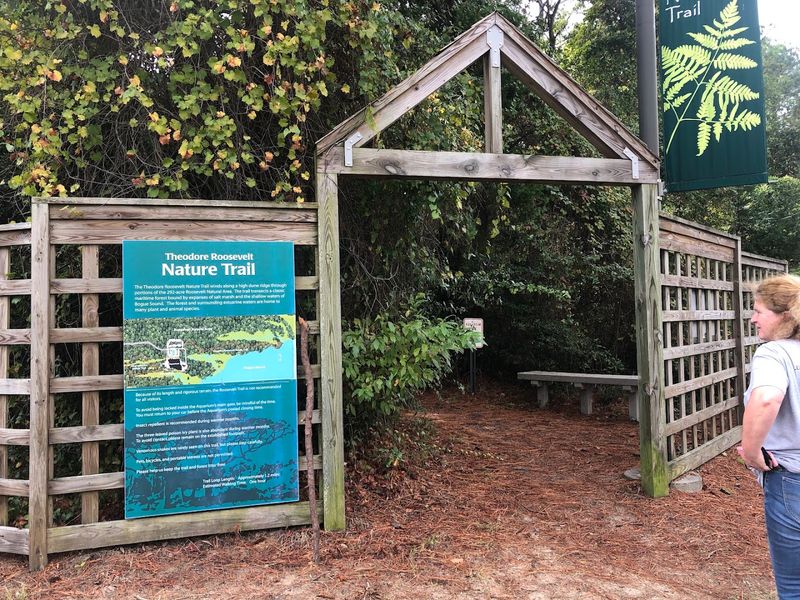
Finding the start of this walk feels a little like being let in on a secret. The trailhead sits at the very back of the North Carolina Aquarium parking lot in Pine Knoll Shores, tucked at the far end where most visitors never think to look.
Regulars mention that the entrance isn’t especially obvious, so it helps to know where you’re headed before you arrive. Once you spot the path slipping into the trees, the transition is quick. One moment you’re in an ordinary lot, and the next you’re swallowed by a green, shaded corridor of forest.
Several visitors note that the route is a simple out-and-back, meaning you follow the same path in and out rather than looping around. That layout keeps things easy to navigate, and it means you get two chances to notice details you missed the first time. The convenience of parking right beside the trailhead makes this an especially easy stop to fold into a coastal day.
Walking Beneath A Canopy Of Live Oaks
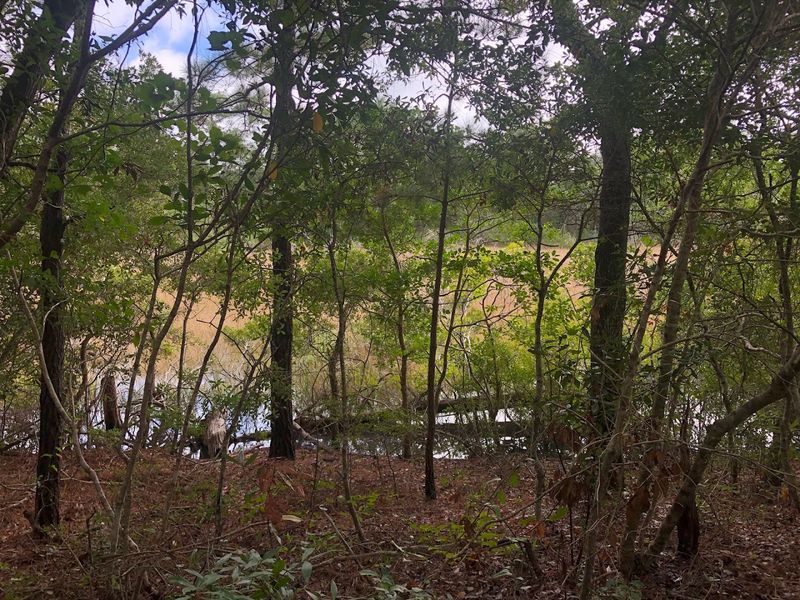
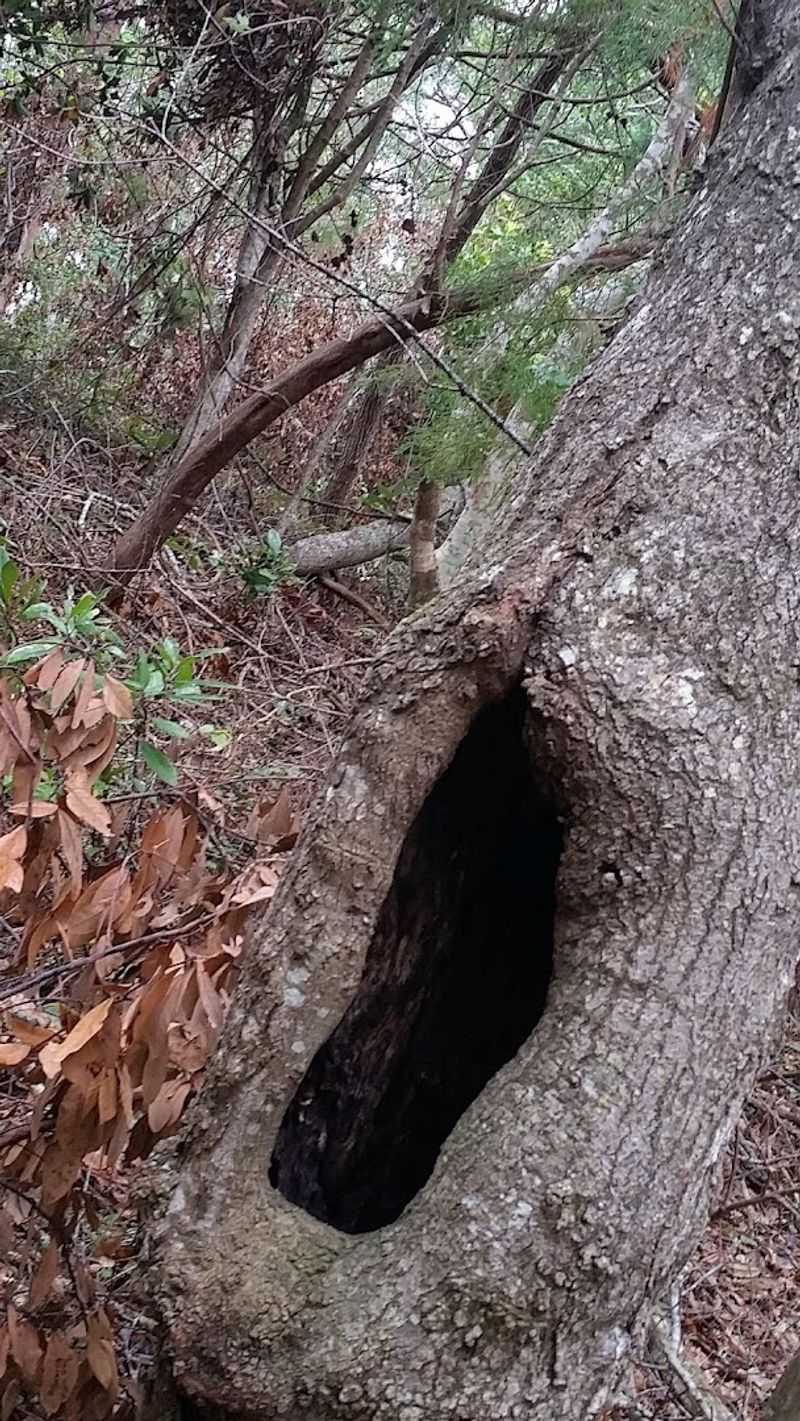
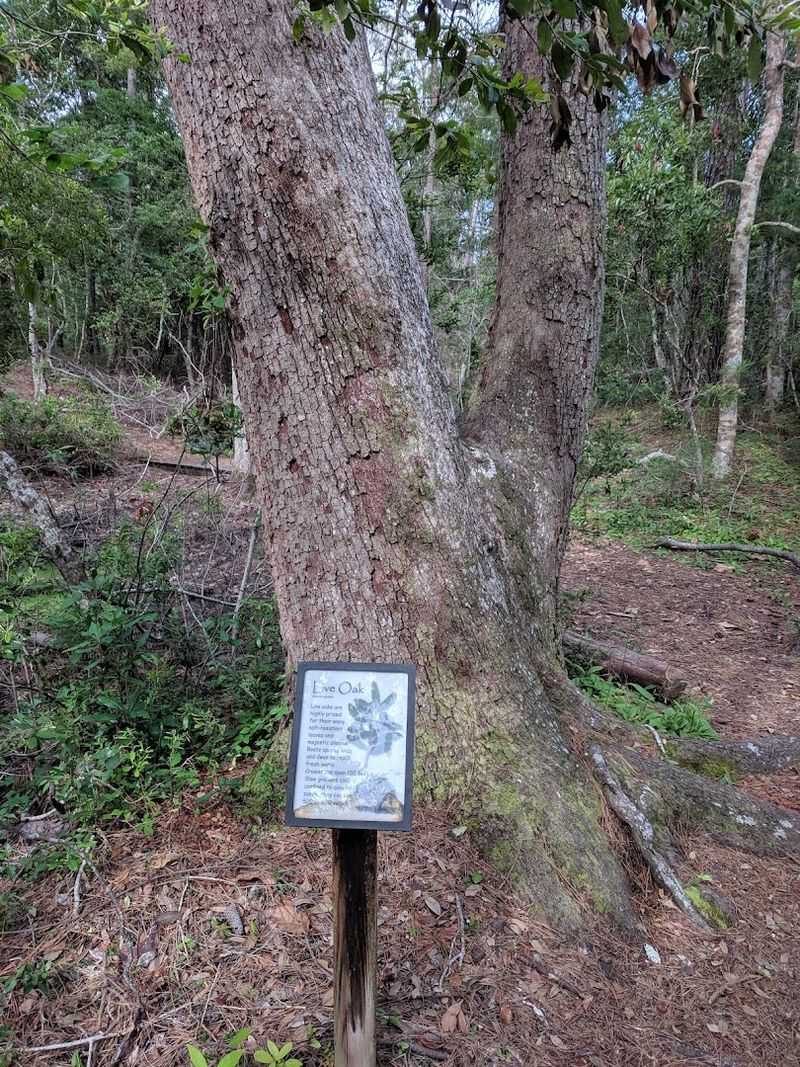
Step onto the path and the temperature seems to drop a few degrees under the thick canopy overhead. Gnarled live oaks and other maritime forest trees knit together above the trail, throwing dappled shade across the ground and giving the whole walk a cool, sheltered feel.
One visitor described the atmosphere as having an extra jungly feel, and that’s a fair way to put it. The greenery presses in close, vines and branches leaning toward the path, so you feel tucked away from the world outside.
A few reviewers point out that the trail can get narrow in places, close enough that brushing against plants is likely. That closeness is part of the charm, though it does come with a small catch worth planning around. The forest muffles sound, too, so the loudest thing you’ll hear is often birdsong or the rustle of something moving through the underbrush. It’s the kind of stroll where the destination matters, but the journey through the trees earns its own applause.
The Secluded Beach And Bogue Sound Reward
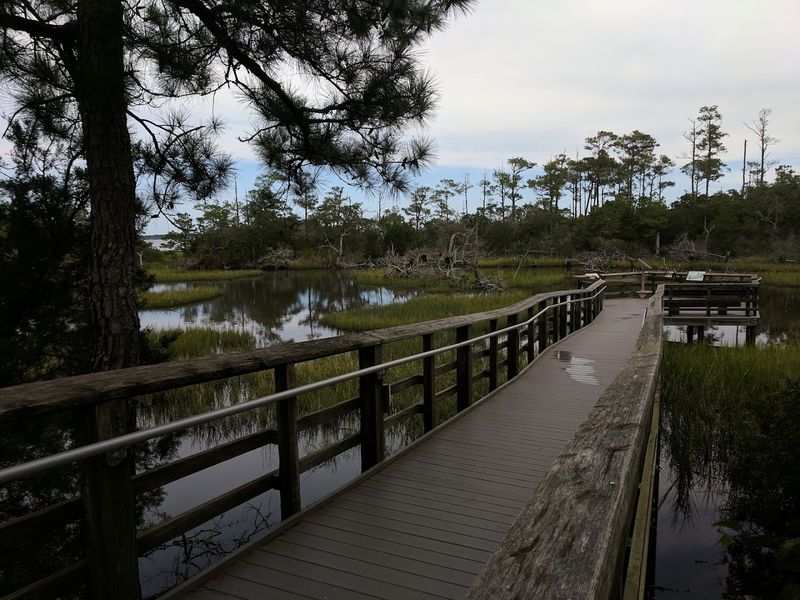
Everything about this walk builds toward the moment the trees open up. After winding through the forest, the trail delivers you to a small, private-feeling beach at the edge of Bogue Sound, and the payoff lands hard after the shady approach.
One longtime visitor recalled arriving at a little private beach with a rich and calming view of the sound, a memory strong enough that she’d been returning since childhood. Others describe the finish as a point on Bogue Sound or an inlet of the salt marsh, a quiet spot where the water stretches wide and calm.
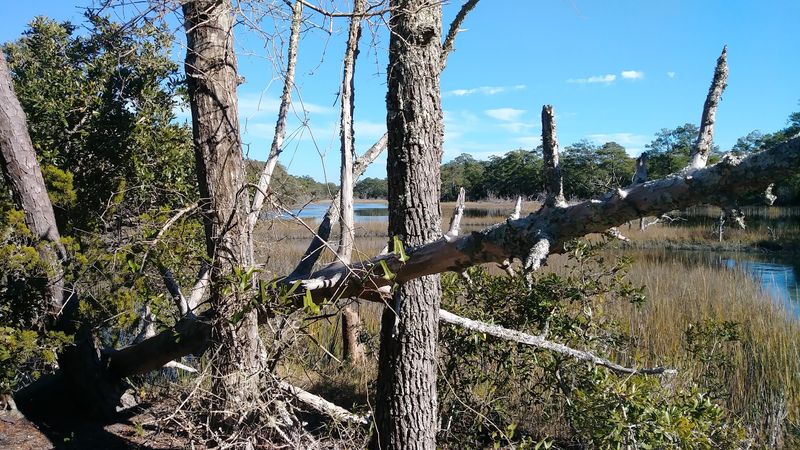
The views take in the Intracoastal Waterway, and on a still day the whole scene feels earned rather than handed to you. Because you have to hoof it through the woods first, the beach never feels crowded the way a roadside overlook might. That sense of having worked, even just a little, for a peaceful stretch of shoreline is what keeps people coming back and telling their friends.
A Front-Row Seat For Birds And Crabs
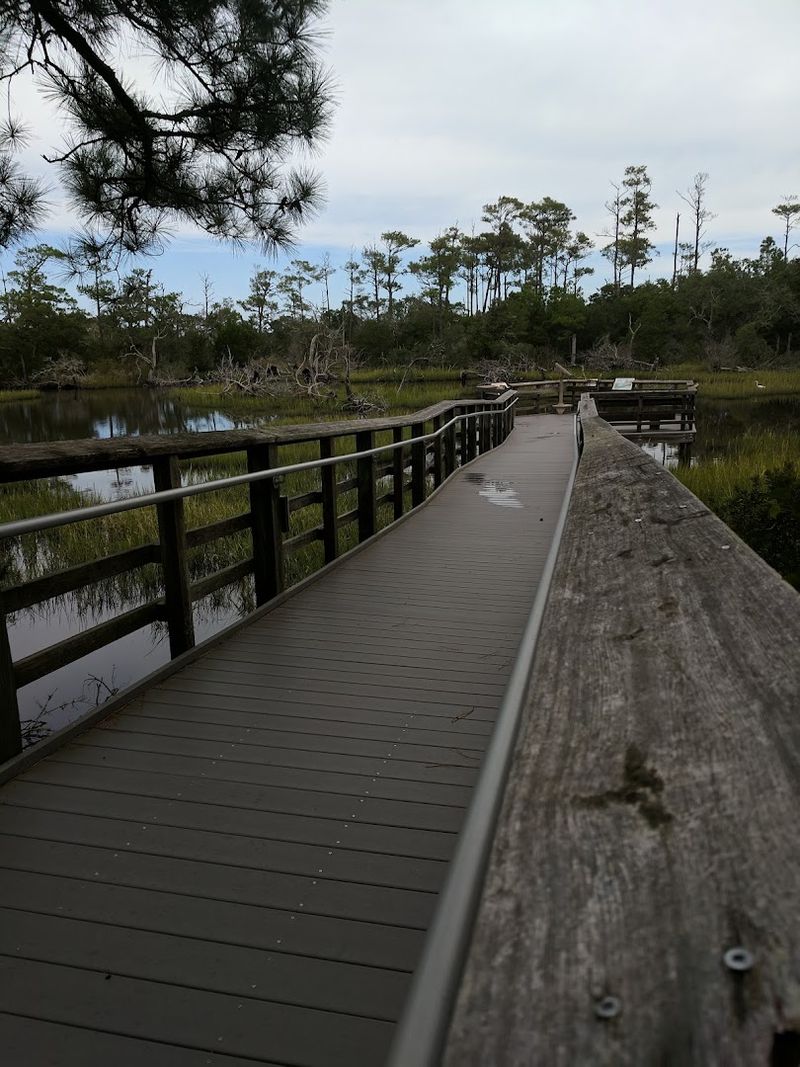
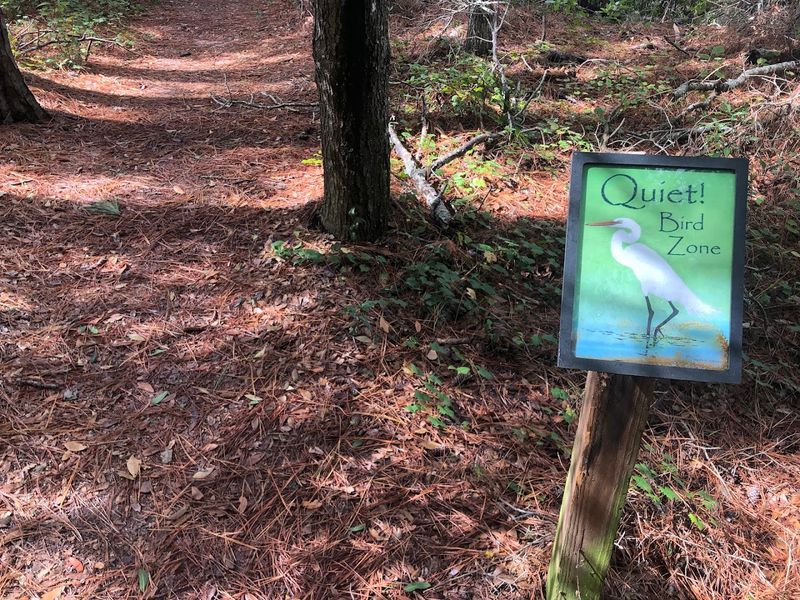
Bird watchers, this one’s for you. The salt marsh and sound edges here draw a steady parade of wildlife, and patient visitors say the payoff is well worth slowing down for. During fall and winter especially, folks mention great chances to spot marshland fowl if you’re willing to wait quietly.
The critters aren’t limited to birds, either. Reviewers describe scouting out crabs along the water and watching the salt marsh come alive with small movements. One person called the overlook a really nice spot to scout out some crabs and birds, and another simply said that if you love birding, you’ll love this place.
Because the trail hugs both the sound and the inland marsh, you get two very different habitats within a single short walk. That variety keeps the wildlife interesting from one stretch to the next. Bring a little patience and maybe a pair of binoculars, and the preserve tends to reward you with sightings that a rushed passerby would never notice.
Benches, Signs, And Little Rest Stops
Thoughtful touches turn this from a simple footpath into a proper nature walk. Benches are scattered along the route, and visitors mention them again and again as perfect perches for bird watching or just catching your breath and taking in the surroundings.
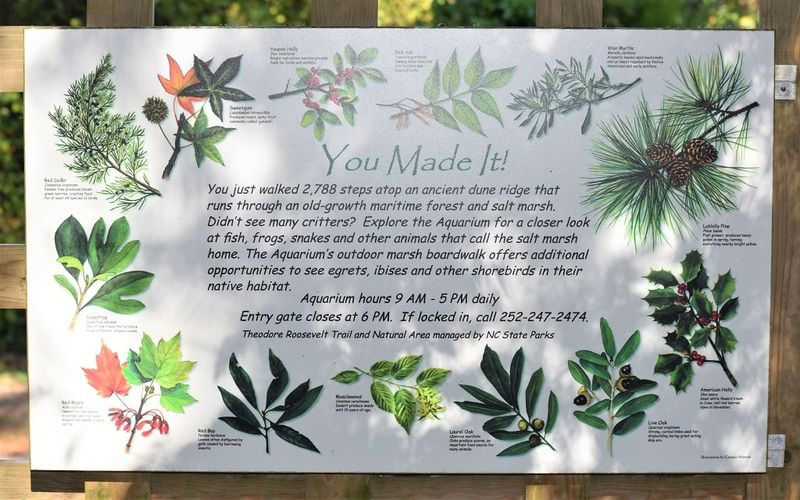
Informative signs line the trail, too, offering bits of context about the maritime forest and marsh you’re passing through. Several people appreciated that the walk is self-guided but not silent, with those signs quietly filling in the story of the landscape.
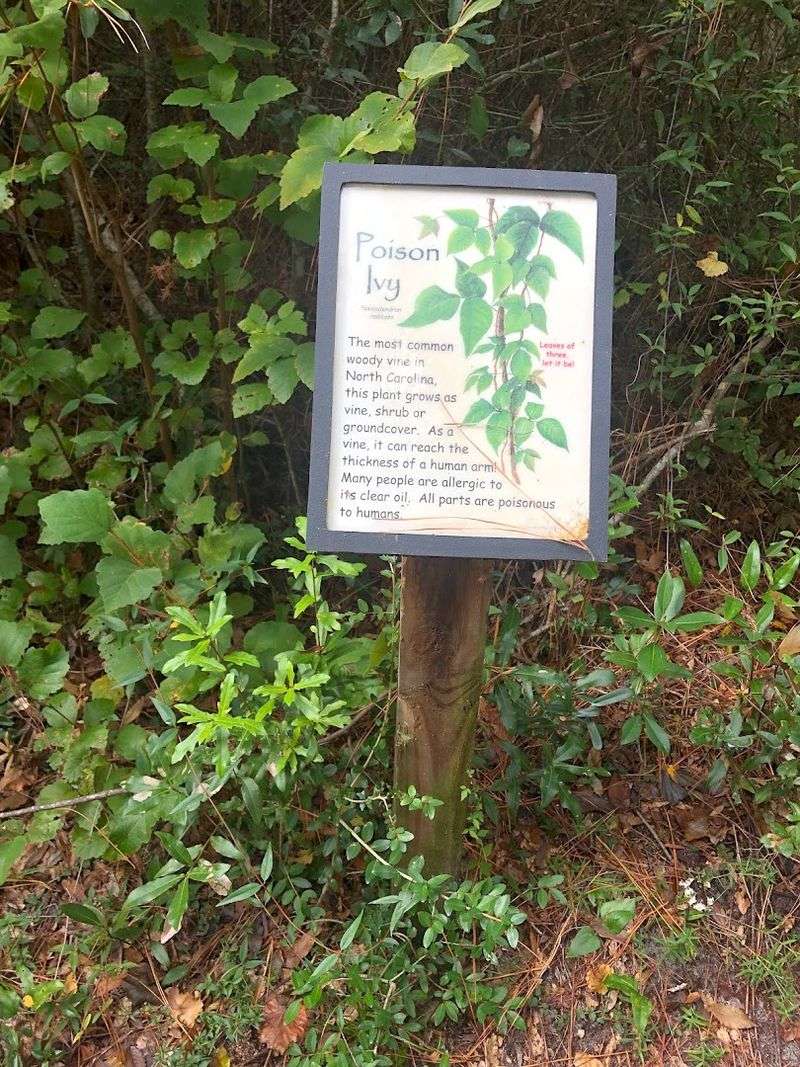
The signage does double duty as a safety heads-up as well. Posted warnings flag poison ivy along the path, though a number of visitors said they never actually spotted any during their trips. Between the resting spots and the reading material, the trail feels welcoming to families and casual walkers who’d rather amble than march. It’s a walk that invites you to sit, watch, and let the marsh reveal itself in its own time.
A Short Walk Anyone Can Handle
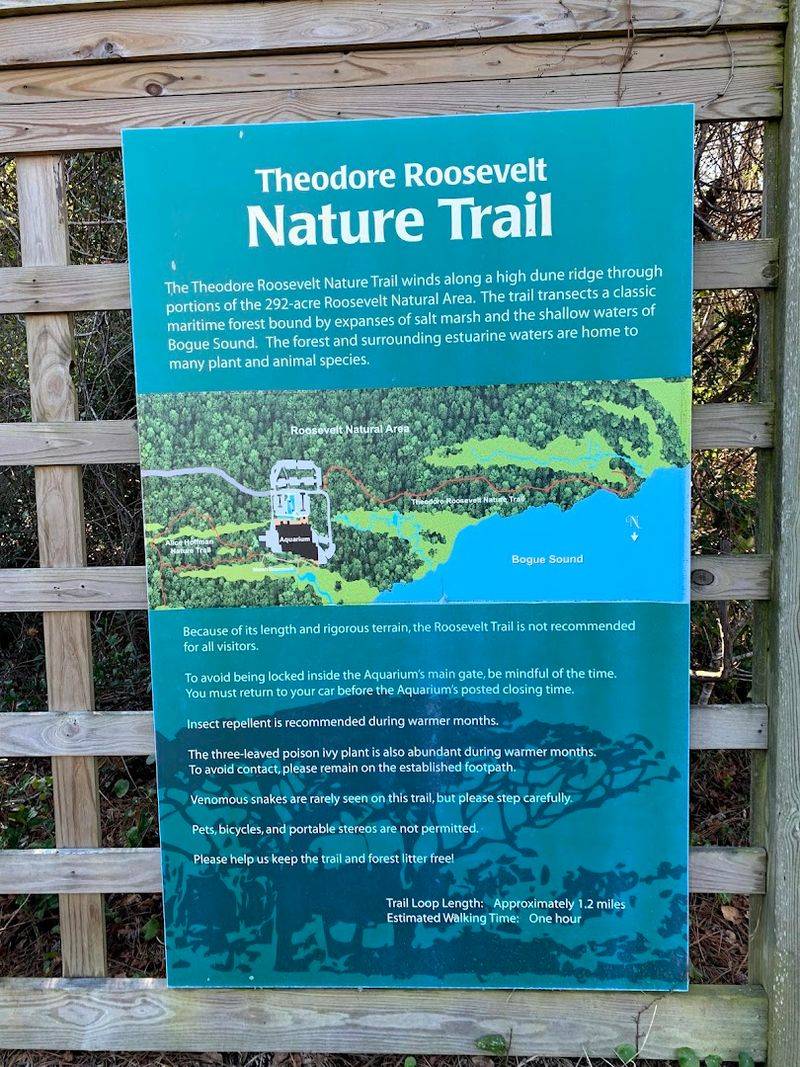
Don’t let the word hike scare you off. Most visitors clock this trail at right around a mile round trip, with distances mentioned anywhere from about 0.6 miles one way up to roughly 1.3 miles total depending on who’s measuring.
The pace is forgiving. Reviewers consistently describe an easy walk that takes about an hour down and back at a leisurely stroll, sometimes less. There’s no steep climbing or rough scrambling to worry about, which makes it friendly for kids, grandparents, and anyone who wants fresh air without a workout.
One family called it a great place to explore and spend quality time with the kids, and that sums up the vibe nicely. Because it’s an out-and-back with only one way in and out, you can turn around whenever you like if little legs get tired. For a quick, satisfying dose of coastal scenery that doesn’t demand much, this trail punches well above its short length.
The Free Trail Versus The Aquarium Paths
Here’s a detail that trips up newcomers, so it’s worth spelling out. There are actually two hiking experiences in this area, and only one of them is free.
The Theodore Roosevelt Natural Area trail can be walked at no cost, and several visitors were delighted to discover this even on days when the aquarium itself was sold out. As one put it, the aquarium was sold out of tickets but that didn’t stop them from getting their outdoor adventure on, and best of all, it was free.
The catch is that a second trail and boardwalk sit behind the aquarium and require paid admission to reach. A few reviewers were frustrated that this split isn’t clearly marked in the parking lot or signage, leading to some confusion about which path is which. Knowing the difference ahead of time saves you both money and a headache. If your goal is the free forest walk to the sound, you can skip the ticket line entirely and head straight for the trailhead.
Why Winter Might Be The Smartest Season
If you’re picturing a lazy summer beach walk, you may want to reconsider your timing. Again and again, visitors point to the cooler months as the sweet spot for this trail, and the reason comes down to comfort.
Winter walkers rave about bug-free conditions and the bonus of prime marsh fowl viewing during fall and winter. With no mosquitoes swarming, you can actually stand still at the overlook and soak in the scenery instead of swatting. One reviewer flatly recommended that the trails are probably best accessed during the winter.
The cooler seasons also mean less humidity pressing down on you as you move through the dense forest. That makes the walk feel refreshing rather than sticky. For locals who like to visit places off-peak, this is a perfect example of a spot that quietly gets better once the summer crowds and the summer bugs both thin out. Time it right, and you’ll have a crisp, comfortable trail almost entirely to yourself.
Come Prepared For Mosquitoes And Poison Ivy
Honesty time, because the reviews are blunt about this. In the warm months, the mosquitoes here mean business. More than one summer visitor described being eaten alive, with one calling it impossible to stand still without getting swarmed even after applying repellent.
The advice from seasoned walkers is simple and firm. Bring insect repellent, and in peak bug season reach for something with a strong DEET content or an equally effective alternative. Even an October visitor still needed bug spray, though they said the bugs only bit when standing still to take photos.
Clothing matters, too. Because the trail narrows in spots and brushes against plenty of greenery, one reviewer suggested skipping shorts and short sleeves to guard against both bugs and the poison ivy that signs warn about. None of this is meant to scare you off, since the same people who complained about bites still called the view totally worth it. Pack smart, dress a little longer than you’d expect for the beach, and the discomfort mostly disappears.
Hours, Access, And What It Costs
A few practical details will keep your visit smooth. The natural area trail is free to walk, which is a rare treat for a spot with views this good, and you’ll find it in Pine Knoll Shores at 1 Roosevelt Blvd. Questions can go to the site at +1 252-726-3775.
Because the trailhead sits behind the aquarium parking lot, your access is tied to the aquarium’s operating hours. Several visitors stress this point, noting that you are limited to their hours, so it pays to check before you go and to leave yourself enough time to finish the walk.
The gate is the big thing to watch. Reviewers repeatedly warn that it closes in the late afternoon, with one mentioning a 5:30 closing time, so wandering back late could leave you locked out or scrambling. Plan to start with a comfortable cushion of daylight and time. Since the whole loop takes about an hour, an early or midday arrival gives you room to linger at the beach without racing the clock.
A Small Trail Worth Earning
Some places win you over not with size but with the feeling of having found something. This short trail in Pine Knoll Shores is one of those. It doesn’t promise miles of wilderness or dramatic cliffs, just a quiet walk through live oaks that ends at a calm, secluded beach on Bogue Sound.
The affection people have for it runs deep. One reviewer who first walked it as a young child returned decades later and hoped it would stay around another hundred years, which tells you everything about how these paths lodge in memory.
Bring bug spray, aim for cooler weather, mind the gate, and head for the free trail at the back of the aquarium lot. Do that, and you’ll trade a little effort for a stretch of coastline that feels like your own private discovery. For anyone chasing the real, low-cost, overlooked corners of the North Carolina coast, this modest little walk more than earns its place on the list.
Share this story