There is a place in central Massachusetts where the 1830s are not just a chapter in a textbook but a fully functioning world spread across 240 acres of rolling New England countryside. More than 40 historic buildings have been gathered from across the region, each one restored and placed to recreate the look and rhythm of a real early 19th-century rural community.
Costumed historians work the land, operate the mills, and demonstrate the trades that kept small towns alive nearly two centuries ago. Whether a first-time visitor or someone who grew up making school trips here, Old Sturbridge Village has a way of making history feel less like a lesson and more like a genuine discovery.
The Story Behind the Village
Old Sturbridge Village did not grow overnight. The project began taking shape in the 1930s when Albert Wells and his brother Joel Wells started collecting antique tools, furniture, and New England artifacts.
Their passion for preserving early American material culture eventually led to the creation of a full outdoor museum.
The village officially opened to the public in 1946, making it one of the earliest living history museums in the country. From the beginning, the goal was not just to display objects behind glass but to show how those objects were actually used by real people in real communities.
That founding vision has held steady for decades. Today the museum continues to operate with the same core mission: connect modern people to the daily realities of rural New England life during the early 19th century.
The result is a place that feels less like a monument and more like a working memory kept carefully alive.
A Town Built From Rescued Buildings
Every building at Old Sturbridge Village has its own origin story. The structures were not built on site as replicas.
Instead, they were authentic historic buildings sourced from towns throughout New England, then dismantled, transported, and reconstructed on the Sturbridge grounds with careful attention to period accuracy.
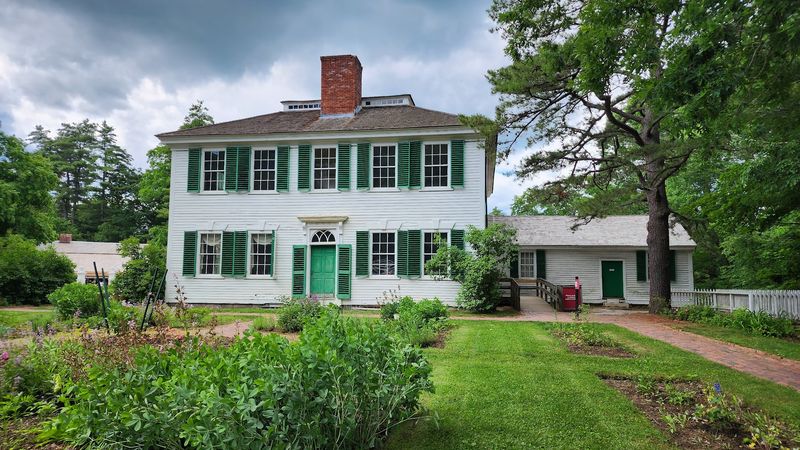
The collection includes homes of varying wealth levels, a district schoolhouse, a Friends meetinghouse, a printing office, a pottery shop, a tin shop, a blacksmith shop, a sawmill, a gristmill, and a carding mill, among many others. Together they form a cross-section of what a prosperous but modest rural community would have looked like in the 1830s.
Each building is furnished with period-appropriate objects, and most are staffed by costumed historians who demonstrate the activities that would have taken place there daily. Walking from one to the next creates a cumulative picture of how interconnected every trade and household was in early New England life.
The Costumed Historians Who Make It Real
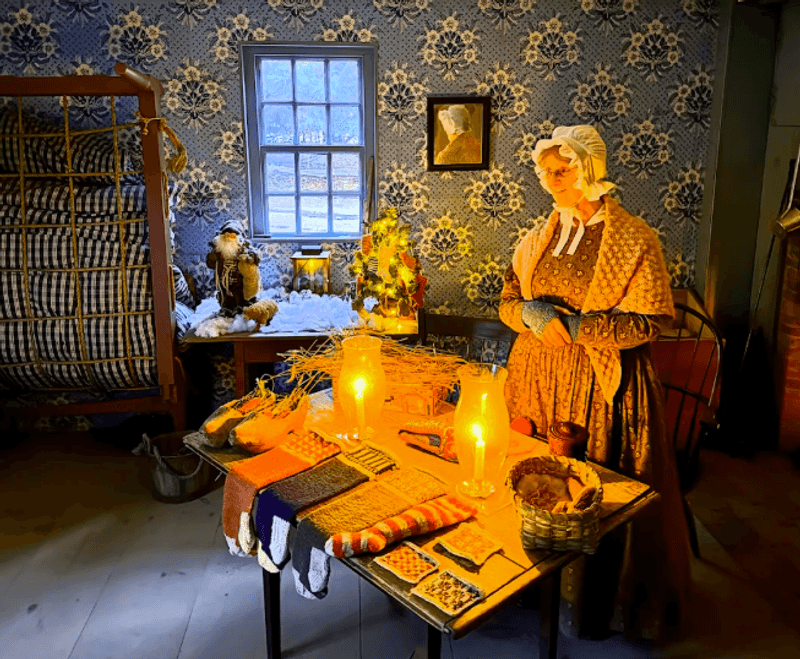
The people working throughout Old Sturbridge Village are not simply tour guides reciting memorized scripts. They are trained costumed historians who interpret the period through demonstration, conversation, and hands-on activity.
Their knowledge of 1830s daily life tends to be deep, specific, and genuinely engaging.
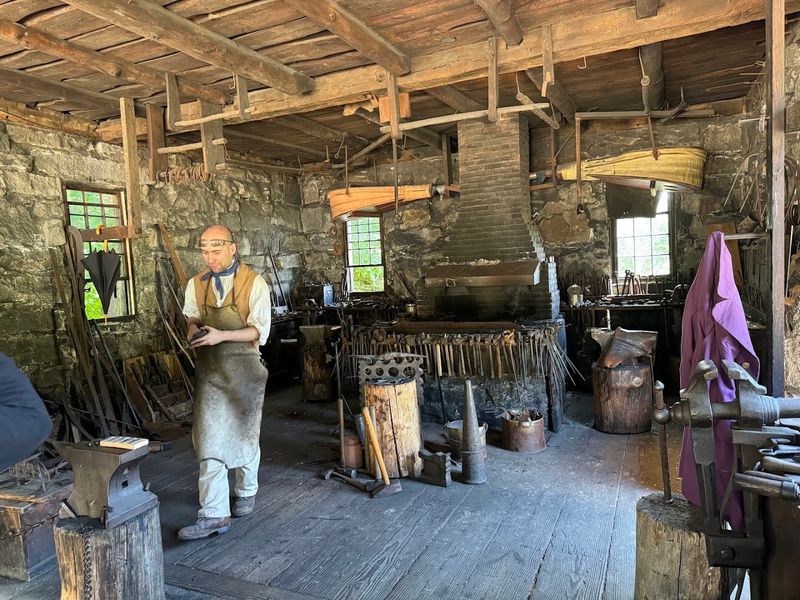
A visitor might find a blacksmith explaining the mechanics of shaping iron at a forge, a potter demonstrating wheel throwing using period techniques, or a farmer discussing crop rotation methods used in early 19th-century New England agriculture. The interactions feel personal rather than performative.
On quieter weekdays, the ratio of staff to guests makes each conversation feel especially focused and unhurried. Weekends bring larger crowds, which changes the dynamic but also adds energy to the common areas and demonstration spaces.
Either way, the costumed staff consistently earn recognition as the element that transforms the grounds from a collection of old buildings into something that genuinely functions like a living community.
Mills That Still Do the Work
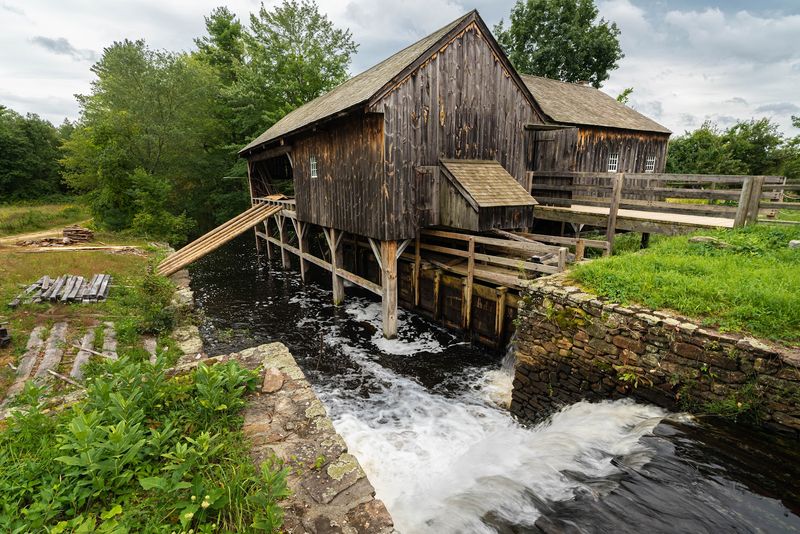
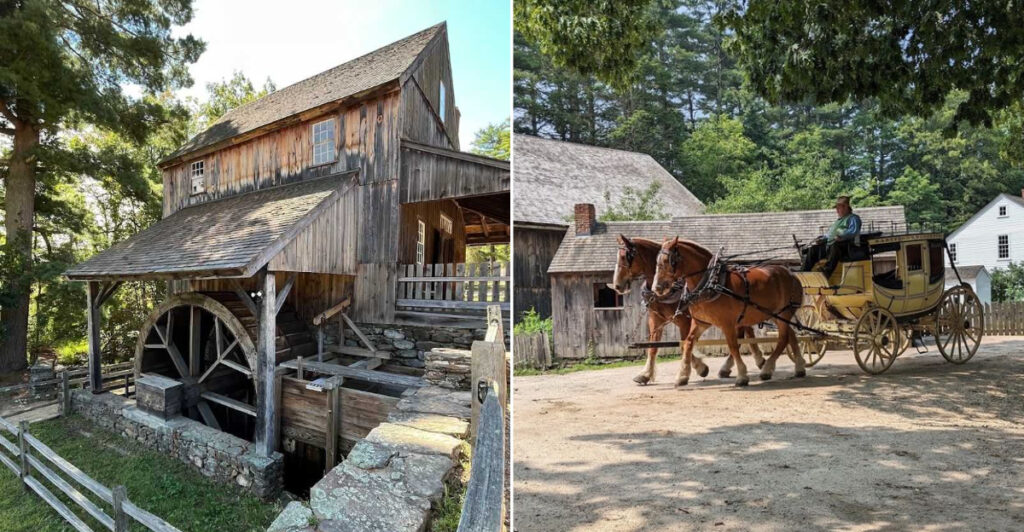
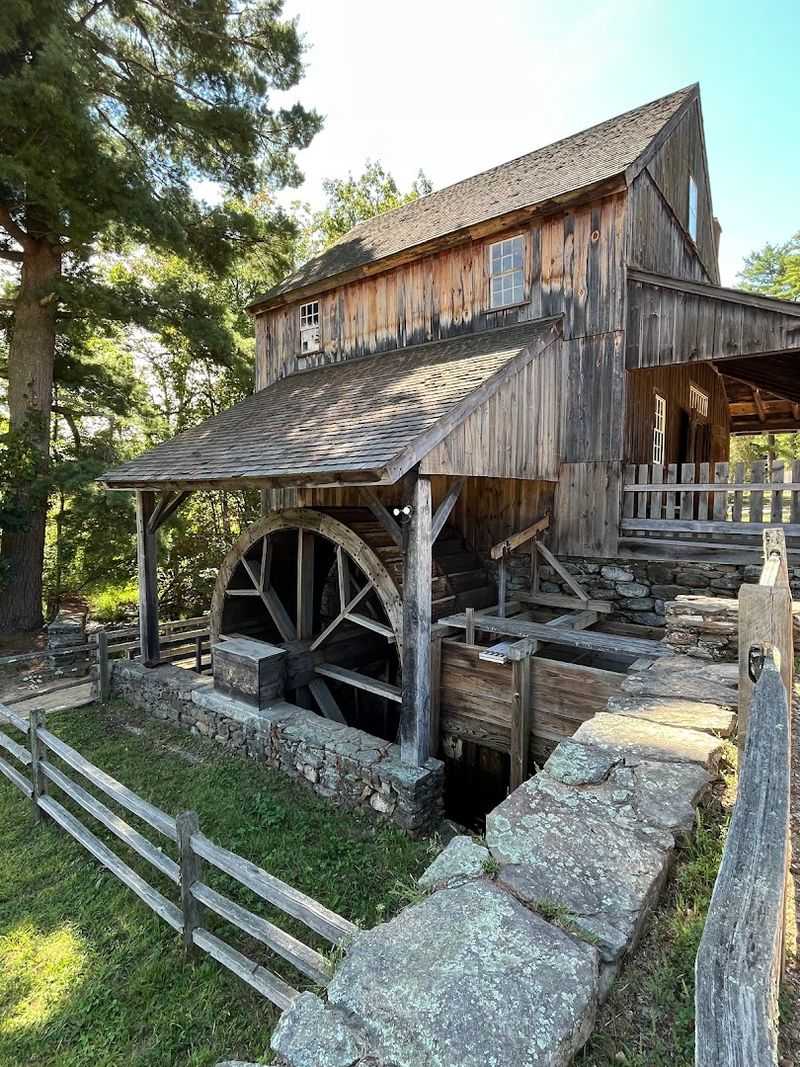
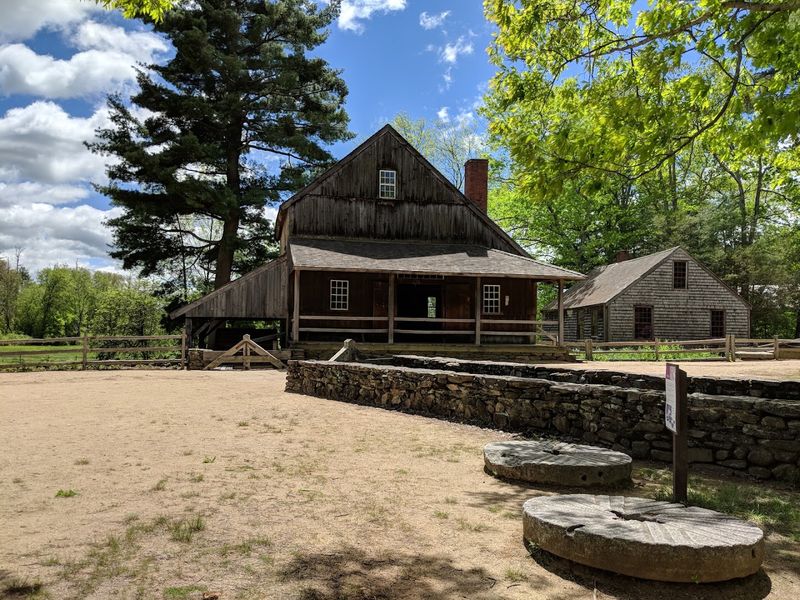
One of the most technically impressive features of Old Sturbridge Village is that its historic mills are not decorative. The sawmill, gristmill, and carding mill on the property are operational, and watching them run gives a concrete understanding of how early industrial machinery actually functioned before the age of electricity.
The sawmill uses water power to drive a reciprocating blade through logs, producing rough-cut lumber the same way it would have been done in the 1830s. The gristmill grinds grain into flour using millstones driven by a waterwheel.
The carding mill processes raw wool fibers in preparation for spinning.
Seeing these machines in motion makes it easy to understand why mill sites were so central to 19th-century rural economies. A community without access to a working mill faced serious practical limitations.
The mills at Old Sturbridge Village turn that abstract historical fact into something a visitor can watch, hear, and understand in real time.
Horse-Drawn Carriage Rides and the Covered Bridge
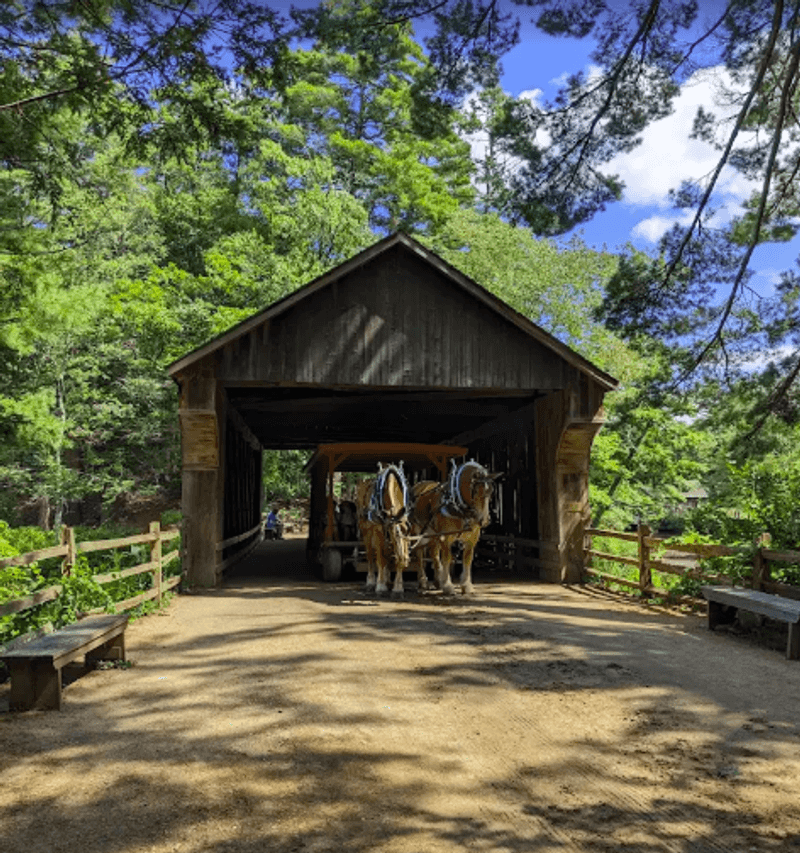
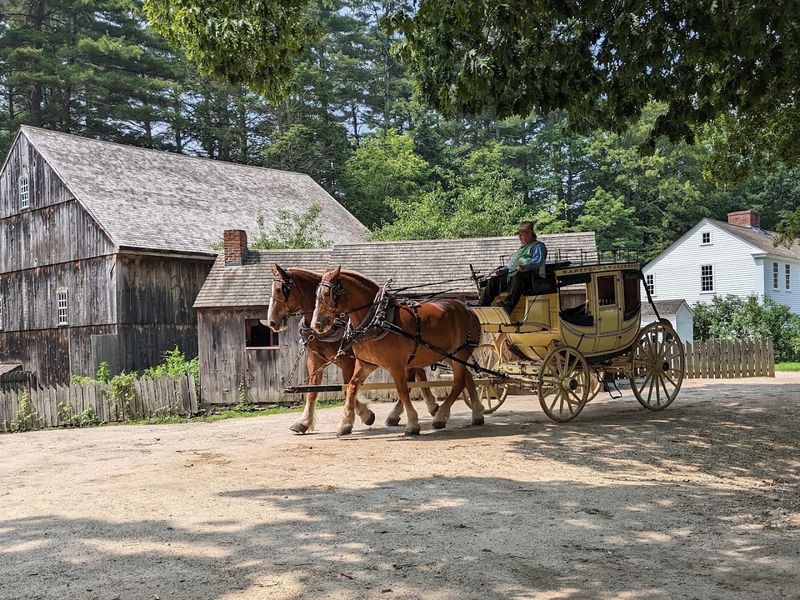
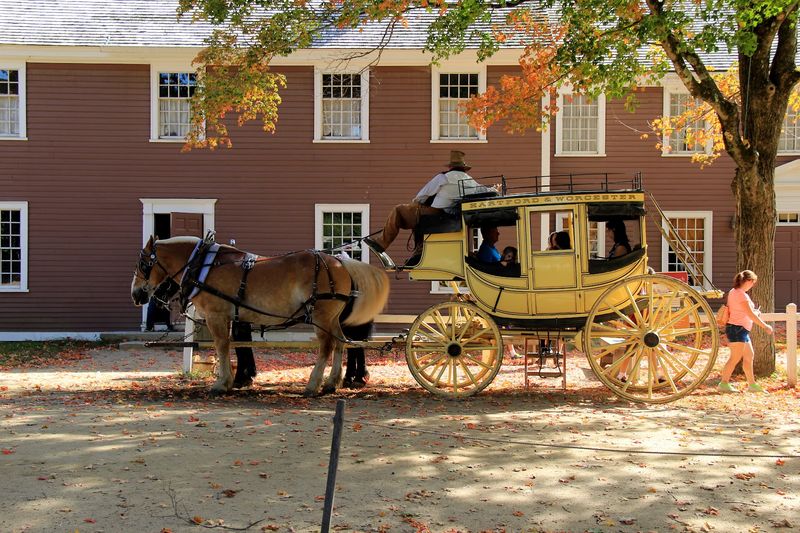
Among the most popular activities at Old Sturbridge Village is the horse-drawn carriage ride that takes guests around the mill pond and through a covered wooden bridge. It is a short ride, but it adds a dimension to the visit that walking alone cannot replicate.
Covered bridges were a practical feature of 19th-century New England landscapes, designed to protect the wooden structure from weather and extend the lifespan of the bridge. The one at Old Sturbridge Village is a genuine example of that tradition, and passing through it by carriage makes the historical context feel immediate rather than abstract.
The carriage ride is a consistent highlight for families visiting with children, though adults tend to enjoy it equally. It requires no special reservation on most regular visiting days and operates during standard museum hours.
For anyone who wants to slow the pace of the visit even further, this particular activity delivers that shift in tempo very effectively.
Trades, Crafts, and the Art of Making Things by Hand
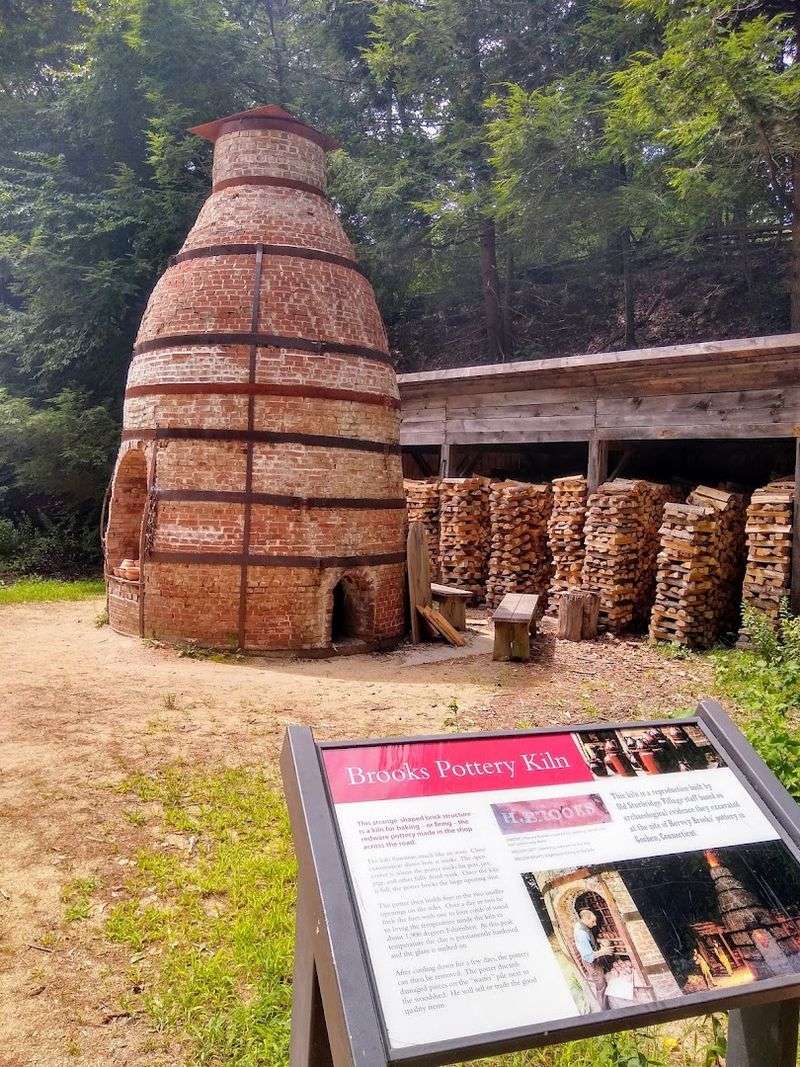
The trade shops at Old Sturbridge Village represent one of the most educational aspects of the entire property. Watching a tinsmith cut, shape, and solder household objects from flat sheets of tin using period hand tools reframes the ordinary in a striking way.
Every item in an 1830s household had to be made by someone with specific skills.
The pottery studio is another standout. The interaction between visitors and the working potter tends to generate genuine curiosity, especially for younger guests who have never seen a wheel-thrown pot take shape from raw clay.
The shop also sells items made on site, which means visitors can take home objects that were actually produced using traditional methods.
The printshop, joinery shop, and cooperage round out the trade demonstrations with their own distinct rhythms and tools. Each shop tells a slightly different story about the division of labor in a pre-industrial rural economy, and together they build a surprisingly complete picture of how a community sustained itself.
Farm Life in the 1830s
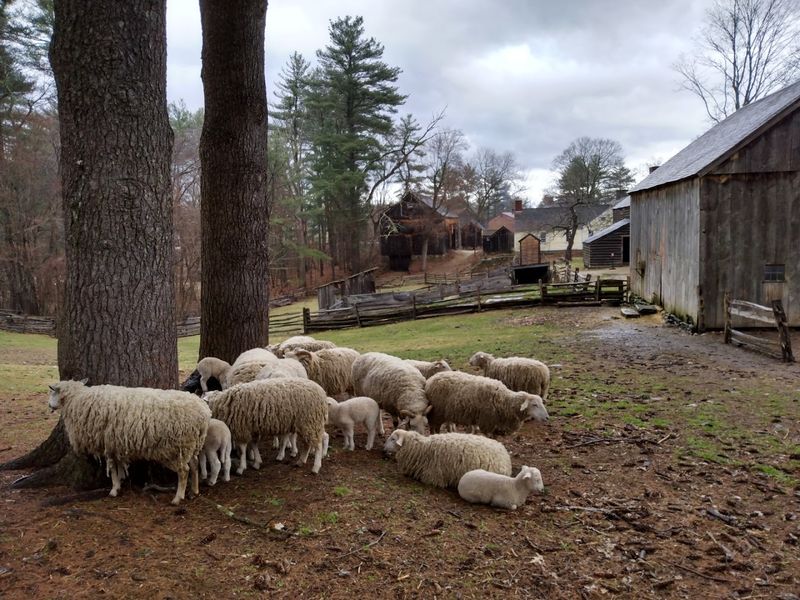
Farming was the economic backbone of rural New England in the early 19th century, and Old Sturbridge Village takes that fact seriously. The working farm on the property includes period-appropriate crops, livestock, and agricultural tools, all managed using methods consistent with 1830s practice.
Visitors can observe the seasonal rhythms of farm work, from planting and cultivation to harvest and animal care. The animals on the farm are a reliable draw for families, and the costumed farmers who tend them are ready to explain the role each species played in sustaining a household through the year.
What comes through clearly during a visit to the farm is how labor-intensive every aspect of rural life actually was. There were no shortcuts, and the community depended on every household pulling its weight through the growing season.
That reality lands differently when observed in a working environment rather than read about in a textbook or viewed through a museum display case.
Special Events That Transform the Village
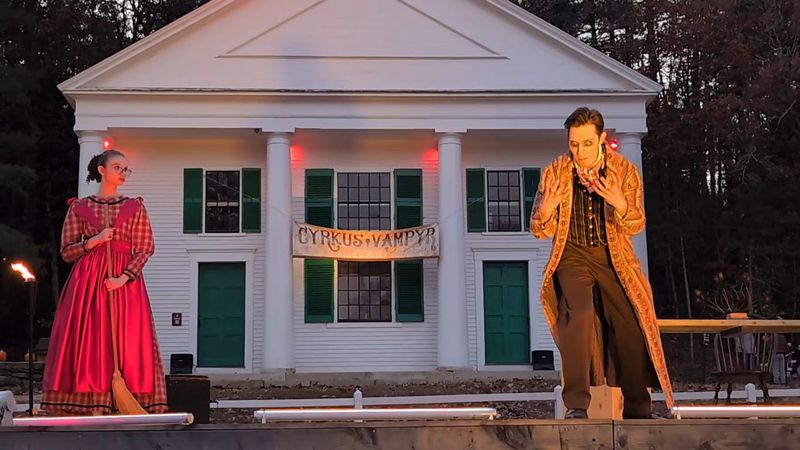
Beyond its regular programming, Old Sturbridge Village runs a calendar of special events throughout the year that draw guests who may have visited before and want a different kind of experience. Two of the most talked-about are Phantoms by Firelight in October and Christmas by Candlelight in December.
Christmas by Candlelight transforms the village into an evening celebration of how the holiday was observed in the 1830s. Activities have included candle dipping, storytelling, caroling, horse carriage rides, and visits with period-appropriate holiday figures.
The atmosphere during these events is distinctly different from a daytime visit and tends to resonate strongly with adults as well as children.
Phantoms by Firelight uses the village’s historic setting for a Halloween event that leans into the darker folklore of early New England without becoming inappropriate or alarming. The themes are historically grounded and thoughtfully executed.
Both events sell out, so checking the museum calendar and booking early is strongly recommended for anyone planning to attend.
A Living Classroom for Homeschool Families
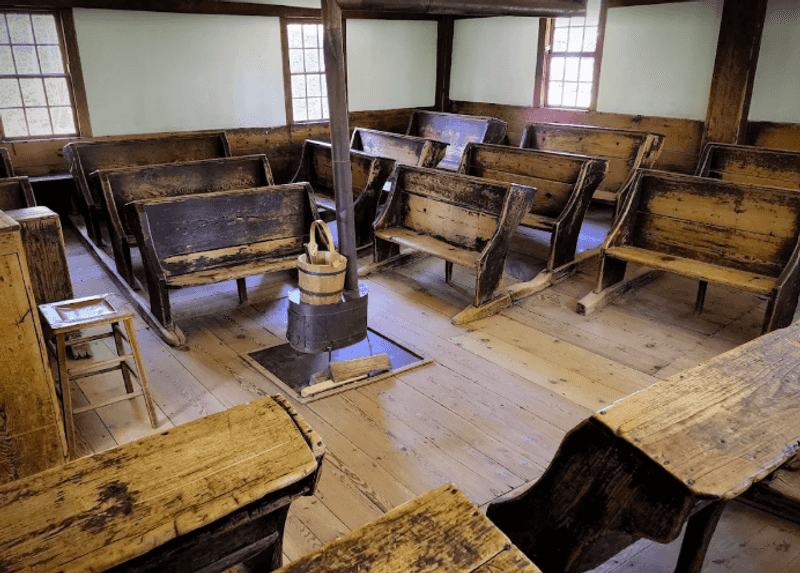
Old Sturbridge Village has built a strong reputation among homeschool communities as one of the most effective field trip destinations in New England. The combination of authentic historic structures, working demonstrations, and knowledgeable staff creates a learning environment that is hard to replicate through any other format.
Homeschool groups frequently cite the depth of engagement they find at the village. A child who watches a blacksmith explain the properties of iron at a forge, then walks to a farm to see how draft animals were used, and then visits a schoolhouse to understand how children were educated in the 1830s, is building a layered understanding of a historical period that sticks far longer than a chapter summary.
The museum offers structured educational programming designed specifically for school groups, but independent homeschool families find that even an unstructured visit yields significant learning. The staff are consistently described as eager to share knowledge and adapt their explanations to different age groups and levels of prior knowledge.
The Grounds Themselves Are Worth the Walk
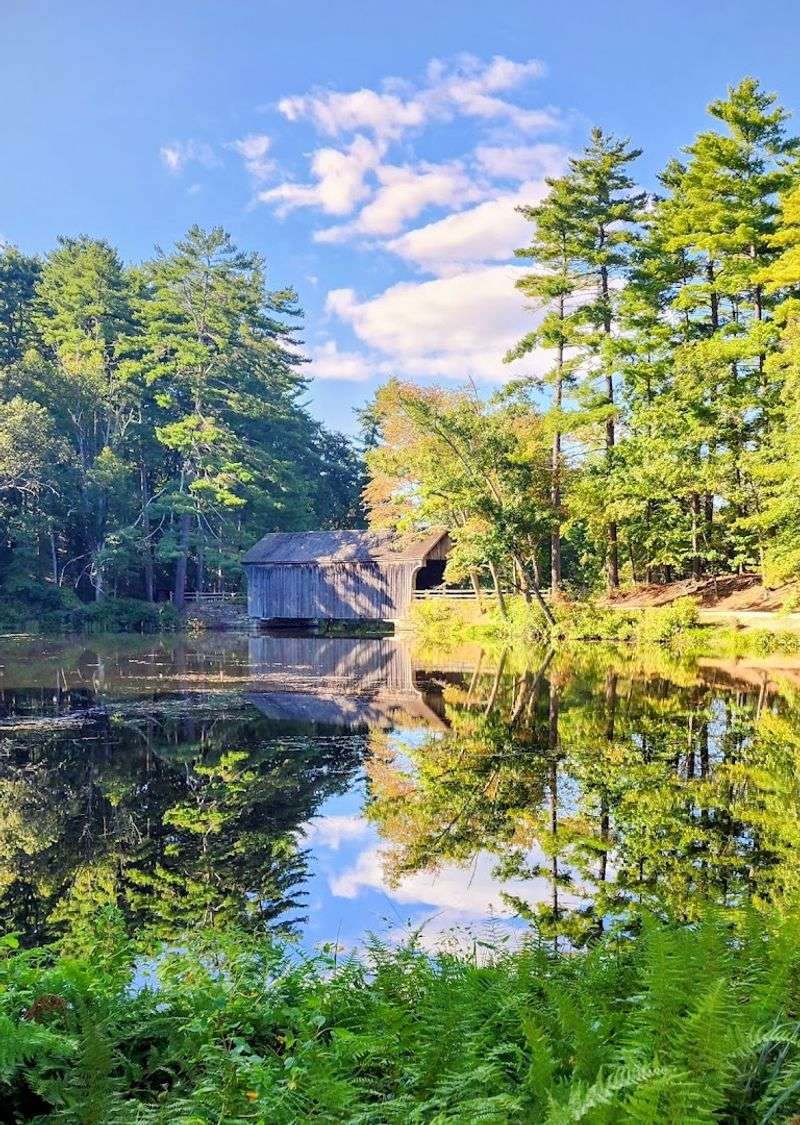
Covering 240 acres, the grounds of Old Sturbridge Village are substantial enough that a single visit rarely covers everything. The property includes open fields, forested paths, the mill pond, and the covered bridge, all of which contribute to a landscape that changes noticeably with the seasons.
Fall visits are particularly striking because the New England foliage frames the historic buildings in a way that feels almost theatrical without any effort. Spring brings green fields and active planting demonstrations on the farm.
Summer visits offer the fullest programming calendar but also the largest crowds, especially on weekends.
The sheer walkability of the property is one of its underappreciated qualities. There is enough space to spread out, take a quiet path away from the main activity areas, and simply observe the landscape without feeling rushed.
Many guests find that the unhurried pace of the grounds itself is part of what makes the experience distinct from other museum formats.
Practical Tips for Planning Your Visit
Old Sturbridge Village is open Wednesday through Sunday from 9:30 AM to 5 PM and is closed on Mondays and Tuesdays. The museum is located at 1 Old Sturbridge Village Road in Sturbridge, Massachusetts, making it accessible from the Massachusetts Turnpike and easily reachable from Boston, Hartford, and Providence.
Weekday visits, particularly on Wednesdays and Thursdays, tend to offer a quieter experience with more direct access to staff demonstrations and shorter waits at popular spots. Saturday visits during peak season can be significantly busier, so arriving close to the 9:30 AM opening helps maximize the day.
Bringing water is a practical move, especially during summer months. The museum does have a food operation on site, and the Bullard Tavern provides a sit-down dining option.
The gift shop carries items made in the village’s own craft shops, which makes for a more meaningful souvenir than the average museum store typically offers.
The USA 250 Celebration Connection
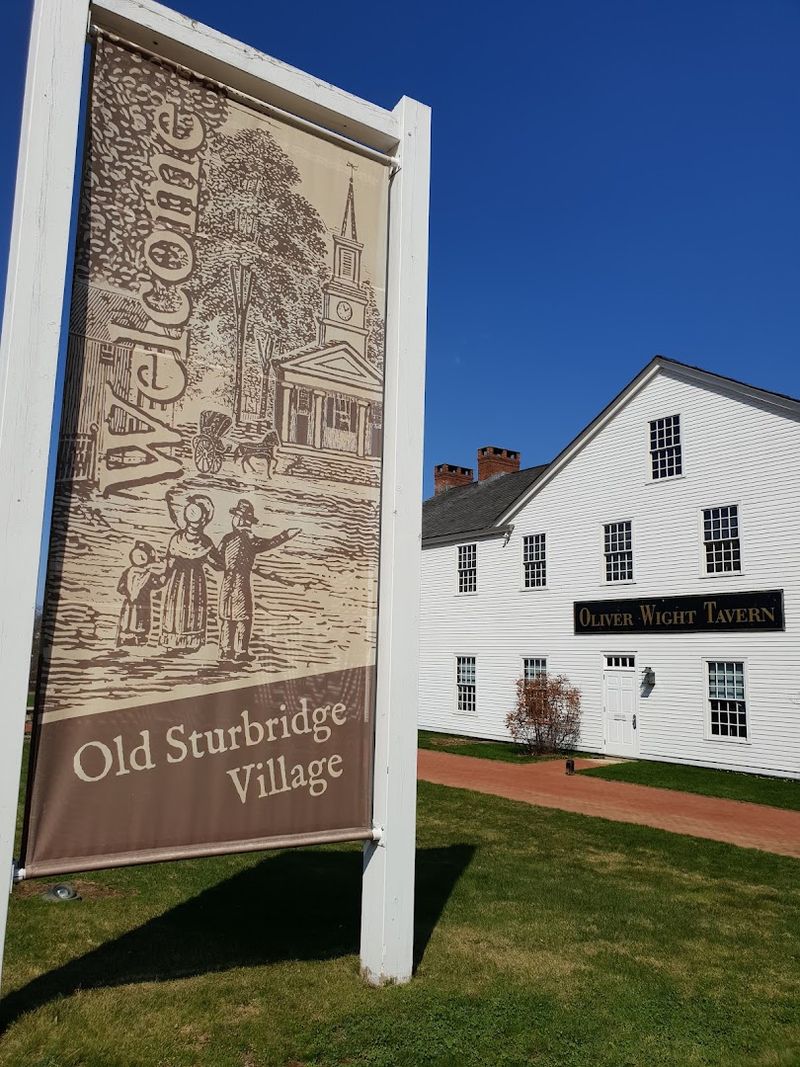
As the United States approaches its 250th anniversary, Old Sturbridge Village has positioned itself as a natural hub for commemorating that milestone. The museum has developed special programming tied to the USA 250 celebration, using its 1830s setting to explore what American democracy and community life looked like in the decades following the nation’s founding.
The early 19th century was a formative period for American civic identity. Town meetings, local governance, religious communities, and trade networks were all evolving rapidly during the 1830s, and the village captures that moment of transition with unusual specificity.
For visitors who want to connect the current anniversary to something tangible and historically grounded, a trip to Old Sturbridge Village offers exactly that kind of perspective. The museum does not just present the past as a curiosity.
It frames early American life as a set of ongoing conversations about community, work, and shared responsibility that remain relevant well beyond the 19th century.
What Keeps People Coming Back
A striking number of people who visit Old Sturbridge Village describe returning multiple times across different life stages. Some came as children on school trips and returned as adults with their own families.
Others discovered it as adults and found themselves drawn back for different seasons or special events.
The reason for this pattern is not hard to identify. The village is large enough that a single visit genuinely cannot cover everything, and the rotating programming means the experience shifts throughout the year.
A summer visit focused on farm demonstrations feels different from a candlelit December evening or a fall afternoon walk through foliage-covered paths.
There is also something about the format itself that rewards return visits. Knowing the layout from a previous trip allows a visitor to slow down and focus on specific buildings or demonstrations rather than trying to take in everything at once.
That depth of engagement is what separates Old Sturbridge Village from a one-and-done tourist stop.
A Place That Earns Its Place in New England History
Not every museum manages to stay relevant across generations, but Old Sturbridge Village has maintained its standing as one of the most respected living history institutions in the country for nearly eight decades. That longevity reflects both the quality of its curation and the continued public appetite for history presented through experience rather than display.
The museum’s commitment to accuracy extends beyond the buildings and tools to the agricultural practices, trade techniques, and social structures it represents. Nothing is simplified to the point of distortion, and the staff are trained to handle nuanced questions about early 19th-century life with honesty and depth.
For anyone who has ever wanted to understand not just what happened in early American history but how it actually felt to live through that period on a daily basis, Old Sturbridge Village offers the closest thing available to a genuine answer. The 240 acres do not just preserve the past.
They keep it in conversation with the present in a way that few institutions manage to sustain.
Where History Actually Lives
At 1 Old Sturbridge Village Road in Sturbridge, Massachusetts, sits one of the largest outdoor living history museums in the entire northeastern United States. The village is open Wednesday through Sunday from 9:30 AM to 5 PM, and the grounds cover a full 240 acres of authentic New England terrain.
What makes this place stand out from a typical museum is the sheer scale of it. Over 40 historic structures have been relocated from towns across New England and carefully reassembled here to form a cohesive, walkable 1830s community.
The layout follows the organic logic of a real rural town, with a common, a meetinghouse, farms, trade shops, and homes all connected by dirt paths. Nothing feels staged or rushed.
The whole experience rewards people who slow down and pay attention to the small details tucked into every corner of the property.
Share this story