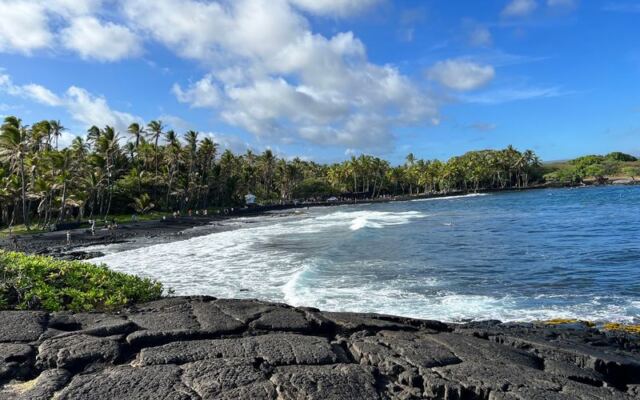
Coconut palms lean over sand so dark it looks like crushed obsidian, and just a few feet away, giant green sea turtles doze in the sun without a care in the world. This is one of only a handful of black-sand beaches on the planet, and the color comes straight from volcanic activity that shaped the entire island.
People drive here from all over the Big Island hoping to catch a glimpse of the honu resting on the shore, and most walk away saying it was the highlight of their whole trip. There is a story behind the sand, a set of rules that protect the wildlife, and a few practical tricks that can save you money and stress.
Keep reading, because this beach earns every bit of its reputation.
Where the Black Sand Meets the Palms
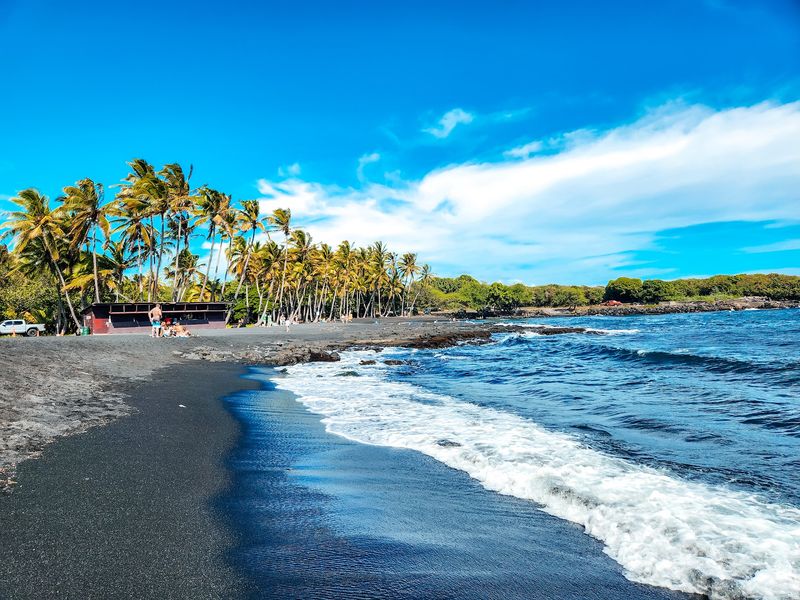
Tucked along the southeastern coast of Hawaii’s Big Island, Punaluʻu Beach sits between Kona and Volcanoes National Park in the district of Kaʻu. The address is simply listed as Hawaii, and locals often point people toward the county park entrance rather than any fancy street sign.
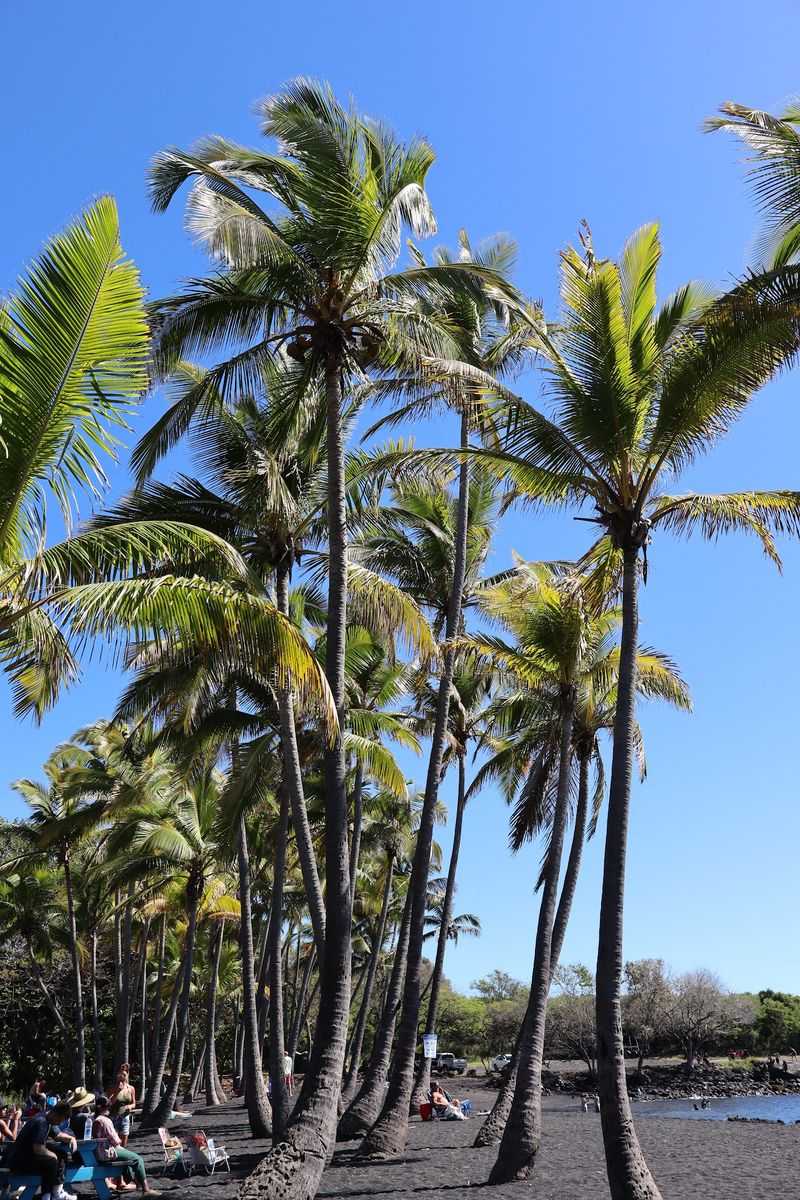
The beach is famous for two things that rarely appear together: jet-black sand and green sea turtles lounging in plain view. Coconut palms curve over the shoreline, giving the whole place a framed, postcard look.
It holds a 4.7-star average across more than a thousand pieces of feedback, which is high for any public beach. That kind of number usually means people leave happier than they arrived.
Many travelers stop here on the drive toward Volcanoes National Park, since it sits conveniently along the route. It makes an easy break in a longer day of exploring the island’s volcanic heart.
The setting is compact rather than sprawling, with mountainous rainforest rising behind the sand. That backdrop gives the coastline a vibrant, layered feel that photos struggle to capture fully.
How Volcanoes Painted the Sand
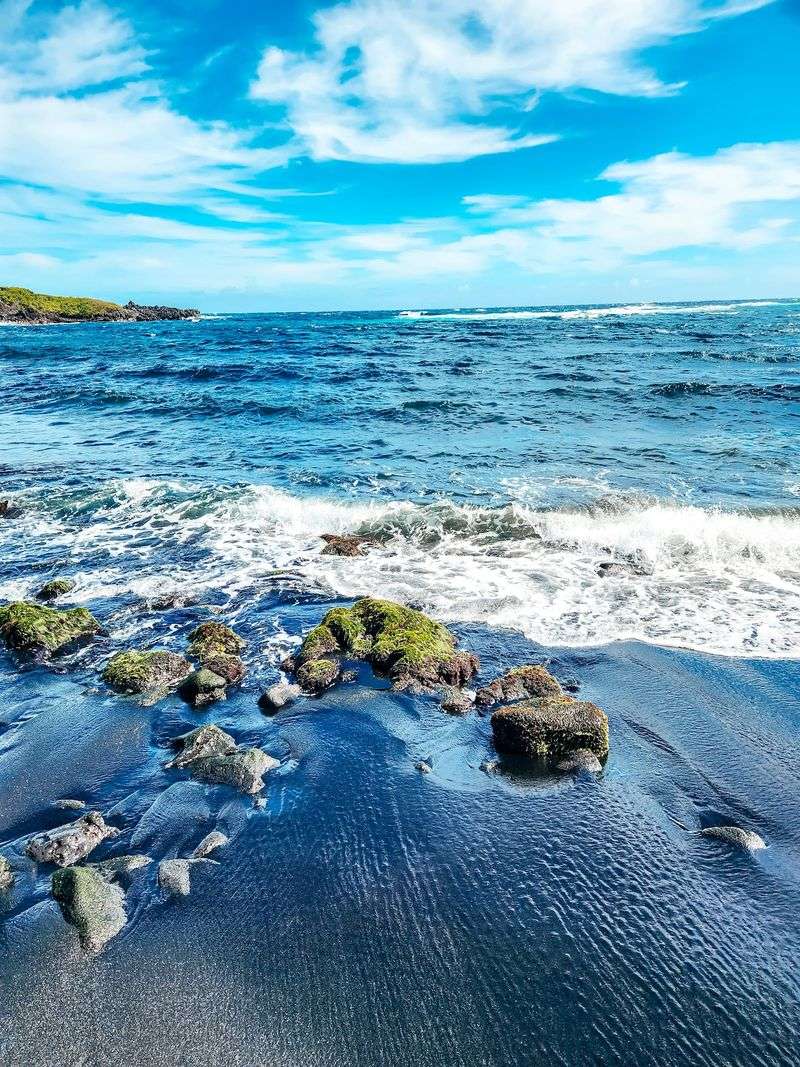
The dark color here is no accident of paint or shadow. It was born from fire and speed.
When extremely hot lava from nearby volcanoes such as Kilauea flowed into the ocean, it cooled so fast that it shattered into tiny fragments. Those fragments settled and formed the deep black grains that cover the shore today.
People often note how surprisingly soft the sand feels underfoot, which catches first-timers off guard. Black sand is not a common sight, and many admit they had never seen anything like it before arriving.
Because the sand absorbs sunlight, it can get quite warm during the day. That warmth plays a starring role in why the turtles love this spot so much.
Punaluʻu is counted among a very small number of black-sand beaches in the world, which is a big part of its pull. Geology fans and casual beachgoers alike find themselves fascinated by the origin story.
Standing on ground that was once molten rock adds a quiet sense of wonder to the visit. It turns a simple beach day into a lesson in how islands are made.
Meet the Honu, the Beach’s Gentle Regulars
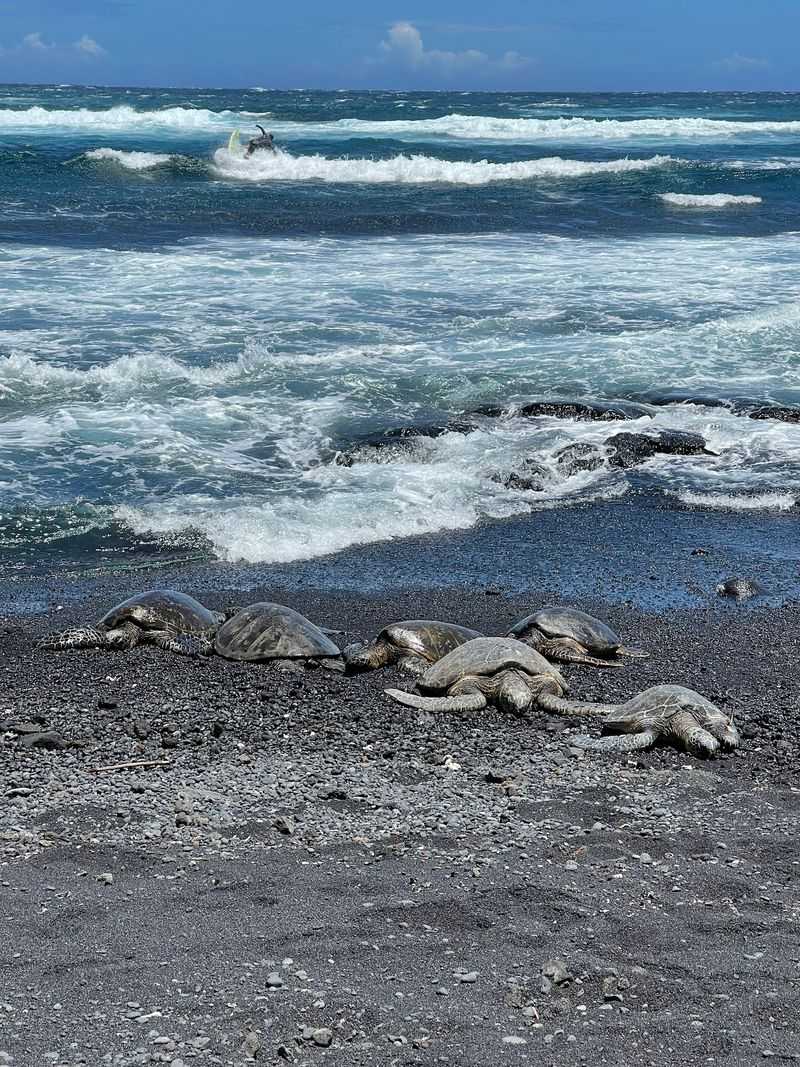
Green sea turtles, known in Hawaiian as honu, are the true celebrities of Punaluʻu. Turtles come up mentioned again and again, with hundreds of nods to their presence.
The warm black sand draws these endangered animals ashore to rest and regulate their body temperature. It is one of the best places in Hawaii to see them resting in the wild rather than only in the water.
Some lucky travelers have counted several turtles in a single visit, and a few have reported seeing as many as eight sunbathing at once. Others catch them napping right up on the sand near the palms.
Sightings are common but never guaranteed, and a handful of people leave without spotting one. That uncertainty only adds to the thrill when a turtle does appear.
Watching a honu slowly haul itself onto the shore is the kind of moment that sticks with families long after the trip ends. It is wildlife on its own terms, unhurried and unbothered.
For many, this single experience justifies the entire detour to Kaʻu.
The Rules That Keep the Turtles Safe
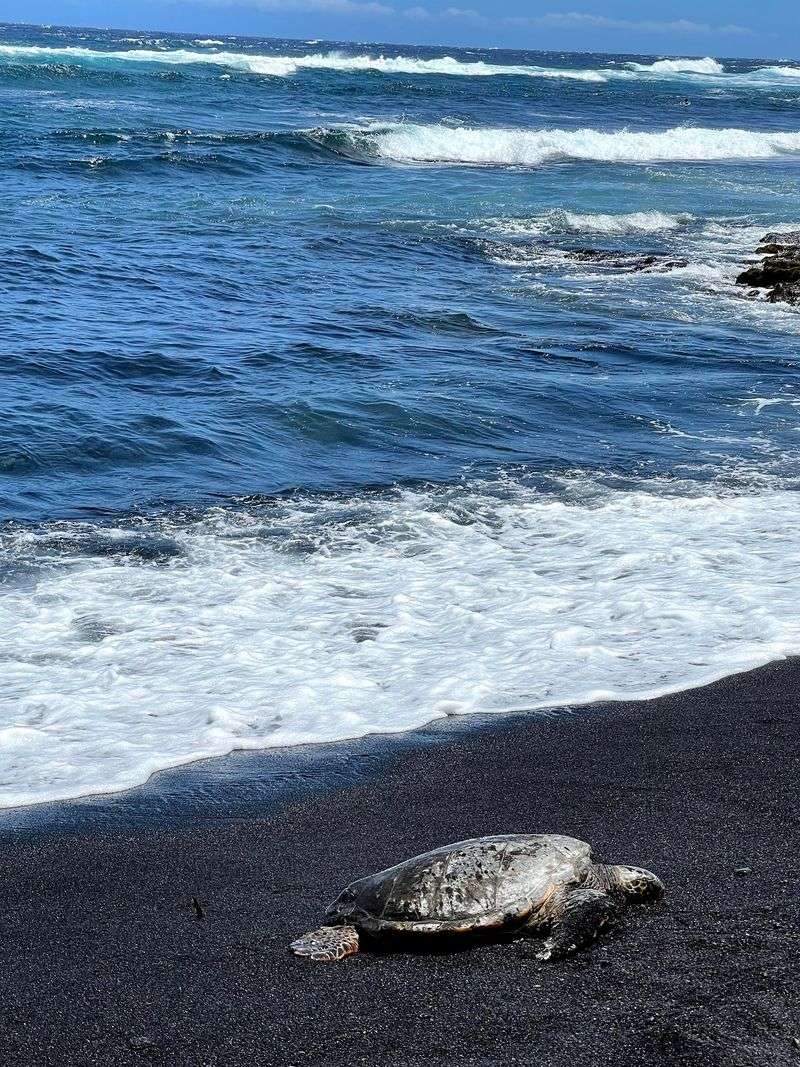
Getting close to a resting turtle might be tempting, but it is strictly off-limits, and for good reason. These animals are protected.
A sectioned-off area marks where the turtles usually gather, and stepping inside it is not allowed. The barrier gives the honu space to rest without stress from crowds.
People are encouraged to keep their distance and use zoom lenses instead of creeping in for a closer shot. Phone cameras with a decent zoom handle the job just fine from where you are allowed to stand.
Following the guidelines is part of what keeps this beach special year after year. Respectful behavior means the turtles keep coming back, and future travelers get the same chance to see them.
Rangers and guides sometimes share extra context about the animals and the site’s cultural importance. That guidance helps everyone understand why the rules exist in the first place.
The payoff is simple: you still get incredible photos and memories, all without disturbing a single turtle. It is a fair trade that protects a fragile natural treasure.
Tide Pools, Lava Rock, and Coastal Corners
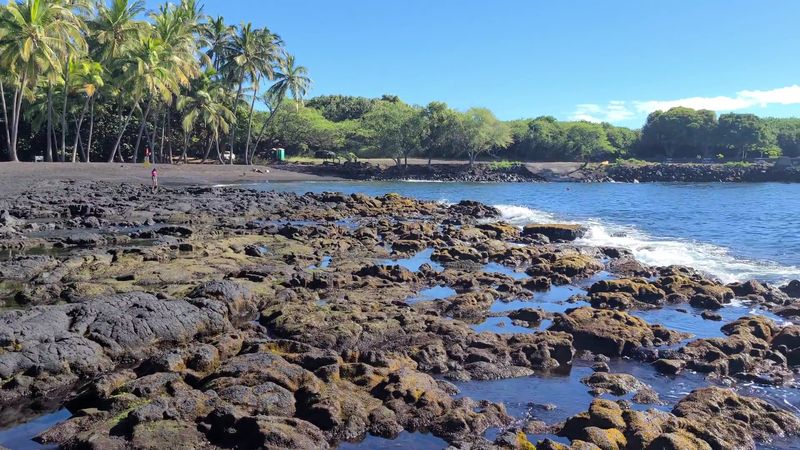
Beyond the sand, the shoreline is cradled by dark lava rock that hardened long ago. Those formations create pockets worth exploring on foot.
Tide pools dot the edges of the beach, offering little windows into shallow marine life. They give curious explorers something to poke around when they need a break from turtle-watching.
Walking over the lava flow that frames the beach is a popular activity, and the rugged texture adds variety to an otherwise sandy landscape. The jagged rock also means you should watch your footing carefully.
Plenty of spots along the rocks and sand invite people to sit and soak up the sun. The mix of surfaces means there is room to spread out even when the beach feels busy.
Petroglyphs can be found near the area as well, hinting at the deep history woven into this stretch of coast. Guides sometimes point them out and explain their meaning.
These smaller details reward travelers who slow down and wander a little. The beach has layers beyond its headline attractions.
Swimming, Snorkeling, and the Offshore Reef
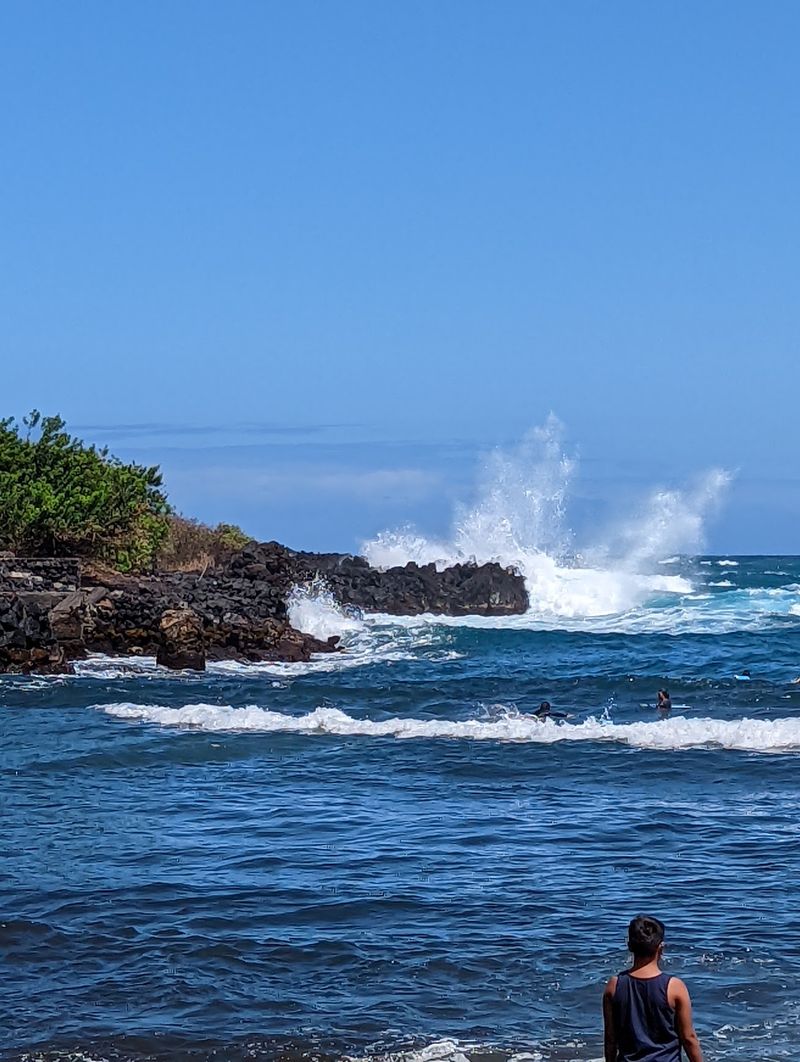
Water lovers have options here, though the conditions ask for a little caution. The ocean can be rocky and the water sometimes choppy.
Snorkeling gets a fair amount of attention, with an offshore coral reef adding interest below the surface. The water is often described as warm, which makes wading in more inviting.
Some find swimming tricky because of jagged rocks and the sheer number of turtles moving through the shallows. It helps to enter carefully and stay aware of your surroundings.
A few surfers even mention riding waves here, so the spot has more range than a simple sit-and-relax beach. Conditions vary, so what works one day may differ the next.
When the water looks too rough, sunbathing and picnicking make excellent backup plans. There is no shortage of ways to enjoy the day even out of the surf.
The combination of warm water, reef, and wildlife keeps active travelers busy. Just respect the turtles and the terrain, and the ocean rewards you.
A Family-Friendly Spot to Spread Out
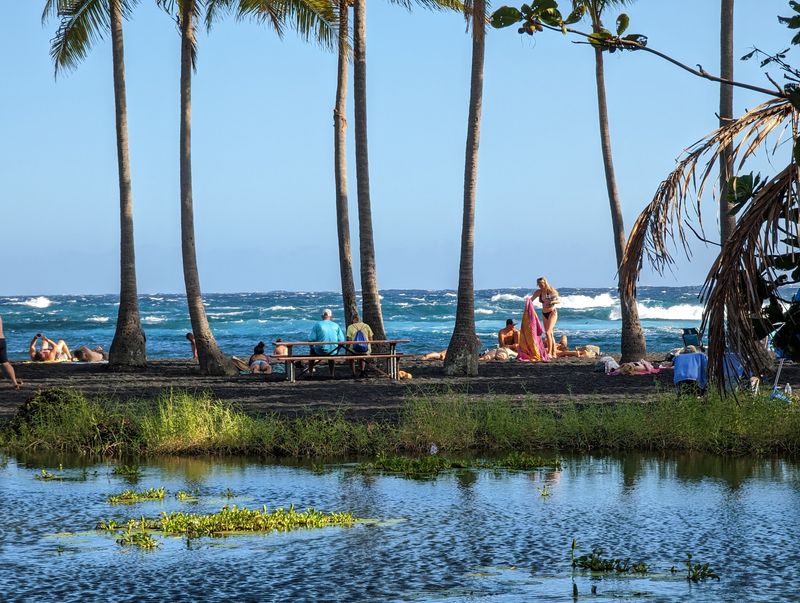
Bring the whole crew, because this beach welcomes families with open arms. It has an easygoing, laid-back feel that suits all ages.
Picnic tables sit near the sand, giving groups a place to gather and eat. You can lay out under the palm trees and simply relax between turtle sightings.
Parents appreciate that the setting feels safe and manageable, especially with the turtle areas clearly marked. Kids get a nature lesson and a beach day rolled into one.
The beach is on the smaller side rather than a vast open stretch, which keeps everyone within easy reach. That compact size can actually be a plus for families keeping an eye on little ones.
Locals are often described as friendly, adding to the welcoming atmosphere. It never feels like a place where visitors are unwelcome.
Between the shade, the tables, and the wildlife, families tend to linger far longer than they planned. Some even return day after day during a single vacation.
Snacks, Coconuts, and a Gift Shack
You will not go hungry or empty-handed on a visit here. A little commerce sits right by the beach.
There is a food shack and a gift shack on-site, handy for grabbing a bite or a souvenir without driving off. That convenience keeps the day flowing smoothly.
Stands selling coconuts pop up around the area, giving travelers a fresh island treat to enjoy on the sand. It is a small touch that adds to the local flavor of the stop.
Having these options nearby means you can stay longer without worrying about supplies. Pack light and pick up what you need once you arrive.
The presence of vendors also reflects how popular the beach has become over the years. Where the crowds go, the coconut stands follow.
Whether you want a keepsake to remember the honu or a snack to fuel more exploring, the little shacks have you covered. It is beach shopping at its most relaxed.
Parking, Restrooms, and the Money-Saving Tip
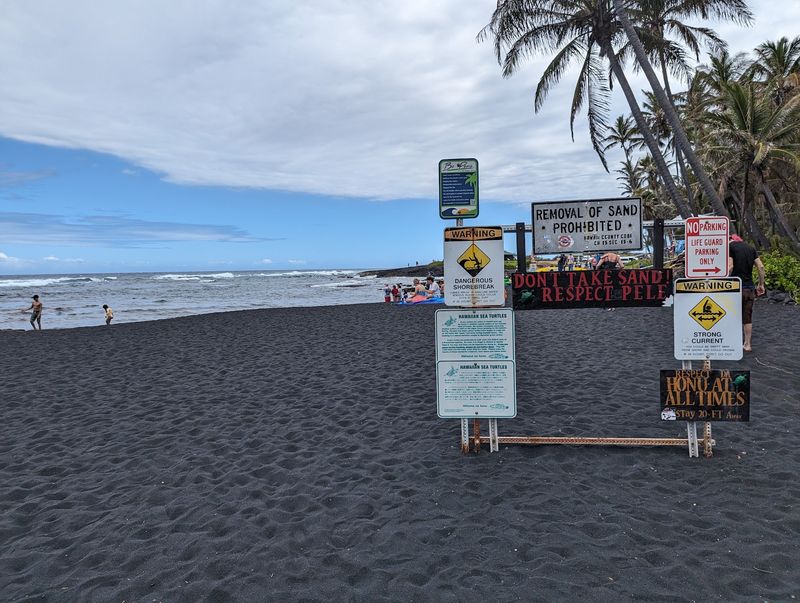
Here is the practical detail that trips up plenty of first-timers. Parking can be confusing and, in one spot, pricey.
A paid lot at the north end charges around fifteen dollars, and some feel it is not worth it. The smart move is heading to the free county park parking lot at the south end instead.
Spaces are limited overall, so arriving earlier in the day improves your odds of finding a spot. The beach is not huge, and neither is its lot.
Restrooms come in the form of porta potties scattered around the immediate area, and reports say the restrooms stay open around the clock. It is basic but functional.
One access point near the paid lot passes some run-down buildings, so choosing the south entrance tends to be the smoother path. A little planning avoids the awkward approach entirely.
Wind is another thing to expect, since several people mention breezy conditions. Pack accordingly, secure your hat, and you will be set for a comfortable visit.
Why This Stop Belongs on Your Big Island List
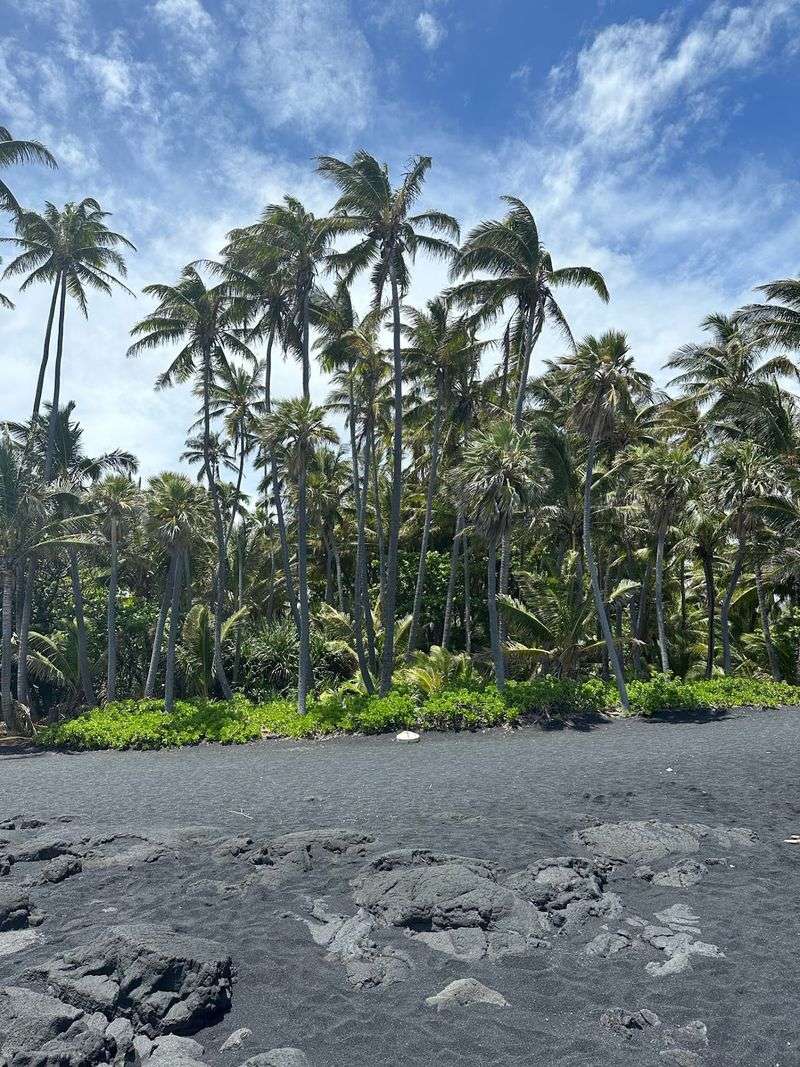
Few beaches manage to combine geology, wildlife, and scenery quite like this one does. It delivers on all three at once.
Between the volcanic black sand, the resting honu, and the palm-lined shore, the place earns the enthusiasm people pour into it. Many rank it among the best black-sand beaches on the Big Island, and some call it their favorite beach anywhere.
The convenient location along the road to Volcanoes National Park makes it an easy addition to a bigger itinerary. You do not have to go far out of your way to fit it in.
Come with realistic expectations about parking, wind, and rocky water, and the experience tends to exceed hopes. Sort out the small logistics and the rest takes care of itself.
Turtle sightings may not be promised, but the odds are strong and the setting is worth it regardless. Even turtle-free visits leave people impressed by the sand and views.
Punaluʻu Beach rewards the curious traveler with a rare slice of the island’s fiery, living story. It is the kind of stop that stays with you long after the sand washes off your feet.
Share this story