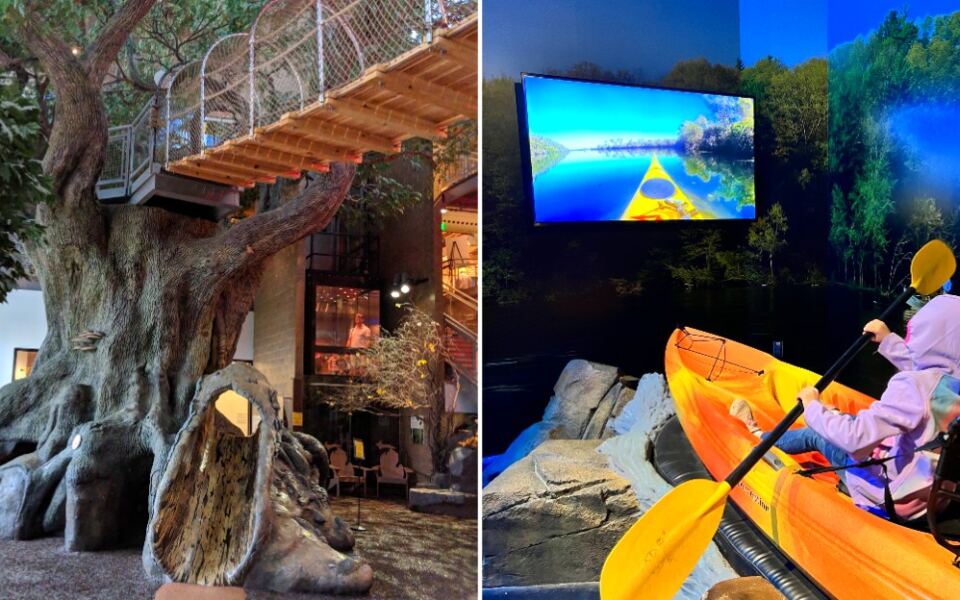
In downtown Detroit, one unique indoor attraction lets visitors climb a 35-foot tree, walk behind a waterfall, and experience kayaking, fishing, and snowmobiling without heading outdoors. Interactive exhibits bring Michigan’s natural landscapes and wildlife to life, making it a fun destination for families.
Housed inside a historic industrial building where Henry Ford once worked, the center combines hands-on adventure with local history. Its location near the Detroit Riverwalk also makes it an easy addition to a day exploring the waterfront.
An Old Riverfront Building With a Wild New Job
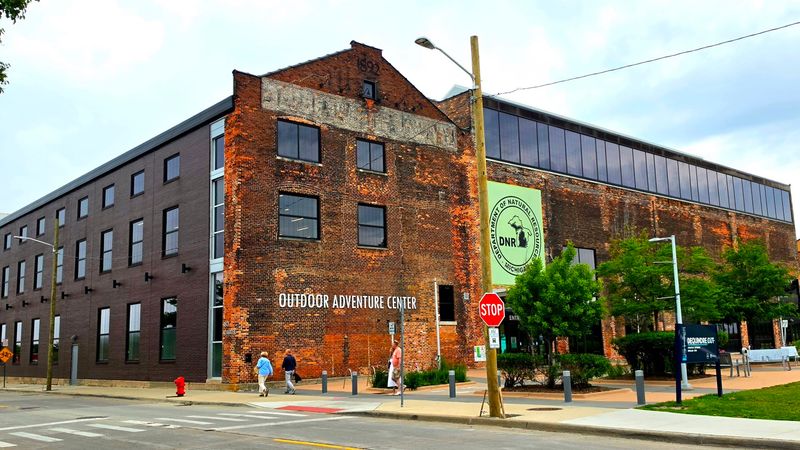
My map app said I had arrived at a brick warehouse, and for a second I thought I had the wrong spot.
The Outdoor Adventure Center sits at 1801 Atwater Street, Detroit, Michigan 48207, inside the historic Globe Building on the Detroit riverfront. The state of Michigan runs it through the Department of Natural Resources, so this is an official DNR facility.
The location is part of the fun. William G.
Milliken State Park and Harbor sits right across the street, and the Detroit Riverwalk is only a short stroll away.
Behind the building runs the Dequindre Cut, a popular walking and biking trail. That means you can pair your indoor adventure with real fresh air without moving your car.
The mission here is simple and kind of brilliant. The center brings the feeling of an up north trip right into the middle of the city.
It opened to the public on July 20, 2015. Before that, though, the building lived a very different life, and its old job involved giant engines and a future car legend.
Steam Engines, Shipbuilders, and a Young Henry Ford
History buffs, this part is for you. The oldest sections of the Globe Building date back to the 1860s.
Back then, the site belonged to the Detroit Dry Dock Engine Works, and later the Detroit Shipbuilding Company. Workers here built marine steam engines for freight and passenger ships sailing the Great Lakes.
Here is my favorite fun fact. Henry Ford worked here as an apprentice machinist from 1880 to 1882, learning skills he later used to change how the world drives.
After the ship days ended, the building had a few other tenants. A small stove maker moved in, and Detroit Edison used the space to repair appliances.
Then came the Globe Trading Company, whose name gave the building its nickname. Its sign could still be seen on the bricks as late as 1966.
By the 1970s the building sat empty. In 2007, the city started taking bids to redevelop it, and the result is the cheerful place I explored.
Knowing all this made the next stop feel even more surprising, because now a tree grows inside.
A 35-Foot Oak You Are Allowed to Climb
Nobody at the front desk warned me I would be climbing a tree on a Tuesday. Okay, it was a Saturday, but the surprise still counts.
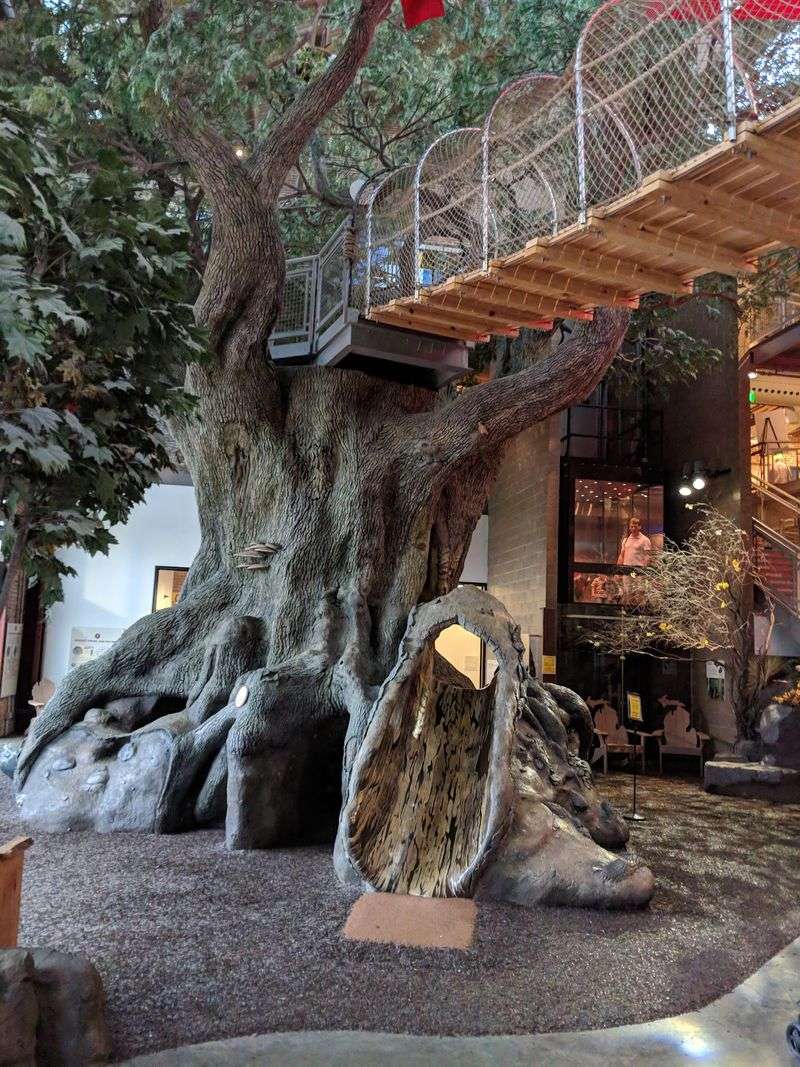
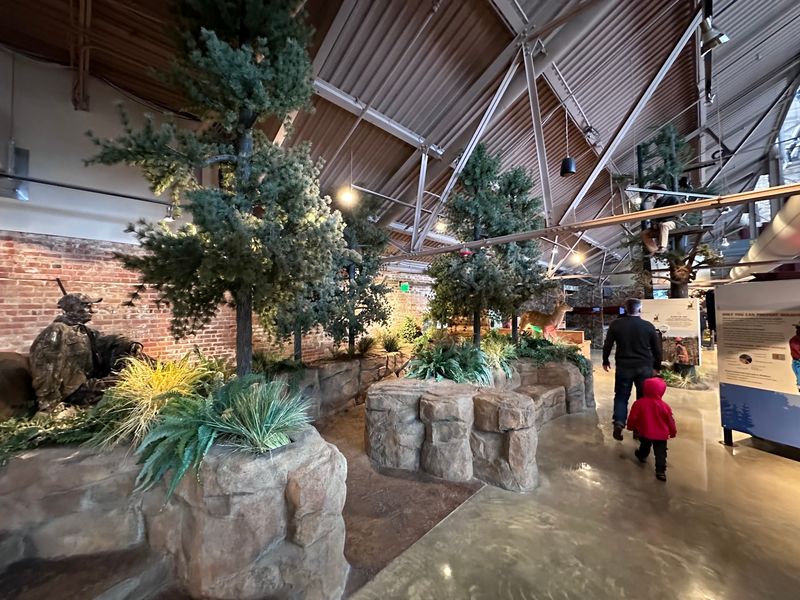
The center of the building holds a 35-foot bur oak tree that you can climb and explore from the roots up. It is easily the star of the show for most kids I saw.
A suspension bridge stretches through the branches and across the building. Walking it gave me a bird’s view of the whole floor, and my knees only wobbled a little.
Down below, kids can slide along giant tree roots. There is also a fake lightning-strike crack in the trunk to peek through.
The exhibit sneaks in some learning too. Signs explain how trees feed and shelter wildlife and give us wood for everyday products.
My tip is to tackle the tree early, before the crowd grows. Wear shoes with good grip and keep small bags zipped.
Once you climb down, follow the sound of rushing water, because the next exhibit lets you get closer than most hiking trails ever allow.
Walk Behind a Waterfall, Then Head Underground
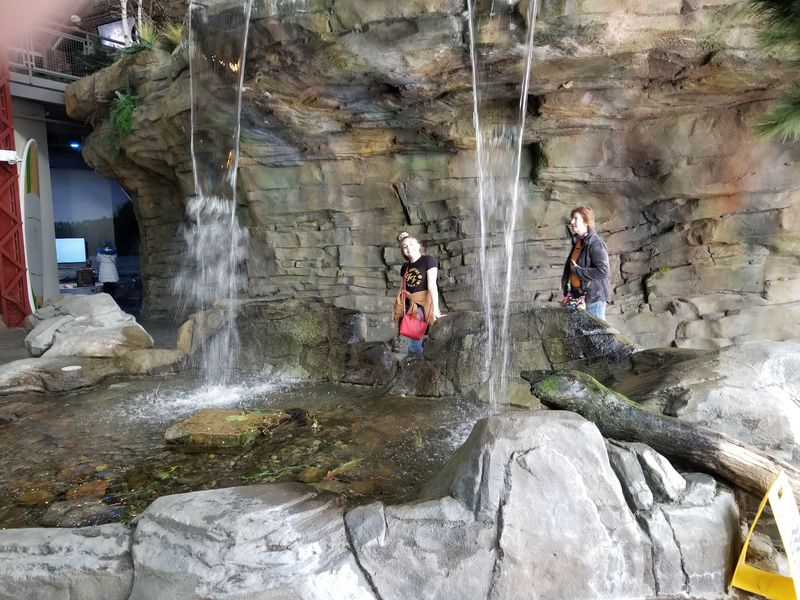
Cool mist hit my face before I even saw the water. That is the best way to meet a waterfall.
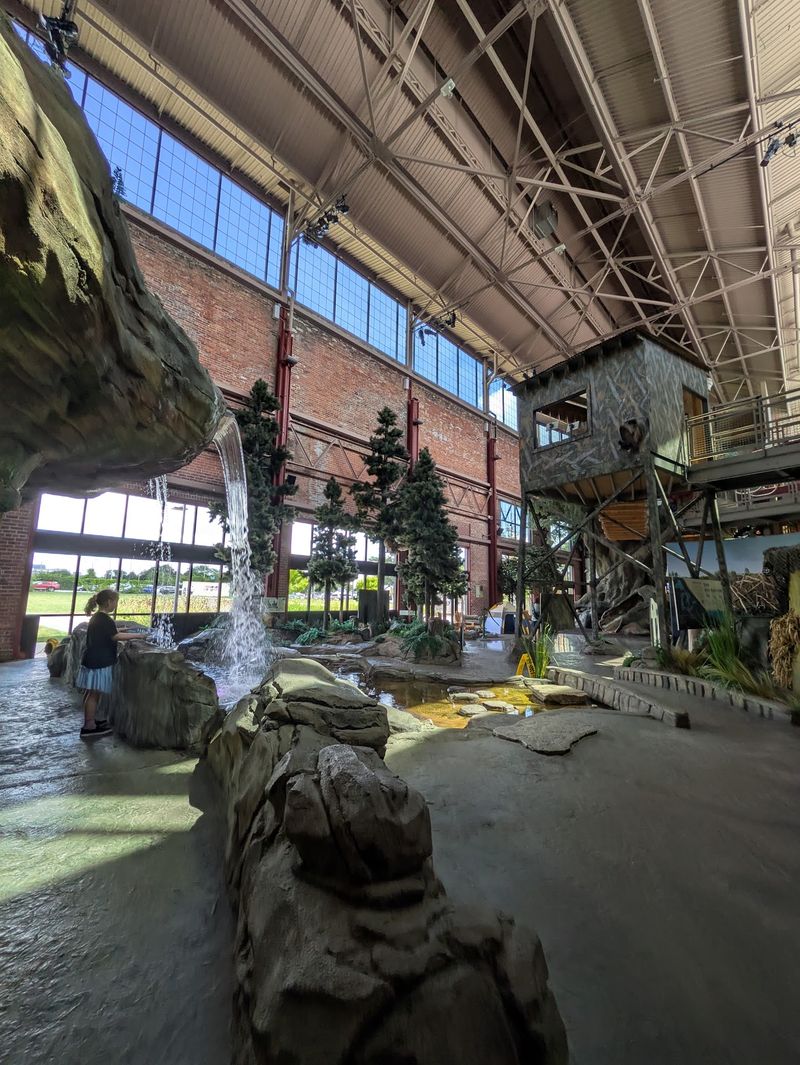
The center has an indoor Michigan-style waterfall that you can walk behind. You can even reach out and touch the falling water, which my inner kid did about six times.
The sound is calming, and it covers up some of the busy chatter of the building. It felt like a tiny break in the middle of a fun but lively visit.
Past the falls, the path leads into a cave and mine area. Here you learn about Michigan’s rocks and its long mining history.
It is darker and a bit tighter in there, so little ones may want a hand to hold. Older kids usually love the spooky-but-safe feel.
Bring a small towel if your kids are touchy-feely. Sleeves can get damp fast.
After drying off, I was ready for the part of the title that pulled me in. Grab a paddle, because the kayak is waiting just ahead.
Paddling a Kayak on a River That Is Not There
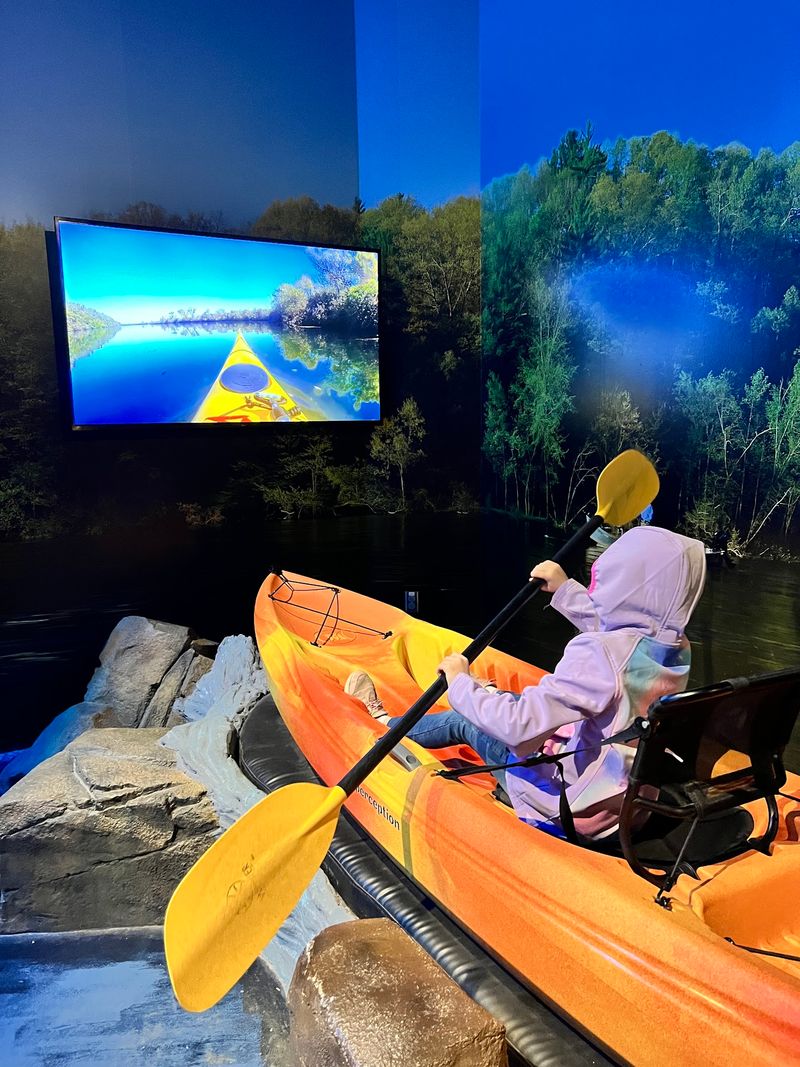
My arms were sore the next morning, and I blame a kayak that never touched water.
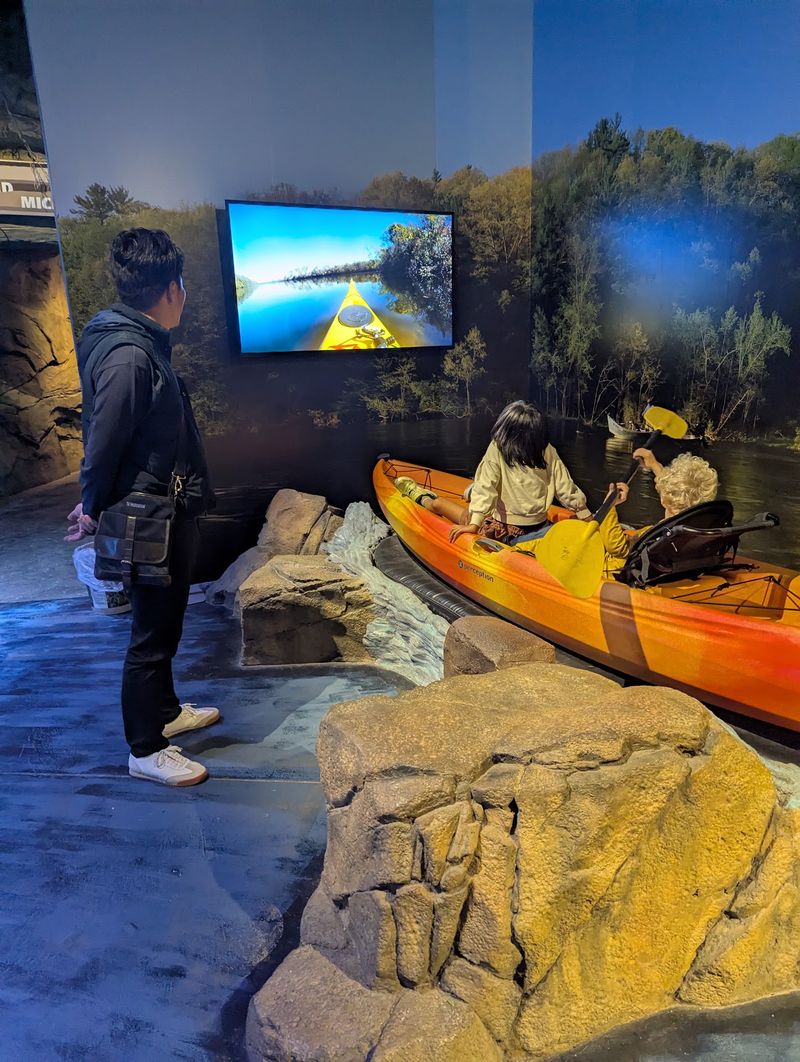
The kayak simulator is one of the most talked-about stations here. You sit in a real kayak, grab the paddle, and steer down a virtual Michigan waterway on the screen in front of you.
It is a gentle way to learn the basic paddle stroke. Left side, right side, repeat, and try not to bump the riverbank.
Kids figure it out quickly, and grown-ups tend to get competitive. I spotted at least one parent asking for a second turn.
This simulator works well for anyone nervous about real water. You can practice balance and rhythm with zero chance of tipping.
Afterward, you can try the real thing in Michigan’s state parks. The center even shows how many state campgrounds sit right beside lakes and rivers.
Lines can form on busy days, so swing by the kayak early. Also, save some arm strength for the next station, since a big fish is about to fight back.
Reeling In the Big One From a Boat That Never Leaves the Dock
Fish stories usually grow with each telling, but mine has a scoreboard to back it up.
The fishing simulator puts you in a realistic boat with a fishing pole in your hands. When a virtual fish bites, you feel the tug and have to reel it in.
It is a crowd favorite for good reason. The pull is just strong enough to make you grip tighter, and the cheering from nearby kids adds pressure.
Close by is an aquarium filled with fish species found in Michigan’s lakes and rivers. I spent longer there than planned, just watching them drift past the glass.
Signs explain how the DNR manages fish populations and why clean water matters. It is real, useful info for anyone who wants to fish for real someday.
No license, no bait, and no smelly hands. That is a pretty sweet deal for a beginner angler.
Done fishing? The next area trades water for wheels and snow, and it gets noisy in the best way.
Snowmobiles, Side-by-Sides, and Bikes That Race Back
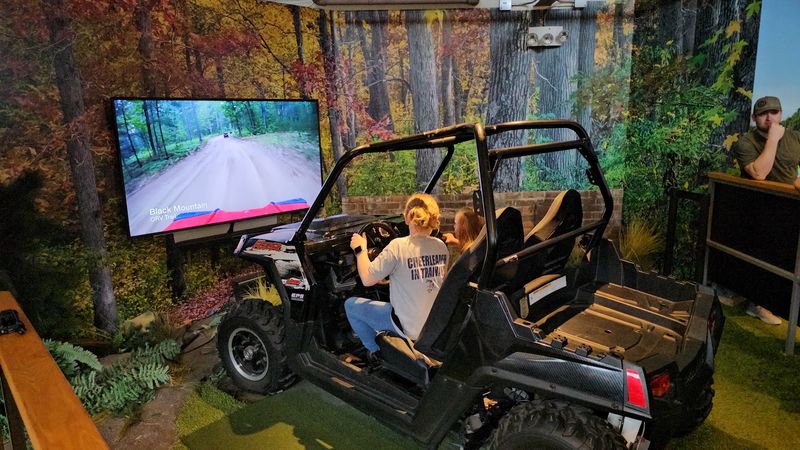
Snow in July sounded impossible until I hopped on a snowmobile in Detroit.
The simulator zone is where older kids tend to vanish for a while. There is a snowmobile, an off-road side-by-side, and a mountain bike setup, each paired with a screen showing Michigan trails.
Some of them let you race the person next to you. My nephew beat me twice, and I am still asking for a rematch.
Beyond the thrills, these rides show the kinds of trails Michigan offers. The state has a huge network for biking, off-road riding, and winter sledding.
It is a safe preview for anyone curious about these hobbies. You get the bumps and turns without the cold toes or muddy jeans.
There is also a target shooting game nearby that draws big competitive energy. High scores get bragged about all day.
A friendly heads-up: some simulators may be down for repairs on a given day. Even so, plenty more awaits, including a skill you can practice with a real bow and arrow.
Bullseye Lessons Taught by Real Instructors
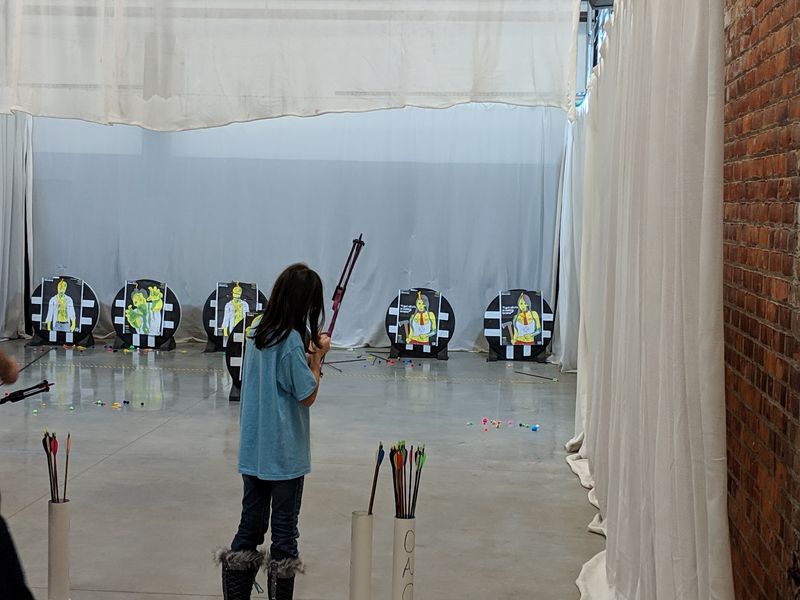
Archery humbled me in about four seconds. My first arrow went somewhere very confident and very wrong.
The center offers archery sessions with instructors on hand to teach the basics. Kids generally need to be 8 or older to take part.
Staff show you how to stand, hold the bow, and draw the string safely. By my third try, I actually hit the target, and I may have done a small happy dance.
Archery times are scheduled, so check the daily plan when you arrive. Spots can fill up on busy weekends.
The center also hosts nature programs about Michigan wildlife, plants, and conservation. Some activities happen in the classroom space upstairs.
Sensory-friendly days are offered as well. There is also a quiet room for anyone who needs a calm break during a regular visit.
Those thoughtful touches make the place feel welcoming for many kinds of families. Speaking of welcome, the next section introduces some furry and slimy locals you can meet up close.
Furry Pelts, Frog Songs, and a Beehive Livestream
Beaver fur is softer than I expected. Skunk fur is too, and thankfully the display skips the smell.
The wildlife area lets you touch real pelts from Michigan mammals. There are also skulls and, yes, examples of animal droppings, which kids find hilarious.
My favorite part was the frog and toad wall. Press a button and you hear each species call, so you can learn them by ear.
It turned into a little game for our group. We tried guessing frogs before pressing the button, and we were wrong a lot.
The center also pushes citizen science, which means regular people helping real research. Visitors can practice bird identification and learn how to report sightings of plants, animals, and insects.
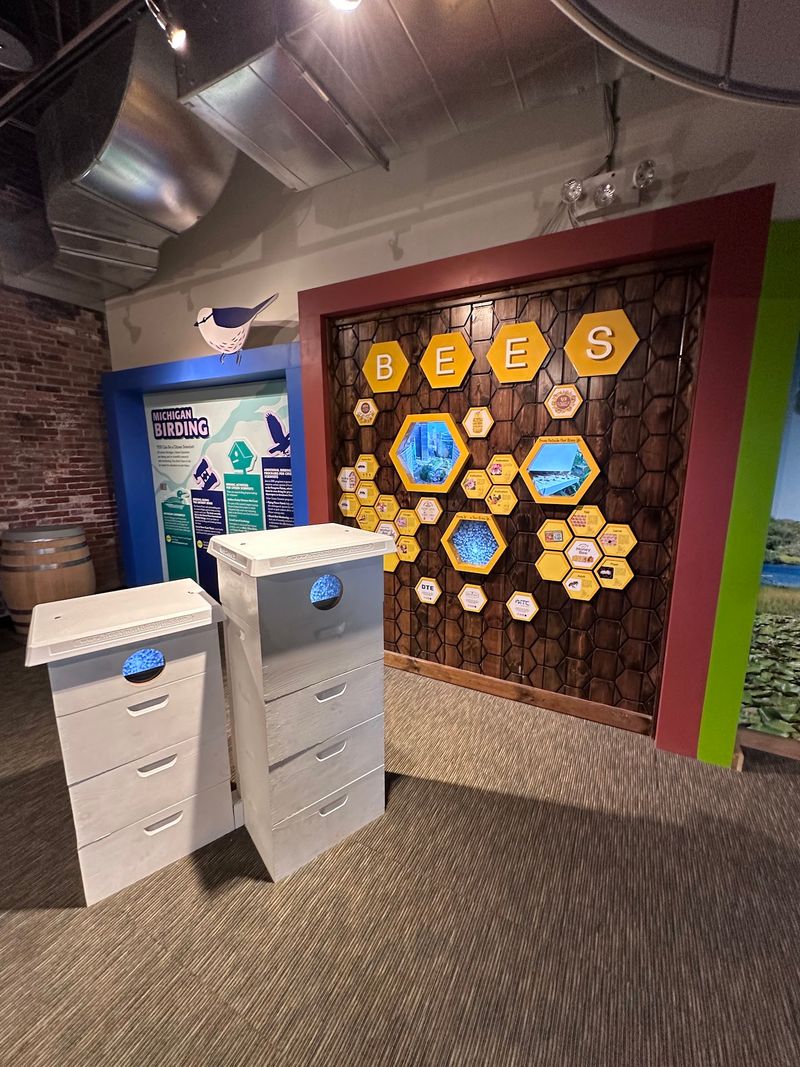
There is even a livestream from the center’s own honeybee hives. Watching the bees work is strangely relaxing.
Keep those animal facts handy. One clever Michigan builder gets a whole exhibit of its own, and you can crawl right inside its home.
Crawling Into a Beaver’s Living Room
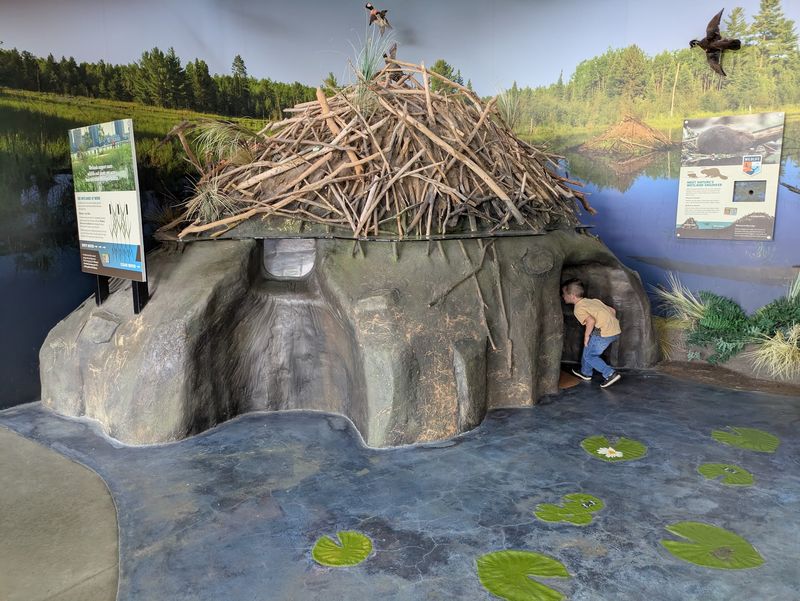
Beavers are the busy builders of Michigan’s wetlands, and this exhibit lets you see their work from the inside.
A model beaver lodge invites kids and curious adults to crawl in. It shows how these animals stack sticks and mud to make a cozy, safe home.
Outside the lodge, you can hop across lily pads set into the floor. Toddlers seemed to love this spot most.
The signs here pack in useful lessons. Wetlands filter pollution from water and help hold back floods.
They also give homes to tons of fish, birds, and other wildlife. After reading that, I looked at every marsh on the drive home a bit differently.
This is a great area for younger kids who need a slower pace. It is low, close to the ground, and easy to watch from nearby.
Once everyone crawls back out, it is time to set up camp. The next stop has a tent, a pretend campfire, and zero mosquitoes.
Camping Indoors and Flying With the DNR
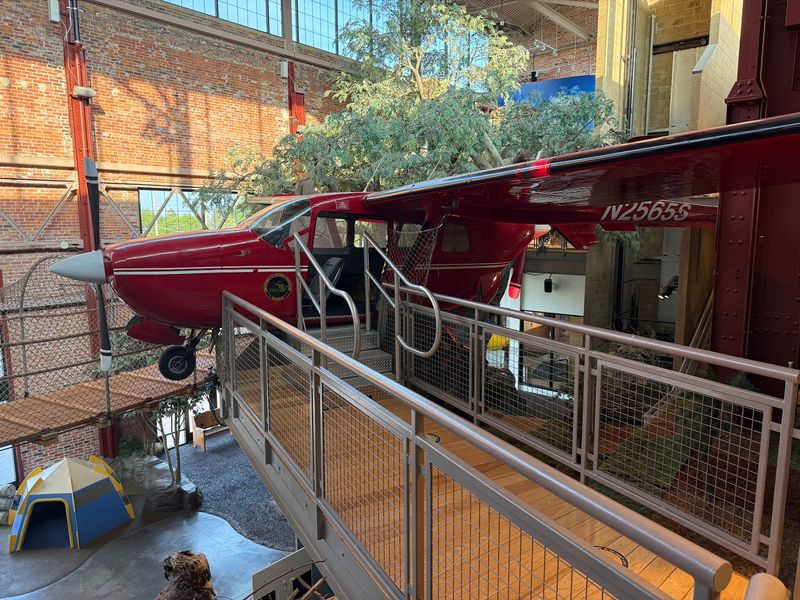
Bug spray is officially optional at this campsite.
The indoor camping exhibit features a real tent you can climb into, plus a pretend campfire. It shows families how rustic camping in Michigan state forests can be cheap and fun all year.
Signs point out that many state forest campgrounds sit near rivers or lakes. That means camping can easily connect to fishing and paddling trips.
A short walk away sits the DNR in the Sky exhibit, built around an actual airplane. Kids can climb aboard and peek into the cockpit.
The exhibit explains how the DNR uses planes to help fight wildfires. Aircraft also help track and survey Michigan wildlife from above.
My younger companions loved pretending to fly, and there is a fly-like-an-eagle feature nearby too. Adults get a real look at how much work goes into protecting the outdoors.
Tickets, Parking, and a Riverfront Day Plan
Good news for your wallet: this adventure costs less than a movie ticket.
Admission is $7 for adults, $5 for kids ages 2 to 12, and $5 for seniors 62 and up. Children under 2 get in free, and an annual family membership costs $65.
Hours are Wednesday through Saturday from 9:30 AM to 4 PM, and Sunday from 12 PM to 4 PM. Ticket sales stop at 3:30 PM, so do not cut it close.
A gated lot off Atwater Street costs $5 before 4 PM. Free street parking sometimes pops up nearby.
No food is sold, but a cafeteria with vending machines welcomes packed lunches. Free lockers, a nursing room, and clean restrooms help a lot.
The building is wheelchair friendly, and strollers work well. Plan on one and a half to three hours inside.
Afterward, stroll the Detroit Riverwalk, visit the lighthouse at Milliken State Park, or ride the Dequindre Cut. For me, that combo turned a quick museum stop into the easiest up north escape Detroit could offer.
Share this story