Detroit’s first City Hall once stood on the same downtown square where visitors now find food trucks, seasonal markets, and a historic fountain. The building opened in 1835, and its ground floor doubled as a public market.
Cadillac Square has changed dramatically since then. It became a major shopping destination, watched office towers rise nearby, and eventually returned to public use as a park beside Campus Martius.
One of its most interesting features is the Bagley Memorial Fountain, designed by renowned architect Henry Hobson Richardson in the 1880s. The fountain has been moved several times, but its original purpose was simple: providing free drinking water to Detroit residents.
Today, the square brings together nearly two centuries of Detroit history in a place many people pass through without knowing what once stood there.
A Small Park With a Very Big Address
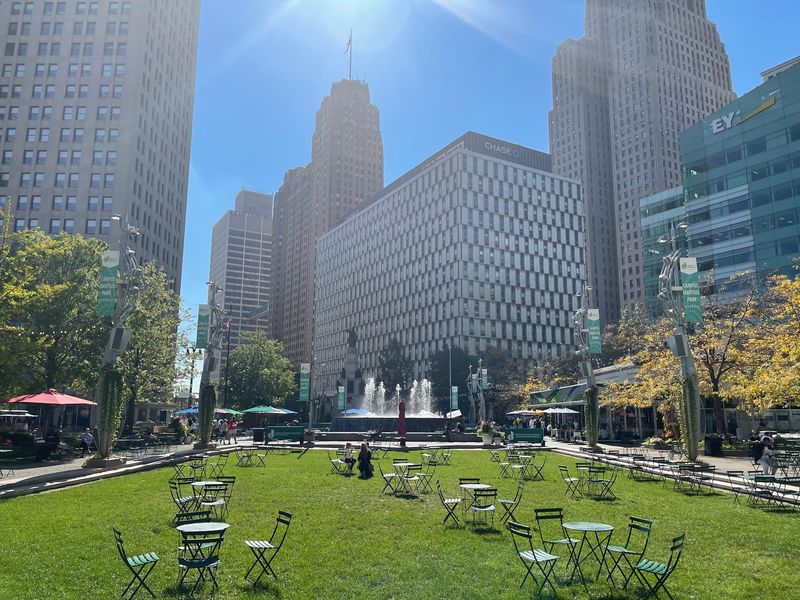
Right in the center of downtown Detroit, a long, open plaza stretches east from Woodward Avenue. Its official name is Cadillac Square Park, and its listed address is 662 Woodward Ave, Detroit, MI 48226, in the United States.
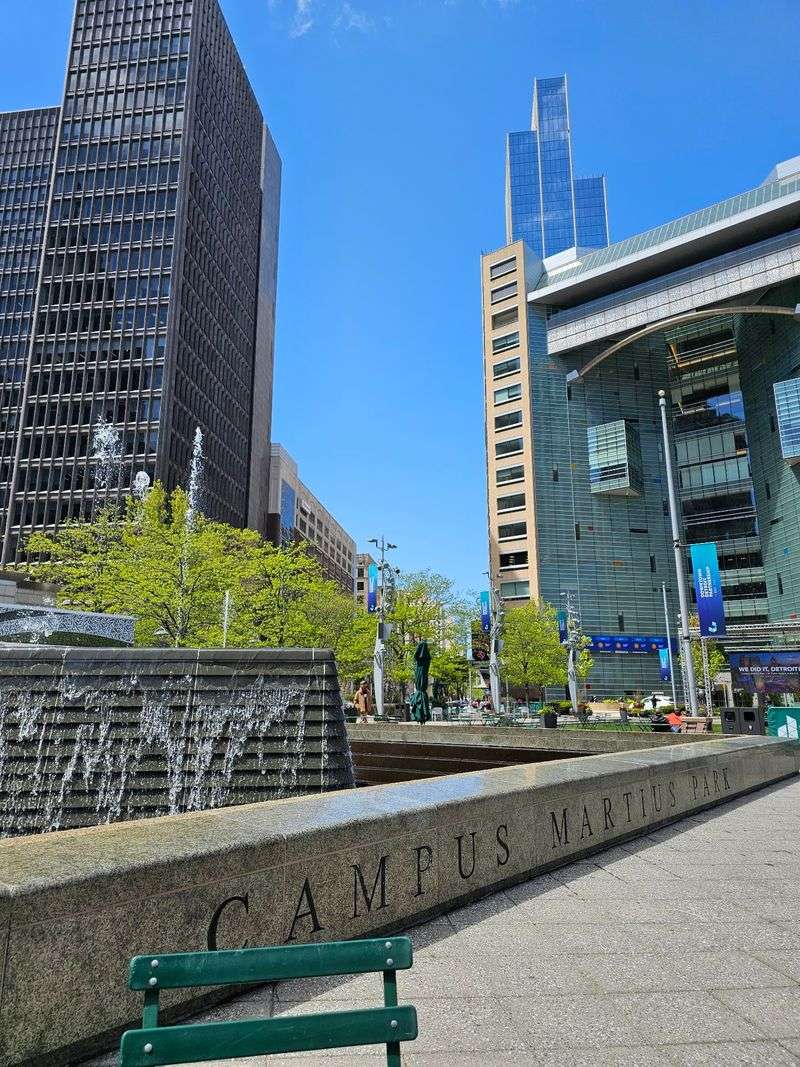
The park sits just steps from Campus Martius Park, so the two spaces often feel like one big outdoor living room. Tall buildings rise on every side, which makes the open sky above the square feel like a real treat in such a crowded area.
The name honors Antoine de la Mothe Cadillac, the French officer who founded Detroit in 1701. Yes, the car company borrowed the same name, but the city had it first.
What catches my attention is how much this one strip of land has seen. Courthouse days, market days, and skyscraper days all happened right here before it became a park again.
The city lists the park as open from 6 a.m. to 10 p.m. every day, so early walkers and evening visitors both have time to stop by. To understand why the square exists at all, we need to go back to a plan drawn after a giant fire.
Born From a Plan After the Great Fire
In 1805, a fire burned almost all of Detroit to the ground. Leaders saw a chance to start fresh, and Judge Augustus Woodward drew up a bold new street plan.
His idea used wide avenues that spread out like spokes, with open public spaces where they met. Campus Martius became the hub, and the long space that grew into Cadillac Square stretched out from it.
Back then, nobody pictured food trucks or ice rinks. Public squares were meant for gathering, trading, and important city buildings.
Over time, Detroit filled many of these spaces with structures. The square went through long stretches as a street and a site for buildings rather than a green space.
I find it fun that a plan from over 200 years ago still shapes where people grab lunch today. Next time you stand in the square, look down Woodward and notice how the old layout still guides the city.
The early plan set aside room for civic life, and one of the first big civic buildings in the area had a very serious job.
Where Detroit’s First City Hall Once Stood
Long before Cadillac Square became a place for food trucks and outdoor gatherings, it was home to Detroit’s first City Hall. Completed in 1835, the building served as an important center of city government while Detroit was growing into a major commercial hub.
The building had another purpose that might surprise visitors today. Its ground floor housed a public market, bringing government business and everyday shopping together under one roof.
As Detroit expanded, the city needed larger government facilities. The original City Hall was eventually replaced, and a grander City Hall opened at nearby Campus Martius in 1871.
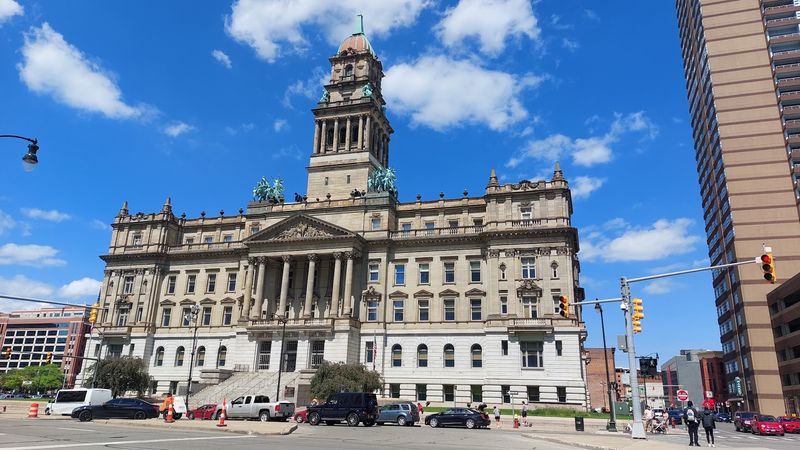
The historic Wayne County Building, completed in 1902, still stands at the eastern end of Cadillac Square. Its elaborate stonework, sculptures, and imposing architecture offer a reminder of Detroit’s importance at the turn of the 20th century.
Today, visitors can walk through Cadillac Square without realizing that this stretch of downtown once played such an important role in the city’s government and commercial life. The connection becomes even more interesting when you discover what happened to the old public market.
Farmers Once Sold Produce Right Here
Fresh carrots, apples, and cabbages were once sold in the middle of Cadillac Square. In the late 1800s, Detroit’s Central Market operated here, with a large market building and an open vegetable shed.
Farmers brought their goods into the city, and shoppers came to fill their baskets. It was busy, noisy, and very practical.
Here’s a fun fact many people miss. When the market closed in the 1890s, the vegetable shed was taken apart and moved to Belle Isle, where it was used for decades.
That shed is now known as the Belle Isle Vegetable Market shed, and it has been talked about as possibly the oldest surviving market structure of its kind in the country. So a piece of Cadillac Square history still exists, just a few miles away.
I enjoy that the square has come full circle in a way. Today, vendors and food trucks set up here again, selling lunch instead of potatoes.
After the market left, though, the land headed in a very different direction. Up went offices, all the way to 22 stories.
A Skyscraper Came and Went
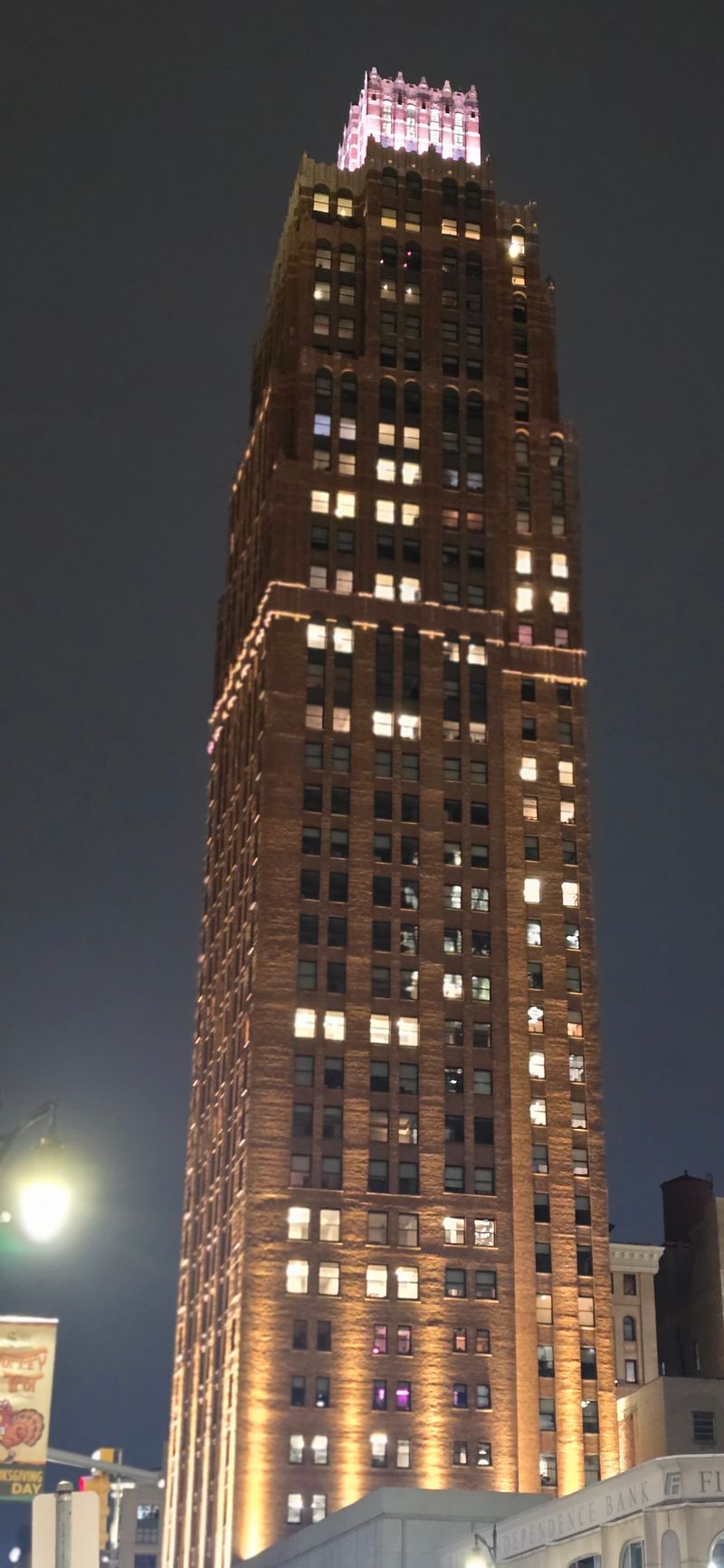
Picture postcards from the early 1900s show something surprising here. The Cadillac Square Building, a tall office tower about 22 stories high, rose along the square.
Other buildings, like the Real Estate Exchange, also took up space over the years. The area was packed with business, streetcars, and traffic.
Cities change, and buildings don’t always last forever. Many of these structures were eventually torn down, and much of the square turned into roads and paved space.
For a long time, it was simply a place people passed through on their way somewhere else. Few would have called it a park.
Then, in 2007, the city brought it back as a public space. Cadillac Square Park was reestablished, and the land returned to the purpose Woodward’s plan had in mind.
I find that comeback encouraging. It shows a city deciding that open space for people matters just as much as space for cars.
Once the park returned, it needed a centerpiece. That came in the form of a historic fountain with a thoughtful backstory.
The Fountain Built for Thirsty Neighbors
Clean water used to be hard to find in a busy 1800s city. John J.
Bagley, a former Michigan governor, wanted to change that, so he left money for a public drinking fountain.
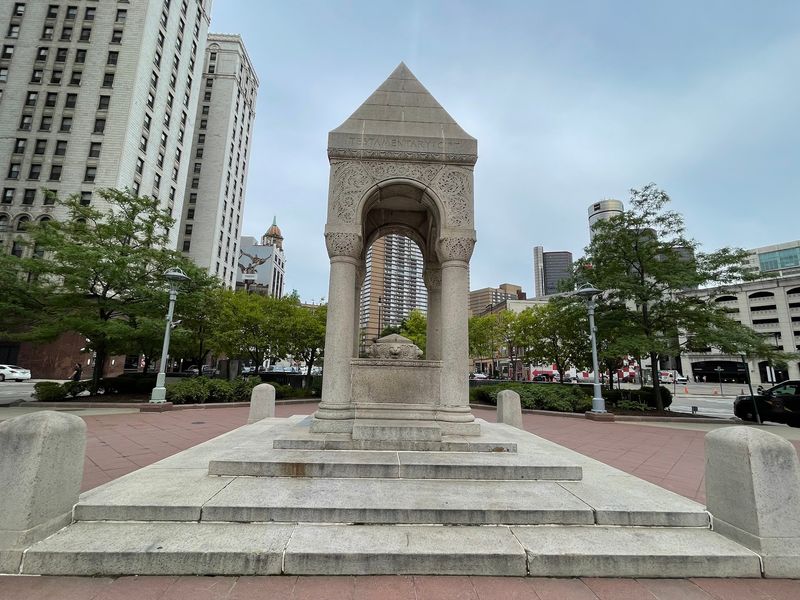
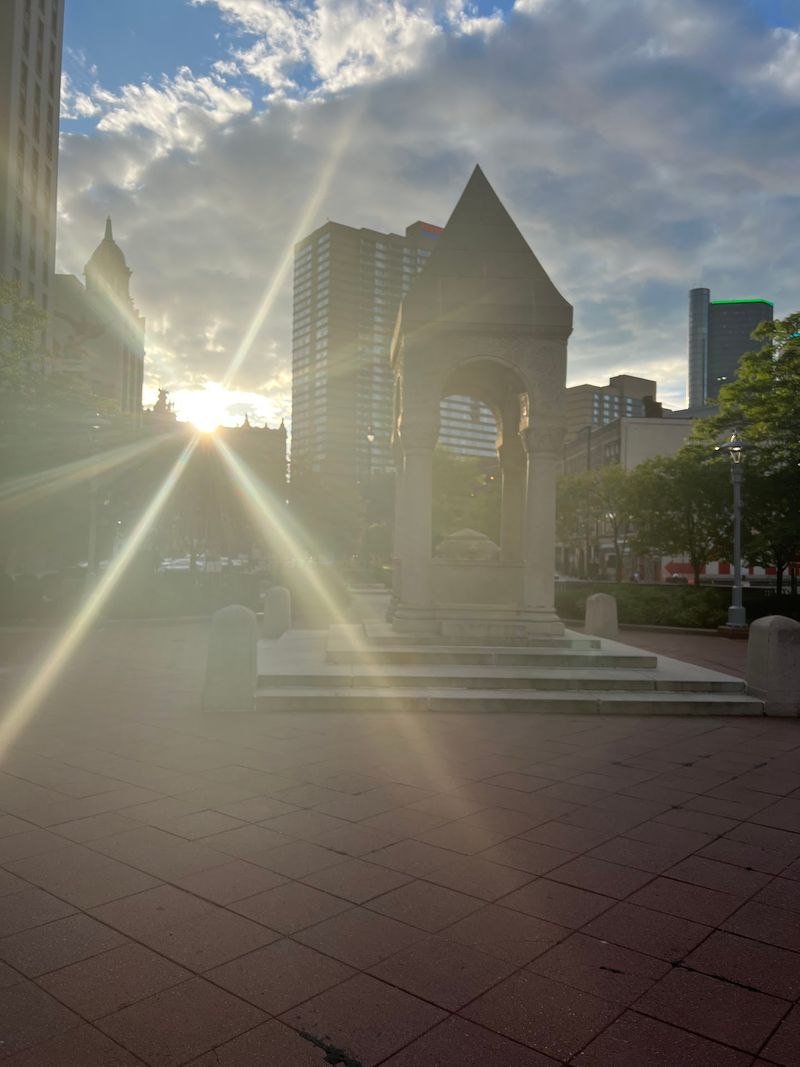
The result is the Bagley Memorial Fountain, completed in 1887. It was designed by Henry Hobson Richardson, a famous architect whose heavy stone style became known as Richardsonian Romanesque.
It’s believed to be the only Richardson work in Detroit. That makes it a rare treat for architecture fans.
The fountain has moved around downtown over the years. In 2017, it was relocated to the west end of Cadillac Square Park, where it stands today.
Take a minute to study the carved granite and arches. It was made to be useful first, which I think is a lovely reason for a monument to exist.
A fountain about kindness to strangers fits right in. The park around it is now all about bringing people together, especially around lunchtime.
Lunch Rolls In on Wheels
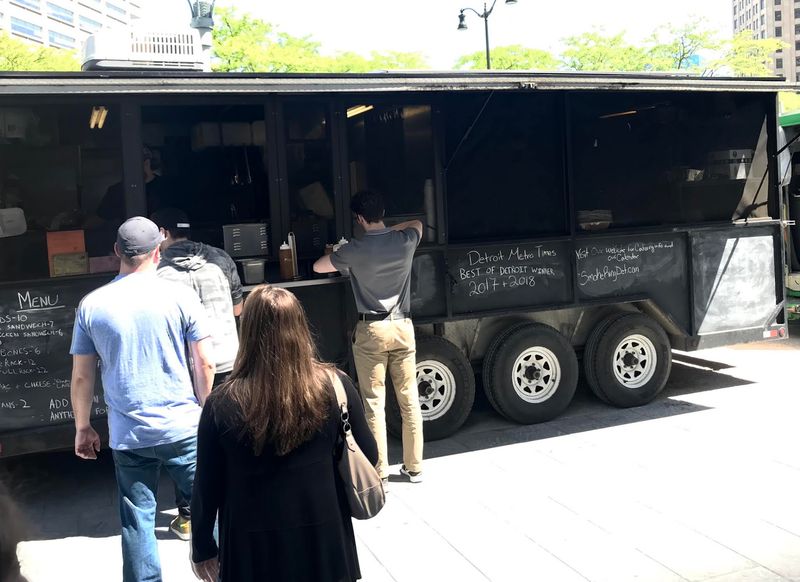
Hungry office workers have a favorite trick downtown. When the weather warms up, food trucks gather at Cadillac Square Park and turn it into an open-air food court.
The trucks rotate, so the lineup can change from day to day. That keeps things interesting if you work nearby and visit often.
Tables and seating spread across the plaza. You can grab a meal and sit under the sky instead of eating at your desk.
I’d plan a lunch break around this if I worked downtown. A short walk, a fresh meal, and a view of old buildings sounds like a good deal.
A smart tip is to come a little early. Lunch hour can get busy, and arriving before the rush gives you more choices and an easier time finding a seat.
Check the Downtown Detroit Partnership’s updates before you go, since schedules depend on season and weather. After you eat, you might want to burn off some energy, and the park has ideas for that too.
Games, Hoops, and Summer Fun
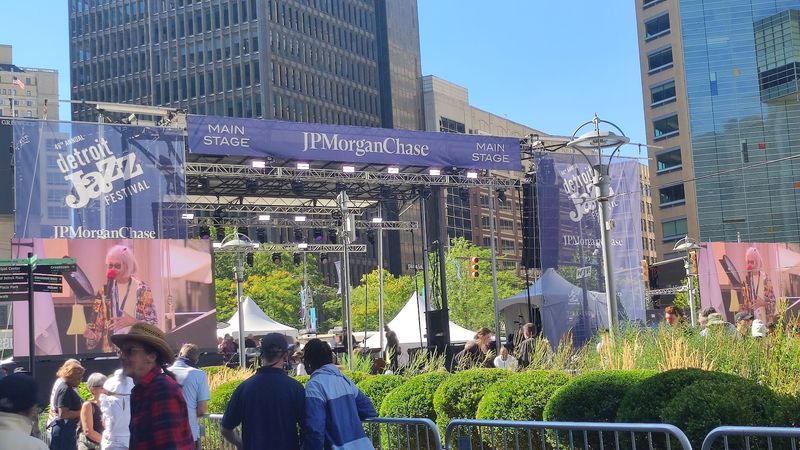
Basketball hoops in the middle of a downtown plaza might seem unusual. At Cadillac Square Park, a seasonal sports zone gives people a place to play right between the office towers.
Over the years, the warm-weather setup has included things like basketball, ping pong, and bean bag toss. Some summers have also brought live music to the space.
Activities can shift from year to year. It’s a good idea to look at current event listings so you know what’s set up before you arrive.
I like how these games invite total strangers to share a moment. Someone sinks a shot, someone else cheers, and suddenly the city feels a little smaller.
Families with kids can find easy fun here, too. Simple games don’t need much skill, and nobody has to buy a ticket to watch.
Summer brings sneakers and sunshine to the square. When the temperature drops, though, the park trades its game gear for something much cozier.
Winter Turns the Square Into a Village
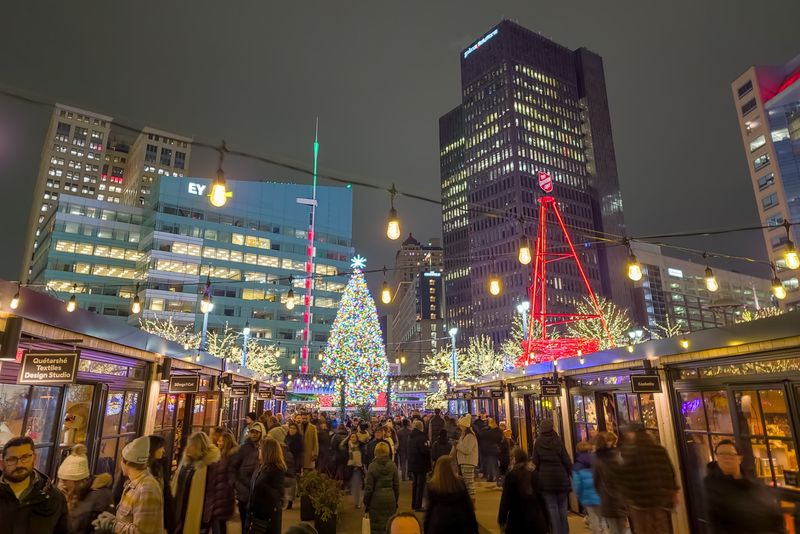
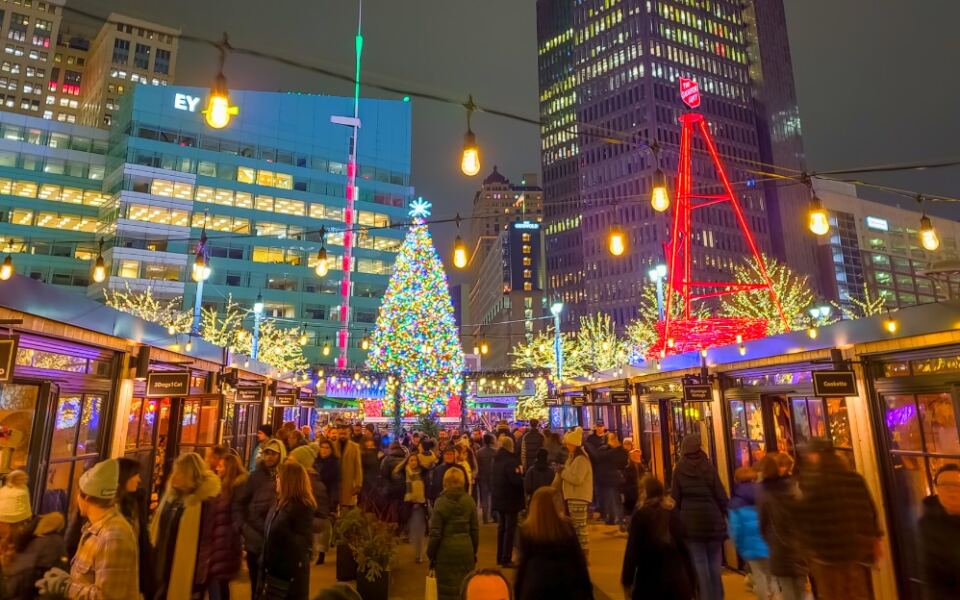
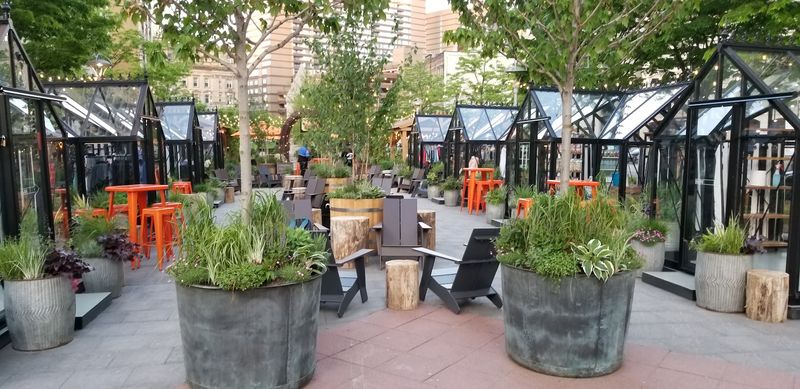
Little wooden cabins glowing with lights fill the square each holiday season. The Downtown Detroit Markets set up here with rows of small pop-up shops.
Many of the shops feature local makers and small businesses. The lineup changes from year to year, so returning visitors can find something new.
The decorations pull a lot of people in for photos, especially after dark. Nearby, the ice rink at Campus Martius Park adds even more winter fun just a short walk away.
Another seasonal feature is the Cadillac Lodge, a warm gathering space that has offered food and a place to come in from the cold. Exact vendors and features can change, so check before you go.
My advice is simple: dress warmly and bring patience on weekends. Shopping small in a festive outdoor setting is easier to enjoy when you aren’t rushing.
I like that the square once hosted a market and still does, just with ornaments instead of onions. Yet the park’s charm also shows up in quieter, everyday details.
Little Details Worth Slowing Down For
Quiet moments are easy to miss in a busy downtown. Cadillac Square Park offers a few, starting with its perennial gardens, a permanent feature that adds color to the plaza.
Look up and around, too. The Wayne County Building at the east end and Cadillac Tower nearby show off decades of Detroit architecture in one view.
Visiting during a calm weekday morning gives a totally different feel than a packed holiday evening. Both are fun, just in different ways.
Here’s a practical tip for planning. The park is listed as open from 6 a.m. to 10 p.m., and since it’s outdoors, the weather will shape your visit more than anything.
Combine it with Campus Martius Park next door for an easy downtown walk. You can see two public spaces with very different histories in just a few minutes.
I’d end any stop by standing near the Bagley fountain and picturing everything that once stood here. Courthouse, market, skyscraper, and now a park where anyone can sit and simply enjoy being in Detroit.
Share this story