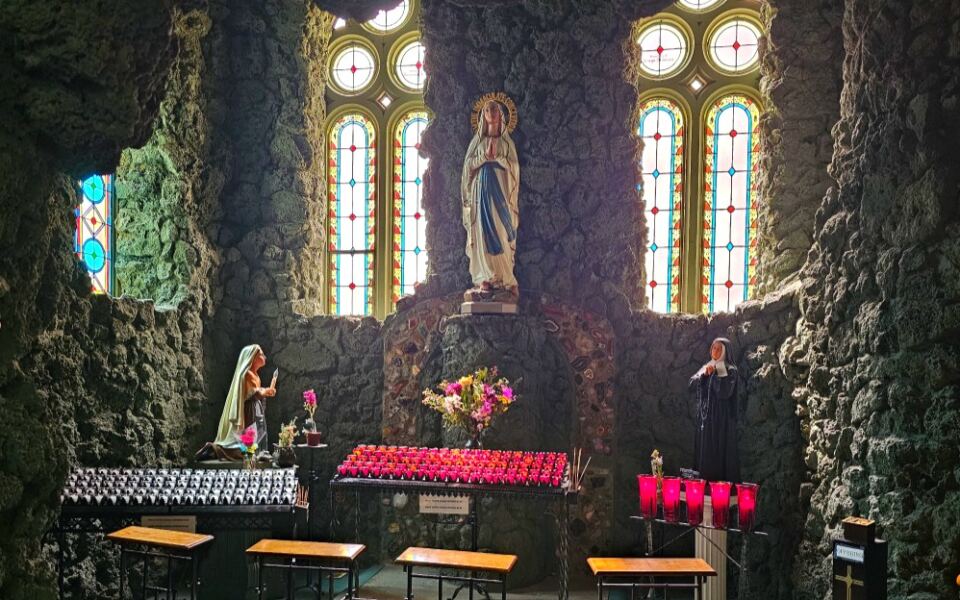
From the streets of Detroit’s Greektown, Old St. Mary’s looks like a grand 19th-century red-brick church. Step inside, however, and three rocky grottos reveal one of the building’s most unexpected features.
The best-known is a replica of the Shrine of Lourdes, created under Father Joseph Wuest in the early 20th century. Local tradition holds that he brought stones back from Lourdes, France, although the exact origins of the individual rocks are difficult to document.
The grotto is more than decoration, since Mass is still celebrated there.
Two additional grottos add to the surprise. The baptistry depicts the Baptism of Jesus, while another represents the Garden of Gethsemane.
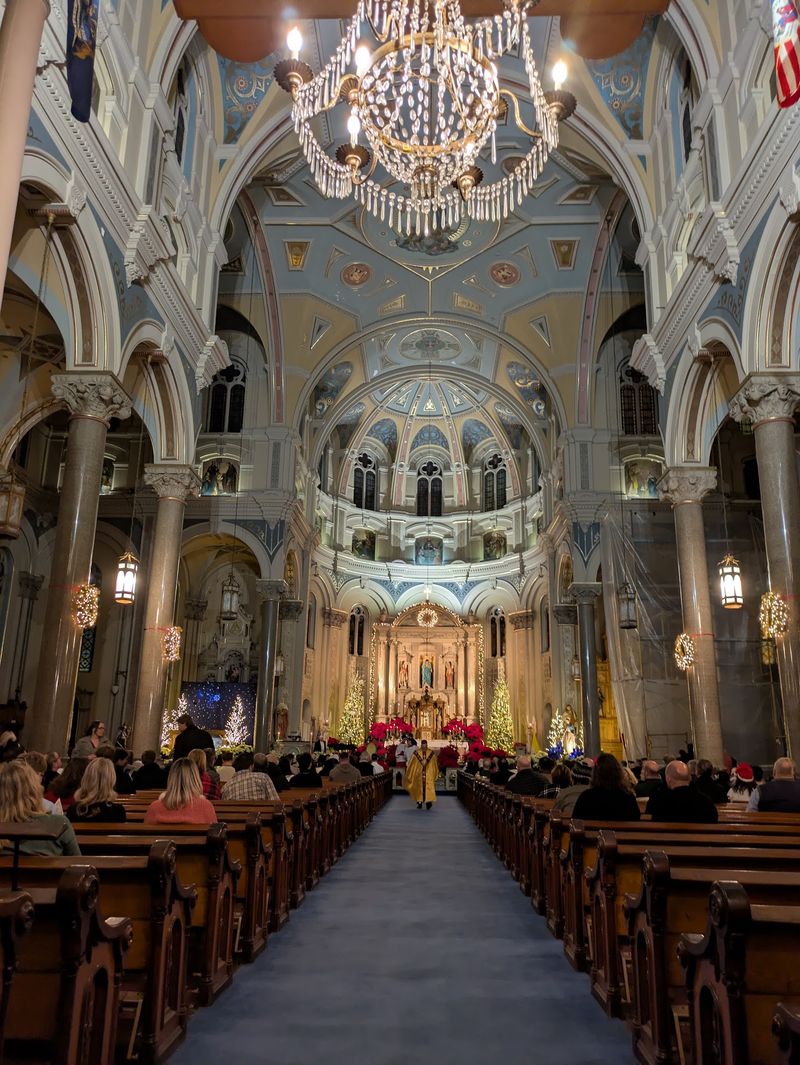
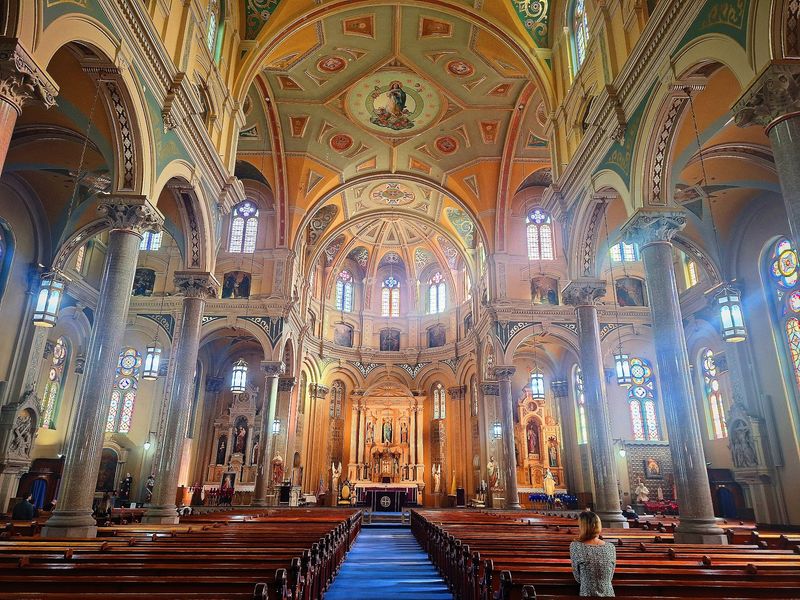
Then there is the church itself. Completed in 1885, Old St. Mary’s rises around ten enormous polished granite columns, each cut from a single piece of stone, along with historic stained glass, a towering nave, and an elaborate high altar.
All of it sits at 646 Monroe Street, just steps from the restaurants and shops of Greektown.
A Red-Brick Surprise Hiding in Plain Sight
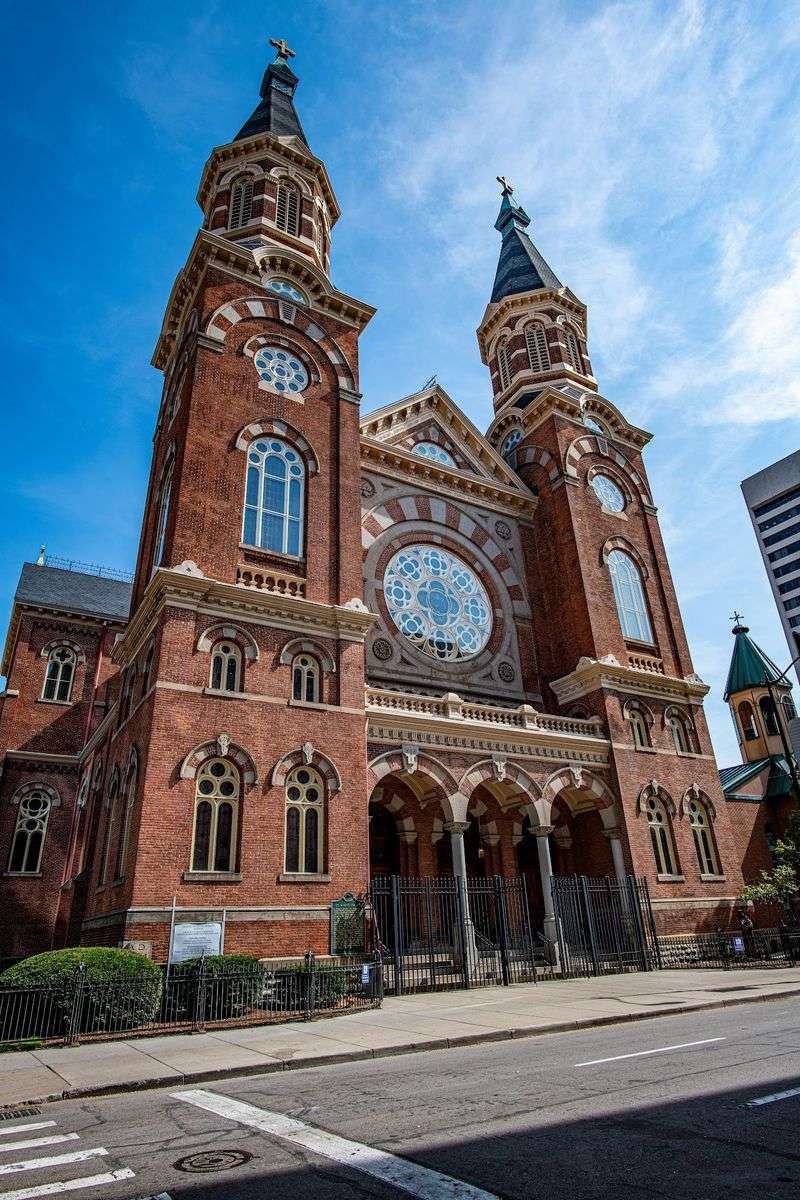
Greektown smells like fresh bread and grilled food, so a church was the last thing I expected to steal my afternoon. Old St. Mary’s Catholic Church sits at 646 Monroe Street, Detroit, Michigan 48226, right in the Greektown Historic District.
Its formal name is a mouthful: the Church of the Immaculate Conception of the Blessed Virgin Mary. Locals simply call it Old St. Mary’s, partly to tell it apart from other parishes with the same name.
From the sidewalk, I saw red brick, pale limestone trim, and two tall towers framing a big round rose window. It looked grand, but it did not look secretive.
That is the fun trick here. Nothing about the front hints at the rocky grottos waiting inside.
The church sits a few steps from restaurants, shops, and the lively blocks of downtown, so I wandered over on foot. I suggest you do the same and look up at those towers for a minute before heading in.
Of course, a building this old has a backstory, and it starts with a single dollar.
How One Dollar Bought a Parish Its Start
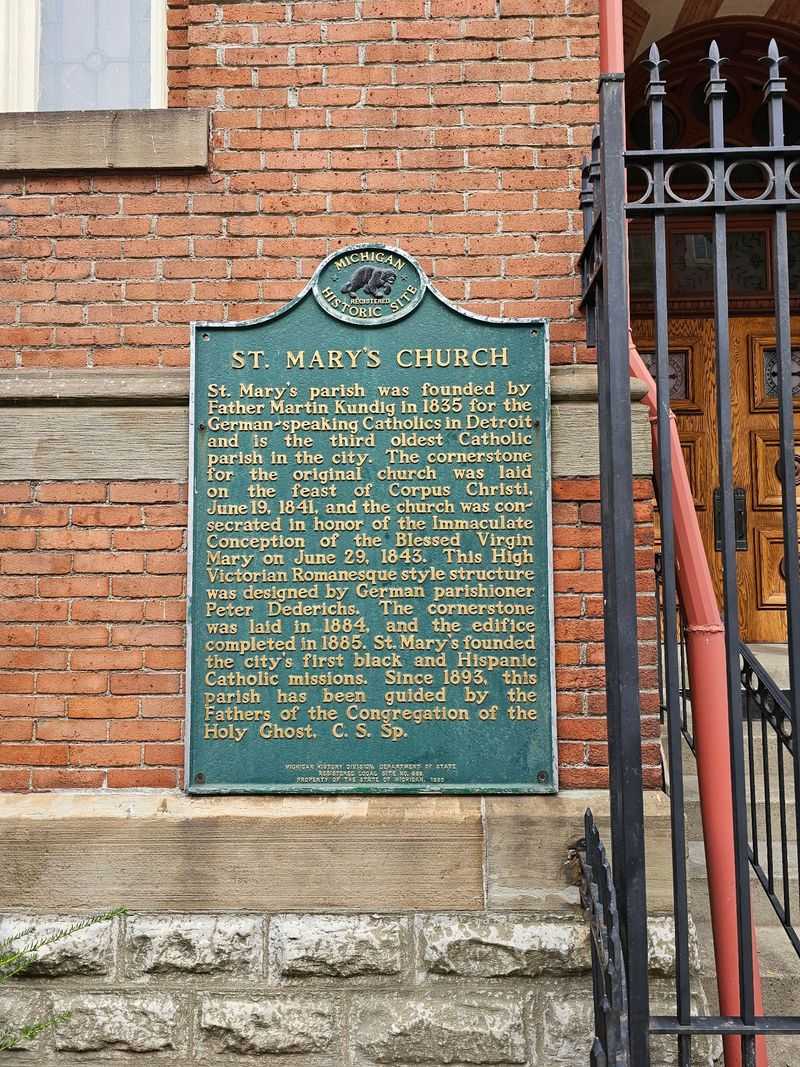
Back in 1834, Detroit was growing fast. The Erie Canal had opened in 1825, and new families poured into the city looking for work and a fresh start.
Many of them spoke German. Father Martin Kundig saw that these newcomers needed a parish where their language and traditions could feel at home.
Here comes my favorite detail. The Beaubien family, early French settlers, gave the land at the corner of St. Antoine and Croghan Streets for just one dollar.
Croghan Street later became Monroe Street, which is why the address looks different today. The first St. Mary’s church went up there in 1841 and was consecrated in 1843.
That first building served the German Catholic community for more than four decades. It made Old St. Mary’s the third-oldest Catholic parish in Detroit.
Knowing this made the bricks outside feel a lot more personal to me. I pictured families walking here on Sunday mornings long before cars filled the streets.
Eventually, the crowds outgrew that first church, and a parishioner with an architect’s pencil stepped up to help.
The Parishioner Who Drew a Masterpiece
Peter Dederichs did not just design this church. He prayed in it too.
The German-born architect was a member of the parish, and he planned the current building after the congregation packed the old pews too tightly. The cornerstone was laid in 1884, and the church was finished in 1885.
Dederichs chose a Pisan Romanesque style with Venetian touches. Critics later called it an exuberant creation, and honestly, I agree with them.
The building follows a Latin Cross plan, which gives it plenty of room inside. Look for the arches, the stone trim, and the rose window tucked between the twin towers on the west side.
I spent a while just walking along the outside. The brickwork has little patterns and shapes that are easy to miss if you rush past.
My advice is simple: bring a phone with a decent zoom. The upper details look even better up close.
Still, the outside is only the opening act. The real secret sits beside the baptistry, and it looks like a piece of France.
A Slice of Lourdes Right in Michigan
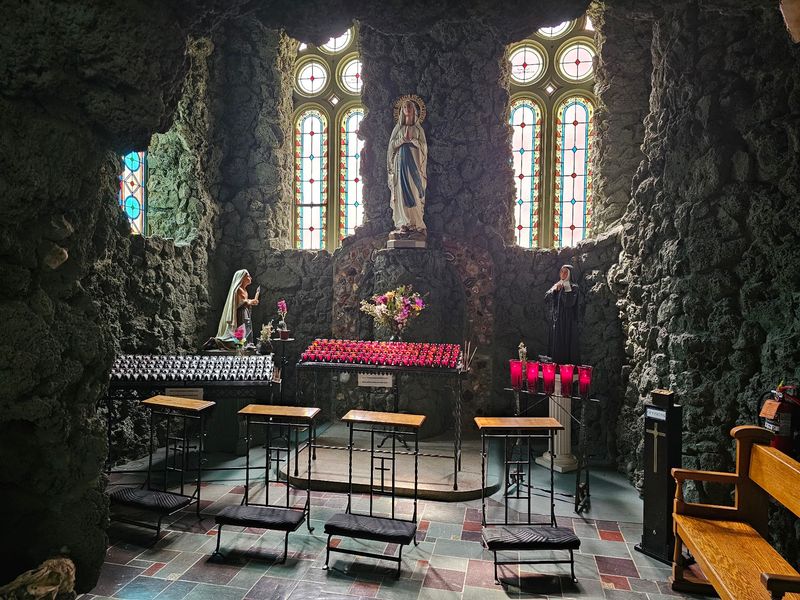
A rock cave inside a church sounds like a dream I made up, but it is real. The replica of the Shrine of Lourdes sits right next to the baptistry, and it stopped me in my tracks.
Father Joseph Wuest, a pastor in the early twentieth century, brought the grottos to life. Local legend says he gathered rocks himself during a trip to Lourdes, France.
I cannot prove which stones came from where, but the story makes the space feel special. The rough rock walls feel nothing like the smooth columns nearby.
Here is the part that surprised me most. This grotto is not just for looking at, since weekly Masses take place inside it.
When I visited, people sat quietly and prayed, so I kept my voice low. If you want photos, wait until the area is empty and skip the flash.
The grotto shows real care in every corner. It lets people in Detroit feel close to Lourdes without buying a plane ticket.
And yes, there are two more grottos left to find.
Two More Grottos With Stories to Tell
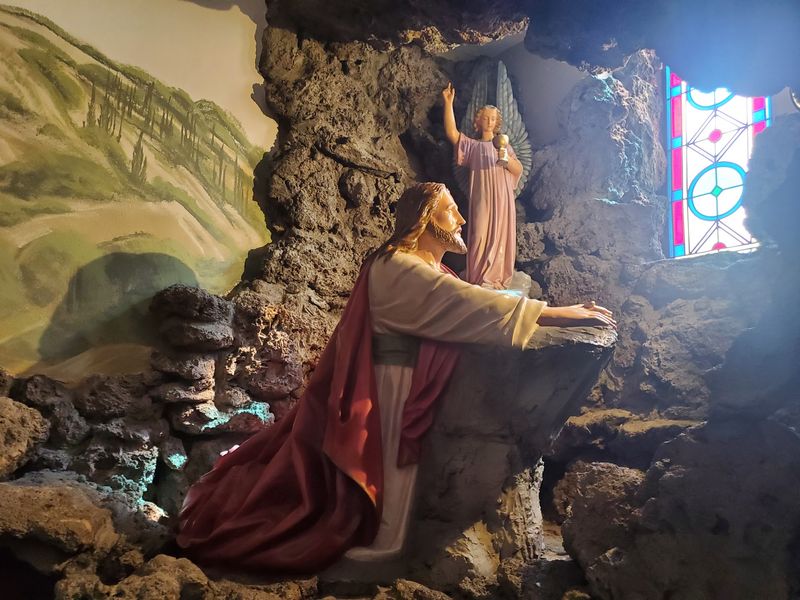
Three grottos in one church felt like a scavenger hunt, and I loved every step. After Lourdes, I went looking for the other two.
On the Epistle side, the baptistry is built as a grotto. It shows the Baptism of Jesus, a fitting scene for the place where new members of the faith begin their journey.
On the opposite side, the third grotto shows the Garden of Gethsemane. It captures Jesus praying on the night before his crucifixion, and the mood there feels hushed and serious.
The stone design with Mary on one side and Jesus on the other gives the church a nice balance. I found myself walking back and forth to compare them.
Some of this work has been restored in recent years. Two of the three grottos are already finished, and the parish plans to complete the third.
Take your time in each one. They are small, so a slow look shows you details that a quick glance misses.
Once I finally looked up from the grottos, the ceiling nearly knocked my socks off.
Ten Columns and One Tall Tale
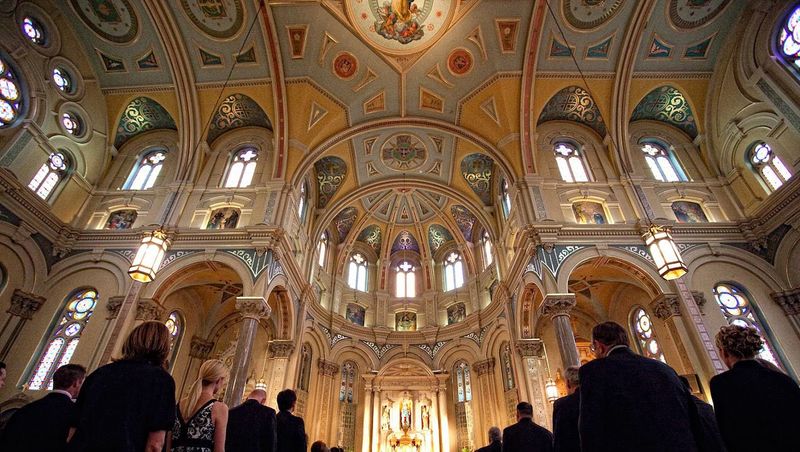
Ninety feet. That is how high the nave rises, and it is 80 feet wide, so my neck got a real workout.
Ten polished granite columns split the main aisle from the side aisles. Each one is cut from a single huge piece of stone.
Now for the local lore. A popular tale says these columns were first meant for the Michigan State Capitol in Lansing.
Whether that is fully true or not, it is a great story to share while you stand next to one. I may have patted a column like an old friend.
The high altar dates to 1885 and shows important saints on its back panel. Two smaller wooden altars sit on either side.
Stained glass windows from The Detroit Stained Glass Works also date to 1885. On a sunny day, colored light drifts across the marble arches and paintings.
Plan to visit around midday for the best glow. Sit in a pew for a few minutes and just let your eyes wander.
Equally striking, though, are the old traditions still happening up front.
Old-School Traditions That Still Ring True
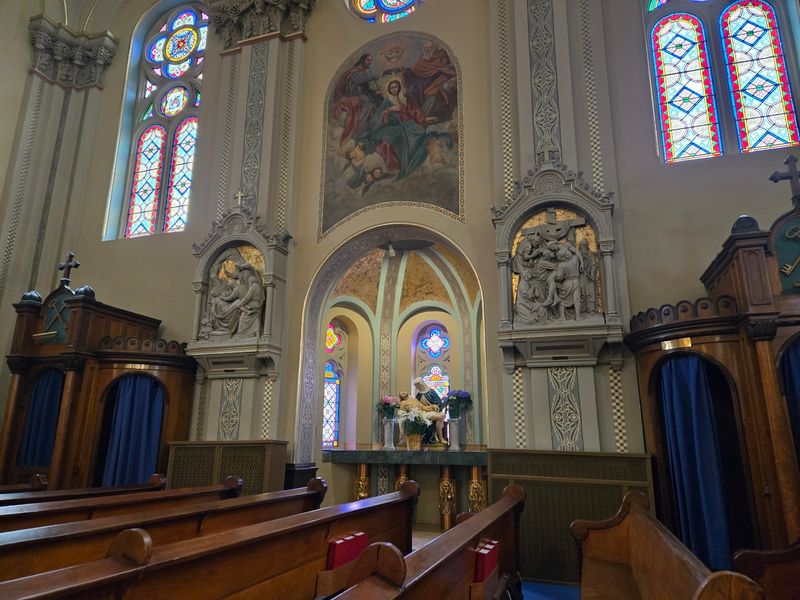
Some churches have modernized everything. Old St. Mary’s kept a few cherished habits, and visitors notice right away.
Communion is still given at a traditional communion rail. Many people tell me they had not seen one in use for years.
The old wooden confessionals are still used too. They have that rich, dark wood that looks carefully polished over many decades.
Then there is the music. A real pipe organ fills the space, and the choir sings with a clear, pure sound that drifts up into those tall arches.
I caught part of a service and felt goosebumps during the entrance chant. You do not need to know the words to enjoy the sound.
Christmas midnight Mass here has a strong reputation, so expect a crowd. Arrive early if you want a good seat.
A friendly tip from me: if you come to look around, stay respectful during worship. Sit in the back, silence your phone, and simply listen.
Those traditions are kept alive by a group with a long history of their own here.
Caretakers With a Century-Long Track Record
Since 1893, one religious community has guided this parish. They are the Spiritans, also known as the Congregation of the Holy Spirit or the Holy Ghost Fathers.
That is well over a century of steady care. It is the second-longest run by a religious community at any parish in the Archdiocese of Detroit.
Thirteen Spiritan pastors have led the parish over the years. Father Wayne Epperly was pastor as of 2018.
Why does this matter to a visitor like me? Long leadership often means a parish keeps its character, and you can feel that here.
The services felt calm and thoughtful. Priests at the daily Masses keep the liturgy solemn, which suits a building this beautiful.
The Spiritans have also changed with the city. They kept old traditions while making the church a welcoming place for new faces.
If you have questions, the parish office is the best contact. Their phone number is 313-961-8711.
Of course, the church itself is only one piece of the property, and the neighbors are quite historic too.
A Campus Older Than the Church Itself
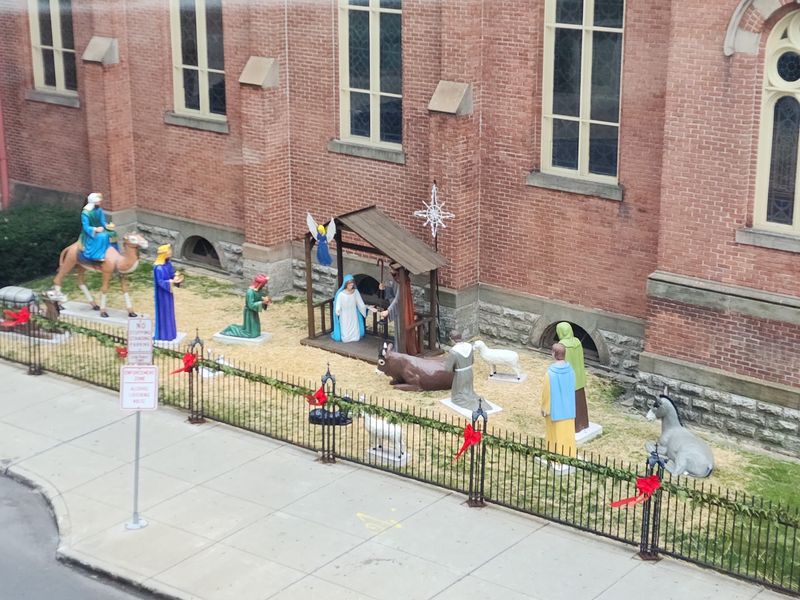
Funny enough, the neighbors are older than the church. Both the rectory and the school were built before the current church went up in 1885.
The rectory came first in 1876. Architect Julian Hess designed it, and he worked on several big Detroit buildings of that era.
It is a grand building for a parish house. It served as home and office for priests across many generations.
Across the street stands the parish school, built in 1868 and designed by Pius Daubner. It is believed to be the oldest surviving school building in Michigan.
Thousands of kids learned their lessons inside those walls. Today the building is leased to Rock Ventures, so it still has a job downtown.
I liked walking around the block to see all three buildings together. It gave me a clearer picture of how the German community built a whole neighborhood life here.
Bring comfortable shoes and give yourself ten extra minutes. The short loop is worth it.
The people who fill these pews today tell a whole new story, though.
Lunch Break Mass and a Very Mixed Crowd
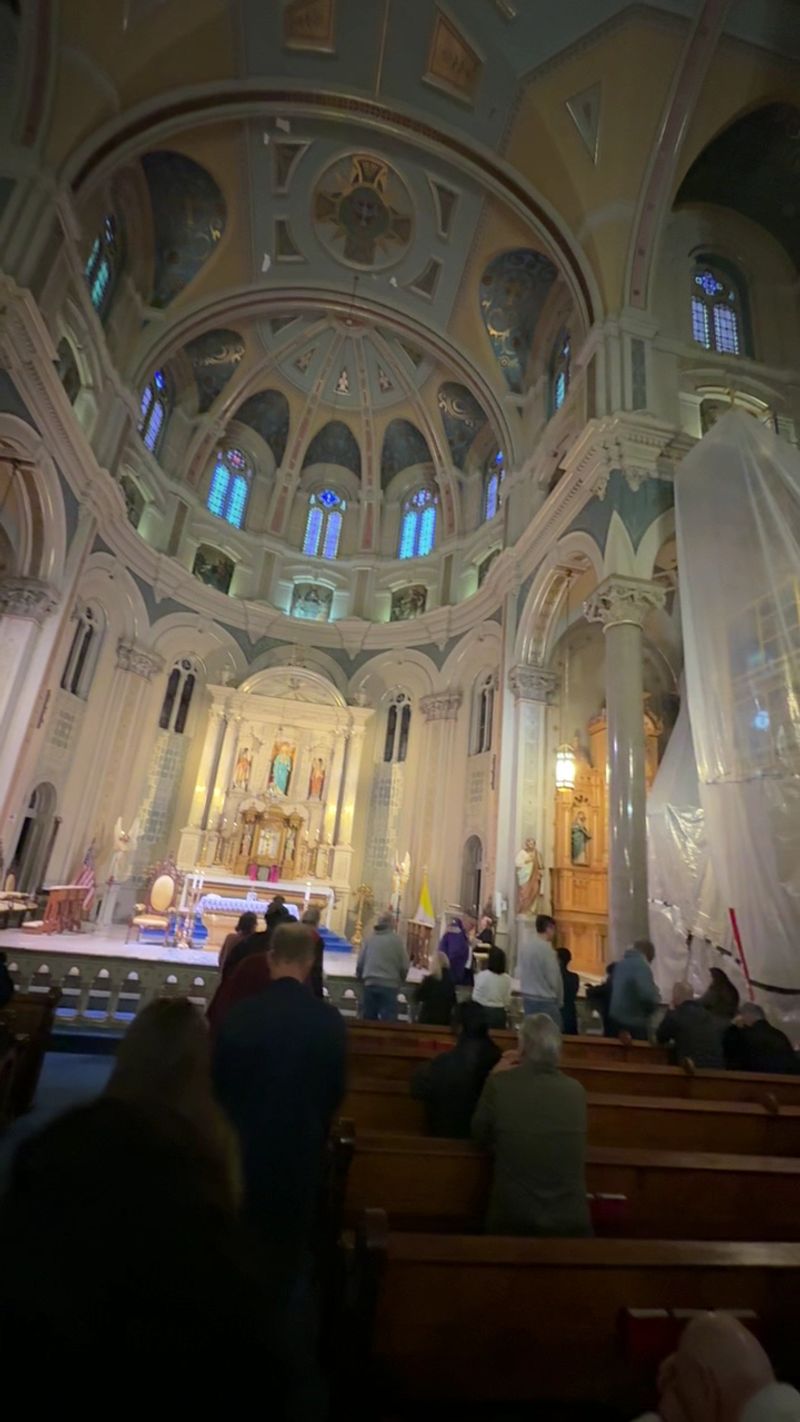
At 12:15 sharp on weekdays, downtown workers slip away from their desks and head here. This short workers Mass usually ends by 12:55.
Doctors, lawyers, and judges have all been known to attend. It is a peaceful break in the middle of a busy day.
The crowd is wonderfully mixed. Families with African American, white, Indian, Asian, Filipino, and Hispanic roots worship side by side.
Some parishioners drive up to 60 miles to attend. That says plenty about how much people care for this place.
The church also hosts Michigan’s oldest Knights of Columbus council, Council No. 305. Their charity work adds to the parish’s role in the community.
When I attended, people smiled, nodded, and made room in the pew. I felt welcome, even as a first-timer.
One note for sightseers: Fridays bring Eucharistic adoration after the noon Mass. Many people stay for about an hour, so photos are tricky then.
Behind all this daily life, there is also a lot of hard work keeping the building strong.
Your Game Plan for a Perfect Visit
Timing is everything here, so check the hours before you go. The doors usually open Monday through Friday from 11 a.m. to 2:30 p.m.
Saturday hours run from 11 a.m. to 6:30 p.m., and Sunday runs from 8 a.m. to 2 p.m. Hours can shift, so a quick call to 313-961-8711 helps.
Guided tours can be arranged by contacting the parish office. Tour groups often get a helpful presenter who shares great stories.
Parking is free during weekend Masses and special events. Security is on hand, which gave me extra peace of mind.
Walking from nearby downtown spots is easy too. Greektown is right across the street, so you can grab lunch before or after.
My best advice is to give yourself at least 45 minutes. You will want time for all three grottos, the columns, and the altar.
Leaving felt like stepping out of a quiet story and back into the city’s busy hum. Those red-brick walls keep their secrets well, but now you know exactly where to look.
Share this story