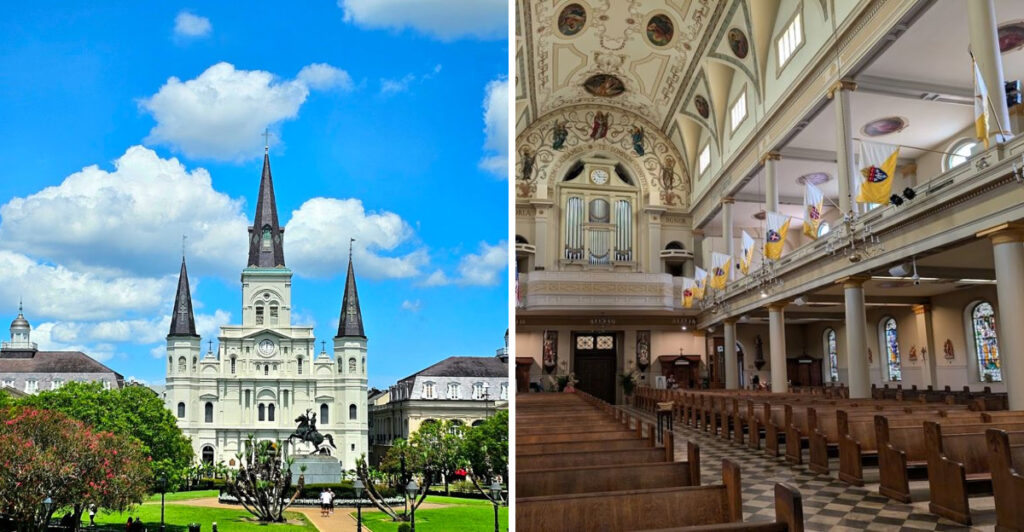
There is a church in the heart of New Orleans where the bells have been ringing since before the United States was even a country. It has survived hurricanes, fires, and the passage of centuries, yet it still holds Sunday Mass just as it always has.
The painted ceiling glows overhead, the stained glass filters afternoon light into colors you cannot quite name, and the air inside feels completely separate from the buzzing street life just outside the doors. St. Louis Cathedral is one of those places that makes you stop and actually pay attention.
America’s Oldest Continuously Active Catholic Cathedral
Some buildings hold records. This one holds something rarer: an unbroken chain of worship stretching back to 1718.
St. Louis Cathedral in New Orleans, Louisiana, located at 615 Pere Antoine Alley, New Orleans, LA 70116, is recognized as the oldest continuously active Catholic cathedral community in the United States.
That is not a title earned by sitting quietly. The congregation has worshipped on this same plot of land through colonial rule, fires, hurricanes, and wars.
The current structure is actually the third cathedral built on this site, completed in its present form in 1851.
Most visitors arrive expecting a pretty church. What they find instead is a living institution that has never once closed its doors to the faithful.
That kind of staying power is genuinely rare, and it gives every visit a weight that goes well beyond admiring the architecture.
The Three Spires That Define the New Orleans Skyline
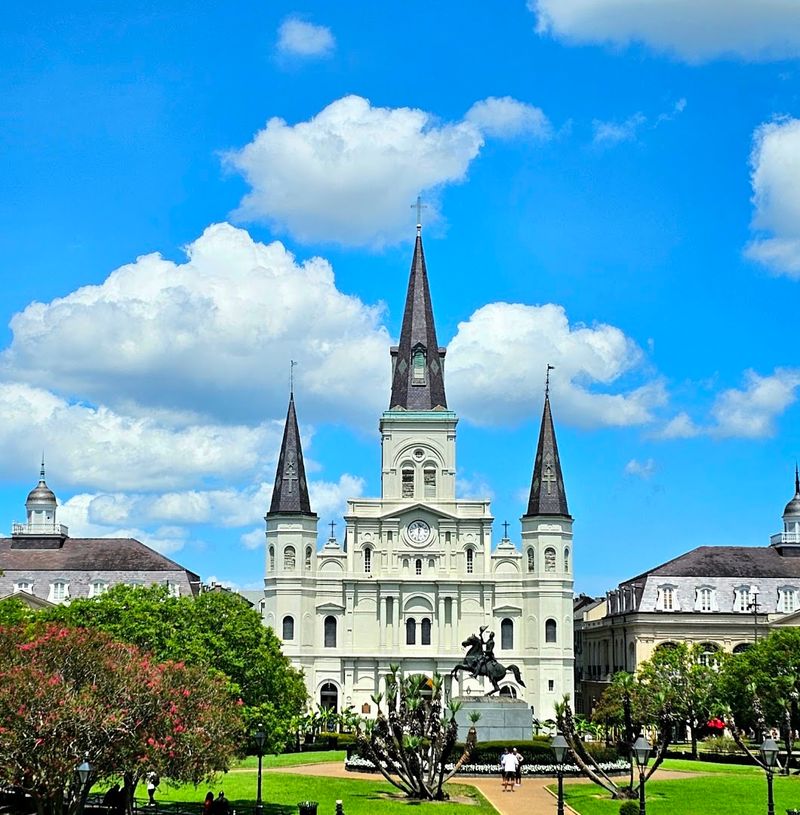
Few city skylines have a single image as instantly recognizable as the three white spires of St. Louis Cathedral rising above Jackson Square. The central spire climbs the highest, flanked by two slightly shorter towers on either side, creating a silhouette that has appeared in paintings, photographs, and postcards for well over a century.
That three-spire design was part of the 1850 renovation led by architect J.N.B. de Pouilly, who transformed the earlier structure into the striking Spanish Colonial and French Baroque blend visitors see today. The spires are not just decorative.
Each tower houses a bell, and together they fill the French Quarter with sound during services and celebrations.
Standing in Jackson Square and looking up at those three peaks, you get a clear sense of why this cathedral has served as the spiritual and visual anchor of New Orleans for so long.
The Painted Ceiling That Stops Visitors Cold
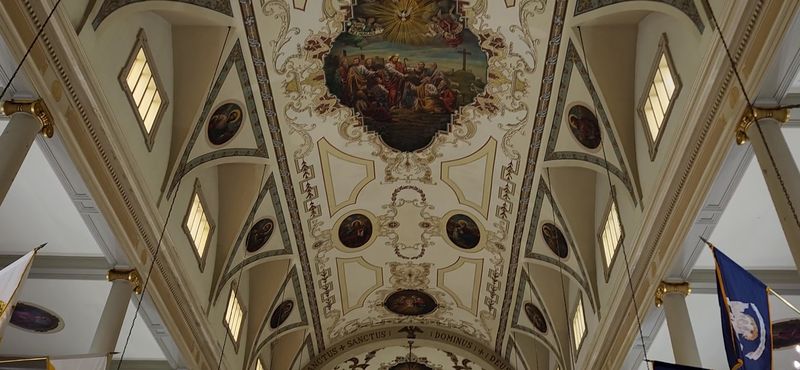
Most people walk through the front doors expecting stained glass. The ceiling is what actually stops them.
The interior of St. Louis Cathedral features a richly painted ceiling covered in detailed religious murals, rendered in deep blues, warm golds, and earthy reds that seem to glow even on overcast days.
The murals depict scenes from the life of King Louis IX of France, the cathedral’s namesake, along with other religious imagery that fills nearly every inch of the vaulted ceiling overhead. Artists worked carefully to create a visual narrative that draws the eye upward and keeps it there.
First-time visitors often spend several minutes simply standing still and looking up, which is exactly what the space was designed to encourage. The ceiling alone justifies the walk through the front doors, and it is the detail most visitors mention long after leaving New Orleans.
Stained Glass Windows Worth Reading Before You See Them
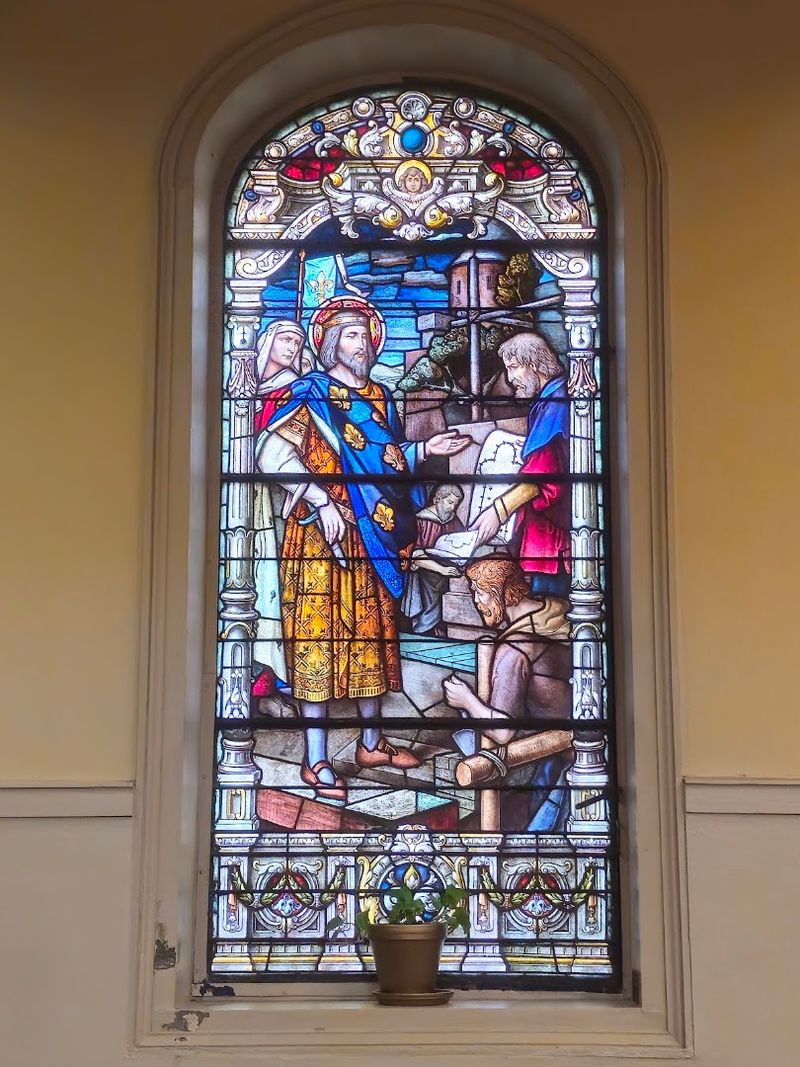
One visitor tip that genuinely improves the experience: read a quick summary of Saint Louis IX before walking inside. The stained glass windows throughout the cathedral feature King Louis IX of France prominently, and knowing his story transforms the windows from beautiful decorations into something you can actually follow.
Louis IX was a 13th-century French king known for his deep Catholic faith, his charitable works, and his role in the Crusades. He was canonized as a saint in 1297, and the cathedral named in his honor portrays key moments from his life in vivid colored glass that catches the light beautifully throughout the day.
The afternoon hours tend to produce the most dramatic light effects, when the sun angles through the south-facing windows and throws pools of color across the stone floor. Arriving around midday gives you the best chance of seeing this effect at its fullest.
Jackson Square and the Living Neighborhood Around the Cathedral
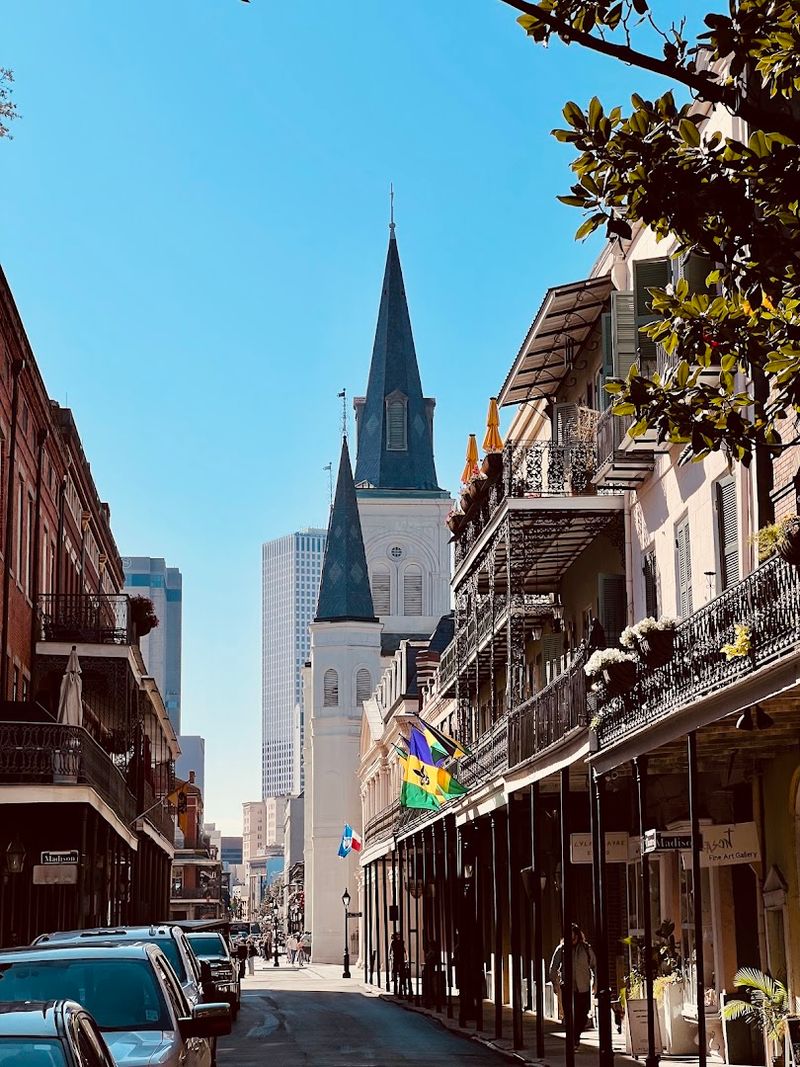
The world just outside the cathedral doors operates at a completely different speed than the world inside. Jackson Square, the open plaza directly in front of St. Louis Cathedral, fills daily with street performers, portrait artists, tarot readers, and tourists moving in every direction at once.
That contrast is part of what makes a visit here so memorable. You step out of the quiet, candlelit interior and immediately back into the full energy of the French Quarter, which somehow makes the calm you just experienced feel even more valuable.
The square itself has historical depth as well. It was originally called the Place d’Armes and served as a military parade ground during the French colonial period.
The iron fence surrounding the square, the equestrian statue of Andrew Jackson at its center, and the cathedral rising behind it all create one of the most photographed scenes in the American South.
Three Centuries of History on a Single Plot of Land
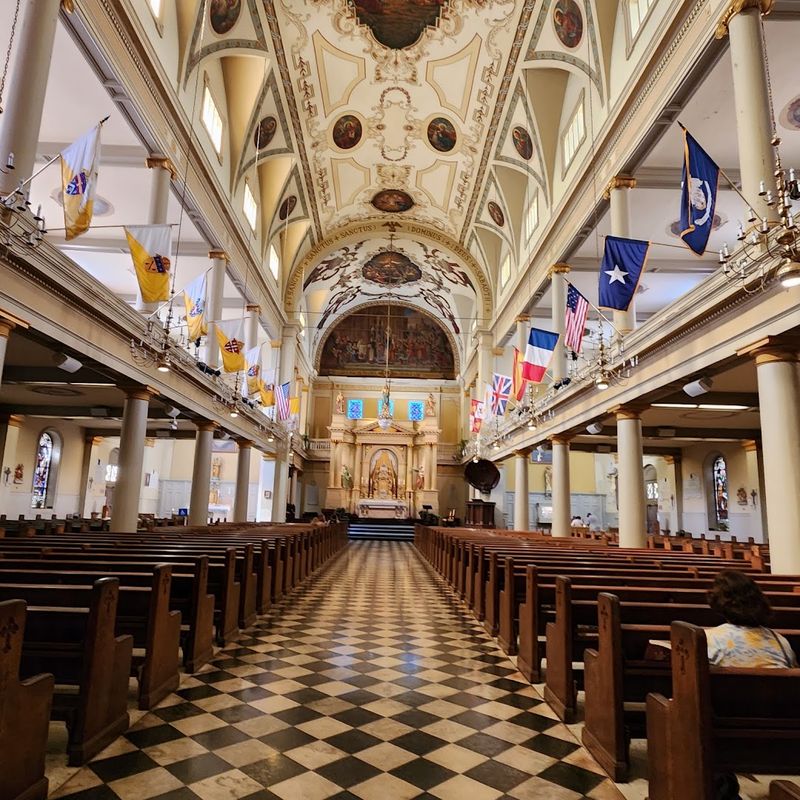
The story of this site begins in 1718, when New Orleans was founded and a church was established almost immediately on this same ground. That first structure was a simple wooden building, nothing like what stands here today, but it marked the beginning of an uninterrupted religious presence that has now lasted more than three centuries.
A hurricane destroyed the first church in 1722. A fire took the second structure in 1788 during the Good Friday Fire that burned much of the French Quarter.
The current cathedral rose from those ashes, rebuilt with Spanish colonial funding and eventually renovated into its present form by the mid-1800s.
Each rebuilding added layers of history rather than erasing them. The congregation never left, the site never changed, and the mission never wavered.
That continuity across so many upheavals gives the cathedral a sense of permanence that newer landmarks simply cannot replicate.
The Peaceful Interior as a Quiet Escape from the French Quarter
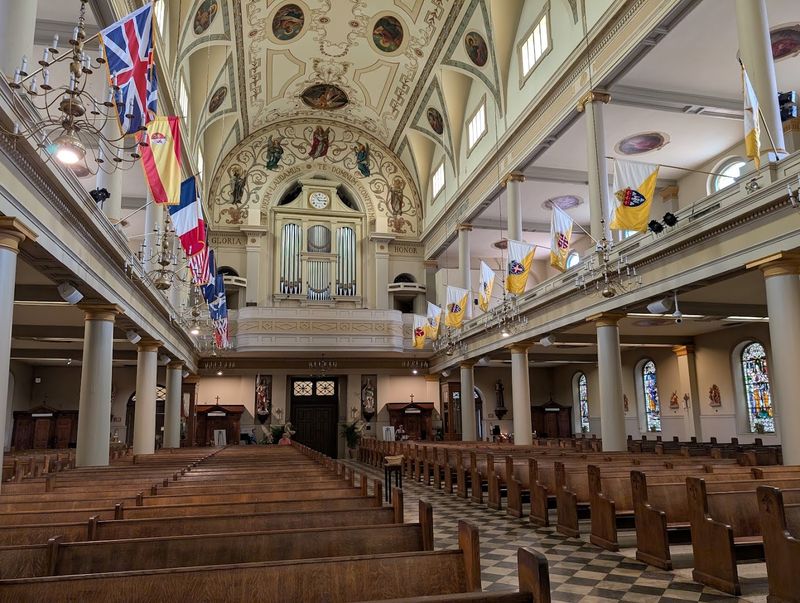
New Orleans is a city that rarely pauses. The French Quarter in particular moves at an intensity that can feel overwhelming after a few hours of walking.
The interior of St. Louis Cathedral operates as a genuine counterweight to all of that.
Once inside, the noise from the street disappears almost completely. The thick stone walls absorb sound, the lighting is soft, and the scale of the space creates a natural hush that visitors tend to honor without being asked.
People speak quietly, move slowly, and spend more time simply sitting than they probably expected to.
Candles burn near the side altars, and the scent of incense lingers lightly in the air. Weekday mornings are particularly calm, with fewer crowds and more open space to move around and take in the details at your own pace.
It is the kind of stillness that stays with you after you leave.
Active Masses and an Engaged Congregation Still Going Strong
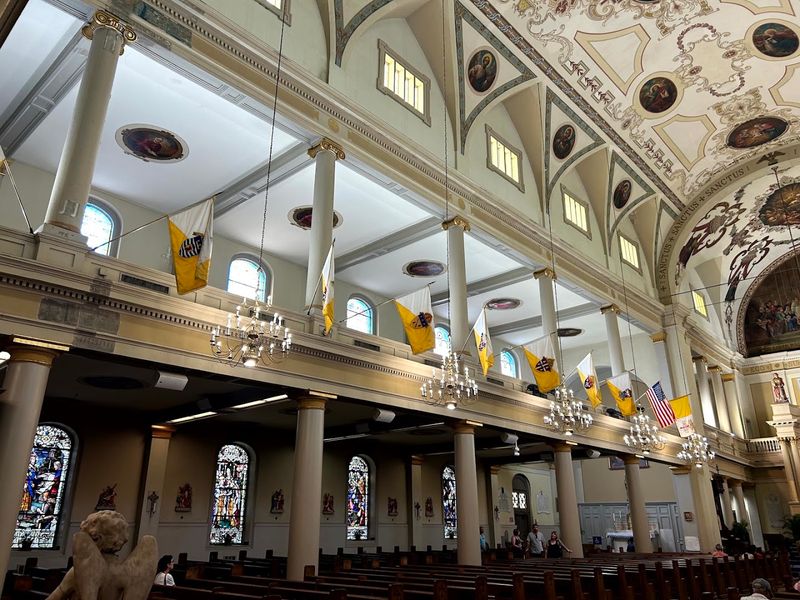
This is not a museum that happens to look like a church. St. Louis Cathedral holds regular Masses throughout the week and draws an active congregation that has been gathering here for generations.
That ongoing religious life is central to what makes the cathedral feel different from other historic landmarks.
Visitors are welcome to attend Mass, and many do. The experience of hearing the choir in that acoustically rich space is something visitors consistently describe as unexpectedly moving, regardless of their personal faith background.
Sound behaves beautifully inside those walls.
One practical note worth keeping in mind: the cathedral closes to general visitors during Mass, so checking the schedule before you arrive will save you a wasted trip. The website at stlouiscathedral.org lists current service times.
Arriving outside of Mass hours allows you to explore the interior freely and respectfully at your own pace.
The Illuminated Bible and Sacred Artifacts Inside
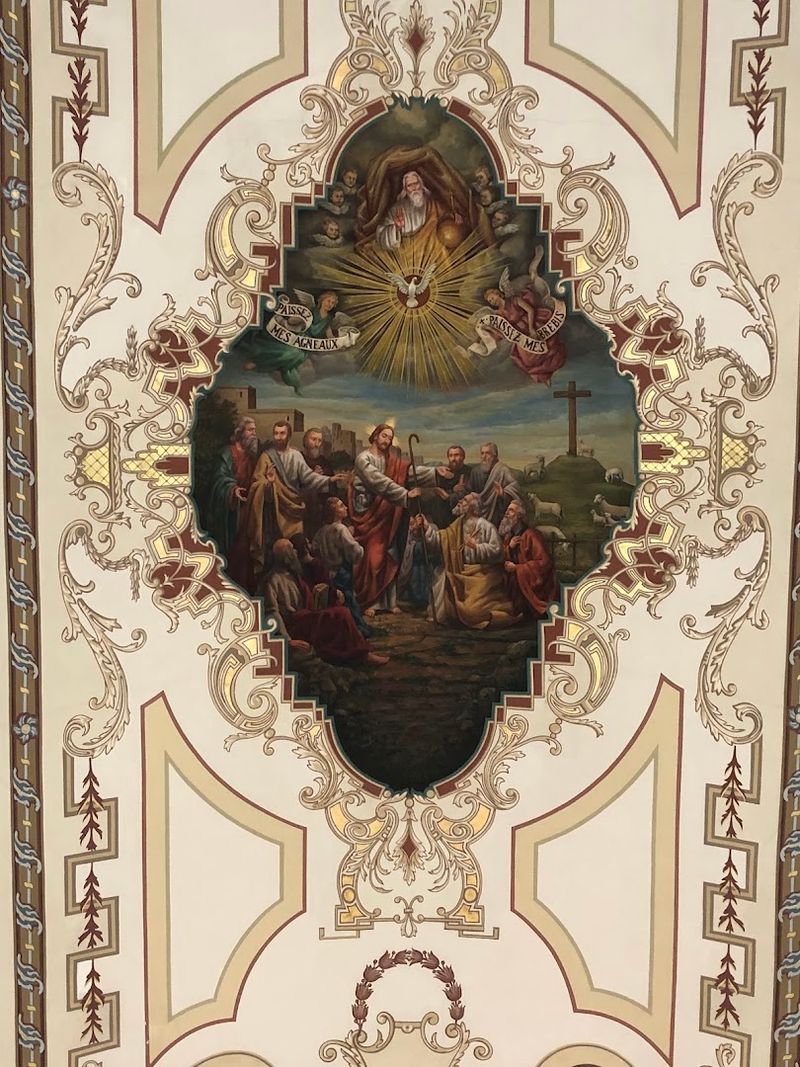
Beyond the architecture, the interior of St. Louis Cathedral holds a collection of sacred art and artifacts that reward slow, careful looking. Among the items visitors often stop to examine is a copy of an illuminated Bible, the kind of manuscript that connects the modern visitor to centuries of religious tradition in a very tangible way.
Illuminated manuscripts were painstakingly created by hand, with decorative borders, gilded lettering, and miniature illustrations filling the margins. Seeing one up close, even a reproduction, gives you an immediate appreciation for the devotion that went into both the text and its decoration.
The cathedral also features a range of sacred artwork throughout the nave and side chapels, including paintings, sculptures, and decorative elements that span several artistic periods. Each piece was chosen to serve the space spiritually as well as visually, and the overall collection feels cohesive rather than crowded.
Architecture That Blends Spanish, French, and American Influences
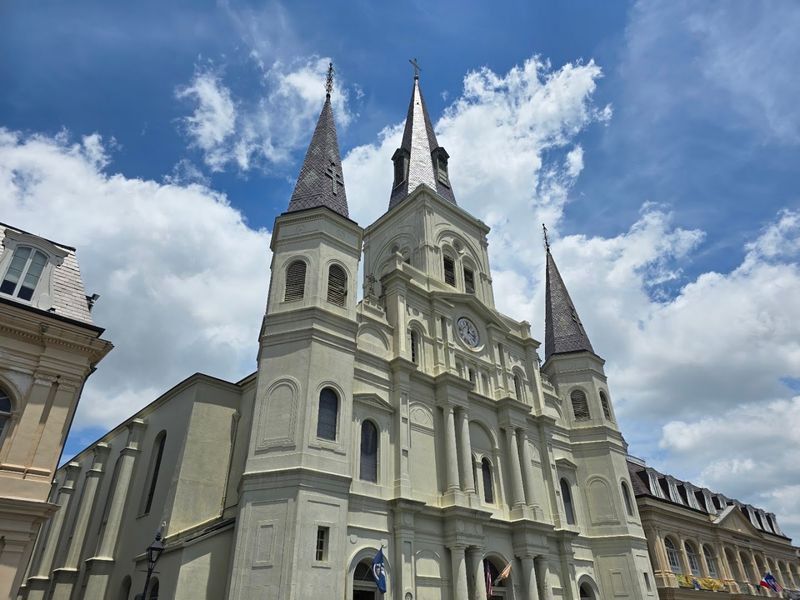
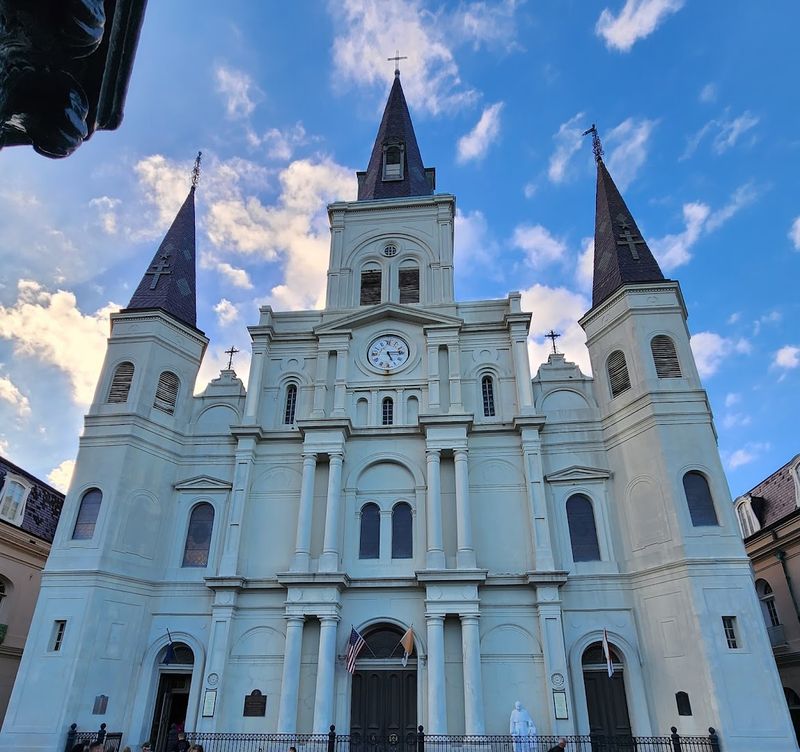
The architectural story of St. Louis Cathedral is really the story of New Orleans itself: a layering of Spanish, French, and American influences that produced something uniquely its own. The current facade is bright white stucco with symmetrical towers and arched openings that reflect both Spanish Colonial and French Baroque design principles.
Architect J.N.B. de Pouilly oversaw the major 1850 renovation that gave the cathedral much of its current appearance, enlarging and refining the earlier structure into the grand building visitors see today. The proportions feel both monumental and welcoming, which is a difficult balance to achieve in any building.
Up close, the details reward attention. The ironwork, the carved stone elements, and the layering of decorative features across the facade tell the story of multiple hands and multiple eras contributing to a single continuous structure.
It is the kind of building that looks different every time you approach it from a new angle.
The Gift Shop and Bookstore at the Cathedral Entrance
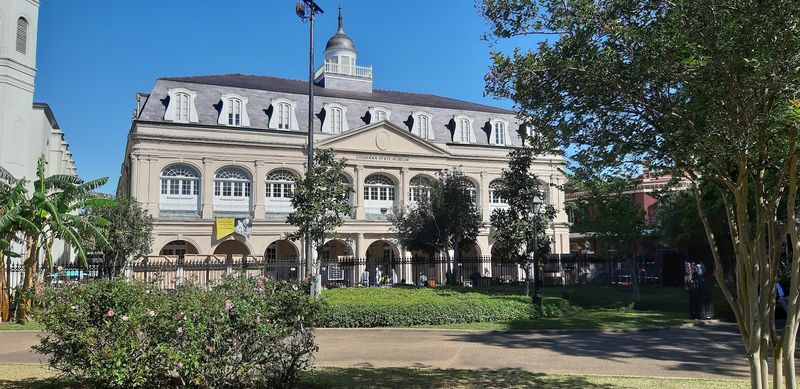
Right at the entrance of the cathedral, a small bookstore and gift shop offers visitors a chance to take something meaningful home. The selection leans toward religious books, prayer cards, rosaries, and keepsakes connected to the cathedral’s history and its patron saint.
It is a modest space, not a large commercial operation, which actually suits the atmosphere well. The items feel carefully chosen rather than mass-produced, and browsing through them gives you a few extra minutes to absorb the surroundings before stepping back out into Jackson Square.
For visitors who want to learn more about the cathedral’s history and the life of Saint Louis IX, the bookstore carries titles that go well beyond what the plaques inside can convey. Picking up a small book or a prayer card is a low-key way to extend the experience beyond the visit itself, and admission to the cathedral remains free.
The Light Show That Transforms the Cathedral After Dark
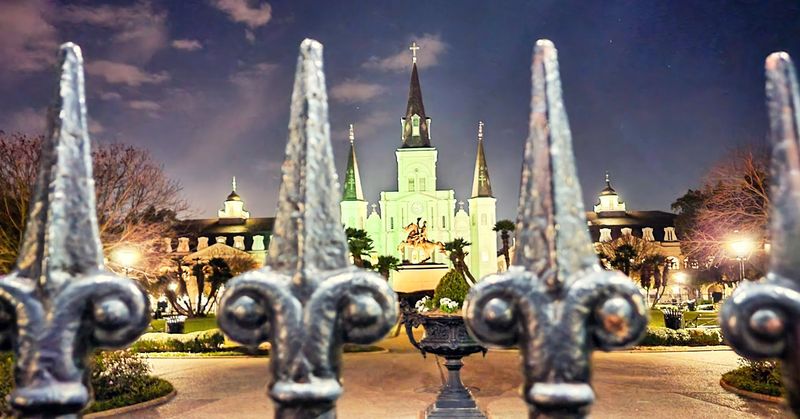
Most visitors see St. Louis Cathedral during daylight hours, which means they miss one of its more unexpected presentations. The cathedral facade has served as the canvas for special light projection shows during major events, most recently during Super Bowl week in New Orleans, when the building was transformed by color, motion, and imagery every thirty minutes through the evening.
The light shows draw crowds to Jackson Square who gather on the open plaza to watch together, which creates a community atmosphere that feels surprisingly warm for an outdoor event in a busy city. The cathedral’s white facade turns out to be an ideal projection surface, holding color and detail better than most building materials.
These events are not permanent fixtures, but they do occur periodically around major celebrations in the city. Checking local event listings before your visit will tell you whether anything is scheduled during your time in New Orleans.
Visiting Tips That Will Improve Your Experience
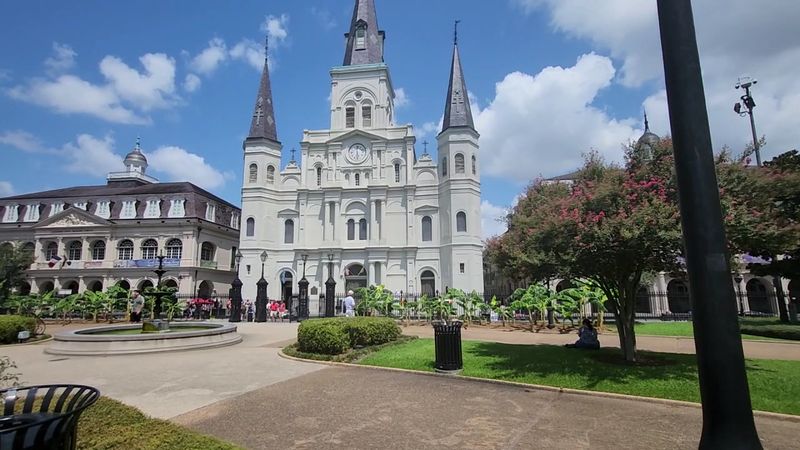
A few practical details make a real difference here. The cathedral is open to visitors most days from 9:30 AM to 4:00 PM, with Sunday hours beginning at 9:00 AM.
Arriving early on weekdays gives you the calmest, least crowded experience inside.
Avoid arriving at noon, when Mass is typically beginning. The doors close to general visitors during services, and waiting outside in the New Orleans heat is nobody’s idea of a good time.
A quick check of the schedule on the cathedral’s website before you leave your hotel takes about thirty seconds and saves potential frustration.
Parking in the French Quarter is genuinely challenging, so most visitors arrive on foot from nearby accommodations or via rideshare. The cathedral is free to enter, which makes it one of the most accessible historic sites in the city.
Respectful behavior inside is expected and appreciated by the active congregation.
Why Locals Keep Coming Back to This Cathedral
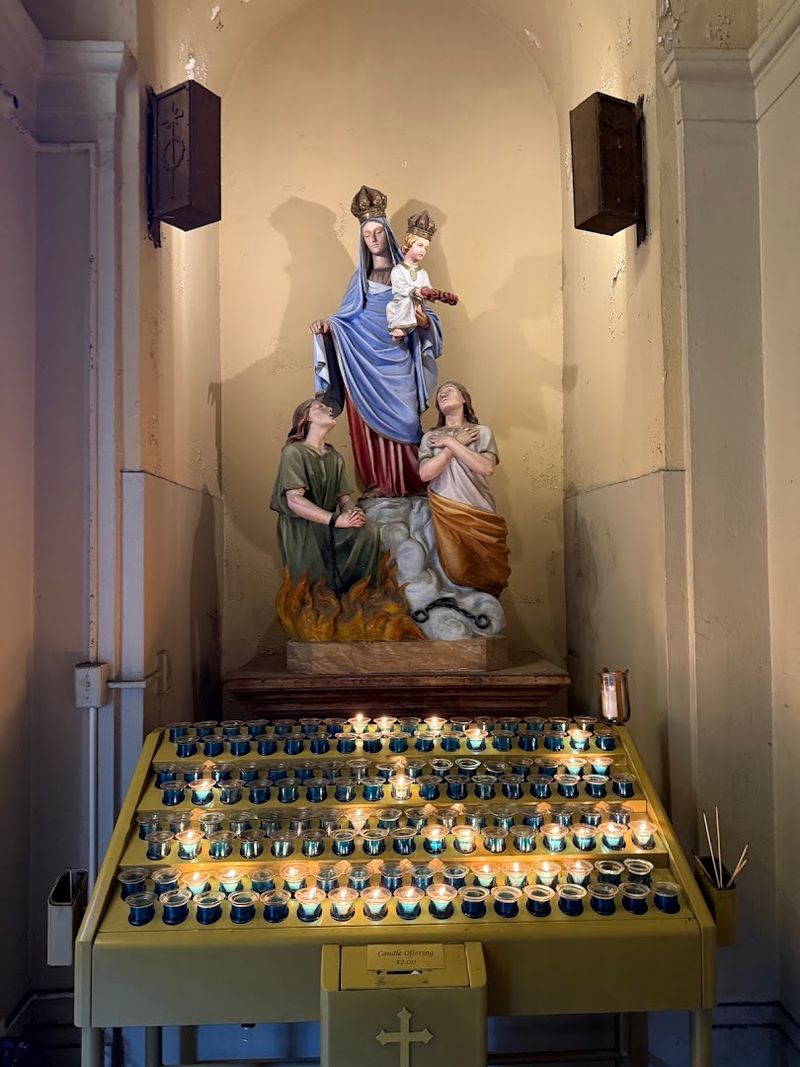
Tourists visit St. Louis Cathedral once and remember it forever. Locals come back repeatedly, which says something more interesting about the place.
For many New Orleans residents, this cathedral is woven into the fabric of their lives: baptisms, first communions, weddings, and funerals have all happened here across multiple generations of the same families.
That layering of personal history on top of civic history creates an emotional texture that visitors can feel even without knowing the specifics. The space carries the weight of countless meaningful moments, and it shows in the way people move and speak inside it.
Beyond the religious community, artists, writers, and musicians have long been drawn to the cathedral as a place for quiet reflection in a city that offers very little of it. The building seems to generate a kind of stillness that people return to whenever the city gets too loud, which in New Orleans is fairly often.
Exploring the French Quarter Beyond the Cathedral Doors
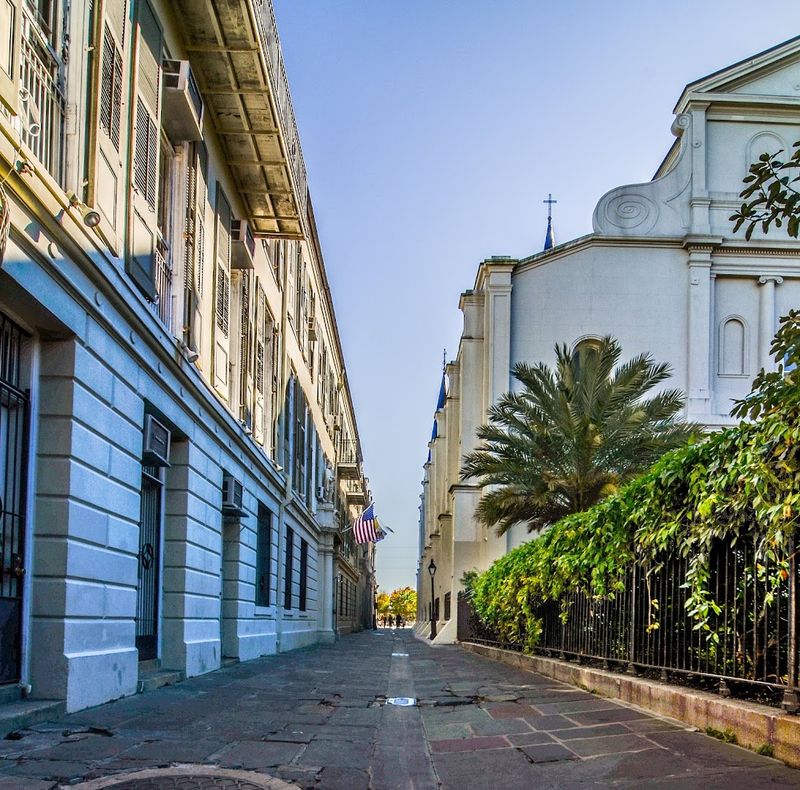
The cathedral sits at the center of the French Quarter, which means everything worth seeing in that neighborhood is within easy walking distance. The surrounding streets hold some of the oldest architecture in the city, with cast-iron balconies, brick courtyards, and narrow lanes that have changed surprisingly little over the past two centuries.
The Mississippi River is just a short walk away, and the levee walkway offers a completely different view of the city from the water’s edge. The French Market, one of the oldest public markets in the country, runs along the riverfront and rewards an hour of wandering.
After the quiet of the cathedral interior, stepping back into the French Quarter feels like switching channels. Both experiences are worth having on the same visit, and the contrast between them is part of what makes this corner of New Orleans feel so layered and genuinely alive.
Share this story