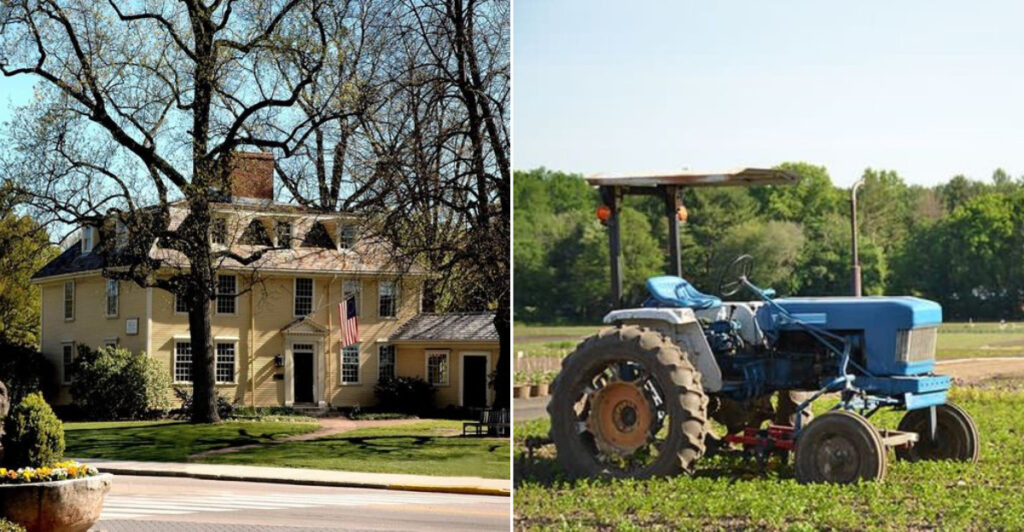
Lexington, Massachusetts is one of those towns that manages to feel both frozen in time and completely alive. Most people know it as the place where the first shots of the American Revolution rang out on April 19, 1775, but there is genuinely more here than a single famous morning.
You can walk a preserved battlefield trail, step inside an eighteenth-century tavern, explore a universally accessible nature reserve, and pick up fresh produce from a farm that has been running since 1884, all within a few miles of each other. Whether you are a history enthusiast, a casual cyclist, a nature walker, or someone who just wants a great day trip from Boston, Lexington delivers a surprising range of experiences that go well beyond the textbook version of its story.
Stand Where The American Revolution Began At Lexington Battle Green
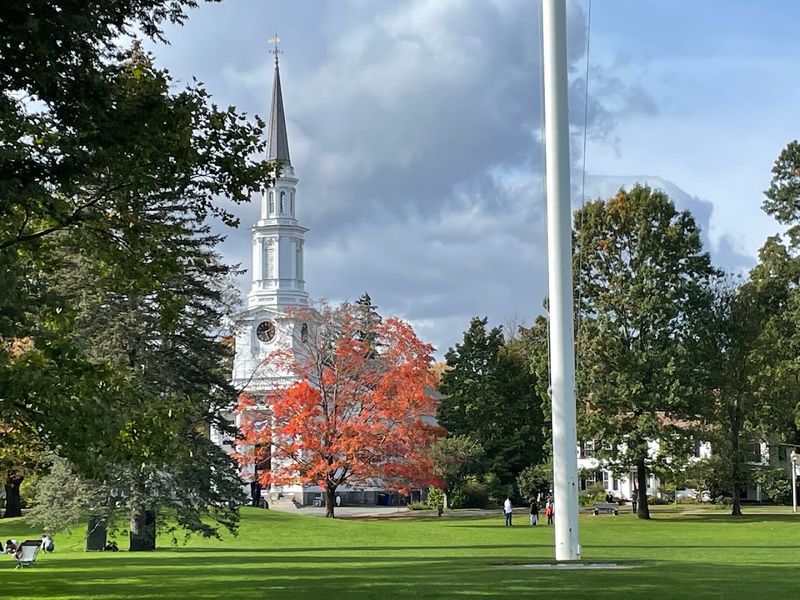
Few places in America carry the weight of Lexington Battle Green. This triangular common is where roughly 80 militiamen faced a far larger British force on April 19, 1775, and where eight colonists lost their lives in the opening clash of the American Revolution.
Visitors can stand near the line where Captain John Parker’s men assembled, study the 1898 Minuteman Statue, and pause at the Revolutionary Monument marking the burial site of those who fell that morning. One remarkable detail many visitors do not expect: Congress has authorized the American flag to fly here around the clock, one of the rare sites in the country to hold that designation.
Colonial-costumed guides offer seasonal walks around the green and the nearby cemetery, adding personal stories to the well-known scene. Because the site sits directly in Lexington Center, it connects easily with museums, restaurants, shops, and several other Revolutionary landmarks all reachable on foot.
Enter The Tavern Where Lexington’s Militia Waited For The British
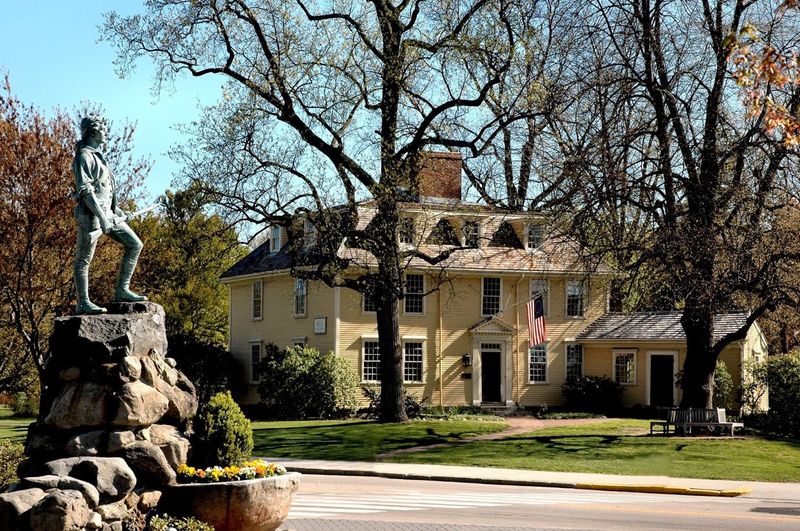
Built in 1710, Buckman Tavern served locals, travelers, and town meetings for decades before it became the gathering place where Captain Parker’s militia spent the tense early hours of April 19, 1775, waiting for British troops to arrive.
One of the most memorable objects inside is the original front door, still marked by a British musket ball. The rooms are furnished to reflect an eighteenth-century public house, and upstairs exhibitions display period furnishings, Revolutionary artifacts, and rotating presentations that keep the experience fresh for repeat visitors.
Because Buckman Tavern stands directly beside Lexington Battle Green, the short distance between waiting inside and facing British troops outside becomes immediately clear in a way no map or textbook can quite convey. A small historic herb garden behind the building offers a quieter stop and can be explored even when the museum interior is closed for the season.
Visit The House Where Paul Revere Delivered His Famous Warning
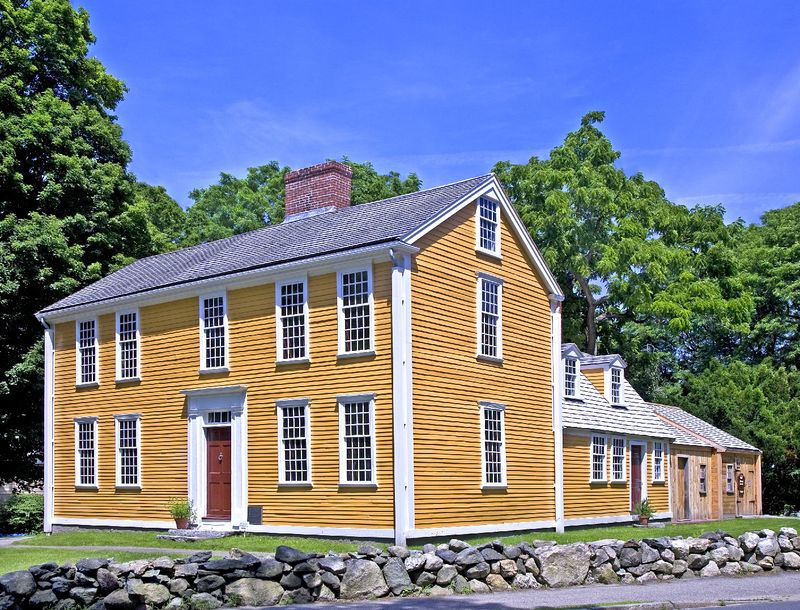
On the night of April 18, 1775, Paul Revere rode to this house to warn John Hancock and Samuel Adams that British troops were advancing from Boston. Built in 1737 as Lexington’s parsonage for Reverend Jonas Clarke, the home was hosting two of the Revolution’s most recognizable figures when that warning arrived.
Guided tours move through rooms connected to the family and their famous guests, including the chamber where Hancock and Adams stayed before departing for safety. Hancock-Clarke House also broadens the traditional story through exhibits about Black Lexington residents, including people who were enslaved or indentured during the eighteenth and nineteenth centuries, a dimension of local history often left out of the standard Revolutionary narrative.
Outside, an award-winning herb garden features culinary, medicinal, aromatic, and household plants researched from the colonial period, along with an heirloom apple tree. The combination of political history and overlooked personal stories makes this one of Lexington’s most thoughtful stops.
See The Revolutionary War From The British Side At Munroe Tavern
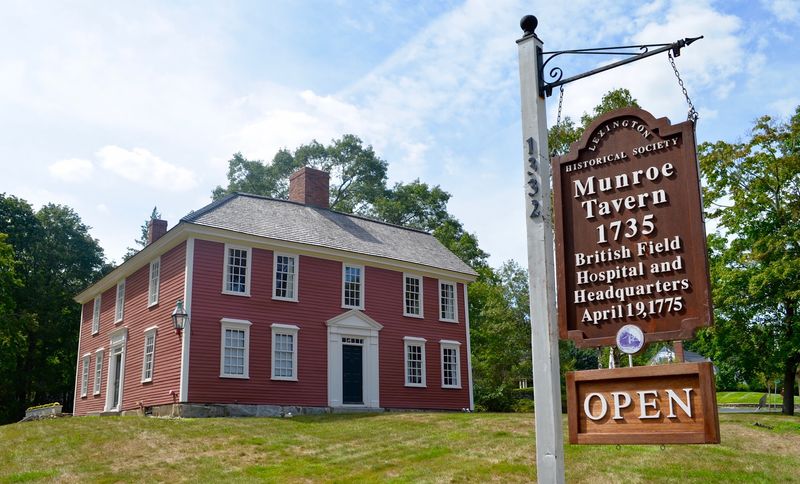
Most Lexington visitors hear the colonial militia’s side of April 19, 1775. Munroe Tavern shifts that perspective considerably.
Built in 1735, the building was commandeered by retreating British regulars that afternoon as they made their difficult journey back toward Boston.
Downstairs exhibits examine the soldiers’ experience, while upstairs rooms explore what it meant for the Munroe family to have its home occupied by an opposing army. The tavern also carries a later chapter of national history: George Washington stopped here during his 1789 New England tour, and visitors can see the room prepared for his meal, including a chair associated with his visit.
The grounds add another layer worth exploring. A Colonial Flower Garden, a native wildflower garden, and a rose garden maintained by the Lexington Field and Garden Club surround the property.
Together, the house and its outdoor spaces show how one building moved from wartime occupation to presidential hospitality and then into careful long-term preservation.
Follow The Route Of Retreating Soldiers Along Battle Road Trail
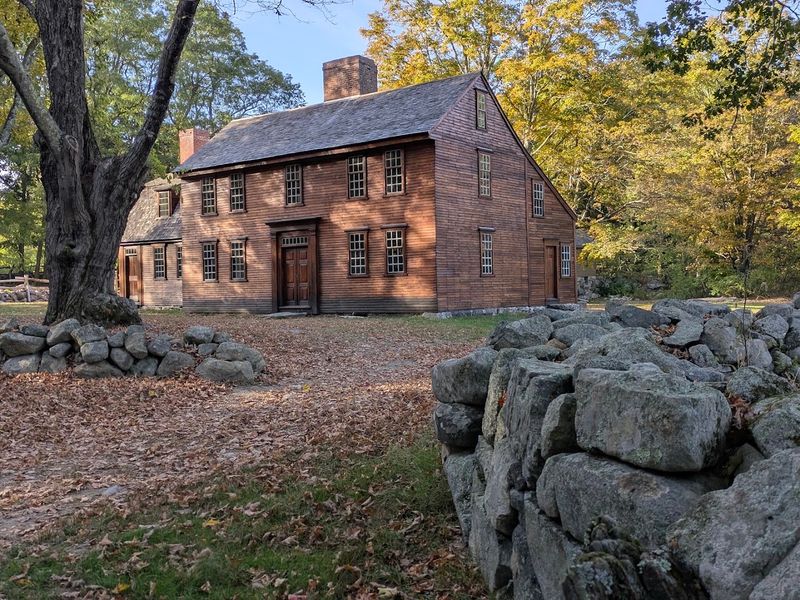
Minute Man National Historical Park stretches from Lexington into Lincoln and Concord, and its five-mile Battle Road Trail gives visitors one of the most immersive ways to understand how the fighting unfolded across an entire day rather than a single moment.
Instead of running beside modern traffic the whole way, the trail passes through fields, forests, and wetlands, creating a genuinely scenic walk or bike ride through a protected landscape. Markers and preserved structures along the route explain ambushes, retreats, civilian experiences, and the shifting tactics used by both sides on April 19, 1775.
What makes this park especially effective is how it connects individual landmarks into one continuous story rather than presenting them as isolated stops. Visitors can choose a short section near the Lexington end or commit to several hours on the trail, making it a flexible option for both casual sightseers and travelers who want a serious outdoor Revolutionary War experience.
Discover Lexington’s Story Beyond 1775 At The Lexington Depot
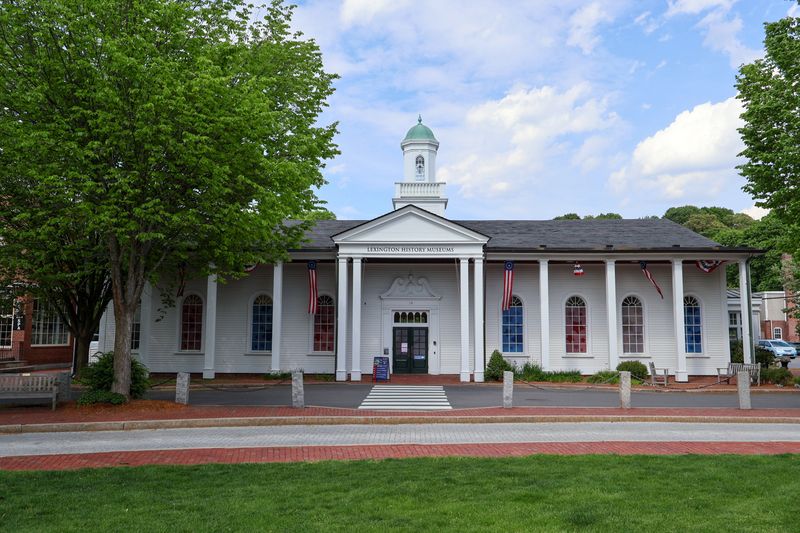
After several stops focused on 1775, the Lexington Depot offers a broader view of what the town became over the following two centuries. First used as a railroad station in 1846, the building served train passengers until 1977 and is considered one of New England’s surviving train-shed depots.
Today, the Depot uses displays and interactive exhibits to introduce the architects, farmers, activists, musicians, scientists, and community leaders who shaped Lexington across different eras. A central highlight is Emanuel Leutze’s restored 1852 painting “The News From Lexington,” displayed near Revolutionary objects that include a waistcoat owned by John Hancock.
Maps, uniforms, recorded interviews, and hands-on elements help connect the town’s famous origin story with its later growth and changing population. The Depot’s location near Massachusetts Avenue, the Battle Green, and the Minuteman Bikeway makes it a natural transition point between museum visits, a meal in Lexington Center, and an afternoon walk or ride.
Explore Symbols And Secret Societies At This Free Museum
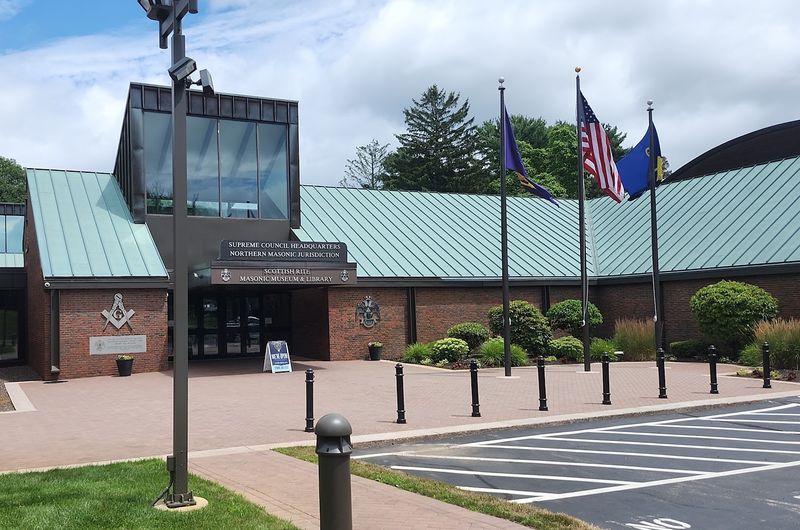
Most visitors to Lexington do not expect to find a nationally recognized museum dedicated to Freemasonry and American fraternal history, but the Scottish Rite Masonic Museum and Library has been operating here since 1975 and consistently surprises first-time visitors.
Exhibitions draw from collections that include furniture, textiles, prints, photographs, ceramics, medals, clocks, ritual objects, and archival materials, covering American history through the lens of civic organizations, patriotism, decorative arts, and changing social movements. The museum also maintains the Van Gorden-Williams Library and Archives, a major research resource for the history of Freemasonry and related groups.
Admission is free, which makes it an easy and low-commitment addition to a Lexington itinerary, though operating days should be confirmed before visiting. The spacious campus and professionally designed galleries feel completely different from the town’s colonial houses, making this a strong choice for art lovers, researchers, and anyone drawn to symbols and lesser-known chapters of American culture.
Bike From Historic Lexington Toward Cambridge On A Famous Rail Trail
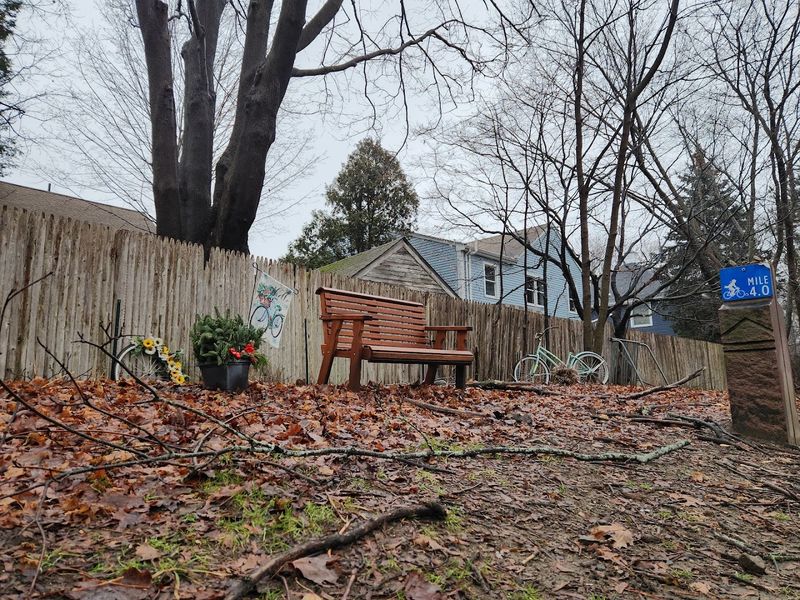
The Minuteman Bikeway runs ten miles from Bedford through Lexington Center to the Alewife MBTA station near Cambridge, following a former railroad corridor that has been converted into one of the region’s most popular paved trails. It was inducted into the Rail-Trail Hall of Fame in 2008, reflecting both its recreational appeal and its practical value as a commuter route.
In Lexington, riders and walkers can leave the trail at multiple points to reach the Battle Green, Buckman Tavern, the Old Burying Ground, the Visitors Center, shops, and restaurants, making the bikeway a genuine connector between outdoor activity and historic sightseeing.
Because the trail is mostly level, it works well for families, casual cyclists, joggers, and visitors who prefer walking between attractions rather than driving. Much of Lexington’s portion is maintained for year-round use, so the experience shifts noticeably with spring blossoms, summer shade, fall foliage, and the open winter landscape.
Find Boardwalks And A Wildlife Pond At Parker Meadow
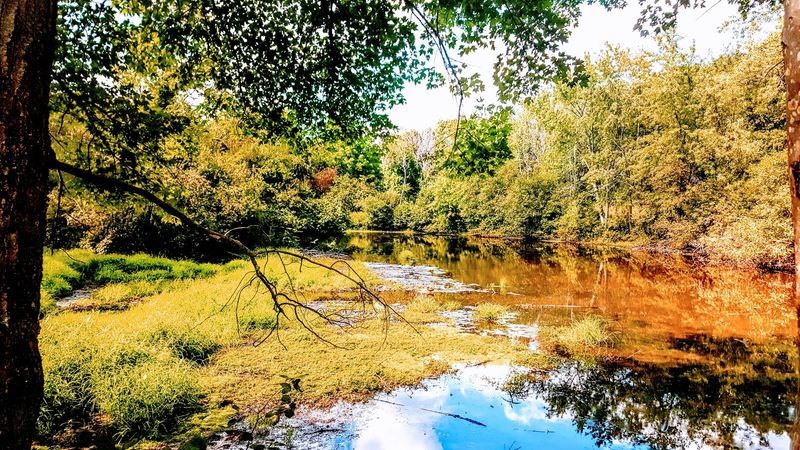
Parker Meadow Conservation Area sits just a short distance from Lexington’s historic center, but it feels like a completely different world. The 17-acre property combines woodland, open field, wetland, and a picturesque wildlife pond, with access from Revere Street and the Minuteman Bikeway.
In 2022, Parker Meadow became Lexington’s first universally accessible conservation area, a milestone that reflects genuine planning effort. Wide stone-dust paths, broad boardwalks, accessible parking, and an elevated wooden overlook facing the pond were all part of the improvements, making the site usable for visitors with a wide range of mobility needs.
The route is short enough for a relaxed visit, yet the mix of habitats creates real opportunities to observe birds, notice seasonal plant changes, and enjoy the reflections on the water. An interpretive panel introduces local biodiversity, adding educational value for families.
Pairing this stop with a bike ride, a downtown lunch, or a museum visit makes for a well-rounded Lexington afternoon.
Shop At A Lexington Farm That Has Been Growing Since 1884

Founded by Irish immigrants in 1884, Wilson Farm has been operating at its Pleasant Street location for more than 140 years, growing from a small vegetable operation into a large year-round farm market that plays an active role in Lexington’s everyday life.
The farm is known for locally grown produce, flowers, garden plants, house-baked breads and sweets, prepared meals, meats, cheeses, and other New England products. The displays shift dramatically with the seasons, from spring plants and summer vegetables to autumn harvest goods and winter holiday specialties, so the market feels different depending on when you visit.
Because food is grown, prepared, and sold on the same property, a stop here connects more directly to local agriculture than a typical grocery run. Wilson Farm has earned repeated regional recognition, including Best of Boston honors.
For travelers wrapping up a day of sightseeing, it is a practical and satisfying last stop for picnic supplies, fresh ingredients, or something sweet for the drive home.
Share this story