On a sweltering summer day in southern Illinois, there is a place underground where the temperature never budges from a cool 58 degrees, no matter how brutal the heat gets above. That place is a wild, self-guided cave tucked into the bluffs near Waterloo, Illinois, and it is unlike any state park experience you have had before.
You will get muddy, you will get wet, and you will love every second of it. This article walks you through everything you need to know before you lace up your waterproof boots and head underground.
Where Exactly You Will Find This Underground Escape
The address is 4369 G Rd, Waterloo, IL 62298, tucked into Monroe County in the southwestern corner of Illinois, not far from the Mississippi River bluffs. Getting there feels like a road trip through classic Midwest farmland, with rolling fields and quiet two-lane roads that make the destination feel earned.
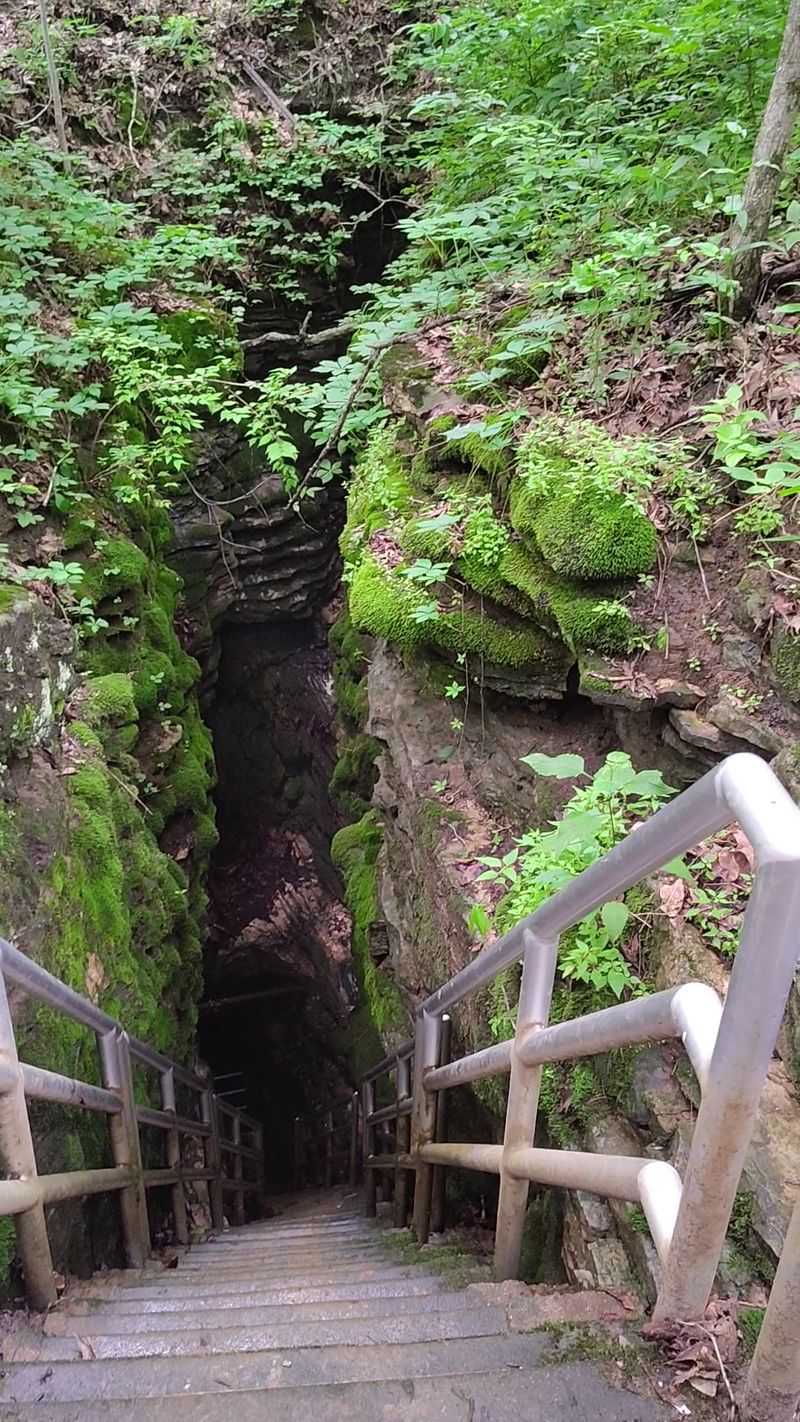
The park sits within a natural sinkhole landscape, which gives you a hint of what is waiting underground even before you reach the entrance. A steep staircase descends into the sinkhole itself, and that is your first real sign that this is not your average state park outing.
The area is managed by the Illinois Department of Natural Resources and has a small check-in building where staff greet visitors, hand out helmets, and go over the rules. Cell service can be spotty out here, so downloading directions ahead of time is a smart move.
The rural setting adds to the sense of adventure before you even set foot inside the cave.
A Cave That Has Been Welcoming Adventurers for Generations
Illinois Caverns, once known locally as Birksville Cave, has a long history tied to the communities of Monroe County. For many Illinois residents, visiting this cave as a child is a memory that sticks with them for decades, and plenty of those same people now bring their own kids back to explore the same passages.
The cave was closed to the public for more than ten years before reopening, and that reopening was a big deal for anyone who had been waiting. The formations, the underground river, and the raw, unlit passages had all been preserved exactly as nature left them.
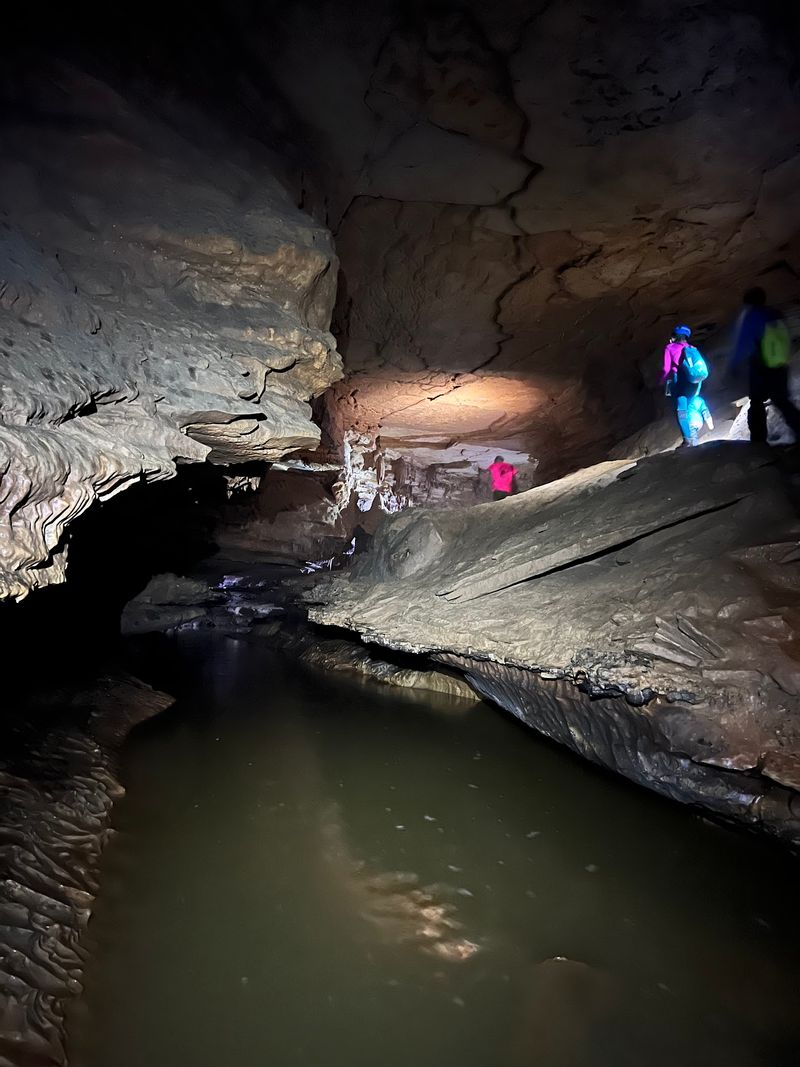
Unlike many famous caves that have been fitted with electric lights and paved walkways, Illinois Caverns has kept its wild character intact. There are no glowing neon signs, no guided tours with a script, and no handrails every few feet.
What you get instead is an honest caving experience that connects you directly with the geology that has been building underground for thousands of years, one drip at a time.
The 58-Degree Secret That Makes Summer Visits So Satisfying
One of the most talked-about features of Illinois Caverns is the temperature. Rain or shine, July heat wave or January freeze, the inside of the cave holds steady at around 58 degrees Fahrenheit year-round.
That is the natural result of the cave’s depth and the insulating properties of the limestone above it.
In the middle of a hot Illinois summer, that coolness hits you the moment you descend the sinkhole stairs. Visitors who have been sweating through the parking lot suddenly find themselves reaching for the jacket they were smart enough to bring.
The flip side is that 58 degrees can feel surprisingly cold when you are also wading through knee-deep water. The cave keeps its own schedule regardless of how warm or energetic you feel at the start.
Wearing a light base layer under your caving clothes makes a real difference, especially if you plan to spend several hours underground. The temperature is one of the reasons so many people describe this cave as the best possible way to spend a hot summer afternoon in Illinois.
Self-Guided and Seriously Wild: What the Caving Experience Is Really Like
Most commercial caves in the United States put you in a tour group, hand you a brochure, and walk you down a lit path with a guide telling you when to look left. Illinois Caverns does none of that.
Once you sign your waiver and strap on your helmet, you are on your own to explore.
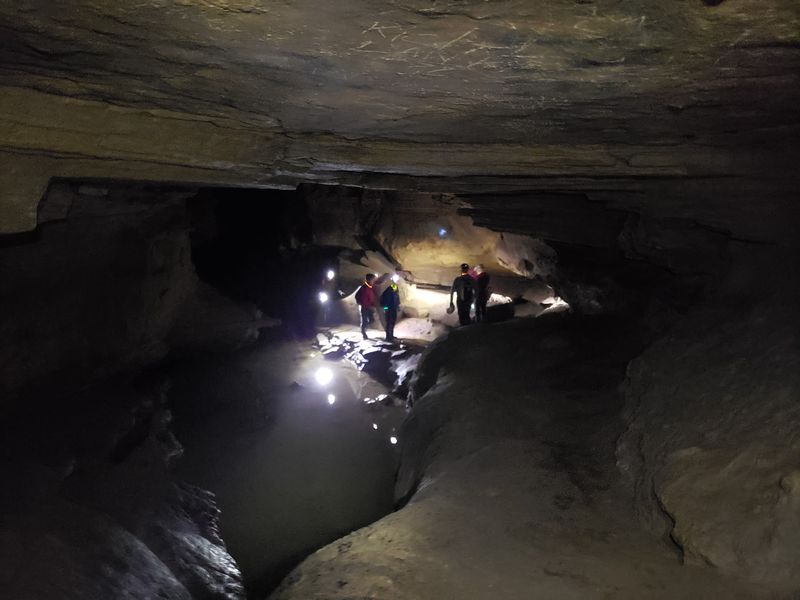
The cave follows an underground river for roughly 1.5 miles in each direction, with side rooms and passages branching off along the way. Groups have spent anywhere from two to five hours underground, depending on how far they push in and how much time they spend poking around the side chambers.
The experience demands actual navigation skills and a solid sense of direction. There are no painted arrows on the walls, no maps handed out at the door.
You follow the river, pay attention to landmarks, and trust your group to keep track of where you came from. For anyone who has ever wanted to feel like a real explorer rather than a tourist, this cave delivers that feeling in a very concrete way.
Rules You Need to Know Before You Even Leave the House
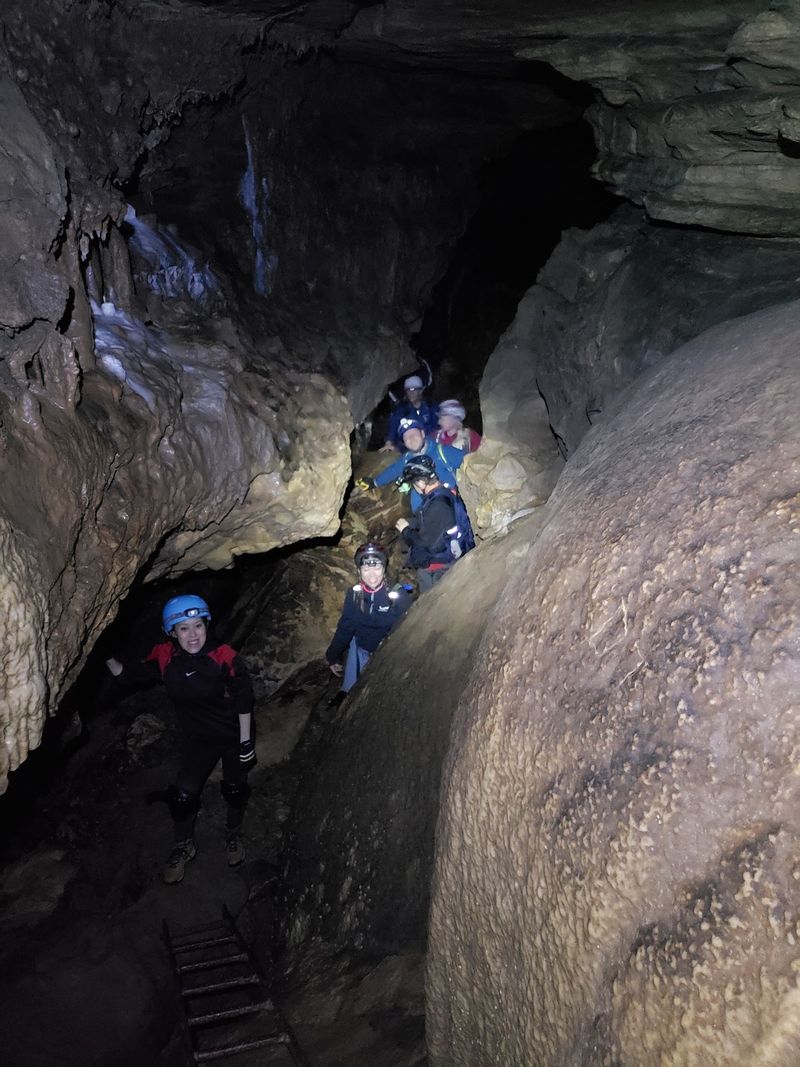
Illinois Caverns has a short but firm list of requirements, and ignoring them means you will not get in. Every group must have a minimum of four people.
No exceptions, no matter how experienced or confident you are as a solo caver or a pair.
Each person must carry three separate sources of light, and cell phone flashlights do not count. That means three actual lights per person, whether that is headlamps, handheld flashlights, or a combination of both.
Backup batteries for each one are strongly encouraged.
Helmets are mandatory, and the check-in station loans them out at no charge, which is a genuinely helpful perk. Every visitor also signs a waiver before entering, which is standard practice for a cave that has real physical hazards.
Children of school age and older are welcome, but the staff does ask that you call ahead if you are planning to bring younger kids. Knowing these rules before you make the drive saves you from a very disappointing turnaround in the parking lot.
Getting Wet and Muddy Is Not a Warning, It Is the Point
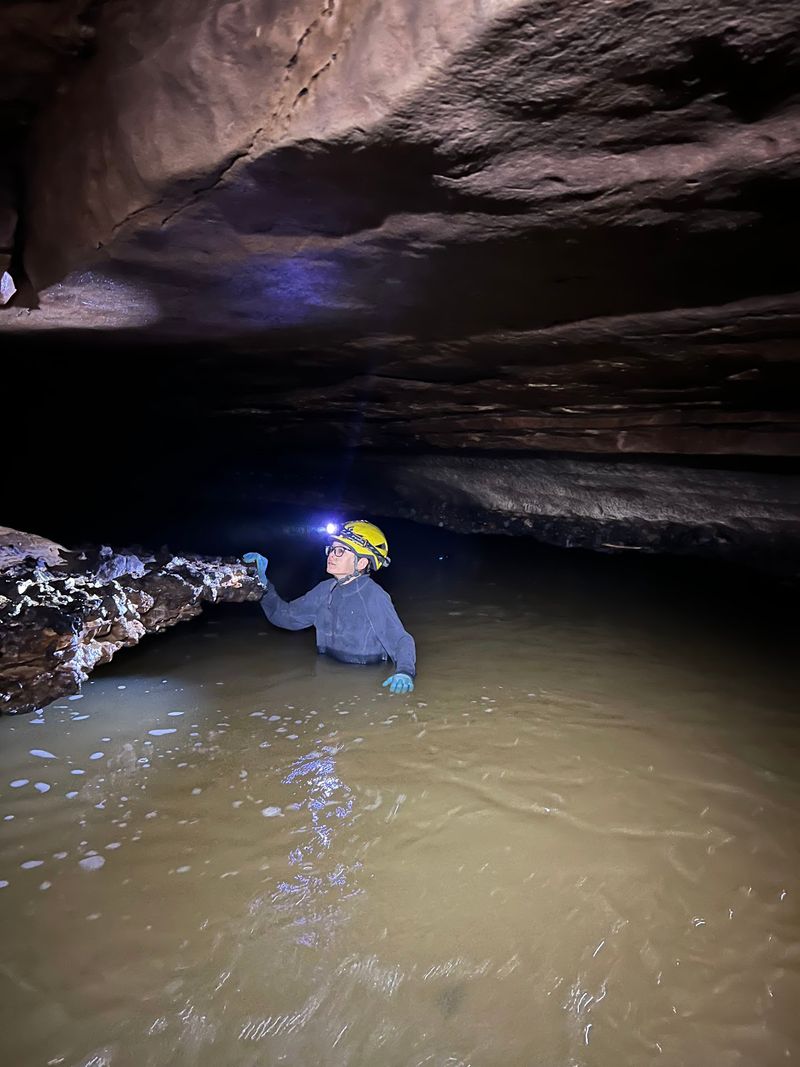
Every single person who has ever visited Illinois Caverns comes out of that cave dirtier than they went in. The underground river that runs through the main passage means you will be walking through water for a significant portion of your visit, and the cave floor is a mix of limestone, silt, and mud that does not discriminate.
The water depth varies, but expect it to be around knee height for most of the main passage. If you push all the way to the waterfall at the back of the cave, the water can reach mid-thigh, and climbing the waterfall itself means getting thoroughly soaked.
Waterproof boots or neoprene waders are the gear recommendations that come up again and again from experienced visitors. Regular sneakers will be soaked within the first ten minutes, and wet feet in 58-degree water for several hours is not a fun combination.
There are changing rooms at the trailhead, so bringing a complete dry set of clothes to change into afterward is not just a good idea, it is practically a requirement for the drive home.
Formations That Have Been Growing for Thousands of Years
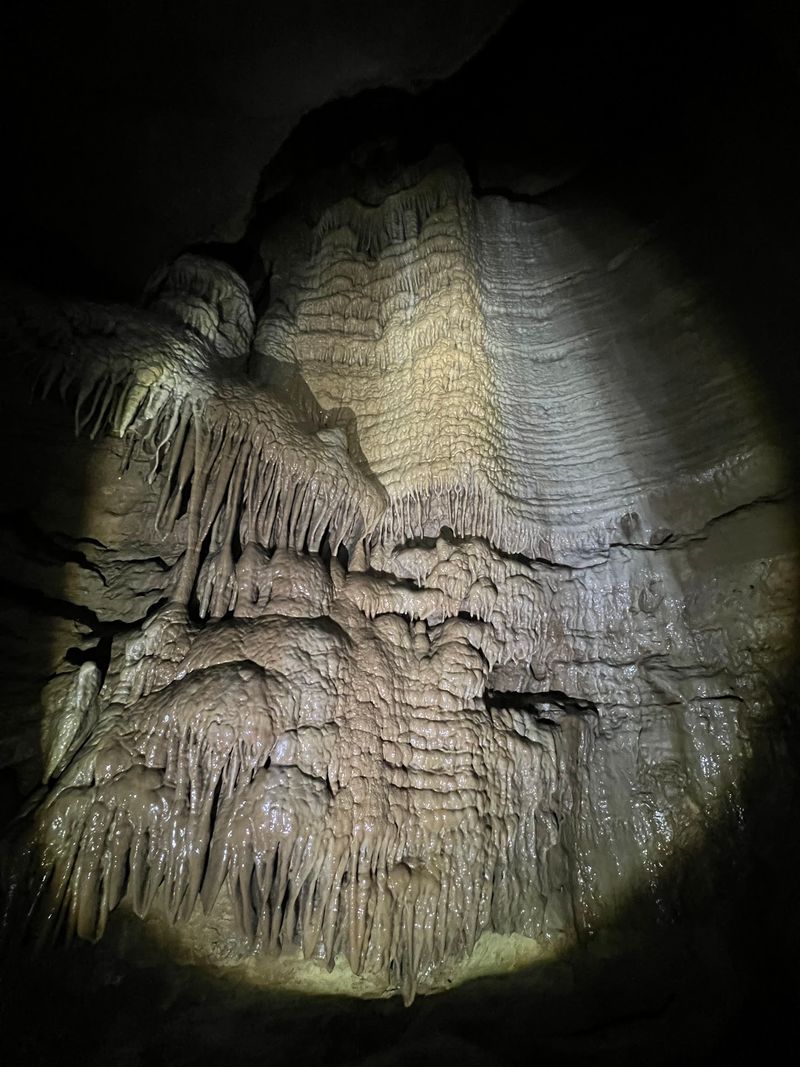
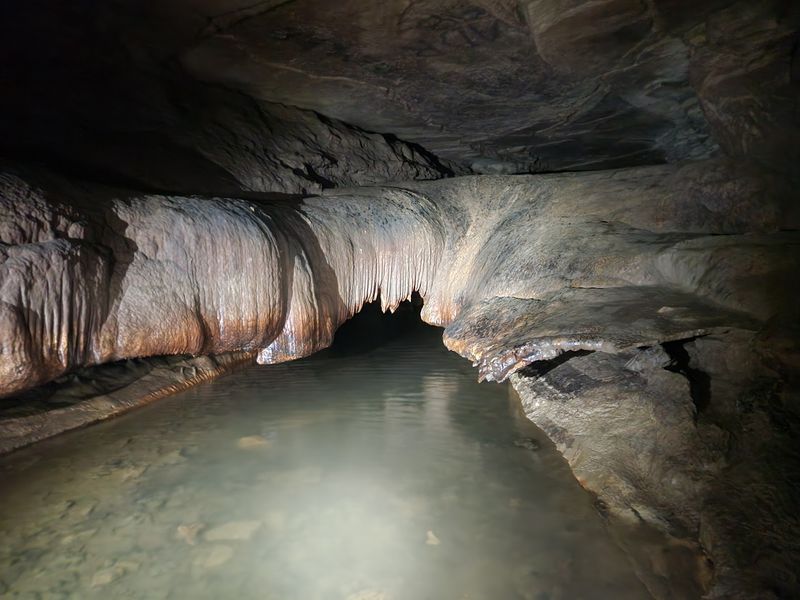
Beyond the mud and the water, Illinois Caverns holds some genuinely remarkable geology. The cave is a karst system carved out of Mississippian-age limestone, and over thousands of years, water seeping through cracks in the rock has deposited minerals that form the stalactites, stalagmites, and flowstone you see throughout the passages.
Some formations are delicate and thin, almost translucent when a headlamp shines directly through them. Others are thick columns that have been building since long before anyone thought to name this cave.
The variety of textures and shapes makes the cave feel like a slow-motion sculpture gallery.
Because the cave is self-guided and not commercialized, you get to spend as much time as you want studying a particular formation without a tour group nudging you along. The rule about leaving no trace is taken seriously here, and the formations are in excellent condition as a result.
Touching the formations is strongly discouraged because the oils from human skin can permanently discolor and damage mineral deposits that took centuries to form.
The Waterfall at the Back of the Cave Is Worth Every Muddy Step
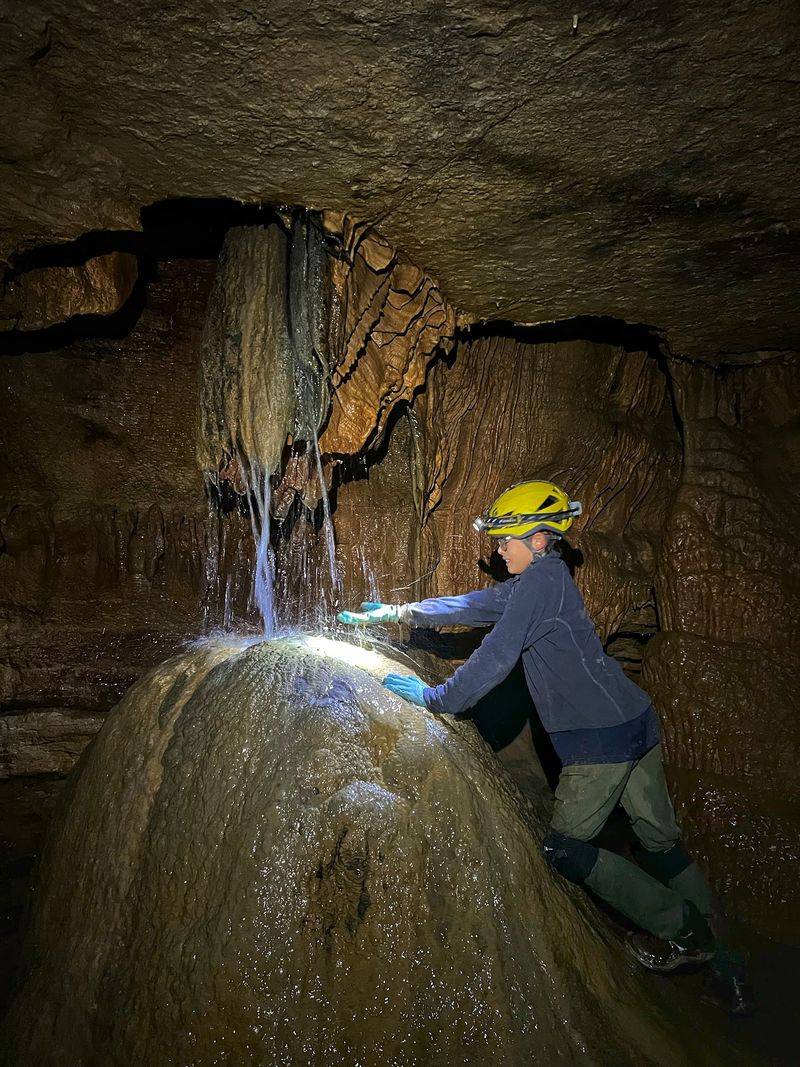
Deep inside Illinois Caverns, past the long stretches of wading and the low-ceilinged passages, there is a waterfall. Reaching it requires a full commitment to the cave, and by the time most groups get there, they have already spent a couple of hours underground.
The waterfall is not massive by outdoor standards, but inside a dark cave with nothing but headlamps for light, it feels genuinely dramatic. The sound of the water echoes off the limestone walls in a way that is hard to describe without sounding over the top, but it is the kind of moment that makes people want to come back every year.
Climbing the waterfall is possible, and some visitors do it, though it requires getting very wet and exercising good judgment about footing on slick rock. The payoff is a view back down the passage from above, with your group’s lights scattered across the cave floor below.
For a lot of people who visit Illinois Caverns, the waterfall is the highlight they talk about long after the mud has washed off their boots.
What the Staff Gets Right Every Single Time
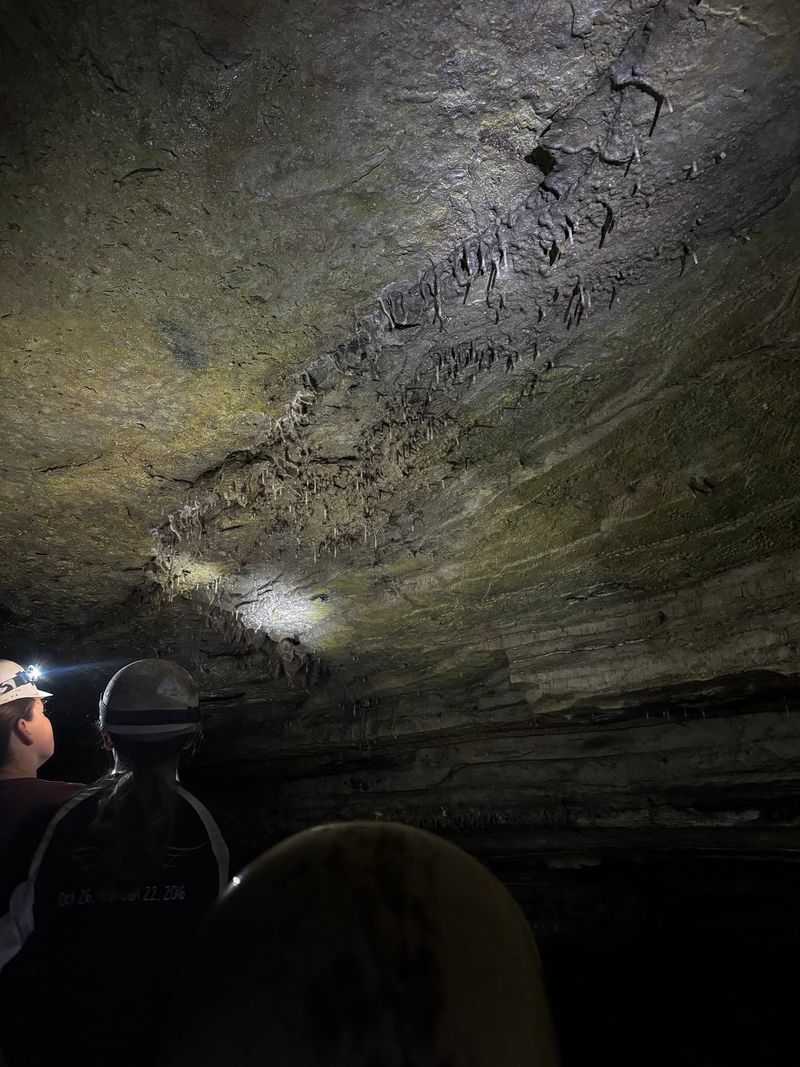
The staff at Illinois Caverns consistently earns high marks from visitors, and it is easy to see why. The check-in process is smooth, the rangers are knowledgeable, and the whole operation runs with a friendliness that feels genuine rather than scripted.
Rangers take the time to go over the cave rules clearly, answer questions, and make sure every group understands what they are getting into before they head down the sinkhole stairs. That kind of preparation matters in a cave where there are real hazards and no staff underground to help if things go sideways.
One thing that stands out is how much the staff clearly cares about the cave itself, not just the visitor experience. The emphasis on leaving no trace, the strict rules about group size and lighting, and the condition of the cave all reflect a management approach that puts long-term preservation first.
That care is part of why the cave looks as good today as it did decades ago when many of the current visitors first explored it as children. Good stewardship is not glamorous, but it is what keeps places like this open for everyone.
Best Times to Visit and Hours You Should Plan Around
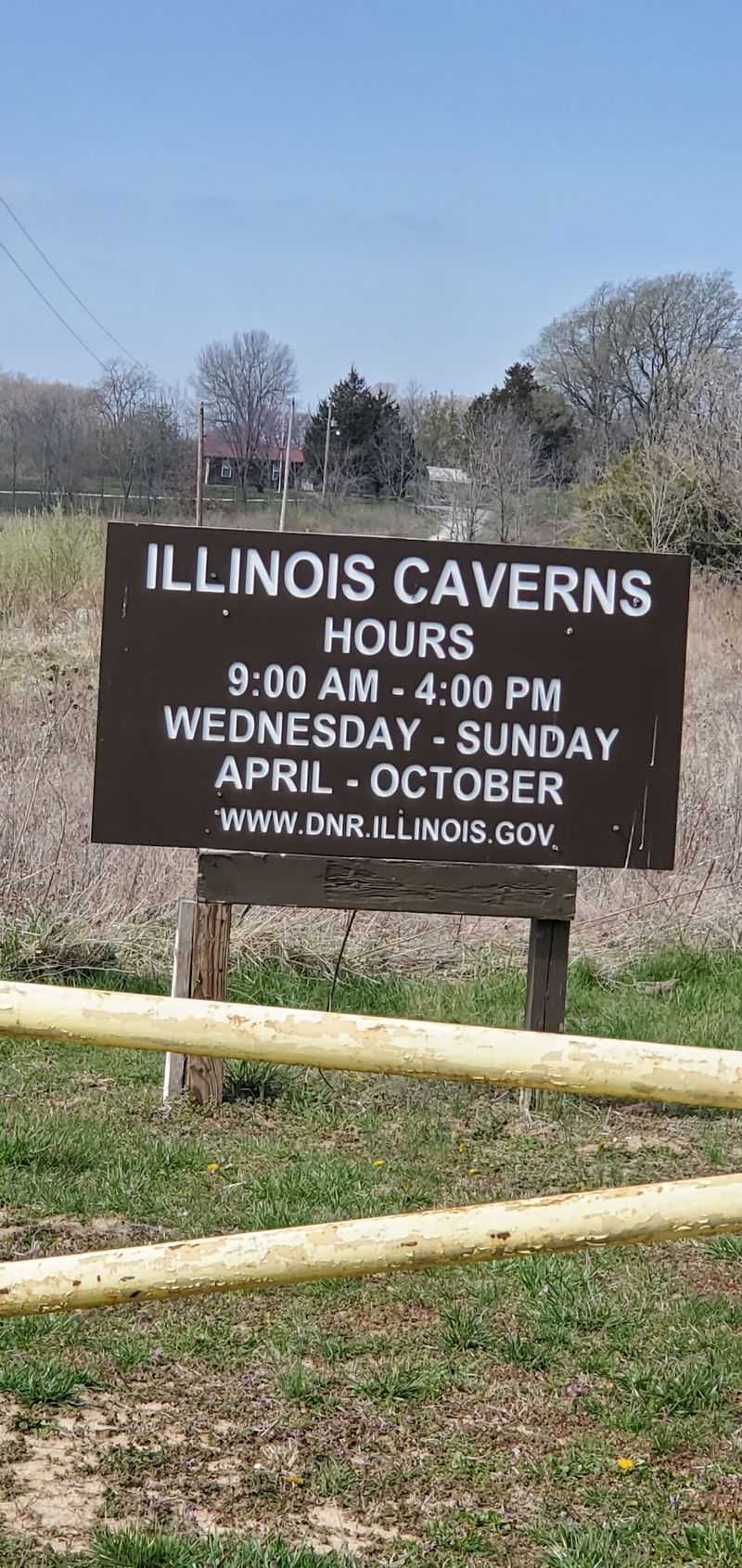
Illinois Caverns is open Wednesday through Saturday from 8:30 AM to 4:30 PM, and on Sundays from 8:30 AM to 4:00 PM. The cave is closed on Mondays and Tuesdays, so checking the schedule before you make the trip is essential.
The phone number for the park is +1 618-458-6268, and calling ahead is especially useful if you have questions about group size or conditions.
Summer weekends tend to draw the most visitors, and the parking area is small enough that arriving early in the morning gives you a better chance at a smooth check-in. Weekday visits, when the cave is open, are noticeably quieter and allow for a more relaxed exploration pace.
Spring and fall are also excellent times to visit. The cave temperature stays the same year-round, but the air outside is more comfortable for the drive and the sinkhole descent.
Winter visits are possible but require extra preparation for cold temperatures at the surface. No matter when you go, building in at least four to five hours for the full experience is the right way to plan the day.
Free to Enter, but You Still Need to Come Prepared
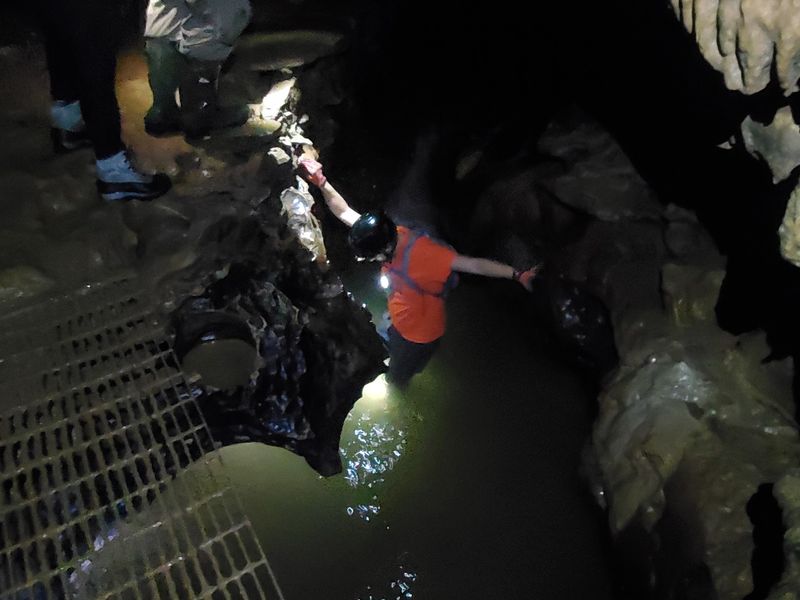
One of the most surprising things about Illinois Caverns is that it costs nothing to enter. For a caving experience this raw and this rewarding, free admission feels almost too good to be true, but that is exactly what the park offers.
Helmets are also provided at no charge during check-in.
Free admission does not mean low effort, though. The gear list for a responsible visit adds up quickly.
Three light sources per person, waterproof boots or waders, a helmet, backup batteries, and a full change of dry clothes are all things you need to source before you arrive.
Spending a little time and money on the right gear before your first visit makes an enormous difference in how much you enjoy the experience. Groups that show up in jeans and sneakers with one flashlight between them tend to turn back early and miss the best parts of the cave.
Groups that come prepared tend to stay for hours and leave already planning their next visit. The cave rewards preparation generously, and the price of admission makes the gear investment feel very reasonable by comparison.
Why This Cave Keeps Pulling People Back Year After Year
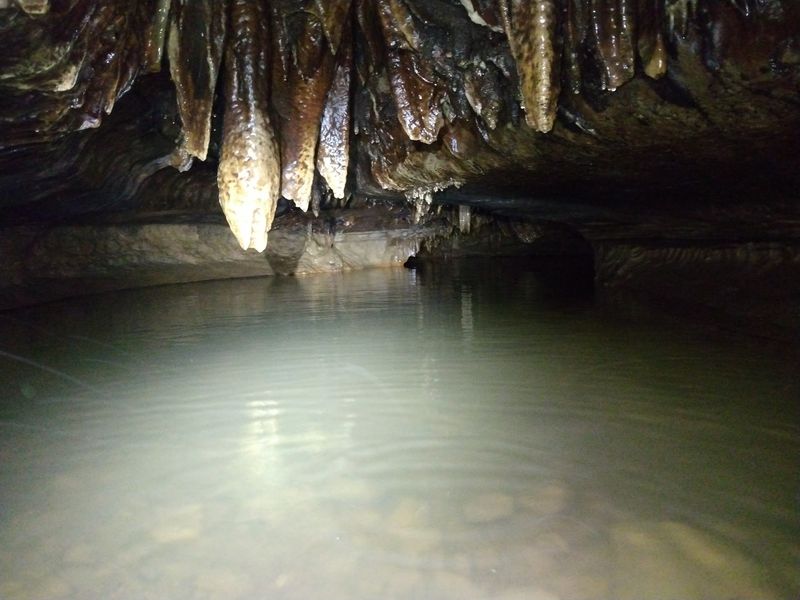
There is something about Illinois Caverns that creates repeat visitors at a rate that most tourist attractions would envy. Families come back annually, pushing a little farther each time.
Groups of friends who first visited in college return years later with their kids in tow.
Part of the appeal is that the cave is genuinely different every time. Water levels change with the seasons, formations look different depending on where your light hits them, and the passages you half-remember from a previous visit feel new again when you approach them from a slightly different angle.
The other part is simpler: there are very few places in the Midwest where you can have an experience this unfiltered and this physically engaging for free. No gift shop at the exit, no upsell for a premium tour, no velvet rope separating you from the interesting parts.
Just a cave, your group, your lights, and however much adventure you are willing to earn. That combination is rare enough that once people find Illinois Caverns, they tend to hold onto it like a personal discovery worth protecting and sharing at the same time.
Share this story