Deep in the Shawnee National Forest of southern Illinois, there is a massive stone structure that once roared with fire and molten iron, and today it stands quietly beside a creek where kids splash around on warm summer days. The contrast is almost funny when you think about it: industrial history sharing a clearing with one of the most laid-back swimming spots in the region.
I had no idea what to expect when I first turned off the main road and followed the winding forest path toward this place, but what I found genuinely surprised me. By the time I left, I had touched 190-year-old stonework, waded through cool creek water, and eaten a picnic lunch in a forest shelter that felt completely removed from the modern world.
Finding the Furnace: Location and Getting There
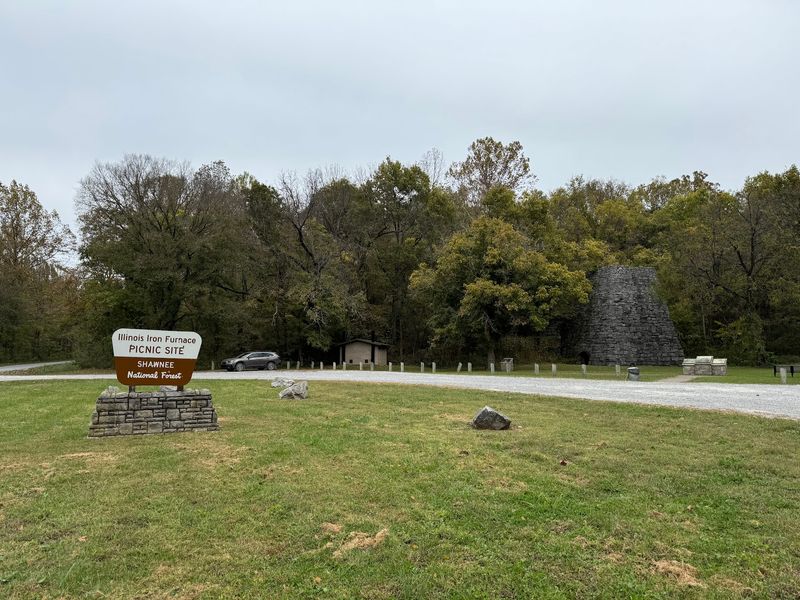
The address that gets you to this remarkable spot is Route 146 and Route 34, Elizabethtown, IL 62931, tucked deep inside the Shawnee National Forest in the far southern corner of Illinois. Getting there is genuinely part of the adventure, because the roads narrow, the trees close in, and your cell signal quietly disappears before you even realize it.
My strongest advice: download your map or screenshot the directions before you leave town. The GPS on my phone went completely silent about two miles out, and I was very glad I had a backup plan.
Some of the approach roads have blind curves and unpaved stretches, so taking it slow is less of a suggestion and more of a requirement.
The site sits at coordinates 37.4991 N, 88.3281 W, and the phone number for the Shawnee National Forest office is 618-287-2201. You can also check the official USDA Forest Service page for updates before visiting.
The remoteness of the location is honestly a big part of its appeal, because the forest swallows all the noise of everyday life the moment you arrive.
The Rebuilt Stone Furnace: What You Are Actually Looking At
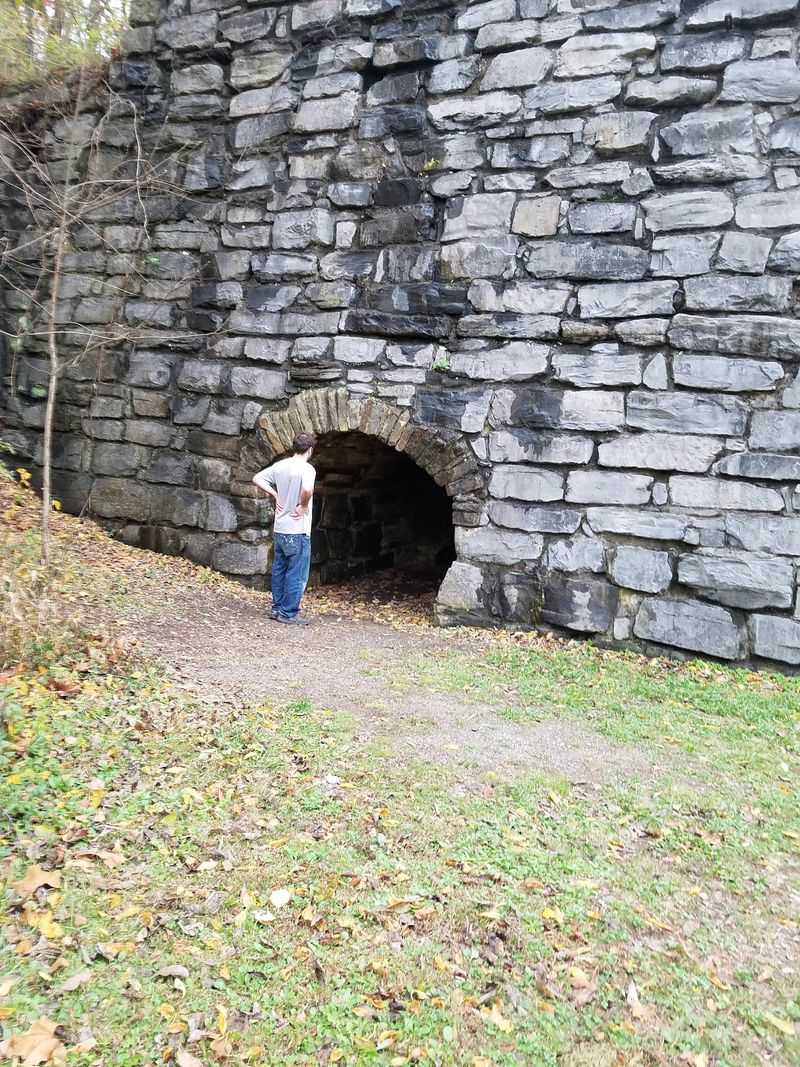
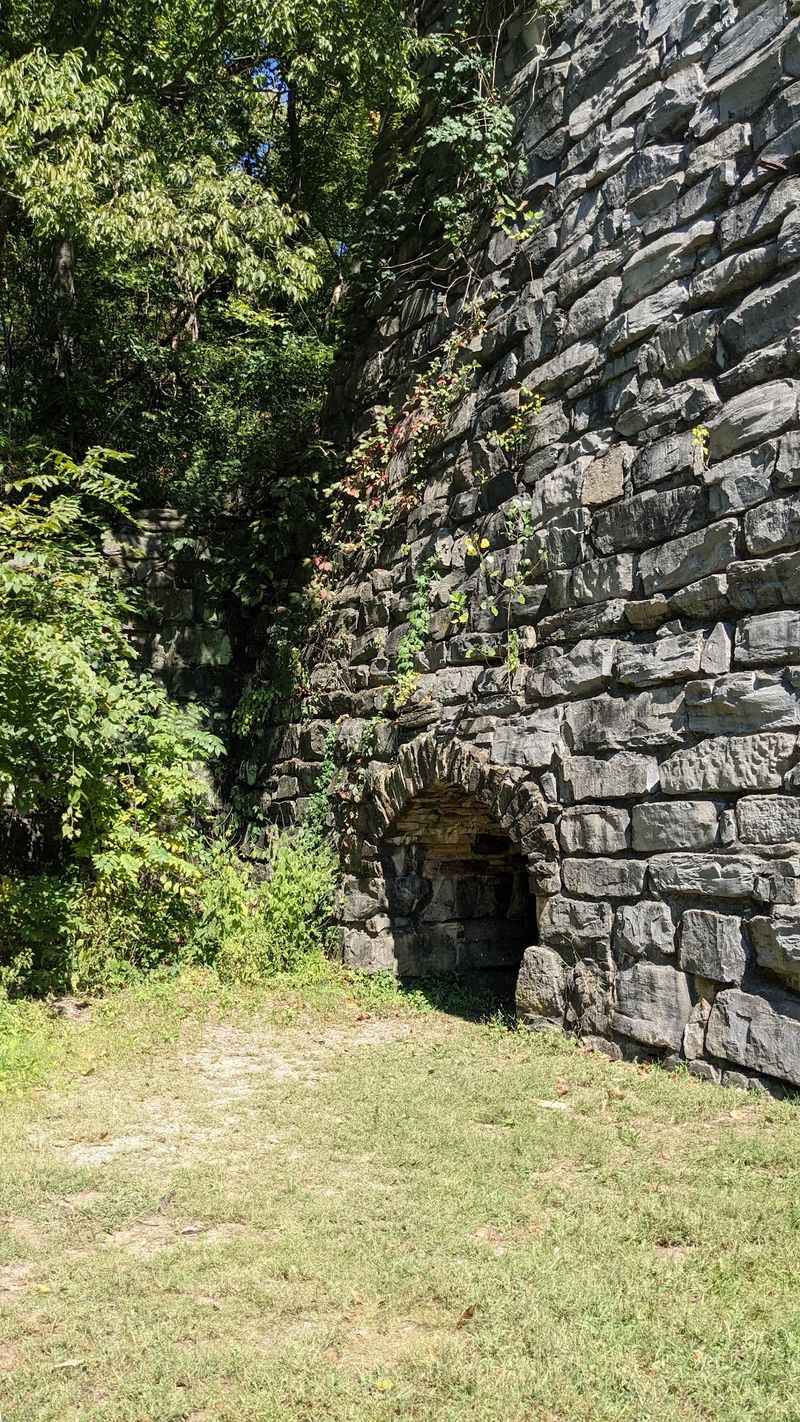
The furnace itself is genuinely massive, and that surprises almost every first-time visitor. The stone arch stands tall enough that a full-grown adult can walk inside without ducking, which gives you an immediate sense of the industrial scale this structure once operated at.
Built in the 1830s, the Illinois Iron Furnace is listed on the National Register of Historic Places and represents one of the few surviving examples of early American iron-making technology in the Midwest.
The structure you see today is a careful reconstruction, because the original furnace deteriorated significantly over the decades. The rebuild used period-appropriate stone techniques to match the original as closely as possible, and the result is a structure that reads as genuinely old rather than a theme-park replica.
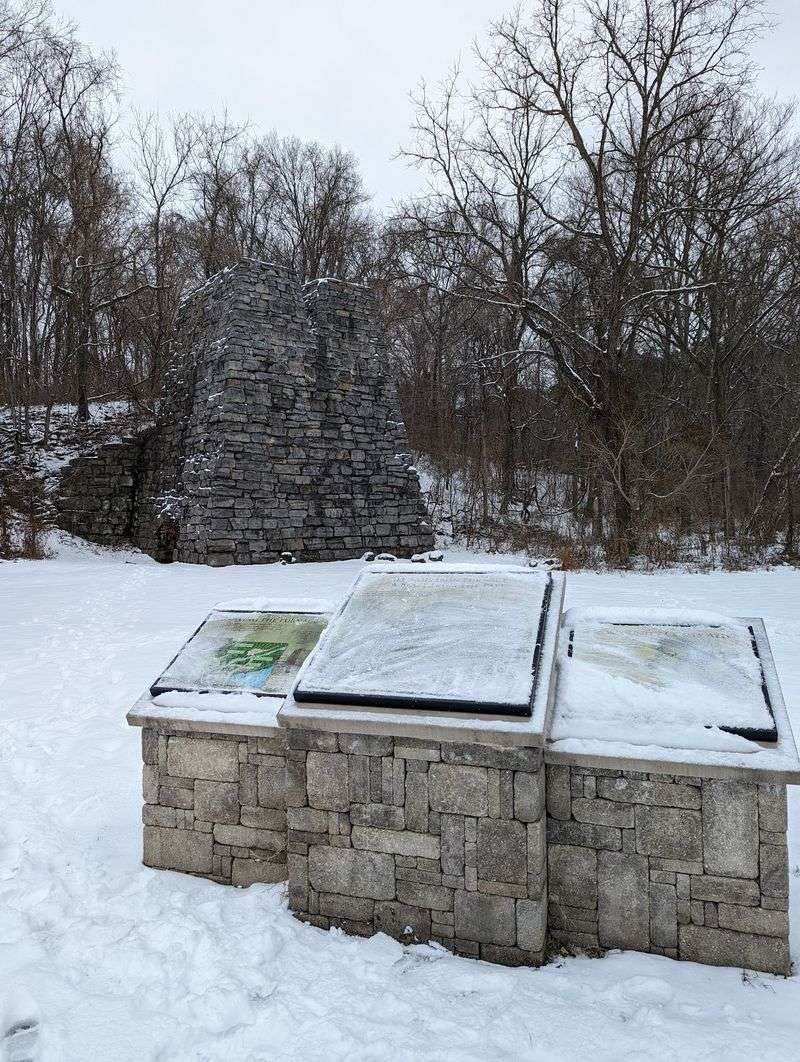
Informational panels nearby explain how the furnace worked, including the role of charcoal, iron ore, and limestone in the smelting process.
One thing worth knowing: the back side of the structure can have broken glass scattered on the ground, so keep an eye on where small children and pets are stepping. The front and sides are clean and very photogenic for anyone who wants a good shot of the stonework.
A Community That Once Lived Here
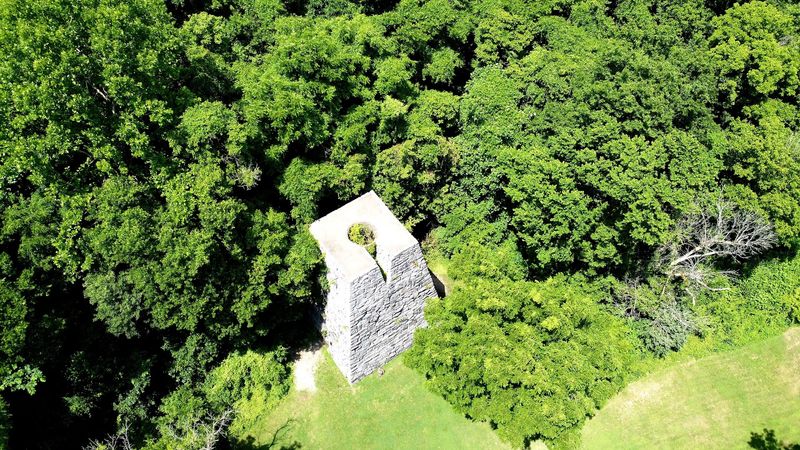
Most people do not realize that this furnace was not just a lonely industrial building dropped in the middle of nowhere. Around 100 people once lived in a small community right here, built entirely around the work of iron production.
The men largely worked at the furnace itself, while others farmed the surrounding land to help feed the settlement.
The community had a school, a post office, and even a hotel, which tells you that this was a functioning, self-contained little town rather than just a worksite. Families built their lives here, children grew up in these woods, and daily routines revolved around the rhythm of the furnace.
That context makes standing next to the structure feel much more personal and layered than just staring at old stonework.
By the time the iron industry shifted and demand for local smelting dropped, the community dissolved and the forest gradually reclaimed the land. Almost nothing physical remains of those homes and buildings today, which makes the furnace itself an even more remarkable survivor.
History has a way of erasing its own evidence, and the furnace standing here is a rare exception to that rule.
Big Creek: The Swimming Hole That Keeps People Coming Back
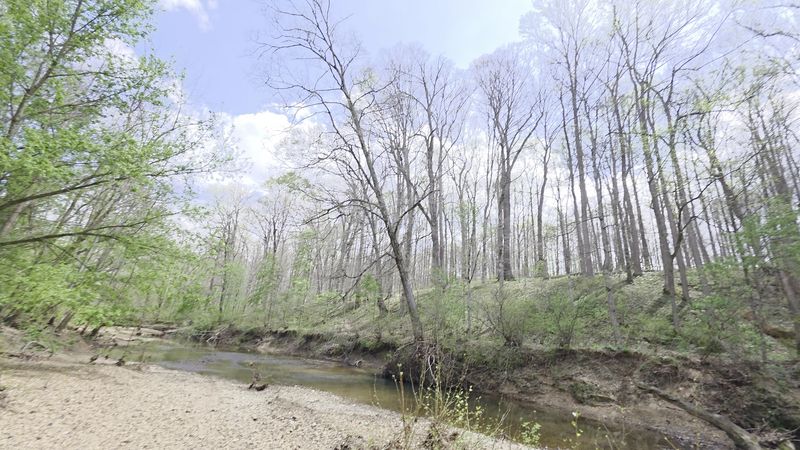
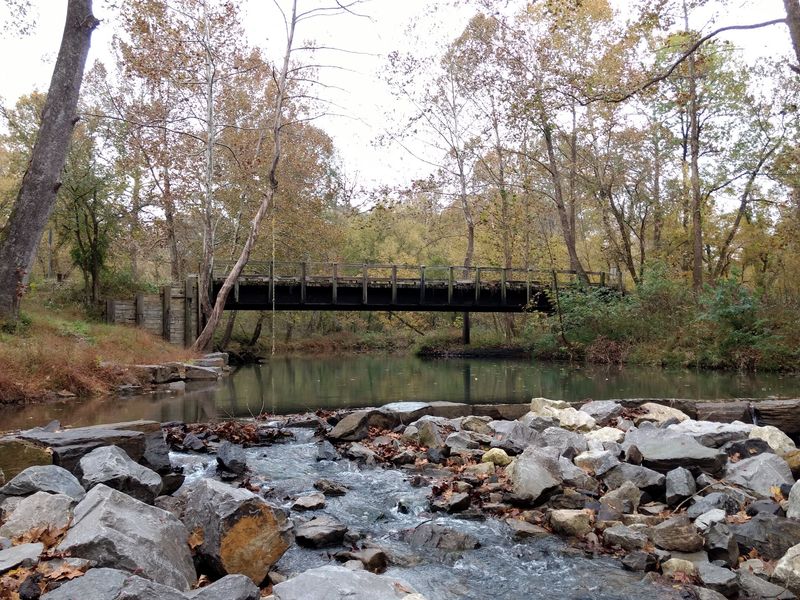
Right alongside the historic site runs Big Creek, and it is the kind of natural swimming spot that feels like something out of a childhood memory even if you have never been there before. The water is cool, clear, and shallow in most places, making it perfectly suited for families who want to let kids splash around without worrying too much about depth.
The creek is not a manicured, lifeguarded facility. There are no roped-off sections or concession stands.
What you get instead is a stretch of flowing water over smooth rocks, surrounded by forest sounds and dappled light through the tree canopy. That simplicity is exactly what makes it so enjoyable, because there is nothing competing for your attention except the water and the woods.
Hikers passing through also appreciate the creek as a reliable water source, though filtering is recommended before drinking. The combination of the historic furnace and the natural swimming area means that a visit here genuinely offers two completely different experiences in one stop.
You can spend time exploring industrial history and then cool your feet in a forest creek within about a three-minute walk of each other, which is a pretty hard combination to beat.
The Picnic Area: Lunch With a Side of Forest Quiet
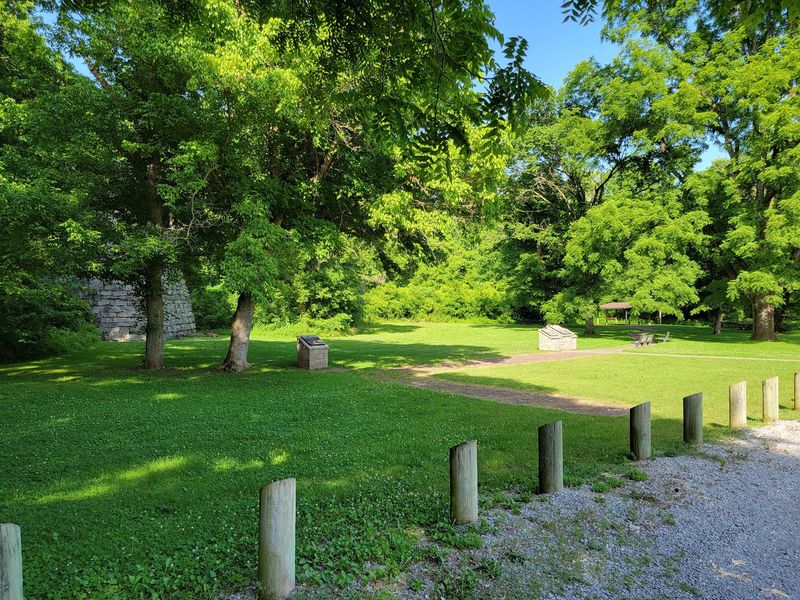
The picnic area at the Illinois Iron Furnace site is genuinely well-maintained and makes a strong case for packing a lunch before you head out. There is a covered shelter with a concrete sidewalk connecting the gravel parking area to the picnic tables, which is a thoughtful touch that keeps things accessible even after rain softens the ground.
A grill is available at the shelter area, so if you want to cook rather than just unpack sandwiches, that option is there. The setting is quiet enough that you can hear the creek from the tables, and the tree cover keeps things cool even on warmer days.
It is the kind of lunch spot where you end up sitting longer than you planned simply because there is no reason to rush.
The site is open 24 hours a day, seven days a week, which means early morning visits before the heat builds are completely viable. Separate restroom facilities for men and women are available on-site, though they do not have running water, so bringing hand sanitizer is a practical call.
The overall cleanliness of the picnic area consistently impresses visitors who stop here as part of a longer Shawnee National Forest outing.
The Scale of the Furnace Up Close
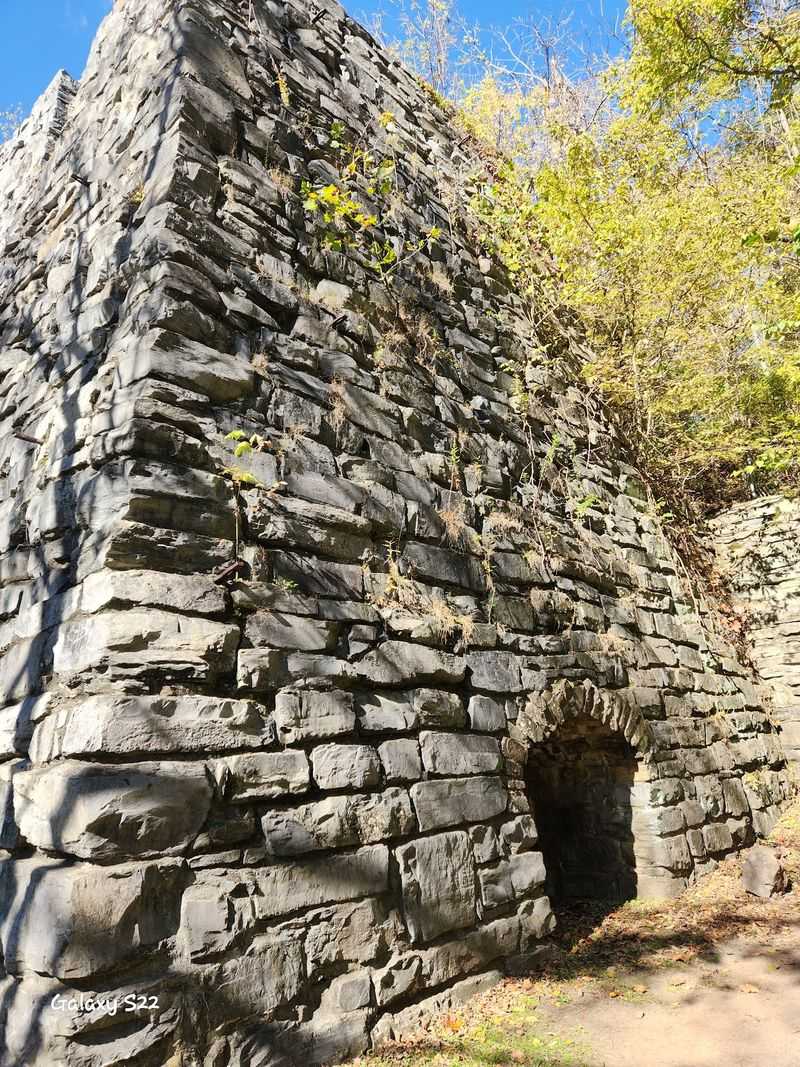
Photos of the furnace do not fully prepare you for the moment you walk up to it and realize just how large the structure is. The stone arch opening is wide and tall, and the overall mass of the furnace rises well above head height, built from rough-cut stone blocks fitted together with impressive precision for the 1830s.
The walls have that particular texture of genuinely old construction, where moss has settled into the gaps and the stone surface has weathered unevenly over nearly two centuries. Running your hand across the rock face connects you to the workers who cut and stacked those same stones when this part of Illinois was still frontier territory.
There is something quietly powerful about that kind of physical connection to history.
The informational signage around the structure does a good job of explaining the iron-making process in plain language, so you do not need a background in industrial history to understand what you are looking at. The furnace used a combination of iron ore, limestone, and charcoal to produce pig iron, which was then transported out of the region for further processing.
The whole operation was labor-intensive, fire-driven, and built entirely by hand, which the stonework makes very easy to believe.
Accessibility and Practical Visitor Details
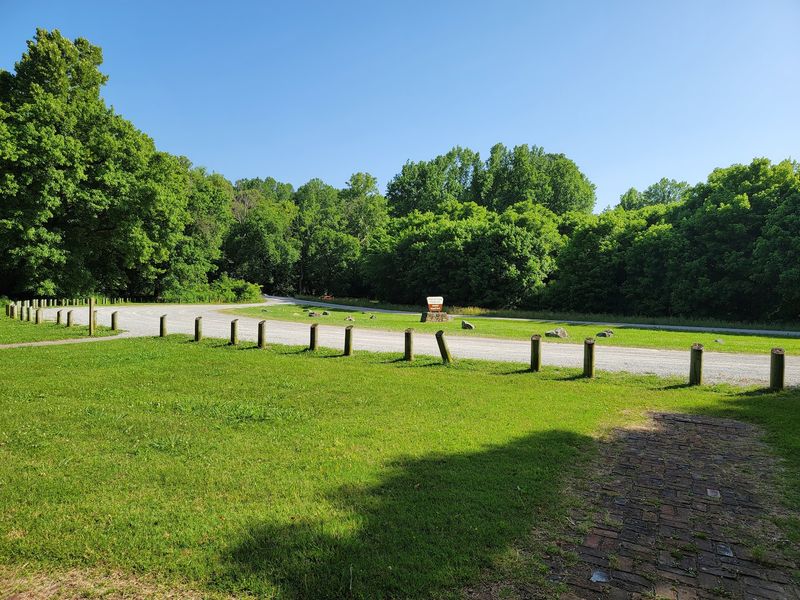
The site is wheelchair accessible along the main path from the parking area to the picnic shelter and the furnace viewing area, which is a meaningful detail for visitors who need level ground. The concrete sidewalk from the gravel lot makes that route manageable, though the paths do not extend all the way to the restroom facilities, which is worth factoring into your planning.
The restrooms are separate for men and women and are kept reasonably clean, but they operate without running water. Bringing your own water, hand sanitizer, and any supplies you might need for a half-day outing is the smart approach.
The site does not have a gift shop, a fee booth, or any staffed facilities, so self-sufficiency is the expectation.
Cell service is essentially nonexistent once you get close to the site, so downloading offline maps before leaving is not optional if you are not already familiar with the back roads of southern Illinois. The site is managed by the Shawnee National Forest and is open around the clock every day of the year.
That 24-hour access makes sunrise and early morning visits genuinely special, when the forest light is soft and you often have the entire clearing to yourself.
The Shawnee National Forest Setting
The furnace does not exist in isolation. The Shawnee National Forest surrounds it on all sides, and the broader landscape of southern Illinois adds enormous context to the visit.
The forest stretches across roughly 280,000 acres of hills, bluffs, creeks, and hardwood canopy, and the furnace sits in one of its quieter, less-trafficked corners.
The drive through the forest to reach the site is worth treating as part of the experience rather than just a means to an end. The road winds through stretches of dense tree cover where the canopy meets overhead, and in fall the color change turns the whole route into something genuinely beautiful.
Even in summer, the green is deep and layered in a way that feels very different from the flat agricultural landscape that dominates most of Illinois.
Wildlife is active throughout the forest, and it is not unusual to spot deer near the tree line or hear woodpeckers working through the upper canopy while you eat lunch at the picnic shelter. The Shawnee is one of the most ecologically diverse areas in the state, and the furnace site gives you a front-row seat to that natural richness alongside the historical interest.
Few places in Illinois manage to deliver both at the same time.
Best Times to Visit and Seasonal Considerations
Spring and fall are the strongest seasons for a visit to the Illinois Iron Furnace site. Spring brings wildflowers along the creek banks and mild temperatures that make the forest walk comfortable, while fall delivers the full color display that the Shawnee hardwoods are known for.
Summer works well too, especially if the swimming hole at Big Creek is part of your plan, but the heat and humidity of a southern Illinois August can be significant.
Winter visits are possible since the site is open year-round, but the back roads can become challenging after snow or freezing rain. One visitor noted needing four-wheel drive in winter conditions, which is a real consideration for anyone planning an off-season trip.
The forest is quiet and stark in winter, and the furnace structure actually photographs beautifully against bare trees and gray skies.
Weekday mornings are consistently the least crowded time to visit, regardless of season. The site never gets genuinely overwhelmed with crowds given its remote location, but arriving early still gives you the best chance of having the furnace and the creek to yourself for a while.
That kind of solitude in a place with this much history is something worth planning around.
History of Iron Production in Southern Illinois
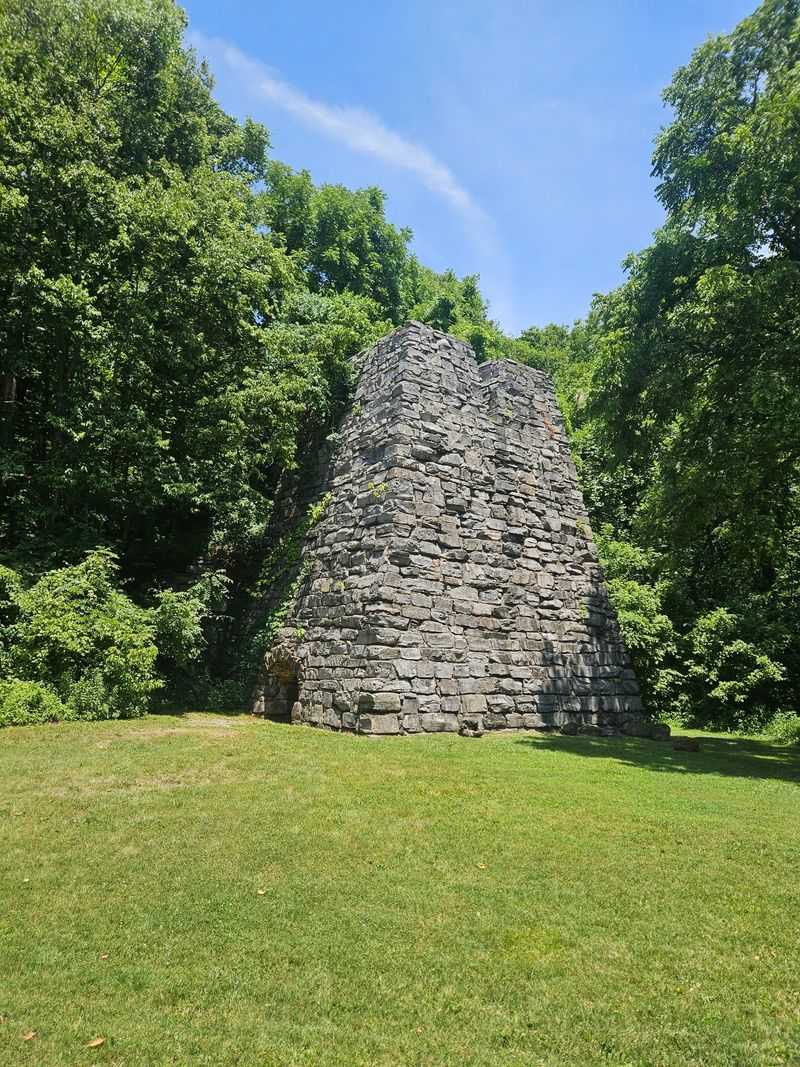
The Illinois Iron Furnace was built in 1839, making it one of the earliest iron-production operations in what was then a very young state. Iron smelting at this scale required three key ingredients: iron ore, which was mined locally from the surrounding hills; limestone, used as a flux to remove impurities; and charcoal, produced by burning vast quantities of the surrounding hardwood forest.
The furnace operated by stacking these materials in layers inside the stone structure and then blasting the pile with forced air to reach the temperatures needed for smelting. The molten iron that resulted was cast into bars called pig iron, which could then be shaped into tools, hardware, and other goods.
The whole process was relentless and physically demanding, running day and night during active production periods.
The furnace operated for only a relatively short period before more efficient iron production methods elsewhere in the country made small regional furnaces economically unviable. That short operational window is part of what makes the site so historically interesting, because it captures a very specific and brief moment in American industrial development.
The furnace is a physical record of a technology that rose and fell within a single generation, preserved in stone in the middle of an Illinois forest.
Tips for Making the Most of Your Visit
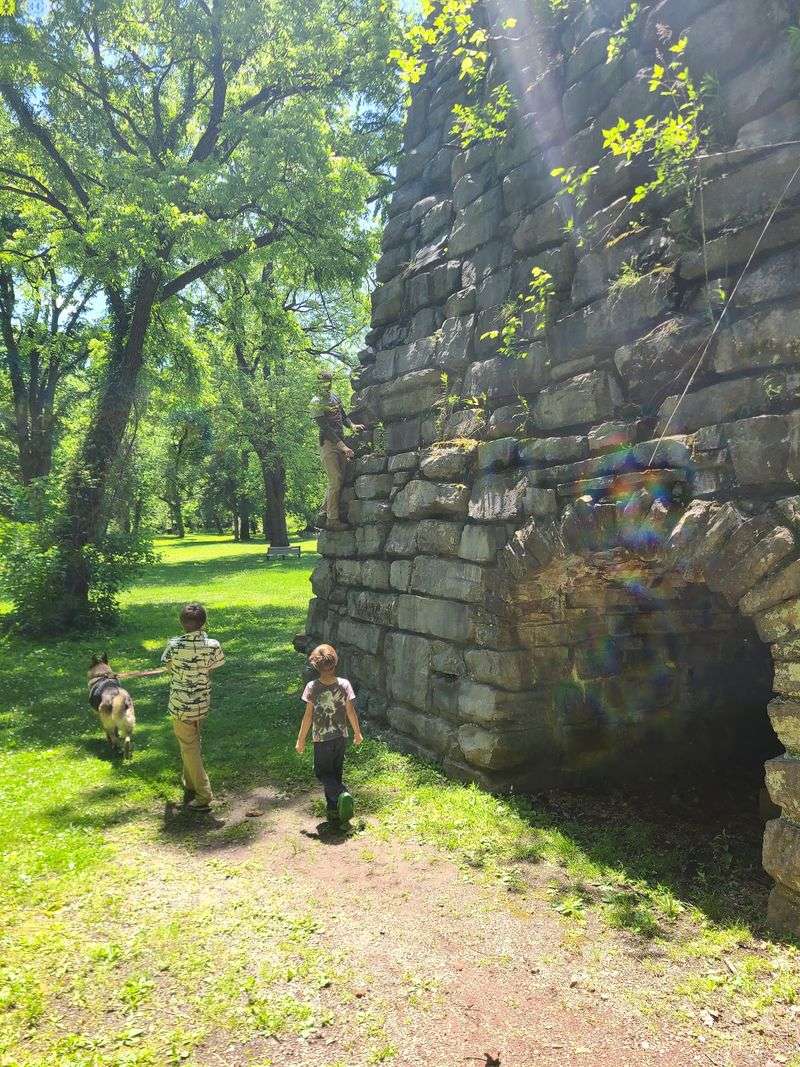
A half hour is enough time to see the furnace and read the informational panels, but planning for closer to two hours gives you room to explore the creek, have a picnic, and wander the surrounding forest paths without feeling rushed. The site rewards a slower pace, and there is more to notice the longer you stay.
Wear shoes you do not mind getting wet if you plan to spend time at Big Creek. The creek bottom is rocky, and the most enjoyable way to experience it involves actually stepping in.
Sandals with straps or old sneakers work better than flip-flops on the uneven creek bed.
Pack out everything you bring in, since there are no trash facilities on-site. Bringing a small trash bag is a simple habit that keeps the site clean for the next visitor.
If you notice broken glass near the back of the furnace structure, stepping carefully and keeping children close is the right move. The site is free to visit and requires no reservation, which makes spontaneous day trips from nearby towns in southern Illinois very easy to pull off.
The Shawnee National Forest has a lot to offer in the surrounding area, so treating this as one stop on a longer forest day is a natural fit.
Why This Place Stays With You After You Leave
Some places are interesting in the moment and then fade quickly from memory. The Illinois Iron Furnace is not one of those places.
The combination of the physical scale of the furnace, the knowledge that an entire community once lived and worked here, and the surrounding forest makes the visit feel layered in a way that most roadside historical stops simply do not.
The creek adds something that purely historical sites often lack: a sensory experience that pulls you into the present even while the furnace is pulling you toward the past. Cool water on your feet, the sound of current over rocks, the smell of forest air.
Those details anchor the visit in your memory alongside the stonework and the history panels.
The site carries a 4.6-star rating from over 350 visitors, and the consistency of that praise across very different types of travelers, from history enthusiasts to families looking for a picnic spot to hikers filtering water from the creek, says something real about how broadly the place delivers. There is no single type of person who gets the most out of a visit here.
The furnace and the forest and the swimming hole have a way of giving each visitor exactly what they came for, and occasionally something they were not expecting at all.
Share this story