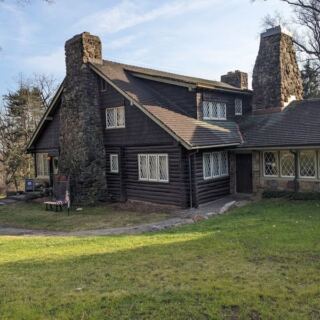
There is a place in northern Illinois where the landscape looks like it was sculpted by a force far older than any road or building nearby, because it was. Thousands of years ago, a massive glacier crept across this land, carving out lakes, wetlands, and rolling terrain that still exist today.
The result is a 2,200-acre state park that feels nothing like the flat Illinois most people picture. I visited Moraine Hills State Park on a crisp fall morning, and by the time I finished my first trail loop, I was already planning my return trip.
Rare glacial lakes, over 200 bird species, winding trails, and a boardwalk that puts you right in the middle of the wetlands are all waiting here, just about an hour north of Chicago.
Where It All Begins: Location and First Impressions
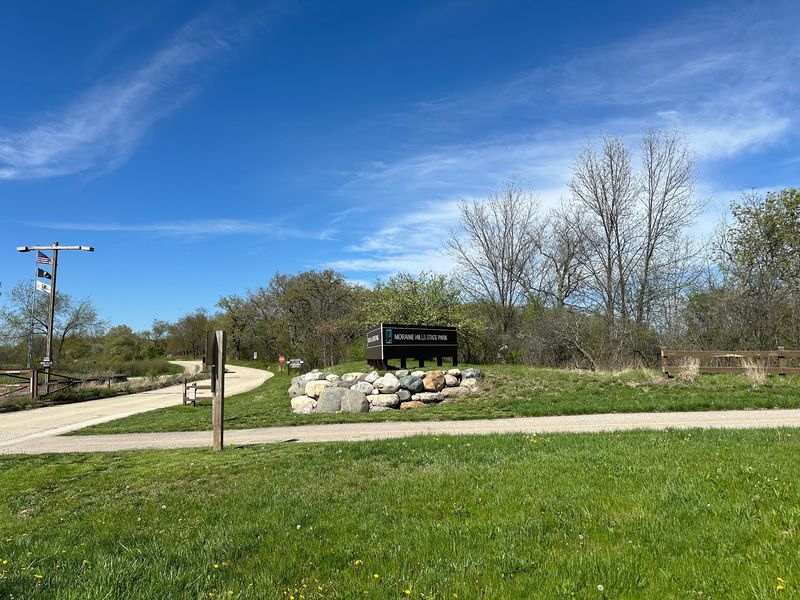
The address is 1510 S River Rd, McHenry, IL 60051, and the drive there already starts to hint at what is ahead. The roads narrow, the trees thicken, and the suburban noise fades fast.
Moraine Hills State Park sits in McHenry County in northern Illinois, roughly an hour’s drive from Chicago. The park covers more than 2,200 acres of glacier-formed terrain, including woods, wetlands, open prairies, and several lakes.
That variety packed into one place is genuinely rare for this part of the state.
Parking is plentiful, with multiple lots spread around the park near different trailheads. The main office area near Northern Woods is a solid starting point if it is your first visit.
Staff there can hand you a trail map, which is worth grabbing before you head out.
The park is managed by the Illinois Department of Natural Resources and is open year-round. Hours vary by season, so check ahead and make sure you leave before closing time, because the gates do get locked.
First impressions here are strong, and the park lives up to every one of them.
Lake Defiance: A Glacial Relic Worth Every Step
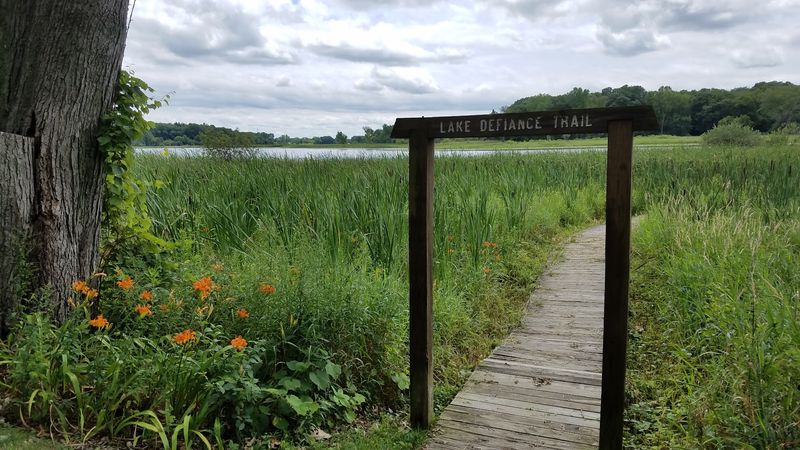
Lake Defiance is the crown of this park, and its origin story makes it even more interesting to stand beside. The lake was formed by a glacier thousands of years ago, making it a true glacial lake, a type that is genuinely rare in Illinois.
The Red Loop Trail wraps around Lake Defiance and runs about 3.73 miles. It mixes paved and unpaved sections, passes through wooded stretches, and opens up into wide sunny areas where the lake comes into full view.
Bring sunscreen for the exposed sections and carry water, because shade is not always available.
The trail has some elevation changes, which is a pleasant surprise given how flat much of Illinois tends to be. Those small hills give the hike a bit of energy and break up the rhythm nicely.
Most people complete the loop in about 1.5 to 2 hours depending on pace.
Kayaking and canoeing are also possible on the lake, which adds another layer to the visit. There is something quietly satisfying about paddling across water that has existed in this same spot since the last Ice Age.
Birdwatching: Over 200 Species and Counting
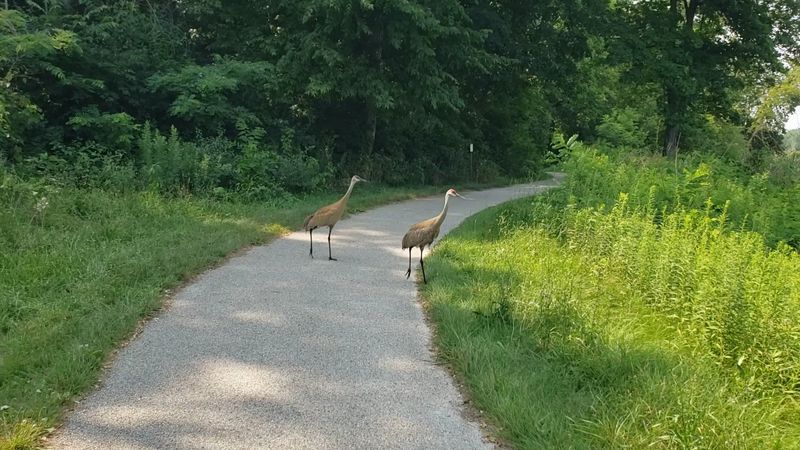
Moraine Hills State Park has earned a serious reputation among birdwatchers, and the numbers back that up. More than 200 bird species have been recorded here, drawn by the park’s rich mix of wetlands, forests, open prairies, and lake edges.
Sandhill cranes are among the more dramatic sightings, often spotted in open fields during migration season. Herons, egrets, ducks, and warblers also show up regularly depending on the time of year.
Spring and fall migration periods are especially active, but even a midsummer visit turns up a solid list.
The wetland areas and boardwalk sections put you close to the water’s edge, which is exactly where many of the best sightings happen. Bring binoculars and move quietly, and you will be rewarded.
The park’s diverse habitat types mean you are essentially covering multiple ecosystems in a single walk.
Wildlife viewing is mentioned frequently by visitors, and cranes spotted in the fields tend to be a highlight that people talk about long after the visit. For anyone with a birding checklist, this park has the kind of variety that makes the drive from Chicago absolutely worth it.
The Boardwalk: A Walk Above the Wetlands
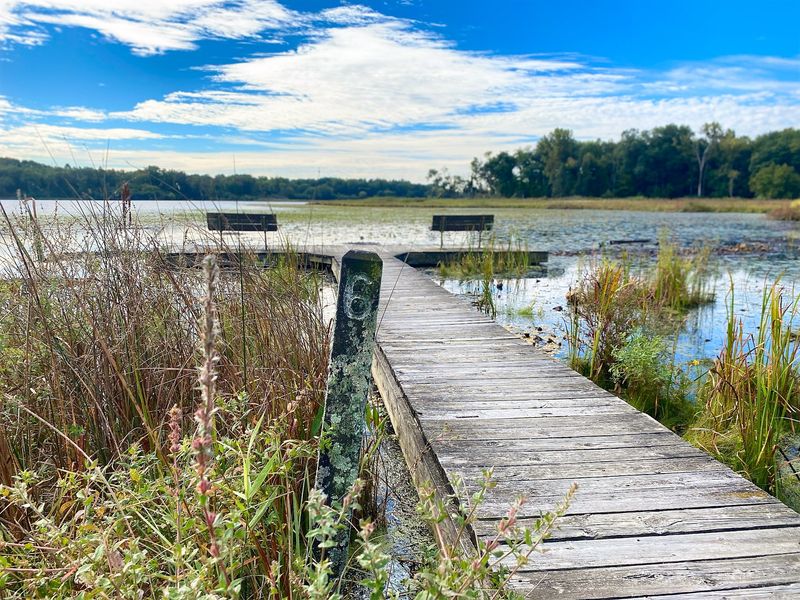
Of all the things to experience at this park, the boardwalk consistently stands out as the most memorable feature for first-time visitors. It carries you right over the wetlands, with open water and marsh grass on both sides and the sounds of frogs and birds all around.
The boardwalk is part of the longer trail system and adds a completely different texture to the hike. Instead of crunching gravel underfoot, you hear the soft thud of wood planks and the occasional splash from something moving in the water below.
It is a sensory experience that a paved path simply cannot replicate.
The structure gives you an elevated vantage point over the marsh, which is especially useful for spotting wildlife that would otherwise stay hidden in the reeds. Early morning visits tend to offer the calmest conditions and the most active wildlife sightings along this stretch.
The boardwalk section is part of a roughly three-mile journey through the park, and it sits near the nature center, making it a natural midpoint rest stop. That combination of boardwalk, wetland views, and a nearby nature center in one stretch is hard to beat for a single afternoon outing.
Trails for Every Kind of Visitor
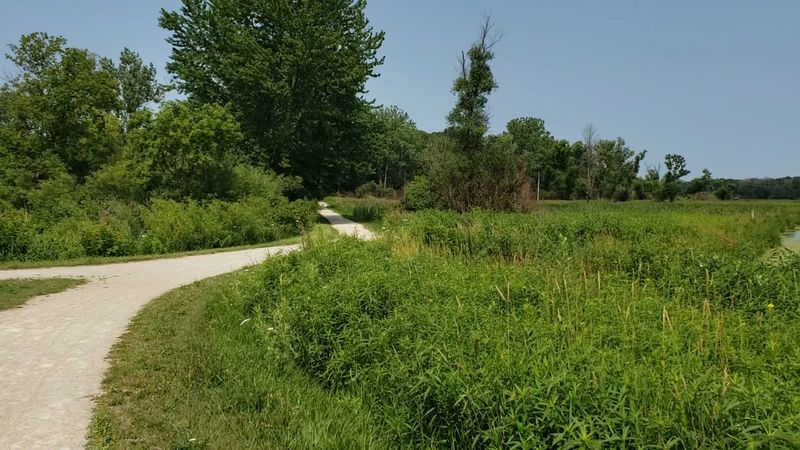
Trail variety is one of the park’s genuine strengths. The system covers multiple loops of different lengths, with surfaces ranging from asphalt to crushed gravel to mowed grass paths.
Most trails are wide enough to accommodate both hikers and cyclists comfortably side by side.
The shorter loops run around 3.2 miles, while dedicated hikers can combine trails to reach 10 miles or more in a single outing. The terrain is mostly flat with some rolling sections, so the hikes are accessible to a wide range of fitness levels, including families with younger kids.
One feature that stands out is the one-way bike trail system, which keeps cyclists from meeting head-on around blind corners. That kind of thoughtful design makes the park safer and more enjoyable for everyone sharing the paths.
Trail maps are available at the main office and are worth picking up before you start. The network connects in ways that are not always obvious from the trailhead, and getting a sense of the layout before setting off helps you plan the right distance for your group.
Benches, restroom facilities, and covered rest shelters are scattered along the routes so you are never too far from a break.
Cycling Through the Park: 25 Miles of Scenic Roads and Trails
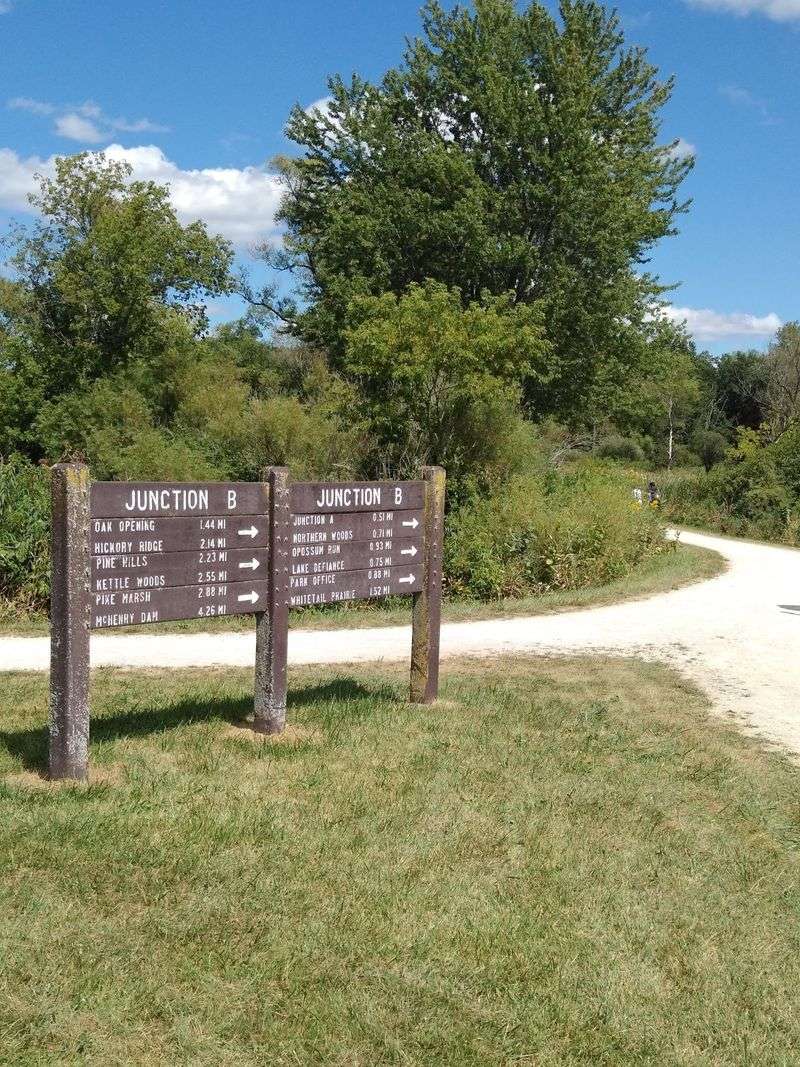
Cycling at Moraine Hills is a different kind of experience compared to a typical bike path along a city street. The park’s trail system winds through forests, past wetlands, and along lake edges, giving riders a constantly changing view without ever leaving the park.
The one-way bike trails are a particular highlight. They eliminate the stress of oncoming cyclists on narrow sections and let you settle into the ride without constant alertness to traffic.
Some visitors have logged 25 miles within the park and the nearby McHenry Dam area in a single day.
The terrain mixes flat stretches with a few steeper climbs, so riders get a bit of a workout without it ever becoming punishing. The paved sections are smooth and well-maintained, while the crushed limestone paths add a slightly more rugged feel to certain loops.
Bringing your own bike is the way to go here, as there are no rental options on-site. Parking near the trailheads is easy, and the lots are large enough that you can unload gear without scrambling for space.
A full day of cycling here leaves you pleasantly tired and genuinely glad you made the trip.
Fishing at the Park: Rods, Patience, and Quiet Water
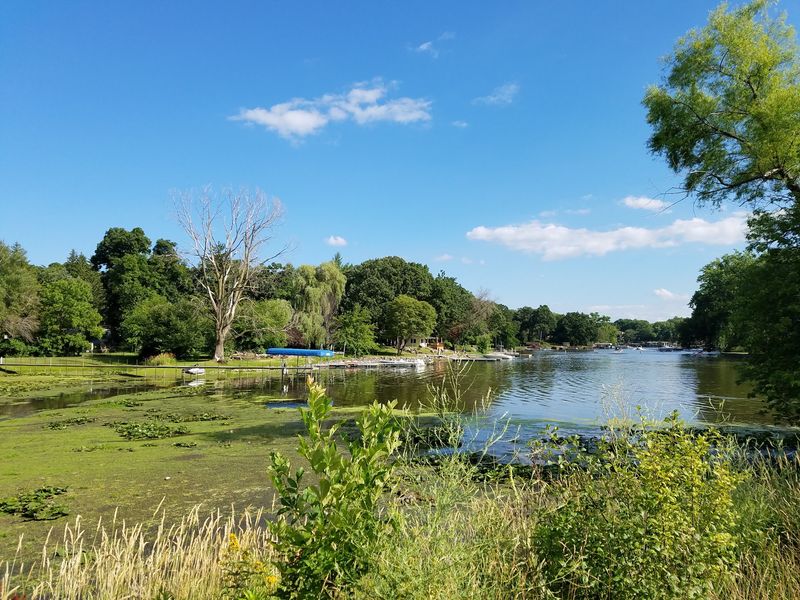
Fishing is one of the most popular activities at Moraine Hills, and the lake and surrounding waters give anglers plenty of spots to set up. The word fishing appears over 100 times in visitor mentions of the park, which tells you something about how seriously people take it here.
The park’s lakes and connected waterways support a variety of fish species, making it a productive spot for both casual and experienced anglers. Early morning and late afternoon tend to be the most active times, when fish are feeding near the surface and the water is at its calmest.
Shoreline fishing is accessible from several points around the park, and the benches placed along the water make it easy to settle in for a longer session. The peaceful surroundings add to the appeal, since the sound of the water and the absence of road noise make the whole experience genuinely relaxing.
A valid Illinois fishing license is required for anyone 16 and older, so make sure that is sorted before you arrive. The park does not have a bait shop on-site, so come prepared with your own gear and supplies.
A quiet morning by the water here is hard to improve on.
Fall Colors and Seasonal Beauty
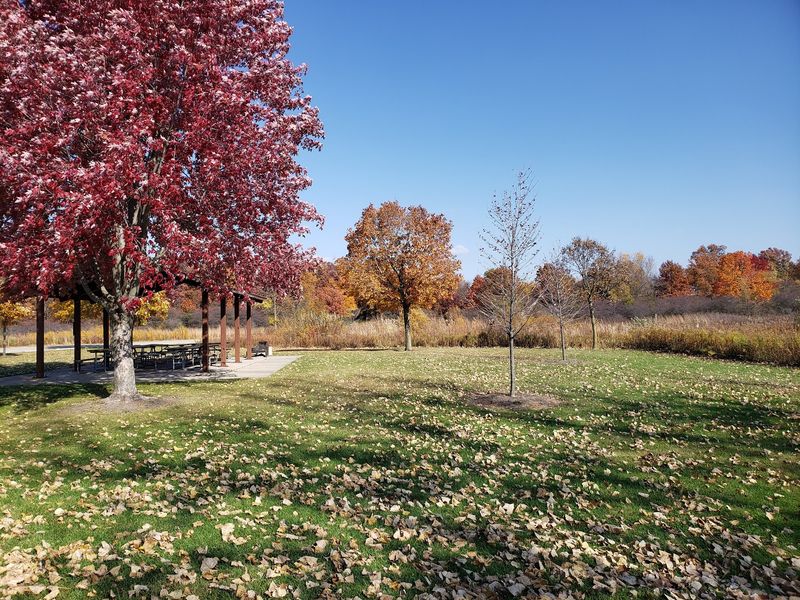
Fall at Moraine Hills is something that genuinely stops you mid-stride. The trees shift into deep reds, burnt oranges, and bright yellows, and those colors reflect off the lake surface in a way that makes the whole park feel painted.
The wetlands add another layer to the autumn palette, with grasses turning golden and the open sky framing the treeline on all sides. Photographers tend to show up in force during peak color weeks, and it is easy to see why.
Every bend in the trail opens onto a new composition.
The nature center sits roughly in the middle of the trail system and makes a great stopping point during a fall walk. Benches and covered shelters along the route give you places to sit and take in the scenery without rushing through it.
Spring and summer have their own appeal, with wildflowers, green canopy cover, and active wildlife. But fall has a specific quality here that visitors come back for year after year.
The combination of glacial lake, wetland views, and a full canopy of color makes Moraine Hills one of the better places in northern Illinois to spend an October afternoon.
Prairies, Wetlands, and a Landscape Built by Ice
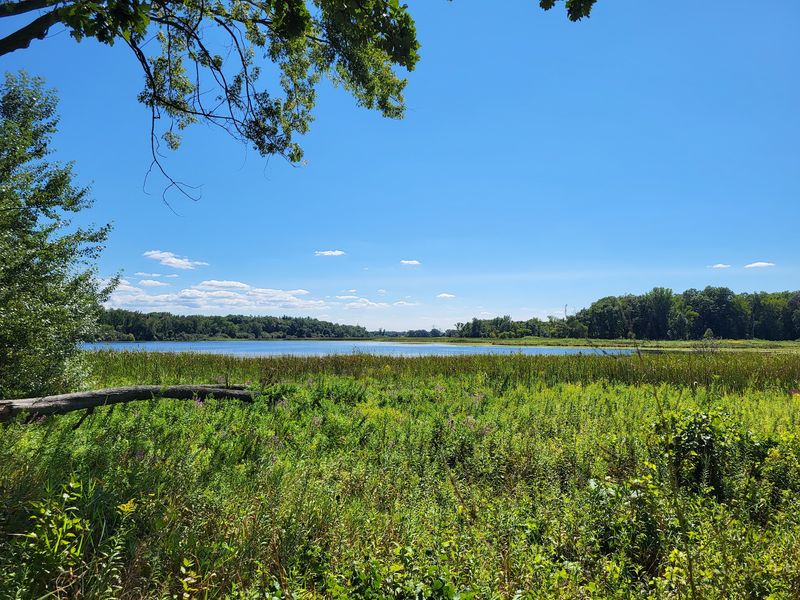
What makes Moraine Hills unusual is how many different ecosystems exist within its 2,200 acres. A single visit can take you through dense forest, open prairie, boggy wetland, and lake shoreline, sometimes within the span of a single trail loop.
The park’s terrain was shaped entirely by glacial activity, and that origin is visible in the rolling hills, kettle lakes, and marshy depressions scattered across the landscape. Glaciers do not leave a flat, predictable surface, and that irregularity is exactly what gives this park its character.
Prairie sections within the park support native grasses and wildflowers that attract pollinators and ground-nesting birds. These open stretches contrast sharply with the wooded sections and give the trail system a rhythm that keeps things interesting over longer distances.
The bogs and marshes are particularly valuable habitat for amphibians, insects, and waterbirds. Grasshoppers are plentiful on the paths during warmer months, so watch your step on the trail edges.
The diversity of plant and animal life packed into this one park is a direct result of the glacial legacy that shaped it, and that connection between geology and ecology is genuinely fascinating to walk through.
Practical Tips for Your Visit
A few practical details can make the difference between a smooth visit and a frustrating one at Moraine Hills. The park closes at 8 p.m. during summer months, and the gates are locked at closing time, so plan your exit accordingly.
Ticks are present throughout the park, especially in warmer months. Check yourself and any pets thoroughly after your visit, even if you stayed on the main trails.
The park provides pet waste bags at several points, which is a small but genuinely useful touch for dog owners.
Sunscreen and water are worth packing, particularly for the Red Loop Trail, where a significant portion of the path runs without shade. The exposed sections can get warm on clear days, and there are no water fountains along the trails themselves.
Restrooms are clean and located at multiple points throughout the park, including along the longer trail routes. Picnic tables are available near parking areas and along the paths, making the park a solid choice for a full-day family outing.
The park can be reached at 815-385-1624 for current conditions and hours. Free admission and easy parking make Moraine Hills one of the most accessible nature experiences in the Chicago area.
Share this story