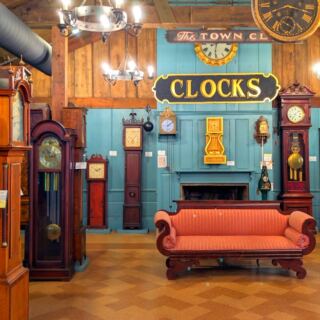
Some of the best discoveries happen when you least expect them. Illinois has a way of hiding genuinely spectacular places in plain sight, and one lakefront museum in Chicago proves that point better than almost anywhere else.
Picture spending a full autumn weekend surrounded by hands-on exhibits, real history, and jaw-dropping science displays without once checking your phone out of boredom. Once you find this place, you will wonder how it stayed off your radar for so long.
Where the Museum Sits and What Makes It Stand Out

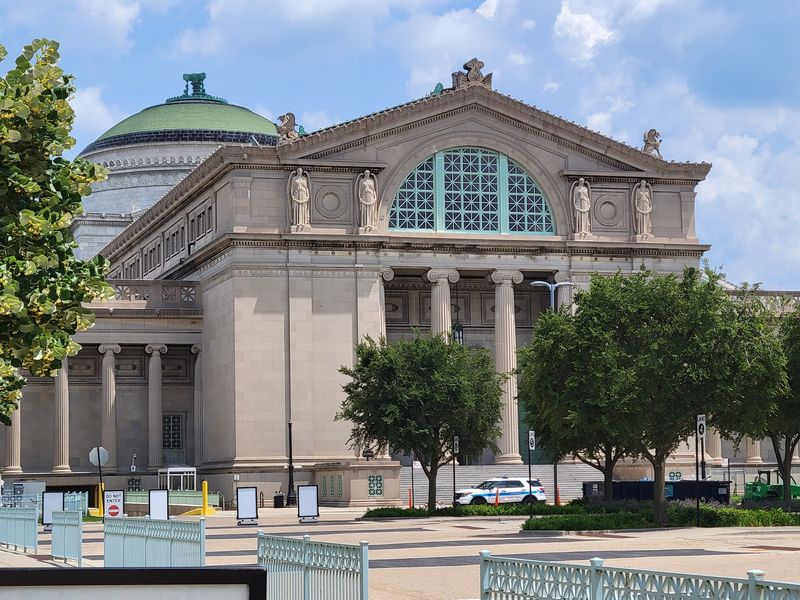
Perched right along the shore of Lake Michigan on Chicago’s South Side, the Griffin Museum of Science and Industry occupies one of the most dramatic settings of any museum in the Midwest. The address at 5700 S DuSable Lake Shore Dr places it squarely in the Hyde Park neighborhood, a corner of Chicago that rewards curious visitors who venture beyond the usual tourist loop.
The building itself is a neoclassical landmark, originally constructed for the 1893 World’s Columbian Exposition. That heritage gives every visit a layered feeling – you are walking through science history inside a structure that is itself a piece of history.
Fall is arguably the finest season to visit. The surrounding parkland glows with color, the lake reflects crisp autumn light, and the crowds thin just enough to let you breathe.
Few Illinois day trips offer this kind of backdrop before you even step inside.
The Story Behind One of Chicago’s Most Beloved Institutions
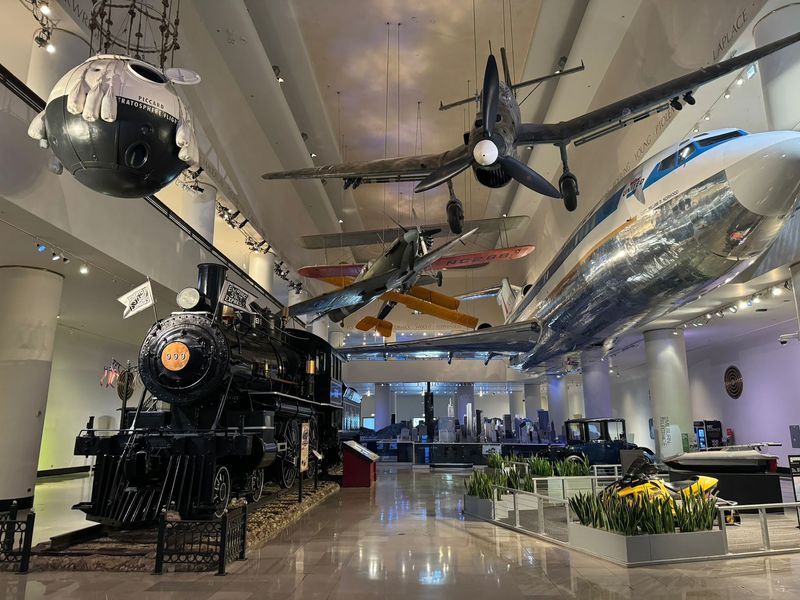
Opening its doors in 1933, the Museum of Science and Industry – now carrying the Griffin name after a major philanthropic gift – has spent nearly a century building one of the most interactive science collections anywhere in North America. Julius Rosenwald, the businessman behind Sears, Roebuck and Co., was the driving force who pushed to transform the old exposition building into a public science museum inspired by the Deutsches Museum in Munich.
His vision was radical for the time: let visitors touch things, pull levers, and actually engage with the exhibits rather than simply stare through glass cases. That philosophy took root and never left.
Decades later, the museum has grown into a sprawling complex with dozens of permanent galleries and rotating special exhibits. Locals who grew up visiting on school field trips still return as adults, and they bring their own children, keeping a genuine cycle of discovery alive across generations.
The U-505 Submarine – A Centerpiece Unlike Anything Else
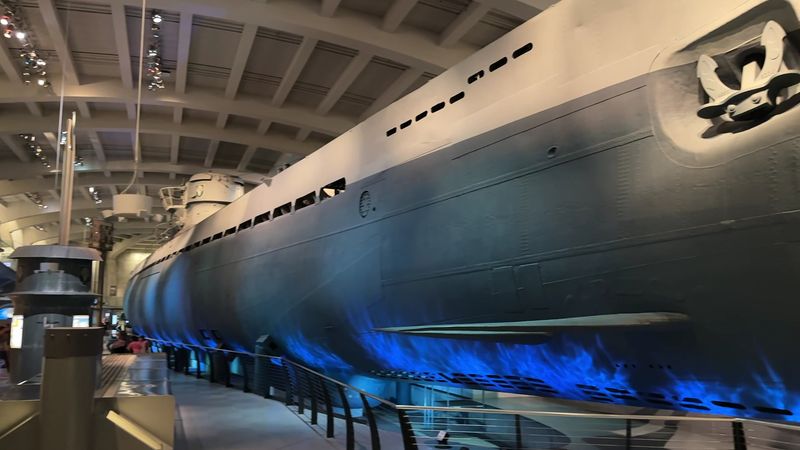
No single exhibit at the Griffin Museum generates more awe than the U-505, a genuine German U-boat captured during World War II. Seeing a full-sized submarine in person, up close, inside a museum basement, is the kind of experience that stops people mid-sentence.
Visitors consistently call it one of the most impressive museum moments they have ever had.
The story behind the capture is equally gripping. In 1944, a U.S.
Navy task group boarded and seized the submarine at sea, a rare and dangerous feat that yielded invaluable intelligence. The museum acquired it in 1954, and it has been a centerpiece ever since.
Families traveling with young children report that the submarine leaves a lasting impression on even the youngest visitors. One family who made the trip from South Florida mentioned their five-year-old still talked about the U-boat more than a year later.
That kind of staying power says everything about this exhibit.
Interactive Exhibits That Keep Every Age Genuinely Engaged
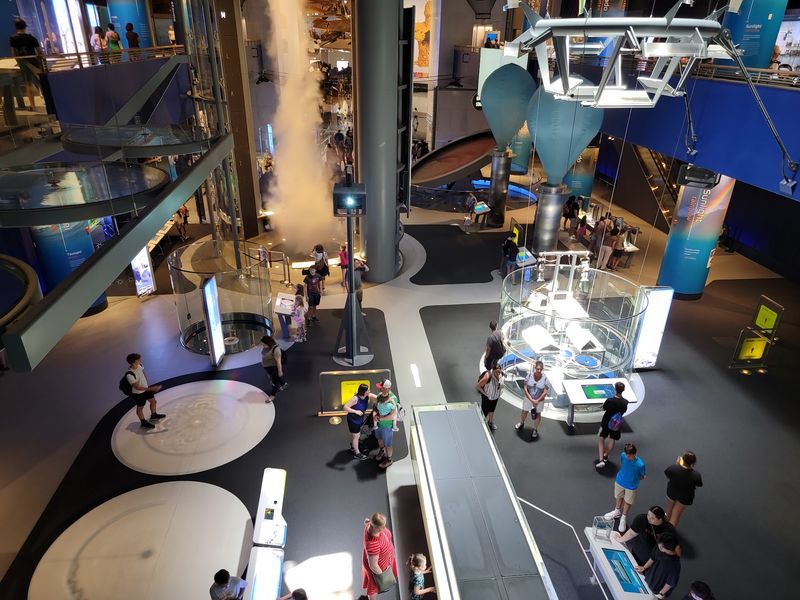
Walking through the Griffin Museum feels less like a traditional museum visit and more like stepping into a giant science playground where every surface invites participation. The interactive exhibit philosophy baked into the museum’s founding DNA shows up in gallery after gallery, from energy demonstrations designed for young kids to complex simulations that challenge adult visitors just as much.
Popular topics among visitors include a Tesla coil demonstration, a mirror maze, a flight simulator, and a space exhibit that pulls in curious minds of every age. The tornado exhibit lets you stand next to a 40-foot indoor twister, which is exactly as thrilling as it sounds.
Visitors frequently mention that the museum swallowed an entire day without anyone feeling restless. One group arrived at opening and stayed until closing, later noting it felt like only two or three hours had passed.
That kind of time distortion is the hallmark of a place built for genuine engagement rather than passive observation.
The Coal Mine Tour – A Hands-On Piece of Illinois History

Tucked within the museum’s lower level, the coal mine tour stands apart as one of the most unexpectedly moving experiences in the building. Visitors board a coal car and descend into a faithful recreation of an early 20th-century Illinois coal mine, complete with period tools, tight corridors, and the kind of atmospheric detail that makes history feel immediate rather than distant.
The additional cost runs around twelve dollars per person, and regulars say it is completely worth it. The tour offers a visceral sense of how demanding and dangerous mining life was, delivering a history lesson that no textbook could replicate.
Illinois has deep roots in coal mining, and this exhibit honors that legacy with honesty and care.
Children between roughly four and fifteen years old tend to find it especially captivating, though adults consistently walk away just as affected. For a fall weekend that mixes fun with genuine learning, the coal mine tour is a natural highlight.
Weather Wonders and the Tornado Simulator
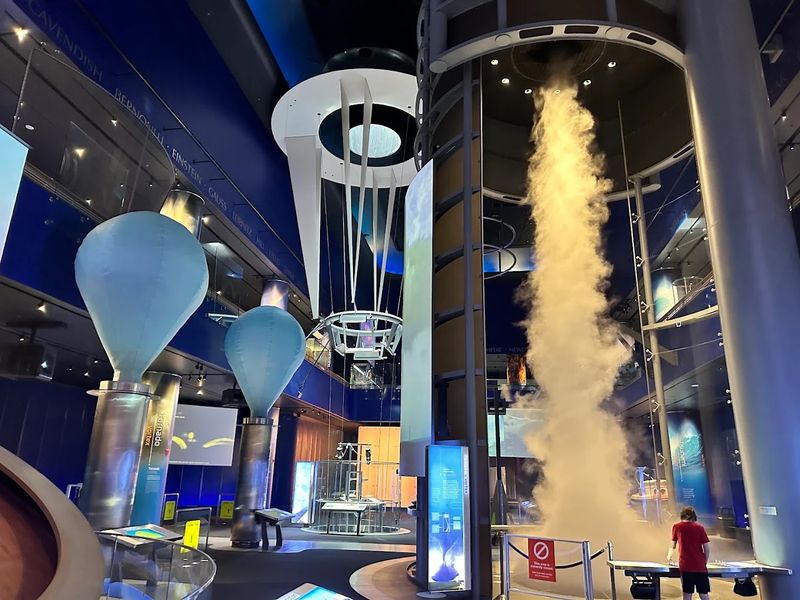
Midwest weather has a personality all its own, and the Griffin Museum leans into that fact with exhibits dedicated to storms, atmospheric science, and the raw power of natural phenomena. The tornado simulator is the crown jewel of this section, generating a towering indoor vortex that visitors can walk right up to and feel.
Standing next to a 40-foot simulated tornado is one of those moments that shifts from novelty to genuine wonder within seconds. The exhibit explains the science clearly without losing the drama, which is exactly the balance a great science museum should strike.
Visitors traveling with children particularly rave about this section. One family mentioned the storm exhibit as a personal favorite, noting how effectively it combined spectacle with real meteorological education.
For anyone who has ever watched a Midwest sky turn green and felt that particular mix of curiosity and respect for nature, this exhibit will feel like a satisfying answer to a lifelong question.
Trains, Stagecoaches, and the Transportation Galleries
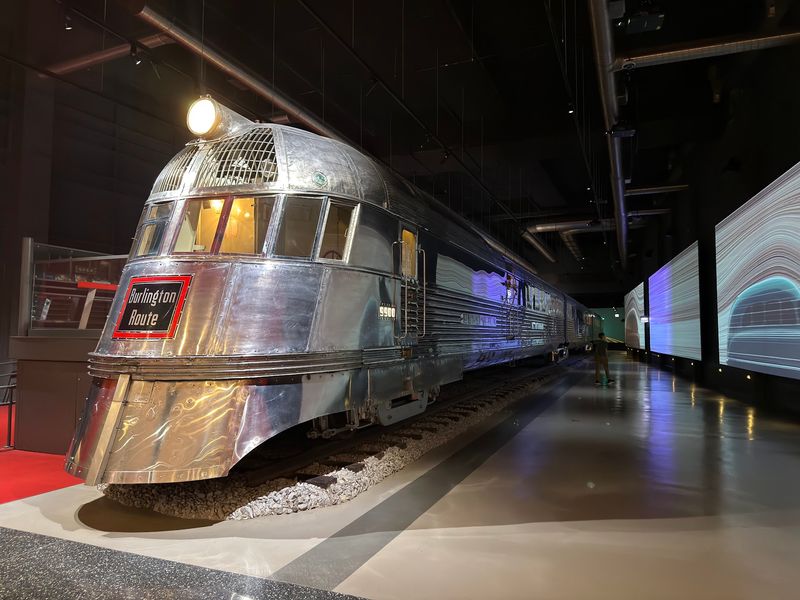
Few things capture the imagination quite like the scale of early American transportation, and the Griffin Museum’s galleries devoted to trains and historic travel do not disappoint. A full indoor train exhibit showcases railroads from around the world, presenting their engineering and cultural significance in a way that feels expansive rather than cramped.
Stagecoaches and other period vehicles round out the section, giving visitors a tangible sense of how dramatically transportation transformed life over the past two centuries. The exhibits are particularly well-suited for multigenerational visits, where grandparents and grandchildren can find common ground over shared fascination.
Multiple visitors have called out the railroad presentation as a personal highlight of the entire museum, noting how thoughtfully the displays are arranged. Fall weekends are a fine time to linger here without the peak-season crowds, allowing a slower pace that lets the details sink in.
The museum does a genuinely impressive job of making transportation history feel alive and relevant rather than dusty.
Food Options Inside the Museum – Better Than Expected

Museum food courts have a reputation for being an afterthought, but the Griffin Museum breaks that pattern in a way visitors genuinely appreciate. The on-site food options cover enough ground to keep a full family happy without anyone feeling stuck with a sad plate of fries.
Visitors have praised specific items including vegan pesto pizza, burgers, a vegetarian tofu bowl, and a solid general spread across the food court.
Having quality dining inside the building matters more than it might seem on paper. When you are deep into a full-day visit and energy starts to flag, being able to grab a satisfying meal without leaving the premises keeps the momentum going.
No need to hunt for parking again or lose your rhythm.
The bathrooms, for what it is worth, also earn consistent praise for cleanliness – a small detail that adds up over the course of a long day with kids in tow. The museum clearly sweats the operational details that make visits comfortable from start to finish.
Practical Visiting Details – Hours, Prices, and Getting There
Planning ahead makes a real difference at a museum this size. The Griffin Museum is open Monday through Saturday from 9:30 a.m. to 4 p.m., with Sunday hours running from 11 a.m. to 4 p.m.
Arriving close to opening time is a smart move – visitors who get there right when the doors open consistently report a smoother, less hectic experience.
Public transportation reaches the museum with reasonable ease from neighborhoods like River North, and rideshares drop off directly at the entrance. Parking is available for those driving in, though note that the walk from the lot to the entrance can be a bit of a trek around the building’s perimeter.
Several exhibits carry additional fees on top of general admission, with special experiences running around twenty dollars each. Visitors who prefer to skip the add-ons still find more than enough to fill a complete day.
For more information, the museum’s website at griffinmsi.org has current pricing and ticketing details.
Why Fall Is the Right Season to Make the Trip

Timing a visit to the Griffin Museum in autumn hits a sweet spot that other seasons simply cannot match. Summer brings the biggest crowds, and winter can make the lakefront approach feel punishing.
Fall threads the needle perfectly – comfortable temperatures, stunning color along the parkway, and a slight thinning of the crowds that makes the galleries feel more breathable.
A full weekend works better than a single day. Saturday can cover the major permanent galleries, the submarine, and the coal mine tour, while Sunday leaves room for the exhibits you missed and a slower walk through the building’s remarkable architecture.
The museum is large enough that even visitors who stay from open to close report leaving things unseen.
For Illinois day-trippers looking for a fall outing that delivers on every front – history, science, lakefront scenery, and genuinely good food – the Griffin Museum is a hard case to argue against. Plan the drive, block the calendar, and go.
Share this story